

4 months 4 weeks ago
It is truly not the merit of the school if we do not come out selfish. Each sort of corresponding pride and every wind of covetousness, eagerness for office, mechanical and servile officiousness, hypocrisy, etc., is bound as much with extensive knowledge as with elegant, classical education, and since this whole instruction exercises no influence of any sort on our ethical behavior, it thus frequently falls to the fate of being forgotten in the same measure as it is not used: one shakes off the dust of the school.
▼
Source
source
p. 22

6 months 2 weeks ago
An utterance can have Intentionality, just as a belief has Intentionality, but whereas the Intentionality of the belief is intrinsic the Intentionality of the utterance is derived.
▼
Source
source
P. 27.

9 months 1 day ago
If man of himself could in a perfect manner know all things visible and invisible, it would indeed be foolish to believe what he does not see. But our manner of knowing is so weak that no philosopher could perfectly investigate the nature of even one little fly.
▼
Source
source
Prologue (trans. Joseph B. Collins)
4 months 1 week ago
He who lives in harmony with himself lives in harmony with the universe.
▼
Source
source
Attributed in The Life You Were Born to Live : Finding Your Life Purpose (1995) by Dan Millman, Pt. 2, Ch. 2 : Cooperation and Balance
5 months 3 weeks ago
To say that all philosophy is writing is, minimally, to say that it is never the transparent expression of thought.
▼
Source
source
Chapter 3, Deconstruction and Criticism, p. 46
8 months 2 weeks ago
The truth can wait, for she lives a long life.
▼
Source
source
Willen in der Natur (On the Will in Nature), 1836;
8 months 2 weeks ago
I quite understand the principle of confining employment as far as possible to the British without regard for efficiency. I think, however, that the Ministry is not applying the principle sufficiently widely. I know many Englishmen who have married foreigners, and many English potential wives who are out of a job. Would not a year be long enough to train an English wife to replace the existing foreign one in such cases?
▼
Source
source
Enclosed reply to the Ministry of Labour, in defense of A. S. Neill (who declined to send it), 27 January, 1931
5 months 4 days ago
But leaving this, let us remark one thing which is very plain: That whatever be the uses and duties, real or supposed, of a Secretary in Parliament, his faculty to accomplish these is a point entirely unconnected with his ability to get elected into Parliament, and has no relation or proportion to it, and no concern with it whatever.

6 months 3 weeks ago
But now we come to the real paradox: that something as explosive as sexual excitement can nevertheless become a matter of habit, But then that applies to all our pleasures. We discover some new product in the supermarket, and become addicted to it. Then our tastebuds become accustomed to its flavour, and or interest fades. In the same way a honeymoon couple may find an excuse to hurry off to the bedroom half a dozen times a day; but after a month or so sex has taken its place among the many routines of their lives. They still enjoy it, but it no longer has quite the same power to excite the imagination. Sex, like every other pleasure, can become mechanical.
▼
Source
source
p. 14
6 months 3 weeks ago
The most successful tempters and thus the most dangerous are the deluded deluders.
▼
Source
source
F 120
7 months 4 days ago
Those who have ever valued liberty for its own sake believed that to be free to choose, and not to be chosen for, is an inalienable ingredient in what makes human beings human.
8 months 1 week ago
At the core of all well-founded belief, lies belief that is unfounded.
8 months 2 weeks ago
The adjective is the enemy of the substantive.
▼
Source
source
Variants: The adjective is the enemy of the noun. Quote attributed in Arthur Schopenhauer (translated by Mrs Rudolf Dircks), Essays of Schopenhauer (2004), Kessinger Publishing, p. 31

4 months 1 week ago
On similar ground it may be proved that no society can make a perpetual constitution, or even a perpetual law. The earth belongs always to the living generation. They may manage it then, & what proceeds from it, as they please, during their usufruct. They are masters too of their own persons, & consequently may govern them as they please. But persons & property make the sum of the objects of government. The constitution and the laws of their predecessors extinguished then in their natural course, with those who gave them being. This could preserve that being till it ceased to be itself, & no longer. Every constitution then, & every law, naturally expires at the end of 19 years. If it be enforced longer, it is an act of force, & not of right. It may be said that the succeeding generation exercising in fact the power of repeal, this leaves them as free as if the constitution or law had been expressly limited to 19 years only.
▼
Source
source
Letter to James Madison,

5 months 1 week ago
The Republican party has really gone off the rails and has become... in many ways a quasi-authoritarian party because many Republicans are not willing to accept the results of a... free and fair election. ...We've learned a lot from the... House committee that's studying the January 6th insurrection... What that committee has revealed was that this wasn't just a demonstration that spontaneously got out of hand. It was planned very deliberately by the White House as a way of pressuring former vice president Pence to overturn the election and keep Donald Trump in office, and right now a lot of state level Republican legislatures are trying to modify their rules for counting votes in the next election so that they would be in a better position to do what they tried to do in 2020, but didn't get away with... So this is probably the most severe threat to American democracy... since the Civil War... and I'm quite worried about that.
▼
Source
source
43:51:00
7 months 5 days ago
Eternal vigilance is the price of knowledge.
▼
Source
source
p. 58
4 months 1 week ago
How many together with whom I came into the world are already gone out of it.
▼
Source
source
VI, 56
6 months 2 weeks ago
You need to know enough of the natural sciences so that you are not a stranger in the world.
6 months 1 week ago
In order that men should embrace the truth - not in the vague way they did in childhood, nor in the one-sided and perverted way presented to them by their religious and scientific teachers, but embrace it as their highest law the complete liberation of this truth from all and every superstition (both pseudo-religious and pseudo-scientific) by which it is still obscured is essential: not a partial, timid attempt, reckoning with traditions sanctified by age and with the habits of the people - not such as was effected in the religious sphere by Guru Nanak, the founder of the sect of the Sikhs, and in the Christian world by Luther, and by similar reformers in other religions - but a fundamental cleansing of religious consciousness from all ancient religious and modern scientific superstitions.
▼
Source
source
VI

4 months 1 week ago
I see too many proofs of the imperfection of human reason, to entertain wonder or intolerance at any difference of opinion on any subject; and acquiesce in that difference as easily as on a difference of feature or form; experience having long taught me the reasonableness of mutual sacrifices of opinion among those who are to act together for any common object, and the expediency of doing what good we can, when we cannot do all we would wish.
▼
Source
source
Letter to John Randolph (1 December 1803), published in The Works of Thomas Jefferson in Twelve Volumes, Federal Edition, Paul Leicester Ford, ed., New York: G. P. Putnam's Sons, 1904, Vol. 109, pp. 54

6 months 3 weeks ago
I do not mean to deny the biologic, physiologic, or psychologic factors in creating crime; but there is hardly an advanced criminologist who will not concede that the social and economic influences are the most relentless, the most poisonous germs of crime.

8 months 1 week ago
Hegel once observed that comedy is in act superior to tragedy and humourous reasoning superior to grandiloquent reasoning. Although Lincoln does not possess the grandiloquence of historical action, as an average man of the people he has its humour.

8 months 4 weeks ago
Yes, you see the Trinity if you see charity.
▼
Source
source
De Trinitate VIII 8,12.

8 months 2 weeks ago
The prejudices of the second species, since they impose upon the intellect by the sensual conditions restricting the mind if it wishes in certain cases to attain to what is intellectual, lurk more deeply. One of them is that which affects knowledge of quantity, the other that affecting knowledge of qualities generally. The former is: every actual multiplicity can be given numerically, and hence, every infinite quantity; the latter, whatever is impossible contradicts itself. In either of them the concept of time, it is true, does not enter into the very notion of the predicate, nor is it attributed as a qualification to the subject. But yet it serves as a means for forming an idea of the predicate, and thus, being a condition, affects the intellectual concept of the subject to the extent that the latter is only attained by its aid.
4 months 1 week ago
As you say of yourself, I too am an Epicurian. I consider the genuine (not the imputed) doctrines of Epicurus as containing everything rational in moral philosophy which Greece and Rome have left us.
▼
Source
source
Letter to William Short
7 months 1 week ago
The Life according to Reason consists herein, -that the Individual forget himself in the Race, place his own life in the life of the Race, and dedicate it thereto;-the Life opposed to Reason, on the contrary, consists in this, that the Individual think of nothing but himself, love nothing but himself and in relation to himself, and set his whole existence in his own personal well-being alone: -and since we may briefly call that which is according to Reason good, and that which is opposed to Reason evil, so there is but One Virtue, to forget one's own personality;-and but One Vice,-to make self the object of our thoughts.
▼
Source
source
p. 33
7 months 1 week ago
My poor opinion is, that the closest connexion between Great Britain and Ireland, is essential to the well being, I had almost said, to the very being, of the two Kingdoms. ... I think indeed that Great Britain would be ruined by the separation of Ireland; but, as there are degrees even in ruin, it would fall the most heavily on Ireland. By such a separation Ireland would be the most completely undone Country in the world; the most wretched, the most distracted and, in the end, the most desolate part of the habitable Globe.
▼
Source
source
Letter to an unknown correspondent (February 1797), quoted in R. B. McDowell (ed.)

4 months 1 week ago
I reduce to two the systems of philosophy which deal with man's soul. The first and older system is materialism; the second is spiritualism.
7 months 2 weeks ago
The arbitrary rule of a just and enlightened prince is always bad. His virtues are the most dangerous and the surest form of seduction: they lull a people imperceptibly into the habit of loving, respecting, and serving his successor, whoever that successor may be, no matter how wicked or stupid.
▼
Source
source
Refutation of Helvétius
6 months 1 week ago
People try to do all sorts of clever and difficult things to improve life instead of doing the simplest, easiest thing-refusing to participate in activities that make life bad.
▼
Source
source
p. 210
8 months 1 week ago
The truth can be spoken only by someone who is already at home in it; not by someone who still lives in untruthfulness, and does no more than reach out towards it from within untruthfulness.
▼
Source
source
p. 41e
4 months 1 week ago
The eighteenth century, which distrusted itself in nothing, as a matter of course, hesitated in nothing.
▼
Source
source
VIII
5 months 3 weeks ago
The difference between a Humanist and a lunatic is in fact one of degree.
▼
Source
source
Vol. 9
9 months 1 week ago
The first philosophers, in investigating the truth and the nature of things, wandered, as if led by ignorance, into a certain... path. Hence, they say that no being is either generated or corrupted, because it is necessary that what is generated should be generated either from being or non-being: but both these are impossible; for neither can being be generated, since it already is; and from nothing, nothing can be generated... And thus... they said that there were not many things, but that being alone had a subsistence. ...the ancient philosophers ...through this ignorance added so much to their want of knowledge, as to fancy that nothing else was generated or had a being; but they subverted all generation.

7 months 1 week ago
We suffer: the external world begins to exist . . . ; we suffer to excess: it vanishes. Pain instigates the world only to unmask its unreality.
5 months 1 week ago
You cannot endow even the best machine with initiative; the jolliest steam-roller will not plant flowers.
▼
Source
source
Ch. I: "Routineer and Inventor", p. 30.
7 months 1 week ago
Labor is a commodity, like any other, and its price is therefore determined by exactly the same laws that apply to other commodities. In a regime of big industry or of free competition - as we shall see, the two come to the same thing - the price of a commodity is, on the average, always equal to its cost of production. Hence, the price of labor is also equal to the cost of production of labor. But, the costs of production of labor consist of precisely the quantity of means of subsistence necessary to enable the worker to continue working, and to prevent the working class from dying out. The worker will therefore get no more for his labor than is necessary for this purpose; the price of labor, or the wage, will, in other words, be the lowest, the minimum, required for the maintenance of life.
8 months 1 week ago
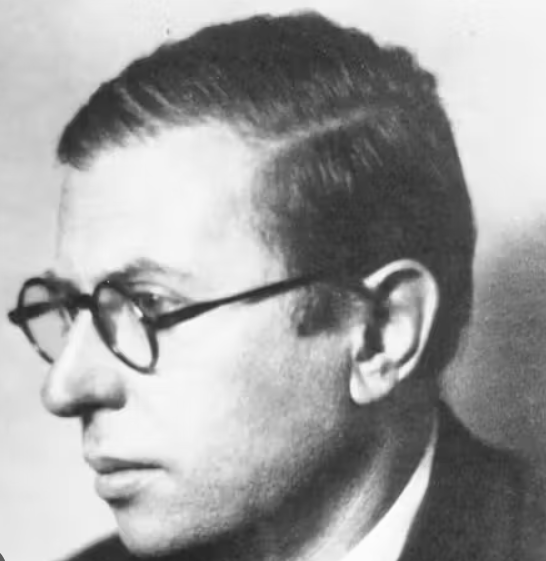
Suppose that I wish to deserve the title of "robber of remorse" and that I place in myself all the townspeople's repentence?
▼
Source
source
Orestes to Electra, Act 2
4 months 1 week ago
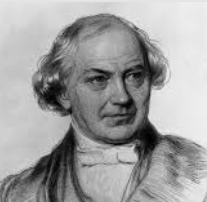
It has been proved by the biological speculations of past time, that organic Life cannot rightly be resolved into mechanical or chemical forces, or the operation of a vital fluid, or of a soul.

9 months 1 week ago
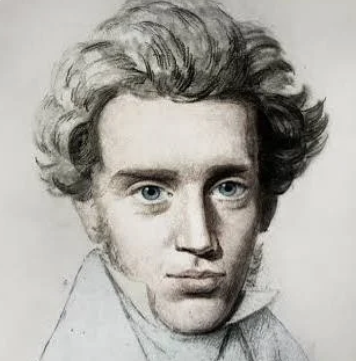
She has forgotten speech and language and the restlessness of thoughts, has forgotten what is even greater restlessness, this self, has forgotten herself-she, the lost woman, who is now lost in her Savior, who, lost in him, rests at his feet-like a picture. He speaks about her; he says: Her many sins are forgiven her, because she loved much. Although she is present, it is almost as if she were absent; it is almost as if he changed her into a picture, a parable.

5 months 4 days ago
To the wild deep-hearted man all was yet new, not veiled under names or formulas; it stood naked, flashing in on him there, beautiful, awful, unspeakable. Nature was to this man, what to the Thinker and Prophet it forever is, preternatural. This green flowery rock-built earth, the trees, the mountains, rivers, many-sounding seas;-that great deep sea of azure that swims overhead; the winds sweeping through it; the black cloud fashioning itself together, now pouring out fire, now hail and rain.
7 months 1 week ago
My mission is to see things as they are. Exactly the contrary of a mission.
7 months 1 week ago
Even in childhood I watched the hours flow, independent of any reference, any action, any event, the disjunction of time from what was not itself, its autonomous existence, its special status, its empire, its tyranny. I remember quite clearly that afternoon when, for the first time, confronting the empty universe, I was no more than a passage of moments reluctant to go on playing their proper parts. Time was coming unstuck from being - at my expense.
4 months 1 week ago
There is a limit to the time assigned you, and if you don't use it to free yourself it will be gone and never return.
▼
Source
source
(Hays translation) II, 4
CivilSimian.com created by AxiomaticPanic, CivilSimian, Kalokagathia