

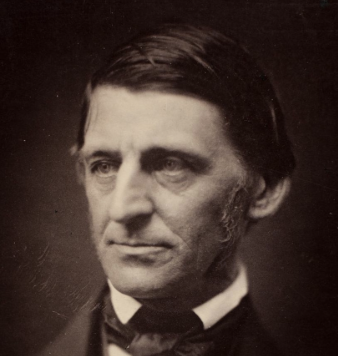
8 months 1 week ago
But genius looks forward: the eyes of men are set in his forehead, not in his hindhead: man hopes: genius creates.
▼
Source
source
par. 18
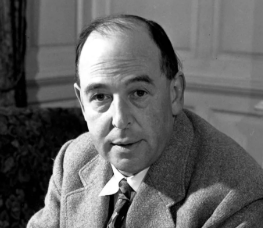
8 months 1 week ago
I am almost inclined to set it up as a canon that a children's story which is enjoyed only by children is a bad children's story. The good ones last. A waltz which you can like only when you are waltzing is a bad waltz.
▼
Source
source
"On Three Ways of Writing for Children" (1952) - in Of Other Worlds: Essays and Stories (1967), p. 24

6 months 3 weeks ago
Popular escapist fiction enchants adult readers without challenging them to be educated for critical consciousness.
7 months 4 days ago
The man with the clear head is the man who frees himself from those fantastic "ideas" and looks life in the face, realises that everything in it is problematic, and feels himself lost. As this is the simple truth - that to live is to feel oneself lost - he who accepts it has already begun to find himself, to be on firm ground. Instinctively, as do the shipwrecked, he will look round for something to which to cling, and that tragic, ruthless glance, absolutely sincere, because it is a question of his salvation, will cause him to bring order into the chaos of his life.
▼
Source
source
Chapter XIV: Who Rules The World?
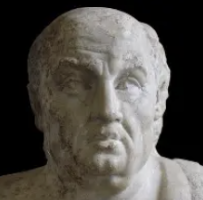
4 months 4 weeks ago
Socrates is reported to have replied, when a certain person complained of having received no benefit from his travels: "It serves you right! You travelled in your own company!"
4 months 1 week ago
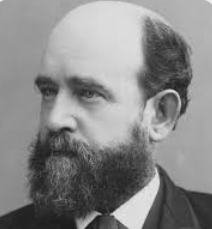
Men must have rights before they can have equal rights. Each man has a right to use the world because he is here and wants to use the world. The equality of this right is merely a limitation arising from the presence of others with like rights. Society, in other words, does not grant, and cannot equitably withhold from any individual, the right to the use of land. That right exists before society and independently of society, belonging at birth to each individual, and ceasing only with his death. Society itself has no original right to the use of land. What right it has with regard to the use of land is simply that which is derived from and is necessary to the determination of the rights of the individuals who compose it. That is to say, the function of society with regard to the use of land only begins where individual rights clash, and is to secure equality between these clashing rights of individuals.
▼
Source
source
Part I : Declaration, Ch. IV : Mr. Spencer's Confusion as to Rights
8 months 1 week ago
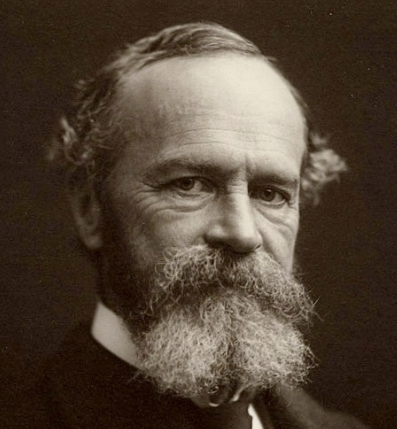
Pragmatism, on the other hand, asks its usual question. "Grant an idea or belief to be true," it says, "what concrete difference will its being true make in anyone's actual life? How will the truth be realized? What experiences will be different from those which would obtain if the belief were false? What, in short, is the truth's cash-value in experiential terms?"
▼
Source
source
Lecture VI, Pragmatism's Conception of Truth
6 months 3 weeks ago
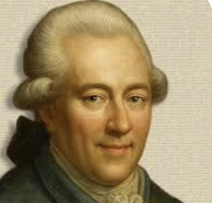
Body and soul: a horse harnessed beside an ox.
▼
Source
source
D 103
7 months 2 weeks ago
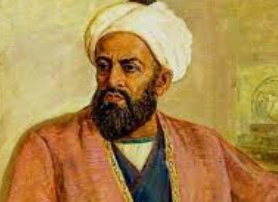
Indeed, the drunken man while in that condition does not know the definition of drunkenness nor the scientific account of it; he has not the very least scientific knowledge of it. The sober man, on the other hand, knows the definition of drunkenness and its basis, yet he is not drunk in the very least. Again the doctor, when he is himself ill, knows the definition and causes of health and the remedies which restore it, and yet is lacking in health. Similarly there is a difference between knowing the true nature and causes and conditions of the ascetic life and actually leading such a life and forsaking the world.
▼
Source
source
III. The Classes of Seekers, p. 47.

7 months 1 week ago
There is something beautiful about virtue, Captain. But I am just a poor guy.
▼
Source
source
Scene VI.
7 months 1 week ago
Friends, the soil is poor, we must sow seeds in plenty for us to garner even modest harvests.
▼
Source
source
Motto

5 months 3 days ago
[after quoting from Lucretius] In the face of warfare and inevitable death, there is no wisdom but in ataraxia, "to look on all things with a mind at peace"." Here, clearly, the old pagan joy of life is gone, and an almost exotic spirit touches a broken lyre. History, which is nothing if not humorous, was never so facetious as when she gave to this abstemious and epic pessimist the name of Epicurean.
4 months 4 weeks ago
The interventionists do not approach the study of economic matters with scientific disinterestedness. Most of them are driven by an envious resentment against those whose incomes are larger than their own. This bias makes it impossible for them to see things as they really are. For them the main thing is not to improve the conditions of the masses, but to harm the entrepreneurs and capitalists even if this policy victimizes the immense majority of the people.
8 months 1 week ago
Instead of insanity eliminating the crime according to the original meaning of article 64,every crime and even every offense now carries within it, as a legitimate suspicion, but also as a right that may be claimed, the hypothesis of insanity, in any case of anomaly. And the sentence that condemns or acquits is not simply a judgement of guily, a legal decision that lays down punishment; it bears within it an assessment of normality and a technical prescription for a possible normalization Today the judge- magistrate or juror0 certainly does more than 'judge'.
▼
Source
source
pp. 20-21
7 months 2 weeks ago
If man's love for himself be necessary, then his love for Him through whom, first his coming-to-be, and second, his continuance in his essential being with all his inward and outward traits, his substance and his accidents, occur must also be necessary. Whoever is so besotted by his fleshy appetites as to lack this love neglects his Lord and Creator. He possesses no authentic knowledge of Him; his gaze is limited to his cravings and to things of sense.
▼
Source
source
Al-Ghazali on Love, Longing, Intimacy & Contentment, Translated with an introduction and notes by Eric Ormsby. Cambridge: The Islamic Texts Society (2011), p. 25.
5 months 4 days ago
Somehow, the practice of astronomy, physics, chemistry or biology normally fails to evoke the controversies over fundamentals that today seem endemic among, say, psychologists or sociologists. Attempting to discover the source of that difference led me to recognize the role in scientific research of what I have since called "paradigms." These I take to be universally recognized scientific achievements that for a time provide model problems and solutions for a community of practitioners.
▼
Source
source
p. xiii
6 months 6 days ago
Death is the dark backing that a mirror needs if we are to see anything.
▼
Source
source
Humboldt's Gift (1975), p. 265
6 months 3 weeks ago
By public administration is meant, in common usage, the activities of the executive branches of national, state, and local governments; independent boards and commissions set up by the congress and state legislatures; government corporations, and certain agencies of a specialized character. Specifically excluded are judicial and legislative agencies within the government and nongovernmental administration.
▼
Source
source
p. 7

6 months 3 weeks ago
Every single empire in its official discourse has said that it is not like all the others, that its circumstances are special, that it has a mission to enlighten, civilize, bring order and democracy, and that it uses force only as a last resort. And, sadder still, there always is a chorus of willing intellectuals to say calming words about benign or altruistic empires, as if one shouldn't trust the evidence of one's eyes watching the destruction and the misery and death brought by the latest mission civilizatrice.
▼
Source
source
"Preface (2003)"
9 months 2 weeks ago
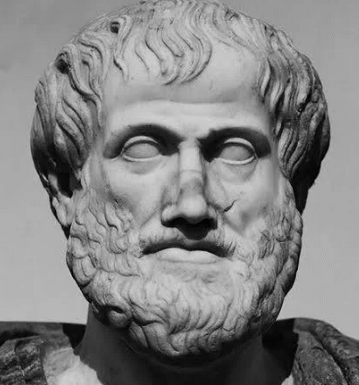
All things as subsist from nature appear to contain in themselves a principle of motion and permanency; some according to place, others according to increase and diminuation; and others according to change in quality.
▼
Source
source
Book II, Ch. I, p. 88.
7 months 1 week ago
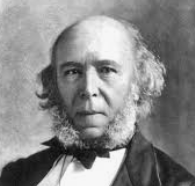
How often misused words generate misleading thoughts!
▼
Source
source
Ch. 8, Humanity
4 months 1 week ago
The intelligence required for the solving of social problems is not a thing of the mere intellect. It must be animated with the religious sentiment and warm with sympathy for human suffering. It must stretch out beyond self-interest, whether it be the self-interest of the few or of the many. It must seek justice. For at the bottom of every social problem we will find a social wrong.
▼
Source
source
Ch. 1 : The Increasing Importance of Social Questions
7 months 3 weeks ago
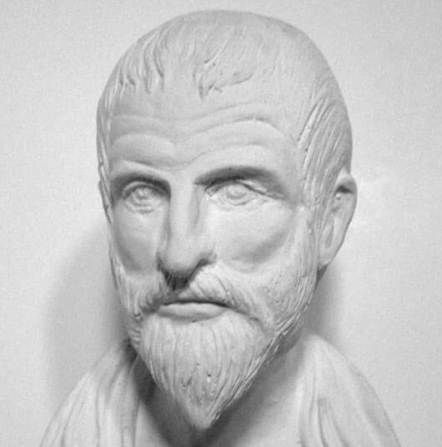
The mathematician speculates the causes of a certain sensible effect, without considering its actual existence; for the contemplation of universals excludes the knowledge of particulars; and he whose intellectual eye is fixed on that which is general and comprehensive, will think but little of that which is sensible and singular.
▼
Source
source
A Dissertation on the Doctrine of Ideas, &c.
8 months 2 weeks ago
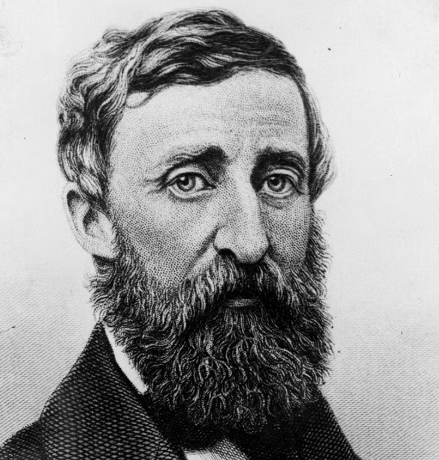
When the husk gets separated from the kernel, almost all men run after the husk and pay their respects to that. It is only the husk of Christianity that is so bruited and wide spread in this world; the kernel is still the very least and rarest of all things. There is not a single church founded on it.
8 months 2 weeks ago
I hardly know an intellectual man, even, who is so broad and truly liberal that you can think aloud in his society. Most with whom you endeavor to talk soon come to a stand against some institution in which they appear to hold stock, - that is, some particular, not universal, way of viewing things.
▼
Source
source
p. 490

6 months 2 weeks ago
I do not define time, space, place, and motion, as being well known to all. Only I must observe, that the common people conceive those quantities under no other notions but from the relation they bear to sensible objects. And thence arise certain prejudices, for the removing of which it will be convenient to distinguish them into absolute and relative, true and apparent, mathematical and common.
▼
Source
source
Definitions - Scholium
4 months 1 week ago
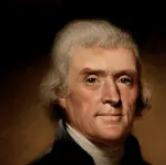
I had rather be shut up in a very modest cottage with my books, my family and a few old friends, dining on simple bacon, and letting the world roll on as it liked, than to occupy the most splendid post, which any human power can give.
▼
Source
source
Letter to Alexander Donald
6 months 1 week ago
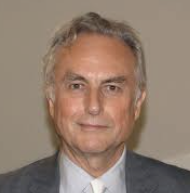
I don't believe you until you tell me, do you really believe, for example, if they say they are Catholic, "Do you really believe that when a priest blesses a wafer, it turns into the body of Christ? Are you seriously telling me you believe that? Are you seriously saying that wine turns into blood?" Mock them. Ridicule them. In public. Don't fall for the convention that we're all too polite to talk about religion. Religion is not off the table. Religion is not off limits. Religion makes specific claims about the universe which need to be substantiated and need to be challenged and, if necessary, need to be ridiculed with contempt.
▼
Source
source
Reason Rally, National Mall, Washington, DC, 2012-03-24 Richard Dawkins and his Foundation at the Reason Rally, YouTube, 7 April 2012
5 months 4 days ago
To a shower of gold most things are penetrable.
▼
Source
source
Pt. I, Bk. III, ch. 7.
8 months 1 week ago
Friendship, I have said, is born at the moment when one man says to another "What! You too? I thought that no one but myself..."
9 months 2 weeks ago
Be attentive therefore, according to the instruction of the Gospel, to learn obedience from the lily and the bird. Be not affrighted, do no despair, when thou comparest thy life with these teachers. There is nothing to despair about, for indeed thou shalt learn from them; and the Gospel first comforts thee by telling thee that God is the God of patience, and then it adds: 'Thou shalt learn from the lilies and the birds, learn to be absolutely obedient like the lilies and the birds, learn not to serve two masters; for no man can serve two masters, he must either ... or.
8 months 2 weeks ago
Physics is mathematical not because we know so much about the physical world, but because we know so little: it is only its mathematical properties that we can discover.
▼
Source
source
An Outline of Philosophy Ch.15 The Nature of our Knowledge of Physics, 1927
6 months 1 week ago
There is a real, living unity in our time, as in any other, but it lies submerged under a superficial hubbub of sensation.
▼
Source
source
Letter to Harold Adam Innis (14 March 1951), published in Letters of Marshall McLuhan (1987), p. 223
6 months 1 week ago
Necessity gives the law without itself acknowledging one.
▼
Source
source
Maxim 444
6 months 1 week ago
There are circumstances in which even the least energetic of mankind learn to behave with vigour and decision; and the most cautious forget their prudence and embrace foolhardy resolutions.
▼
Source
source
The Rajah's Diamond, Story of the Bandbox.
6 months 1 week ago
Receive an injury rather than do one.
▼
Source
source
Maxim 5
7 months 2 weeks ago
He was one of those who wished for the abolition of the Slave Trade. He thought it ought to be abolished on principles of humanity and justice.
▼
Source
source
Speech in the House of Commons (9 May 1788), quoted in The Parliamentary History of England, From the Earliest Period to the Year 1803, Vol. XXVII (1816), column 502
6 months 1 week ago
The inner trip is not the sole prerogative of the LSD traveler; it's the universal experience of TV watchers.

6 months 1 week ago
Literacy, the visual technology, dissolved the tribal magic by means of its stress on fragmentation and specialization and created the individual.

8 months 3 weeks ago
Therefore death is nothing to us, it matters not one jot, since the nature of the mind is understood to be mortal.
▼
Source
source
Book III, lines 830-831 (tr. Rouse)
8 months 1 week ago
Friendship is the greatest of worldly goods. Certainly to me it is the chief happiness of life. If I had to give a piece of advice to a young man about a place to live, I think I shd. say, 'sacrifice almost everything to live where you can be near your friends.
▼
Source
source
Letter to Arthur Greeves (29 December 1935) - in They Stand Together: The Letters of C. S. Lewis to Arthur Greeves (1914-1963) (1979), p. 477
4 months 4 weeks ago
A good judge condemns wrongful acts, but does not hate them.
▼
Source
source
De Ira (On Anger): Book 1, cap. 16, line 6.
7 months 2 weeks ago
Early and provident fear is the mother of safety.
▼
Source
source
Speech on the Petition of the Unitarians (11 May 1792), volume vii, p. 50
6 months 3 weeks ago
The human tendency to regard little things as important has produced very many great things. G 46 Variant translation: The inclination of people to consider small things as important has produced many great things.
9 months 1 week ago
To succeed, planning alone is insufficient. One must improvise as well.
CivilSimian.com created by AxiomaticPanic, CivilSimian, Kalokagathia