


6 months 4 days ago
French schoolchildren can be proud to become citizens of the country that gave the world the Declaration of the Rights of Man; need they be told that it was disregarded a few years after it inspired the revolution in Haiti, whose leader, Toussaint Louverture, was consigned to death in a French prison?
6 months 1 week ago
I speak as a biologist. There aren't many absolutely clear distinctions in biology. Mostly what we have is a spectrum. But the male-female divide is exceptional in biology. It really is a true binary.
▼
Source
source
Interviewed by Judith Woods, as cited in "Richard Dawkins interview: 'I shall continue to use every one of the prohibited words'", The Telegraph
7 months 1 week ago
That fear which gives birth to thoughts, and the fear of thoughts...
7 months 1 week ago
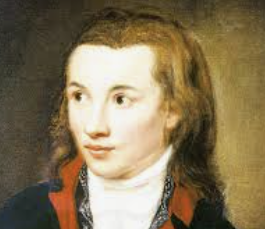
Most observers of the French Revolution, especially the clever and noble ones, have explained it as a life-threatening and contagious illness. They have remained standing with the symptoms and have interpreted these in manifold and contrary ways. Some have regarded it as a merely local ill. The most ingenious opponents have pressed for castration. They well noticed that this alleged illness is nothing other than the crisis of beginning puberty.
▼
Source
source
Fragment No. 105
5 months 3 weeks ago
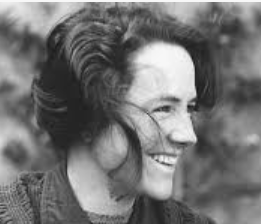
So dazzling was the spread of constellations that it had the impact of a vision, of some hidden insight. I drove home saying to myself: The dead, too, are like this, blazing within us - invisibly.
▼
Source
source
As quoted in No More Words : A Journal of My Mother, Anne Morrow Lindbergh (2001) by Reeve Lindbergh, p. 41
8 months 3 weeks ago
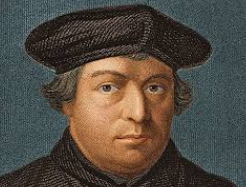
To turn one's eyes away from Jesus means to turn them to the Law.
▼
Source
source
Chapter 2
8 months 2 weeks ago
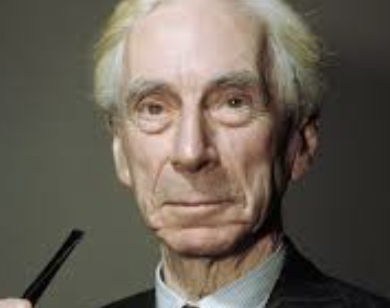
If the Russians still adhered to the Greek Orthodox religion, if they had instituted parliamentary government, and if they had a completely free press which daily vituperated us, then - provided they still had armed forces as powerful as they have now - we should still hate them if they gave us ground for thinking them hostile.

6 months 5 days ago
While the intellectual space does contain universal ideas, definitions, those definitions are detailed a posteriori. Truth corresponds with reality at a minimum.
8 months 2 weeks ago
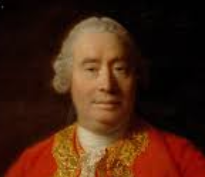
Necessity may be defined in two ways, conformably to the two definitions of cause, of which it makes an essential part. It consists either in the constant conjunction of like objects, or in the inference of the understating from one object to another.
▼
Source
source
§ 8.27
4 months 1 week ago
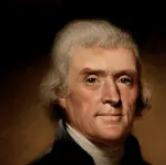
The equal rights of man, and the happiness of every individual, are now acknowledged to be the only legitimate objects of government. Modern times have the signal advantage, too, of having discovered the only device by which these rights can be secured, to wit: government by the people, acting not in person, but by representatives chosen by themselves, that is to say; by every man of ripe years and sane mind, who either contributes by his purse or person to the support of his country.
6 months 2 weeks ago
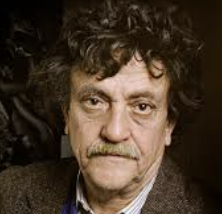
People hate it when they're tickled because laughter is not pleasant, if it goes on too long. I think it's a desperate sort of convulsion in desperate circumstances, which helps a little.
▼
Source
source
Interview Public Radio International
7 months 3 weeks ago
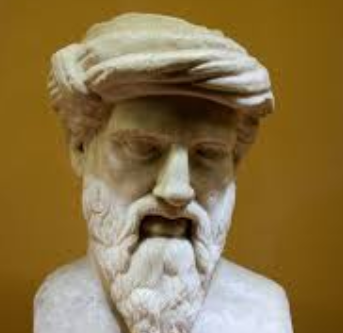
Remind yourself that all men assert that wisdom is the greatest good, but that there are few who strenuously seek out that greatest good.
▼
Source
source
Pythagorean Ethical Sentences From Stobæus
6 months 1 week ago
Newton, and 'proper scientific method' after him, conducted attention to 'continuous description' of experimental phenomena instead of to causes.
▼
Source
source
p. 50
9 months 2 weeks ago
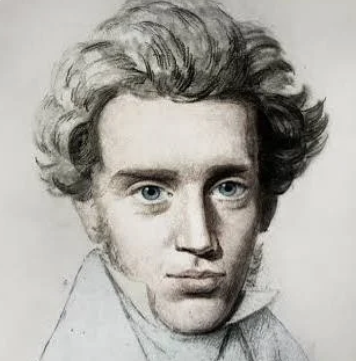
It will be easy for us once we receive the ball of yarn from Ariadne (love) and then go through all the mazes of the labyrinth (life) and kill the monster. But how many are there who plunge into life (the labyrinth) without taking that precaution?
6 months 3 weeks ago
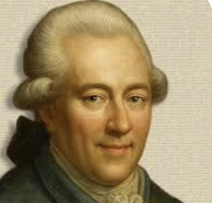
If this is philosophy it is at any rate a philosophy that is not in its right mind.
▼
Source
source
L 23
8 months 2 weeks ago
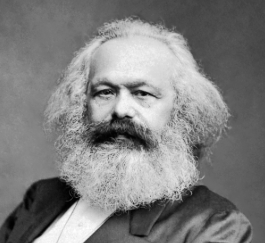
Thus, while the refugee serfs only wished to be free to develop and assert those conditions of existence which were already there, and hence, in the end, only arrived at free labour, the proletarians, if they are to assert themselves as individuals, will have to abolish the very condition of their existence hitherto (which has, moreover, been that of all society up to the present), namely, labour. Thus they find themselves directly opposed to the form in which, hitherto, the individuals, of which society consists, have given themselves collective expression, that is, the State. In order, therefore, to assert themselves as individuals, they must overthrow the State.
▼
Source
source
"Communism. The Production of the Form of Intercourse Itself", The Marx-Engels Reader
7 months 1 week ago
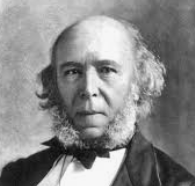
Time: That which man is always trying to kill, but which ends in killing him.
▼
Source
source
Definitions, as quoted in The Dictionary of Essential Quotations (1983) by Kevin Goldstein-Jackson, p. 154
5 months 4 days ago
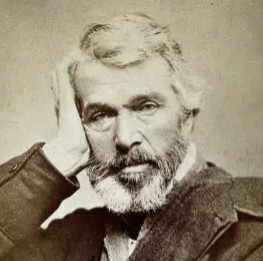
Is it not a right glorious thing, and set of things, this that Shakspeare has brought us? For myself, I feel that there is actually a kind of sacredness in the fact of such a man being sent into this Earth.
8 months 1 week ago
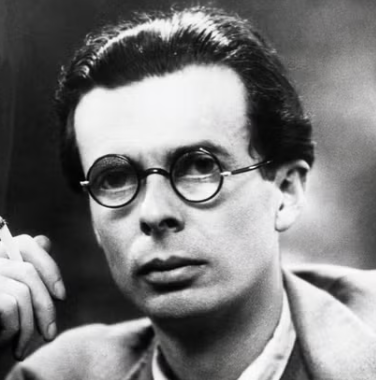
Societies are composed of individuals and are good only insofar as they help individuals to realize their potentialities and to lead a happy and creative life.
▼
Source
source
Chapter 3 (p. 20)
8 months 2 weeks ago
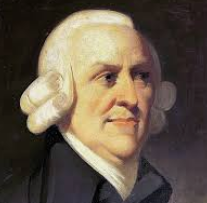
By nature a philosopher is not in genius and disposition half so different from a street porter, as a mastiff is from a greyhound.
▼
Source
source
Chapter II, p. 17.
7 months 6 days ago
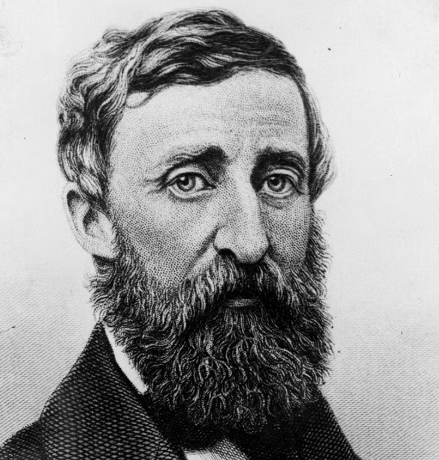
Loren von Stein thus turned the dialectic into an ensemble of objective laws calling for social reform as the adequate solution of all contradictions and neutralized the critical elements of the dialectic.
▼
Source
source
P. 388

8 months 2 weeks ago
The eye may see for the hand, but not for the mind.
7 months 2 weeks ago
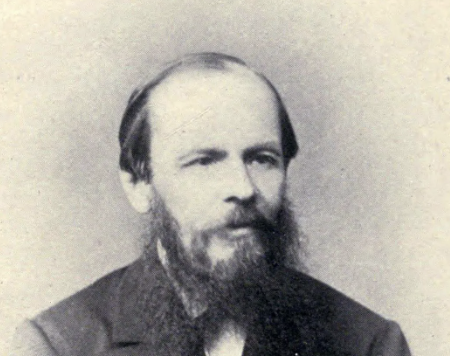
I could never stand more than three months of dreaming at a time without feeling an irresistible desire to plunge into society. To plunge into society meant to visit my superior, Anton Antonich Syetochkin. He was the only permanent acquaintance I have had in my life, and I even wonder at the fact myself now. But I even went to see him only when that phase came over me, and when my dreams had reached such a point of bliss that it became essential to embrace my fellows and all mankind immediately. And for that purpose I needed at least one human being at hand who actually existed. I had to call on Anton Antonich, however, on Tuesday - his at-home day; so I always had to adjust my passionate desire to embrace humanity so that it might fall on a Tuesday.
▼
Source
source
Part 2, Chapter 2
6 months 1 week ago
It is as natural and as right for a young man to be imprudent and exaggerated, to live in swoops and circles, and beat about his cage like any other wild thing newly captured, as it is for old men to turn gray, or mothers to love their offspring, or heroes to die for something worthier than their lives.
▼
Source
source
Crabbed Age and Youth.
9 months 2 weeks ago
Irony is a qualification of subjectivity.

8 months 4 weeks ago
If thou shouldst say, 'It is enough, I have reached perfection,' all is lost. For it is the function of perfection to make one know one's imperfection.
▼
Source
source
Quoted by Aldous Huxley, in The Perennial Philosophy (1945)
4 months 4 weeks ago
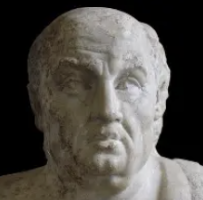
The wise man is joyful, happy and calm, unshaken, he lives on a plane with the gods.
4 months 4 weeks ago
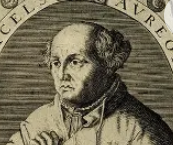
God, our Father, has given us the life and the art of healing to protect and maintain it.
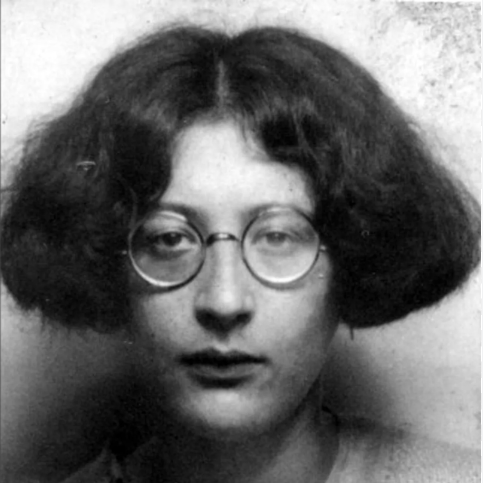
6 months 4 weeks ago
Capitalism has brought about the emancipation of collective humanity with respect to nature. But this collective humanity has itself taken on with respect to the individual the oppressive function formerly exercised by nature.
▼
Source
source
p. 140
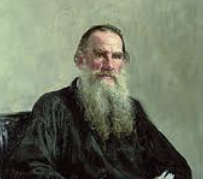
6 months 1 week ago
The good is the everlasting, the pinnacle of our life. ... life is striving towards the good, toward God. The good is the most basic idea ... an idea not definable by reason ... yet is the postulate from which all else follows. But the beautiful ... is just that which is pleasing. The idea of beauty is not an alignment to the good, but is its opposite, because for most part, the good aids in our victory over our predilections, while beauty is the motive of our predilections. The more we succumb to beauty, the further we are displaced from the good. ...the usual response is that there exists a moral and spiritual beauty ... we mean simply the good. Spiritual beauty or the good, generally not only does not coincide with the typical meaning of beauty, it is its opposite.
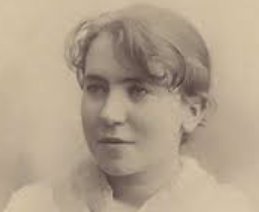
6 months 3 weeks ago
It must be borne in mind that it is through the channel of the child that the development of the mature man must go, and that the present ideas of the educating or training of the latter in the school and the family - even the family of the liberal or radical - are such as to stifle the natural growth of the child. Every institution of our day, the family, the State, our moral codes, sees in every strong, beautiful, uncompromising personality a deadly enemy; therefore every effort is being made to cramp human emotion and originality of thought in the individual into a straight-jacket from its earliest infancy; or to shape every human being according to one pattern; not into a well-rounded individuality, but into a patient work slave, professional automaton, tax-paying citizen, or righteous moralist.
4 months 3 weeks ago
Ethics, too, are nothing but reverence for life. That is what gives me the fundamental principle of morality, namely, that good consists in maintaining, promoting, and enhancing life, and that destroying, injuring, and limiting life are evil.
8 months 3 weeks ago
Knowledge, that tendeth but to satisfaction, is but as a courtesan, which is for pleasure, and not for fruit or generation.
▼
Source
source
Valerius Terminus: Of the Interpretation of Nature (ca. 1603), in Works, Vol. 1, p. 83; The Works of Francis Bacon (1819), Vol. 2, p. 133

8 months 2 weeks ago
We speak not strictly and philosophically when we talk of the combat of passion and of reason. Reason is, and ought only to be the slave of the passions, and can never pretend to any other office than to serve and obey them.
▼
Source
source
Part 3, Section 3
8 months 1 week ago
The sweetest thing in all my life has been the longing - to reach the Mountain, to find the place where all the beauty came from - my country, the place where I ought to have been born. Do you think it all meant nothing, all the longing? The longing for home? For indeed it now feels not like going, but like going back.
▼
Source
source
Psyche
8 months 4 days ago
Rather, we heirs of Enlightenment think of enemies of liberal democracy like Nietzsche or Loyola as, to use Rawls's word, "mad." We do so because there is no way to see them as fellow citizens of our constitutional democracy, people whose life plans might, given ingenuity and good will, be fitted in with those of other citizens. They are crazy because the limits of sanity are set by what we can take seriously. This, in turn, is determined by our upbringing, our historical situation.
9 months 1 week ago
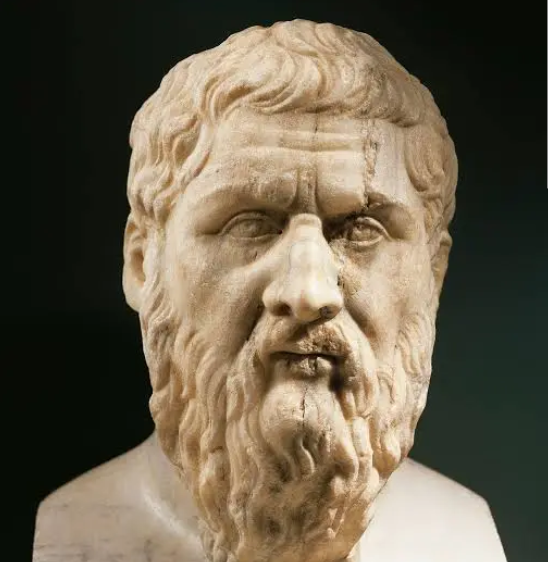
The whole business of the kingly weaving is comprised in this and this alone: in never allowing the self-restrained characters to be separated from the courageous, but in weaving them together by common beliefs and honors and dishonors and opinions and interchanges of pledges, thus making of them a smooth and, as we say, well-woven fabric, and then entrusting to them in common forever the offices of the state.
6 months 3 weeks ago
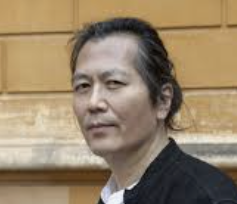
Today, to live means merely to produce.

5 months 2 weeks ago
The basis of science is the empirical method, which uses the senses to build up a picture of the world; but science tells us that our senses have evolved to help us get by, not to show us the world as it is. Science is only a systematic examination of our impressions, and in the end all each of us has left are our own sensations ... The end-result of the empirical method, then, is that each individual is left alone with their own experiences. We can escape this solitude, Balfour suggested, only if we accept that there is a divine mind.
▼
Source
source
Cross-correspondences (p. 69-70)
6 months 3 weeks ago
If an angel were ever to tell us anything of his philosophy I believe many propositions would sound like 2 times 2 equals 13.
▼
Source
source
B 44
4 months 3 days ago
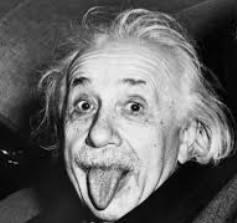
The really good music, whether of the East or of the West, cannot be analyzed.

5 months 4 days ago
"Normal science" means research firmly based upon one or more past scientific achievements, achievements that some particular scientific community acknowledges for a time as supplying the foundation for its further practice.
▼
Source
source
p. 10
9 months 2 weeks ago
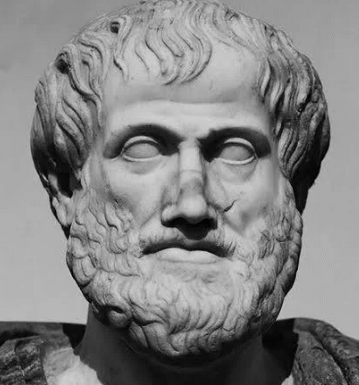
The truly good and wise man will bear all kinds of fortune in a seemly way, and will always act in the noblest manner that the circumstances allow.
CivilSimian.com created by AxiomaticPanic, CivilSimian, Kalokagathia