Not totally a fan...but he's right about some things.....


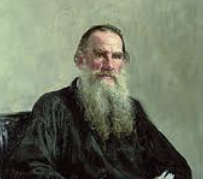
While imprisoned in the shed Pierre had learned not with his intellect but with his whole being, by life itself, that man is created for happiness, that happiness is within him, in the satisfaction of simple human needs, and that all unhappiness arises not from privation but from superfluity. And now during these last three weeks of the march he had learned still another new, consolatory truth- that nothing in this world is terrible. He had learned that as there is no condition in which man can be happy and entirely free, so there is no condition in which he need be unhappy and lack freedom. He learned that suffering and freedom have their limits and that those limits are very near together....

Wait for the appointed hour.
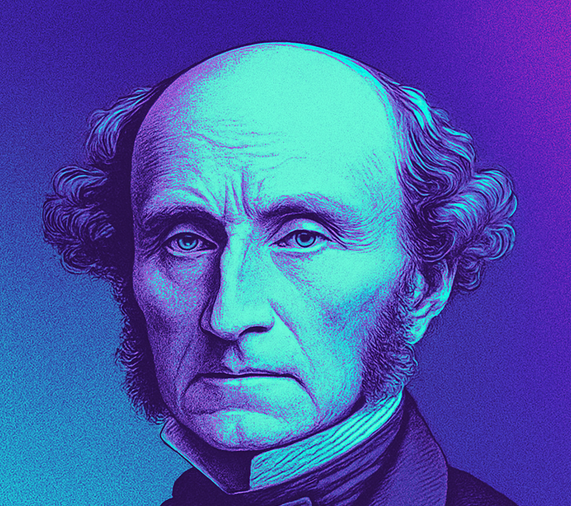
The world would be astonished if it knew how great a proportion of its brightest ornaments-of those most distinguished even in popular estimation for wisdom and virtue-are complete sceptics in religion...
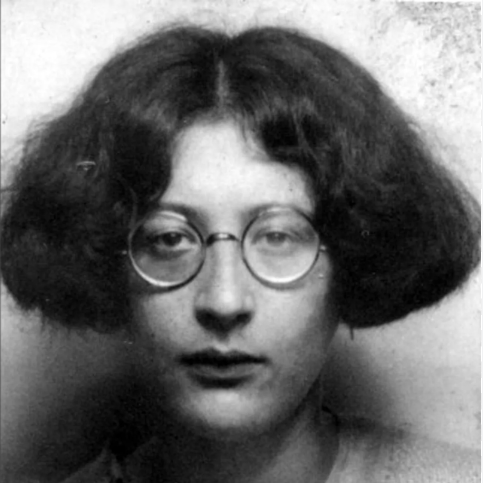
We should desire neither the immortality nor the death of any human being, whoever he may be, with whom we have to do.
So the majority of the highest classes of that age, even the popes and ecclesiastics, really believed in nothing at all. They did not believe in the Church doctrine, for they saw its insolvency; but neither could they follow Francis of Assisi, Kelchitsky, and most of the sectarians in acknowledging the moral, social teaching of Christ, for that undermined their social position. And so these people remained without any religious view of life. And, having none, they could have no standard with which to estimate what was good and what was bad art, but that of personal enjoyment.
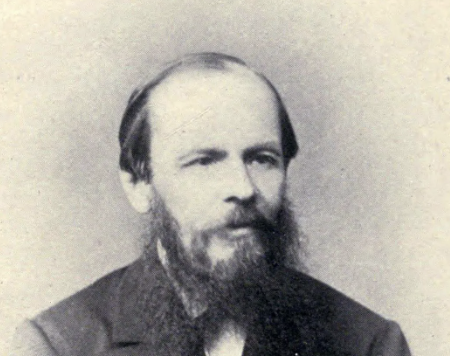
I am a sick man... I am a wicked man. An unattractive man.
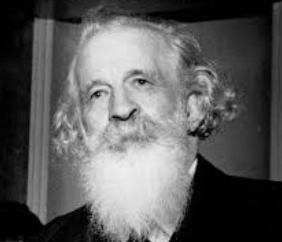
A man is a man to the extent that he is a superman. A man should be defined by the sum of those tendencies which impel him to surpass the human condition.
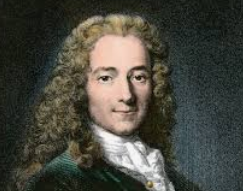
I am very fond of truth, but not at all of martyrdom.

Get hold of yourself, be confident once more, don't forget that it is not given to just anyone to have idolized discouragement without succumbing to it.
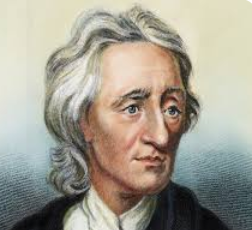
No man's knowledge here can go beyond his experience.
If I were asked to name the chief benefit of the house, I should say: the house shelters day-dreaming, the house protects the dreamer, the house allows one to dream in peace.
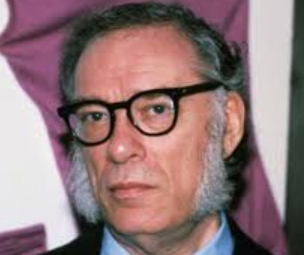
Well, then, arrest him. You can accuse him of something or other afterward.
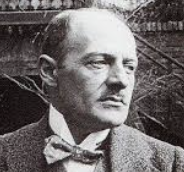
In ressentiment morality, love for the "small," the "poor," the "weak," and the "oppressed" is really disguised hatred, repressed envy, an impulse to detract, etc., directed against the opposite phenomena: "wealth," "strength," "power," "largesse." When hatred does not dare to come out into the open, it can be easily expressed in the form of ostensible love-love for something which has features that are the opposite of those of the hated object. This can happen in such a way that the hatred remains secret. When we hear that falsely pious, unctuous tone (it is the tone of a certain "socially-minded" type of priest), sermonizing that love for the "small" is our first duty, love for the "humble" inspirit, since God gives "grace" to them, then it is often only hatred posing as Christian love.
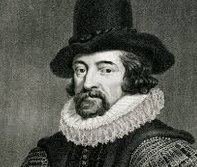
Some books are to be tasted, others to be swallowed, and some few to be chewed and digested; that is, some books are to be read only in parts; others to be read, but not curiously; and some few to be read wholly, and with diligence and attention.
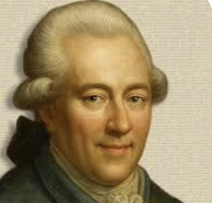
The noble simplicity in the works of nature only too often originates in the noble shortsightedness of him who observes it.
It seems to me that the current political task in a society like ours is to criticize the working of institutions that are apparently the most neutral and independent, to criticize these institutions and attack them in such a way that the political violence that exercises itself obscurely through them becomes manifest, so that one can fight against them.
In a well worn metaphor, a parallel is drawn between the life of man and the metamorphosis of the caterpillar into the butterfly; but the comparison may be more just as well as more novel, if for its former term we take the mental progress of the race. History shows that the human mind, fed by constant accessions of knowledge, periodically grows too large for its theoretical coverings, and bursts them asunder to appear in new habiliments, as the feeding and growing grub, at intervals, casts its too narrow skin and assumes another, itself but temporary. Truly the imago state of Man seems to be terribly distant, but every moult is a step gained, and of such there have been many.
You find as you look around the world that every single bit of progress of humane feeling, every improvement in the criminal law, every step toward the diminution of war, every step toward better treatment of the colored races, or even mitigation of slavery, every moral progress that there has been in the world, has been consistently opposed by the organized churches of the world. I say quite deliberately that the Christian religion, as organized in its churches, has been and still is the principal enemy of moral progress in the world.
The seat of faith, however, is not consciousness but spontaneous religious experience, which brings the individual's faith into immediate relation with God. Here we must ask: Have I any religious experience and immediate relation to God, and hence that certainty which will keep me, as an individual, from dissolving in the crowd?
Good health is the best weapon against religion. Healthy bodies and healthy minds have never been shaken by religious fears.
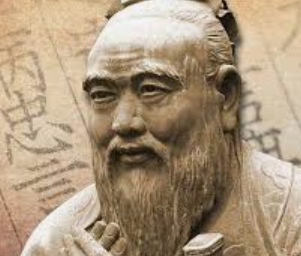
The Superior Man is all-embracing and not partial. The inferior man is partial and not all-embracing.
I've fought with men and gods, I've weighed them well and foundthe sea more firm than earth, the air more firm than sea,and man's impalpable soul still yet more firm than air!
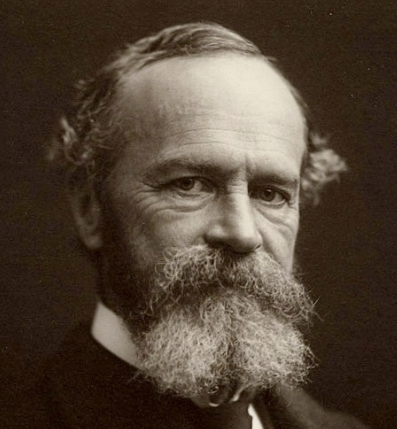
Every way of classifying a thing is but a way of handling it for some particular purpose.
Justice, however, never was in reality administered gratis in any country. Lawyers and attornies, at least, must always be paid by the parties; and, if they were not, they would perform their duty still worse than they actually perform it.

It is necessary to have regard to the person whom we wish to persuade, of whom we must know the mind and the heart, what principles he acknowledges, what things he loves; and then observe in the thing in question what affinity it has with the acknowledged principles, or with the objects so delightful by the pleasure which they give him.
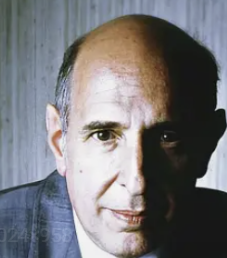
Did Romeo and Juliet have a ... "relationship"? The term "relationship" ... betokens a chaste egalitarianism leveling different ranks and degrees of attachment.
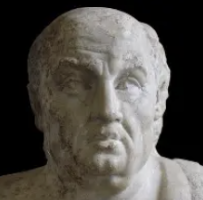
A thatched roof once covered free men; under marble and gold dwells slavery.
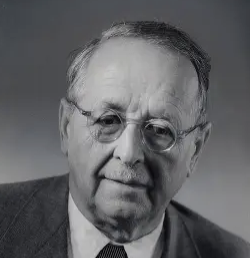
The introduction of numbers as coordinates by reference to the particular division scheme of the open one dimensional continuum is an act of violence whose only practical vindication is the special calculatory manageability of the ordinary number continuum with its four basic operations. The topological skeleton determines the connectivity of the manifold in the large.
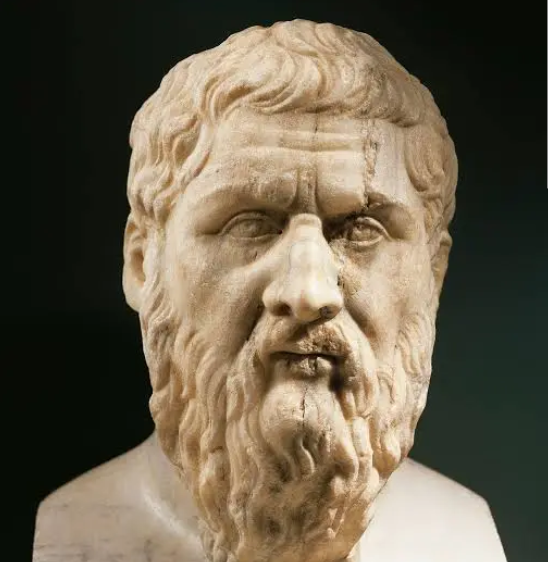
Socrates: Dear Pan and all the other Gods of this place, grant that I may be beautiful inside. Let all my external possessions be in friendly harmony with what is within. May I consider the wise man rich. As for gold, let me have as much as a moderate man could bear and carry with him. Do we need anything more, Phaedrus? For me that prayer is enough. Phaedrus: Let me also share in this prayer; for friends have all things in common.
Try to be free: you will die of hunger.
If belief consists in an emotional reaction of the entire man on an object, how can we believe at will? We cannot control our emotions.... But gradually our will can lead us to the same results by a very simple method: we need only in cold blood act as if the thing in question were real, and keep acting as if it were real, and it will infallibly end by growing into such a connection with our life that it will become real. It will become so knit with habit and emotion that our interests in it will be those which characterize belief.
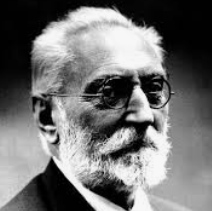
Uncertainty, doubt, perpetual wrestling with the mystery of our final destiny, mental despair, and the lack of any solid and stable foundation, may be the basis of an ethic.

When we are lulled into somnolence by lack of challenge every molehill tends to become a mountain, every minor inconvenience an intolerable imposition. For a self-chosen reality tends to become a prison. The factors that protect and insulate civilized man can easily end by suffocating him unless he possesses a high degree of self-discipline, the 'highly developed vital sense' that Shaw speaks of. And since clever and sensitive people are inclined to lack self-discipline, a high degree of culture usually involves a high degree of pessimism. This is what has happened to Western civilisation over the past two centuries. It explains why so many distinguished artists, writers and musicians have taken such a negative view of the human situation.
How much good it would do if one could exterminate the human race.
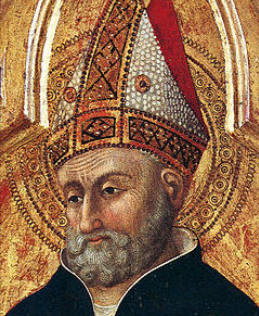
The philosophers who wished us to have the gods for our friends rank the friendship of the holy angels in the fourth circle of society, advancing now from the three circles of society on earth to the universe, and embracing heaven itself. And in this friendship we have indeed no fear that the angels will grieve us by their death or deterioration. But as we cannot mingle with them as familiarly as with men (which itself is one of the grievances of this life), and as Satan, as we read, sometimes transforms himself into an angel of light, to tempt those whom it is necessary to discipline, or just to deceive, there is great need of God's mercy to preserve us from making friends of demons in disguise, while we fancy we have good angels for our friends; for the astuteness and deceitfulness of these wicked spirits is equalled by their hurtfulness.
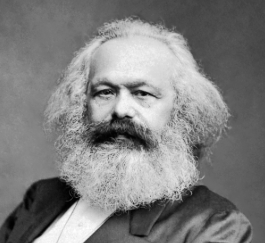
Capital is money: Capital is commodities. For the movement, in the course of which it adds surplus-value, is its own movement, its expansion, therefore, is automatic expansion. Because it is value, it has acquired the occult quality of being able to add value to itself. It brings forth living offspring, or, at the least, lays golden eggs.
Equality, proclaimed in 1793, has been one of the greatest conquests of the French Revolution. Despite all the reactions which have arrived since, that great principle has triumphed in the political economy of Europe. In the most advanced countries, it is called the equality of politic rights; in the other countries, civil equality - equality before the law. No country in Europe would dare to openly proclaim today the principle of political inequality. But the history of the revolution itself and that of the seventy-five years that have passed since, we prove that political equality without economic equality is a lie. You would proclaim in vain the equality of political rights, as long as society remains split by its economic organization into socially different layers - that equality will be nothing but a fiction.
I may become a poor man; I shall then be one among many. I may be exiled; I shall then regard myself as born in the place to which I shall be sent. They may put me in chains. What then? Am I free from bonds now? Behold this clogging burden of a body, to which nature has fettered me! "I shall die," you say; you mean to say "I shall cease to run the risk of sickness; I shall cease to run the risk of imprisonment; I shall cease to run the risk of death."
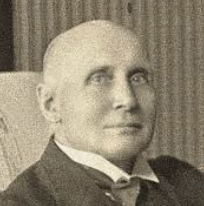
A race preserves its vigour so long as it harbours a real contrast between what has been and what may be, and so long as it is nerved by the vigour to adventure beyond the safeties of the past. Without adventure, civilization is in full decay.
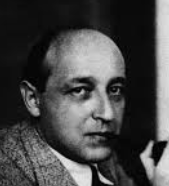
We are faced with the curiously appalling trend of modern thought, in which the absolute which was once a means of entering into communion with the divine, has now become an instrument used by those who profit from it, to distort, pervert, and conceal the meaning of the present.
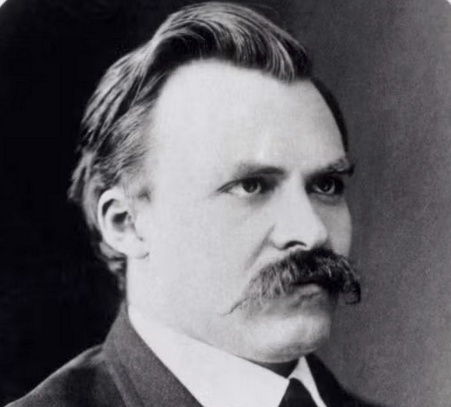

Today those who peer into the future want only relief from anxiety. Unable to face the prospect that the cycles of war will continue, they are desperate to find a pattern of improvement in history. It is only natural that believers in reason, lacking any deeper faith and too feeble to tolerate doubt, should turn to the sorcery of numbers. Happily there are some who are ready to assist them. Just as the Elizabethan magus transcribed tables shown to him by angels, the modern scientific scryer deciphers numerical auguries of angels hidden in ourselves.
I recognize the necessity of animal experiments with my mind but not with my heart.
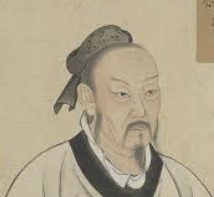
The gentleman knows that whatever is imperfect and unrefined does not deserve praise. ... He makes his eyes not want to see what is not right, makes his ears not want to hear what is not right, makes his mouth not want to speak what is not right, and makes his heart not want to deliberate over what is not right. ... For this reason, power and profit cannot sway him, the masses cannot shift him, and nothing in the world can shake him.
Do not most of us resemble that old general of ninety who, having come upon some young officers debauching some girls, said to them angrily: "Gentlemen, is that the example I give you?" "Character"
CivilSimian.com created by AxiomaticPanic, CivilSimian, Kalokagathia