

7 months 1 week ago
Bach: a scale of tears upon which our desires for God ascend.
5 months ago
State and government are the social apparatus of violent coercion and repression. Such an apparatus, the police power, is indispensable in order to prevent anti-social individuals and bands from destroying social co-operation. Violent prevention and suppression of anti-social activities benefit the whole of society and each of its members. But violence and oppression are none the less evils and corrupt those in charge of their application. It is necessary to restrict the power of those in office lest they become absolute despots. Society cannot exist without an apparatus of violent coercion. But neither can it exist if the office holders are irresponsible tyrants free to inflict harm upon those they dislike.
8 months 2 weeks ago
Do not be too moral. You may cheat yourself out of much life so. Aim above morality. Be not simply good; be good for something.
▼
Source
source
Pearls of Thought (1881) p. 177
8 months 1 week ago
I have at last come to the end of the Faerie Queene: and though I say "at last", I almost wish he had lived to write six books more as he had hoped to do - so much have I enjoyed it.
▼
Source
source
On Edmund Spenser's long poem in a letter to Arthur Greeves (7 March 1916), published in The Collected Letters of C.S. Lewis
4 months 2 weeks ago
That one hundred and fifty lawyers should do business together ought not to be expected.
▼
Source
source
On the U.S. Congress, in his Autobiography, 6 January 1821

9 months 2 weeks ago
An old proverb fetched from the outward and visible world says: "Only the man that works gets the bread." Strangely enough this proverb does not aptly apply in that world to which it expressly belongs. For the outward world is subjected to the law of imperfection, and again and again the experience is repeated that he too who does not work gets the bread, and that he who sleeps gets it more abundantly than the man who works. In the outward world everything is made payable to the bearer, this world is in bondage to the law of indifference, and to him who has the ring, the spirit of the ring is obedient, whether he be Noureddin or Aladdin, and he who has the world's treasure, has it, however he got it.
6 months 2 weeks ago
One might think that it must be quite clear to people not deprived of reason, that violence breeds violence; that the only means of deliverance from violence lies in not taking part in it. This method, one would think, is quite obvious. It is evident that a great majority of men can be enslaved by a small minority only if the enslaved themselves take part in their own enslavement. If people are enslaved, it is only because they either fight violence with violence or participate in violence for their own personal profit. Those who neither struggle against violence nor take part in it can no more be enslaved than water can be cut. They can be robbed, prevented from moving about, wounded or killed, but they cannot be enslaved: that is, made to act against their own reasonable will.
▼
Source
source
The Meaning of the Russian Revolution
6 months 3 weeks ago
It is certainly not a matter of indifference whether I learn something without effort or finally arrive at it myself through my system of thought. In the latter case everything has roots, in the former it is merely superficial.
▼
Source
source
F154
8 months 2 weeks ago
The inclination to act as the laws command, a virtue, is a synthesis in which the law ... loses its universality and the subject its particularity; both lose their opposition, while in the Kantian conception of virtue this opposition remains, and the universal becomes the master and the particular the mastered.
7 months 2 weeks ago
The purpose of an encyclopedia is to collect knowledge disseminated around the globe; to set forth its general system to the men with whom we live, and transmit it to those who will come after us, so that the work of preceding centuries will not become useless to the centuries to come; and so that our offspring, becoming better instructed, will at the same time become more virtuous and happy, and that we should not die without having rendered a service to the human race in the future years to come.
▼
Source
source
Encyclopédie
8 months 2 weeks ago
Every natural fact is a symbol of some spiritual fact.
▼
Source
source
Language
7 months 5 days ago
The quality of the human that precludes identifying the individual with the class is 'metaphysical' and has no place in empiricist epistemology. The pigeon hole into which a man is shoved circumscribes his fate.
▼
Source
source
p. 23.
5 months 5 days ago
The uttered part of a man's life, let us always repeat, bears to the unuttered, unconscious part a small unknown proportion. He himself never knows it, much less do others.
4 months 4 days ago
Without disarmament there can be no lasting peace. On the contrary, the continuation of military armaments in their present extent will with certainty lead to new catastrophies...For the creation of this public opinion in favor of disarmament every person living shares the responsibility, through ever deed and every word.
6 months 2 weeks ago
People understand the meaning of eating lies in the nourishment of the body only when they cease to consider that the object of that activity is pleasure. ...People understand the meaning of art only when they cease to consider that the aim of that activity is beauty, i.e., pleasure.
8 months 2 weeks ago
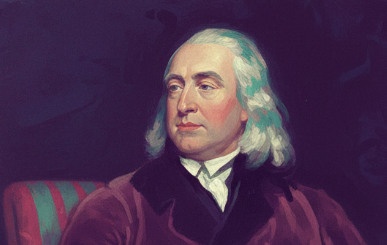
The principle of utility judges any action to be right by the tendency it appears to have to augment or diminish the happiness of the party whose interests are in question... if that party be the community the happiness of the community, if a particular individual, the happiness of that individual.
▼
Source
source
Introduction, 1789 edition
4 months 2 weeks ago
I said only one word, brought only one message: Love. Love - nothing else.
7 months 2 weeks ago
My Lords, to obtain empire is common; to govern it well has been rare indeed. To chastise the guilt of those who have been instruments of imperial sway over other nations by the high superintending justice of the sovereign state has not many striking examples among any people.
▼
Source
source
Speech in opening the impeachment of Warren Hastings (16 February 1788), quoted in The Works of the Right Honourable Edmund Burke, Volume the Ninth (1899), p. 398
6 months 3 weeks ago
Asceticism is the trifling of an enthusiast with his power, a puerile coquetting with his selfishness or his vanity, in the absence of any sufficiently great object to employ the first or overcome the last.
▼
Source
source
Letter (5 September 1857), quoted in The Life of Florence Nightingale (1913) by Edward Tyas Cook, p. 369
8 months 2 weeks ago
We hold, that the moral obligation of providing for old age, helpless infancy, and poverty, is far superior to that of supplying the invented wants of courtly extravagance, ambition and intrigue.
▼
Source
source
Address and Declaration at a Select Meeting of the Friends of Universal Peace and Liberty (August 20, 1791) p. 3
7 months 2 weeks ago
The first and the simplest emotion which we discover in the human mind is Curiosity.
▼
Source
source
Part I Section I
8 months 3 weeks ago
Of the truths within our reach... the mind and the heart are as doors by which they are received into the soul, but... few enter by the mind, whilst they are brought in crowds by the rash caprices of the will, without the council of reason.
9 months 1 week ago
Happiness implied a choice, and within that choice a concerted will, a lucid desire.
5 months 5 days ago
No man who has once heartily and wholly laughed can be altogether irreclaimably bad.
▼
Source
source
Bk. I, ch. 4.
6 months 4 weeks ago
In a certain sense, everything is everywhere at all times. For every location involves an aspect of itself in every other location. Thus every spatio-temporal standpoint mirrors the world.
▼
Source
source
Ch. 5: "The Romantic Reaction", p. 128
8 months 3 weeks ago
Tis a good word and a profitable desire, but withal absurd; for to make the handle bigger than the hand, the cubic longer than the arm, and to hope to stride further than our legs can reach, is both impossible and monstrous; or that man should rise above himself and humanity; for he cannot see but with his eyes, nor seize but with his hold. He shall be exalted, if God will lend him an extraordinary hand; he shall exalt himself, by abandoning and renouncing his own proper means, and by suffering himself to be raised and elevated by means purely celestial. It belongs to our Christian faith, and not to the stoical virtue, to pretend to that divine and miraculous metamorphosis.
▼
Source
source
Ch. 12
8 months 4 weeks ago
Any one thing in the creation is sufficient to demonstrate a Providence to an humble and grateful mind.
▼
Source
source
Book I, ch. 16,7.
7 months 1 week ago
Because the peculiarity of man is that his machinery for reaction on external things has involved an imaginative transcript of these things, which is preserved and suspended in his fancy; and the interest and beauty of this inward landscape, rather than any fortunes that may await his body in the outer world, constitute his proper happiness. By their mind, its scope, quality, and temper, we estimate men, for by the mind only do we exist as men, and are more than so many storage-batteries for material energy. Let us therefore be frankly human. Let us be content to live in the mind.
▼
Source
source
p. 64
7 months 1 week ago
The more intense a spiritual leader's appetite for power, the more he is concerned to limit it to others.
9 months 1 week ago
There is but one truly serious philosophical problem and that is suicide. Judging whether life is or is not worth living amounts to answering the fundamental question of philosophy. All the rest, whether or not the world has three dimensions, whether the mind has nine or twelve categories comes afterwards. These are games; one must first answer. And if it is true, as Nietzsche claims, that a philosopher, to deserve our respect, must preach by example, you can appreciate the importance of that reply, for it will precede the definitive act. These are facts the heart can feel; yet they call for careful study before they become clear to the intellect. If I ask myself how to judge that this question is more urgent than that, I reply that one judges by the actions it entails. I have never seen anyone die for the ontological argument.
▼
Source
source
Absurdity and Suicide
6 months 2 weeks ago
Seize the moments of happiness, love and be loved! That is the only reality in the world, all else is folly. It is the one thing we are interested in here.
▼
Source
source
Book IV, Ch. 11
6 months 2 weeks ago
The Quakers sent me books, from which I learnt how they had, years ago, established beyond doubt the duty for a Christian of fulfilling the command of non-resistance to evil by force, and had exposed the error of the Church's teaching in allowing war and capital punishment.
▼
Source
source
Chapter I, The Doctrine of Non-resistance to Evil by Force has been Professed by a Minority of Men from the Very Foundation of Christianity
8 months 3 weeks ago
We are, I know not how, double in ourselves, which is the cause that what we believe we do not believe, and cannot disengage ourselves from what we condemn.
▼
Source
source
Ch. 16. Of Glory, tr. Cotton, rev. W. Carew Hazlitt, 1877
8 months 4 days ago
Thought is something limitless and independent, and has been mixed with no thing but is alone by itself. ... What was mingled with it would have prevented it from having power over anything in the way in which it does. ... For it is the finest of all things and the purest.
▼
Source
source
Frag. B12, in Jonathan Barnes, Early Greek Philosophy (1984), p. 190.
4 months 2 weeks ago
Self-interest, or rather self-love, or egoism, has been more plausibly substituted as the basis of morality. But I consider our relations with others as constituting the boundaries of morality. With ourselves, we stand on the ground of identity, not of relation, which last, requiring two subjects, excludes self-love confined to a single one. To ourselves, in strict language, we can owe no duties, obligation requiring also two parties. Self-love, therefore, is no part of morality. Indeed, it is exactly its counterpart.
▼
Source
source
Letter to Thomas Law
8 months 2 weeks ago
I have no knowledge of myself as I am, but merely as I appear to myself.
▼
Source
source
B 158
9 months 2 weeks ago
Since my earliest childhood a barb of sorrow has lodged in my heart. As long as it stays I am ironic - if it is pulled out I shall die.
8 months 2 weeks ago
Reason has always existed, but not always in a rational form.
▼
Source
source
Letter from Marx to Arnold Ruge, September 1843
8 months 1 week ago
Dostoevsky once wrote: "If God did not exist, everything would be permitted"; and that, for existentialism, is the starting point. Everything is indeed permitted if God does not exist, and man is in consequence forlorn, for he cannot find anything to depend upon either within or outside himself. He discovers forthwith, that he is without excuse.
▼
Source
source
pp. 33-34
8 months 2 weeks ago
I do not, therefore, need any penetrating acuteness to see what I have to do in order that my volition be morally good. Inexperienced in the course of the world, incapable of being prepared for whatever might come to pass in it, I ask myself only: can you also will that your maxim become a universal law?
8 months 2 weeks ago
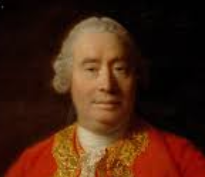
The heroes in paganism correspond exactly to the saints in popery, and holy dervises in MAHOMETANISM. The place of, HERCULES, THESEUS, HECTOR, ROMULUS, is now supplied by DOMINIC, FRANCIS, ANTHONY, and BENEDICT. Instead of the destruction of monsters, the subduing of tyrants, the defence of our native country; whippings and fastings, cowardice and humility, abject submission and slavish obedience, are become the means of obtaining celestial honours among mankind.
▼
Source
source
Part X - With regard to courage or abasement
8 months 3 weeks ago
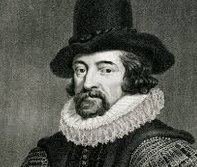
He that defers his charity 'till he is dead, is (if a man weighs it rightly) rather liberal of another man's, than of his own.
▼
Source
source
Ornamenta Rationalia, [§55]
8 months 3 weeks ago
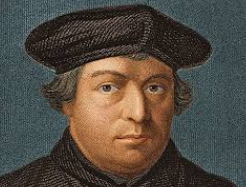
Certainly it is true that Christians, so far as they themselves are concerned, are subject neither to law nor sword, and have need of neither. But take heed and first fill the world with real Christians before you attempt to rule it in a Christian and evangelical manner. This you will never accomplish; for the world and the masses are and always will be un-Christian, even if they are all baptized and Christian in name.
▼
Source
source
p. 91
8 months 2 weeks ago
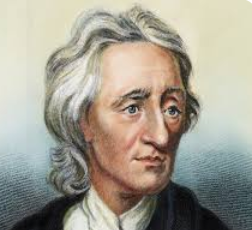
Wit and good nature meeting in a fair young lady as they do in you make the best resemblance of an angel that we know; and he that is blessed with the conversation and friendship of a person so extraordinary enjoys all that remains of paradise in this world.
▼
Source
source
Letter to Mary Clarke (7 May 1682), quoted in Maurice Cranston, John Locke: A Biography (1957; 1985), p. 221
7 months 1 day ago
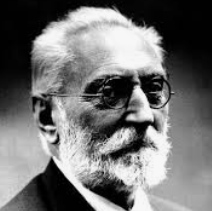
The most authentic Catholic ethic, monastic asceticism, is an ethic of eschatology, directed to the salvation of the individual soul rather than to the maintenance of society. And in the cult of virginity may there not perhaps be a certain obscure idea that to perpetuate ourselves in others hinders our own personal perpetuation?

8 months 4 weeks ago
What once sprung from earth sinks back into the earth.
▼
Source
source
Book II, lines 999-1000 (tr. Bailey)

4 months 2 weeks ago
Much of the obscurity of our effort so far against terrorism originates in the now official idea that the enemy is evil and that we are (therefore) good, which is the precise mirror image of the official idea of the terrorists.
CivilSimian.com created by AxiomaticPanic, CivilSimian, Kalokagathia