

4 months 4 weeks ago
What madness this is, to punish oneself because one is unfortunate, and not to lessen, but to increase one's ills! You ought to display, in this matter also, that decent behaviour and modesty which has characterised all your life: for there is such a thing as self-restraint in grief also.
4 months 3 weeks ago
It is especially important for Westerners to understand that high lamas, Zen masters, and Hindu gurus in the discipline of yoga are human beings, not supermen. We must not put them, as we have put Jesus Christ, on pedestals of reverence so high that we automatically exclude ourselves from their states of consciousness.
▼
Source
source
Foreward to The Secret Oral Teachings in the Tibetan Buddhist Sects (1964)], by Alexandra David Neel
7 months 1 week ago
An aphorism? Fire without flames. Understandable that no one tries to warm himself at it.
6 months 1 week ago
Radical changes of identity, happening suddenly and in very brief intervals of time, have proved more deadly and destructive of human values than wars fought with hardware weapons.
▼
Source
source
p. 97
6 months 2 weeks ago
But one no longer wonders when one realizes that in the higher classes there is an unerring instinct of what tends to maintain and of what tends to destroy the organization by virtue of which they enjoy their privileges. The fashionable lady had certainly not reasoned out that if there were no capitalists and no army to defend them, her husband would have no fortune, and she could not have her entertainments and her ball-dresses. And the artist certainly does not argue that he needs the capitalists and the troops to defend them, so that they may buy his pictures. But instinct, replacing reason in this instance, guides them unerringly. And it is precisely this instinct which leads all men, with few exceptions, to support all the religious, political, and economic institutions which are to their advantage.
▼
Source
source
Chapter XII, Conclusion-Repent Ye, for the Kingdom of Heaven is at Hand

4 months 4 weeks ago
Press on, therefore, as you have begun; perhaps you will be led to perfection, or to a point which you alone understand is still short of perfection.
9 months 2 weeks ago
Socrates did not stop with a philosophical consideration of mankind; he addressed himself to each one individually, wrested everything from him, and sent him away empty-handed.
8 months 1 week ago
A man will be imprisoned in a room with a door that's unlocked and opens inwards; as long as it does not occur to him to pull rather than push it.
▼
Source
source
p. 42e
8 months 2 weeks ago
Mathematics takes us still further from what is human, into the region of absolute necessity, to which not only the world, but every possible world, must conform.
7 months 1 week ago
Big industry has brought all the people of the Earth into contact with each other, has merged all local markets into one world market, has spread civilization and progress everywhere and has thus ensured that whatever happens in civilized countries will have repercussions in all other countries. It follows that if the workers in England or France now liberate themselves, this must set off revolution in all other countries - revolutions which, sooner or later, must accomplish the liberation of their respective working class.
8 months 2 weeks ago
Love is a severe critic. Hate can pardon more than love.
▼
Source
source
Pearls of Thought (1881) p. 159
6 months 3 weeks ago
If we accept values as given and consistent, if we postulate an objective description of the world as it really is, and if we assume that the decision maker's computational powers are unlimited, then two important consequences follow. First, we do not need to distinguish between the real world and the decision maker's perception of it: he or she perceives the world as it really is. Second, we can predict the choices that will be made by a rational decision maker entirely from our knowledge of the real world and without a knowledge of the decision maker's perceptions or modes of calculation. (We do, of course, have to know his or her utility function.)
7 months 5 days ago
Lichtenberg ... held something of the following kind: one should neither affirm the existence of God nor deny it. ... It is not that he wished to leave certain perspectives open, nor to please everyone. It is rather that he was identifying himself, for his part, with a consciousness of self, of the world, and of others that was "strange" (the word is his) in a sense which is equally well destroyed by the rival explanations.
▼
Source
source
pp. 45-46
4 months 3 weeks ago
I lay it down that there is Matter, and also there are Material Species, but unless a Final Cause for them be previously assumed, we shall be, without perceiving it, introducing the doctrine of Epicurus: since if nothing be anterior to two efficient causes, a spontaneous flux and chance must have united the two together.
6 months 2 weeks ago
I have lived through much, and now I think I have found what is needed for happiness. A quiet secluded life in the country, with the possibility of being useful to people to whom it is easy to do good, and who are not accustomed to have it done to them; then work which one hopes may be of some use; then rest, nature, books, music, love for one's neighbor -- such is my idea of happiness. And then, on the top of all that, you for a mate, and children perhaps -- what more can the heart of man desire?
▼
Source
source
Part 1, Chapter V
8 months 2 weeks ago
There as here, passions are the motive of all action, but they are livelier, more ardent, or merely simpler and purer, thereby assuming a totally different character. All the first movements of nature are good and right.
▼
Source
source
First Dialogue; translated by Judith R. Bush, Christopher Kelly, Roger D. Masters
7 months 3 weeks ago
None but a Craftsman can judge of a craft.
9 months 1 week ago
Self-education is, I firmly believe, the only kind of education there is.

8 months 4 days ago
Verily we know nothing. Truth is buried deep.
▼
Source
source
(Another translation: "Of truth we know nothing, for truth is in a well." Diogenes Laertius, Lives of Eminent Philosophers R.D. Hicks, Ed.)
8 months 2 weeks ago
There is no method of reasoning more common, and yet none more blameable, than, in philosophical disputes, to endeavour the refutation of any hypothesis, by a pretence of its dangerous consequences to religion and morality. When any opinion leads to absurdities, it is certainly false; but it is not certain that an opinion is false, because it is of dangerous consequence. Such topics, therefore, ought entirely to be forborne; as serving nothing to the discovery of truth, but only to make the person of an antagonist odious.
▼
Source
source
Of Liberty and Necessity, Part II
5 months 6 days ago
In all cases, therefore, we will agree with the judicious Mrs. Glass: 'First catch your hare!' First get your man; all is got: he can learn to do all things, from making boots, to decreeing judgments, governing communities; and will do them like a man.
9 months 1 week ago
Parmenides: If the one is not, nothing is. Then, and we may add, whether the one is or is not, the one and the others in relation to themselves and to each other all in every way are and are not and appear and do not appear.
7 months 2 weeks ago
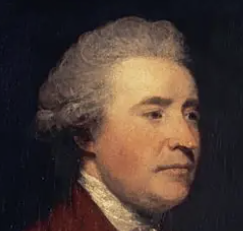
This day I heard from Laurence who has sent me papers confirming the portentous State of France-where the Elements which compose Human Society seem all to be dissolved, and a world of Monsters to be producd in the place of it-where Mirabeau presides as the Grand Anarch; and the late Grand Monarch makes a figure as ridiculous as pitiable.
▼
Source
source
Letter to Richard Burke (c. 10 October 1789), quoted in Alfred Cobban and Robert A. Smith (eds.), The Correspondence of Edmund Burke, Volume VI: July 1789-December 1791 (1967), p. 30
8 months 3 weeks ago
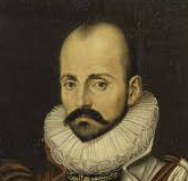
Man is certainly stark mad; he cannot make a worm, and yet he will be making gods by dozens.
▼
Source
source
Book II, Ch. 12. Apology for Raimond Sebond
6 months 1 week ago
All media of communications are cliches serving to enlarge man's scope of action, his patterns of associations and awareness. These media create environments that numb our powers of attention by sheer pervasiveness.

5 months 3 weeks ago
Against the many Russian thinkers influenced by Hegel who believed that history was governed by universal laws to which one could only submit, Turgenev upheld the freedom of different societies to pursue different paths of development and of individuals to pursue, even in opposition to powerful historical forces, their own goals and values. Here Turgenev endorsed the celebrated dictum of Alexander Herzen, with whom he disagreed on other matters: that history has no libretto. Human history is a realm of contingency and unpredictability, in which each generation faces conflicts that have no ideal solution.
▼
Source
source
'Isaiah Berlin: The Value of Decency' (p.105)
7 months 5 days ago
You do not attain to knowledge by remaining on the shore and watching the foaming waves, you must make the venture and cast yourself in, you must swim, alert and with all your force, even if a moment comes when you think you are losing consciousness; in this way, and in no other, do you reach anthropological insight.
▼
Source
source
p. 148
8 months 3 weeks ago
Saturninus said, "Comrades, you have lost a good captain to make him an ill general."
▼
Source
source
Book III, Ch. 9. Of Vanity

6 months 2 weeks ago
In default of any other proof, the thumb would convince me of the existence of a God.
▼
Source
source
Stanislas (1856)

9 months 1 week ago
He realized now that to be afraid of this death he was staring at with animal terror meant to be afraid of life. Fear of dying justified a limitless attachment to what is alive in man. And all those who had not made the gestures necessary to live their lives, all those who feared and exalted impotence — they were afraid of death because of the sanction it gave to a life in which they had not been involved. They had not lived enough, never having lived at all.
7 months 1 week ago
At the edge of life you feel that you are no longer master of the life within you, that subjectivity is an illusion, and that uncontrollable forces are seething inside you, evolving with no relation to a personal center or a definite, individual rhythm.
▼
Source
source
essay 2 - On not wanting to live
5 months 1 week ago
A scientist worthy of the name, above all a mathematician, experiences in his work the same impression as an artist; his pleasure is as great and of the same nature. ...we work not only to obtain the positive results which, according to the profane, constitute our one and only affection, as to experience this esthetic emotion and to convey it to others who are capable of experiencing it.
▼
Source
source
"Notice sur Halphen," Journal de l'École Polytechnique (Paris, 1890), 60ème cahier, p. 143.
4 months 2 weeks ago
If a due participation of office is a matter of right, how are vacancies to be obtained? Those by death are few; by resignation, none.
▼
Source
source
Letter to Elias Shipman and others of New Haven (12 July 1801). Often misquoted as, "few die and none resign".
8 months 2 weeks ago
These considerations did not make us overlook the folly of premature attempts to dispense with the inducements of private interest in social affairs, while no substitute for them has been or can be provided: but we regarded all existing institutions and social arrangements as being (in a phrase I once heard from Austin) "merely provisional," and we welcomed with the greatest pleasure and interest all socialistic experiments by select individuals (such as the Co-operative Societies), which, whether they succeeded or failed, could not but operate as a most useful education of those who took part in them, by cultivating their capacity of acting upon motives pointing directly to the general good, or making them aware of the defects which render them and others incapable of doing so.
▼
Source
source
(pp. 233-234)
9 months 2 days ago
Religious law makes it illegal for the ignorant to drink wine, but intelligence makes it legal for the intellectual.
9 months 4 days ago
To rank the effort above the prize may be called love.
7 months 1 week ago
Nothing is a better proof of how far humanity has regressed than the impossibility of finding a single nation, a single tribe, among whom birth still provokes mourning and lamentations.
6 months 1 week ago
Necessity gives the law without itself acknowledging one.
▼
Source
source
Maxim 444
5 months 3 weeks ago
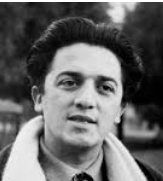
I don't believe in total freedom for the artist. Left on his own, free to do anything he likes, the artist ends up doing nothing at all. If there's one thing that's dangerous for an artist, it's precisely this question of total freedom, waiting for inspiration and the rest of it.
▼
Source
source
Artistic Freedom
7 months 3 weeks ago
Dear youths, I warn you cherish peace divine, And in your hearts lay deep these words of mine.
▼
Source
source
As reported by Heraclides, son of Sarapion, and Diogenes Laërtius, in Lives and Opinions of Eminent Philosophers, "Pythagoras", Sect. 7, in the translation of C. D. Yonge
8 months 3 weeks ago
It is good to rub and polish our brain against that of others.
▼
Source
source
Book I, Ch. 26
4 months 3 weeks ago
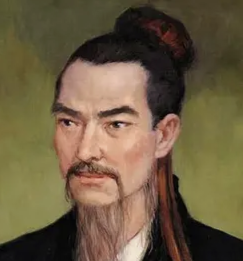
When we try to develop and procure benefits for the world with universal love as our standard, then attentive ears and keen eyes will respond in service to one another, then limbs will be strengthened to work for one another, and those who know the Tao will untiringly instruct others. Thus the old and those who have neither wife nor children will have the support and supply to spend their old age with, and the young and weak and orphans will have the care and admonition to grow up in. When universal love is adopted as the standard, then such are the consequent benefits. It is incomprehensible, then, why people should object to universal love when they hear it.
▼
Source
source
Book 4; Universal Love III

6 months 5 days ago
French schoolchildren can be proud to become citizens of the country that gave the world the Declaration of the Rights of Man; need they be told that it was disregarded a few years after it inspired the revolution in Haiti, whose leader, Toussaint Louverture, was consigned to death in a French prison?
CivilSimian.com created by AxiomaticPanic, CivilSimian, Kalokagathia