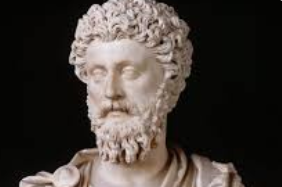


Make life better, but make the best of what you have also....


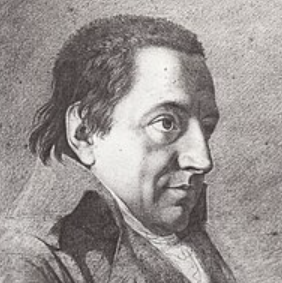
The End of the Life of Mankind on Earth is this,-that in this Life they may order all their relations with FREEDOM according to REASON.
Valor withers without adversity.
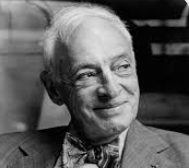
You never have to change anything you got up in the middle of the night to write.
Self-preservation has frequently knuckled under to that tremendous yearning to get even.
To rank the effort above the prize may be called love.
The dressing up and puffing up of the individual erases the lineaments of protest.
The true Enlightenment thinker, the true rationalist, never wants to talk anyone into anything. No, he does not even want to convince; all the time he is aware that he may be wrong. Above all, he values the intellectual independence of others too highly to want to convince them in important matters. He would much rather invite contradiction, preferably in the form of rational and disciplined criticism. He seeks not to convince but to arouse - to challenge others to form free opinions.
We often want one thing and pray for another, not telling the truth even to the gods.
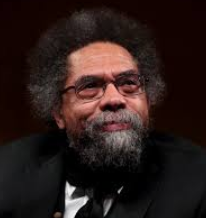
The political triumph of Donald Trump is a symbol and symptom-not cause or origin-of our imperial meltdown. Trump is neither alien nor extraneous to American culture and history. In fact, he is as American as apple pie. Yet he is a sign of our spiritual bankruptcy-all spectacle and no substance, all narcissism and no empathy, all appetite and greed and no wisdom and maturity. Yet his triumph flows from the implosion of a Republican Party establishment beholden to big money, big military, and big scapegoating of vulnerable peoples of color, LGBTQ peoples, immigrants, Muslims, and women; from a Democratic Party establishment beholden to big money, big military, and the clever deployment of peoples of color, LGBTQ peoples, immigrants, Muslims, and women to hide and conceal the lies and crimes of neoliberal policies here and abroad; and from a corporate media establishment that aided and abetted Trump owing to high profits and revenues.
Remember that it is not he who gives abuse or blows who affronts, but the view we take of these things as insulting. When, therefore, any one provokes you, be assured that it is your own opinion which provokes you.
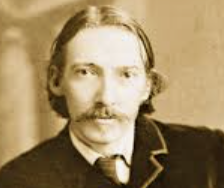
The cruelest lies are often told in silence. A man may have sat in a room for hours and not opened his teeth, and yet come out of that room a disloyal friend or a vile calumniator. And how many loves have perished because, from pride, or spite, or diffidence, or that unmanly shame which withholds a man from daring to betray emotion, a lover, at the critical point of the relation, has but hung his head and held his tongue?
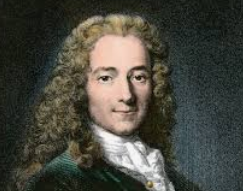
"You're a bitter man," said Candide. "That's because I've lived," said Martin.
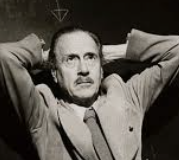
Older cliches are retrieved both as inherent principles that inform the new ground and new awareness, and as archetypal nostalgia figures with transformed meaning in relation to the new ground.
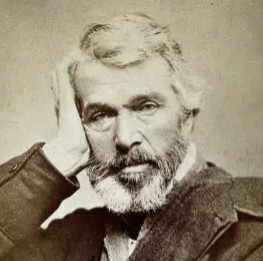
Philosophy complains that Custom has hoodwinked us, from the first; that we do everything by Custom, even Believe by it; that our very Axioms, let us boast of Free-thinking as we may, are oftenest simply such Beliefs as we have never heard questioned. Nay, what is Philosophy throughout but a continual battle against Custom; an ever-renewed effort to transcend the sphere of blind Custom, and so become Transcendental?
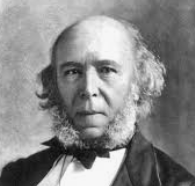
Evolution is definable as a change from an incoherent homogeneity to a coherent heterogeneity, accompanying the dissipation of motion and integration of matter.
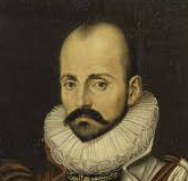
Let no man be ashamed to speak what he is not ashamed to think.
The mosaic form of the TV image demands participation and involvement in depth, of the whole being, as does the sense of touch.
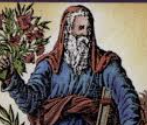
If the potential of every number is in the monad, then the monad would be intelligible number in the strict sense, since it is not yet manifesting anything actual, but everything conceptually together in it.
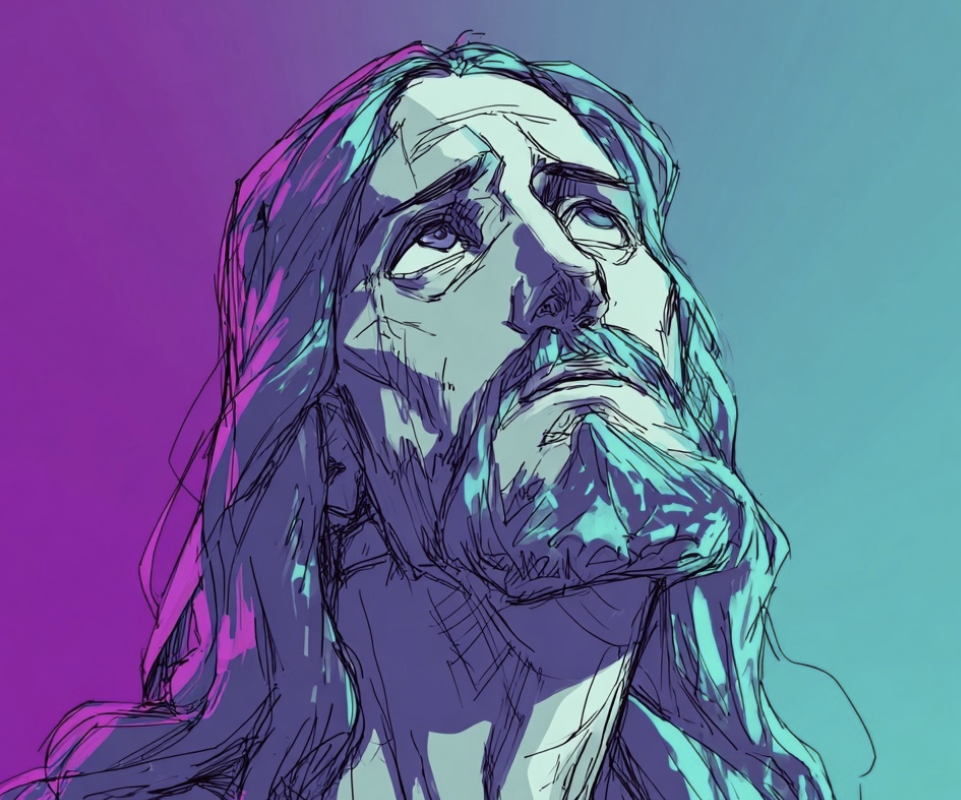
See thou tell no man; but go thy way, shew thyself to the priest, and offer the gift that Moses commanded, for a testimony unto them.
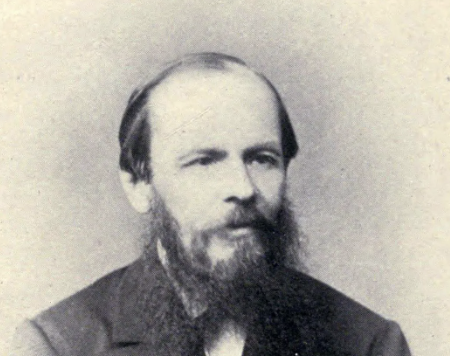
Paper, they say, does not blush, but I assure you it's not true and that it's blushing just as I am now, all over.
Certain success evicts one from the paradise of winning against the odds.
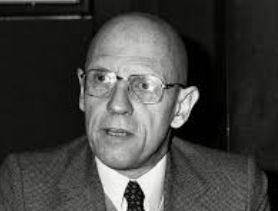
Today, criminal justice functions and justifies itself only by this perpetual reference to something other than itself, by this unceasing reinscription in non-juridical systems.

Since it is always the same person whose mind thinks, wills, and judges, the autonomous nature of these activities has created great difficulties. Reason's inability to move the will, plus the fact that thinking can only "understand" what is past what neither remove it nor "rejuvenate it" ... have led to the various doctrines asserting the mind's impotence and the force of the irrational, in brief to Hume's famous dictum that "Reason is and ought only to be the slave of the passions," that is, to a rather simple-minded reversal of the Platonic notion of reason's uncontested rulership in the household of the soul. What is so remarkable in all these theories and doctrines is their implicit monism, the claim that behind the obvious multiplicity of the world's appearances and, even more pertinently to our context, behind the obvious plurality of man's faculties and abilities, there must exist a oneness - the old hen pan, "the all is one" - either a single source or a single ruler.

The basic paradox about sex is that it always seems to be offering more than it can deliver. A glimpse of a girl undressing through a lighted bedroom window induces a vision of ecstatic delight, but in the actual process of persuading the girl into bed, the vision somehow evaporates.
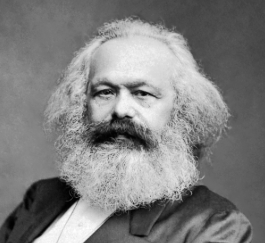
The real point at issue always is Turkey in Europe - the great peninsula to the south of the Save and Danube. This splendid territory [the Balkans] has the misfortune to be inhabited by a conglomerate of different races and nationalities, of which it is hard to say which is the least fit for progress and civilization. Slavonians, Greeks, Wallachians, Arnauts, twelve millions of men, are all held in submission by one million of Turks, and up to a recent period, it appeared doubtful whether, of all these different races, the Turks were not the most competent to hold the supremacy which, in such a mixed population, could not but accrue to one of these nationalities.
It is a sore thing to have laboured along and scaled the arduous hilltops, and when all is done, find humanity indifferent to your achievement. Hence physicists condemn the unphysical; financiers have only a superficial toleration for those who know little of stocks; literary persons despise the unlettered; and people of all pursuits combine to disparage those who have none. But though this is one difficulty of the subject, it is not the greatest. You could not be put in prison for speaking against industry, but you can be sent to Coventry for speaking like a fool. The greatest difficulty with most subjects is to do them well; therefore, please to remember this is an apology. It is certain that much may be judiciously argued in favour of diligence; only there is something to be said against it, and that is what, on the present occasion, I have to say.
Once more I realized to what an extent earthly happiness is made to the measure of man. It is not a rare bird which we must pursue at one moment in heaven, at the next in our minds. Happiness is a domestic bird found in our own courtyards.
All presentation, all demonstration-and the presentation of thought is demonstration-has, according to its original determination-and this is all that matters to us-the cognitive activity of the other person as its ultimate aim.

I have not been able to discover the cause of those properties of gravity from phenomena, and I frame no hypotheses; for whatever is not deduced from the phenomena is to be called a hypothesis, and hypotheses, whether metaphysical or physical, whether of occult qualities or mechanical, have no place in experimental philosophy.
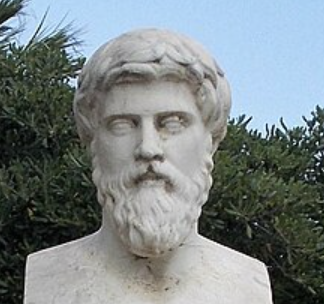
Socrates thought that if all our misfortunes were laid in one common heap, whence every one must take an equal portion, most persons would be contented to take their own and depart.
The primary use of knowledge is for such guidance of conduct under all circumstances as shall make living complete. All other uses of knowledge are secondary.
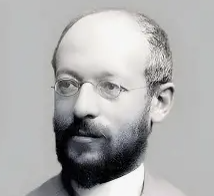
When one says, for example, that superiority and inferiority is a formation to be found in every human association, though the proposition certainly involves very profound insight into the essence of human nature and human relationship, yet the assertion is so general that it affords little knowledge of particular societary formations. In order to reach such particular knowledge we must study separate types of superiority and inferiority, and we must master the special features of their formation, which in proportion to their definiteness of course lose generality of application.
I have always taken as the standard of the mode of teaching and writing, not the abstract, particular, professional philosopher, but universal man, that I have regarded man as the criterion of truth, and not this or that founder of a system, and have from the first placed the highest excellence of the philosopher in this, that he abstains, both as a man and as an author, from the ostentation of philosophy, i.e., that he is a philosopher only in reality, not formally, that he is a quiet philosopher, not a loud and still less a brawling one.
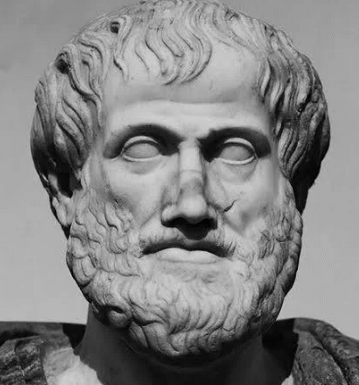
Man is a goal-seeking animal. His life only has meaning if he is reaching out and striving for goals.
I consider the foundation of the Constitution as laid on this ground: That "all powers not delegated to the United States, by the Constitution, nor prohibited by it to the States, are reserved to the States or to the people." To take a single step beyond the boundaries thus specially drawn around the powers of Congress, is to take possession of a boundless field of power, no longer susceptible of any definition. The incorporation of a bank, and the powers assumed by this bill, have not, in my opinion, been delegated to the United States, by the Constitution... They are not among the powers specially enumerated...
There is no social entity with a good that undergoes some sacrifice for its own good. There are only individual people, different individual people, with their own individual lives. Using one of these people for the benefit of others, uses him and benefits the others. Nothing more.
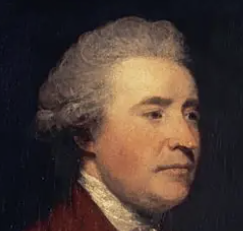
Justice is itself the great standing policy of civil society; and any eminent departure from it, under any circumstances, lies under the suspicion of being no policy at all.
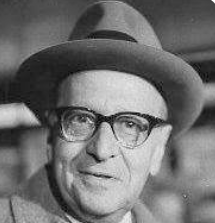
The metaphysical apologia at least betrayed the injustice of the established order through the incongruence of concept and reality. The impartiality of scientific language deprived what was powerless of the strength to make itself heard and merely provided the existing order with a neutral sign for itself. Such neutrality is more metaphysical than metaphysics.
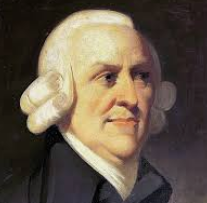
As to love our neighbour as we love ourselves is the great law of Christianity, so it is the great precept of nature to love ourselves only as we love our neighbour, or what comes to the same thing, as our neighbour is capable of loving us.
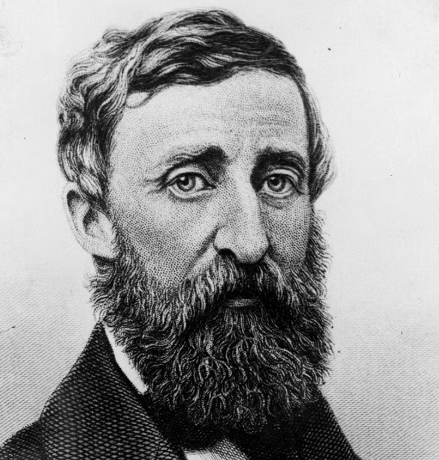
If you can speak what you will never hear, if you can write what you will never read, you have done rare things.
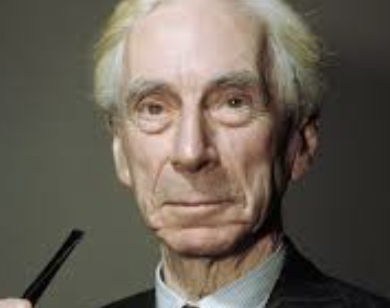
Power, like vanity, is insatiable. Nothing short of omnipotence could satisfy it completely. And as it is especially the vice of energetic men, the causal efficacy of love of power is out of all proportion to its frequency. It is, indeed, by far the strongest motive in the lives of important men. Love of power is greatly increased by the experience of power, and this applies to petty power as well as to that of potentates.
Writers, poets, painters, musicians, philosophers, political thinkers, to name only a few of the categories affected, must woo their readers, viewers, listeners, from distraction. To this we must add, for simple realism demands it, that these same writers, painters, etc., are themselves the children of distraction. As such, they are peculiarly qualified to approach the distracted multitudes. They will have experienced the seductions as well as the destructiveness of the forces we have been considering here. This is the destructive element in which we do not need to be summoned to immerse ourselves, for we were born to it.

We are all secularised anarchists today.
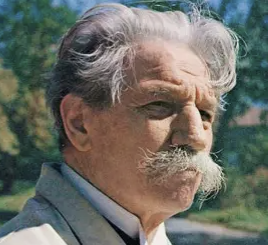
Any religion or philosophy which is not based on a respect for life is not a true religion or philosophy.
When I was a student in the 1950s, I read Husserl, Sartre, Merleau-Ponty. When you feel an overwhelming influence, you try to open a window. Paradoxically enough, Heidegger is not very difficult for a Frenchman to understand. When every word is an enigma, you are in a not-too-bad position to understand Heidegger. Being and Time is difficult, but the more recent works are clearer. Nietzsche was a revelation to me. I felt that there was someone quite different from what I had been taught. I read him with a great passion and broke with my life, left my job in the asylum, left France: I had the feeling I had been trapped. Through Nietzsche, I had become a stranger to all that.
Nine-tenths of the activities of a modern Government are harmful; therefore the worse they are performed, the better.
CivilSimian.com created by AxiomaticPanic, CivilSimian, Kalokagathia