

5 months 1 day ago
Nothing becomes so offensive so quickly as grief. When fresh it finds someone to console it, but when it becomes chronic, it is ridiculed and rightly.
▼
Source
source
Line 13.
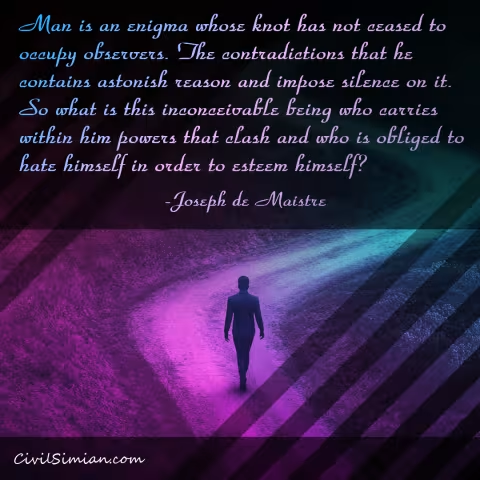
5 months 1 week ago
Pragmatism starts from assumptions similar to those of empiriocriticism, but differs from the latter by its striking formulations, loose aphorisms, and analytical unscrupulousness.
▼
Source
source
Chapter Seven, Pragmatism and Positivism, p. 166
5 months 1 week ago
We call that fire of the black thunder-cloud "electricity," and lecture learnedly about it, and grind the like of it out of glass and silk: but what is it? What made it? Whence comes it? Whither goes it? Science has done much for us; but it is a poor science that would hide from us the great deep sacred infinitude of Nescience, whither we can never penetrate, on which all science swims as a mere superficial film. This world, after all our science and sciences, is still a miracle; wonderful, inscrutable, magical and more, to whosoever will think of it.
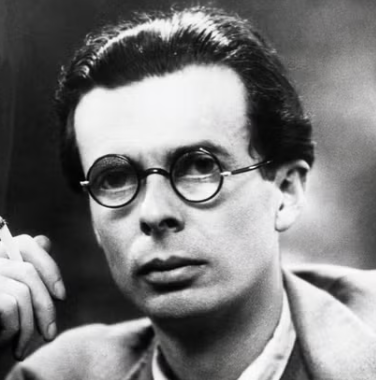
8 months 2 weeks ago
In any race between human numbers and natural resources, time is against us.
▼
Source
source
Chapter 12 (p. 113)
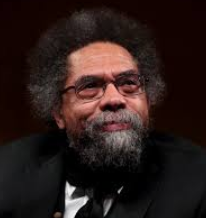
8 months 1 week ago
Justice is what love looks like in public.
▼
Source
source
Brother West (2009), p. 232
7 months 1 week ago
The present contains nothing more than the past, and what is found in the effect was already in the cause.
▼
Source
source
Creative Evolution (1907), Chapter I, as translated by Arthur Mitchell (1911), p. 14.; italicized in the original.
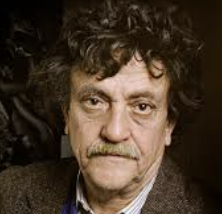
6 months 2 weeks ago
I was taught in the sixth grade that we had a standing army of just over a hundred thousand men and that the generals had nothing to say about what was done in Washington. I was taught to be proud of that and to pity Europe for having more than a million men under arms and spending all their money on airplanes and tanks. I simply never unlearned junior civics. I still believe in it. I got a very good grade.
▼
Source
source
As quoted by James Lundquist in Kurt Vonnegut
7 months 3 days ago
To fall into a habit is to begin to cease to be.

6 months 2 weeks ago
We do not have to love one another to be obligated to build a world in which all lives are sustainable. The right to persist can only be understood as a social right, as the subjective instance of a social and global obligation we bear toward one another.
▼
Source
source
p. 64
4 months 2 weeks ago
War as the most extreme political means discloses the possibility which underlies every political idea, namely, the distinction of friend and enemy.
9 months 6 days ago
What the great learning teaches, is to illustrate illustrious virtue; to renovate the people; and to rest in the highest excellence. The point where to rest being known, the object of pursuit is then determined; and, that being determined, a calm unperturbedness may be attained to. To that calmness there will succeed a tranquil repose. In that repose there may be careful deliberation, and that deliberation will be followed by the attainment of the desired end.

4 months 2 weeks ago
Being doesn't know.
8 months 2 weeks ago
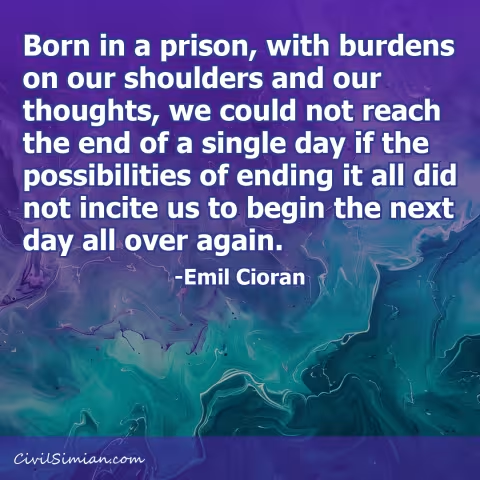
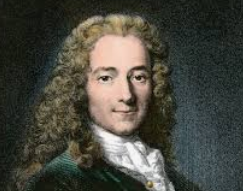
"You're a bitter man," said Candide. "That's because I've lived," said Martin.
5 months 1 week ago
O poor mortals, how ye make this earth bitter for each other.
▼
Source
source
Pt. I, Bk. V, ch. 5.
8 months 4 days ago
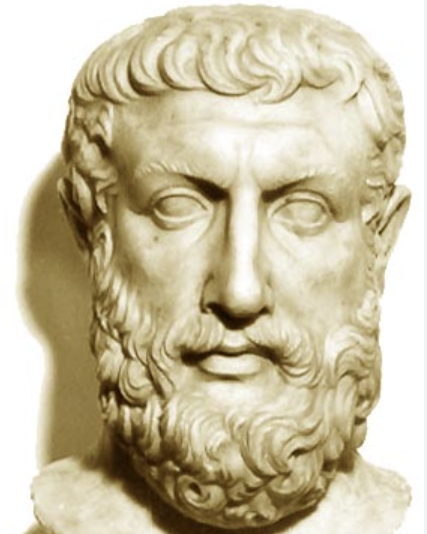
Never will this prevail, that the things that are not are - bar your thought from this road of inquiry.
▼
Source
source
Frag. B 7.1-2, quoted by Plato, Sophist, 237a

7 months 1 week ago
Thou shalt do no murder, Thou shalt not commit adultery, Thou shalt not steal, Thou shalt not bear false witness, Honour thy father and thy mother: and, Thou shalt love thy neighbour as thyself.
▼
Source
source
19:18-19 (KJV)
8 months 1 week ago
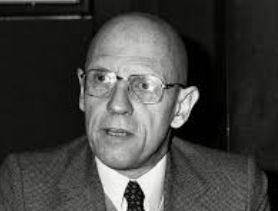
The public execution, then, has a juridico-political function. It is a ceremonial by which a momentarily injured sovereignty is reconstituted. It restores that sovereignty by manifesting it at its most spectacular. The public execution, however hasty and everyday, belongs to a whole series of great rituals in which power is eclipsed and restored (coronation, entry of the king into a conquered city, the submission of rebellious subjects); over and above the crime that has placed the sovereign in contempt, it deploys before all eyes an invincible force. Its aim is not so much to re-establish a balance as to bring into play, as its extreme point, the dissymmetry between the subject who has dared to violate the law and the all-powerful sovereign who displays his strength.
▼
Source
source
Chapter One, The Spectacle of the Scaffold

5 months 3 weeks ago
Humanists today, who claim to take a wholly secular view of things, scoff at mysticism and religion. But the unique status of humans is hard to defend, and even to understand, when it is cut off from any idea of transcendence. In a strictly naturalistic view - one in which the world is taken on its own terms, without reference to a creator or any spiritual realm - there is no hierarchy of value with humans at the top. There are simply multifarious animals, each with their own needs. Human uniqueness is a myth inherited from religion, which humanists have recycled into science.
▼
Source
source
An Old Chaos: Humanism and Flying Saucers (p. 77)
8 months 2 weeks ago
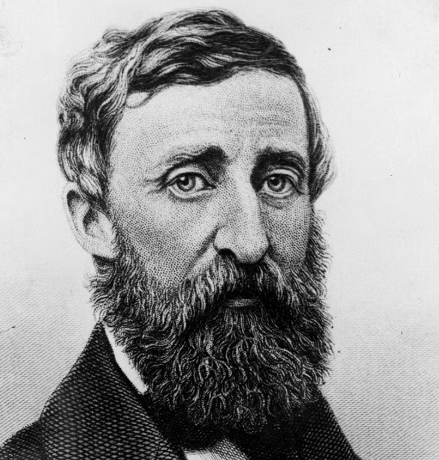
A living dog is better than a dead lion. Shall a man go and hang himself because he belongs to the race of pygmies, and not be the biggest pygmy that he can? Let every one mind his own business, and endeavor to be what he was made. Why should we be in such desperate haste to succeed, and in such desperate enterprises? If a man does not keep pace with his companions, perhaps it is because he hears a different drummer. Let him step to the music which he hears, however measured or far away.
▼
Source
source
pp. 366-67

4 months 3 weeks ago
To be honest, as critical as I am of people for being anti-human, I love everybody so much for sinking on this ship with me. Admit it or not, we're all dying together.
9 months 2 weeks ago
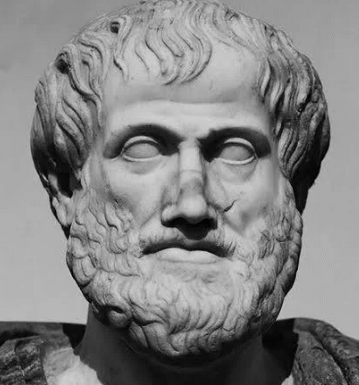
Homer has taught all other poets the art of telling lies skillfully.
5 months 1 day ago
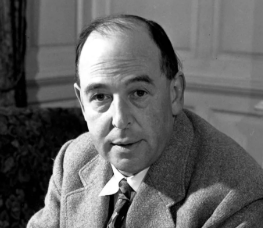
If you wish to be loved, love.
▼
Source
source
Seneca quotes this in Epistulae Morales ad Lucilium; Epistle IX and attributes it to Hecato
8 months 2 weeks ago
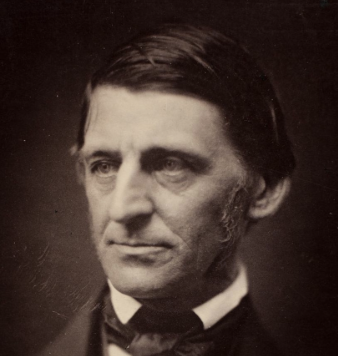
Looking for God-or Heaven-by exploring space is like reading or seeing all Shakespeare's plays in the hope that you will find Shakespeare as one of the characters or Stratford as one of the places. Shakespeare is in one sense present at every moment in every play.
▼
Source
source
"The Seeing Eye", in Christian Reflections (1967), p. 167
8 months 2 weeks ago
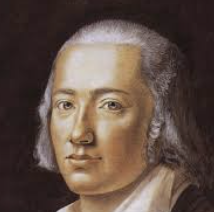
O tenderly the haughty day Fills his blue urn with fire; One morn is in the mighty heaven, And one in our desire.
▼
Source
source
Ode, st. 1

7 months ago
My own book Women, Race and Class was one of many that were published during that era, including, to name only a few, This Bridge Called My Back, edited by Gloria Anzaldúa and Cherrie Moraga, the work of bell hooks and Michelle Wallace, and the anthology All the Women Are White, All the Blacks Are Men, but Some of Us Are Brave: Black Women's Studies. So behind this concept of intersectionality is a rich history of struggle. A history of conversations among activists within movement formations, and with and among academics as well.
▼
Source
source
Angela Davis Freedom Is a Constant Struggle: Ferguson, Palestine, and the Foundations of a Movement (2015) p 19
7 months 2 weeks ago
He who has thought most deeply loves what is most alive.
6 months 2 weeks ago
People never remember but the computer never forgets.
▼
Source
source
(p. 69)
9 months 1 day ago
No thing great is created suddenly, any more than a bunch of grapes or a fig. If you tell me that you desire a fig, I answer you that there must be time. Let it first blossom, then bear fruit, then ripen.
▼
Source
source
Book I, ch. 15, 7.
7 months 1 week ago
The abolition of private property is, doubtless, the shortest and most significant way to characterize the revolution in the whole social order which has been made necessary by the development of industry - and for this reason it is rightly advanced by communists as their main demand.
8 months 2 weeks ago
Christian philosophers have found no difficulty in justifying imperialism, war, the capitalist system, the use of torture, the censorship of the press and ecclesiastical tyrannies of every sort, from the tyranny of Rome to the tyrannies of Geneva and New England.
▼
Source
source
Ch. 14, p. 315 [2012 reprint]
4 months 2 weeks ago
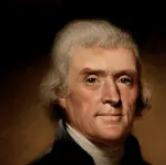
It is not by the consolidation or concentration, of powers, but by their distribution that good government is effected.
▼
Source
source
Memoirs, Correspondence and Private Papers of Thomas Jefferson (1829) edited by Thomas Jefferson Randolph, p. 70
4 months 2 weeks ago
No one has a natural right to the trade of a money lender, but he who has the money to lend. Let those then among us who have a moneyed capital and who prefer employing it in loans rather than otherwise, set up banks and give cash or national bills for the notes they discount. Perhaps, to encourage them, a larger interest than is legal in the other cases might be allowed them, on the condition of their lending for short periods only.
▼
Source
source
ME 13:277
6 months 2 weeks ago
You need to know enough of the natural sciences so that you are not a stranger in the world.

7 months 1 week ago
Can it really be that for us existence means exile, and nothingness, home?
8 months 2 weeks ago
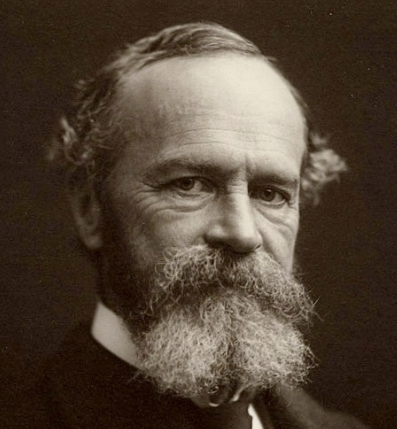
Habit is thus the enormous fly-wheel of society, its most precious conservative agent. It alone is what keeps us all within the bounds of ordinance, and saves the children of fortune from the envious uprisings of the poor.
▼
Source
source
Ch. 4
4 months 1 week ago
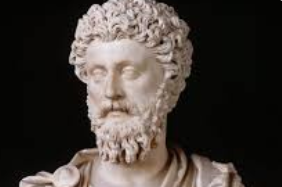
It is crazy to want what is impossible. And impossible for the wicked not to do so.
▼
Source
source
V, 17, (Hays translation) To seek what is impossible is madness: and it is impossible that the bad should not do something of this kind.
4 months 3 weeks ago
It is not sufficient to say, "God spake and it was so." For the natures of things that are created ought to harmonise with the commands of God. I will say more clearly what I mean. Did God ordain that fire should mount upwards by chance and earth sink down? Was it not necessary, in order that the ordinance of God should be fulfilled, for the former to be light and the latter to weigh heavy? And in the case of other things also this is equally true.
8 months 2 weeks ago
Immortality. I notice that as soon as writers broach this question they begin to quote. I hate quotation. Tell me what you know.
▼
Source
source
May 1849
7 months 1 week ago
Logical empiricism holds the view, notwithstanding some its assertions, that the forms of knowledge and consequently the relations of man to nature and to other men never change. According to rationalism, too, all subjective and objective potentialities are rooted in insights which the individual already possesses, but rationality uses existing objects as well as the active inner striving and ideas of man to construct standards for the future. In this regard, it is not so closely associated with the present order as is empiricism.
▼
Source
source
p. 148.

7 months 3 weeks ago
The Universe is one, infinite, immobile. The absolute potential is one, the act is one, the form or soul is one, the material or body is one, the thing is one, the being in one, one is the maximum and the best... It is not generated, because there is no other being it could desire or hope for, since it comprises all being. It does not grow corrupt. because there is nothing else into which it could change, given that it is itself all things. It cannot diminish or grow, since it is infinite.
▼
Source
source
As translated by Paul Harrison
7 months 2 weeks ago
The body of all true religion consists, to be sure, in obedience to the will of the Sovereign of the world, in a confidence in His declarations, and in imitation of His perfections.
5 months 2 days ago
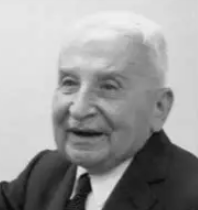
State and government are the social apparatus of violent coercion and repression. Such an apparatus, the police power, is indispensable in order to prevent anti-social individuals and bands from destroying social co-operation. Violent prevention and suppression of anti-social activities benefit the whole of society and each of its members. But violence and oppression are none the less evils and corrupt those in charge of their application. It is necessary to restrict the power of those in office lest they become absolute despots. Society cannot exist without an apparatus of violent coercion. But neither can it exist if the office holders are irresponsible tyrants free to inflict harm upon those they dislike.
7 months 3 days ago
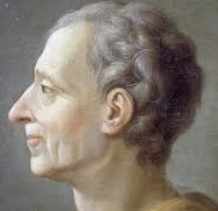
In France there are three kinds of professions: the church, the sword, and the long robe. Each hath a sovereign contempt for the other two. For example, a man who ought to be despised only for being a fool is often so because he is a lawyer.
▼
Source
source
No. 44 (Usbek writing to Rhedi)
8 months 2 weeks ago
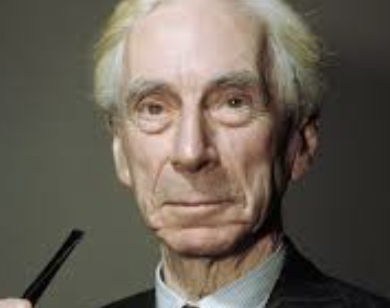
The pursuit of philosophy is founded on the belief that knowledge is good, even if what is known is painful. A man imbued with the philosophic spirit, whether a professional philosopher or not, will wish his beliefs to be as true as he can make them, and will, in equal measure, love to know and hate to be in error. This principle has a wider scope than may be apparent at first sight.
5 months 1 week ago
A witty statesman said, you might prove anything by figures.
▼
Source
source
Ch. 2, Statistics.
CivilSimian.com created by AxiomaticPanic, CivilSimian, Kalokagathia