



8 months 4 weeks ago
All the excesses, all the violence, and all the vanity of great men, come from the fact that they know not what they are: it being difficult for those who regard themselves at heart as equal with all men... For this it is necessary for one to forget himself, and to believe that he has some real excellence above them, in which consists this illusion that I am endeavoring to discover to you.
4 months 2 weeks ago
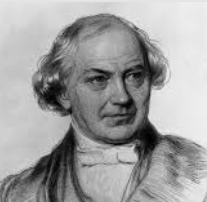
The distinction of Fact and Theory is only relative. Brute animals have a practical knowledge of relations of space and force; but they have no knowledge of Geometry or Mechanicks.

6 months 4 weeks ago
Those who devote themselves to rituals must ignore themselves. Rituals produce a distance from the self, a self-transcendence.
8 months 2 weeks ago
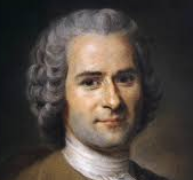
A country cannot subsist well without liberty, nor liberty without virtue.
▼
Source
source
As quoted in A Dictionary of Thoughts: Being a Cyclopedia of Laconic Quotations from the Best Authors of the World, Both Ancient and Modern (1908) by Tryon Edwards, p. 301.
8 months 2 weeks ago
... happiness is not an ideal of reason, but of imagination, resting on merely empirical grounds…
▼
Source
source
4:418-19, p.29
7 months 1 week ago
Even if the whole world were to fall to pieces, the unity of the psyche would never be shattered. And the wider and more numerous the fissures on the surface, the more the unity is strengthened in the depths.
▼
Source
source
Civilization in Transition
7 months 2 weeks ago
As one of our Swiss friends put it: "Now every German tailor living in Japan, China, or Moscow feels that he has the German navy and all of Germany's power behind him. This proud consciousness sends him into an insane rapture: the German has finally lived to see the day when he can say with pride, relying on his own state, like an Englishman or an American, 'I am a German.' True, when the Englishman or American says 'I am an Englishman,' or 'I am an American,' he is saying 'I am a free man.' The German, however, is saying 'I am a slave, but my emperor is stronger than all other princes, and the German soldier who is strangling me will strangle all of you.'"
4 months 2 weeks ago
Now to get back to our given Church: it lives almost entirely for modesty and moneyed piety. It zealously inveighs against the harm done to Joseph and the sheep, but it has made its arrangements with the upper classes and serves as their spiritual defender. It bristles at see-through blouses, but not at slums in which half-naked children starve, and not, above all, at the conditions that keep three quarters of mankind in misery. It condemns desperate girls who abort a foetus, but it consecrates war, which aborts millions. It has nationalized its God, nationalized him into ecclesiastic organization, and has inherited the Roman empire under the mask of the Crucified. It preserves misery and injustice, having first tolerated and then approved the class power that causes them; it prevents any seriousness about deliverance by postponing it to St. Never-Ever's Day or shifting it to the beyond.
▼
Source
source
p. 144

4 months 2 weeks ago
The greatest service which can be rendered any country is to add an useful plant to its culture; especially, a bread grain; next in value to bread is oil.
▼
Source
source
Thomas Jefferson, In Memoir, Correspondence, and Miscellanies from the Papers of T. Jefferson (1829), Vol. 1, 144
7 months 3 days ago
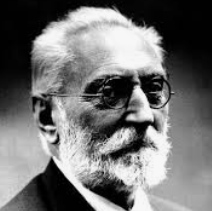
Not without reason did he who had the right to do so speak of the foolishness of the cross. Foolishness, without a doubt, foolishness. And the American humorist, Oliver Wendell Holmes, was not altogether wide of the mark in making one of the characters in his ingenious conversations say that he thought better of those who were confined in a lunatic asylum on account of religious mania than of those who, while professing the same religious principles, kept their wits and appeared to enjoy life very well outside the asylums. But those who are at large, are they not really, thanks to God, mad too? Are there not mild madnesses, which not only permit us to mix with our neighbors without danger to society, but which rather enable us to do so, for by means of them we are able to attribute a meaning and finality to life and society?
4 months 2 weeks ago
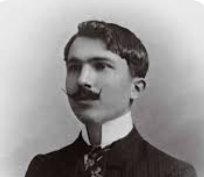
If you are a man of learning, fight in the skull, kill ideas and create new ones. God hides in every idea as in every cell of flesh. Smash the idea, set him free! Give him another, a more spacious idea in which to dwell.
4 months 3 weeks ago
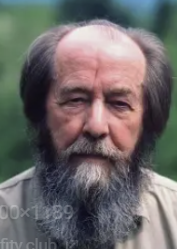
The clock of communism has stopped striking. But its concrete building has not yet come crashing down. For that reason, instead of freeing ourselves, we must try to save ourselves from being crushed by its rubble.
▼
Source
source
How We Must Rebuild Russia in Komsomolskaya Pravda

4 months 2 weeks ago
To know the nature of man, the most direct and wisest way undoubtedly is to know what he has always been. Since when can theories be opposed to facts? History is experimental politics; this is the best or rather the only good politics.
▼
Source
source
p. 21
8 months 2 weeks ago
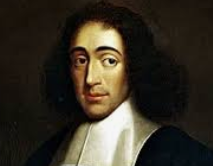
All the better; they do not force me to do anything that I would not have done of my own accord if I did not dread scandal. But since they want it that way, I enter gladly on the path that is opened to me, with the consolation that my departure will be more innocent than was the exodus of the early Hebrews from Egypt.
▼
Source
source
Statement after his excommunication from Jewish society, attributed by Lucas, in The Oldest Biography of Spinoza (1970) by A. Wolf; also in Spinoza: A Life (1999) by Steven Nadler
5 months 2 days ago
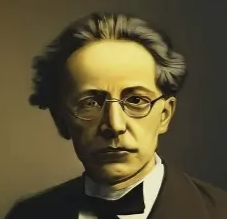
Feuerbach ... recognizes ... "even love, in itself the truest, most inward sentiment, becomes an obscure, illusory one through religiousness, since religious love loves man only for God's sake, therefore loves man only apparently, but in truth God only." Is this different with moral love? Does it love the man, this man for this man's sake, or for morality's sake, for Man's sake, and so-for homo homini Deus-for God's sake?
▼
Source
source
Cambridge 1995, p. 56
7 months 3 days ago
Jesus said that God was not the God of the dead, but of the living. And the other life is not, in fact, thinkable to us except under the same forms as those of this earthly and transitory life.

7 months 1 week ago
The more you are a victim of contradictory impulses, the less you know which to yield to. To lack character - precisely that and nothing more.


8 months 2 weeks ago
We think it also necessary to express our astonishment that a government, desirous of being called free, should prefer connection with the most despotic and arbitrary powers in Europe.
▼
Source
source
Address and Declaration at a Select Meeting of the Friends of Universal Peace and Liberty (August 20, 1791) p. 5
9 months 2 weeks ago
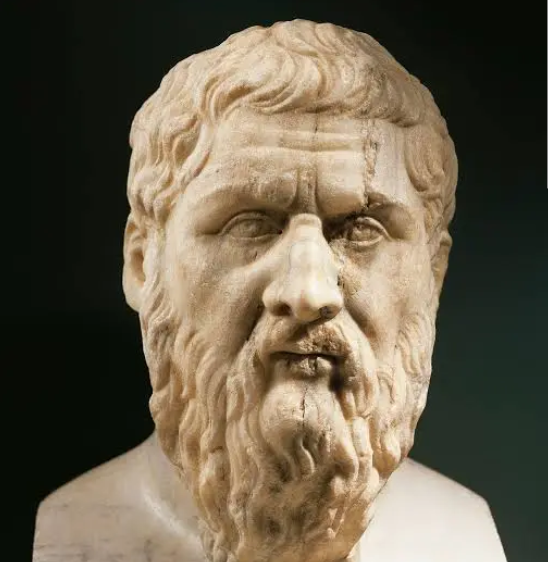
The whole business of the kingly weaving is comprised in this and this alone: in never allowing the self-restrained characters to be separated from the courageous, but in weaving them together by common beliefs and honors and dishonors and opinions and interchanges of pledges, thus making of them a smooth and, as we say, well-woven fabric, and then entrusting to them in common forever the offices of the state.

8 months 2 weeks ago
For the lesson of such stories [of resistance to Nazi atrocities] is simple and within everybody's grasp. Politically speaking, it is that under conditions of terror, most people will comply but some people will not, just as the lesson of the countries to which the Final Solution was proposed is that "it could happen" in most places but it did not happen everywhere. Humanly speaking, no more is required, and no more can reasonably be asked, for this planet to remain a place fit for human habitation.
▼
Source
source
Ch. XIV
5 months 1 week ago
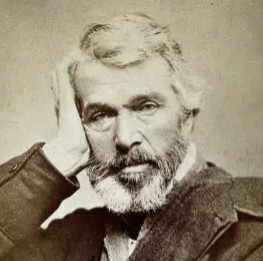
The pious soul,-which, if you reflect, will mean the ingenuous and ingenious, the gifted, intelligent and nobly-aspiring soul,-such a soul, in whatever rank of life it were born, had one path inviting it; a generous career, whereon, by human worth and valor, all earthly heights and Heaven itself were attainable. In the lowest stratum of social thraldom, nowhere was the noble soul doomed quite to choke, and die ignobly.

7 months ago
If one assumes, as I do, that battery is caused by the belief permeating this culture that hierarchical rule and coercive authority are natural, then all our relationships tend to be based on power and domination, and thus all forms of battery are linked.
8 months 6 days ago
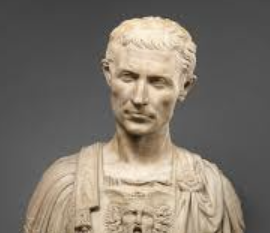
It is worth observing, how we feel ourselves affected in reading the characters of Cæsar, and Cato, as they are so finely drawn and contrasted in Salust. In one, the ignoscendo, largiundo; in the other, nil largiundo. In one, the miseris perfugium; in the other, malis perniciem. In the latter we have much to admire, much to reverence, and perhaps something to fear; we respect him, but we respect him at a distance. The former makes us familiar with him; we love him, and he leads us whither he pleases.
▼
Source
source
Edmund Burke, A Philosophical Enquiry into the Origin of Our Ideas of the Sublime and Beautiful (2nd ed. 1759), pp. 206-207
8 months 2 weeks ago
In a field of ripening corn I came to a place which had been trampled down by some ruthless foot; and as I glanced amongst the countless stalks, every one of them alike, standing there so erect and bearing the full weight of the ear, I saw a multitude of different flowers, red and blue and violet. How pretty they looked as they grew there so naturally with their little foliage! But, thought I, they are quite useless; they bear no fruit; they are mere weeds, suffered to remain only because there is no getting rid of them. And yet, but for these flowers, there would be nothing to charm the eye in that wilderness of stalks. They are emblematic of poetry and art, which, in civic life-so severe, but still useful and not without its fruit-play the same part as flowers in the corn.
▼
Source
source
"Similes, Parables and Fables" Parerga and Paralipomena, vol. 2, § 380A
9 months 2 weeks ago
The division between human and robot is perhaps not as significant as that between intelligence and nonintelligence.
6 months 3 weeks ago
Truth and falsity are the most fundamental terms of rational criticism, and any adequate philosophy must give some account of these, or failing that, show that they can be dispensed with.
▼
Source
source
"Introduction: Philosophy of language and the rest of philosophy"
8 months 1 week ago
How can one be late to the end of history? A question for today. It is serious because it obliges one to reflect again, as we have been doing since Hegel, on what happens and deserves the name of event, after history; it obliges one to wonder if the end of history is but the end of a certain concept of history.
▼
Source
source
Injunctions of Marx
7 months 2 weeks ago
Public life is a situation of power and energy; he trespasses against his duty who sleeps upon his watch, as well as he that goes over to the enemy.
7 months 1 week ago
History has proved us, and all who thought like us, wrong. It has made it clear that the state of economic development on the Continent at that time was not, by a long way, ripe for the removal of capitalist production.
▼
Source
source
Introduction (1895) to Marx's The Class Struggles in France

6 months 2 weeks ago
In many cases it is a matter for decision and not a simple matter of fact whether x understands y; and so on.
5 months 1 week ago
A certain degree of blindness as to the absoluteness of one's own values may be indispensable to extract the valuable qualities from the world, the qualities whose value is believed to be the highest. It is possible that in order to realize one's values one must have faith in their exclusive character.
▼
Source
source
Chapter Eight, Logical Empiricism, p. 202-203
7 months 2 weeks ago
Difficulty is a severe instructor, set over us by the supreme ordinance of a parental Guardian and Legislator, who knows us better than we know ourselves, as he loves us better too. Pater ipse colendi haud facilem esse viam voluit. He that wrestles with us strengthens our nerves, and sharpens our skill. Our antagonist is our helper.
▼
Source
source
Volume iii, p. 453
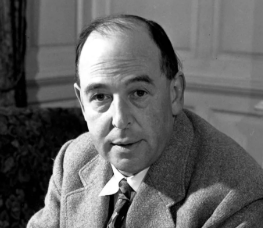
8 months 2 weeks ago
But supposing one tries to live by Pantheistic philosophy? Does it lead to a complacent Hegelian optimism?
▼
Source
source
Pilgrim's Regress 132-133
7 months 2 weeks ago
It is reconciled in policy; and politics ought to be adjusted, not to human reasonings, but to human nature; of which the reason is but a part; and by no means the greatest part.
▼
Source
source
Observations on a Late Publication on the Present State of the Nation (1769), page 78
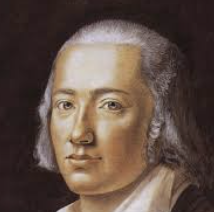
7 months 2 weeks ago
What is all that men have done and thought over thousands of years, compared with one moment of love. But in all Nature, too, it is what is nearest to perfection, what is most divinely beautiful! There all stairs lead from the threshold of life. From there we come, to there we go.
6 months 4 weeks ago
Neurosis can be understood best as the battle between tendencies within an individual; deep character analysis leads, if successful, to the progressive solution.
▼
Source
source
p. 264
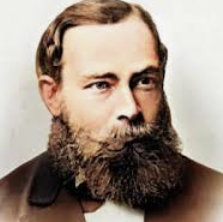
7 months 1 week ago
I hope I may claim in the present work to have made it probable that the laws of arithmetic are analytic judgments and consequently a priori. Arithmetic thus becomes simply a development of logic, and every proposition of arithmetic a law of logic, albeit a derivative one. To apply arithmetic in the physical sciences is to bring logic to bear on observed facts; calculation becomes deduction.
▼
Source
source
Gottlob Frege (1950 ). The Foundations of Arithmetic. p. 99.
8 months 2 weeks ago
Acquisitiveness - the wish to possess as much as possible of goods, or the title to goods - is a motive which, I suppose, has its origin in a combination of fear with the desire for necessaries.
7 months 1 week ago
Ideas should be neutral. But man animates them with his passions and folly. Impure and turned into beliefs, they take on the appearance of reality. The passage from logic is consummated. Thus are born ideologies, doctrines, and bloody farce.
8 months 2 weeks ago
Modern transcendental idealism, Emersonianism, for instance, also seems to let God evaporate into abstract Ideality. Not a deity in concreto, not a superhuman person, but the immanent divinity in things, the essentially spiritual structure of the universe, is the object of the transcendentalist cult. In that address of the graduating class at Divinity College in 1838 which made Emerson famous, the frank expression of this worship of mere abstract laws was what made the scandal of the performance.
▼
Source
source
Lecture II, "Circumscription of the Topic"

5 months 3 weeks ago
All urgent calls he shall hear at once, but never put off; for when postponed, they will prove too hard or impossible to accomplish.
▼
Source
source
Book I : "Concerning Discipline" Chapter 19
8 months 3 weeks ago
If women get tired and die of bearing, there is no harm in that; let them die as long as they bear; they are made for that.
▼
Source
source
-- Essays, quoted in Luther On "Woman"
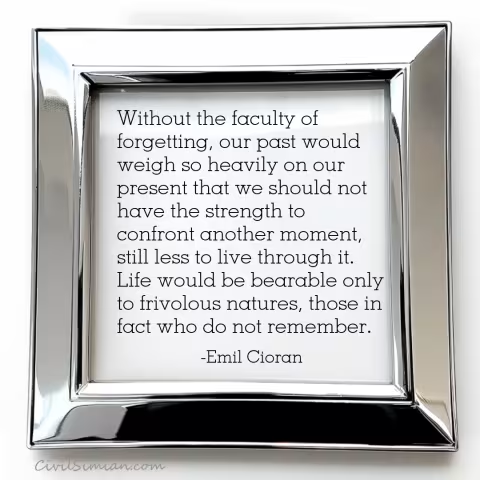
CivilSimian.com created by AxiomaticPanic, CivilSimian, Kalokagathia