

9 months 4 days ago
And what can be more divine than the exhalations of the earth, which affect the human soul so as to enable her to predict the future ? And could the hand of time evaporate such a virtue? Do you suppose you are talking of some kind of wine or salted meat ?
▼
Source
source
Book I, Chapter III

6 months 2 weeks ago
Descartes may have made a lot of mistakes, but he was right about this: you cannot doubt the existence of your own consciousness. That's the first feature of consciousness, it's real and irreducible. You cannot get rid of it by showing that it's an illusion in a way that you can with other standard illusions.
7 months 2 weeks ago
Neither a person nor a nation can exist without some higher idea. And there is only one higher idea on earth, and it is the idea of the immortality of the human soul, for all other "higher" ideas of life by which humans might live derive from that idea alone.
▼
Source
source
A Writer's Diary, Vol. 1: 1873-1876, ed. Kenneth Lantz (1994), p. 734
6 months 3 weeks ago
We accumulate our opinions at an age when our understanding is at its weakest.
▼
Source
source
H 4

8 months 2 weeks ago
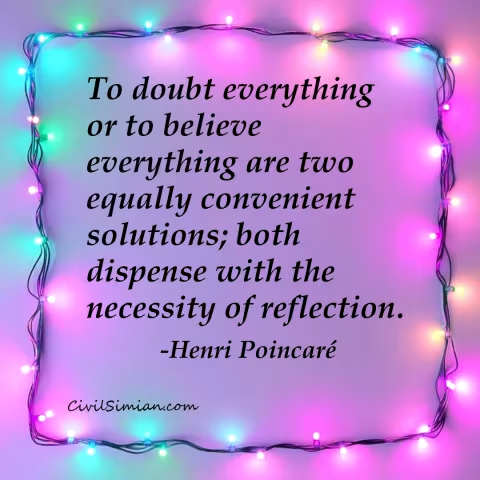
When one admits that nothing is certain one must, I think, also admit that some things are much more nearly certain than others. It is much more nearly certain that we are assembled here tonight than it is that this or that political party is in the right. Certainly there are degrees of certainty, and one should be very careful to emphasize that fact, because otherwise one is landed in an utter skepticism, and complete skepticism would, of course, be totally barren and completely useless.
▼
Source
source
"Skepticism"
7 months 1 week ago
The soul contains few secrets and longings which cannot be sensibly discussed, analyzed, and polled. Solitude, the very condition which sustained the individual against and beyond his society, has become technically impossible. Logical and linguistic analysis demonstrate that the old metaphysical problems are illusory problems; the quest for the "meaning" of things can be reformulated as the quest for the meaning of words, and the established universe of discourse and behavior can provide perfectly adequate criteria for the answer.
▼
Source
source
p. 71

4 months 2 weeks ago
Love responsibility. Say: "It is my duty, and mine alone, to save the earth. If it is not saved, then I alone am to blame." Love each man according to his contribution in the struggle. Do not seek friends; seek comrades-in-arms.
8 months 2 weeks ago
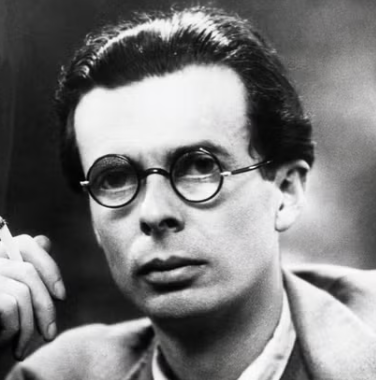
At this point we find ourselves confronted by a very disquieting question: Do we really wish to act upon our knowledge?
▼
Source
source
Chapter 12 (p. 116)
8 months 2 weeks ago
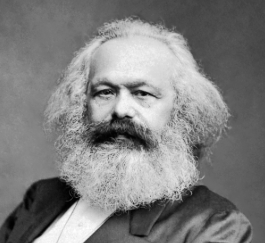
Communism... is the genuine resolution of the antagonism between man and nature and between man and man; it is the true resolution of the conflict between existence and essence, objectification and self-affirmation, freedom and necessity, individual and species. It is the riddle of history solved and knows itself as the solution.
▼
Source
source
Private Property and Communism, p. 43.
8 months 2 weeks ago
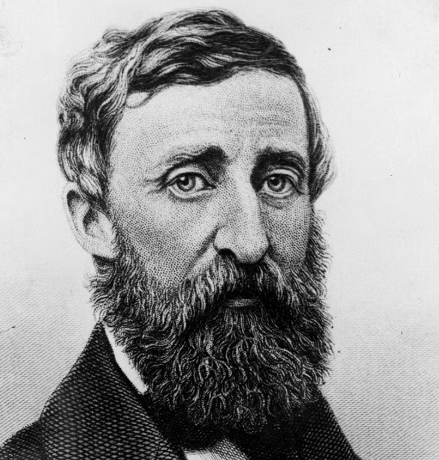
Whatever my own practice may be, I have no doubt that it is a part of the destiny of the human race, in its gradual improvement, to leave off eating animals, as surely as the savage tribes have left off eating each other when they came in contact with the more civilized.
▼
Source
source
p. 245

7 months ago
Now he saw the problem with great clarity. If he lived here, life would be pleasant and safe. But it would also be predictable. A child could be born here, grow up here, die here, without ever experiencing the excitement of discovery. Why did Dona question him endlessly about his life in the burrow and his journey to the country of the ants? Because for her, it represented a world that was dangerous and full of fascinating possibilities. For the children of this underground city, life was a matter of repetition, of habit. And this, he suddenly realized, was the heart of the problem. Habit. Habit was a stifling, warm blanket that threatened you with suffocation and lulled the mind into a state of perpetual nagging dissatisfaction. Habit meant the inability to escape from yourself, to change and develop . . .
▼
Source
source
pp. 132-133
7 months 1 week ago
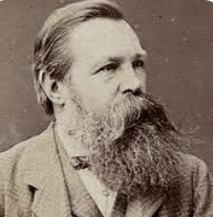
Since the communists cannot enter upon the decisive struggle between themselves and the bourgeoisie until the bourgeoisie is in power, it follows that it is in the interest of the communists to help the bourgeoisie to power as soon as possible in order the sooner to be able to overthrow it.
9 months 2 weeks ago
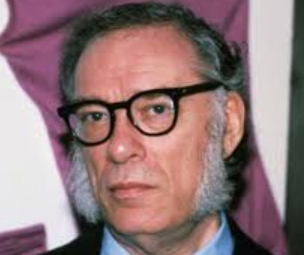
Often, writers on historical events tend to consider ... a loss of willingness to fight as a sign of "decadence," as though there were something despicable about not being a bully and not being willing to engage in mass murder. Perhaps we ought to feel instead that to cease to be warlike means to begin to be civilized and decent.
8 months 2 weeks ago
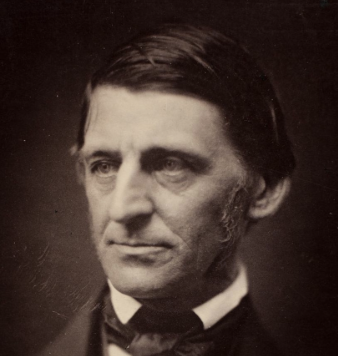
The faith that stands on authority is not faith.
▼
Source
source
The Over-soul
8 months 1 week ago
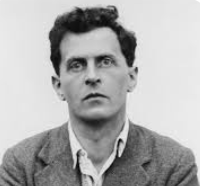
I work quite diligently and wish that I were better and smarter. And these both are one and the same.
▼
Source
source
In a letter to Paul Engelmann (1917) as quoted in The Idea of Justice (2010) by Amartya Sen, p. 31
8 months 2 weeks ago
There is one very serious defect to my mind in Christ's moral character, and that is that He believed in hell. I do not myself feel that any person who is really profoundly humane can believe in everlasting punishment.
▼
Source
source
"The Moral Problem"

7 months 1 week ago
When you love someone, you hope - the more closely to be attached - that a catastrophe will strike your beloved.
5 months 1 week ago
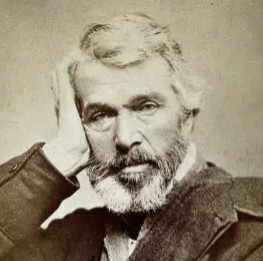
The great law of culture is: Let each become all that he was created capable of being.
▼
Source
source
Richter.

4 months 2 weeks ago
We are not afraid to follow truth wherever it may lead, nor to tolerate any error so long as reason is left free to combat it.
▼
Source
source
Letter to William Roscoe
4 months 3 weeks ago
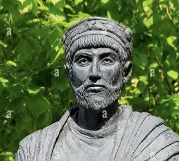
The trial that begins Awards to him who wins The fairest prize to-day. And lo, the hour is here And summons you. Appear! Ye may no more delay. Come hear the herald's call Ye princes one and all. Many tribes of men Submissive to you then! How keen in war your swords! But now 'tis wisdom's turn; Now let your rivals learn How keen can be your words.
8 months 2 weeks ago
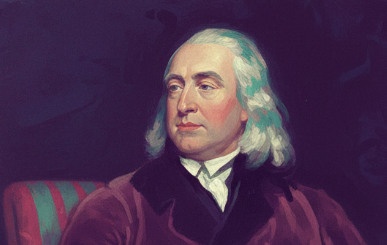
Figure to yourself the mixture of surprise and delight which has this instant been poured into my mind by the sound of my name, as uttered by you, in the speech just read to me out of the Morning Herald... By one and the same man, not only Parliamentary Reform, but Law Reform advocated. Advocated? and by what man? By one who, in the vulgar sense of profit and loss, has nothing to gain by it... Yes, only from Ireland could such self-sacrifice come; nowhere else: least of all in England, cold, selfish, priest-ridden, lawyer-ridden, lord-ridden, squire-ridden, soldier-ridden England, could any approach to it be found.
▼
Source
source
Letter to Daniel O'Connell (15 July 1828) , quoted in The Works of Jeremy Bentham, Vol. X (1843), pp. 594-595
8 months 2 weeks ago
If, when a man writes a poem or commits a murder, the bodily movements involved in his act result solely from physical causes, it would seem absurd to put up a statue to him in the one case and to hang him in the other.
▼
Source
source
"The Doctrine of Free Will"

9 months 1 week ago
The absurd does not liberate; it binds. It does not authorize all actions. "Everything is permitted" does not mean that nothing is forbidden.
4 months 2 weeks ago
Put down the banks, and if this country could not be carried through the longest war against her most powerful enemy without ever knowing the want of a dollar, without dependence on the traitorous classes of her citizens, without bearing hard on the resources of the people, or loading the public with an indefinite burden of debt, I know nothing of my countrymen. Not by any novel project, not by any charlatanerie, but by ordinary and well-experienced means; by the total prohibition of all private paper at all times, by reasonable taxes in war aided by the necessary emissions of public paper of circulating size, this bottomed on special taxes, redeemable annually as this special tax comes in, and finally within a moderate period.
▼
Source
source
Letter to Albert Gallatin, 1815. ME 14:356

7 months 2 weeks ago
It is vain to expect virtue from women till they are in some degree independent of men; nay, it is vain to expect that strength of natural affection which would make them good wives and mothers. Whilst they are absolutely dependent on their husbands they will be cunning, mean, and selfish.
▼
Source
source
Ch. 9
7 months 3 days ago
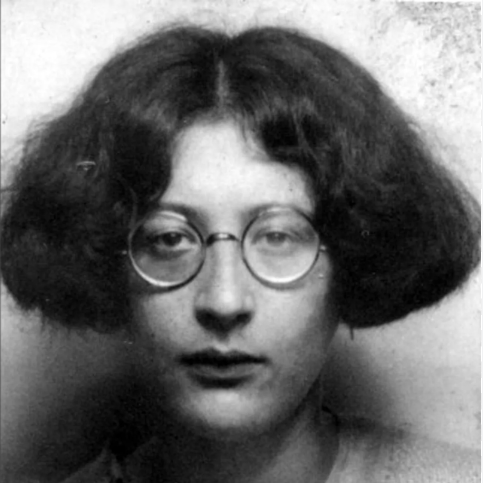
We should have with each person the relationship of one conception of the universe to another conception of the universe, and not to a part of the universe.
▼
Source
source
p. 129
7 months 1 week ago
In every man sleeps a prophet, and when he wakes there is a little more evil in the world.

9 months 1 day ago
Men are eager to tread underfoot what they have once too much feared.
▼
Source
source
Book V, line 1140 (tr. Rouse)
8 months 2 weeks ago
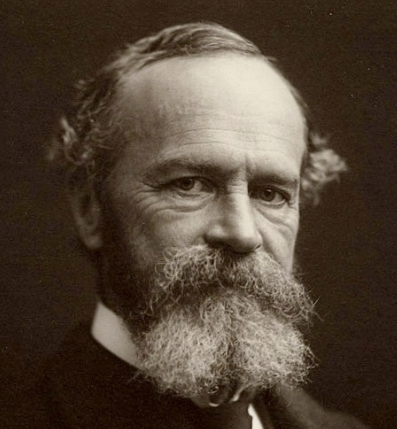
The most violent revolutions in an individual's beliefs leave most of his old order standing. Time and space, cause and effect, nature and history, and one's own biography remain untouched. New truth is always a go-between, a smoother-over of transitions. It marries old opinion to new fact so as ever to show a minimum of jolt, a maximum of continuity.
▼
Source
source
"What Pragmatism Means," Pragmatism, pp. 60-61 (1931); lectures delivered at the Lowell Institute, Boston, Massachusetts
8 months 2 weeks ago
"What is meant by saying that my choice of which way to walk home after the lecture is ambiguous and matter of chance?...It means that both Divinity Avenue and Oxford Street are called but only one, and that one either one, shall be chosen.
▼
Source
source
The Dilemma of Determinism (1884) p.155
4 months 2 weeks ago
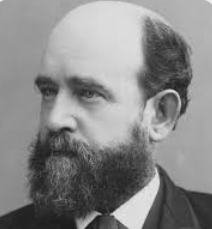
I am firmly convinced, as I have already said, that to effect any great social improvement, it is sympathy rather than self-interest, the sense of duty rather than the desire for self-advancement, that must be appealed to. Envy is akin to admiration, and it is the admiration that the rich and powerful excite which secures the perpetuation of aristocracies.
▼
Source
source
Ch. 21 : Conclusion
7 months 3 days ago
Moreover, nothing is so rare as to see misfortune fairly portrayed; the tendency is either to treat the unfortunate person as though catastrophe were his natural vocation, or to ignore the effects of misfortune on the soul, to assume, that is, that the soul can suffer and remain unmarked by it, can fail, in fact, to be recast in misfortune's image.
▼
Source
source
p. 193

8 months 2 weeks ago
Psychologists have hitherto failed to realize that imagination is a necessary ingredient of perception itself.
▼
Source
source
A 120
6 months ago
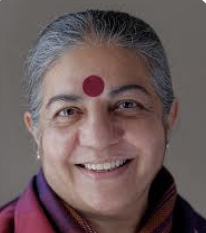
The way out of this violent cycle is to deepen democracy-to bring decisions that directly affect people's lives as close as possible to where people are and to where they can take responsibility.

7 months 2 weeks ago
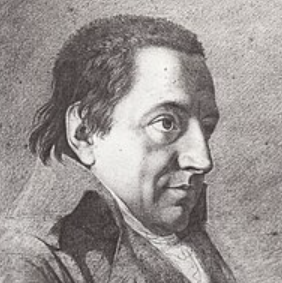
Blessed be the hour in which I was first led to inquire into my own spiritual nature and destination! All my doubts are removed; I know what I can know, and have no fears for what I cannot know. I am satisfied; perfect clearness and harmony reign in my soul, and a new and more glorious existence begins for me. My entire destiny I cannot comprehend; what I am to become, exceeds my present power of conception. A part, which is concealed from me, is visible to the father of spirits. I know only that it is secure, everlasting and glorious. That part of it which is confided to me I know, for it is the root of all my other knowledge.
▼
Source
source
Jane Sinnett, trans 1846 p.120
4 months 4 weeks ago
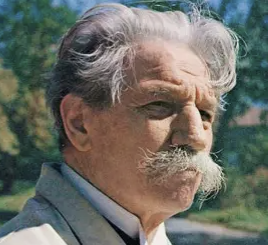
I do not want to frighten you by telling you about the temptations life will bring. Anyone who is healthy in spirit will overcome them. But there is something I want you to realize. It does not matter so much what you do. What matters is whether your soul is harmed by what you do. If your soul is harmed, something irreparable happens, the extent of which you won't realize until it will be too late.
8 months 2 weeks ago
Not from a vain or shallow thought His awful Jove young Phidias brought.
▼
Source
source
The Problem, st. 2
6 months 3 days ago
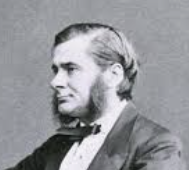
The whole analogy of natural operations furnishes so complete and crushing an argument against the intervention of any but what are termed secondary causes, in the production of all the phenomena of the universe; that, in view of the intimate relations between Man and the rest of the living world; and between the forces exerted by the latter and all other forces, I can see no excuse for doubting that all are co-ordinated terms of Nature's great progression, from the formless to the formed-from the inorganic to the organic-from blind force to conscious intellect and will.
▼
Source
source
Ch.2, p. 128
7 months 1 week ago
If to describe a misery were as easy to live through it!
8 months 3 weeks ago
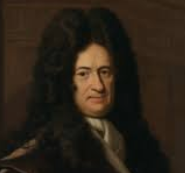
There are two famous labyrinths where our reason very often goes astray. One concerns the great question of the free and the necessary, above all in the production and the origin of Evil. The other consists in the discussion of continuity, and of the indivisibles which appear to be the elements thereof, and where the consideration of the infinite must enter in.
▼
Source
source
Théodicée (1710)ː Préface
9 months 2 weeks ago
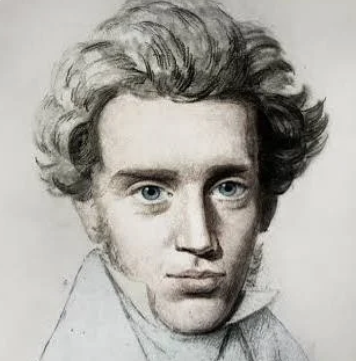
God creates out of nothing. Wonderful you say. Yes, to be sure, but He does what is still more wonderful: He makes saints out of sinners.
6 months 5 days ago
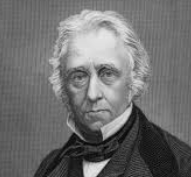
We know of no great revolution which might not have been prevented by compromise early and graciously made... [I]n all movements of the human mind which tend to great revolutions there is a crisis at which moderate concession may amend, conciliate, and preserve.
▼
Source
source
'Hallam', The Edinburgh Review (September 1828), quoted in T. B. Macaulay, Critical and Historical Essays Contributed to The Edinburgh Review, Vol. I (1843), p. 216
4 months 2 weeks ago
I am not the light, I am the night; but a flame stabs through my entrails and consumes me. I am the night devoured by light.
8 months 2 weeks ago
He would have left a Greek accent slanting the wrong way, and righted up a falling man.
CivilSimian.com created by AxiomaticPanic, CivilSimian, Kalokagathia