

7 months 3 days ago
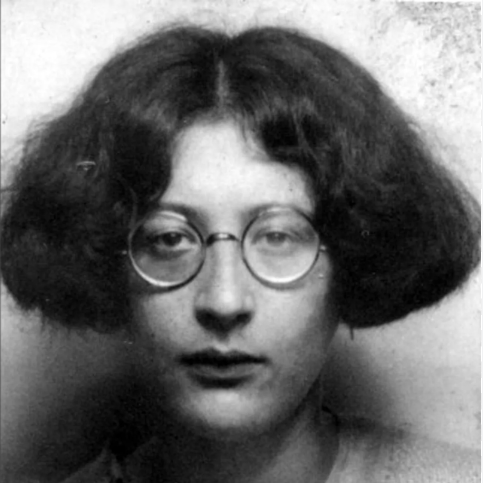
By committing a crime, a man places himself, of his own accord, outside the chain of eternal obligations which bind every human being to every other one. Punishment alone can weld him back again; fully so, if accompanied by consent on his part; otherwise only partially so. Just as the only way of showing respect for somebody suffering from hunger is to give him something to eat, so the only way of showing respect for somebody who has placed himself outside the law is to reinstate him inside the law by subjecting him to the punishment ordained by law.The need for punishment is not satisfied where, as is generally the case, the penal code is merely a method of exercising pressure through fear.
▼
Source
source
p. 103

6 months 1 week ago
Statues are not about history. We don't memorialize each piece of history. We memorialize things that we want to value and things that we want our children to walk by and say "This person embodied the values that I care about." Therefore, statues are about values not about history.
6 months 2 weeks ago
The Marxist critique is only a critique of capital, a critique coming from the heart of the middle and petit bourgeois classes, for which Marxism has served for a century as a latent ideology.... The Marxist seeks a good use of economy. Marxism is therefore only a limited petit bourgeois critique, one more step in the banalization of life toward the "good use" of the social!
▼
Source
source
Canadian Journal of Political and Social Theory 15 (1987) "When Bataille Attacked the Metaphysical Principle of Economy"
7 months 4 days ago
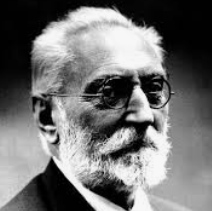
Reason perhaps teaches certain bourgeois virtues, but it does not make either heroes or saints.
7 months 1 week ago
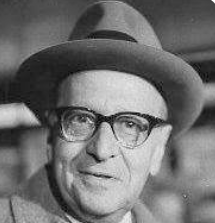
Reason as an organ for perceiving the true nature of reality and determining the guiding principles of our lives has come to be regarded as obsolete.
▼
Source
source
p. 18.
5 months 3 weeks ago
Cheating ageing by a low-calorie diet, uploading one's mind into a super-computer, migrating into outer space ... Longing for everlasting life, humans show that they remain the death-defined animal.
▼
Source
source
Sweet Morality (p. 235)
6 months 3 days ago
The known is finite, the unknown infinite; intellectually we stand on an islet in the midst of an illimitable ocean of inexplicability. Our business in every generation is to reclaim a little more land, to add something to the extent and the solidity of our possessions.
7 months 1 week ago
What each individual wills is obstructed by everyone else, and what emerges is something that no one willed.
▼
Source
source
Letter to Jean-Richard Bloch
8 months 2 weeks ago
The economic concept of value does not occur in antiquity.
▼
Source
source
Notebook VII, The Chapter on Capital, p. 696.
8 months 2 weeks ago
The Calculus required continuity, and continuity was supposed to require the infinitely little; but nobody could discover what the infinitely little might be.
▼
Source
source
Ch. 5: Mathematics and the Metaphysicians
8 months 1 week ago
Nihilism is not overcome by arguments or analyses; it is tamed by love and care. Any disease of the soul must be conquered by a turning of one's soul.
▼
Source
source
(p19)
9 months 2 weeks ago
Parmenides: If anyone, with his mind fixed on all these objections and others like them, denies the existence of ideas of things, and does not assume an idea under which each individual thing is classed, he will be quite at a loss, since he denies that the idea of each thing is always the same, and in this way he will utterly destroy the power of carrying on discussion... Then what will become of philosophy? To what can you turn, if these things are unknown?
5 months 3 days ago
All rational action is economic. All economic activity is rational action. All rational action is in the first place individual action. Only the individual thinks. Only the individual reasons. Only the individual acts.
▼
Source
source
Part II : The Economics of a Socialist Community, § I : The Economics of an Isolated Socialist Community, Ch. 5 : The Nature of Economic Activity, p. 97
8 months 3 weeks ago
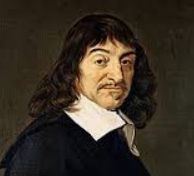
I think, therefore I am.
8 months 2 weeks ago
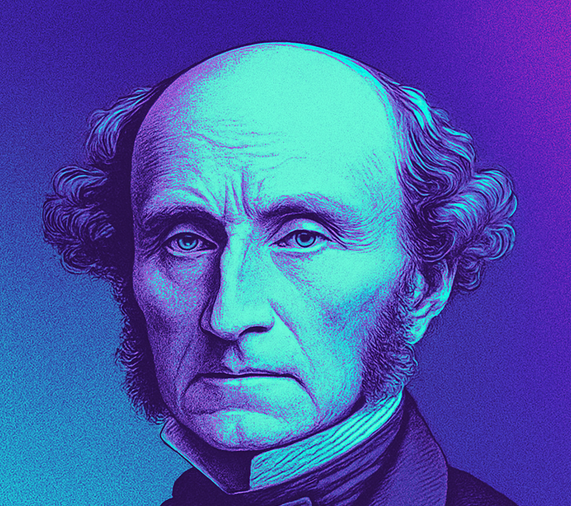
The first intellectual operation in which I arrived at any proficiency, was dissecting a bad argument, and finding in what part the fallacy lay: and though whatever capacity of this sort I attained was due to the fact that it was an intellectual exercise in which I was most perseveringly drilled by my father, yet it is also true that the school logic, and the mental habits acquired in studying it, were among the principal instruments of this drilling. I am persuaded that nothing, in modern education, tends so much, when properly used, to form exact thinkers, who attach a precise meaning to words and propositions, and are not imposed on by vague, loose, or ambiguous terms. The boasted influence of mathematical studies is nothing to it; for in mathematical processes, none of the real difficulties of correct ratiocination occur.
▼
Source
source
(p. 19)
5 months 1 week ago
Marxism has been the greatest fantasy of our century. It was a dream offering the prospect of a society of perfect unity, in which all human aspirations would be fulfilled and all values reconciled.
▼
Source
source
Epilogue, p. 1206
8 months 2 weeks ago
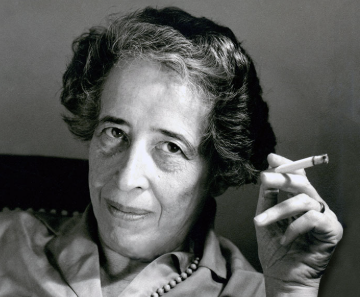
The main characteristic of any event is that it has not been foreseen. We don't know the future but everybody acts into the future. Nobody knows what he is doing because the future is being done, action is being done by a "we" and not an "I." Only if I were the only one acting could I foretell the consequences of what I'm doing. What actually happens is entirely contingent, and contingency is indeed one of the biggest factors in all history.
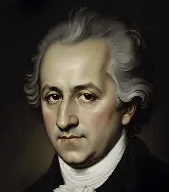
5 months 1 week ago
One lives but once in the world.
▼
Source
source
Clavigo, Act I, sc. i
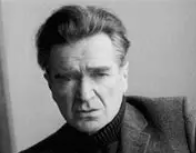
7 months 1 week ago
One of the greatest delusions of the average man is to forget that life is death's prisoner.
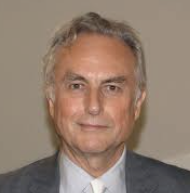
6 months 1 week ago
It may be that brain hardware has co-evolved with the internal virtual worlds that it creates. This can be called hardware-software co-evolution.
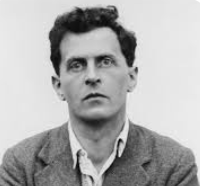
8 months 1 week ago
The less somebody knows and understands himself the less great he is, however great may be his talent. For this reason our scientists are not great.
▼
Source
source
p. 51e
8 months 2 weeks ago
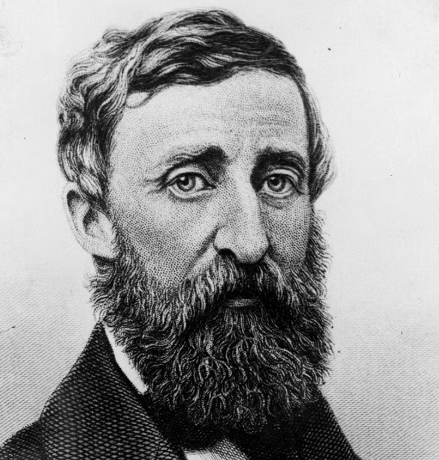
I am grateful for what I am & have. My thanksgiving is perpetual. It is surprising how contented one can be with nothing definite - only a sense of existence. Well, anything for variety. I am ready to try this for the next 1000 years, & exhaust it. How sweet to think of! My extremities well charred, and my intellectual part too, so that there is no danger of worm or rot for a long while. My breath is sweet to me. O how I laugh when I think of my vague indefinite riches. No run on my bank can drain it - for my wealth is not possession but enjoyment.
▼
Source
source
Letter to Harrison Gray Otis Blake (6-7 December 1856), as published in The Correspondence of Henry David Thoreau (1958)
7 months 1 week ago
Fear is the antidote to boredom: the remedy must be stronger than the disease.
8 months 3 weeks ago
I speak truth, not so much as I would, but as much as I dare; and I dare a little the more as I grow older.
▼
Source
source
Book iii. Chap 2. Of Repentance
4 months 4 weeks ago
Profound love demands a deep conception and out of this develops reverence for the mystery of life. It brings us close to all beings, to the poorest and smallest as well as all others.
7 months 2 weeks ago
Pure mathematics is religion.
7 months 1 week ago
A gifted humanity can only produce skeptics, never saints.
6 months 3 weeks ago
Body and soul: a horse harnessed beside an ox.
▼
Source
source
D 103
4 months 2 weeks ago
An art that heals and protects its subject is a geography of scars.
▼
Source
source
Damage
4 months 2 weeks ago
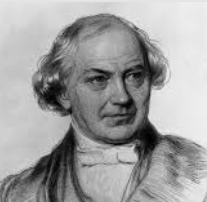
Truths once obtained by legitimate Induction are Facts: these Facts may be again connected, so as to produce higher truths: and thus we advance to 'Successive Generalizations'.
8 months 1 week ago
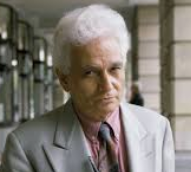
To live, by definition, is not something one learns. Not from oneself, it is not learned from life, taught by life. Only from the other and by death. In any case from the other at the edge of life. At the internal border or the external border, it is a heterodidactics between life and death.
▼
Source
source
Exordium
9 months 1 week ago
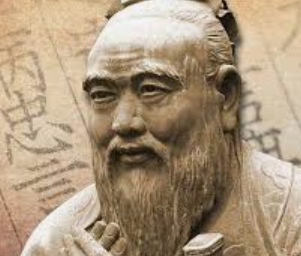
To entire sincerity there belongs ceaselessness. Not ceasing, it continues long. Continuing long, it evidences itself. Evidencing itself, it reaches far. Reaching far, it becomes large and substantial. Large and substantial, it becomes high and brilliant. Large and substantial; this is how it contains all things. High and brilliant; this is how it overspreads all things. Reaching far and continuing long; this is how it perfects all things. So large and substantial, the individual possessing it is the co-equal of Earth. So high and brilliant, it makes him the co-equal of Heaven. So far-reaching and long-continuing, it makes him infinite. Such being its nature, without any display, it becomes manifested; without any movement, it produces changes; and without any effort, it accomplishes its ends.
8 months 3 weeks ago
What if he has borrowed the matter and spoiled the form, as it oft falls out?
▼
Source
source
Book III, Ch. 8. Of the Art of Conversation
4 months 4 weeks ago
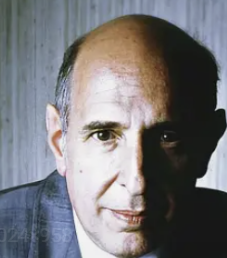
Socrates' way of life is the consequence of his recognition that we can know what it is that we do not know about the most important things and that we are by nature obliged to seek that knowledge.
▼
Source
source
Western Civ, p. 18.
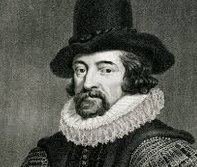
8 months 3 weeks ago
Time, which is the author of authors.
▼
Source
source
Book I, iv, 12
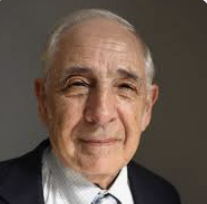
6 months 2 weeks ago
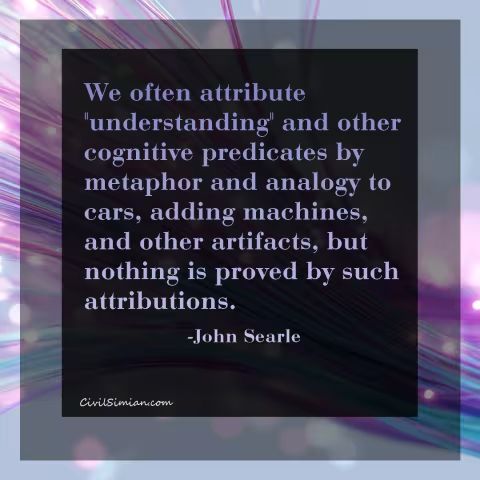
All of our conscious states, without exception, are caused by lower level neurobiological processes in the brain, and they are realized in the brain as higher level, or system features. It's about as mysterious as the liquidity of water, right? The liquidity is not an extra juice squirted out by the H2O molecules, it's a condition that the system is in; and just as the jar full of water can go from a liquid to solid, depending on the behavior of the molecules, so your brain can go from a state of being conscious to a state of being unconscious, depending on the behavior of the molecules. The famous mind body problem is that simple.
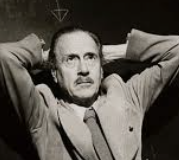
6 months 2 weeks ago
People never remember but the computer never forgets.
▼
Source
source
(p. 69)
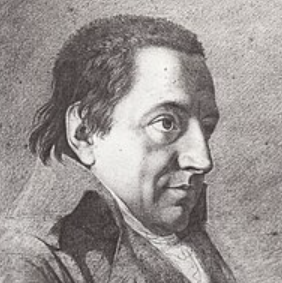
7 months 2 weeks ago
This method of mental training is, therefore, the immediate preparation for the moral; it completely destroys the root of immorality by never allowing sensuous enjoyment to become the motive. Formerly, that was the first motive to be stimulated and developed, because it was believed that otherwise the pupil could not be influenced or controlled at all.
▼
Source
source
General Nature of New Eduction contiunued p. 31
8 months 2 weeks ago
If you read history you will find that the Christians who did most for the present world were just those who thought most of the next... It is since Christians have largely ceased to think of the other world that they have become so ineffective in this. Aim at Heaven and you will get earth "thrown in": aim at earth and you will get neither.
▼
Source
source
Book III, Chapter 10, "Hope"
6 months ago
I find I am shedding hypocrisy in human relationships. What a rest that will be! The most exhausting thing in life, I have discovered, is being insincere. That is why so much of social life is exhausting; one is wearing a mask. I have shed my mask.
▼
Source
source
Ch. 2; part of this statement has often been paraphrased: "The most exhausting thing in life is being insincere."

5 months 5 days ago
There should be 2 systems. One for needs and one for wants. We shouldn't have to compete for needs, and we shouldn't expect the things we want. An ideal system would definitely be a seriously regulated capitalism with an uncompromised safety net that we focus on with automation and AI. But, those with just want those without to die. In the end, they will lose.

7 months 1 week ago
Individuality, conceived as a temporal development involves uncertainty, indeterminacy, or contingency. Individuality is the source of whatever is unpredictable in the world.
8 months 1 week ago
With regard to the rather common general distinction between good and bad sex ..., bad sex is generally better than none at all. This should not be controversial: it seems to hold for other important matters, like food, music, literature, and society. In the end, one must choose from among the available alternatives, whether their availability depends on the environment or on one's own constitution. And the alternatives have to be fairly grim before it becomes rational to opt for nothing.
▼
Source
source
"Sexual Perversion" (1969), p. 52.
8 months 3 weeks ago
It is manifest that there is no danger at all in the proportion or quantity of knowledge, how large soever, lest it should make it swell or out-compass itself; no, but it is merely the quality of knowledge, which, be it in quantity more or less, if it be taken without the true corrective thereof, hath in it some nature of venom or malignity, and some effects of that venom, which is ventosity or swelling. This corrective spice, the mixture whereof maketh knowledge so sovereign, is charity, which the Apostle immediately addeth to the former clause; for so he saith, "Knowledge bloweth up, but charity buildeth up".
▼
Source
source
Book I
7 months 4 weeks ago
In this theater of man's life it is reserved only for God and angels to be lookers on.
▼
Source
source
Francis Bacon, in The Advancement of Learning (1605) Book II, xx, 8.
4 months 2 weeks ago
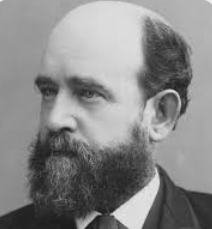
The rights of men to the use of land are not joint rights: they are equal rights. Were there only one man on earth, he would have a right to the use of the whole earth or any part of the earth. When there is more than one man on earth, the right to the use of land that any one of them would have, were he alone, is not abrogated: it is only limited. The right of each to the use of land is still a direct, original right, which he holds of himself, and not by the gift or consent of the others; but it has become limited by the similar rights of the others, and is therefore an equal right.
▼
Source
source
Part I : Declaration, Ch. III : "Social Statics" - The Right of Property
7 months 1 week ago
There have always been poor and working classes; and the working class have mostly been poor. But there have not always been workers and poor people living under conditions as they are today.
CivilSimian.com created by AxiomaticPanic, CivilSimian, Kalokagathia