



8 months 1 week ago
Indulge in no wrathfulness, for a man when he indulges in wrath becomes then forgetful of his duty and good works . . . and sin and crime of every kind occur unto his mind, and until the subsiding of the wrath he is said to be just like Ahareman.

4 months 4 weeks ago
From my youth onwards, I have felt sure that all thought which thinks itself out to an issue ends in mysticism. In the stillness of the African jungle I have been able to work out this thought and give it expression.
4 months 3 weeks ago
Space and time are commonly regarded as the forms of existence of the real world, matter as its substance. A definite portion of matter occupies a definite part of space at a definite moment of time. It is in the composite idea of motion that these three fundamental conceptions enter into intimate relationship.
▼
Source
source
Introduction
8 months 3 weeks ago
I have resolved to demonstrate by a certain and undoubted course of argument, or to deduce from the very condition of human nature, not what is new and unheard of, but only such things as agree best with practice.
▼
Source
source
Ch. 1, Introduction

6 months 1 week ago
It takes intellectual courage to kick yourself out of your emotional incredulity and persuade yourself that there is no other rational choice.
▼
Source
source
The Intellectual and Moral Courage of Atheism
7 months ago
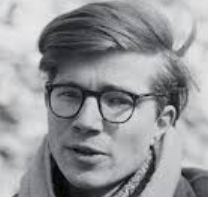
The chief impression left by a study of Crowley's life and works is that he wasted an immense amount of time and energy trying to shock everyone he came into contact with, and his dislike of orthodoxy turned him into an unconsciously comic figure, like Don Quixote.
▼
Source
source
pp. 153-154
8 months 2 weeks ago
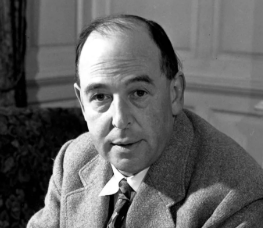
My dear Wormwood, I note what you say about guiding your patient's reading and taking care that he sees a good deal of his materialist friend. But are you not being a trifle naive? It sounds as if you suppose that argument was the way to keep him out of the enemy's clutches. That might have been so if he had lived a few centuries earlier.
▼
Source
source
Letter I
4 months 2 weeks ago
Whoever is a truly good man seeks a renown not by means of an ornament that does not belong to him but by means of his own virtue.
▼
Source
source
p. 151
6 months 2 weeks ago
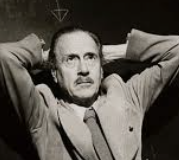
The method of the twentieth century is to use not single but multiple models for experimental exploration - the technique of the suspended judgement.
▼
Source
source
(p. 81)

8 months 2 weeks ago
A father would do well, as his son grows up, and is capable of it, to talk familiarly with him; nay, ask his advice, and consult with him about those things wherein he has any knowledge or understanding. By this, the father will gain two things, both of great moment. The sooner you treat him as a man, the sooner he will begin to be one; and if you admit him into serious discourses sometimes with you, you will insensibly raise his mind above the usual amusements of youth, and those trifling occupations which it is commonly wasted in. For it is easy to observe, that many young men continue longer in thought and conversation of school-boys than otherwise they would, because their parents keep them at that distance, and in that low rank, by all their carriage to them.
▼
Source
source
Sec. 95
6 months 1 day ago
There is a strong affinity between the forces of empire and a politics of hate that justifies policies of domination and exclusion. So long as people's attention is focused on fear and hatred of foreigners or members of a particular religious group, such as Muslims, they are distracted from organizing to deal with the system of institutional domination and exploitation that is the real source of their insecurity.
7 months 2 weeks ago
...what the freedom is that I love, and that to which I think all men intitled. It is not solitary, unconnected, individual, selfish Liberty. As if every Man was to regulate the whole of his Conduct by his own will. The Liberty I mean is social freedom. It is that state of things in which Liberty is secured by the equality of Restraint; A Constitution of things in which the liberty of no one Man, and no body of Men and no Number of men, can find Means to trespass on the liberty of any Person, or any description of Persons in the Society. This kind of liberty is indeed but another name for Justice, as ascertained by wise Laws, and secured by well-constructed institutions.
▼
Source
source
Letter to Charles-Jean-François Depont (November 1789), quoted in Alfred Cobban and Robert A. Smith (eds.), The Correspondence of Edmund Burke, Volume VI: July 1789-December 1791 (1967), p. 42
7 months 4 days ago
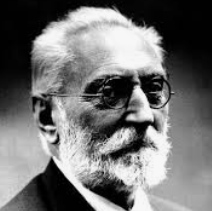
Apart from the fact there is no normal standard of health, nobody has proved that man is necessarily cheerful by nature. And further, man, by the very fact of being man, of possessing consciousness, is, in comparison with the ass or the crab, a diseased animal. Consciousness is a disease.
7 months 3 weeks ago
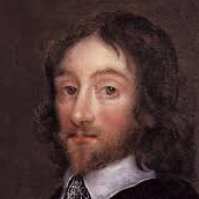
We all labour against our own cure, for death is the cure of all diseases.
▼
Source
source
Section 9
8 months 1 week ago
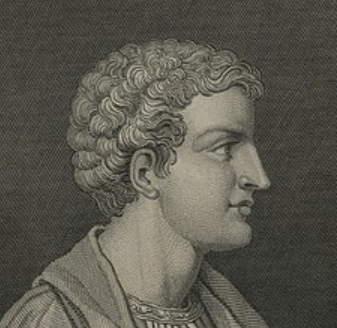
My cares and my inquiries are for decency and truth, and in this I am wholly occupied.
▼
Source
source
Book I, epistle i, line 11
8 months 1 week ago
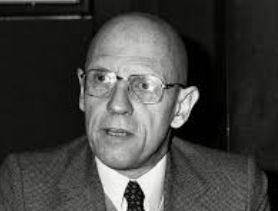
All these present struggles revolve around the question: Who are we? They are a refusal of these abstractions, of economic and ideological state violence, which ignore who we are individually, and also a refusal of a scientific or administrative inquisition which determines who one is.
▼
Source
source
p. 781
4 months 4 weeks ago
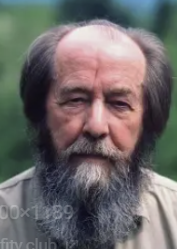
Literature that is not the breath of contemporary society, that dares not transmit the pains and fears of that society, that does not warn in time against threatening moral and social dangers - such literature does not deserve the name of literature; it is only a façade. Such literature loses the confidence of its own people, and its published works are used as wastepaper instead of being read.
▼
Source
source
Open letter to the Fourth Soviet Writers' Congress (16 May 1967) "The Struggle Intensifies," Solzhenitsyn: A Documentary Record, ed. Leopold Labedz
8 months 1 week ago
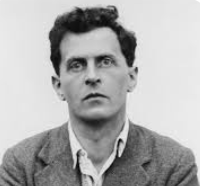
Philosophy unravels the knots in our thinking; hence its results must be simple, but its activity is as complicated as the knots that it unravels.
▼
Source
source
Ch. 9 : Philosophy, p. 183
7 months 1 week ago
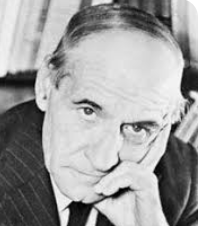
Diogenes, in his mud-covered sandals, tramps over the carpets of Aristippus. The cynic pullulated at every corner, and in the highest places. This cynic did nothing but saboter the civilisation of the time. He was the nihilist of Hellenism. He created nothing, he made nothing. His role was to undo - or rather to attempt to undo, for he did not succeed in his purpose. The cynic, a parasite of civilisation, lives by denying it, for the very reason that he is convinced that it will not fail. What would become of the cynic among a savage people where everyone, naturally and quite seriously, fulfils what the cynic farcically considers to be his personal role?
▼
Source
source
Chapter XI: The Self-Satisfied Age
4 months 2 weeks ago
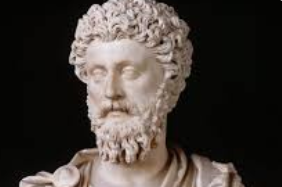
Be not unwilling in what thou doest, neither selfish nor unadvised nor obstinate; let not over-refinement deck out thy thought; be not wordy nor a busybody.
▼
Source
source
III, 5
8 months 2 weeks ago
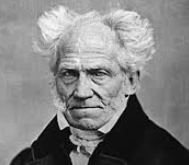
Christianity taught only what the whole of Asia knew already long before and even better.
▼
Source
source
quoted in Londhe, S. (2008). A tribute to Hinduism: Thoughts and wisdom spanning continents and time about India and her culture. New Delhi: Pragun Publication.
6 months 1 week ago
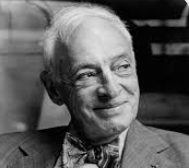
In the greatest confusion there is still an open channel to the soul. It may be difficult to find because by midlife it is overgrown, and some of the wildest thickets that surround it grow out of what we describe as our education. But the channel is always there, and it is our business to keep it open, to have access to the deepest part of ourselves-to that part of us which is conscious. ... The independence of this consciousness, which has the strength to be immune to the noise of history and the distractions of our immediate surroundings, is what the life struggle is all about. The soul has to find and hold its ground against hostile forces, sometimes embodied in ideas which frequently deny its very existence, and which indeed often seem to be trying to annul it altogether.
▼
Source
source
pp. 16-17
7 months 1 week ago
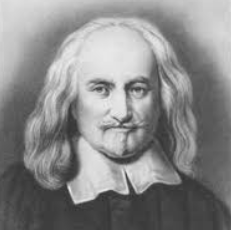
Now I am about to take my last voyage, a great leap in the dark.
▼
Source
source
Last words
8 months 2 weeks ago
I have no doubt that the present Prime Minister, for instance, is a most sincere Christian, but I should not advise any of you to go and smite him on one cheek. I think you might find that he thought this text was intended in a figurative sense.
▼
Source
source
"The Character of Christ"
8 months 2 weeks ago
I felt less alone when I didn't know you yet: I was waiting for the other. I thought only of his strength and never of my weakness. And now here you are, Orestes, it was you. I look at you and I see that we are two orphans.
▼
Source
source
Electra to her brother Orestes, Act 2
7 months ago
I was aggressively nonpolitical. I believed that people who make a fuss about politics do so because their heads are too empty to think about more important things. So I felt nothing but impatient contempt for Osborne's Jimmy Porter and the rest of the heroes of social protest.
▼
Source
source
p. 2

7 months ago
In the end, I am moved by causes and ideas that I can actually choose to support because they conform to values and principles that I believe in.
▼
Source
source
p. 88
4 months 1 week ago
Much reading after a certain age diverts the mind from its creative pursuits. Any man who reads too much and uses his own brain too little falls into lazy habits of thinking, just as the man who spends too much time in the theaters is apt to be content with living vicariously instead of living his own life.
8 months 2 weeks ago
Three passions, simple but overwhelmingly strong, have governed my life: the longing for love, the search for knowledge, and unbearable pity for the suffering of mankind. These passions, like great winds, have blown me hither and thither, in a wayward course, over a deep ocean of anguish, reaching to the very verge of despair.
5 months 1 week ago
At forty, I had attained the unperturbed mind.
▼
Source
source
"Discipline and Character", no. 41

8 months 1 week ago
When we make ethical judgments, we must go beyond a personal or sectional point of view and take into account the interests of all those affected, unless we have sound ethical grounds for doing otherwise. (...) The essence of the principle of equal consideration of interests is that we give equal weight in our moral deliberations to the like interests of all those affected by our actions. (...) an interest is an interest, whoever's interest it may be.
▼
Source
source
Ch. 2: Equality and Its Implications
6 months 1 week ago
Contrary to earlier prejudices, there is nothing inherently progressive about evolution.
▼
Source
source
Chapter 7 "Constructive Evolution" (p. 178)
4 months 4 weeks ago
Running away from fear is fear; fighting pain is pain; trying to be brave is being scared. If the mind is in pain, the mind is pain. The thinker has no other form than his thought.
7 months ago
Christianity was an epidemic rather than a religion. It appealed to fear, hysteria and ignorance. It spread across the Western world, not because it was true, but because humans are gullible and superstitious.
▼
Source
source
p. 212

9 months 3 days ago
Venerate the martyrs, praise, love, proclaim, honor them. But worship the God of the martyrs.
▼
Source
source
273:9; translation from: The works of Saint Augustine, John E. Rotelle, New City Press, ISBN 1565480600 ISBN 9781565480605 p. 21
7 months 1 week ago
The passion of laughter is nothing else but a sudden glory arising from sudden conception of some eminency in ourselves, by comparison with the infirmities of others, or with our own formerly...
▼
Source
source
The Elements of Law, Natural and Politic Pt. I Human Nature (1640) Ch. 9
8 months 2 weeks ago
No particular results then, so far, but only an attitude of orientation, is what the pragmatic method means. The attitude of looking away from first things, principles, 'categories,' supposed necessities; and of looking towards last things, fruits, consequences, facts.
▼
Source
source
Lecture II, What Pragmatism Means
4 months 2 weeks ago
Some people, when they do someone a favor, are always looking for a chance to call it in. And some aren't, but they're still aware of it--still regard it as a debt. But others don't even do that. They're like a vine that produces grapes without looking for anything in return. (Hays translation) A man makes no noise over a good deed, but passes on to another as a vine to bear grapes again in season.
▼
Source
source
V, 6

7 months 2 weeks ago
On its pass through finitude, the being-for-itself of the counter-image expresses itself most potently as ""I-ness", as self-identical individuality. Just as a planet in its orbit no sooner reaches its farthest distance from the center than it returns to its closest proximity, so the point of the farthest distance from God, the I-ness, is also the moment of its return to the Absolute, of the re-absorption into the ideal.
▼
Source
source
P. 30
7 months 1 week ago
True confessions are written with tears only. But my tears would drown the world, as my inner fire would reduce it to ashes.

7 months ago
The supreme effort of the avant-guard is onward, ever onward.
▼
Source
source
Light and Shadows in the Life of an Avant-Guard
7 months 1 week ago
Matters of religion should never be matters of controversy. We neither argue with a lover about his taste, nor condemn him, if we are just, for knowing so human a passion.
▼
Source
source
Ch. VI
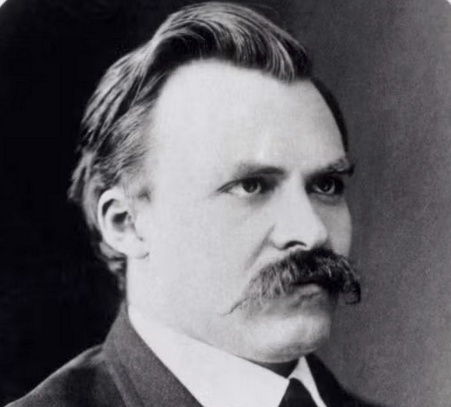
9 months 2 weeks ago
When someone hides something behind a bush and looks for it again in the same place and finds it there as well, there is not much to praise in such seeking and finding. Yet this is how matters stand regarding seeking and finding "truth" within the realm of reason. If I make up the definition of a mammal, and then, after inspecting a camel, declare "look, a mammal' I have indeed brought a truth to light in this way, but it is a truth of limited value. That is to say, it is a thoroughly anthropomorphic truth which contains not a single point which would be "true in itself" or really and universally valid apart from man. At bottom, what the investigator of such truths is seeking is only the metamorphosis of the world into man.
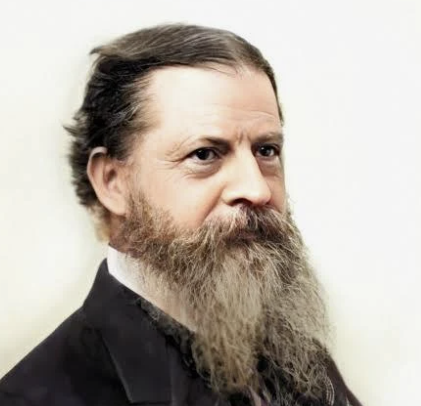
7 months 1 week ago
Logical analysis applied to mental phenomenon shows that there is but one law of mind, namely that ideas tend to spread continuously and to affect certain others which stand to them in a peculiar relation of affectibility. In this spreading they lose intensity, and especially the power of affecting others, but gain generality and become welded with other ideas.
6 months 1 week ago
Women will be no longer made the slaves of, or dependent upon men ... They will be equal in education, rights, privileges and personal liberty.
▼
Source
source
Sixth Part
CivilSimian.com created by AxiomaticPanic, CivilSimian, Kalokagathia