

7 months 3 weeks ago
I look upon you as a gem of the old rock.
▼
Source
source
Dedication
8 months 2 weeks ago
While there are manners and compliments we do not meet, we do not teach one another the lessons of honesty and sincerity that the brutes do, or of steadiness and solidity that the rocks do. The fault is commonly mutual, however; for we do not habitually demand any more of each other.
▼
Source
source
p. 490
4 months 2 weeks ago
Rememberest the gods, and that they wish not to be flattered, but wish all reasonable beings to be made like themselves; and... rememberest that what does the work of a fig-tree is a fig-tree, and that what does the work of a dog is a dog, and that what does the work of a bee is a bee, and that what does the work of a man is a man.
▼
Source
source
X, 8
8 months 2 weeks ago
All the entertainment and talk of history is nothing almost but fighting and killing: and the honour and renown that is bestowed on conquerers (who for the most part are but the great butchers of mankind) farther mislead growing youth, who by this means come to think slaughter the laudible business of mankind, and the most heroick of virtues. By these steps unnatural cruelty is planted in us; and what humanity abhors, custom reconciles and recommends to us, by laying it in the way to honour. Thus, by fashioning and opinion, that comes to be a pleasure, which in itself neither is, nor can be any.
▼
Source
source
Sec. 116

7 months ago
When we are lulled into somnolence by lack of challenge every molehill tends to become a mountain, every minor inconvenience an intolerable imposition. For a self-chosen reality tends to become a prison. The factors that protect and insulate civilized man can easily end by suffocating him unless he possesses a high degree of self-discipline, the 'highly developed vital sense' that Shaw speaks of. And since clever and sensitive people are inclined to lack self-discipline, a high degree of culture usually involves a high degree of pessimism. This is what has happened to Western civilisation over the past two centuries. It explains why so many distinguished artists, writers and musicians have taken such a negative view of the human situation.
▼
Source
source
Introduction, p. xiii
8 months 2 weeks ago
Sophistry is only fit to make men more conceited in their ignorance.
4 months 3 weeks ago
In our opinion, the task of a far-sighted policy of the Third Reich ought to have been that of seeking every possible means to obtain at least the neutrality of the western nations so as to have free hands for a devestating attack exclusively against the Soviet Union-but that would have required the shrewdness and genius of a Metternich.
▼
Source
source
pp. 81-82
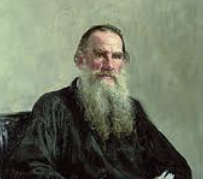
6 months 2 weeks ago
If one has no vanity in this life of ours, there is no sufficient reason for living.
▼
Source
source
Ch. 23. This is not, as it is often quoted, a stand-alone Tolstoy epigram, but part of the narration by the novella's jealousy-ridden protagonist Pozdnyshev.
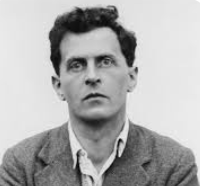
8 months 1 week ago
Don't get involved in partial problems, but always take flight to where there is a free view over the whole single great problem, even if this view is still not a clear one.
▼
Source
source
Journal entry
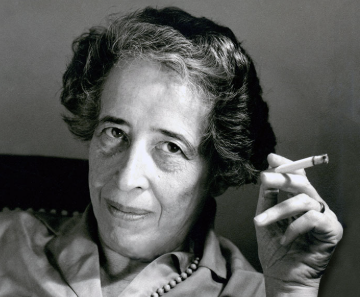
8 months 2 weeks ago
In a head-on clash between violence and power, the outcome is hardly in doubt. Nowhere is the self-defeating factor in the victory of violence over power more evident than in the use of terror to maintain domination, about whose weird successes and eventual failures we know perhaps more than any generation before us. Violence can destroy power; it is utterly incapable of creating it.
▼
Source
source
On Violence
6 months 2 weeks ago
No man is happy who does not think himself so.
▼
Source
source
Maxim 584
5 months 3 weeks ago
From each as they choose, to each as they are chosen.
▼
Source
source
Ch. 7 : Distributive Justice, Section I, Patterning, p. 160
4 months 2 weeks ago
The great work of the present for every man, and every organization of men, who would improve social conditions, is the work of education - the propagation of ideas. It is only as it aids this that anything else can avail. And in this work every one who can think may aid - first by forming clear ideas himself, and then by endeavoring to arouse the thought of those with whom he comes in contact.
▼
Source
source
Ch. 21 : Conclusion
5 months 1 week ago
A person who has been punished is not thereby simply less inclined to behave in a given way; at best, he learns how to avoid punishment.
▼
Source
source
Beyond Freedom and Dignity
5 months 2 days ago
There are more things, Lucilius, likely to frighten us than there are to crush us; we suffer more often in imagination than in reality.
5 months 3 days ago
The unhampered market economy is not a system which would seem commendable from the standpoint of the selfish group interests of the entrepreneurs and capitalists. It is not the particular interests of a group or of individual persons that require the market economy, but regard for the common welfare. It is not true that the advocates of the free-market economy are defenders of the selfish interests of the rich. The particular interests of the entrepreneurs and capitalists also demand interventionism to protect them against the competition of more efficient and active men. The free development of the market economy is to be recommended, not in the interest of the rich, but in the interest of the masses of the people.
▼
Source
source
Ch. VII : The Economic, Social, and Political Consequences of Interventionism § 1. The Economic Consequences
6 months 2 weeks ago
While imprisoned in the shed Pierre had learned not with his intellect but with his whole being, by life itself, that man is created for happiness, that happiness is within him, in the satisfaction of simple human needs, and that all unhappiness arises not from privation but from superfluity. And now during these last three weeks of the march he had learned still another new, consolatory truth- that nothing in this world is terrible. He had learned that as there is no condition in which man can be happy and entirely free, so there is no condition in which he need be unhappy and lack freedom. He learned that suffering and freedom have their limits and that those limits are very near together....
▼
Source
source
Bk. XIV, ch. 12
8 months 3 weeks ago
What would become of history, had we not a dependence on the veracity of the historian, according to the experience, what we have had of mankind?
▼
Source
source
§ 8.18
4 months 3 weeks ago
If life is all subjective, why not be subjectively happy rather than subjectively sad?
▼
Source
source
On the Wisdom of America (1950), p. 155
4 months 3 weeks ago
I am here to speak on freedom of speech. It is a great topic, and I am going to make my speech as free as possible. But you know that this cannot be done, for when anyone announces that he is going to speak his mind freely, everyone is frightened. This shows that there is no such thing as true freedom of speech. No one can afford to let his neighbors know what he is thinking about them. Society can exist only on the basis that there is some amount of polished lying and that no one says exactly what he thinks.
▼
Source
source
"Of Freedom of Speech", lecture given in China
4 months 2 weeks ago
It is too narrow an understanding of production which confines it merely to the making of things. Production includes not merely the making of things, but the bringing of them to the consumer. The merchant or storekeeper is thus as truly a producer as is the manufacturer, or farmer, and his stock or capital is as much devoted to production as is theirs.
▼
Source
source
Book I, Ch. 2
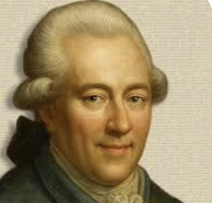
6 months 3 weeks ago
I am convinced we do not only love ourselves in others but hate ourselves in others too.
▼
Source
source
F 54
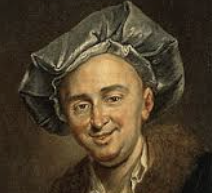
4 months 2 weeks ago
Let us not limit the resources of nature; they are infinite, especially when reinforced by great art.
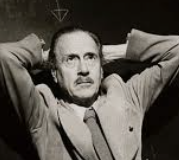
6 months 2 weeks ago
Violence, whether spiritual or physical, is a quest for identity and the meaningful.
▼
Source
source
The less identity, the more violence. "Violence in the media." Canadian Forum. Volume 56, 1976, p. 9
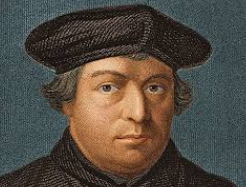
8 months 3 weeks ago
Mother love is stronger than the filth and scabbiness on a child, and so the love of God toward us is stronger than the dirt that clings to us.
▼
Source
source
94
7 months ago
Has not authority from time immemorial stamped every step of progress as treasonable?
5 months 1 week ago
Life is that which can hold a purpose for three thousand years and never yield. The individual fails, but life succeeds. The individual is foolish, but life holds in its blood and seed the wisdom of generations. The individual dies, but life, tireless and undiscourageble, goes on, wondering, longing, planning, trying, mounting, longing.
▼
Source
source
Ch. 5 : On Death
6 months 3 weeks ago
Schizophrenia is like love: there is no specifically schizophrenic phenomenon or entity; schizophrenia is the universe of productive and reproductive desiring machines, universal primary production as "the essential reality of man and nature".
▼
Source
source
The Desiring Machine
8 months 2 weeks ago
Long discourses, and philosophical readings, at best, amaze and confound, but do not instruct children. When I say, therefore, that they must be treated as rational creatures, I mean that you must make them sensible, by the mildness of your carriage, and in the composure even in the correction of them, that what you do is reasonable in you, and useful and necessary for them; and that it is not out of caprichio, passion or fancy, that you command or forbid them any thing.
▼
Source
source
Sec. 81
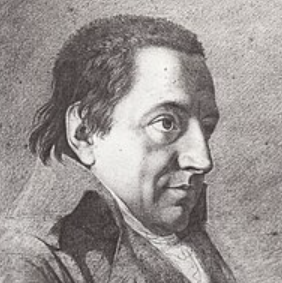
7 months 2 weeks ago
All law relations are determined by this principle: each one must restrict his freedom by the possibility of the freedom of the other. ... My freedom is limited by the freedom of the other only on condition that he limits his freedom by the conception of mine. Otherwise he is lawless. Hence, if a law-relation is to result from my cognition of the other, the cognition and the consequent limitation of freedom must have been mutual. All law-relation between persons is, therefore, conditioned by their mutual cognition of each other, and is, at the same time, completely determined thereby.
▼
Source
source
P. 173-175
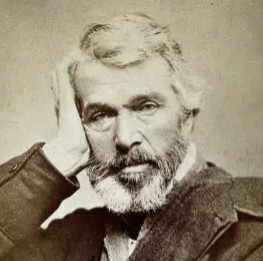
5 months 1 week ago
They understood in their heart that it was indispensable to be brave; that Odin would have no favor for them, but despise and thrust them out, if they were not brave. Consider too whether there is not something in this! It is an everlasting duty, valid in our day as in that, the duty of being brave. Valor is still value. The first duty for a man is still that of subduing Fear. We must get rid of Fear; we cannot act at all till then.
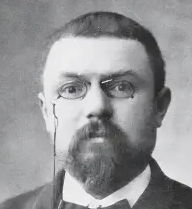
5 months 1 week ago
Thought is only a flash between two long nights, but this flash is everything.
▼
Source
source
Quoted in H. L. Mencken, A New Dictionary of Quotations
5 months 1 week ago
Society attacks early, when the individual is helpless.
▼
Source
source
Walden Two (1948), p. 95
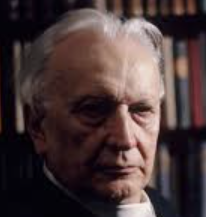
7 months 1 week ago
Rohde became more and more firmly bound to the bourgeois world, its institutions and accepted opinions. ... The contrast between the two natures makes Rohde and Nietzsche exemplary representatives of two distinctive worlds. In their youth they both live in the realm of boundless possibilities and feel an affinity through the exuberance of their noble aspirations. Subsequently they go in opposite directions. Nietzsche remains young, leaving concrete reality as his task assumes existential import. Rohde grows old, bourgeois, stable, and skeptical. Hence courage is a fundamental trait in Nietzsche, plaintive self-irony in Rohde. ... Rohde retained the interests but not the attitudes of his youth; he looked to the world of the Greeks for the object of his contemplation rather than the norm of obligation.
▼
Source
source
pp. 61-62
7 months 2 weeks ago
That unwise body, the United Irishmen, have had the folly to represent those Evils as owing to this Country, when in truth its chief guilt is in its total neglect, its utter oblivion, its shameful indifference and its entire ignorance, of Ireland and of every thing that relates to it, and not in any oppressive disposition towards that unknown region.
▼
Source
source
Letter to Thomas Hussey (9 December 1796), quoted in R. B. McDowell (ed.)
6 months 2 weeks ago
Once we have surrendered our senses and nervous systems to the private manipulation of those who would try to benefit from taking a lease on our eyes and ears and nerves, we don't really have any rights left. Leasing our eyes and ears and nerves to commercial interests is like handing over the common speech to a private corporation, or like giving the earth's atmosphere to a company as a monopoly.
▼
Source
source
p.73 of the 1966 Signet paperback edition

7 months 2 weeks ago
Situation seems to be the mould in which men's characters are formed.
▼
Source
source
Letter 23
8 months 3 weeks ago
Here am I who have written on all sorts of subjects calculated to excite hostility, moral, political, and religious, and yet I have no enemies - except, indeed, all the Whigs, all the Tories, and all the Christians.
▼
Source
source
Statement to a friend shortly before his death, as recounted in Men of Letters by Lord Henry Brougham
9 months 2 weeks ago
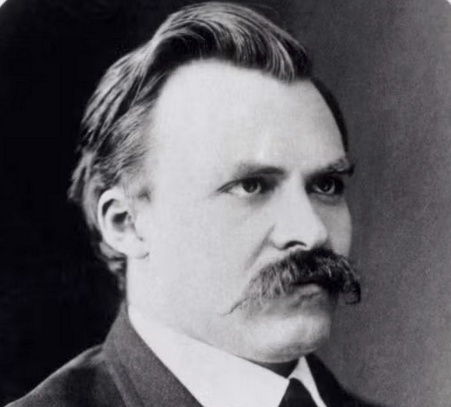
Knowledge more than a Means. Also without this passion I refer to the passion for knowledge, science would be furthered: science has hitherto increased and grown up without it. The good faith in science, the prejudice in its favour, by which States are at present dominated (it was even the Church formerly), rests fundamentally on the fact that the absolute inclination and impulse has so rarely revealed itself in it, and that science is regarded not as a passion, but as a condition and an "ethos." Indeed, amour-plaisir of knowledge (curiosity) often enough suffices, amour-vanity suffices, and habituation to it, with the afterthought of obtaining honour and bread; it even suffices for many that they do not know what to do with a surplus of leisure, except to continue reading, collecting, arranging, observing and narrating; their "scientific impulse" is their ennui.
7 months 1 week ago
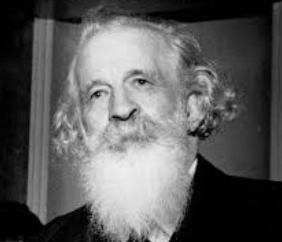
I am a dreamer of words, of written words. I think I am reading; a word stops me. I leave the page. The syllables of the word begin to move around. Stressed accents begin to invert. The word abandons its meaning like an overload which is too heavy and prevents dreaming. Then words take on other meanings as if they had the right to be young. And the words wander away, looking in the nooks and crannies of vocabulary for new company, bad company.
▼
Source
source
Introduction, sect. 6
9 months 2 weeks ago
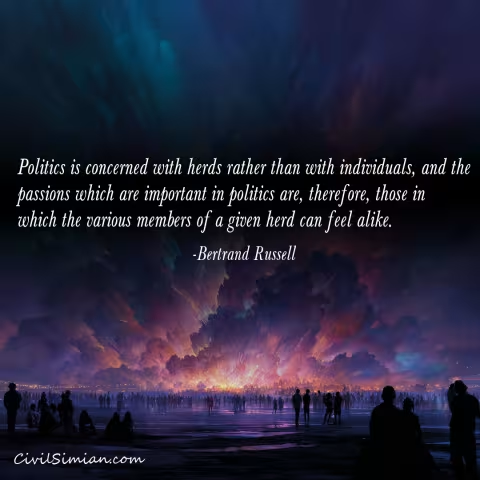
Mathematics would certainly have not come into existence if one had known from the beginning that there was in nature no exactly straight line, no actual circle, no absolute magnitude.
CivilSimian.com created by AxiomaticPanic, CivilSimian, Kalokagathia