
But...objective reality determines the grade he gets...


The philosophy of Plotinus has the defect of encouraging men to look within rather than to look without: when we look within we see nous, which is divine, while when we look without we see the imperfections of the sensible world. This kind of subjectivity was a gradual growth; it is to be found in the doctrines of Protagoras, Socrates, and Plato, as well as in the Stoics and Epicureans. But at first it was only doctrinal, not temperamental; for a long time it failed to kill scientific curiosity. [...] Plotinus is both an end and a beginning-an end as regards the Greeks, a beginning as regards Christendom.
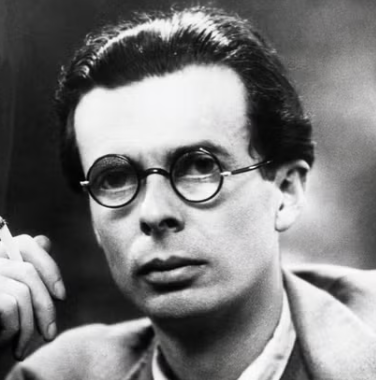
A belief in hell and the knowledge that every ambition is doomed to frustration at the hands of a skeleton have never prevented the majority of human beings from behaving as though death were no more than an unfounded rumour, and survival a thing beyond the bounds of possibility.
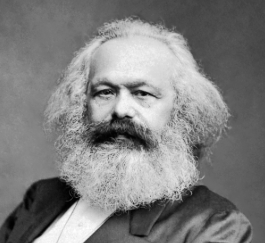
These numerous points at which money is withdrawn from circulation and accumulated in numerous individual hoards or potential money-capitals appears as so many obstacles to circulation, because they immobilise the money and deprive it of its capacity to circulate for a certain time.
Beauty is a pledge of the possible conformity between the soul and nature, and consequently a ground of faith in the supremacy of the good.
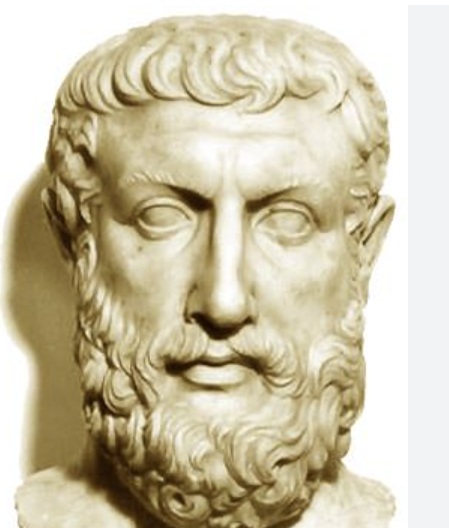
What was was ever, and ever shall be. For, if it had come into being, it needs must have been nothing before it came into being. Now, if it were nothing, in no wise could anything have arisen out of nothing.
This inner revolution is realistic because it maintains itself deliberately within the framework of existing institutions; the oppressed reckon with the real situation.
We do not require elaborate training merely in order to refrain from embarking upon intricate trains of inference. Such abstinence is only too easy.
Care and responsibility are constituent elements of love, but without respect for and knowledge of the beloved person, love deteriorates into domination and possessiveness. Respect is not fear and awe; it denotes, in accordance with the root of the word (respicere = to look at), the ability to see a person as he is, to be aware of his individuality and uniqueness. To respect a person is not possible without knowing him; care and responsibility would be blind if they were not guided by the knowledge of the person's individuality.
We must have kings, and we must have nobles. Nature provides such in every society, - only let us have the real instead of the titular. Let us have our leading and our inspiration from the best. In every society some men are born to rule, and some to advise. Let the powers be well directed, directed by love, and they would everywhere be greeted with joy and honor.
I believe that the advance of science depends upon the free competition of thought, and thus upon freedom, and that it must come to an end if freedom is destroyed (though it may well continue for some time in some fields, especially in technology).
Kripke tries to sober us up by denying that meaning determines reference. Rather, we name things by confronting them and baptising them, not by creating them out of a list of qualities. Names are not, pace Russell, shorthand for such lists. They are not abbreviations for descriptions, but (in Kripke's coinage) 'rigid designators' - that is, they would name the same things in any possible world, including worlds in which their bearers did not have the properties we, in this world, use to identify them.
Not everything in religion is precious or deserving of reverence. There is an inheritance of anthropocentrism, the ugly fantasy that the Earth exists to serve humans, which most secular humanists share. There is the claim of religious authorities, also made by atheist regimes, to decide how people can express their sexuality, control their fertility and end their lives, which should be rejected categorically. Nobody should be allowed to curtail freedom in these ways, and no religion has the right to break the peace.
Each of the parts of philosophy is a philosophical whole, a circle rounded and complete in itself. In each of these parts, however, the philosophical Idea is found in a particular specificality or medium. The single circle, because it is a real totality, bursts through the limits imposed by its special medium, and gives rise to a wider circle. The whole of philosophy in this way resembles a circle of circles. The Idea appears in each single circle, but, at the same time, the whole Idea is constituted by the system of these peculiar phases, and each is a necessary member of the organisation.
We will not go to Heaven,Goetz, and even if we both entered it, we would not have eyes to see each other, nor hands to touch each other. Up there, God gets all the attention.... We can only love on this earth and against God.
That higher and "complete" man is begotten by the "unknown" father and born from Wisdom, and it is he who, in the figure of the puer aeternus-"vultu mutabilis albus et ater"-represents our totality, which transcends consciousness. It was this boy into whom Faust had to change, abandoning his inflated onesidedness which saw the devil only outside. Christ's "Except ye become as little children" is a prefiguration of this, for in them the opposites lie close together; but what is meant is the boy who is born from the maturity of the adult man, and not the unconscious child we would like to remain.
I was in a state of witless shock, as though flames had suddenly enwrapped and paralyzed me so that for a moment I had no mind, no memory.
Emptiness is not a denial of the proper but an affirmation of it.
Though we may prefer ourselves to the universe, we nonetheless loathe ourselves much more than we suspect. If the wise man is so rare a phenomenon, it is because he seems unshaken by the aversion which, like all beings, he must feel for himself.
Fear is in almost all cases a wretched instrument of government, and ought in particular never to be employed against any order of men who have the smallest pretensions to independency.
Among civilized and thriving nations, on the contrary, though a great number of people do no labor at all, many of whom consume the produce of ten times, frequently of a hundred times more labour than the greater part of those who work; yet the produce of the whole labour of the society is so great, that all are often abundantly supplied, and a workman, even of the lowest and poorest order, if he is frugal and industrious, may enjoy a greater share of the necessaries and conveniencies of life than it is possible for any savage to acquire.
The problem posed by indirect speech acts is the problem of how it is possible for the speaker to say one thing and mean that but also to mean something else.
What chance has Vulcan against Roberts & Co., Jupiter against the lightning-rod and Hermes against the Credit Mobilier? All mythology overcomes and dominates and shapes the forces of nature in the imagination and by the imagination; it therefore vanishes with the advent of real mastery over them.
Start with a planet like the earth, with a complement of simple compounds bound to exist upon it, add the energy of a nearby sun, and you are bound to end with nucleic acids. You can't avoid it.
At the core of all well-founded belief, lies belief that is unfounded.
It is the real, and not the map, whose vestiges persist here and there in the deserts that are no longer those of the Empire, but ours: The desert of the real itself.
His imperial muse tosses the creation like a bauble from hand to hand to embody any capricious thought that is uppermost in her mind. The remotest spaces of nature are visited, and the farthest sundered things are brought together by a subtle spiritual connection.
History has proved us, and all who thought like us, wrong. It has made it clear that the state of economic development on the Continent at that time was not, by a long way, ripe for the removal of capitalist production.
No human institution can endure unless supported by the Hand which supports all; that is to say, if it is not especially consecrated to Him at its origin. The more it is penetrated with the Divine principle, the more durable it will be. How strange is the blindness of men in our age! They boast of their knowledge, and are ignorant of everything, since they are ignorant of themselves. They know not what they are, nor what they can do. An invincible pride bears them on continually to overthrow every thing which they have not made; and in order to work out new creations, they separate themselves from the source of all existence. Jean-Jacques Rousseau has, however, very well said, Little, vain man, show me thy power, and I will show thee thy weakness. It might be said, with as much truth and more profit, Little, vain man, confess to me thy weakness, and I will show thee thy strength.
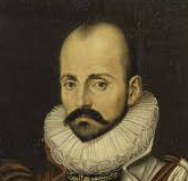
There is the name and the thing: the name is a voice which denotes and signifies the thing; the name is no part of the thing, nor of the substance; 'tis a foreign piece joined to the thing, and outside it. God, who is all fulness in Himself and the height of all perfection, cannot augment or add anything to Himself within; but His name may be augmented and increased by the blessing and praise we attribute to His exterior works: which praise, seeing we cannot incorporate it in Him, forasmuch as He can have no accession of good, we attribute to His name, which is the part out of Him that is nearest to us. Thus is it that to God alone glory and honour appertain; and there is nothing so remote from reason as that we should go in quest of it for ourselves; for, being indigent and necessitous within, our essence being imperfect, and having continual need of amelioration, 'tis to that we ought to employ all our endeavour.
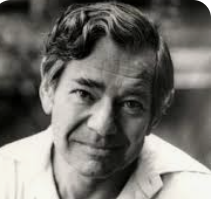
The great artist liberates the emotions and recreates the sheer wonder of childhood without surrendering the development of the intellect.
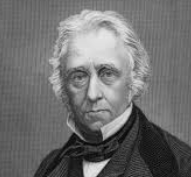
If we consider merely the subtlety of disquisition, the force of imagination, the perfect energy and elegance of expression, which characterise the great works of Athenian genius, we must pronounce them intrinsically most valuable; but what shall we say when we reflect that from hence have sprung, directly or indirectly, all the noblest creations of the human intellect; that from hence were the vast accomplishments, and the brilliant fancy of Cicero; the withering fire of Juvenal; the plastic imagination of Dante; the humour of Cervantes; the comprehension of Bacon; the wit of Butler; the supreme and universal excellence of Shakspeare? All the triumphs of truth and genius over prejudice and power, in every country and in every age, have been the triumphs of Athens. Wherever a few great minds have made a stand against violence and fraud, in the cause of liberty and reason, there has been her spirit in the midst of them; inspiring, encouraging, consoling.
Who does not in some sort live to others, does not live much to himself.
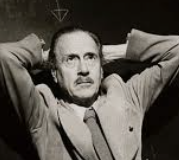
The hot radio medium used in cool or nonliterate cultures has a violent effect, quite unlike its effect, say in England or America, where radio is felt as entertainment.
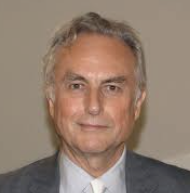
I think it is not helpful to apply Darwinian language too widely. Conquest of nation by nation is too distant for Darwinian explanations to be helpful. Darwinism is the differential survival of self-replicating genes in a gene pool, usually as manifested by individual behaviour, morphology, and phenotypes. Group selection of any kind is not Darwinism as Darwin understood it nor as I understand it. There is a very vague analogy between group selection and conquest of a nation by another nation, but I don't think it's a very helpful analogy. So I would prefer not to invoke Darwinian language for that kind of historical interpretation.
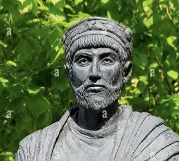
I make known unto thee how He hath provided for the bodily health of us all, by having produced Æsculapius, the Preserver of the universe; and how he hath communicated to us virtue of every kind, by sending down Aphrodite in company with Athene for our guardian; having made it all but a law that no one should use copulation except for the end of generating his like. For this reason truly, according to his revolutions and seasons, do the various vegetable and animal races feel themselves stirred towards the generation of their kind. What need is there to magnify the glory of his rays, and of his light? A night without moon, and without stars, how terrible is it! Let anyone reflect on this, in order that he may estimate how great a blessing is the light we derive from the Sun!
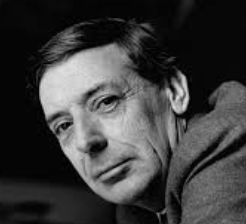
Positivism ... implies the double falsehood that no interpretation is needed, and that it is not needed because the story which the positivist writer tells, such as it is, is obvious. The story he or she tells is usually a bad one, and its being obvious only means that it is familiar.
CivilSimian.com created by AxiomaticPanic, CivilSimian, Kalokagathia