

8 months 2 weeks ago
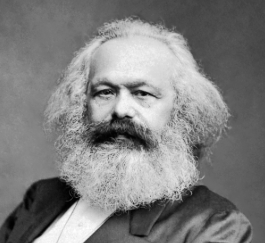
In its beginnings, the credit system sneaks in as a modest helper of accumulation and draws by invisible threads the money resources scattered all over the surface of society into the hands of individual or associated capitalists. But soon it becomes a new and formidable weapon in the competitive struggle, and finally it transforms itself into an immense social mechanism for the centralisation of capitals.
▼
Source
source
Vol. I, Ch. 25, Section 2, pg. 687.
7 months 4 days ago
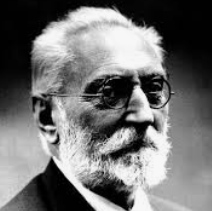
An eternal purgatory, then, rather than a heaven of glory; an eternal ascent. If there is an end to all suffering, however pure and spiritualized we may suppose it to be, if there is an end to all desire, what is it that makes the blessed in paradise go on living? If in paradise they do not suffer for want of God, how shall they love Him? And if there, in the heaven of glory, while they behold God little by little and closer and closer, yet without ever wholly attaining Him, there does not always remain something more for them to know and desire, if there does not always remain a substratum of doubt, how shall they not fall asleep?
7 months 4 days ago
But the capacity to enjoy is impossible without the capacity to suffer; and the faculty of enjoyment is one with that of pain. Whosoever does not suffer does not enjoy, just as whosoever is insensible to cold is insensible to heat.
8 months 2 weeks ago
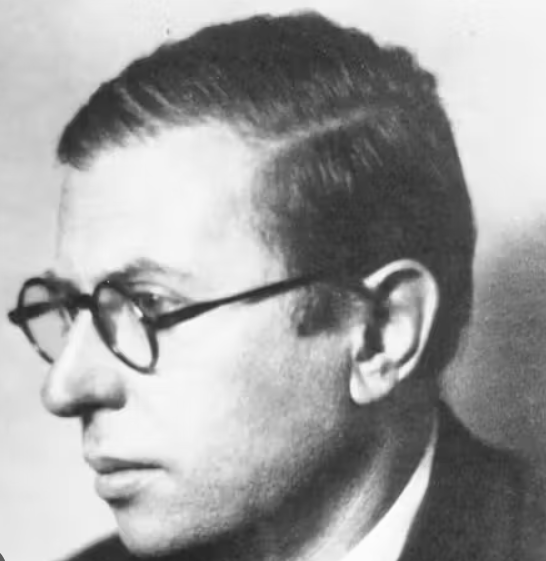
A man is what he wills himself to be.
7 months 4 days ago
We never know, believe me, when we have succeeded best.
▼
Source
source
Essays and Soliloquies
5 months 2 days ago
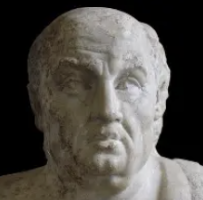
For love of bustle is not industry - it is only the restlessness of a hunted mind.
▼
Source
source
Line 5.

9 months 3 days ago
But if we discard this definition of a people, and, assuming another, say that a people is an assemblage of reasonable beings bound together by a common agreement as to the objects of their love, then, in order to discover the character of any people, we have only to observe what they love. Yet whatever it loves, if only it is an assemblage of reasonable beings and not of beasts, and is bound together by an agreement as to the objects of love, it is reasonably called a people; and it will be a superior people in proportion as it is bound together by higher interests, inferior in proportion as it is bound together by lower.
▼
Source
source
XIX, 24
6 months 3 weeks ago
The most heated defenders of a science, who cannot endure the slightest sneer at it, are commonly those who have not made very much progress in it and are secretly aware of this defect.
▼
Source
source
F 8
7 months 1 week ago
The music of the soul is also the music of salesmanship. Exchange value, not truth value counts. On it centers the rationality of the status quo, and all alien rationality is bent to It.
▼
Source
source
p. 57
4 months 3 weeks ago
Although our case is different from that of ascetics who remove themselves from the world, the situation of the latest technological civilization might offer the incentive for commitments of this kind. In a large city, in mass society, among the almost unreal swarming of faceless beings, an essential sense of isolation or of detachment often occurs naturally, perhaps even more than in the solitude of moors and mountains.
▼
Source
source
p. 121
8 months 2 weeks ago
Ramsgate is full of Jews and fleas.
▼
Source
source
MEKOR IV, 490, 25 August 1879
8 months 2 weeks ago
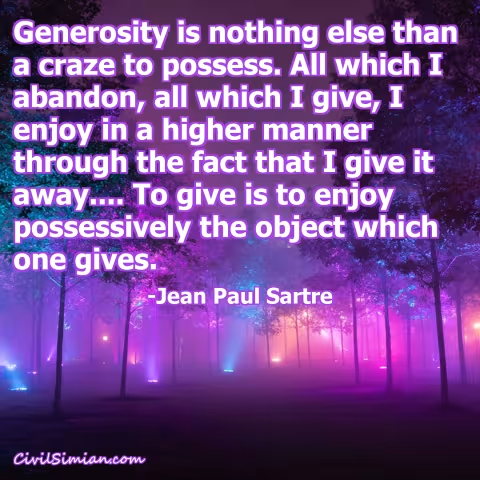
Don't you feel the same way? When I cannot see myself, even though I touch myself, I wonder if I really exist.
▼
Source
source
Estelle, discovering that there are no mirrors in Hell, Act 1, sc. 5

8 months 2 weeks ago
The principal source of the harm done by the State is the fact that power is its chief end.
▼
Source
source
Principles of Social Reconstruction (1917), Ch. II: The State
4 months 4 weeks ago
Camus said there is only really one serious philosophical question, which is whether or not to commit suicide. I think there are four or five serious philosophical questions: The first one is: Who started it? The second is: Are we going to make it? The third is: Where are we going to put it? The fourth is: Who's going to clean up? And the fifth: Is it serious?
▼
Source
source
Out Of Your Mind (2004), Audio lecture 1: The Nature of Consciousness: A Game That's Worth The Candle
5 months 1 week ago
Marxism was a philosophical or semi-philosophical doctrine and a political ideology which was used by the communist state as the main source of legitimacy and the obligatory faith.
▼
Source
source
New Preface, p. v
5 months 1 week ago
All agreed in rejecting that blasphemy, that Greece was ever a province of Asia, that the Greek spirit, so free, so objective, so limpid, could contain any element of the vague and obscure spirit of the Orient.
▼
Source
source
"Des Religions de l'antiquité et leurs derniers historiens", Mondes, vol. 23, no. 2 (1853) p. 835
8 months 2 weeks ago
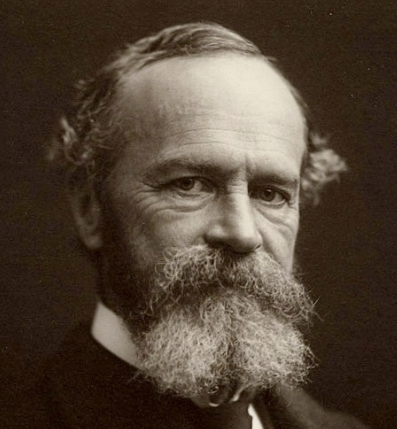
Religion, therefore, as I now ask you arbitrarily to take it, shall mean for us the feelings, acts, and experiences of individual men in their solitude, so far as they apprehend themselves to stand in relation to whatever they may consider the divine. Since the relation may be either moral, physical, or ritual, it is evident that out of religion in the sense in which we take it, theologies, philosophies, and ecclesiastical organizations may secondarily grow.
▼
Source
source
Lecture II, "Circumscription of the Topic"
7 months 2 days ago
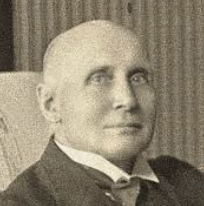
There are no whole truths; all truths are half-truths. It is trying to treat them as whole truths that plays the devil.
▼
Source
source
Prologue.
8 months 2 weeks ago
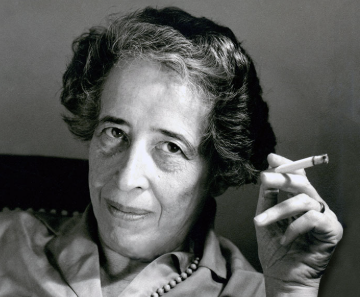
Thinking withdraws radically and for its own sake from this world and its evidential nature, whereas science profits from a possible withdrawal for the sake of specific results.
▼
Source
source
p. 56
8 months 1 week ago
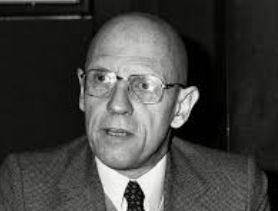
Recalling all the erroneous things that doctors have been able to say about sex or madness does us a fat lot of good. I think that what is currently politically important is to determine the regime of verediction established at a given moment ... on the basis of which you can now recognize, for example, that doctors in the nineteenth century said so many stupid things about sex. ... It is not so much the history of the true or the history of the false as the history of verediction which has a political significance.
▼
Source
source
Lecture 2, January 17, 1979, p. 36
8 months 2 weeks ago
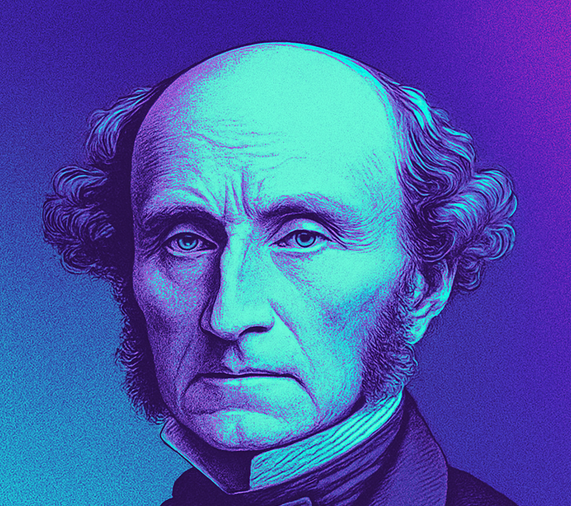
Alike in the highest regions of speculation and in the smaller practical concerns of daily life, her mind was the same perfect instrument, piercing to the very heart and marrow of the matter; always seizing the essential idea or principle. The same exactness and rapidity of operation, pervading as it did her sensitive as well as her mental faculties, would, with her gifts of feeling and imagination, have fitted her to be a consummate artist, as her fiery and tender soul and her vigorous eloquence would certainly have made her a great orator, and her profound knowledge of human nature and discernment and sagacity in practical life, would, in the times when such a carrière was open to women, have made her eminent among the rulers of mankind. Her intellectual gifts did but minister to a moral character at once the noblest and the best balanced which I have ever met with in life.
▼
Source
source
(pp. 186-187)
7 months 1 week ago
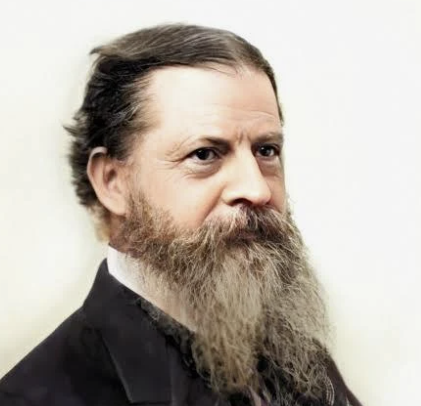
Now, let there be an indefinite succession of these inferential acts of comparative perception; and it is plain that the last moment will contain objectively the whole series. Let there be, not merely an indefinite succession, but a continuous flow of inference through a finite time; and the result will be a mediate objective consciousness of the whole time in the last moment. In this last moment, the whole series will be recognized, or known as known before.
5 months 2 days ago
The point is, not how long you live, but how nobly you live. And often this living nobly means that you cannot live long.

5 months 3 weeks ago
The reason for sketching what's technically feasible with the tools of synthetic biology is that only after human complicity in the persistence of suffering in the biosphere is acknowledged can we hope to have an informed socio-political debate on the morality of its perpetuation. No serious ethical discussion of free-living animal suffering can begin in the absence of recognition of human responsibility for nonhuman well-being.
▼
Source
source
Compassionate Biology: How CRISPR-based gene drives" could cheaply, rapidly and sustainably reduce suffering throughout the living world", BLTC Research, 2016
9 months 2 weeks ago
I was once being interviewed by Barbara Walters [...] In between two of the segments she asked me [...] "But what would you do if the doctor gave you only six months to live?" I said, "Type faster." This was widely quoted, but the "six months" was changed to "six minutes," which bothered me. It's "six months."
9 months 1 week ago
Character is destiny.
8 months 2 weeks ago
One mode of emotional excitability is exceedingly important in the composition of the energetic character, from its peculiarly destructive power over inhibitions. I mean what in its lower form is mere irascibility, susceptibility to wrath, the fighting temper; and what in subtler ways manifests itself as impatience, grimness, earnestness, severity of character. Earnestness means willingness to live with energy, though energy bring pain. The pain may be pain to other people or pain to one's self - it makes little difference; for when the strenuous mood is on one, the aim is to break something, no matter whose or what. Nothing annihilates an inhibition as irresistibly as anger does it; for, as Moltke says of war, destruction pure and simple is its essence.
8 months 2 weeks ago
The necessity of speaking, the predicament of having nothing to say, and the desire for tact are three things that can turn the greatest man into a laughingstock.
8 months 2 weeks ago
To choose this or that is to affirm at the same time the value of what we choose, because we can never choose evil. We always choose the good, and nothing can be good for us without being good for all.
▼
Source
source
Existentialism and Human Emotions
6 months 1 week ago
It is the worst of all quaint and of all cheap ways of life that they bring us at last to the pinch of some humiliation.
▼
Source
source
Episodes in the Story of a Mine.
8 months 3 weeks ago
Knowledge, that tendeth but to satisfaction, is but as a courtesan, which is for pleasure, and not for fruit or generation.
▼
Source
source
Valerius Terminus: Of the Interpretation of Nature (ca. 1603), in Works, Vol. 1, p. 83; The Works of Francis Bacon (1819), Vol. 2, p. 133
8 months 2 weeks ago
...the reality of society involves the socialization of certain unrealities.
▼
Source
source
p. 455
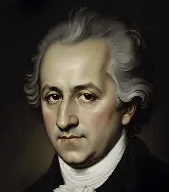
5 months 1 week ago
A talent is formed in stillness, a character in the world's torrent.
▼
Source
source
Torquato Tasso, Act I, sc. ii

6 months 1 day ago
The business of grabbing and money-making, through a violent extractive economy that the 1% have built, is burdening the earth and humanity with unbearable and non-sustainable costs, and has brought us to the brink of extinction. We do not have to escape from the earth; we have to escape from the illusions that enslave our minds and make extinction look inevitable.
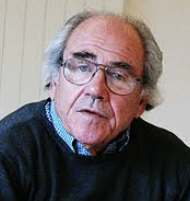
6 months 2 weeks ago
The great event of this period, the great trauma, is this decline of strong referentials, these death pangs of the real and of the rational that open onto an age of simulation. Whereas so many generations, and particularly the last, lived in the march of history, in the euphoric or catastrophic expectation of a revolution-today one has the impression that history has retreated, leaving behind it an indifferent nebula, traversed by currents, but emptied of references. It is into this void that the phantasms of a past history recede, the panoply of events, ideologies, retro fashions-no longer so much because people believe in them or still place some hope in them, but simply to resurrect the period when at least there was history, at least there was violence (albeit fascist), when at least life and death were at stake.
▼
Source
source
"History: A Retro Scenario," pp. 43-44
7 months 1 week ago
The people are led to find in the productive apparatus the effective agent of thought and action to which their personal thought and action can and must be surrendered. And in this transfer, the apparatus also assumes the role of a moral agent.
▼
Source
source
Conscience is absolved by reification. p. 79
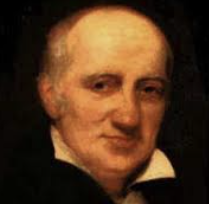
7 months 2 weeks ago
One principle, that I believe is wanting in you, and all our too fervent and impetuous reformers, is the thought, that almost every institution or form of society is good in its place, and in the period of time to which it belongs. How many beautiful and admirable effects grew out of Popery and the monastic institutions, in the period, when they were in their genuine health and vigour! To them we owe almost all our logic and our literature. What excellent effects do we reap, even at this day, from the feudal system and from chivalry! In this point of view, nothing can, perhaps, be more worthy of our applause than the English constitution.
▼
Source
source
Letter to Percy Bysshe Shelley (4 March 1812), quoted in Thomas Jefferson Hogg, The Life of Percy Bysshe Shelley, Vol. II (1858), p. 86
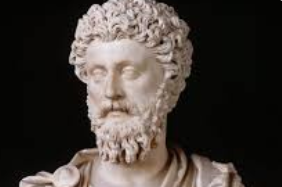
4 months 2 weeks ago
To live your brief life rightly, isn't that enough?
▼
Source
source
(Hays translation) X, 31
5 months 3 weeks ago
Much more seriously, in those traditional eco-systems that we chose to retain, millions of non-human animals will continue periodically to starve, die horribly of thirst and disease, or even get eaten alive. This is commonly viewed as "natural" and hence basically OK. It would indeed be comforting to think that in some sense this ongoing animal holocaust doesn't matter too much. We often find it convenient to act as though the capacity to suffer were somehow inseparably bound up with linguistic ability or ratiocinative prowess. Yet there is absolutely no evidence that this is the case, and a great deal that it isn't.
▼
Source
source
1.9 The Taste of Depravity

9 months 2 days ago
A little river seems to him, who has never seen a larger river, a mighty stream; and so with other things-a tree, a man-anything appears greatest to him that never knew a greater.
▼
Source
source
Book VI, lines 674-677 (quoted in The Essays of Michel de Montaigne, tr. W. C. Hazlitt)
5 months 3 weeks ago
Negative-utilitarianism is only one particular denomination of a broad church to which the reader may well in any case not subscribe. Fortunately, the program can be defended on grounds that utilitarians of all stripes can agree on. So a defence will be mounted against critics of the theory and application of a utilitarian ethic in general. For in practice the most potent and effective means of curing unpleasantness is to ensure that a defining aspect of future states of mind is their permeation with the molecular chemistry of ecstasy: both genetically precoded and pharmacologically fine-tuned. Orthodox utilitarians will doubtless find the cornucopian abundance of bliss this strategy delivers is itself an extra source of moral value. Future generations of native ecstatics are unlikely to disagree.
▼
Source
source
2.7 Why Be Negative?
4 months 3 weeks ago
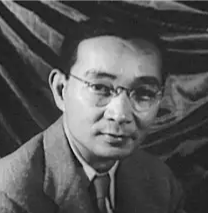
The Chinese believe that when there are too many policemen, there can be no individual liberty, when there are too many lawyers, there can be no justice, and when there are too many soldiers, there can be no peace.
▼
Source
source
Between Tears And Laughter (1943), p. 71.
8 months 2 weeks ago
There is an artist imprisoned in each one of us. Let him loose to spread joy everywhere.
▼
Source
source
Last Essay: "1967"
9 months 2 weeks ago
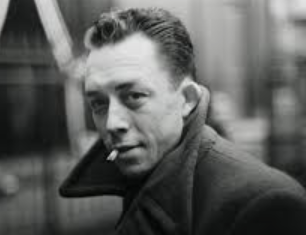
One does not decide the truth of a thought according to whether it is right-wing or left-wing.

7 months 1 week ago
We must live, you used to say, as if we were never going to die. - Didn't you know that's how everyone lives, including those obsessed with Death?
7 months 1 week ago
Miracles are propitious accidents, the natural causes of which are too complicated to be readily understood.
8 months 2 weeks ago
I say a murder is abstract. You pull the trigger and after that you do not understand anything that happens.
▼
Source
source
Act 5, sc. 2
8 months 1 week ago
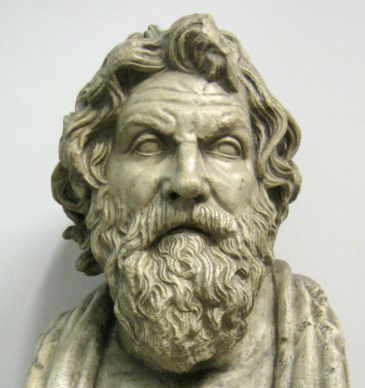
States are doomed when they are unable to distinguish good men from bad.
▼
Source
source
§ 5
CivilSimian.com created by AxiomaticPanic, CivilSimian, Kalokagathia