

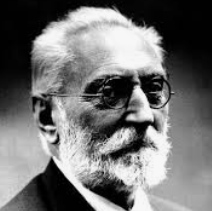
6 months 4 weeks ago
We men do nothing but lie and make ourselves important. Speech was invented for the purpose of magnifying all of our sensations and impressions - perhaps so that we could believe in them.
▼
Source
source
Niebla [Mist]


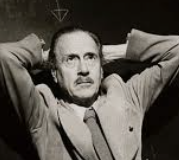
6 months 1 week ago
The stock market was created by the telegraph and the telephone, and its panics are engineered by carefully orchestrated stories in the press.
▼
Source
source
(p. 106)
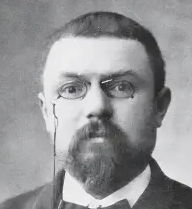
5 months 1 week ago
All that is not thought is pure nothingness; since we can think only thought and all the words we use to speak of things can express only thoughts, to say there is something other than thought, is therefore an affirmation which can have no meaning.And yet-strange contradiction for those who believe in time-geologic history shows us that life is only a short episode between two eternities of death, and that, even in this episode, conscious thought has lasted and will last only a moment. Thought is only a gleam in the midst of a long night. But it is this gleam which is everything.
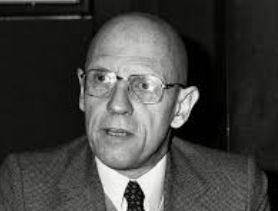
8 months 1 week ago
Confession frees, but power reduces one to silence; truth does not belong to the order of power, but shares an original affinity with freedom: traditional themes in philosophy, which a political history of truth would have to overturn by showing that truth is not by nature free--nor error servile--but that its production is thoroughly imbued with relations of power. The confession is an example of this.
▼
Source
source
Vol. I, p. 60
9 months 1 week ago
It is by the Imperial Capital that contemporaries (and posterity, too) judge an Empire, and its magnificence impresses them mightily and leads them to judge the Emperor a great man and hero, even though it may all be based on robbery, and though the provinces of the Empire may be sunk in misery.
6 months 3 weeks ago
We will likely also find that the nature of the problem to be solved will be a principal determinant of the mix. With our growing understanding of the organization of judgmental and intuitive processes, of the specific knowledge that of the specific knowledge that is required to perform particular judgmental tasks, and of the cues that evoke such knowledge in situations in which it is relevant, we have a powerful new tool for improving expert judgment. We can specify the knowledge and the recognition capabilities that experts in a domain need to acquire, and use these specifications for designing appropriate learning procedures.
▼
Source
source
p. 137.
6 months 4 weeks ago
Ether is, in effect, a merely hypothetical entity, valuable only in so far as it explains that which by means of it we endeavor to explain - light, electricity, or universal gravitation - and only so far as these facts cannot be explained in any other way. In like manner the idea of God is also an hypothesis, valuable only in so far as it enables us to explain that which by means of it we endeavor to explain - the essence and existence of the Universe - and only so long as these cannot be explained in any other way. And since in reality we explain the Universe neither better nor worse with this idea than without it, the idea of God, the supreme petitio principii, is valueless.
7 months 1 week ago
In fact, this infinitesimally spread-out consciousness is a direct feeling of its contents as spread out. In an infinitesimal interval we directly perceive the temporal sequence of its beginning, middle, and end... Now upon this interval follows another, whose beginning is the middle of the former, and whose middle is the end of the former. Here we have an immediate perception of the temporal sequence of its beginning, middle and end, or say, of the second, third, and fourth instants.
8 months 1 week ago
The Hindoos are most serenely and thoughtfully religious than the Hebrews. They have perhaps a purer, more independent and impersonal knowledge of God. Their religious books describe the first inquisitive and contemplative access to God; the Hebrew bible a conscientious return, a grosser and more personal repentance. Repentance is not a free and fair highway to God. A wise man will dispense with repentance. It is shocking and passionate. God prefers that you approach him thoughtful, not penitent, though you are chief of sinners. It is only by forgetting yourself that you draw near to him. The calmness and gentleness with which the Hindoo philosophers approach and discourse on forbidden themes is admirable. In 1853.
▼
Source
source
A Tribute to Hinduism, 2008
8 months 1 week ago
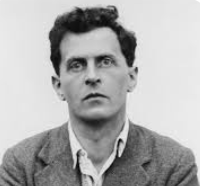
The world and life are one.
▼
Source
source
(5.621) Original German: Die Welt und das Leben sind Eins.
8 months 2 weeks ago
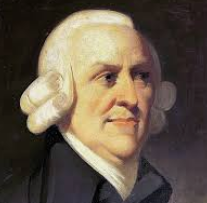
Every man is rich or poor according to the degree in which he can afford to enjoy the necessaries, conveniences, and amusements of human life. But after the division of labour has once thoroughly taken place, it is but a very small part of these with which a man's own labour can supply him. The far greater part of them he must derive from the labour of other people, and he must be rich or poor according to the quantity of that labour which he can command, or which he can afford to purchase. The value of any commodity, therefore, to the person who possesses it, and who means not to use or consume it himself, but to exchange it for other commodities, is equal to the quantity of labour which it enables him to purchase or command. Labour, therefore, is the real measure of the exchangeable value of all commodities.
▼
Source
source
Chapter V.
4 months 1 week ago
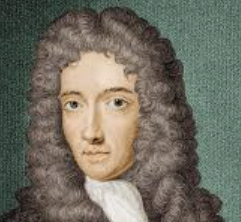
Not that I at all disallow the use of reasoning upon experiments, or the endeavouring to discern as early as we can the confederations, and differences, and tendencies of things: for such an absolute suspension of the exercise of reasoning were exceeding troublesome, if not impossible. And, as in that rule of arithmetic, which is commonly called regula falsi by proceeding upon a conjecturally-supposed number, as if it were that, which we inquire after, we are wont to come to the knowledge of the true number sought for; so in physiology it is sometimes conducive to the discovery of truth, to permit the understanding to make an hypothesis, in order to the explication of this or that difficulty, that by examining how far the phænomena are, or are not, capable of being solved by that hypothesis, the understanding may, even by its own errors, be instructed.
7 months 1 week ago
In an article published in The Monist for January, 1891, I endeavored to show what ideas ought to form the warp of a system of philosophy, and particularly emphasized that of absolute chance. In the number of April, 1892, I argued further in favor of that way of thinking, which it will be convenient to christen tychism (from τύχη, chance). A serious student of philosophy will be in no haste to accept or reject this doctrine; but he will see in it one of the chief attitudes which speculative thought may take, feeling that it is not for an individual, nor for an age, to pronounce upon a fundamental question of philosophy. That is a task for a whole era to work out. I have begun by showing that tychism must give birth to an evolutionary cosmology, in which all the regularities of nature and of mind are regarded as products of growth, and to a Schelling-fashioned idealism which holds matter to be mere specialized and partially deadened mind.
4 months 1 week ago
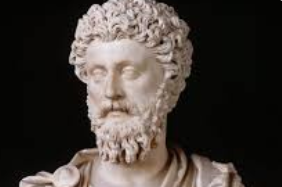
Remember this, then, that this little compound, thyself, must either be dissolved, or thy poor breath must be extinguished, or be removed and placed elsewhere.
▼
Source
source
VIII, 25
8 months 1 week ago
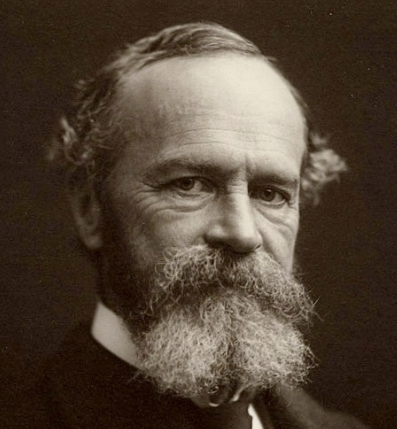
Wherever you are it is your own friends who make your world.
▼
Source
source
As quoted in The Thought and Character of William James (1935) by Ralph Barton Perry, Vol. II, ch. 91
6 months 3 weeks ago
Among most Christians the Old Testament is little read in comparison to the New Testament. Furthermore, much of what is read is often distorted by prejudice. Frequently the Old Testament is believed to express exclusively the principles of justice and revenge, in contrast to the New Testament, which represents those of love and mercy; even the sentence, "Love your neighbor as yourself," is thought by many to derive from the New, not the Old Testament. Or the Old Testament is believed to have been written exclusively in the spirit of narrow nationalism and to contain nothing of supranational universalism so characteristic of the New Testament.
▼
Source
source
You Shall Be as Gods: A Radical Interpretation of the Old Testament and Its Tradition (1966) "Introduction"
6 months 1 week ago
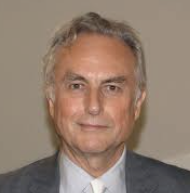
Think about the two qualities that a virus, or any sort of parasitic replicator, demands of a friendly medium, the two qualities that make cellular machinery so friendly towards parasitic DNA, and that make computers so friendly towards computer viruses. These qualities are, firstly, a readiness to replicate information accurately, perhaps with some mistakes that are subsequently reproduced accurately; and, secondly, a readiness to obey instructions encoded in the information so replicated.
7 months 1 week ago
History proves nothing because it contains everything.
8 months 2 weeks ago
Giving then to matter all the properties which philosophy knows it has, or all that atheism ascribes to it, and can prove, and even supposing matter to be eternal, it will not account for the system of the universe or of the solar system, because it will not account for motion, and it is motion that preserves it. When, therefore, we discover a circumstance of such immense importance, that without it the universe could not exist, and for which neither matter, nor any, nor all, the properties of matter can account, we are by necessity forced into the rational and comfortable belief of the existence of a cause superior to matter, and that cause man calls, God.
▼
Source
source
A Discourse, &c. &c.
7 months 1 week ago
It is the love of the people; it is their attachment to their government, from the sense of the deep stake they have in such a glorious institution, which gives you both your army and your navy, and infuses into both that liberal obedience, without which your army would be a base rabble, and your navy nothing but rotten timber.
4 months 1 week ago
Truth will do well enough if left to shift for herself. She seldom has received much aid from the power of great men to whom she is rarely known & seldom welcome. She has no need of force to procure entrance into the minds of men. Error indeed has often prevailed by the assistance of power or force. Truth is the proper & sufficient antagonist to error.
▼
Source
source
Notes on Religion (October 1776), published in The Writings of Thomas Jefferson : 1816-1826 (1899) edited by Paul Leicester Ford, v. 2, p. 102
5 months 1 week ago
Where all think alike, no one thinks very much.
▼
Source
source
Ch. IV: "The Line of Least Resistance", p. 51
6 months 3 weeks ago
Immature love says: "I love you because I need you." Mature love says: "I need you because I love you."
▼
Source
source
Ch. 2
6 months 2 weeks ago
The similarity between Marxism and neoconservativism might be expressed in the following way: both perspectives say that certain injustices can't be cured under our present system of political democracy and mixed economy. The Marxist concludes that we have to overthrow the present system and the neoconservative concludes that we have to live with the injustices. But they are both wrong.
▼
Source
source
How Not to Solve Ethical Problems
7 months 5 days ago
Every good mathematician is at least half a philosopher, and every good philosopher is at least half a mathematician.
▼
Source
source
Attributed to Frege in: A. A. B. Aspeitia (2000), Mathematics as grammar: 'Grammar' in Wittgenstein's philosophy of mathematics during the Middle Period, Indiana University, p. 25
6 months 3 weeks ago
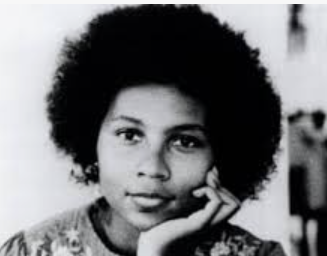
Feminism in the United States has never emerged from the women who are most victimized by sexist oppression; women who are daily beaten down, mentally, physically, and spiritually-women who are powerless to change their condition in life. They are a silent majority. A mark of their victimization is that they accept their lot in life without visible question, without organized protest, without collective anger or rage.
▼
Source
source
p. 1.
8 months 2 weeks ago
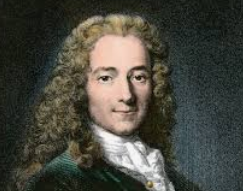
A testimony is sufficient when it rests on: 1st. A great number of very sensible witnesses who agree in having seen well. 2d. Who are sane, bodily and mentally. 3d. Who are impartial and disinterested. 4th. Who unanimously agree. 5th. Who solemnly certify to the fact.
▼
Source
source
As quoted by H. P. Blavatsky in Isis Unveiled, Vol. I, p. 108, 1877
8 months 2 weeks ago
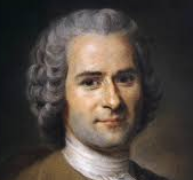
Oh providence! Oh nature! Treasure of the poor, resource of the unfortunate. The person who feels, knows your holy laws and trusts them, the person whose heart is at peace and whose body does not suffer, thanks to you is not entirely prey to adversity.
▼
Source
source
Second Dialogue; translated by Judith R. Bush, Christopher Kelly, Roger D. Masters

5 months 1 week ago
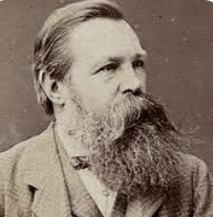
Putin told the Financial Times that liberalism has become an "obsolete" doctrine. While it may be under attack from many quarters today, it is in fact more necessary than ever. It is more necessary because it is fundamentally a means of governing over diversity, and the world is more diverse than it ever has been. Democracy disconnected from liberalism will not protect diversity, because majorities will use their power to repress minorities.
▼
Source
source
Emphasis in original.
7 months 1 week ago
The capitalists soon had everything in their hands and nothing remained to the workers.
5 months 4 weeks ago
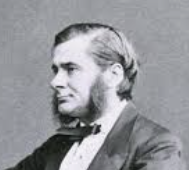
The chalk is no unimportant element in the masonry of the earth's crust, and it impresses a peculiar stamp, varying with the conditions to which it is exposed, on the scenery of the districts in which it occurs.
8 months 1 week ago
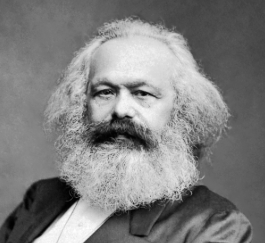
History is not like some individual person, which uses men to achieve its ends. History is nothing but the actions of men in pursuit of their ends.
▼
Source
source
The Holy Family, Ch. VI (1845).
4 months 1 week ago
I have stated that the constitutions of our several States vary more or less in some particulars. But there are certain principles in which all agree, and which all cherish as vitally essential to the protection of the life, liberty, property, and safety of the citizen:
4 months 1 week ago
Were we directed from Washington when to sow and when to reap, we should soon want bread.
▼
Source
source
Autobiography (1821), reprinted in Basic Writings of Thomas Jefferson, ed. Philip S. Foner, New York: Wiley Book Company (1944} p. 464
4 months 4 weeks ago
Every love to which there clings but the smallest speck of obligation is an unselfish love, and, so far as this speck reaches, a possessedness. He who believes that he owes the object of his love anything loves romantically or religiously.
▼
Source
source
Cambridge 1995, p. 260
7 months 5 days ago
Eternal vigilance is the price of knowledge.
▼
Source
source
p. 58
8 months 1 week ago
Slavery is disheartening; but Nature is not so helpless but it can rid itself of every last wrong. But the spasms of nature are centuries and ages and will tax the faith of short-lived men. Slowly, slowly the Avenger comes, but comes surely. The proverbs of the nations affirm these delays, but affirm the arrival. They say, "God may consent, but not forever." The delay of the Divine Justice - this was the meaning and soul of the Greek Tragedy, - this was the soul of their religion.
▼
Source
source
The Fugitive Slave Law, a lecture in NYC, March 7, 1854
8 months 1 week ago
The very cannibalism of the counterrevolution will convince the nations that there is only one way in which the murderous death agonies of the old society and the bloody birth throes of the new society can be shortened, simplified and concentrated, and that way is revolutionary terror.
▼
Source
source
"The Victory of the Counter-Revolution in Vienna," Neue Rheinische Zeitung, 7 November 1848.
6 months 4 weeks ago
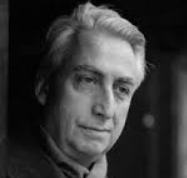
The petit-bourgeois is a man unable to imagine the Other. If he comes face to face with him, he blinds himself, ignores and denies him, or else transforms him into himself.
▼
Source
source
p. 151

7 months 4 days ago
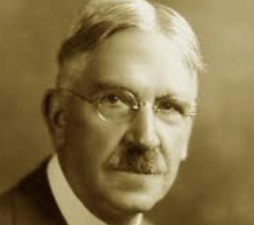
Genuine time, if it exists as anything else except the measure of motions in space, is all one with the existence of individuals as individuals, with the creative, with the occurrence of unpredictable novelties. Everything that can be said contrary to this conclusion is but a reminder that an individual may lose his individuality, for individuals become imprisoned in routine and fall to the level of mechanisms. Genuine time then ceases to be an integral element of their being. Our behavior becomes predictable, because it is but an external rearrangement of what went before.
8 months 2 weeks ago
Many of these were not prisoners of war, and redeemed from savage conquerors, as some plead; and they who were such prisoners, the English, who promote the war for that very end, are the guilty authors of their being so; and if they were redeemed, as is alleged, they would owe nothing to the redeemer but what he paid for them.
8 months 2 weeks ago
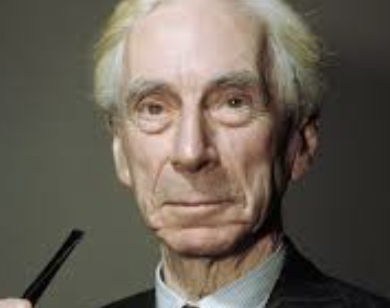
It is clear that thought is not free if the profession of certain opinions makes it impossible to earn a living. It is clear also that thought is not free if all the arguments on one side of a controversy are perpetually presented as attractively as possible, while the arguments on the other side can only be discovered by diligent search.
▼
Source
source
Ch. 12: Free Thought and Official Propaganda, books.google.com, archive.org
6 months 3 weeks ago
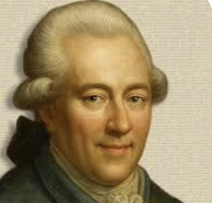
Of all the inventions of man I doubt whether any was more easily accomplished than that of a Heaven.
▼
Source
source
L 34
CivilSimian.com created by AxiomaticPanic, CivilSimian, Kalokagathia