


6 months 3 weeks ago
The philosophy of physics is continuous with physics itself. Just as certain issues in the Foundations of Mathematics have been discussed by both mathematicians and by philosophers of mathematics, so certain issues in the philosophy of physics have been discussed by both physicists and by philosophers of physics. And just as there are issues of a more epistemological kind that tend to concern philosophers of mathematics more than they do working mathematicians, so there are issues that concern philosophers of physics more than they do working physicists.
▼
Source
source
Philosophy of physics
8 months 3 days ago
There is no work so mean, but it would amply serve me to furnish me with sustenance.
▼
Source
source
iv. 35
4 months 2 weeks ago
How simple and frugal a thing is happiness: a glass of wine, a roast chestnut, a wretched little brazier, the sound of the sea. . . . All that is required to feel that here and now is happiness is a simple, frugal heart.
▼
Source
source
Ch. 7
4 months 3 weeks ago
To have faith is to trust yourself to the water. When you swim you don't grab hold of the water, because if you do you will sink and drown. Instead you relax, and float.
▼
Source
source
The Essence of Alan Watts
4 months 4 weeks ago
In the pedagogical as in certain other spheres freedom is not allowed to erupt, the power of the opposition is not allowed to put a word in edgewise: they want submissiveness. Only a formal and material training is being aimed at and only scholars come out of the menageries of the humanists, only "useful citizens" out of those of the realists, both of whom are indeed nothing but subservient people. Our good background of recalcitrancy [sic] gets strongly suppressed and with it the development of knowledge to free will. The result of school is then philistinism.
▼
Source
source
p. 23
8 months 2 weeks ago
There is only one inborn erroneous notion ... that we exist in order to be happy ... So long as we persist in this inborn error ... the world seems to us full of contradictions. For at every step, in great things and small, we are bound to experience that the world and life are certainly not arranged for the purpose of maintaining a happy existence ... hence the countenances of almost all elderly persons wear the expression of ... disappointment.
▼
Source
source
Vol II "On the Road to Salvation"
8 months 3 days ago
Being asked what learning is the most necessary, he replied, "How to get rid of having anything to unlearn.
▼
Source
source
" § 7
8 months 2 weeks ago
We rarely hear, it has been said, of the combinations of masters, though frequently of those of the workman. But whoever imagines, upon this account, that masters rarely combine, is as ignorant of the world as of the subject.
▼
Source
source
Chapter VIII, p. 80.
4 months 1 week ago
The essence of liberalism is negotiation, a cautious half measure, in the hope that the definitive dispute, the decisive bloody battle, can be transformed into a parliamentary debate and permit the decision to be suspended forever in an everlasting discussion.
6 months 6 days ago
In the greatest confusion there is still an open channel to the soul. It may be difficult to find because by midlife it is overgrown, and some of the wildest thickets that surround it grow out of what we describe as our education. But the channel is always there, and it is our business to keep it open, to have access to the deepest part of ourselves.
▼
Source
source
Foreword to The Closing of the American Mind by Allan Bloom

6 months 3 weeks ago
Jesus Christ raised women above the condition of mere slaves, mere ministers to the passions of the man, raised them by His sympathy, to be Ministers of God. He gave them moral activity. But the Age, the World, Humanity, must give them the means to exercise this moral activity, must give them intellectual cultivation, spheres of action.
7 months 1 week ago
We had nothing to say to one another, and while I was manufacturing my phrases I felt that earth was falling through space and that I was falling with it at a speed that made me dizzy.
4 months 1 week ago
Today, local economies are being destroyed by the "pluralistic," displaced, global economy, which has no respect for what works in a locality. The global economy is built on the principle that one place can be exploited, even destroyed, for the sake of another place.
▼
Source
source
Interview in New Perspectives Quarterly (1992), quoted in his Profile at The Poetry Foundation
4 months 3 days ago
The state of mind which enables a man to do work of this kind is akin to that of the religious worshiper or the lover; the daily effort comes from no deliberate intention or program, but straight from the heart.
9 months 2 weeks ago
When God chooses to let himself be born in lowliness, when he who holds all possibilities in his hand takes upon himself the form of a lowly servant, when he goes about defenseless and lets people do with him what they will, he surely must know well enough what he is doing and why he wills it; but for all that it is he who has people in his power and not they who have power over him-so history ought not play Mr. Malapert by this wanting to make manifest who he was.
6 months 3 weeks ago
The key to understanding Crowley is the same as the key to understanding the Marquis de Sade. Both wasted an immense amount of energy screaming defiance at the authority they resented so much, and lacked the insight to see that they were shaking their fists at an abstraction.
▼
Source
source
p. 29
8 months 2 weeks ago
A world without delight and without affection is a world destitute of value.
▼
Source
source
The Scientific Outlook, 1931

7 months 3 weeks ago
Above and before all things, worship GOD!
▼
Source
source
As quoted in The Sayings of the Wise: Or, Food for Thought: A Book of Moral Wisdom, Gathered from the Ancient Philosophers (1555) by William Baldwin [1908 edition]
5 months 4 days ago
Do nothing, only keep agitating, debating; and things will destroy themselves.
▼
Source
source
Pt. I, Bk. VI, ch. 3.
7 months 1 week ago
The Protestant churches generally hold that the elements of the sacrament are flesh and blood only in a tropical sense; they nourish our souls as meat and the juice of it would our bodies. But the Catholics maintain that they are literally just that; although they possess all the sensible qualities of wafer-cakes and diluted wine. But we can have no conception of wine except what may enter into a belief, either -

4 months 1 week ago
The natural progress of things is for liberty to yield, and government to gain ground.
▼
Source
source
Letter to Edward Carrington, Paris
7 months 4 days ago
Language transcends us and yet, we speak.
▼
Source
source
p. 349
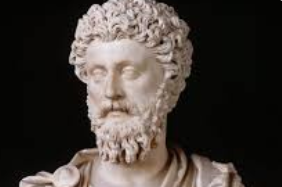
4 months 1 week ago
Why dost thou not pray... to give thee the faculty of not fearing any of the things which thou fearest, or of not desiring any of the things which thou desirest, or not being pained at anything, rather than pray that any of these things should not happen or happen?
▼
Source
source
IX, 40

8 months 4 weeks ago
If there is something more excellent than the truth, then that is God; if not, then truth itself is God.
4 months 1 week ago
Of all the systems of morality, ancient or modern, which have come under my observation, none appear to me so pure as that of Jesus. He who follows this steadily need not, I think, be uneasy, although he cannot comprehend the subtleties and mysteries erected on his doctrines by those who, calling themselves his special followers and favorites, would make him come into the world to lay snares for all understandings but theirs. These metaphysical heads, usurping the judgment seat of God, denounce as his enemies all who cannot perceive the Geometrical logic of Euclid in the demonstrations of St. Athanasius, that three are one, and one is three; and yet that the one is not three nor the three one.
▼
Source
source
Letter to William Canby
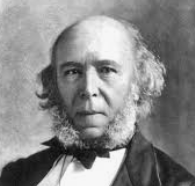
7 months 1 week ago
We have a priori reasons for believing that in every sentence there is some one order of words more effective than any other; and that this order is the one which presents the elements of the proposition in the succession in which they may be most readily put together.
▼
Source
source
Pt. I, sec. 3, "The Principle of Economy Applied to Sentences"
5 months 3 weeks ago
The functional regions of the brain which subserve physical agony, the "pain centres", and the mainly limbic substrates of emotion, appear in phylogenetic terms to be remarkably constant in the vertebrate line. The neural pathways involving serotonin, the periaquaductal grey matter, bradykinin, dynorphin, ATP receptors, the major opioid families, substance P etc all existed long before hominids walked the earth. Not merely is the biochemistry of suffering disturbingly similar where not effectively type-identical across a wide spectrum of vertebrate (and even some invertebrate) species. It is at least possible that members of any species whose members have more pain cells exhibiting greater synaptic density than humans sometimes suffer more atrociously than we do, whatever their notional "intelligence".
▼
Source
source
1.9 The Taste of Depravity
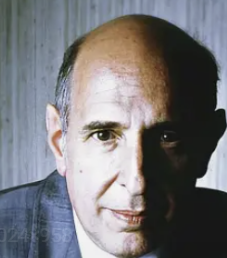
4 months 3 weeks ago
The distinction between the world of commerce and that of "culture" quickly became the distinction between infrastructure and superstructure, with the former clearly determining the latter.
▼
Source
source
Commerce and Culture, p. 281.
7 months 3 days ago
Leibniz's theory on the subject as substantia ideans in the sense of a causative agent of decision and acts stands much closer to a materialist interpretation of history than does a philosophy which reduces the thinking subject to the role of subsuming protocol sentences under general propositions and deducing other sentences from them.
▼
Source
source
p. 149.
8 months 1 week ago
And all the time - such is the tragi-comedy of our situation - we continue to clamor for those very qualities we are rendering impossible. You can hardly open a periodical without coming across the statement that what our civilization needs is more "drive", or dynamism, or self-sacrifice, or "creativity". In a sort of ghastly simplicity we remove the organ and demand the function. We make men without chests and expect of them virtue and enterprise. We laugh at honour and are shocked to find traitors in our midst. We castrate and bid the geldings be fruitful.
6 months 3 weeks ago
And at once I saw with great clarity that human beings possess two bodies. One is the physical body, the other -- just as real, just as self-contained -- is the emotional body. Like the physical body, the emotional body reaches a certain level of growth, and then stops. But it stops rather sooner than the physical body. So most of us possess the emotional body of a retarded adolescent.
▼
Source
source
p. 23
4 months 2 weeks ago
As long as our souls remain strong, that is all that matters; as long as they don't decline. Because with the fall of certain souls in this world, the world itself will collapse. These are the pillars which support it. They are few, but enough.
▼
Source
source
"My Friend Poet. Mount Athos.", Ch. 19, p. 215
7 months 1 week ago
The first authentic record on this subject (alchemy) is an edict of Diocletian, about 300 years after Christ, ordering a diligent search to be made in Egypt for all the ancient books which treated of the art of making gold and silver, that they might be consigned to the flames. This edict necessarily presumes a certain antiquity to the pursuit; and fabulous history has recorded Solomon, Pythagoras, and Hermes among its distinguished votaries.
▼
Source
source
Quoted by H.P. Blavatsky, in Isis Unveiled: A Master-Key to the Mysteries of Ancient and Modern Science and Theology, Vol. I, (1877) (p. 504)
5 months 1 week ago
There is nothing disastrous in the temporary nature of our ideas. They are always that. But there may very easily be a train of evil in the self-deception which regards them as final. I think God will forgive us our skepticism sooner than our Inquisitions.
▼
Source
source
Ch. VII: "The Making of Creeds", p. 236
7 months 4 days ago
When there is genuine artistry in scientific inquiry and philosophic speculation, a thinker proceeds neither by rule nor yet blindly, but by means of meaning that exist immediately as feelings having qualitative color.
8 months 3 days ago
Struggling to be brief I become obscure.
▼
Source
source
Line 25
6 months 3 weeks ago
By relieving the brain of all unnecessary work, a good notation sets it free to concentrate on more advanced problems, and in effect increases the mental power of the race..
▼
Source
source
ch. 5
6 months 1 week ago
For him who loves labor, there is always something to do.
▼
Source
source
Maxim 219
7 months 5 days ago
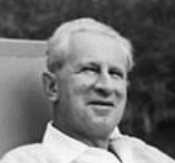
All liberation depends on the consciousness of servitude, and the emergence of this consciousness is always hampered by the predominance of needs and satisfactions which, to a great extent, have become the individual's own.
▼
Source
source
p. 7
5 months 4 days ago
Literature is the Thought of thinking Souls.
8 months 2 weeks ago
I greatly doubt whether the men who become pirate chiefs are those who are filled with retrospective terror of their fathers, or whether Napoleon, at Austerlitz, really felt that he was getting even with Madame Mère. I know nothing of the mother of Attila, but I rather suspect that she spoilt the little darling, who subsequently found the world irritating because it sometimes resisted his whims.
▼
Source
source
Ch. 2: Leaders and Followers
7 months ago
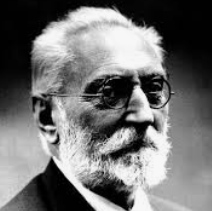
Proceeding from ourselves, from our own human consciousness, the only consciousness which we feel from within and in which feeling is identical with being, we attribute some sort of consciousness, more or less dim, to all living things, and even to the stones themselves, for they also live. And the evolution of organic beings is simply the struggle to realize fullness of consciousness through suffering, a continual aspiration to be others without ceasing to be themselves, to break and yet to preserve their proper limits.
8 months 2 weeks ago
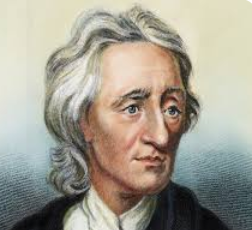
As usurpation is the exercise of power which another has a right to, so tyranny is the exercise of power beyond right, which nobody can have a right to...
▼
Source
source
Second Treatise of Government, Ch. XVIII, sec. 199
8 months 1 week ago
If anything extraordinary seems to have happened, we can always say that we have been the victims of an illusion. If we hold a philosophy which excludes the supernatural, this is what we always shall say.
▼
Source
source
Ch. 1: "The Scope of this Book"
CivilSimian.com created by AxiomaticPanic, CivilSimian, Kalokagathia