Saw something about this discussed in the framing of the free will debate. Roughly, insistence on historical is punitive and focus on the future is progressive. BALANCE is what is needed.


Our preaching does not stop with the law. That would lead to wounding without binding up, striking down and not healing, killing and not making alive, driving down to hell and not bringing back up, humbling and not exalting. Therefore, we must also preach grace and the promise of forgiveness - this is the means by which faith is awakened and properly taught. Without this word of grace, the law, contrition, penitence, and everything else are done and taught in vain.
All things are artificial, for nature is the Art of God.
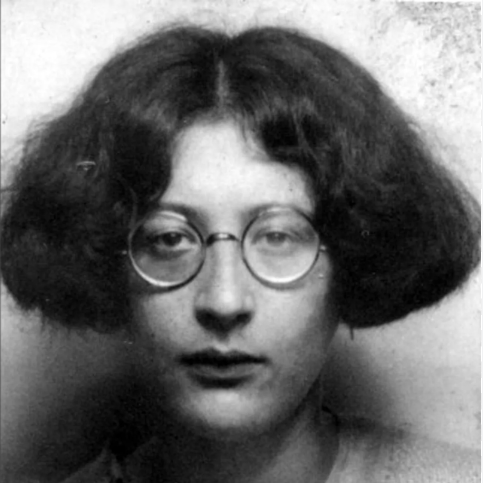
It is precisely those artists and writers who are most inclined to think of their art as the manifestation of their personality who are in fact the most in bondage to public taste.
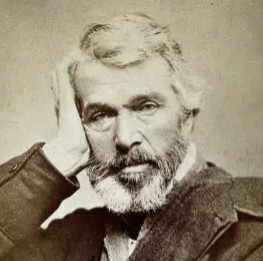
Much has been said of Mahomet's propagating his Religion by the sword. It is no doubt far nobler what we have to boast of the Christian Religion, that it propagated itself peaceably in the way of preaching and conviction. Yet withal, if we take this for an argument of the truth or falsehood of a religion, there is a radical mistake in it. The sword indeed: but where will you get your sword! Every new opinion, at its starting, is precisely in a minority of one. In one man's head alone, there it dwells as yet. One man alone of the whole world believes it; there is one man against all men. That he take a sword, and try to propagate with that, will do little for him. You must first get your sword! On the whole, a thing will propagate itself as it can. We do not find, of the Christian Religion either, that it always disdained the sword, when once it had got one.
Environments work us over and remake us. It is man who is the content of and the message of the media, which are extensions of himself. Electronic man must know the effects of the world he has made above all things.
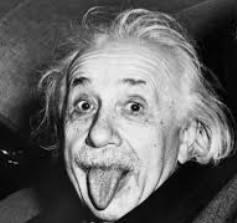
The supreme task of the physicist is to arrive at those universal elementary laws from which the cosmos can be built up by pure deduction. There is no logical path to these laws; only intuition, resting on sympathetic understanding of experience, can reach them. In this methodological uncertainty, one might suppose that there were any number of possible systems of theoretical physics all equally well justified; and this opinion is no doubt correct, theoretically. But the development of physics has shown that at any given moment, out of all conceivable constructions, a single one has always proved itself decidedly superior to all the rest.
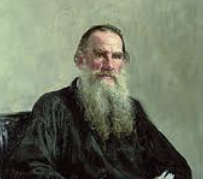
For man to be able to live he must either not see the infinite, or have such an explanation of the meaning of life as will connect the finite with the infinite.
You worldly-minded people are most unfortunate! You are surrounded with sorrows and troubles overhead and underfoot and to the right and to the left, and you are enigmas even to yourselves.
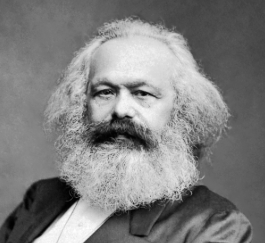
Thus, while the refugee serfs only wished to be free to develop and assert those conditions of existence which were already there, and hence, in the end, only arrived at free labour, the proletarians, if they are to assert themselves as individuals, will have to abolish the very condition of their existence hitherto (which has, moreover, been that of all society up to the present), namely, labour. Thus they find themselves directly opposed to the form in which, hitherto, the individuals, of which society consists, have given themselves collective expression, that is, the State. In order, therefore, to assert themselves as individuals, they must overthrow the State.
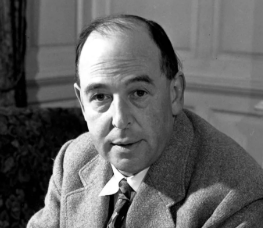
We live, in fact, in a world starved for solitude, silence, and privacy: and therefore starved for meditation and true friendship.
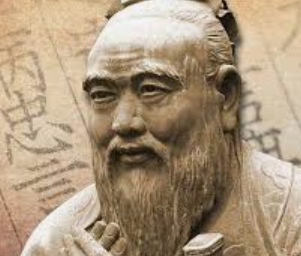
In archery we have something like the way of the superior man. When the archer misses the center of the target, he turns round and seeks for the cause of his failure in himself.
Underlying even the so-called problem of knowledge there is simply this human feeling, just as underlying the inquiry into the "why," the cause, there is simply the search for the "wherefore," the end. All the rest is either to deceive oneself or to wish to deceive others; and to wish to deceive others in order to deceive oneself.
Man is a creation of desire, not a creation of need.
The moral flabbiness born of the exclusive worship of the bitch-goddess SUCCESS. That - with the squalid cash interpretation put on the word success - is our national disease.
In everything well known something worthy of thought still lurks.
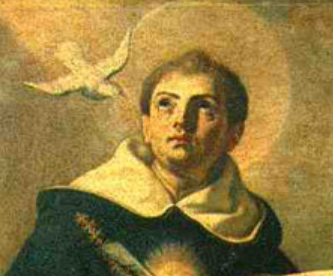
The highest manifestation of life consists in this: that a being governs its own actions. A being that is always subject to the direction of another is somewhat of a dead thing. Variant translation: Now slavery has a certain likeness to death, hence it is also called civil death. For life is most evident in a thing's moving itself, while what can only be moved by another, seems to be as if dead. But it is manifest that a slave is not moved by himself, but only at his master's command.
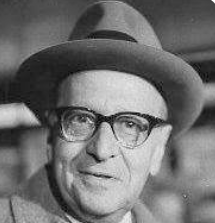
When an active individual of sound common sense perceives the sordid state of the world, desire to change it becomes the guiding principle by which he organizes given facts and shapes them into a theory. The methods and categories as well as the transformation of the theory can be understood only in connection with his taking of sides. This, in turn, discloses both his sound common sense and the character of the world. Right thinking depends as much on right willing as right willing on right thinking.
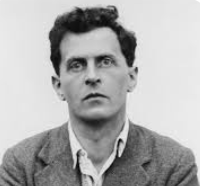
We must plow through the whole of language.
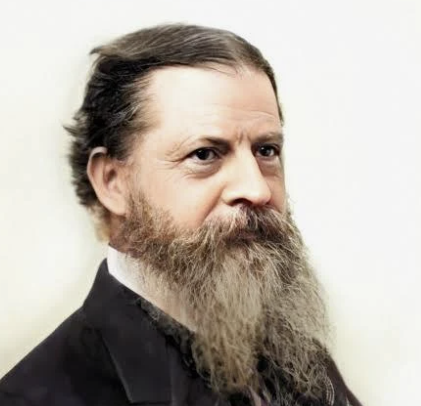
Consider what effects that might conceivably have practical bearings you conceive the objects of your conception to have. Then, your conception of those effects is the whole of your conception of the object.
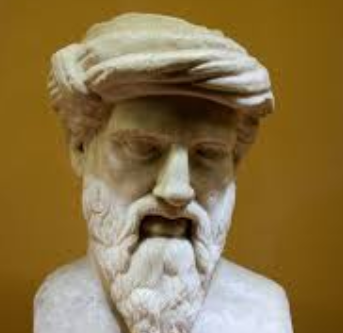
Power is the near neighbour of necessity.
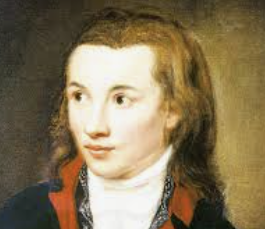
The true philosophical Act is annihilation of self (Selbsttodtung); this is the real beginning of all Philosophy; all requisites for being a Disciple of Philosophy point hither. This Act alone corresponds to all the conditions and characteristics of transcendental conduct.
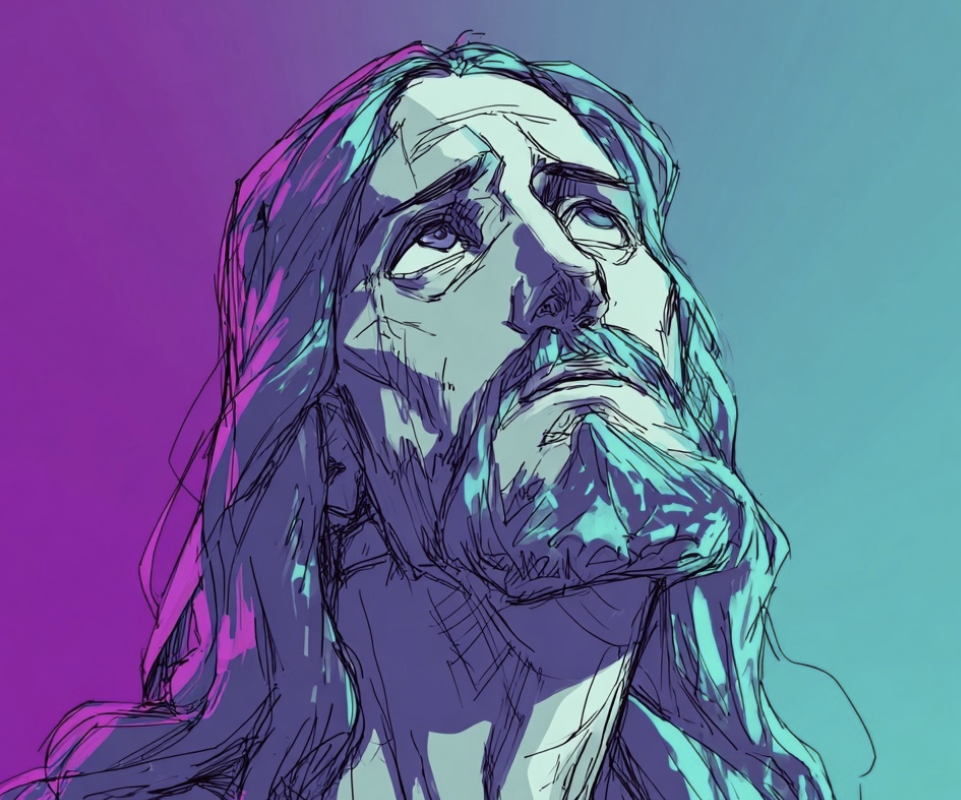
His master was angry, and delivered him to the torturers until he should pay all that was due to him. "So My heavenly Father also will do to you if each of you, from his heart, does not forgive his brother his trespasses."
I should say sincerity, a deep, great, genuine sincerity, is the first characteristic of all men in any way heroic.
Every philosophical, ethical, and political idea-its lifeline connecting it with its historical origins having been severed-has a tendency to become the nucleus of a new mythology, and this is one of the reasons why the advance of enlightenment tends at certain points to revert to superstition and paranoia. The majority principle ... has become the sovereign force to which thought must cater. It is a new god, not in the sense in which the heralds of the great revolutions conceived it, namely, as a power of resistance to existing injustice, but as a power of resistance to anything that does not conform.
The capitalist system of production is an economic democracy in which every penny gives a right to vote. The consumers are the sovereign people. The capitalists, the entrepreneurs, and the farmers are the people's mandatories. If they do not obey, if they fail to produce, at the lowest possible cost, what the consumers are asking for, they lose their office. Their task is service to the consumer. Profit and loss are the instruments by means of which the consumers keep a tight rein on all business activities.
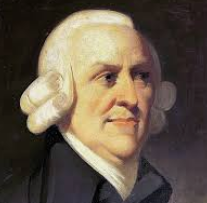
Hatred and anger are the greatest poison to the happiness of a good mind.
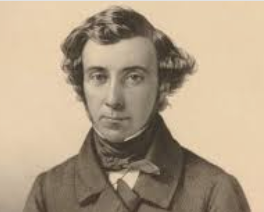
In cities men cannot be prevented from concerting together, and from awakening a mutual excitement which prompts sudden and passionate resolutions. Cities may be looked upon as large assemblies, of which all the inhabitants are members; their populace exercises a prodigious influence upon the magistrates, and frequently executes its own wishes without their intervention. Variant translation: In towns it is impossible to prevent men from assembling, getting excited together and forming sudden passionate resolves. Towns are like great meeting houses with all the inhabitants as members. In them the people wield immense influence over their magistrates and often carry their desires into execution without intermediaries.
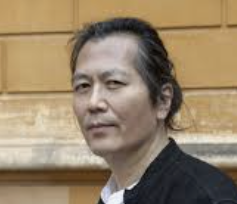
However, the disappearance of domination does not entail freedom. Instead, it makes freedom and constraint coincide. Thus, the achievement-subject gives itself over to compulsive freedom--that is, to the free constraint of maximizing achievement. Excess work and performance escalate into auto-exploitation.
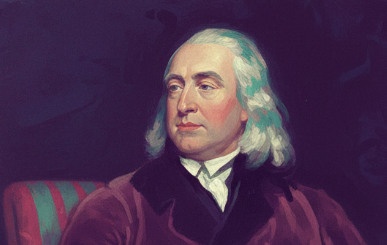
In looking over the catalogue of human actions (says a partizan of this principle) in order to determine which of them are to be marked with the seal of disapprobation, you need but to take counsel of your own feelings: whatever you find in yourself a propensity to condemn, is wrong for that very reason. For the same reason it is also meet for punishment: in what proportion it is adverse to utility, or whether it be adverse to utility at all, is a matter that makes no difference. In that same proportion also is it meet for punishment: if you hate much, punish much: if you hate little, punish little: punish as you hate. If you hate not at all, punish not at all: the fine feelings of the soul are not to be overborne and tyrannized by the harsh and rugged dictates of political utility.
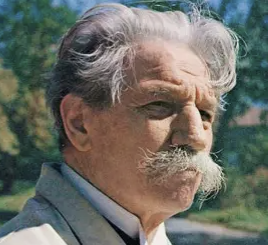
One thing that specially saddened me was that the unfortunate animals had to suffer so much pain and misery. The sight of an old limping horse, tugged forward by one man while another kept beating it with a stick to get it to the knacker's yard at Colmar, haunted me for weeks. It was quite incomprehensible to me - this was before I began going to school - why in my evening prayers I should pray for human beings only. So when my mother had prayed with me and had kissed me good-night, I used to add silently a prayer that I had composed myself for all living creatures. It ran thus: "O, heavenly Father, protect and bless all things that have breath; guard them from all evil, and let them sleep in peace."
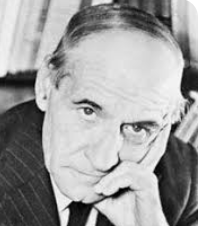
The nineteenth century, utilitarian throughout, set up a utilitarian interpretation of the phenomenon of life which has come down to us and may still be considered as the commonplace of everyday thinking. ... An innate blindness seems to have closed the eyes of this epoch to all but those facts which show life as a phenomenon of utility.
O my Father, if this cup may not pass away from me, except I drink it, thy will be done.
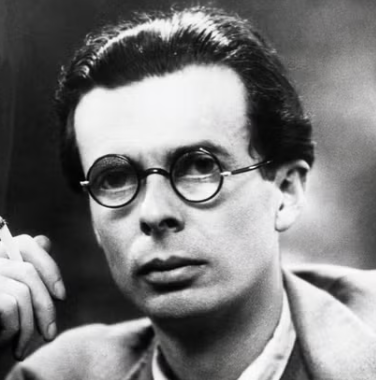
It had been, when I read it, only a vaguely pregnant piece of nonsense. Now it was all as clear as day, as evident as Euclid. Of course the Dharma-Body of the Buddha was the hedge at the bottom of the garden. At the same time, and no less obviously, it was these flowers, it was anything that I-or rather the blessed Not-I, released for a moment from my throttling embrace-cared to look at.
The human body is a machine which winds its own springs.
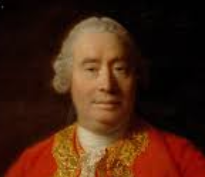
In our reasonings concerning matter of fact, there are all imaginable degrees of assurance, from the highest certainty to the lowest species of moral evidence. A wise man, therefore, proportions his belief to the evidence.
The standard bearers have grown weak in the defense of their priceless heritage, and the powers of darkness have been strengthened thereby. Weakness of attitude becomes weakness of character; it becomes lack of power to act with courage proportionate to danger. All this must lead to the destruction of our intellectual life unless the danger summons up strong personalities able to fill the lukewarm and discouraged with new strength and resolution.

Why dost thou not retire like a guest sated with the banquet of life, and with calm mind embrace, thou fool, a rest that knows no care?
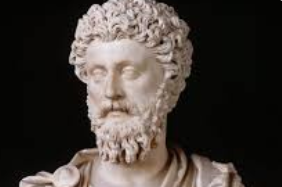
In a sense, people are our proper occupation. Our job is to do them good and put up with them. But when they obstruct our proper tasks, they become irrelevant to us--like sun, wind, and animals. Our actions may be impeded by them, but there can be no impeding our intentions or our dispositions. Because we can accommodate and adapt. The mind adapts and converts to its own purposes the obstacle to our acting. The impediment to action advances action. What stands in the way becomes the way.
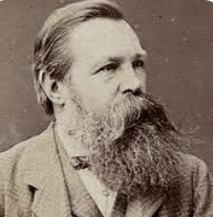
How is it possible that the poorer classes can remain healthy and have a reasonable expectation of life under such conditions? What can one expect but that they should suffer from continual outbreaks of epidemics and an excessively low expectation of life? The physical condition of the workers shows a progressive deterioration.
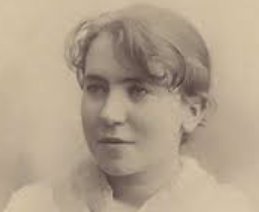
In conclusion, I wish to say that my attitude to the whole tragic question is not dictated by my Jewish antecedents. It is motivated by my abhorrence of injustice, and man's inhumanity to man. It is because of this that I have fought all my life for anarchism which alone will do away with the horrors of the capitalist régime and place all races and peoples, including the Jews, on a free and equal basis. Until then I consider it highly inconsistent for socialists and anarchists to discriminate in any shape or form against the Jews.
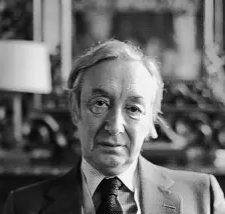
The problem of induction is, roughly speaking, the problem of finding a way to prove that certain empirical generalizations which are derived from past experience will hold good also in the future. There are only two ways of approaching this problem on the assumption that it is a genuine problem, and it is easy to see that neither of them can lead to its solution.
It is quite possible to be both. I look upon myself as a man. Nationalism is an infantile disease. It is the measles of mankind.
It is written again, Thou shalt not tempt the Lord thy God.
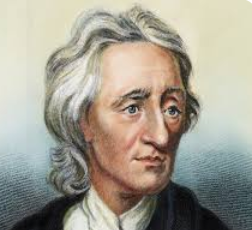
Of all the ways whereby children are to be instructed, and their manners formed, the plainest, easiest, and most efficacious, is, to set before their eyes the examples of those things you would have them do, or avoid; which, when they are pointed out to them, in the practice of persons within their knowledge, with some reflections on their beauty and unbecomingness, are of more force to draw or deter their imitation, than any discourses which can be made to them.
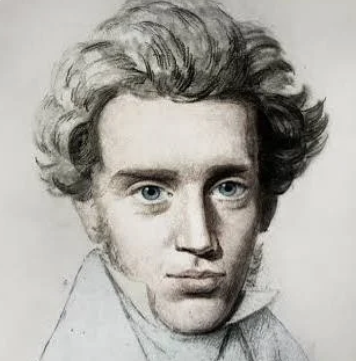
After all, in the poets love has its priests, and sometimes one hears a voice which knows how to defend it; but of faith one hears never a word. Who speaks in honor of this passion? Philosophy goes further. Theology sits rouged at the window and courts its favor, offering to sell her charms to philosophy. it is supposed to be difficult to understand Hegel, but to understand Abraham is a trifle. To go beyond Hegel's is a miracle, but to get beyond Abraham is the easiest thing of all.
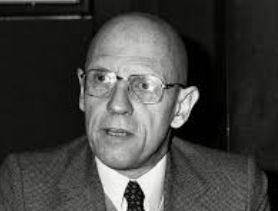
But let there be no misunderstanding: it is not that a real man, the object of knowledge, philosophical reflection or technological intervention, has been substituted for the soul, the illusion of theologians. The man described for us, whom we are invited to free, is already in himself the effect of a subjection more profound than himself. A 'soul' inhabits him and brings him to existence, which is itself a factor in the mastery that power exercises over the body. The soul is the effect and instrument of a political anatomy; the soul is the prison of the body.
CivilSimian.com created by AxiomaticPanic, CivilSimian, Kalokagathia