

5 months ago
What is not supposed to be my concern! First and foremost, the Good Cause, then God's cause, the cause of mankind, of truth, of freedom, of humanity, of justice; further, the cause of my people, my prince, my fatherland; finally, even the cause of Mind, and a thousand other causes. Only my cause is never to be my concern. "Shame on the egoist who thinks only of himself!"
▼
Source
source
Cambridge 1995, p. 5
6 months ago
A small beginning has led us to a great ending. If I were to put the bit of chalk with which we started into the hot but obscure flame of burning hydrogen, it would presently shine like the sun. It seems to me that this physical metamorphosis is no false image of what has been the result of our subjecting it to a jet of fervent, though nowise brilliant, thought to-night. It has become luminous, and its clear rays, penetrating the abyss of the remote past, have brought within our ken some stages of the evolution of the earth. And in the shifting "without haste, but without rest" of the land and sea, as in the endless variation of the forms assumed by living beings, we have observed nothing but the natural product of the forces originally possessed by the substance of the universe.
8 months 2 weeks ago
Reason is a harmonising, controlling force rather than a creative one.
▼
Source
source
Ch. 1: Mysticism and Logic
6 months 3 weeks ago
The two most far-reaching critical theories at the beginning of the latest phase of industrial society were those of Marx and Freud. Marx showed the moving powers and the conflicts in the social-historical process. Freud aimed at the critical uncovering of the inner conflicts. Both worked for the liberation of man, even though Marx's concept was more comprehensive and less time-bound than Freud's.
▼
Source
source
The Art of Being" Pt. 3
5 months 6 days ago
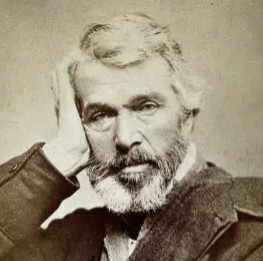
Suppose Odin to have been the inventor of Letters, as well as "magic," among that people! It is the greatest invention man has ever made! this of marking down the unseen thought that is in him by written characters. It is a kind of second speech, almost as miraculous as the first.
8 months 2 weeks ago
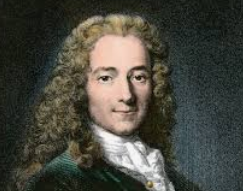
"Let us work without reasoning," said Martin; "it is the only way to make life endurable."
8 months 5 days ago
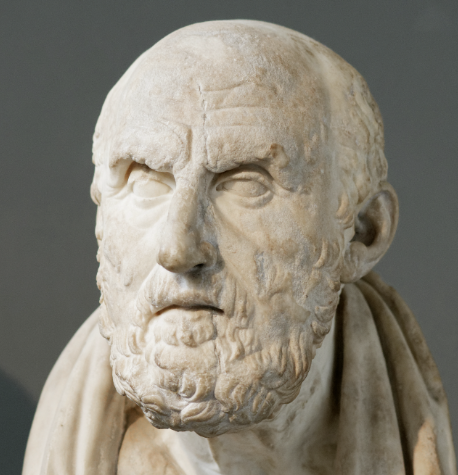
The universe itself is God and the universal outpouring of its soul.
▼
Source
source
As quoted in De Natura Deorum by Cicero, i. 15.
7 months 2 weeks ago
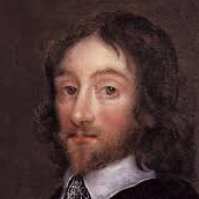
For the world, I count it not an Inn, but a Hospital, and a place, not to live, but to die in.
▼
Source
source
Section 11
6 months 1 week ago
Only puny secrets need protection. Big secrets are protected by public incredulity. You can actually dissipate a situation by giving it maximal coverage. As to alarming people, that's done by rumours, not by coverage.
▼
Source
source
(p. 92)
7 months 6 days ago
The fundamental sense of freedom is freedom from chains, from imprisonment, from enslavement by others. The rest is extension of this sense, or else metaphor.

7 months 2 weeks ago
I could never divide myself from any man upon the difference of an opinion, or be angry with his judgement for not agreeing with me in that, from which perhaps within a few days I should dissent myself.
▼
Source
source
Section 6
5 months 1 week ago
Is the position tenable, that certain phenomena, possible in Euclidean space, would be impossible in non-Euclidean space, so that experience, in establishing these phenomena, would directly contradict the non-Euclidean hypothesis? For my part I think no such question can be put. To my mind it is precisely equivalent to the following, whose absurdity is patent to all eyes: are there lengths expressible in meters and centimeters, but which can not be measured in fathoms, feet, and inches, so that experience, in ascertaining the existence of these lengths, would directly contradict the hypothesis that there are fathoms divided into six feet?
▼
Source
source
Ch. V: Experiment and Geometry (1905) Tr. George Bruce Halstead
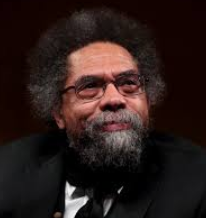
8 months 1 week ago
The Democratic Party is beyond redemption at this point when it comes to seriously speaking to the needs of poor and working people... The neofascism that's escalating is predicated on the rottenness of a system in which the Democratic Party facilitates that frustration and desperation because it can't present an alternative... If America is unable to present an alternative to the Democratic Party, then we're going fascist.
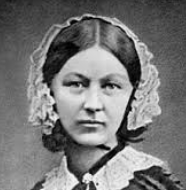
6 months 3 weeks ago
That man and woman have an equality of duties and rights is accepted by woman even less than by man. Behind his destiny woman must annihilate herself, must be only his complement. A woman dedicates herself to the vocation of her husband; she fills up and performs the subordinate parts in it. But if she has any destiny, any vocation of her own, she must renounce it, in nine cases out of ten.
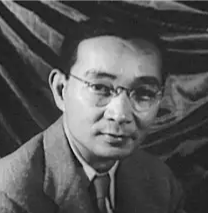
4 months 3 weeks ago
Besides the noble art of getting things done, there is the noble art of leaving things undone. The wisdom of life consists in the elimination of non-essentials.
▼
Source
source
As quoted in Pearls of Wisdom: A Harvest of Quotations From All Ages (1987) by Jerome Agel and Walter D. Glanze, p. 46.
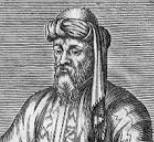
7 months 4 weeks ago
The utility of a science which enables men to take cognizance of the travellers on the mind's highway, and excludes those disorderly interlopers, verbal fallacies, needs but small attestation. Its searching penetration by definition alone, before which even mathematical precision fails, would especially commend it to those whom the abstruseness of the study does not terrify, and who recognise the valuable results which must attend discipline of mind. Like a medicine, though not a panacea for every ill, it has the health of the mind for its aim, but requires the determination of a powerful will to imbibe its nauseating yet wholesome influence: it is no wonder therefore that puny intellects, like weak stomachs, abhor and reject it.
▼
Source
source
Introduction to Aristotle's Organon, as translated by Octavius Freire Owen (1853), p. v
8 months 2 weeks ago
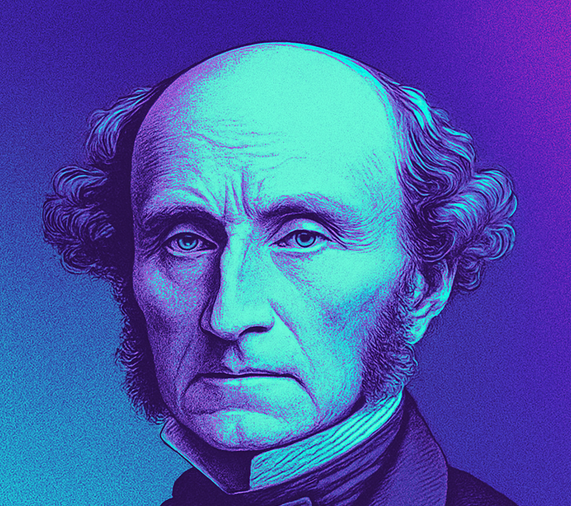
I conceive that the description so often given of a Benthamite, as a mere reasoning machine, though extremely inapplicable to most of those who have been designated by that title, was during two or three years of my life not altogether untrue of me. ...There is nothing very extraordinary in this fact: no youth of the age I then was, can be expected to be more than one thing, and this was the thing I happened to be. Ambition and desire of distinction, I had in abundance; and zeal for what I thought the good of mankind was my strongest sentiment, mixing with and colouring all others. But my zeal was as yet little else, at that period of my life, than zeal for speculative opinions. It had not its root in genuine benevolence, or sympathy with mankind; though these qualities held their due place in my ethical standard. Nor was it connected with any high enthusiasm for ideal nobleness.
▼
Source
source
(pp. 109-110)
6 months 2 weeks ago
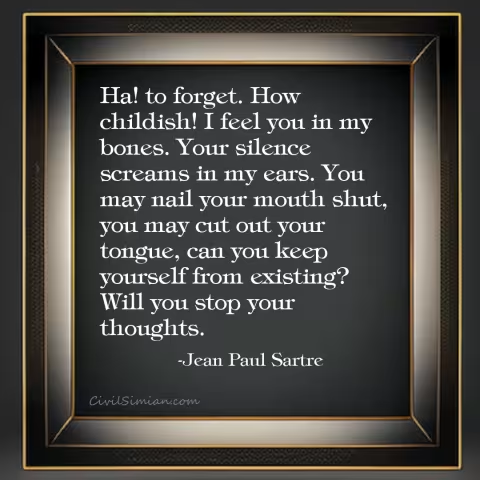
Boredom is like a pitiless zooming in on the epidermis of time. Every instant is dilated and magnified like the pores of the face.
▼
Source
source
Chapter 3
7 months 2 weeks ago
A people who are still, as it were, but in the gristle, and not yet hardened into the bone of manhood.
5 months ago
Criticism actually says: You must free your I so completely from all limitations that it becomes a human I. I say: Free yourself as far as you can, and you have done your part; because it is not given to everyone to break through all limits, or, more eloquently: that is not a limit for everyone which is one to the others. Consequently, don't exhaust yourself on the limits of others; it's enough if you tear down your own. Who has ever been able to break down even one limit for all people? Aren't countless people today, as at all times, running around with all the "limitations of humanity"? One who overturns one of his limits may have shown others the way and the means; the overturning of their limits remains their affair.
▼
Source
source
Landstreicher 2017, p. 97
8 months 1 week ago
Anytime two human beings find genuine pleasure, joy, and love, the stars smile and the universe is enriched. Yet as long as that pleasure, joy, and love is still predicated on myths of black sexuality, the more fundamental challenge of humane interaction remains unmet.
▼
Source
source
(p85)
7 months 1 week ago
Before abstraction everything is one, but one like chaos; after abstraction everything is united again, but this union is a free binding of autonomous, self-determined beings. Out of a mob a society has developed, chaos has been transformed into a manifold world.
▼
Source
source
Fragment No. 95
8 months 3 weeks ago
It is necessary to have regard to the person whom we wish to persuade, of whom we must know the mind and the heart, what principles he acknowledges, what things he loves; and then observe in the thing in question what affinity it has with the acknowledged principles, or with the objects so delightful by the pleasure which they give him.
4 months 2 weeks ago
The God who gave us life, gave us liberty at the same time; the hand of force may destroy, but cannot disjoin them.
▼
Source
source
Summary View of the Rights of British America (1774); The Writings of Thomas Jefferson (19 Vols., 1905) edited by Andrew A. Lipscomb and Albert Ellery Bergh, Vol. 1, p. 211
8 months 2 weeks ago
Talents differ; all is well and wisely put; If I cannot carry forests on my back, Neither can you crack a nut.
▼
Source
source
Fable
6 months 3 weeks ago
So long as one can use scented candy to abate the foul breath of hypocrisy, Puritanism is triumphant.
7 months 1 day ago
The intellectual world is divided into two classes - dilettantes, on the one hand, and pedants, on the other.
7 months 1 week ago
All religions, with their gods, their demigods, and their prophets, their messiahs and their saints, were created by the credulous fancy of men who had not attained the full development and full possession of their faculties. Consequently, the religious heaven is nothing but a mirage in which man, exalted by ignorance and faith, discovers his own image, but enlarged and reversed - that is, divinized. The history of religion, of the birth, grandeur, and decline of the gods who have succeeded one another in human belief, is nothing, therefore, but the development of the collective intelligence and conscience of mankind.
7 months 1 day ago
More than a century ago, in 1804, in Letter XC of that series that constitutes the immense monody of his Obermann, Sénancour wrote the words which I have put at the head of this chapter - and of all the spiritual descendants of the patriarchal Rousseau, Sénancour was the most profound and intense; of all the men of heart and feeling that France has produced, not excluding Pascal, he was the most tragic. "Man is perishable. That may be; but let us perish resisting, and if it is nothingness that awaits us, do not let us so act that it shall be a just fate." Change this sentence from it negative to the positive form - "And if it is nothingness that awaits us, let us so act that it shall be an unjust fate" - and you get the firmest basis of action for the man who cannot or will not be a dogmatist.
9 months 2 weeks ago
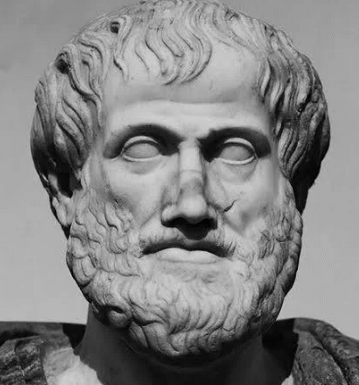
The infinite... happens to subsist in a way contrary to what is asserted by others: for the infinite is not that beyond which there is nothing, but it is that of which there is always something beyond. ...But that pertaining to which there is nothing beyond is perfect and whole. ...that of which nothing is absent pertaining to the parts ...the whole is that pertaining to which there is nothing beyond. But that pertaining to which something external is absent, that is not all ...But nothing is perfect which has not an end; and the end is a bound. On this account... Parmenides spoke better than Melissus: for the latter says that the infinite is a whole; but the former, that the whole is finite, and equally balanced from the middle: for to conjoin the infinite with the universe and the whole, is not to connect line with line.
7 months 1 day ago
Absolute relativism, which is neither more nor less than skepticism, in the most modern sense of the term, is the supreme triumph of the reasoning reason.
4 months 2 weeks ago
We come from a dark abyss, we end in a dark abyss, and we call the luminous interval life. As soon as we are born the return begins, at once the setting forth and the coming back; we die in every moment. Because of this many have cried out: The goal of life is death! But as soon as we are born we begin the struggle to create, to compose, to turn matter into life; we are born in every moment. Because of this many have cried out: The goal of ephemeral life is immortality! In the temporary living organism these two streams collide ... both opposing forces are holy. It is our duty, therefore, to grasp that vision which can embrace and harmonize these two enormous, timeless, and indestructible forces, and with this vision to modulate our thinking and our action.
8 months 2 weeks ago
Literature is the effort of man to indemnify himself for the wrongs of his condition.
▼
Source
source
"Walter Savage Landor", from The Dial, xii, 1841
7 months 1 week ago
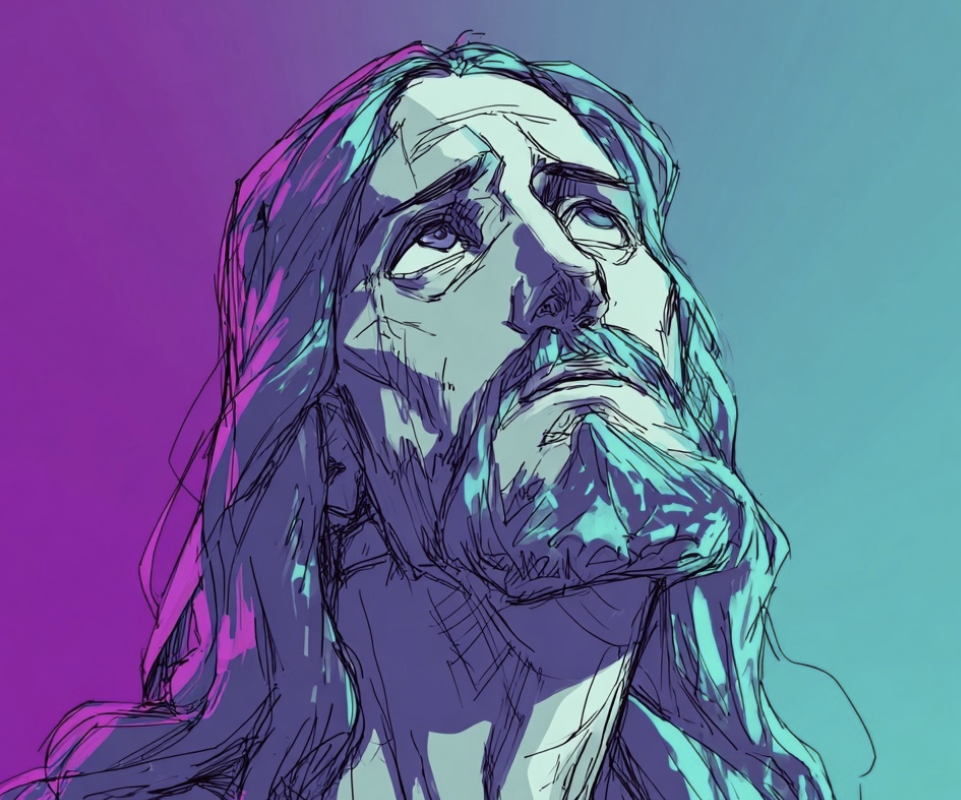
The kingdom of heaven can be compared to a king who wanted to settle accounts with his slaves.
▼
Source
source
18:23
8 months 2 weeks ago
An individual may perceive a way of life, or a method of social organisation, by which more of the desires of mankind could be satisfied than under the existing method. If he perceives truly, and can persuade men to adopt his reform, he is justified. Without rebellion, mankind would stagnate, and injustice would be irremediable.
▼
Source
source
Ch. 15: Power and moral codes
6 months 3 weeks ago
I believe that freedom is not a constant attribute that "we have" or "we don't have"; perhaps there is only one reality: the act of liberating ourselves in the process of using choices. Every step in life that heightens the maturity of man heightens his ability to choose the freeing alternative. I believe that "freedom of choice" is not always equal for all men at every moment. The man with an exclusively necrophilic orientation; who is narcissistic; or who is symbiotic-incestuous, can only make a regressive choice. The free man, freed from irrational ties, can no longer make a regressive choice.
6 months 3 weeks ago
To me, believing that some correspondence intrinsically just is reference (not as a result of our operational and theoretical constraints, or our intentions, but as an ultimate metaphysical fact) amounts to a magical theory of reference. Reference itself becomes what Locke called a 'substantial form' (an entity which intrinsically belongs with a certain name) on such a view. Even if one is willing to contemplate such unexplainable metaphysical facts, the epistemological problems that accompany such a metaphysical view seem insuperable. For, assuming a world of mind- independent, discourse-independent entities (this is the presupposition of the view we are discussing), there are, as we have seen, many different 'correspondences' which represent possible or candidate reference relations (infinitely many, in fact, if there are infinitely many things in the universe).
▼
Source
source
Chap. 2 : A problem about reference
8 months 3 weeks ago
There are some defeats more triumphant than victories.
7 months 1 week ago
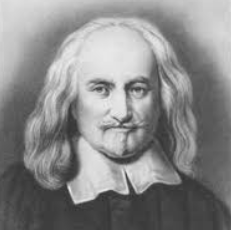
Understanding being nothing else, but conception caused by Speech.
▼
Source
source
The First Part, Chapter 4, p. 17
6 months 3 weeks ago
By necrophilia is meant love for all that is violence and destruction; the desire to kill; the worship of force; attraction to death, to suicide, to sadism; the desire to transform the organic into the inorganic by means of "order." The necrophile, lacking the necessary qualities to create, in his impotence finds it easy to destroy because for him it serves only one quality: force.
6 months 1 week ago
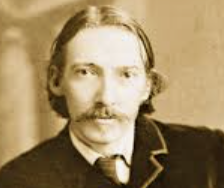
Sight-seeing is the art of disappointment.
▼
Source
source
Pt. I, ch. II.
8 months 2 weeks ago
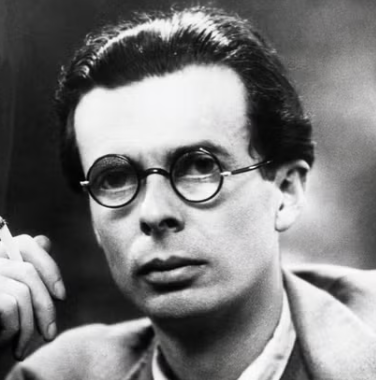
It is a political axiom that power follows property.
▼
Source
source
Chapter 12 (p. 113)
8 months 2 weeks ago
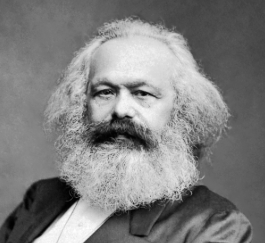
The monopoly of capital becomes a fetter upon the mode of production, which has sprung up and flourished along with, and under it. Centralisation of the means of production and socialisation of labour at last reach a point where they become incompatible with their capitalist integument. This integument is burst asunder. The knell of capitalist private property sounds. The expropriators are expropriated.
▼
Source
source
Vol. I, Ch. 32, p. 837.
9 months ago
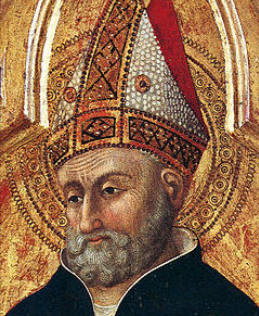
Since love grows within you, so beauty grows. For love is the beauty of the soul.
8 months 5 days ago
Suffer no anxiety, for he who is a sufferer of anxiety becomes regardless of enjoyment of the world and the spirit, and contraction happens to his body and soul.
CivilSimian.com created by AxiomaticPanic, CivilSimian, Kalokagathia