Universal Humanism's distilled rule set as well as top categorical viewpoints and an appeal to negative utilitarianism.
#philosophy #quotes #CivilSimian #UniversalHumanism
https://open.substack.com/pub/axiomaticpanic/p/universal-humanisms-defi…


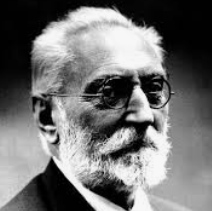
One of those leaders of what they call the social revolution has said that religion is the opiate of the people. Opium...opium...opium, yes. Let us give them opium so that they can sleep and dream.
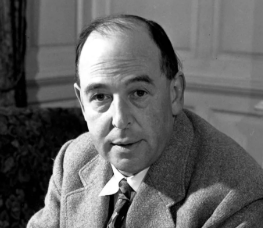
Only the skilled can judge the skilfulness, but that is not the same as judging the value of the result.
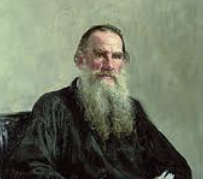
"They must understand that we can only lose by taking the offensive. Patience and time are my warriors, my champions," thought Kutúzov. He knew that an apple should not be plucked while it is green. It will fall of itself when ripe, but if picked unripe the apple is spoiled, the tree is harmed, and your teeth are set on edge.
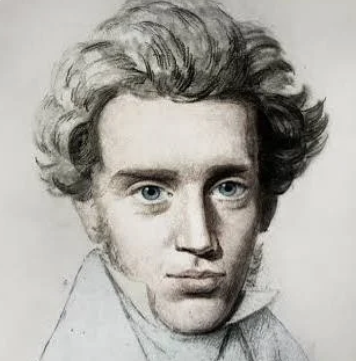
There are many people who reach their conclusions about life like schoolboys; they cheat their master by copying the answer out of a book without having worked out the sum for themselves.
I don't believe you until you tell me, do you really believe, for example, if they say they are Catholic, "Do you really believe that when a priest blesses a wafer, it turns into the body of Christ? Are you seriously telling me you believe that? Are you seriously saying that wine turns into blood?" Mock them. Ridicule them. In public. Don't fall for the convention that we're all too polite to talk about religion. Religion is not off the table. Religion is not off limits. Religion makes specific claims about the universe which need to be substantiated and need to be challenged and, if necessary, need to be ridiculed with contempt.
Only the actual participants can correctly recognize, understand, and judge the concrete situation and settle the extreme case of conflict.
There is something between the gross specialised values of the mere practical man, and the thin specialised values of the mere scholar. Both types have missed something; and if you add together the two sets of values, you do not obtain the missing elements.
Attempt nothing above thy strength!
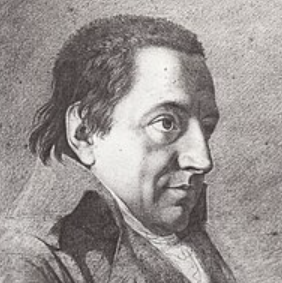
The Doctrine of Knowledge, apart from all special and definite knowing, proceeds immediately upon Knowledge itself, in the essential unity in which it recognises Knowledge as existing; and it raises this question in the first place - How this Knowledge can come into being, and what it is in its inward and essential Nature? The following must be apparent: - There is but One who is absolutely by and through himself, - namely, God; and God is not the mere dead conception to which we have thus given utterance, but he is in himself pure Life. He can neither change nor determine himself in aught within himself, nor become any other Being; for his Being contains within it all his Being and all possible Being, and neither within him nor out of him can any new Being arise.
If there may be doubts for men and for a childless woman as to the way to, fulfil the will of God, for a mother that path is firmly and clearly defined, and if she fulfils it humbly with a simple heart she stands on the highest point of perfection a human being can attain, and becomes for all a model of that complete performance of God's will which all desire. Only a mother can before her death tranquilly say to Him who sent her into this world, and Whom she has served by bearing and bringing up children whom she has loved more than herself - only she having served Him in the way appointed to her can say with tranquillity, Now lettest Thou Thy servant depart in peace. And that is the highest perfection to which, as to the highest good, men aspire.
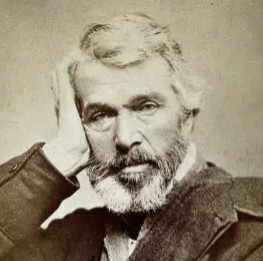
With his sharp power of vision, resolute power of action, I doubt not he could have learned to write Books withal, and speak fluently enough;-he did harder things than writing of Books. This kind of man is precisely he who is fit for doing manfully all things you will set him on doing.
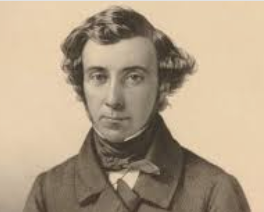
Americans of all ages, all stations of life, and all types of disposition are forever forming associations... In democratic countries knowledge of how to combine is the mother of all other forms of knowledge; on its progress depends that of all the others.
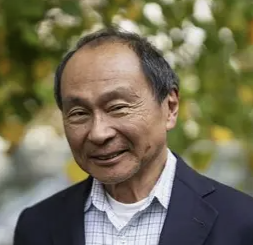
On the left you had a different aspect of individual autonomy that was pushed to an extreme, which really had to do with the autonomy that individuals have to create their own lifestyles. ...The basic concept of liberal autonomy has to do with your ability to make moral choices, but as time went on the emphasis came to be not on making the right moral choices within an existing moral framework, but rather to be able to make up that framework on your own, that that was the ultimate expression of individual human freedom, and it has obvious problems for a society because all societies have to be based on shared norms that allow people to coordinate their actions, to communicate, and the like... If you believe that the rules can be... set by anybody and that transgressing existing rules is automatically a good thing, you're not going to have... a stable society.
One is not worthy to have what one, through weakness, lets be taken from him; one is not worthy of it because one is not capable of it.
If we want a love which will protect the soul from wounds we must love something other than God.
"Detect quacks"? Yes do, for Heaven's sake; but know withal the men that are to be trusted! Till we know that, what is all our knowledge; how shall we even so much as "detect"? For the vulpine sharpness, which considers itself to be knowledge, and "detects" in that fashion, is far mistaken. Dupes indeed are many: but, of all dupes, there is none so fatally situated as he who lives in undue terror of being duped.
Every being ought to do that which is according to its constitution; and all other things have been constituted for the sake of the superior, but the rational for the sake of one another.
I am to talk about Apologetics. Apologetics means of course Defence. The first question is - what do you propose to defend? Christianity, of course...
So it is that after each night, facing a new day, the impossible necessity of dealing with it fills us with dread; exiled in light as if the world had just started, inventing the sun, we flee from tears-just one of which would be enough to wash us out of time.
To be an intellectual really means to speak a truth that allows suffering to speak. That is, it creates a vision of the world that puts into the limelight the social misery that is usually hidden or concealed by the dominant viewpoints of a society. "Intellectual" in that sense simply means those who are willing to reflect critically upon themselves as well as upon the larger society and to ascertain whether there is some possibility of amelioration and betterment.
The most advanced nations are always those who navigate the most.
I cannot contribute anything to this world because I only have one method: agony.
War is the father and king of all: some he has made gods, and some men; some slaves and some free.
If we sit and talk in a dark room, words suddenly acquire new meanings and different textures...and on the radio. Given only the sound of a play, we have to fill in all of the senses, not just the sight of the action. So much do-it-yourself, or completion and "closure" of action, develops a kind of independent isolation in the young that makes them remote and inaccessible.
Man is born as a freak of nature, being within nature and yet transcending it. He has to find principles of action and decision-making which replace the principles of instincts. He has to have a frame of orientation which permits him to organize a consistent picture of the world as a condition for consistent actions. He has to fight not only against the dangers of dying, starving, and being hurt, but also against another danger which is specifically human: that of becoming insane. In other words, he has to protect himself not only against the danger of losing his life but also against the danger of losing his mind.
Although usury is itself a form of credit in its bourgeoisified form, the form adapted to capital, in its pre-bourgeois form it is rather the expression of the lack of credit.
Maurras, with perfect logic, is an atheist. The Cardinal [Richelieu], in postulating something whose whole reality is confined to this world as an absolute value, committed the sin of idolatry. ... The real sin of idolatry is always committed on behalf of something similar to the State.
In a free system any large, popular, revolutionary movement should be able to bring about its ends by such a voluntary process. As more and more people see how it works more and more will wish to participate in or support it. And so it will grow, without being necessary to force everyone or a majority or anyone into the pattern.
I have remarked very clearly that I am often of one opinion when I am lying down and of another when I am standing up.
Allow me, excellent Lucilius, to utter a still bolder word: if any goods could be greater than others, I should prefer those which seem harsh to those which are mild and alluring, and should pronounce them greater. For it is more of an accomplishment to break one's way through difficulties than to keep joy within bounds.
The Outsider is always unhappy, but he is an agent that ensures the happiness for millions of 'Insiders'.
Athuroglossos is characterized by..: (1) When you have "a mouth like a running spring," you cannot distinguish those occasions when you should speak from those when you should remain silent; or that which must be said from that which must remain unsaid; or the circumstances and situations where speech is required from those where one ought to remain silent. (2) As Plutarch notes... you have no regard for the value of logos, for rational discourse as a means of gaining access to truth.
What I know at sixty, I knew as well at twenty. Forty years of a long, a superfluous, labor of verification.
The sentiments of men often differ with regard to beauty and deformity of all kinds, even while their general discourse is the same ... In all matters of opinion and science, the case is opposite: The difference among men is there oftener found to lie in generals than in particulars; and to be less in reality than in appearance.
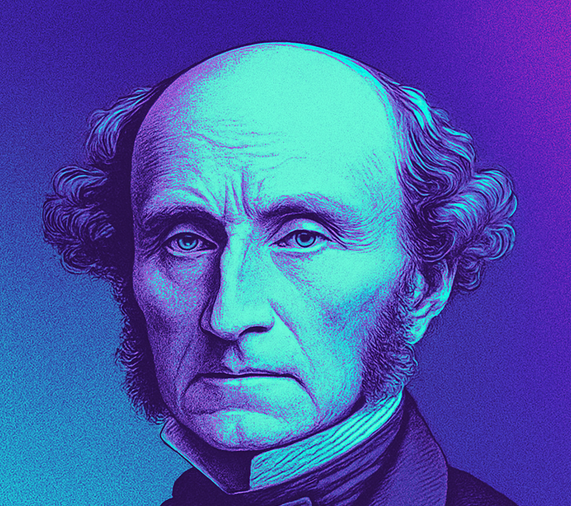
A bureaucracy always tends to become a pedantocracy.
The refusal of work and authority, or really the refusal of voluntary servitude, is the beginning of liberatory politics.
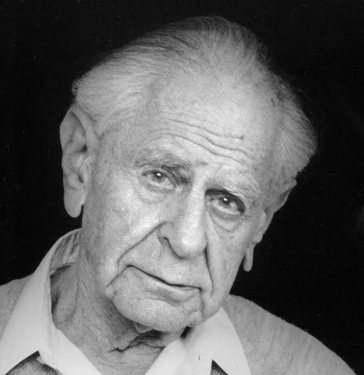
We may become the makers of our fate when we have ceased to pose as its prophets.
I write to thee on this subject, friend, because I am angry at a book which I have just left, which is so large, that it seems to contain universal science, but it hath almost split my head, without teaching me anything.
I do not define time, space, place, and motion, as being well known to all. Only I must observe, that the common people conceive those quantities under no other notions but from the relation they bear to sensible objects. And thence arise certain prejudices, for the removing of which it will be convenient to distinguish them into absolute and relative, true and apparent, mathematical and common.
I'm not clever enough to be a physicist. When asked about why he chose to become a biologist.
No critic writing about a film could say more than the film itself, although they do their best to make us think the opposite.
So we do sometimes think because it has been found to pay.
"No human laws are of any validity if contrary to the law of nature; and such of them as are valid derive all their force and all their authority mediately or immediately from this original." Thus writes Blackstone, to whom let all honour be given for having so far outseen the ideas of his time; and, indeed, we may say of our time. A good antidote, this, for those political superstitions which so widely prevail. A good check upon that sentiment of power-worship which still misleads us by magnifying the prerogatives of constitutional governments as it once did those of monarchs. Let men learn that a legislature is not "our God upon earth," though, by the authority they ascribe to it, and the things they expect from it, they would seem to think it is. Let them learn rather that it is an institution serving a purely temporary purpose, whose power, when not stolen, is at the best borrowed.
No man can justly censure or condemn another, because indeed no man truly knows another.
CivilSimian.com created by AxiomaticPanic, CivilSimian, Kalokagathia