


7 months 3 weeks ago
But the Quincunx of Heaven runs low, and 'tis time to close the five ports of knowledge. We are unwilling to spin out our awaking thoughts into the phantasmes of sleep, which often continueth præcogitations; making Cables of Cobwebbes and Wildernesses of handsome Groves. Beside Hippocrates hath spoke so little and the Oneirocriticall Masters, have left such frigid Interpretations from plants, that there is little encouragement to dream of Paradise it self. Nor will the sweetest delight of Gardens afford much comfort in sleep; wherein the dulnesse of that sense shakes hands with delectable odours; and though in the Bed of Cleopatra, can hardly with any delight raise up the ghost of a Rose.
▼
Source
source
Ch. 5
8 months 2 weeks ago
The trade of insurance gives great security to the fortunes of private people, and by dividing among a great many that loss which would ruin an individual, makes it fall light and easy upon the whole society.
▼
Source
source
Chapter I, Part III, p. 821.
4 months 3 weeks ago
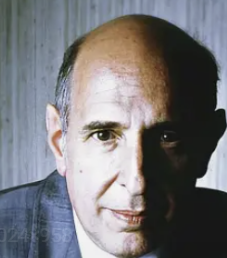
Students have powerful images of what a perfect body is and pursue it incessantly. But deprived of literary guidance, they no longer have any image of a perfect soul, and hence do not long to have one.
▼
Source
source
p. 67.

4 months 2 weeks ago
The bank mania is one of the most threatening of these imitations. It is raising up a moneyed aristocracy in our country which has already set the government at defiance, and although forced at length to yield a little on this first essay of their strength, their principles are unyielded and unyielding. These have taken deep root in the hearts of that class from which our legislators are drawn, and the sop to Cerberus from fable has become history. Their principles lay hold of the good, their pelf of the bad, and thus those whom the Constitution had placed as guards to its portals, are sophisticated or suborned from their duties.
▼
Source
source
Letter to Josephus B. Stuart (May 10, 1817) ME 15:112; reported in The Writings of Thomas Jefferson, ed. Andrew A. Lipscomb (1904), vol. 15, p. 112
7 months 2 weeks ago
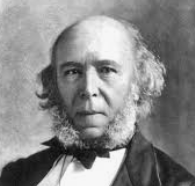
Every cause produces more than one effect.
▼
Source
source
On Progress: Its Law and Cause
8 months 2 weeks ago
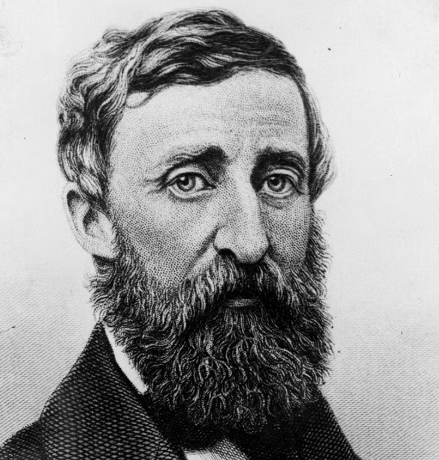
It is remarkable that, notwithstanding the universal favor with which the New Testament is outwardly received, and even the bigotry with which it is defended, there is no hospitality shown to, there is no appreciation of, the order of truth with which it deals.
7 months 1 week ago
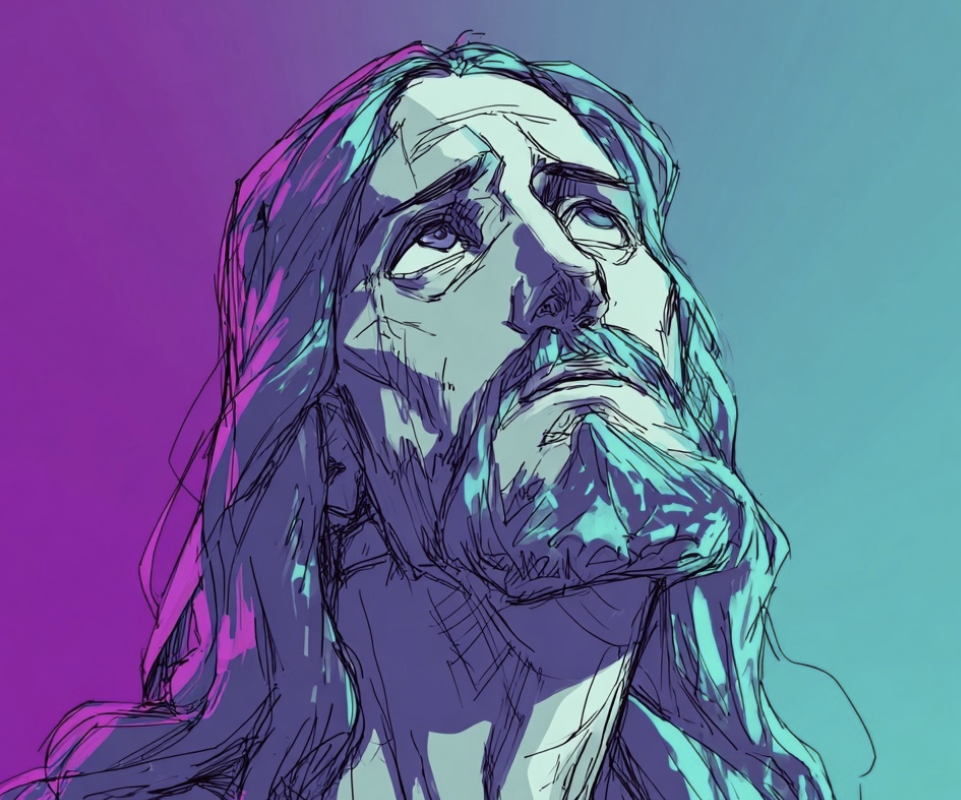
Woe unto thee, Chorazin! woe unto thee, Bethsaida! for if the mighty works, which were done in you, had been done in Tyre and Sidon, they would have repented long ago in sackcloth and ashes. But I say unto you, It shall be more tolerable for Tyre and Sidon at the day of judgment, than for you. And thou, Capernaum, which art exalted unto heaven, shalt be brought down to hell: for if the mighty works, which have been done in thee, had been done in Sodom, it would have remained until this day. But I say unto you, That it shall be more tolerable for the land of Sodom in the day of judgment, than for thee.
▼
Source
source
11:21-24 (KJV)
7 months 1 week ago
Most men's conscience, habits, and opinions are borrowed from convention and gather continual comforting assurances from the same social consensus that originally suggested them.
▼
Source
source
Ch. VIII: Ideal Society
9 months 1 day ago
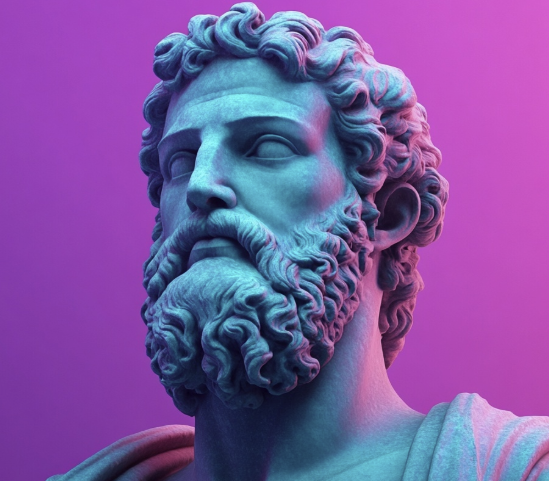
No man is free who is not master of himself.
▼
Source
source
Fragment 35 (Oldfather translation)
9 months 6 days ago
When one cultivates to the utmost the principles of his nature, and exercises them on the principle of reciprocity, he is not far from the path. What you do not like when done to yourself, do not do to others.
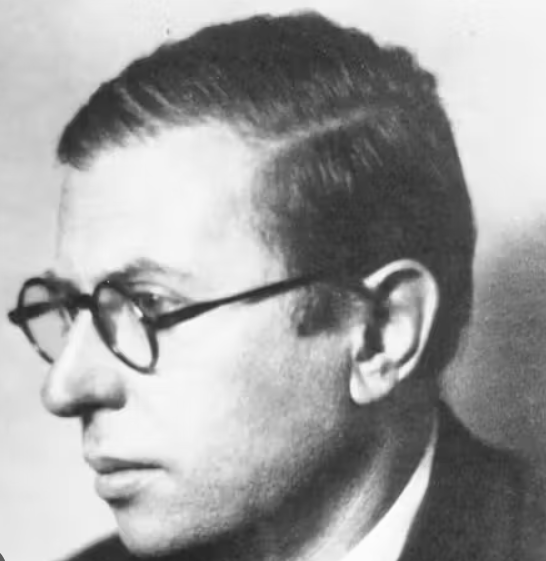
8 months 2 weeks ago
All human activities are equivalent ... and ... all are on principle doomed to failure.
▼
Source
source
Conclusion, II
4 months 2 weeks ago
Which of the two eternal roads shall I choose? Suddenly I know that my whole life hangs on this decision - the life of the entire Universe. Of the two, I choose the ascending path. Why? For no intelligible reason, without any certainty; I know how ineffectual the mind and all the small certainties of man can be in this moment of crisis. I choose the ascending path because my heart drives me toward it. "Upward! Upward! Upward!" my heart shouts, and I follow it trustingly.
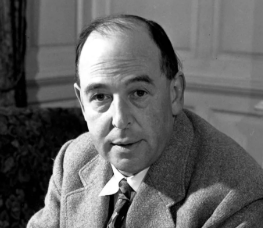
8 months 2 weeks ago
The safest road to Hell is the gradual one - the gentle slope, soft underfoot, without sudden turnings, without milestones, without signposts.
▼
Source
source
Letter XII
4 months 3 weeks ago
The old view was that delicacy of language was part of the nature, the sacred nature, of eros and that to speak about it in any other way would be to misunderstand it. What has disappeared is the risk and the hope of human connectedness embedded in eros. Ours is a language that reduces the longing for an other to the need for individual, private satisfaction and safety.
▼
Source
source
pp. 13-14.


4 months 2 weeks ago
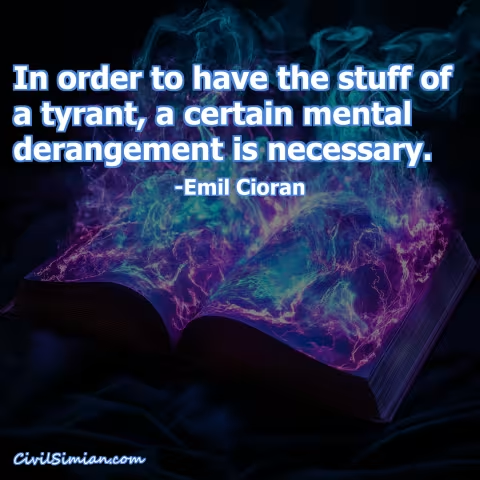
A mind that has confronted ruin for years Is half or more a ruined mind.
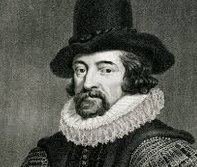
8 months 3 weeks ago
There is another ground of hope that must not be omitted. Let men but think over their infinite expenditure of understanding, time, and means on matters and pursuits of far less use and value; whereof, if but a small part were directed to sound and solid studies, there is no difficulty that might not be overcome.
▼
Source
source
Aphorism 111
8 months 2 weeks ago
Is anything more certain than that in all those vast times and spaces, if I were allowed to search them, I should nowhere find her face, her voice, her touch? She died. She is dead. Is the word so difficult to learn?
8 months 2 weeks ago
Nine-tenths of the activities of a modern Government are harmful; therefore the worse they are performed, the better.
▼
Source
source
The Problem of China (1922), Ch. XII: The Chinese Character
5 months 1 day ago
Whoever complains about the death of anyone, is complaining that he was a man. Everyone is bound by the same terms: he who is privileged to be born, is destined to die.
8 months 2 weeks ago
Don't you feel the same way? When I cannot see myself, even though I touch myself, I wonder if I really exist.
▼
Source
source
Estelle, discovering that there are no mirrors in Hell, Act 1, sc. 5
9 months 6 days ago
The Superior Man has nothing to compete for. But if he must compete, he does it in an archery match, wherein he ascends to his position, bowing in deference. Descending, he drinks (or has [the winner] drink) the ritual cup. Note: Bowing is a courtesy for the host who invites him as well drinking a cup.
7 months 1 week ago
There is nothing impossible in the existence of the supernatural: its existence seems to me decidedly probable.
▼
Source
source
The Genteel Tradition at Bay
8 months 2 weeks ago
It is sad that often, to be a good patriot, one must be the enemy of the rest of mankind.
▼
Source
source
"Country"
4 months 2 weeks ago
A lively and lasting sense of filial duty is more effectually impressed on the mind of a son or daughter by reading King Lear, than by all the dry volumes of ethics, and divinity, that ever were written.
▼
Source
source
Letter to Robert Skipwith (3 August 1771) ; also in The Writings of Thomas Jefferson (19 Vols., 1905) edited by Andrew A. Lipscomb and Albert Ellery Bergh, Vol. 4, p. 239
6 months 2 weeks ago
Success makes some crimes honorable.
▼
Source
source
Maxim 326
8 months 2 weeks ago
Truth is a shining goddess, always veiled, always distant, never wholly approachable, but worthy of all the devotion of which the human spirit is capable.
▼
Source
source
Fact and Fiction (1961), Part II, Ch. 10: "University Education", p. 153
5 months 4 weeks ago
I mean to lead a simple life, to choose a simple shell I can carry easily - like a hermit crab. But I do not. I find that my frame of life does not foster simplicity. My husband and five children must make their way in the world. The life I have chosen as a wife and mother entrains a whole caravan of complications.

7 months 1 week ago
To have committed every crime but that of being a father.
8 months 1 week ago
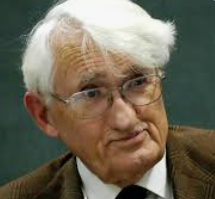
Subjects who reciprocally recognize each other as such, must consider each other as identical, insofar as they both take up the position of subject; they must at all times subsume themselves and the other under the same category. At the same time, the relation of reciprocity of recognition demands the non-identity of one and the other, both must also maintain their absolute difference, for to be a subject implies the claim of individuation.
▼
Source
source
Habermas (1972) "Sprachspiel, intention und Bedeutung. Zu Motiven bei Sellars und Wittgenstein". In R.W. Wiggerhaus (Ed.) Sprachanalyse and Soziologie. Frankfurt: Suhrkamp). p. 334 This is called the paradoxical achievement of intersubjectivity
7 months 1 week ago
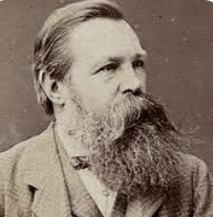
Wherever big industries displaced manufacture, the bourgeoisie developed in wealth and power to the utmost and made itself the first class of the country. The result was that wherever this happened, the bourgeoisie took political power into its own hands and displaced the hitherto ruling classes, the aristocracy, the guildmasters, and their representative, the absolute monarchy. The bourgeoisie annihilated the power of the aristocracy, the nobility, by abolishing the entailment of estates - in other words, by making landed property subject to purchase and sale, and by doing away with the special privileges of the nobility. It destroyed the power of the guildmasters by abolishing guilds and handicraft privileges. In their place, it put competition - that is, a state of society in which everyone has the right to enter into any branch of industry, the only obstacle being a lack of the necessary capital.
8 months 2 weeks ago
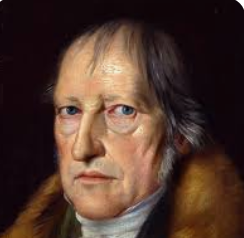
In history, we are concerned with what has been and what is; in philosophy, however, we are concerned not with what belongs exclusively to the past or to the future, but with that which is, both now and eternally - in short, with reason.
▼
Source
source
As translated by H. B. Nisbet, 1975
7 months 1 week ago
From the cradle to the grave, each individual pays for the sin of not being God. That's why life is an uninterrupted religious crisis, superficial for believers, shattering for doubters.
8 months 1 week ago
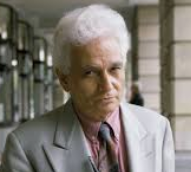
To live, by definition, is not something one learns. Not from oneself, it is not learned from life, taught by life. Only from the other and by death. In any case from the other at the edge of life. At the internal border or the external border, it is a heterodidactics between life and death.
▼
Source
source
Exordium
7 months 2 days ago
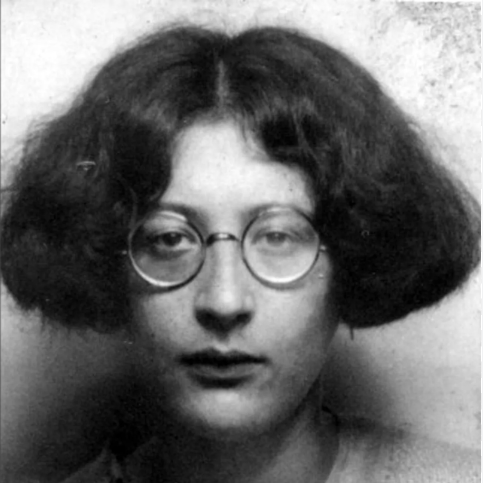
In order to obey God, one must receive his commands. How did it happen that I received them in adolescence, while I was professing atheism? To believe that the desire for good is always fulfilled - that is faith, and whoever has it is not an atheist.
▼
Source
source
Last Notebook (1942) p. 137
6 months 2 weeks ago
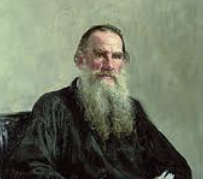
The conscience of a man of our circle, if he retains but a scrap of it, cannot rest, and poisons all the comforts and enjoyments of life supplied to us by the labour of our brothers, who suffer and perish at that labour. And not only does every conscientious man feel this himself (he would be glad to forget it, but cannot do so in our age) but all the best part of science and art - that part which has not forgotten the purpose of its vocation - continually reminds us of our cruelty and of our unjustifiable position. The old firm justifications are all destroyed; the new ephemeral justifications of the progress of science for science's sake and art for art's sake do not stand the light of simple common sense. Men's consciences cannot be set at rest by new excuses, but only by a change of life which will make any justification of oneself unnecessary as there will be nothing needing justification.
9 months 1 week ago
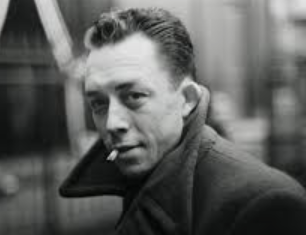
The contradiction is this: man rejects the world as it is, without accepting the necessity of escaping it. In fact, men cling to the world and by far the majority do not want to abandon it.
4 months 2 weeks ago
'When two equal weights are supported on the middle point between them, the pressure on the fulcrum is equal to the sum of the weights.'

7 months 1 day ago
You cannot think without abstractions; accordingly, it is of the utmost importance to be vigilant in critically revising your modes of abstraction. It is here that philosophy finds its niche as essential to the healthy progress of society. It is the critic of abstractions. A civilisation which cannot burst through its current abstractions is doomed to sterility.
▼
Source
source
Ch. 4: "The Eighteenth Century", pp. 82-83
8 months 2 weeks ago
But perhaps I lack the gift. I see I've described her as being like a sword. That's true as far as it goes. But utterly inadequate by itself, and misleading. I ought to have said 'But also like a garden. Like a nest of gardens, wall within wall, hedge within hedge, more secret, more full of fragrant and fertile life, the further you explore.' And then, of her, and every created thing I praise, I should say 'in some way, in its unique way, like Him who made it.' Thus up from the garden to the Gardener, from the sword to the Smith. to the life-giving Life and the Beauty that makes beautiful.
7 months 1 week ago
Coleridge said that every work of art must have about it something not understood to obtain its full effect.
▼
Source
source
p. 202
CivilSimian.com created by AxiomaticPanic, CivilSimian, Kalokagathia