

9 months 1 day ago
Practice yourself, for heaven's sake, in little things; and thence proceed to greater.
▼
Source
source
Book I, ch. 18, 18.
8 months 2 weeks ago
Written words differ from spoken words in being material structures. A spoken word is a process in the physical world, having an essential time-order; a written word is a series of pieces of matter, having an essential space-order.
▼
Source
source
An Outline of Philosophy Ch.4 Language, 1927
7 months 2 weeks ago
To conceive that compulsion and punishment are the proper means of reformation, is the sentiment of a barbarian; civilisation and science are calculated to explode so ferocious an idea. It was once universally admitted and approved; it is now necessarily upon the decline.
▼
Source
source
Vol. 2, bk. 7, ch. 5

8 months 3 weeks ago
The world is but a perpetual see-saw.
7 months 2 weeks ago
I believe it to be this; that my will, absolutely of itself, and without the intervention of any instrument that might weaken its effect, shall act in a sphere perfectly congenial - reason upon reason, spirit upon spirit; in a sphere to which it does not give the laws of life, of activity, of progress, but which has them in itself, therefore, upon self-active reason. But spontaneous, self-active reason is will. The law of the transcendental world must, therefore, be a Will.
▼
Source
source
Jane Sinnett, trans 1846 p.110
8 months 2 weeks ago
When it is a question of money, everybody is of the same religion.
▼
Source
source
Letter to Mme. d'Épinal, Ferney (26 December 1760) from Oeuvres Complètes de Voltaire: Correspondance (Garnier frères, Paris, 1881), vol. IX, letter # 4390 (p. 124)
7 months 2 weeks ago
Pantheism makes God into a present, real, and material being; empiricism - to which rationalism also belongs - makes God into an absent, remote, unreal, and negative being. Empiricism does not deny God existence, but denies him all positive determinations, because their content is supposed to be only finite and empirical; the infinite cannot, therefore, be an object for man. But the more determinations I deny to a being, the more do I cut it of[ from myself, and the less power and influence do I concede to it over me, the freer do I make myself of it. The more qualities I possess, the more I am for others, and the greater is the extent of my influence and effects. And the more one is, the more one is known to others. Hence, each negation of an attribute of God is a partial atheism, a sphere of godlessness.
▼
Source
source
Part I, Section 16

5 months 1 week ago
Art enlarges experience by admitting us to the inner life of others.
▼
Source
source
Ch. IV: "The Golden Rule and After", p. 110.

8 months 1 week ago
September 11, 2001, was just another day for most of the world's desperately poor people, so presumably close to 30,000 children under five died from these causes on that day-about ten times the number of victims of the terrorist attacks. The publication of these figures did not lead to an avalanche of money for UNICEF or other aid agencies helping to reduce infant mortality. In the year 2000 Americans made private donations for foreign aid of all kinds totaling about $4 per person in extreme poverty, or roughly $20 per family. New Yorkers who were living in lower Manhattan on September 11, 2001, whether wealthy or not, were able to receive an average of $5,300 per family. The distance between these amounts encapsulates the way in which, for many people, the circle of concern for others stops at the boundaries of their own country-if it extends even that far.
▼
Source
source
Chapter 5: One Community (p. 176)
7 months 3 weeks ago
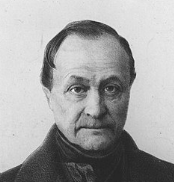
The principal means of realizing it will be the formation of an alliance between philosophers and the working classes, for which both are alike prepared by the negative and positive progress of the last five centuries. The direct object of their combined action will be to set in motion the force of Public Opinion.
▼
Source
source
p. 153
6 months 1 week ago
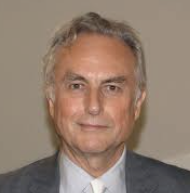
It is often said, mainly by the 'no-contests', that although there is no positive evidence for the existence of God, nor is there evidence against his existence. So it is best to keep an open mind and be agnostic. At first sight that seems an unassailable position, at least in the weak sense of Pascal's wager. But on second thoughts it seems a cop-out, because the same could be said of Father Christmas and tooth fairies. There may be fairies at the bottom of the garden. There is no evidence for it, but you can't prove that there aren't any, so shouldn't we be agnostic with respect to fairies?
▼
Source
source
From speech at the Edinburgh International Science Festival, 1992-04-15.
7 months 1 week ago
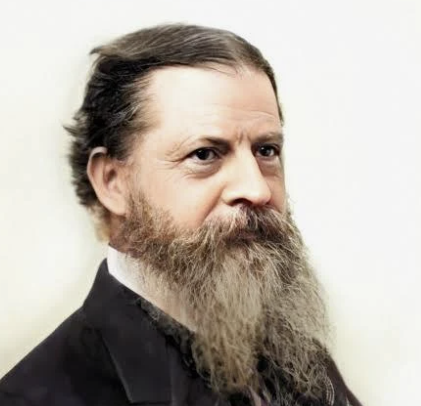
The consciousness of a general idea has a certain "unity of the ego" in it, which is identical when it passes from one mind to another. It is, therefore, quite analogous to a person, and indeed, a person is only a particular kind of general idea.
▼
Source
source
Man's Glassy Essence in The Monist, Vol. III, No. 1
5 months 4 weeks ago
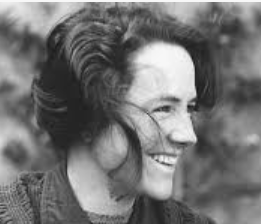
Only in growth, reform, and change, paradoxically enough, is true security to be found.
▼
Source
source
The Wave of the Future
8 months 2 weeks ago
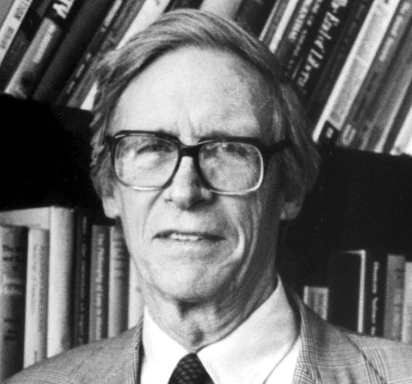
The claims of existing social arrangements and of self interest have been duly allowed for. We cannot at the end count them a second time because we do not like the result.
▼
Source
source
Chapter III, Section 23, pg. 135
8 months 4 weeks ago
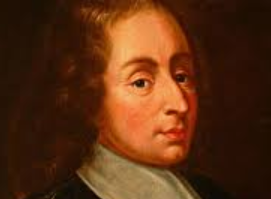
In order to enter into a real knowledge of your condition, consider it in this image: A man was cast by a tempest upon an unknown island, the inhabitants of which were in trouble to find their king, who was lost; and having a strong resemblance both in form and face to this king, he was taken for him, and acknowledged in this capacity by all the people.
8 months 1 week ago
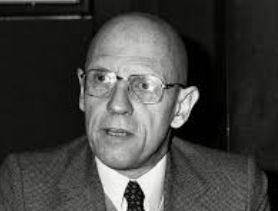
A great prison structure was planned, whose different levels would correspond exactly to the levels of the centralized administration. The scaffold, where the body of the tortured criminal had been exposed to the ritually manifested force of the sovereign, the punitive theatre in which the representation of punishment was permanently available to the social body, was replaced by a great enclosed, complex and hierarchized structure that was integrated into the very body of the state apparatus.
▼
Source
source
Chapter Three, The Gentle Way in Punishment
7 months 3 weeks ago
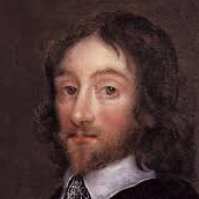
He who discommendeth others obliquely commendeth himself.
▼
Source
source
Part I, Section XXXIV
6 months 4 weeks ago
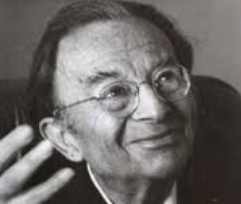
People have committed suicide because of their failure to realize the passions for love, power, fame, revenge. Cases of suicide because of a lack of sexual satisfaction are virtually nonexistent.
▼
Source
source
p. 30
4 months 2 weeks ago
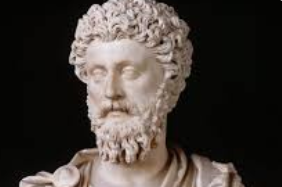
Remember this, then, that this little compound, thyself, must either be dissolved, or thy poor breath must be extinguished, or be removed and placed elsewhere.
▼
Source
source
VIII, 25
4 months 2 weeks ago
A wrongdoer is often a man who has left something undone, not always one who has done something.
▼
Source
source
IX, 5
7 months 1 week ago
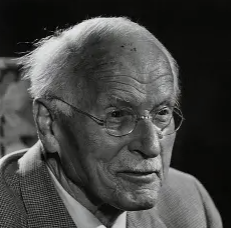
Naturally, every age thinks that all ages before it were prejudiced, and today we think this more than ever and are just as wrong as all previous ages that thought so. How often have we not seen the truth condemned! It is sad but unfortunately true that man learns nothing from history.
▼
Source
source
p. 33

9 months 5 days ago
It would be better if they [rulers] compelled the Jews to work for their living, as they do in parts of Italy, than that, living without occupation, they can grow rich only by usury .
▼
Source
source
art. 2
6 months 2 weeks ago
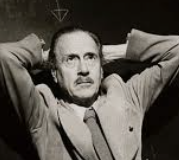
The unformulated message of an assembly of news items from every quarter of the globe is that the world today is one city. All war is civil war. All suffering is our own.
▼
Source
source
p. 291
7 months 2 weeks ago
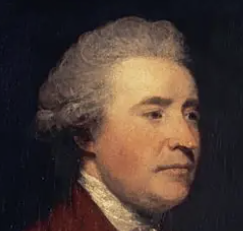
To the Deity must be left the task of infinite perfection, while to us poor, weak, incapable mortals, there was no rule of conduct so safe as experience.
▼
Source
source
Speech in the House of Commons (6 May 1791), quoted in The Parliamentary History of England, From the Earliest Period to the Year 1803, Vol. XXIX (1817), column 388
7 months 4 days ago
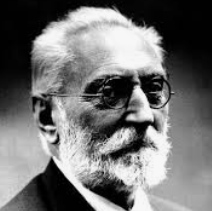
To believe in God is to long for His existence and, further, it is to act as if he existed; it is to live by this longing and to make it the inner spring of our action. This longing or hunger for divinity begets hope, hope begets faith, and faith and hope beget charity. Of this divine longing is born our sense of beauty, of finality, of goodness.
7 months 3 weeks ago
Persecution is a bad and indirect way to plant Religion.
▼
Source
source
Section 25

4 months 2 weeks ago
It is an axiom in my mind, that our liberty can never be safe but in the hands of the people themselves, and that too of the people with a certain degree of instruction. This it is the business of the State to effect, and on a general plan.
▼
Source
source
Letter to George Washington

5 months 1 week ago
The final thing... the question of the nation, and the role of the nation in liberalism...There would seem to be a tension between liberalism's belief that all human beings enjoy... the same basic set of human rights, and the fact that we are divided up into nation states, in which the authority to enforce those rights is territorially limited. ...This contradiction can be bridged because... there is a liberal form of national identity which is not only possible, but... necessary if a liberal society is going to succeed.
▼
Source
source
23:22
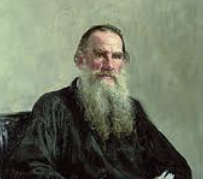
6 months 2 weeks ago
There can be only one permanent revolution - a moral one; the regeneration of the inner man. How is this revolution to take place? Nobody knows how it will take place in humanity, but every man feels it clearly in himself. And yet in our world everybody thinks of changing humanity, and nobody thinks of changing himself.
▼
Source
source
"Three Methods Of Reform" in Pamphlets : Translated from the Russian (1900) as translated by Aylmer Maude, p. 29
8 months 2 weeks ago
Superstition is to religion what astrology is to astronomy, the mad daughter of a wise mother. These daughters have too long dominated the earth.
▼
Source
source
"Whether it is useful to maintain the people in superstition," Treatise on Toleration, 1763
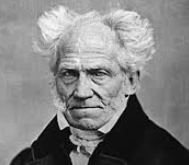
8 months 2 weeks ago
The word of man is the most durable of all material.
▼
Source
source
Vol. 2, Ch. 25, sect. 298
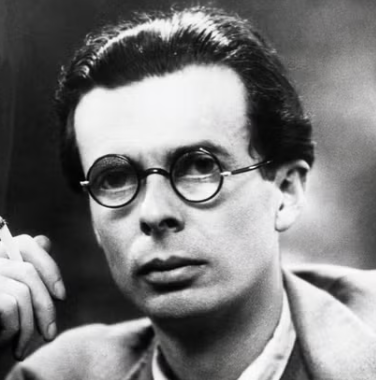
8 months 2 weeks ago
Facts are ventriloquists' dummies. Sitting on a wise man's knee they may be made to utter words of wisdom; elsewhere, they say nothing, or talk nonsense, or indulge in sheer diabolism.
▼
Source
source
"Bruno Rontini"
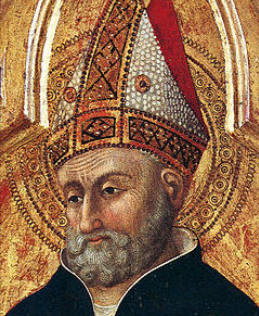
9 months 2 days ago
I became evil for no reason. I had no motive for my wickedness except wickedness itself. It was foul, and I loved it. I loved the self-destruction, I loved my fall, not the object for which I had fallen but my fall itself. My depraved soul leaped down from your firmament to ruin. I was seeking not to gain anything by shameful means, but shame for its own sake.
▼
Source
source
II, 4
8 months 2 weeks ago
I shall keep it [the manuscript] by me until the end of May for purposes of revision, and of adding malicious foot-notes.
▼
Source
source
Letter to W. W. Norton, 17 February, 1931
8 months 3 weeks ago
This adoration, too, was not the same as the worship of God. In my opinion they did not yet recognize him as God, but they acted in keeping with the custom mentioned in Scripture, according to which Kings and important people were worshiped; this did not mean more than falling down before them at their feet and honoring them.
▼
Source
source
Sermon on The Gospel for the Festival of the Epiphany, 1522. Luther's Works, American Ed., Hans J. Hillerbrand, Helmut T. Lehmann eds., Philadelphia, Concordia Publishing House/Fortress Press, 1974, ISBN 0800603524 (Sermons II), vol. 52:198
9 months 2 weeks ago
Again, it is possible to fail in many ways (for evil belongs to the class of the unlimited ... and good to that of the limited), while to succeed is possible only in one way (for which reason also one is easy and the other difficult—to miss the mark easy, to hit it difficult); for these reasons also, then, excess and defect are characteristic of vice, and the mean of virtue; For men are good in but one way, but bad in many.
8 months 2 weeks ago
Those who have been inspired to action by the doctrine of the class war will have acquired the habit of hatred, and will instinctively seek new enemies when the old ones have been vanquished. But in actual fact the psychology of the working man in any of the Western democracies is totally unlike that which is assumed in the Communist Manifesto. He does not by any means feel that he has nothing to lose but his chains, nor indeed is this true. The chains which bind Asia and Africa in subjection to Europe are partly riveted by him. He is himself part of a great system of tyranny and exploitation. Universal freedom would remove, not only his own chains, which are comparatively light, but the far heavier chains which he has helped to fasten upon the subject races of the world.
▼
Source
source
Ch. VI: International Relations
8 months 2 weeks ago
Far or forgot to me is near; Shadow and sunlight are the same; The vanished gods to me appear; And one to me are shame and fame.
▼
Source
source
Brahma, st. 2
7 months 1 week ago
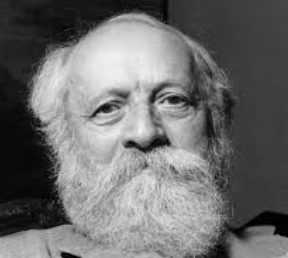
Before his death, Rabbi Zusya said, "In the coming world, they will not ask me: 'Why were you not Moses?' They will ask me: 'Why were you not Zusya?'"
▼
Source
source
Tales of the Hasidim (1947), 1991 Ebook edition, p.251, as quoted in Jewish Currents.
7 months 2 weeks ago
He laid it down as a maxim, that monarchy was the basis of all good government and the nearer to monarchy any government approached, the more perfect it was, and vice versa; and he certainly in his wildest moments, never had so far forgotten the nature of government, as to argue that we ought to wish for a constitution that we could alter at pleasure, and change like a dirty shirt. He was by no means anxious for a monarchy with a dash of republicanism to correct it. But the French constitution was the exact opposite of the English in every thing, and nothing could be so dangerous as to set it up to the view of the English, to mislead and debauch their minds.
▼
Source
source
Speech in the House of Commons (6 May 1791), quoted in The Parliamentary History of England, From the Earliest Period to the Year 1803, Vol. XXIX (1817), column 385
8 months 3 weeks ago
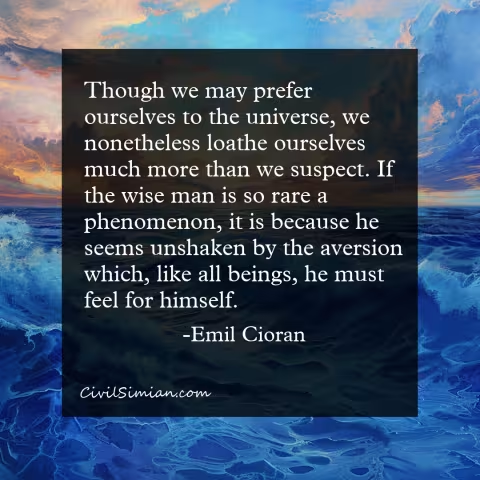
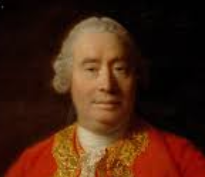
This avidity alone, of acquiring goods and possessions for ourselves and our nearest friends, is insatiable, perpetual, universal, and directly destructive of society.
▼
Source
source
Part 2, Section 2
4 months 2 weeks ago
I repair, then, fellow-citizens, to the post you have assigned me. With experience enough in subordinate offices to have seen the difficulties of this the greatest of all, I have learnt to expect that it will rarely fall to the lot of imperfect man to retire from this station with the reputation and the favor which bring him into it.
8 months 2 weeks ago
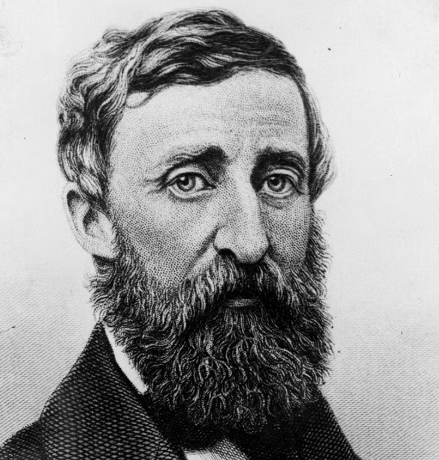
I think that there is nothing, not even crime, more opposed to poetry, to philosophy, ay, to life itself, than this incessant business.
▼
Source
source
p. 485
8 months 2 weeks ago
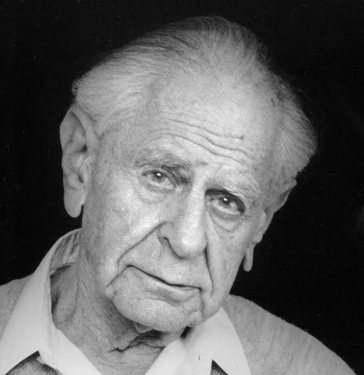
Science does not rest upon solid bedrock. The bold structure of its theories arises, as it were, above a swamp. It is like a building erected on piles. The piles are driven down from above into the swamp, but not down to any natural or 'given' base; and if we stop driving the piles deeper, it is not because we have reached firm ground. We simply stop when we are satisfied that the piles are firm enough to carry the structure, at least for the time being.
▼
Source
source
Ch. 5 "The Problem of the Empirical Basis", Section 30: Theory and Experiment, p. 94.
9 months 2 weeks ago
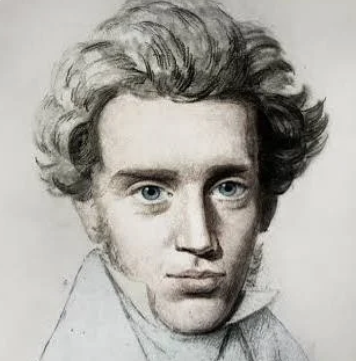
Knowledge can in part be set aside, and one can then go further in order to collect new; the natural scientist can set aside insects and flowers and then go further, but if the existing person sets aside the decision in existence, it is eo ipso lost, and he is changed.
CivilSimian.com created by AxiomaticPanic, CivilSimian, Kalokagathia