

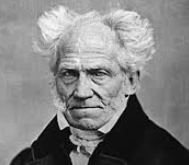
8 months 2 weeks ago
Christianity taught only what the whole of Asia knew already long before and even better.
▼
Source
source
quoted in Londhe, S. (2008). A tribute to Hinduism: Thoughts and wisdom spanning continents and time about India and her culture. New Delhi: Pragun Publication.
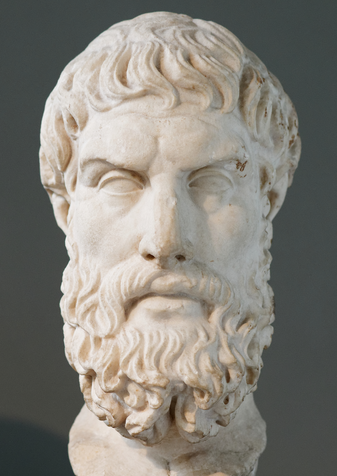
9 months 6 days ago
The flesh receives as unlimited the limits of pleasure; and to provide it requires unlimited time. But the mind, intellectually grasping what the end and limit of the flesh is, and banishing the terrors of the future, procures a complete and perfect life, and we have no longer any need of unlimited time. Nevertheless the mind does not shun pleasure, and even when circumstances make death imminent, the mind does not lack enjoyment of the best life.
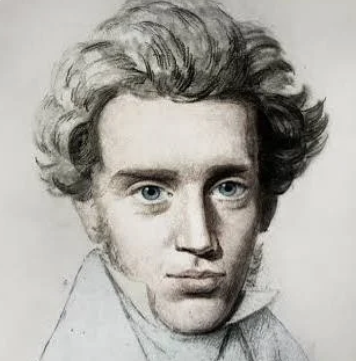
9 months 2 weeks ago
What the age needs is not a genius - it has had geniuses enough, but a martyr, who in order to teach men to obey would himself be obedient unto death. What the age needs is awakening. And therefore someday, not only my writings but my whole life, all the intriguing mystery of the machine will be studied and studied. I never forget how God helps me and it is therefore my last wish that everything may be to his honour.
7 months 2 weeks ago
Opinion is ultimately determined by the feelings, and not by the intellect.
▼
Source
source
Pt. IV, Ch. 30 : General Considerations
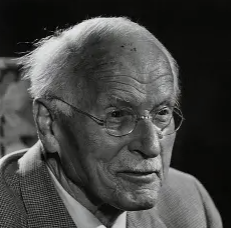
7 months 1 week ago
Why is psychology the youngest of the empirical sciences? Why have we not long since discovered the unconscious and raised up its treasure-house of eternal images? Simply because we had a religious formula for everything psychic - and one that is far more beautiful and comprehensive than immediate experience. Though the Christian view of the world has paled for many people, the symbolic treasure-rooms of the East are still full of marvels that can nourish for a long time to come the passion for show and new clothes. What is more, these images - be they Christian or Buddhist or what you will - are lovely, mysterious, richly intuitive.
▼
Source
source
p. 7-8
4 months 2 weeks ago
To know the nature of man, the most direct and wisest way undoubtedly is to know what he has always been. Since when can theories be opposed to facts? History is experimental politics; this is the best or rather the only good politics.
▼
Source
source
p. 21
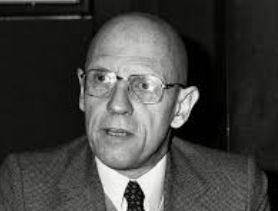
8 months 1 week ago
A utopia of judicial reticence: take away life, but prevent the patient from feeling it; deprive the prisoner of all rights, but do not inflict pain; impose penalties free of all pain. Recourse to psycho-pharmacology and to various physiological 'disconnectors', even if it is temporary, is a logical consequence of this 'non-corporal' penalty.
▼
Source
source
Chapter One, The Spectacle of the Scaffold

4 months 2 weeks ago
We are living even now among punishments and ruins.
▼
Source
source
"A Few Words in Favor of Edward Abbey"
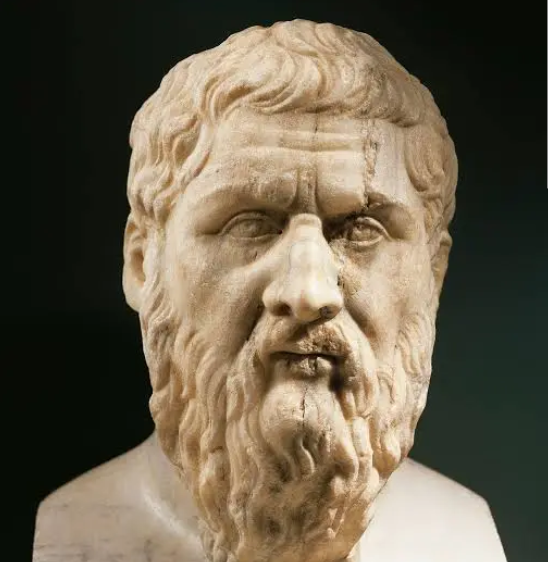
9 months 2 weeks ago
For once touched by love, everyone becomes a poet.
8 months 2 weeks ago
Genius borrows nobly. When Shakespeare is charged with debts to his authors, Landor replies: "Yet he was more original than his originals. He breathed upon dead bodies and brought them into life."
▼
Source
source
Quotation and Originality
7 months 1 week ago
Freedom of thought and of expression are not mere rights to be claimed. They have their roots deep in the existence of individuals as developing careers in time. Their denial and abrogation is an abdication of individuality and a virtual rejection of time as opportunity.
8 months 2 weeks ago
Ramsgate is full of Jews and fleas.
▼
Source
source
MEKOR IV, 490, 25 August 1879
8 months 2 weeks ago
It is therefore correct to say that the senses do not err - not because they always judge rightly, but because they do not judge at all.
▼
Source
source
A 293, B 350
8 months 1 week ago
Eventually, I believe, current attempts to understand the mind by analogy with man-made computers that can perform superbly some of the same external tasks as conscious beings will be recognized as a gigantic waste of time.
▼
Source
source
p. 16.
8 months 2 weeks ago
There are infinitely many variations of the initial situation and therefore no doubt indefinitely many theorems of moral geometry.
▼
Source
source
Chapter III, Section 21, pg. 126


5 months 1 week ago
The way of learning is none other than finding the lost mind.
▼
Source
source
6A:11, as translated by Wing-tsit Chan in A Source Book in Chinese Philosophy (1963), p. 58
8 months 2 weeks ago
Not only must philosophy be in agreement with our empirical knowledge of Nature, but the origin and formation of the Philosophy of Nature presupposes and is conditioned by empirical physics. However, the course of a science's origin and the preliminaries of its construction are one thing, while the science itself is another. In the latter, the former can no longer appear as the foundation of the science; here, the foundation must be the necessity of the Concept.
7 months 1 week ago
When Socrates and his two great disciples composed a system of rational ethics they were hardly proposing practical legislation for mankind...They were merely writing an eloquent epitaph for their country.
9 months 5 days ago
Times are bad. Children no longer obey their parents, and everyone is writing a book.
▼
Source
source
As quoted in InfoWorld, Vol. 23, No. 16, 16 April 2001, p. 49. This had been attributed previously to many other sources from 1908 on, according to this analysis by Quote Investigator.
7 months 2 weeks ago
The subject must distinguish itself through opposition from the rational being, which it has assumed outside of itself. The subject has posited itself as one, which contains in itself the last ground of something that is in it, (for this is the condition of Egohood, or of Rationality generally;) but it has also posited a being outside of itself, as the last ground of this something in it. It is to have the power of distinguishing itself from this other being; and this is, under our presupposition, possible only, if the subject can distinguish in that given something how far the ground of this something lies in itself and how far it lies outside of itself.
▼
Source
source
P. 63
7 months 1 week ago
Is it always permissible to speak of the extension of a concept, of a class? And if not, how do we recognize the exceptional cases? Can we always infer from the extension of one concept's coinciding with that of a second, that every object which falls under the first concept also falls under the second?
▼
Source
source
Vol. 2, p. 127. Replying to Bertrand Russell's letter about Russell's Paradox; quoted in The Stanford Encyclopedia of Philosophy

9 months 2 weeks ago
And thus Christianity is played in, Christendom. Artists in dramatic costumes make their appearance in artistic buildings-there really is no danger at all, anything but that: the teacher is a royal functionary, steadily promoted, making a career-and how he dramatically plays Christianity, in short, he plays comedy. He lectures about renunciation, but he himself is being steadily promoted; he teaches all that about despising worldly titles and rank, but he himself is making a career.
7 months ago
However, the disappearance of domination does not entail freedom. Instead, it makes freedom and constraint coincide. Thus, the achievement-subject gives itself over to compulsive freedom--that is, to the free constraint of maximizing achievement. Excess work and performance escalate into auto-exploitation.
▼
Source
source
Source: Page 11
5 months 1 week ago
It is a mistake to think that the past is dead. Nothing that has ever happened is quite without influence at this moment. The present is merely the past rolled up and concentrated in this second of time. You, too, are your past; often your face is your autobiography; you are what you are because of what you have been; because of your heredity stretching back into forgotten generations; because of every element of environment that has affected you, every man or woman that has met you, every book that you have read, every experience that you have had; all these are accumulated in your memory, your body, your character, your soul. So with a city, a country, and a race; it is its past, and cannot be understood without it.
▼
Source
source
As quoted in "The Gentle Philosopher" (2006) by John Little at the Will Durant Foundation
4 months 2 weeks ago
As for others whose lives are not so ordered, he reminds himself constantly of the characters they exhibit daily and nightly at home and abroad, and of the sort of society they frequent; and the approval of such men, who do not even stand well in their own eyes has no value for him.
▼
Source
source
III. 4, trans. Maxwell Staniforth
7 months 4 weeks ago
Tell not abroad what thou intendest to do; for if thou speed not, thou shalt be mocked!
5 months 1 week ago
Middle age begins with marriage; for then work and responsibility replace carefree play, passion surrenders to the limitations of social order, and poetry yields to prose.
▼
Source
source
Ch. 3 : On Middle Age
9 months 2 weeks ago
Every tradition grows ever more venerable — the more remote its origin, the more confused that origin is. The reverence due to it increases from generation to generation. The tradition finally becomes holy and inspires awe.
8 months 4 days ago
Agesilaus was very fond of his children; and it is reported that once toying with them he got astride upon a reed as upon a horse, and rode about the room; and being seen by one of his friends, he desired him not to speak of it till he had children of his own.
▼
Source
source
Of Agesilaus the Great
8 months 2 weeks ago
In the United States of North America, every independent movement of the workers was paralysed so long as slavery disfigured a part of the Republic. Labour cannot emancipate itself in the white skin where in the black it is branded.
▼
Source
source
Vol. I, Ch. 10, Section 7, pg. 329.
4 months 3 weeks ago
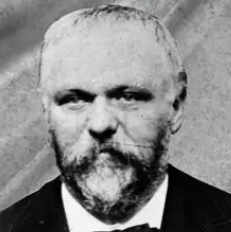
Myths are not descriptions of things, but expressions of a determination to act... A myth cannot be refuted since it is, at bottom, identical with the convictions of a group, being the expression of these convictions in the language of movement.
▼
Source
source
p. 28-29 (Letter to Daniel Halevy)
8 months 1 week ago
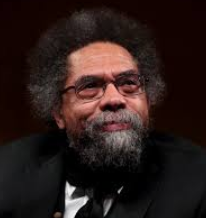
From whence are these "rights of individuals" derived, and why should we care? Unless we presume the existence of some greater power that determines what is good, isn't it arbitrary to posit that human survival is more important than private property rights, an equally artificially construed concept? Isn't it arbitrary to assume that some sort of equality is preferable to a system where, say, the poor are assumed to have bad karma? If these 'rights of individuals' are derived only from shared humanity, then do 'individuals' (a thoroughly meaningless term, by the way), begin to lose them when they act inhumanely? And isn't it totally arbitrary to grant rights to humans rather than other creatures anyway?
▼
Source
source
Lecture in New Haven, On Constructed Rights
9 months 2 weeks ago
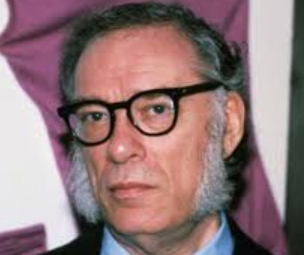
Hypocrisy is a universal phenomenon. It ends with death, but not before.
7 months 1 week ago
No doubt the spirit or energy of the world is what is acting in us, as the sea is what rises in every little wave; but it passes through us, and cry out as we may, it will move on. Our privilege is to have perceived it as it moves.
▼
Source
source
p. 199
1 year 2 weeks ago
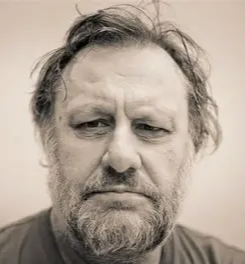
Precisely as an enigma, the symptom, so to speak, announces its dissolution through interpretation: the aim of psychoanalysis is to re-establish the broken network of communication by allowing the patient to verbalize the meaning of his symptom: through this verbalization the symptom is automatically dissolved. This, then is the basic point: in its very construction, the symptom implies the field of the big Other as consistent, complete, because its very function is an appeal to the Other which contains its meaning.
8 months 1 week ago
Meaning created links so numerous, so rich and involved that only esoteric knowledge could possibly have the necessary key. Objects became so weighed down with attributes, connections and associations that they lost their own original face. Meaning was no longer read in an immediate perception, and accordingly objects ceased to speak directly: between the knowledge that animated the figures of objects and the forms they were transformed into, a divide began to appear, opening the way for a symbolism more often associated with the world of dreams.
▼
Source
source
Part One: 1. Stultifera Navis
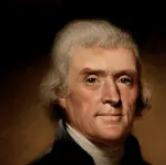
4 months 2 weeks ago
Botany is the school for patience, and it's amateurs learn resignation from daily disappointments.
▼
Source
source
Thomas Jefferson, in letter to Madame de Tessé (25 Apr 1788). In Thomas Jefferson Correspondence: Printed from the Originals (1916), 7.
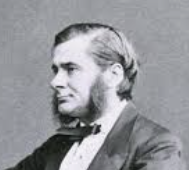
6 months 3 days ago
The sceptics end in the infidelity which asserts the problem to be insoluble, or in the atheism which denies the existence of any orderly progress and governance of things: the men of genius propound solutions which grow into systems of Theology or of Philosophy, or veiled in musical language which suggests more than it asserts, take the shape of the Poetry of an epoch.
▼
Source
source
Ch.2, p. 72
8 months 2 weeks ago
Earth proudly wears the Parthenon As the best gem upon her zone.
▼
Source
source
The Problem, st. 3
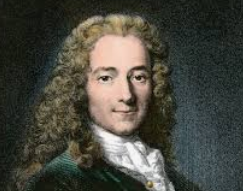
8 months 2 weeks ago
It is very strange that men should deny a creator and yet attribute to themselves the power of creating eels.
▼
Source
source
From the Philosophic Dictionary, as quoted in The life of Pasteur, 1902


6 months 2 weeks ago
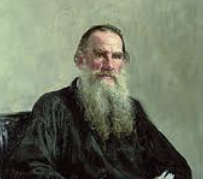
Every one who has a heart and eyes sees that you, working men, are obliged to pass your lives in want and in hard labor, which is useless to you, while other men, who do not work, enjoy the fruits of your labor-that you are the slaves of these men, and that this ought not to exist.
▼
Source
source
To the Working People, Complete Works, trans. Leo Wiener, Vol 24, p. 129
7 months 3 weeks ago
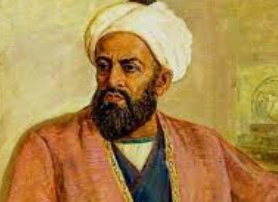
The lowest degree of education is to distinguish oneself from the ignorant ordinary man. The educated man does not loathe honey even if he finds it in the surgeon's cupping-glass; he realizes that the cupping glass does not essentially alter the honey. The natural aversion from it in such a case rests on popular ignorance, arising from the fact that the cupping-glass is made only for impure blood. Men imagine that the blood is impure because it is in the cupping-glass, and are not aware that the impurity is due to a property.
▼
Source
source
III. The Classes of Seekers, p. 31.
7 months 1 week ago
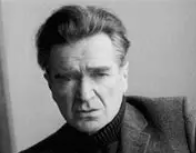
Tyranny is just what one can develop a taste for, since it so happens that man prefers to wallow in fear rather than to face the anguish of being himself.
CivilSimian.com created by AxiomaticPanic, CivilSimian, Kalokagathia