

7 months 1 week ago
Montaigne puts not self-satisfied understanding but a consciousness astonished at itself at the core of human existence.
▼
Source
source
Signs, trans. R. McCleary (Evanston: 1964), p. 203

7 months 1 week ago
All that is Life in me urges me to give up God.
9 months 2 weeks ago
It is true that in the confessional it is the pastor who preaches; but the true preacher is still the secret-sharer in your inner being. The pastor can preach only in vague generalities; the preacher in your inner being is just the opposite; he speaks simply and solely about you, to you, and within you.
7 months 3 days ago
We believe we are rising because while keeping the same base inclinations (for instance: the desire to triumph over others) we have given them a noble object. We should, on the contrary, rise by attaching noble inclinations to lowly objects.
▼
Source
source
La pesanteur et la grâce (1948), p. 61
8 months 2 weeks ago
If you punish a child for being naughty, and reward him for being good, he will do right merely for the sake of the reward; and when he goes out into the world and finds that goodness is not always rewarded, nor wickedness always punished, he will grow into a man who only thinks about how he may get on in the world, and does right or wrong according as he finds either of advantage to himself.

7 months 1 week ago
Be ye therefore ready also: for the Son of man cometh at an hour when ye think not.
▼
Source
source
12:40

4 months 2 weeks ago
The, diverse states of the soul are always correlative with those of the body.
8 months 2 weeks ago
William James used to preach the "will-to-believe." For my part, I should wish to preach the "will-to-doubt." None of our beliefs are quite true; all at least have a penumbra of vagueness and error. What is wanted is not the will to believe, but the will to find out, which is the exact opposite.
▼
Source
source
Ch. 12: Free Thought and Official Propaganda
9 months 1 week ago
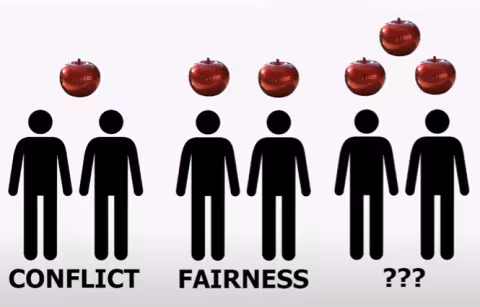
Those animals which are incapable of making binding agreements with one another not to inflict nor suffer harm are without either justice or injustice; and likewise for those peoples who either could not or would not form binding agreements not to inflict nor suffer harm.

8 months 2 weeks ago
That men do not learn very much from the lessons of history is the most important of all the lessons that history has to teach.
▼
Source
source
"A Case of Voluntary Ignorance" in Collected Essays, 1959
8 months 3 weeks ago
Saying is one thing and doing is another.
▼
Source
source
Ch. 31
8 months 2 weeks ago
No doubt, when modesty was made a virtue, it was a very advantageous thing for the fools, for everybody is expected to speak of himself as if he were one.
▼
Source
source
Vol. 1, Ch. 3, Section 2: Pride
6 months 4 weeks ago
If a person loves only one other person and is indifferent to all others, his love is not love but a symbiotic attachment, or an enlarged egotism.
7 months 1 week ago
When it is evening, ye say, It will be fair weather: for the sky is red. And in the morning, It will be foul weather to day: for the sky is red and lowring. O ye hypocrites, ye can discern the face of the sky; but can ye not discern the signs of the times? A wicked and adulterous generation seeketh after a sign; and there shall no sign be given unto it, but the sign of the prophet Jonas.
▼
Source
source
16:2-4 (KJV)
6 months 1 week ago
And perhaps this habit of much travel, and the engendering of scattered friendships, may prepare the euthanasia of ancient nations.
▼
Source
source
Pt. I, ch. II.
5 months 3 days ago
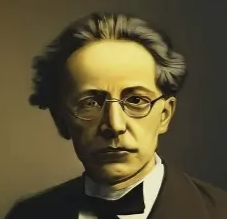
That the individual is of himself a world's history, and possesses his property in the rest of the world's history, goes beyond what is Christian. To the Christian the world's history is the higher thing, because it is the history of Christ or 'man'; to the egoist only his history has value, because he wants to develop only himself not the mankind-idea, not God's plan, not the purposes of Providence, not liberty, and the like. He does not look upon himself as a tool of the idea or a vessel of God, he recognizes no calling, he does not fancy that he exists for the further development of mankind and that he must contribute his mite to it, but he lives himself out, careless of how well or ill humanity may fare thereby.
▼
Source
source
Cambridge 1995, p. 323
4 months 2 weeks ago
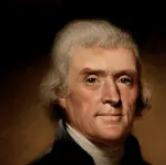
No experiment can be more interesting than that we are now trying, and which we trust will end in establishing the fact, that man may be governed by reason and truth. Our first object should therefore be, to leave open to him all the avenues to truth. The most effectual hitherto found, is the freedom of the press. It is, therefore, the first shut up by those who fear the investigation of their actions.
▼
Source
source
Letter to Judge John Tyler (June 28, 1804); in: The Writings of Thomas Jefferson, Memorial Edition (ME) (Lipscomb and Bergh, editors), 20 Vols., Washington, D.C., 1903-04, Volume 11, page 33
7 months 1 week ago
I would say act like a man of thought and think like a man of action.
▼
Source
source
Speech at the Descartes Conference in Paris (1937) Quoted in The Forbes Scrapbook of Thoughts on the Business of Life (1950), p. 442, as "Think like a man of action, act like a man of thought."
8 months 2 weeks ago
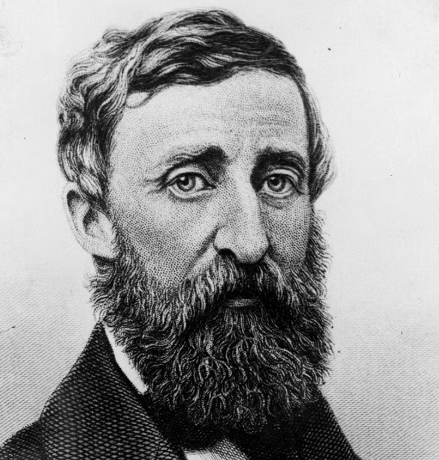
Talk of mysteries! - Think of our life in nature, - daily to be shown matter, to come in contact with it, - rocks, trees, wind on our cheeks! The solid earth! the actual world! the common sense! Contact! Contact! Who are we? where are we?
▼
Source
source
The Maine Woods (1848)
8 months 1 week ago
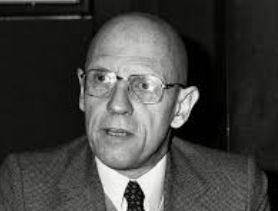
Sometimes, because my position has not been made clear enough, people think I'm a sort of radical anarchist who has an absolute hatred of power. No! What I am trying to do is to approach this extremely important and tangled phenomenon in our society, the exercise of power, with the most reflective, and I would say prudent attitude. Prudent in my analysis, in the moral and theoretical postulates I use: I try to figure out what's at stake. But to question the relations of power in the most scrupulous and attentive manner possible, looking into all the domains of its exercise, that's not the same thing as constructing a mythology of power as the beast of the apocalypse.
▼
Source
source
"Power, Moral Values, and the Intellectual", interview in History of the Present 4
7 months 1 week ago
We are born to exist, not to know, to be, not to assert ourselves.
9 months 1 week ago
He who is not satisfied with a little, is satisfied with nothing.
7 months 1 week ago
Each of us is born with a share of purity, predestined to be corrupted by our commerce with mankind, by that sin against solitude.

6 months 2 weeks ago
There is no practice of nonviolence that does not negotiate fundamental ethical and political ambiguities, which means that "nonviolence" is not an absolute principle, but the name of an ongoing struggle.
▼
Source
source
p. 23
7 months 1 week ago
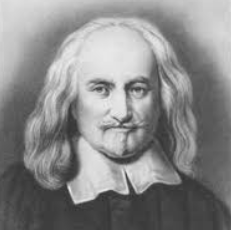
Understanding being nothing else, but conception caused by Speech.
▼
Source
source
The First Part, Chapter 4, p. 17
6 months 1 week ago
When things fall out opportunely for the person concerned, he is not apt to be critical about the how or why, his own immediate personal convenience seeming a sufficient reason for the strangest oddities and revolutions in our sublunary things.
▼
Source
source
The Sire de Maletroit's Door.

7 months ago
Suffering is admittedly one of the central problems of human existence; but this is because we have a suspicion that it is all for nothing. If we had a certainty about meaning, the suffering would be bearable. With no certainty of meaning, even comfort begins to feel futile.
▼
Source
source
p. 89
9 months 5 days ago
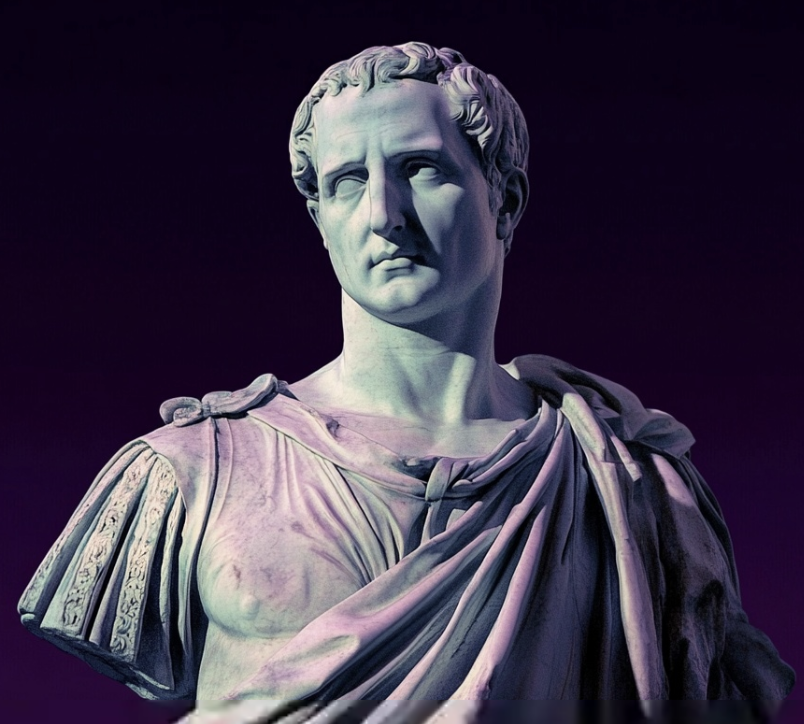
I have always been of the opinion that infamy earned by doing what is right is not infamy at all, but glory.
▼
Source
source
Speech I
9 months 2 weeks ago
He could almost wish he were superstitious. He could then console himself with the thought that the casual meaningless meeting had really been directed by a knowing and purposeful Fate.
8 months 2 weeks ago
The virtues of society are the vices of the saints.
▼
Source
source
Circles
9 months 2 weeks ago
The military mind remains unparalleled as a vehicle of creative stupidity.
7 months 1 week ago
The words of the world want to make sentences.
▼
Source
source
Ch. 5, sect. 4
8 months 2 weeks ago
Men tend to have the beliefs that suit their passions. Cruel men believe in a cruel God, and use their belief to excuse their cruelty. Only kindly men believe in a kindly God, and they would be kindly in any case.
▼
Source
source
In London Calling (1947), p. 18
8 months 2 weeks ago
All human activity is prompted by desire. There is a wholly fallacious theory advanced by some earnest moralists to the effect that it is possible to resist desire in the interests of duty and moral principle. I say this is fallacious, not because no man ever acts from a sense of duty, but because duty has no hold on him unless he desires to be dutiful. If you wish to know what men will do, you must know not only, or principally, their material circumstances, but rather the whole system of their desires with their relative strengths.
▼
Source
source
(wav audio file of Russell's voice)
8 months 2 weeks ago
If one advances confidently in the direction of his dreams, and endeavors to live the life which he has imagined, he will meet with a success unexpected in common hours ... In proportion as he simplifies his life, the laws of the universe will appear less complex, and solitude will not be solitude, nor poverty poverty, nor weakness weakness.
▼
Source
source
p. 364
8 months 1 week ago
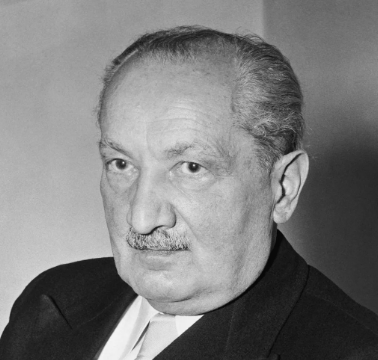
From our human experience and history, at least as far as I am informed, I know that everything essential and great has only emerged when human beings had a home and were rooted in a tradition. Today's literature is, for instance, largely destructive.
8 months 3 weeks ago
It (marriage) happens as with cages: the birds without despair to get in, and those within despair of getting out.
▼
Source
source
Ch. 5

4 months 1 week ago
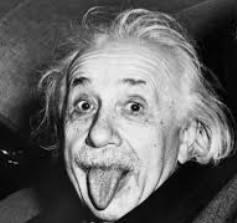
The most simple picture one can form about the creation of an empirical science is along the lines of an inductive method. Individual facts are selected and grouped together such that their lawful connection becomes clearly apparent. ... The truly great advances in our understanding of nature originated in a manner almost diametrically opposed to induction. The intuitive grasp of the essentials or a large complex of facts leads the scientist to the postulation of a hypothetical basic law, or several such basic laws. From the basic laws (system of axioms) he derives his conclusions as completely as possible in a purely logically deductive manner. These conclusions, derived from the basic laws (and often only after time-consuming developments and calculations), can then be compared to experience, and in this manner provide criteria for the justification of the assumed basic law.
4 months 2 weeks ago
If, in my retirement to the humble station of a private citizen, I am accompanied with the esteem and approbation of my fellow citizens, trophies obtained by the blood-stained steel, or the tattered flags of the tented field, will never be envied. The care of human life and happiness, and not their destruction, is the first and only legitimate object of good government.
▼
Source
source
Letter To the Republican Citizens of Washington county, Maryland
5 months 1 week ago
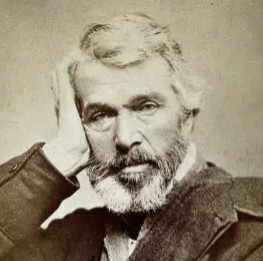
History a distillation of Rumour.
▼
Source
source
Pt. I, Bk. VII, ch. 5.
4 months 3 weeks ago
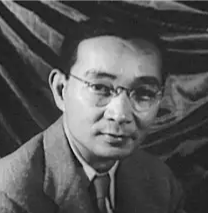
The Chinese believe that when there are too many policemen, there can be no individual liberty, when there are too many lawyers, there can be no justice, and when there are too many soldiers, there can be no peace.
▼
Source
source
Between Tears And Laughter (1943), p. 71.
6 months 2 weeks ago
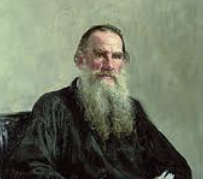
The error arises from the learned jurists deceiving themselves and others, by asserting that government is not what it really is, one set of men banded together to oppress another set of men, but, as shown by science, is the representation of the citizens in their collective capacity.
▼
Source
source
Chapter VI, Attitude of Men of the Present Day to War Variant translation: Government is an association of men who do violence to the rest of us.
4 months 2 weeks ago
We ought not to teach to little children, as a known fact, that which is not a known fact.
▼
Source
source
[Lectures and essays (1879), vol. 2, p. 294]
8 months 2 weeks ago
There is always a certain meanness in the argument of conservatism, joined with a certain superiority in its fact.
CivilSimian.com created by AxiomaticPanic, CivilSimian, Kalokagathia