

7 months ago
Yet it must be acknowledged that there is a fundamental difference between the sexual impulse in men and women. Her need is for a lover, a protector, a father for her children. His desire is for mastery, conquest, to be allowed to use her body for his own satisfaction. He feels like a bee, burying itself in a flower, apparently doing nothing for the flower but taking its sweetness. If he loves her, then his desire is mixed with a kind of pity.
7 months 1 week ago
Artist and perceiver alike begin with what may be called a total seizure, an inclusive qualitative whole not yet articulated, not distinguished into members.
▼
Source
source
p. 199
8 months 3 weeks ago
It would be better to have no laws at all than to have them in such profusion as we do.
▼
Source
source
Ch. 13
9 months 2 weeks ago
No power can maintain itself if only hypocrites represent it.
5 months 1 week ago
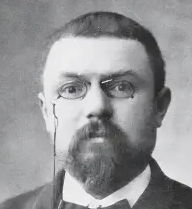
I think I have already said somewhere that mathematics is the art of giving the same name to different things.
▼
Source
source
Part I. Ch. 2 : The Future of Mathematics, p. 31
7 months 1 week ago
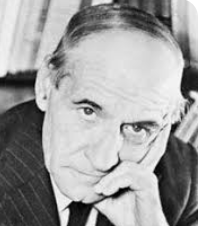
It is necessary to insist upon this extraordinary but undeniable fact: experimental science has progressed thanks in great part to the work of men astoundingly mediocre, and even less than mediocre. That is to say, modern science, the root and symbol of our actual civilization, finds a place for the intellectually commonplace man and allows him to work therein with success.
▼
Source
source
Chapter XII: The Barbarism Of "Specialisation"
8 months 3 weeks ago
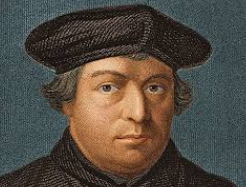
Tell your master that if there were as many devils at Worms as tiles on its roofs, I would enter.
▼
Source
source
Psalm. Ein feste Burg ist unser Gott (translated by Frederic H. Hedge), Reported in Bartlett's Familiar Quotations, 10th ed. (1919).

8 months 5 days ago
A prating barber asked Archelaus how he would be trimmed. He answered, "In silence."
▼
Source
source
33 Archelaus

5 months 1 week ago
On the left you had a different aspect of individual autonomy that was pushed to an extreme, which really had to do with the autonomy that individuals have to create their own lifestyles. ...The basic concept of liberal autonomy has to do with your ability to make moral choices, but as time went on the emphasis came to be not on making the right moral choices within an existing moral framework, but rather to be able to make up that framework on your own, that that was the ultimate expression of individual human freedom, and it has obvious problems for a society because all societies have to be based on shared norms that allow people to coordinate their actions, to communicate, and the like... If you believe that the rules can be... set by anybody and that transgressing existing rules is automatically a good thing, you're not going to have... a stable society.
▼
Source
source
15:05
6 months 3 days ago
The sceptics end in the infidelity which asserts the problem to be insoluble, or in the atheism which denies the existence of any orderly progress and governance of things: the men of genius propound solutions which grow into systems of Theology or of Philosophy, or veiled in musical language which suggests more than it asserts, take the shape of the Poetry of an epoch.
▼
Source
source
Ch.2, p. 72

5 months 1 week ago
Of America it would ill beseem any Englishman, and me perhaps as little as another, to speak unkindly, to speak unpatriotically, if any of us even felt so. Sure enough, America is a great, and in many respects a blessed and hopeful phenomenon. Sure enough, these hardy millions of Anglosaxon men prove themselves worthy of their genealogy... But as to a Model Republic, or a model anything, the wise among themselves know too well that there is nothing to be said... Their Constitution, such as it may be, was made here, not there... Cease to brag to me of America, and its model institutions and constitutions.
▼
Source
source
Latter Day Pamphlets, No. 1., p. 23, 24.
8 months 2 weeks ago
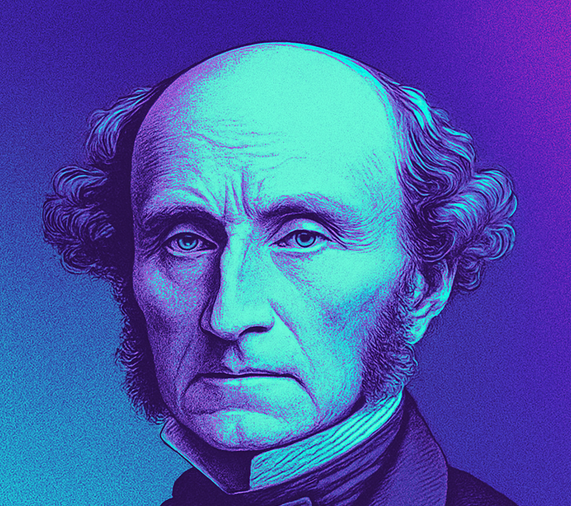
I conceive that the description so often given of a Benthamite, as a mere reasoning machine, though extremely inapplicable to most of those who have been designated by that title, was during two or three years of my life not altogether untrue of me. ...There is nothing very extraordinary in this fact: no youth of the age I then was, can be expected to be more than one thing, and this was the thing I happened to be. Ambition and desire of distinction, I had in abundance; and zeal for what I thought the good of mankind was my strongest sentiment, mixing with and colouring all others. But my zeal was as yet little else, at that period of my life, than zeal for speculative opinions. It had not its root in genuine benevolence, or sympathy with mankind; though these qualities held their due place in my ethical standard. Nor was it connected with any high enthusiasm for ideal nobleness.
▼
Source
source
(pp. 109-110)
8 months 2 weeks ago
The governors of the world believe, and have always believed, that virtue can only be taught by teaching falsehood, and that any man who knew the truth would be wicked. I disbelieve this, absolutely and entirely. I believe that love of truth is the basis of all real virtue, and that virtues based upon lies can only do harm.
7 months 1 week ago
We should, out of decency, choose for ourselves the moment to disappear.
8 months 3 weeks ago
Not because Socrates said so, but because it is in truth my own disposition - and perchance to some excess - I look upon all men as my compatriots, and embrace a Pole as a Frenchman, making less account of the national than of the universal and common bond.
▼
Source
source
Ch. 9
7 months 1 week ago
Each of us is born with a share of purity, predestined to be corrupted by our commerce with mankind, by that sin against solitude.
4 months 2 weeks ago
It is from the shadow of a cloister that there emerges one of mankind's greatest very greatest scourges. Luther appears; Calvin follows him. The Peasants' Revolt; the Thirty Years' War; the civil war in France; the massacre of the Low Countries; the massacre of Ireland; the massacre of the Cévennes; St Bartholomew's Day; the murders of Henry II, Henry IV, Mary Stuart, and Charles I; and finally, in our day, from the same source, the French Revolution.
▼
Source
source
Chapter III, p. 27
5 months 2 weeks ago
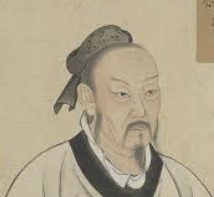
The gentleman knows that whatever is imperfect and unrefined does not deserve praise. ... He makes his eyes not want to see what is not right, makes his ears not want to hear what is not right, makes his mouth not want to speak what is not right, and makes his heart not want to deliberate over what is not right. ... For this reason, power and profit cannot sway him, the masses cannot shift him, and nothing in the world can shake him.
▼
Source
source
Readings in Classical Chinese Philosophy (2001), p. 260
5 months 1 week ago
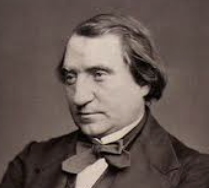
To write well is to think well; there is no art of style distinct from the culture of the mind. The good writer is a complete mind, gifted with judgment, passion, imagination, and at the same time well trained. The inner qualities of rectitude, of brilliant geniality, are not given; instruction, wealth of information, fulness of knowledge, are acquired. Thus good training of the mind is the only school of good style. Wanting that, you have merely rhetoric and bad taste.
▼
Source
source
As quoted in The Art of Authorship (1890) by George Bainton
4 months 3 weeks ago
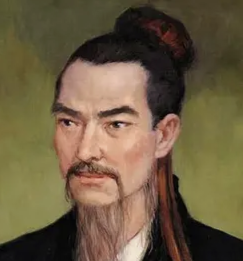
If we should classify one by one all those who hate others and injure others, should we find them to be universal in love or partial? Of course we should say they are partial. Now, since partiality against one another is the cause of the major calamities in the empire, then partiality is wrong.
▼
Source
source
Book 4; Universal Love III
9 months 2 weeks ago
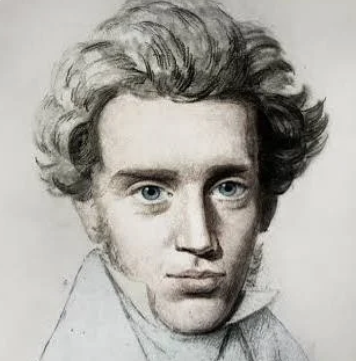
An authorship that began with Either/Or and advanced step by step seeks here its decisive place of rest, at the foot of the altar, where the author, personally most aware of his own imperfections and guilt, certainly does not call himself a truth-witness but only a singular kind of poet and thinker who, without authority, has had nothing new to bring but “has wanted once again to read through, if possible in a more inward way, the original text handed down from the fathers.
7 months ago
This is the Outsider's extremity. He does not prefer not to believe; he doesn't like feeling that futility gets the last word in the universe; his human nature would like to find something it can answer to with complete assent. But honesty prevents his accepting a solution that he cannot reason about.
▼
Source
source
Chapter Five, The Pain Threshold
9 months 2 weeks ago
I do not want to found anything on the incomprehensible. I want to know whether I can live with what I know and with that alone.
9 months 2 days ago
Let not that which in the case of another is contrary to nature become an evil for you; for you are born not to be humiliated along with others, nor to share in their misfortunes, but to share in their good fortune. If, however, someone is unfortunate, remember that his misfortune concerns himself. For God made all mankind to be happy, to be serene.
▼
Source
source
Book III, ch. 24, 1
9 months 2 weeks ago
Dogmatics must be designed in this way. Above all, every science must vigorously lay hold of its own beginning and not live in complicated relations with other sciences. If dogmatics begins by wanting to explain sinfulness or by wanting to prove its actuality, no dogmatics will come out of it, but the entire existence of dogmatics will become problematic and vague.
6 months 2 weeks ago
God is the infinite ALL. Man is only a finite manifestation of Him. Or better yet: God is that infinite All of which man knows himself to be a finite part. God alone exists truly. Man manifests Him in time, space and matter. The more God's manifestation in man (life) unites with the manifestations (lives) of other beings, the more man exists. This union with the lives of other beings is accomplished through love. God is not love, but the more there is of love, the more man manifests God, and the more he truly exists... We acknowledge God only when we are conscious of His manifestation in us. All conclusions and guidelines based on this consciousness should fully satisfy both our desire to know God as such as well as our desire to live a life based on this recognition.
▼
Source
source
Entry in Tolstoy's Diary
6 months 2 weeks ago
One touch of nature makes the whole world tin.
9 months 2 weeks ago
Democracy does not contain any force which will check the constant tendency to put more and more on the public payroll. The state is like a hive of bees in which the drones display, multiply and starve the workers so the idlers will consume the food and the workers will perish.
6 months 2 weeks ago
Particularly in the case of all professional of press-images which testify of the real events. In making reality, even the most violent, emerge to the visible, it makes the real substance disappear. It is like the Myth of Eurydice : when Orpheus turns around to look at her, she vanishes and returns to hell. That is why, the more exponential the marketing of images is growing the more fantastically grows the indifference towards the real world. Finally, the real world becomes a useless function, a collection of phantom shapes and ghost events. We are not far from the silhouettes on the walls of the cave of Plato.
6 months 2 weeks ago
If Mormonism is able to endure, unmodified, until it reaches the third and fourth generation, it is destined to become the greatest power the world has ever known.
▼
Source
source
This quote originates in Thomas J. Yates, "Count Tolstoi and the 'American Religion' ", Improvement Era (February 1939)
9 months 2 weeks ago
The welfare of the people in particular has always been the alibi of tyrants, and it provides the further advantage of giving the servants of tyranny a good conscience. It would be easy, however, to destroy that good conscience by shouting to them: if you want the happiness of the people, let them speak out and tell what kind of happiness they want and what kind they don't want! But, in truth, the very ones who make use of such alibis know they are lies; they leave to their intellectuals on duty the chore of believing in them and of proving that religion, patriotism, and justice need for their survival the sacrifice of freedom.
7 months 1 week ago
To regiment artists, to make them servants of some particular cause does violence to the very springs of artistic creation. But it does more than that. It betrays the very cause of a better future it would serve, for in its subjugation of the individuality of the artist it annihilates the source of that which is genuinely new. Where the regimentation is successful, it would cause the future to be but a rearrangement of the past.
8 months 1 week ago
One often makes a remark and only later sees how true it is.
▼
Source
source
Journal entry (11 October 1914), p. 10e
6 months 4 weeks ago
At present we live to impede each other's satisfactions; competition, domestic life, society, what is it all but this? We go somewhere where we are not wanted and where we don't want to go. What else is conventional life? Passivity when we want to be active. So many hours spent every day in passively doing what conventional life tells us, when we would so gladly be at work. And is it a wonder that all individual life is extinguished?
4 months 3 weeks ago
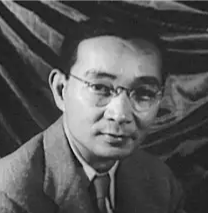
A mellow understanding of life and of human nature is, and always has been, the Chinese ideal of character, and from that understanding other qualities are derived, such as pacifism, contentment, calm and strength of endurance which distinguish the Chinese character.
▼
Source
source
p. 43
4 months 2 weeks ago
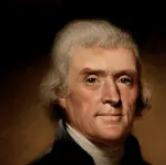
Pride costs us more than hunger, thirst and cold.
6 months 3 days ago
The great tragedy of Science - the slaying of a beautiful hypothesis by an ugly fact.
▼
Source
source
Presidential Address at the British Association, "Biogenesis and abiogenesis" (1870); later published in Collected Essays, Vol. 8, p. 229
7 months 1 week ago
In the hours without sleep, each moment is so full and so vacant that it suggests itself as a rival of Time.
7 months 1 week ago
We live in the false as long as we have not suffered. But when we begin to suffer, we enter the truth only to regret the false.
8 months 2 weeks ago
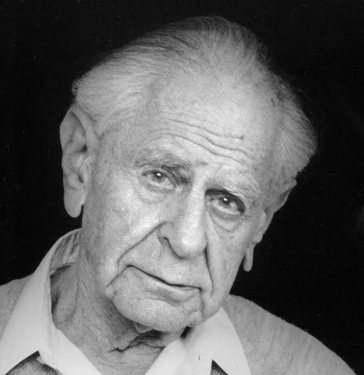
Diversity makes critical argument fruitful. ...[P]artners in an argument must share ...the wish to know, and the readiness to learn from the other ...by severely criticizing his views... and hearing... [the] reply. ...the so-called method of science consists in this kind of criticism.
9 months 5 days ago
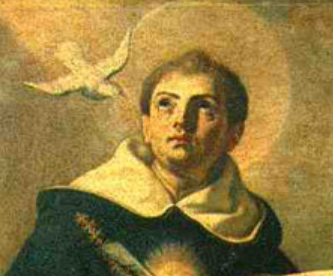
One who liberates his country by killing a tyrant is to be praised and rewarded.
▼
Source
source
Trans. J.G. Dawson (Oxford, 1959), 44, 2 in O’Donovan, pp. 329-30
7 months 1 week ago
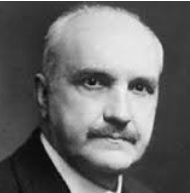
Perhaps the only true dignity of man is his capacity to despise himself.
5 months 1 week ago
Do nothing, only keep agitating, debating; and things will destroy themselves.
▼
Source
source
Pt. I, Bk. VI, ch. 3.
5 months 1 week ago
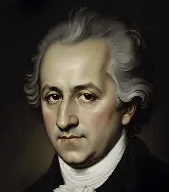
I have often felt a bitter sorrow at the thought of the German people, which is so estimable in the individual and so wretched in the generality. A comparison of the German people with other peoples arouses a painful feeling, which I try to overcome in every possible way.
▼
Source
source
Goethes Gespraeche
4 months 3 weeks ago
There are two kinds of animals on earth. One kind minds his own business, the other minds other people's business. The former are vegetarians, like cows, sheep and thinking men. The latter are carnivorous, like hawks, tigers and men of action.
▼
Source
source
As quoted by Tai-yi Lin (Lin Yutang's daughter) in her Foreword (26 March 1950) to The Importance of Living, p. x
4 months 3 weeks ago
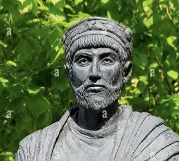
I had imagined that the prelates of the Galilaeans were under greater obligations to me than to my predecessor. For in his reign many of them were banished, persecuted, and imprisoned, and many of the so-called heretics were executed ... all of this has been reversed in my reign; the banished are allowed to return, and confiscated goods have been returned to the owners. But such is their folly and madness that, just because they can no longer be despots, ... or carry out their designs first against their brethren, and then against us, the worshippers of the gods, they are inflamed with fury and stop at nothing in their unprincipled attempts to alarm and enrage the people.
▼
Source
source
Edict to the people of Bostra, reported in Henry Bettenson, Documents of the Christian Church
8 months 2 weeks ago
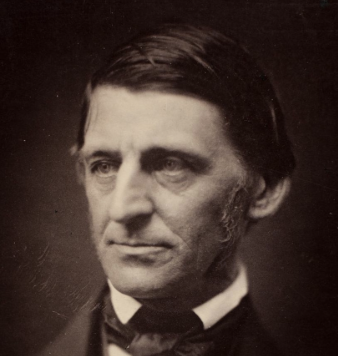
Bad times have a scientific value. [...] We learn geology the morning after the earthquake, on ghastly diagrams of cloven mountains, upheaved plains, and the dry bed of the sea.
▼
Source
source
Considerations by the Way
CivilSimian.com created by AxiomaticPanic, CivilSimian, Kalokagathia