

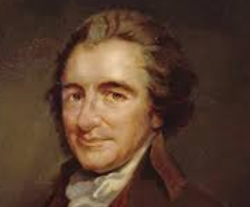
8 months 2 weeks ago
With what consistency, or decency they complain so loudly of attempts to enslave them, while they hold so many hundred thousands in slavery; and annually enslave many thousands more, without any pretence of authority, or claim upon them?
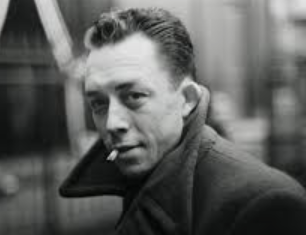
9 months 2 weeks ago
There is but one truly serious philosophical problem and that is suicide. Judging whether life is or is not worth living amounts to answering the fundamental question of philosophy. All the rest, whether or not the world has three dimensions, whether the mind has nine or twelve categories comes afterwards. These are games; one must first answer. And if it is true, as Nietzsche claims, that a philosopher, to deserve our respect, must preach by example, you can appreciate the importance of that reply, for it will precede the definitive act. These are facts the heart can feel; yet they call for careful study before they become clear to the intellect. If I ask myself how to judge that this question is more urgent than that, I reply that one judges by the actions it entails. I have never seen anyone die for the ontological argument.
▼
Source
source
Absurdity and Suicide
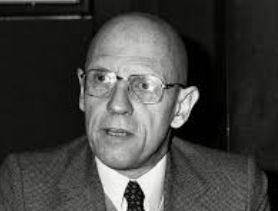
8 months 1 week ago
The appearance in nineteenth-century psychiatry, jurisprudence, and literature of a whole series of discourses on the species and subspecies of homosexuality, inversion, pederasty, and "psychic hermaphroditism" made possible a strong advance of social controls into this area of "perversity"; but it also made possible the formation of a "reverse" discourse: homosexuality began to speak in its own behalf, to demand that its legitimacy or "naturality" be acknowledged, often in the same vocabulary, using the same categories by which it was medically disqualified.
▼
Source
source
Vol. I, p. 101
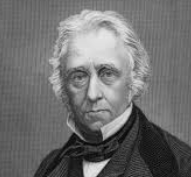
6 months 6 days ago
The object of oratory alone is not truth, but persuasion.
▼
Source
source
'On the Athenian Orators', Knight's Quarterly Magazine (August 1824), quoted in The Miscellaneous Writings of Lord Macaulay, Vol. I (1860), p. 135
4 months 4 weeks ago
If you get the message, hang up the phone. For psychedelic drugs are simply instruments, like microscopes, telescopes, and telephones. The biologist does not sit with eye permanently glued to the microscope, he goes away and works on what he has seen.
▼
Source
source
p. 26 (This statement was redacted from later editions.)

7 months ago
The basic paradox about sex is that it always seems to be offering more than it can deliver. A glimpse of a girl undressing through a lighted bedroom window induces a vision of ecstatic delight, but in the actual process of persuading the girl into bed, the vision somehow evaporates.
▼
Source
source
p. 16
5 months 1 week ago
Marriage and dependent children are a trap for the people! Morality carefully hides this distressing truth from us because it knows no remedy for the evil. But I , who bring a remedy must not dissimulate the woes from fathers, and I must not dissimulate from society its radical vice of pushing seven-eighths of all families into evil practices through poverty.
8 months 3 weeks ago
When the happiness or misery of others depends in any respect upon our conduct, we dare not, as self-love might suggest to us, prefer the interest of one to that of many. The man within immediately calls to us, that we value ourselves too much and other people too little, and that, by doing so, we render ourselves the proper object of the contempt and indignation of our brethren. Neither is this sentiment confined to men of extraordinary magnanimity and virtue. It is deeply impressed upon every tolerably good soldier, who feels that he would become the scorn of his companions, if he could be supposed capable of shrinking from danger, or of hesitating, either to expose or to throw away his life, when the good of the service required it.
▼
Source
source
Chap. III.
7 months 3 weeks ago
I discuss with myself questions of politics, love, taste, or philosophy. I let my mind rove wantonly, give it free rein to follow any idea, wise or mad that may present itself. ... My ideas are my harlots.

4 months 1 week ago
Everything should be made simple as possible but no simpler.
▼
Source
source
Repeated throughout his life, see: [http://quoteinvestigator.com/2011/05/13/einstein-simple/ Quote Investigator]
6 months 2 weeks ago
Logos is the formal cause of the kosmos and all things, responsible for their nature and configuration.
▼
Source
source
p. 37
7 months 2 weeks ago
We are on a mission: we are called to the cultivation of the earth.
▼
Source
source
Fragment No. 32
4 months 4 weeks ago
Ego is a social institution with no physical reality. The ego is simply your symbol of yourself. Just as the word "water" is a noise that symbolizes a certain liquid without being it, so too the idea of ego symbolizes the role you play, who you are, but it is not the same as your living organism.
▼
Source
source
Buddhism : The Religion of No-Religion
5 months 1 week ago
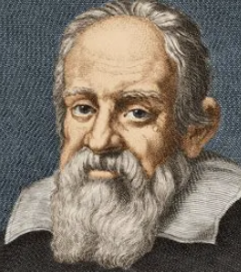
This [experimentation] is the custom-and properly so-in those sciences where mathematical demonstrations are applied to natural phenomena, as is seen in the case of perspective, astronomy, mechanics, music, and others where the principles, once established by well-chosen experiments, become the foundations of the entire superstructure.
▼
Source
source
Salviati, Third Day. Change of Position
4 months 2 weeks ago
The line that connects the bombing of civilian populations to the mountain removed by strip mining ... to the tortured prisoner seems to run pretty straight. We're living, it seems, in the culmination of a long warfare - warfare against human beings, other creatures and the Earth itself.
▼
Source
source
Commencement address at Lindsey Wilson College
4 months 2 weeks ago
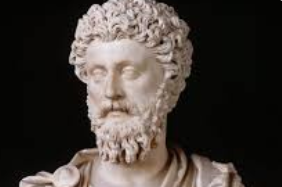
Remember that the term Rational was intended to signify a discriminating attention to every several thing and freedom from negligence; and that Equanimity is the voluntary acceptance of things which are assigned to thee by the common nature; and the Magnanimity is the elevation of the intelligent part above the pleasurable or painful sensations of the flesh, and above that poor thing called fame, and death, and all such things. If then, thou maintainest thyself in the possession of these names, without desiring to be called by these names by others, thou wilt be another person and wilt enter into another life.
▼
Source
source
X, 8
8 months 1 week ago
Sometimes, because my position has not been made clear enough, people think I'm a sort of radical anarchist who has an absolute hatred of power. No! What I am trying to do is to approach this extremely important and tangled phenomenon in our society, the exercise of power, with the most reflective, and I would say prudent attitude. Prudent in my analysis, in the moral and theoretical postulates I use: I try to figure out what's at stake. But to question the relations of power in the most scrupulous and attentive manner possible, looking into all the domains of its exercise, that's not the same thing as constructing a mythology of power as the beast of the apocalypse.
▼
Source
source
"Power, Moral Values, and the Intellectual", interview in History of the Present 4

8 months 2 weeks ago
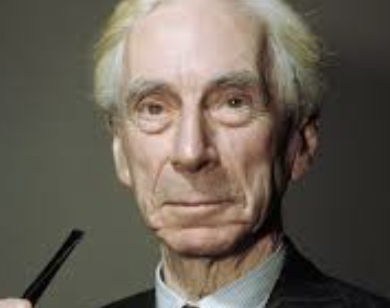
It is normal to hate what we fear, and it happens frequently, though not always, that we fear what we hate. I think it may be taken as the rule among primitive men, that they both fear and hate whatever is unfamiliar. They have their own herd, originally a very small one. And within one herd, all are friends, unless there is some special ground of enmity. Other herds are potential or actual enemies; a single member of one of them who strays by accident will be killed. An alien herd as a whole will be avoided or fought according to circumstances. It is this primitive mechanism which still controls our instinctive reaction to foreign nations. The completely untravelled person will view all foreigners as the savage regards a member of another herd. But the man who has travelled, or who has studied international politics, will have discovered that, if his herd is to prosper, it must, to some degree, become amalgamated with other herds.
8 months 2 weeks ago
The very man who has argued you down will sometimes be found, years later, to have been influenced by what you said.
▼
Source
source
Reflections on the Psalms (1958), ch. VII: Connivance, p. 73
9 months 2 weeks ago
I don't believe in flying saucers... The energy requirements of interstellar travel are so great that it is inconceivable to me that any creatures piloting their ships across the vast depths of space would do so only in order to play games with us over a period of decades.

7 months ago
We Americans claim to be a peace-loving people. We hate bloodshed; we are opposed to violence. Yet we go into spasms of joy over the possibility of projecting dynamite bombs from flying machines upon helpless citizens. We are ready to hang, electrocute, or lynch anyone, who, from economic necessity, will risk his own life in the attempt upon that of some industrial magnate. Yet our hearts swell with pride at the thought that America is becoming the most powerful nation on earth, and that it will eventually plant her iron foot on the necks of all other nations. Such is the logic of patriotism.

7 months 3 days ago
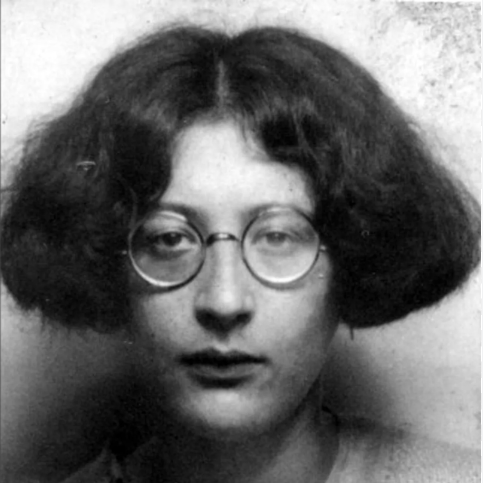
No human being escapes the necessity of conceiving some good outside himself towards which his thought turns in a movement of desire, supplication, and hope. consequently, the only choice is between worshipping the true God or an idol. Every atheist is an idolater - unless he is worshipping the true God in his impersonal aspect. The majority of the pious are idolaters.
▼
Source
source
Last Notebook (1942) p. 308
8 months 1 week ago
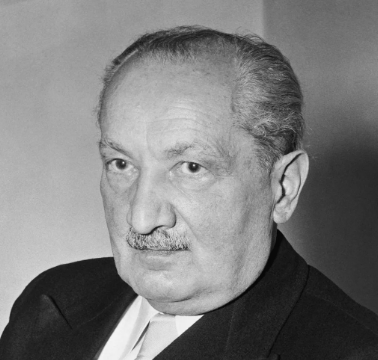
Kant speaks of the "thing-in-itself" (Ding an sich) in order to distinguish it from the "thing-for-us" (Ding fur uns), that is, as a "phenomenon." A thing-in-itself is that which is not approachable through experience as are the rocks, plants, and animals. Every thing-for-us is as a thing and also a thing-in-itself, which means that it is recognized absolutely withing the absolute knowledge of God. But not every thing-in-itself is also a thing-for-us: God, for instance, is a thing-in-itself, as Kant uses the word, according to the meaning of Christian theology.
▼
Source
source
p. 5
8 months 1 week ago
It is better to correct your own faults than those of another.
7 months ago
Emptiness empties the one seeing into what is seen.
9 months 1 week ago
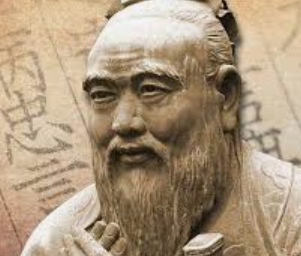
If the Superior Man is not serious, then he will not inspire awe in others. If he is not learned, then he will not be on firm ground. He takes loyalty and good faith to be of primary importance, and has no friends who are not of equal (moral) caliber. When he makes a mistake, he doesn't hesitate to correct it.
9 months 3 days ago
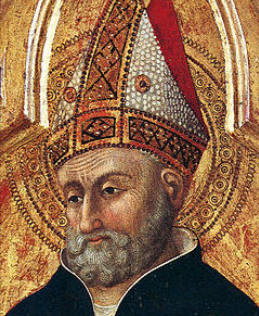
Thou hast made us for Thyself, and the heart never resteth till it findeth rest in Thee.
▼
Source
source
p. 515

5 months 3 weeks ago
The irony of the post-Cold War period is that the fall of communism was followed by the rise of another utopian ideology. In American and Britain, and to a lesser extent other Western countries, a type of market fundamentalism became the guiding philosophy. The collapse of American power that is underway is the predictable upshot.
8 months 2 weeks ago
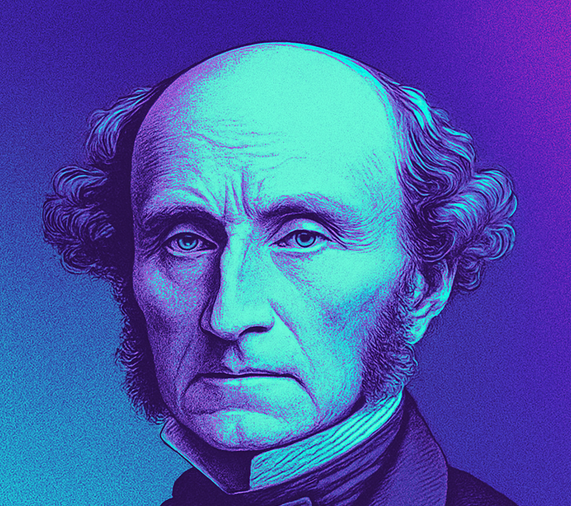
No longer enslaved or made dependent by force of law, the great majority are so by force of poverty; they are still chained to a place, to an occupation, and to conformity with the will of an employer, and debarred, by the accident of birth both from the enjoyments, and from the mental and moral advantages, which others inherit without exertion and independently of desert. That this is an evil equal to almost any of those against which mankind have hitherto struggled, the poor are not wrong in believing.
▼
Source
source
John Stuart Mill, Chapters On Socialism, London, 1879, 'Introductory'
7 months 2 days ago
The vitality of thought is in adventure. Ideas won't keep. Something must be done about them. When the idea is new, its custodians have fervor, live for it, and, if need be, die for it.
▼
Source
source
p. 100; Ch. 12, April 28, 1938.
8 months 2 weeks ago
Thus heaven I've forfeited, I know it full well. My soul, once true to God, is chosen for hell.
▼
Source
source
"The Pale Maiden" (1837) ballad
4 months 2 weeks ago
Believing that the happiness of mankind is best promoted by the useful pursuits of peace, that on these alone a stable prosperity can be founded, that the evils of war are great in their endurance, and have a long reckoning for ages to come, I have used my best endeavors to keep our country uncommitted in the troubles which afflict Europe, and which assail us on every side. Letter to the Young Republicans of Pittsburg and its vicinities
▼
Source
source
2 December 1808
9 months 2 weeks ago
Creationists make it sound as though a "theory" is something you dreamt up after being drunk all night.
8 months 2 weeks ago
The true Enlightenment thinker, the true rationalist, never wants to talk anyone into anything. No, he does not even want to convince; all the time he is aware that he may be wrong. Above all, he values the intellectual independence of others too highly to want to convince them in important matters. He would much rather invite contradiction, preferably in the form of rational and disciplined criticism. He seeks not to convince but to arouse - to challenge others to form free opinions.
8 months 2 weeks ago
"I don't want to! Why should I?" "Because more people will be happier if you do than if you don't." "So what? I don't care about other people." "You should." "But why?" "Because more people will be happier if you do than if you don't."
▼
Source
source
Dialogue between Russell and his daughter Katharine, as quoted in My Father - Bertrand Russell, 1975
9 months 3 days ago
An unjust law is no law at all.
▼
Source
source
On Free Choice Of The Will, Book 1, and 5
4 months 2 weeks ago
We necessarily perceive bodies as 'without' us: the Idea of 'Externality' is one of the conditions of perception.
8 months 2 weeks ago
What is now common to all men is a mere abstract universal, an H.C.F. [Highest Common Factor], and Man's conquest of himself means simply the rule of the Conditioners over the conditioned human material, the world of post-humanity which, some knowingly and some unknowingly, nearly all men in all nations are at present labouring to produce.
6 months 2 weeks ago
I want to block some common misunderstandings about "understanding": In many of these discussions one finds a lot of fancy footwork about the word "understanding."
8 months 2 weeks ago
As soon as it is held that any belief, no matter what, is important for some other reason than that it is true, a whole host of evils is ready to spring up. Discouragement of inquiry, ... is the first of these, but others are pretty sure to follow. Positions of authority will be open to the orthodox. Historical records must be falsified if they throw doubt on received opinion. Sooner or later unorthodoxy will come to be considered a crime to be dealt with by the stake, the purge, or the concentration camp. I can respect the men who argue that religion is true and therefore ought to be believed, but I can only feel profound moral reprobation for those who say that religion ought to be believed because it is useful, and that to ask whether it is true is a waste of time.
▼
Source
source
3 quoted from Why I Am Not a Muslim (1995), Ibn Warraq
5 months 1 week ago
The ones who are preoccupied by logic are above all; to read their works, one is tempted to believe they have advanced only step by step, after the manner of a Vauban who pushes on his trenches against the place besieged, leaving nothing to chance. The others are guided by intuition and, at the first stroke, make quick but sometimes precarious conquests, like bold cavalrymen of the advance guard.
▼
Source
source
quoted in Jacques Hadamard, An essay on the psychology of invention in the mathematical field (1954), pp. 106.
7 months 2 weeks ago
The effect of liberty to individuals is, that they may do what they please: we ought to see what it will please them to do, before we risk congratulations.
7 months 2 weeks ago
The illustrious archbishop of Cambray was of more worth than his chambermaid, and there are few of us that would hesitate to pronounce, if his palace were in flames, and the life of only one of them could be preserved, which of the two ought to be preferred ... Supposing the chambermaid had been my wife, my mother or my benefactor. This would not alter the truth of the proposition. The life of Fenelon would still be more valuable than that of the chambermaid; and justice, pure, unadulterated justice, would still have preferred that which was most valuable. Justice would have taught me to save the life of Fenelon at the expence of the other. What magic is there in the pronoun "my", to overturn the decisions of everlasting truth?
▼
Source
source
Vol.1, bk. 2, ch. 2
7 months 2 weeks ago
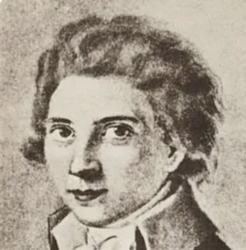
There is no self-knowledge except historical self-knowledge. No one knows what he is if he doesn't know what his contemporaries are.
▼
Source
source
"Ideas," Lucinde and the Fragments, P. Firchow, trans. (1991), § 139
CivilSimian.com created by AxiomaticPanic, CivilSimian, Kalokagathia