

7 months 2 weeks ago
Doth the reality of sensible things consist in being perceived? or, is it something distinct from their being perceived, and that bears no relation to the mind?
▼
Source
source
Philonous to Hylas
8 months 3 days ago
To protest about bullfighting in Spain, the eating of dogs in South Korea, or the slaughter of baby seals in Canada while continuing to eat eggs from hens who have spent their lives crammed into cages, or veal from calves who have been deprived of their mothers, their proper diet, and the freedom to lie down with their legs extended, is like denouncing apartheid in South Africa while asking your neighbors not to sell their houses to blacks.
▼
Source
source
Ch. 4: Becoming a Vegetarian
6 months 3 weeks ago
Human history began with an act of disobedience, and it is not unlikely that it will be terminated by an act of obedience.
▼
Source
source
Disobedience as a Psychological and Moral Problem in On Disobedience and Other Essays
6 months 2 weeks ago
The ascription of an unconscious intentional phenomenon to a system implies that the phenomenon is in principle accessible to consciousness. A statement of the author's "connection principle."
▼
Source
source
"Consciousness, Explanatory Inversion, and Cognitive Science," The Behavioral and Brain Sciences 13, 4 (December 1990): 585-696.
8 months 1 week ago
What should we gain by a definition, as it can only lead us to other undefined terms?
▼
Source
source
p. 26
8 months 1 week ago
First Shakespeare sonnets seem meaningless; first Bach fugues, a bore; first differential equations, sheer torture. But training changes the nature of our spiritual experiences. In due course, contact with an obscurely beautiful poem, an elaborate piece of counterpoint or of mathematical reasoning, causes us to feel direct intuitions of beauty and significance. It is the same in the moral world.
▼
Source
source
Ch. 14, p. 333 [2012 reprint]

8 months 3 weeks ago
The worst evil is hardness of heart. Those who do not repent, who deliberately remain in their habits of sin, have the most to fear.
▼
Source
source
p. 146
7 months 1 week ago
Under the natural course of things each citizen tends towards his fittest function. Those who are competent to the kind of work they undertake, succeed, and, in the average of cases, are advanced in proportion to their efficiency; while the incompetent, society soon finds out, ceases to employ, forces to try something easier, and eventually turns to use.
▼
Source
source
Vol. 3, Ch. VII, Over-Legislation


6 months 1 week ago
The cruelest lies are often told in silence. A man may have sat in a room for hours and not opened his teeth, and yet come out of that room a disloyal friend or a vile calumniator. And how many loves have perished because, from pride, or spite, or diffidence, or that unmanly shame which withholds a man from daring to betray emotion, a lover, at the critical point of the relation, has but hung his head and held his tongue?
▼
Source
source
Truth of Intercourse.
7 months 1 week ago
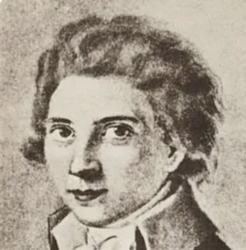
To live classically and to realize antiquity practically within oneself is the summit and goal of philology.
▼
Source
source
Philosophical Fragments, P. Firchow, trans. (1991) § 147
8 months 1 week ago
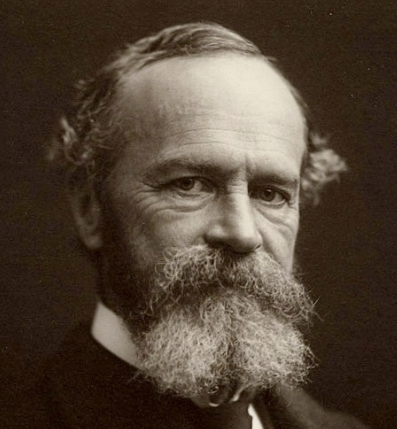
Act as if what you do makes a difference. It does.
▼
Source
source
Correspondence with Helen Keller, 1908, in The Correspondence of William James: April 1908-August 1910, Vol. 12
4 months 1 week ago
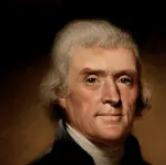
The principle of rotation... in the body of [bank] directors... breaks in upon the esprit de corps so apt to prevail in permanent bodies; it gives a chance for the public eye penetrating into the sanctuary of those proceedings and practices, which the avarice of the directors may introduce for their personal emolument, and which the resentments of excluded directors, or the honesty of those duly admitted, might betray to the public; and it gives an opportunity at the end of the year, or at other periods, of correcting a choice, which on trial, proves to have been unfortunate.
▼
Source
source
Letter to Albert Gallatin, 1803. ME 10:437
4 months 3 weeks ago
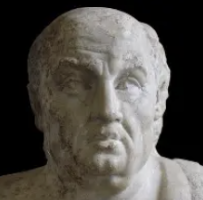
Perhaps its destruction has been brought about only that it may be raised up again to a better destiny. Oftentimes a reverse has but made room for more prosperous fortune. Many structures have fallen only to rise to a greater height.
6 months 5 days ago
The ethical life... is maintained in being by a common culture, which also upholds the togetherness of society... Unlike the modern youth culture, a common culture sanctifies the adult state, to which it offers rites of passage.
▼
Source
source
"Idle Hands" (p. 127)
7 months 2 weeks ago
Wandering in a vast forest at night, I have only a faint light to guide me. A stranger appears and says to me: "My friend, you should blow out your candle in order to find your way more clearly." This stranger is a theologian.
▼
Source
source
Number VIII
8 months 1 week ago
It is said (I do not know with what truth) that a certain Hindu thinker believed the earth to rest upon an elephant. When asked what the elephant rested upon, he replied that it rested upon a tortoise. When asked what the tortoise rested upon, he said, "I am tired of this. Suppose we change the subject." This illustrates the unsatisfactory character of the First-Cause argument.
▼
Source
source
"Is There a God?", 1952
9 months 2 days ago
A lifetime is a child playing, playing checkers; the kingdom belongs to a child.
8 months 1 week ago
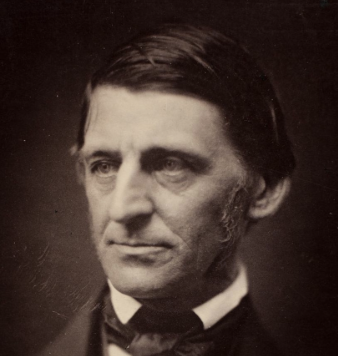
Men are what their mothers made them.
▼
Source
source
Fate
8 months 1 week ago
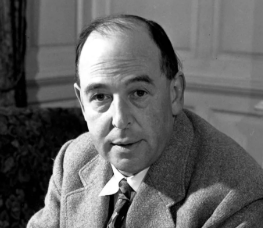
You don't have a soul. You are a soul. You have a body.
▼
Source
source
Commonly attributed to Mere Christianity, where it is not found. Earliest reference seems to be an unsourced attribution to George MacDonald in an 1892 issue of the Quaker periodical The British Friend.
9 months 2 days ago
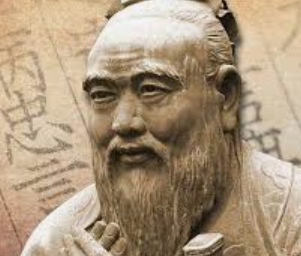
Earnest in practicing the ordinary virtues, and careful in speaking about them, if, in his practice, he has anything defective, the superior man dares not but exert himself; and if, in his words, he has any excess, he dares not allow himself such license. Thus his words have respect to his actions, and his actions have respect to his words; is it not just an entire sincerity which marks the superior man?
8 months 1 week ago
So much of our time is spent in preparation, so much in routine and so much in retrospect, that the amount of each person's genius is confined to a very few hours.
▼
Source
source
Quoted in Simon Brown (ed.) The New England Farmer, vol. 9 (January 1857) p. 18
7 months 5 days ago
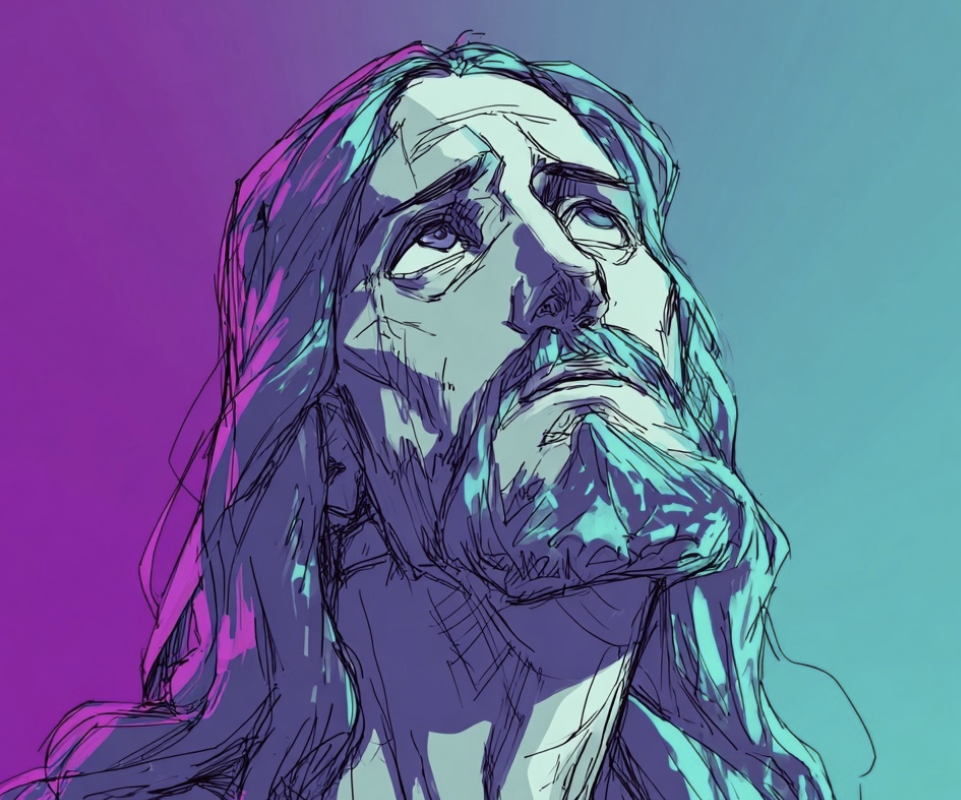
...whoever is not against us is for us.
▼
Source
source
9:40
8 months 2 weeks ago
I doubt not but one great reason why many children abandon themselves wholly to silly sports, and trifle away all their time insipidly, is, because they have found their curiosity baulk'd, and their inquiries neglected. But had they been treated with more kindness and respect, and their questions answered, as they should, to their satisfaction; I doubt not but that they would have taken more pleasure in learning, and improving their knowledge, wherein there would still be newness and variety, which is what they are delighted with, than in returning over and over to the same play and play-things.
▼
Source
source
Sec. 118
4 months 3 weeks ago
I have no reason to suppose that Lenin gained his ideas from my books; but if that were true, I should be not a little proud of having contribute to the intellectual development of a man who seems to me to be at once the greatest theoretician of socialism since Marx and a statesman whose genius recalls that of Peter the Great.
▼
Source
source
For Lenin, Soviet Russia, Official Organ of The Russian Soviet Government Bureau, Vol. II, New York: NY, January-June 1920 (April 10, 1920), p. 356
4 months 1 week ago
One cannot reduce terror by holding over the world the threat of what it most fears.
6 months 1 week ago
In the spiritual realm nothing is indifferent: what is not useful is harmful.
▼
Source
source
VII
4 months 3 weeks ago
God, our Father, has given us the life and the art of healing to protect and maintain it.
8 months 1 week ago
The ceremonial (hot or cold) as opposed to the haphazard (lukewarm) characterizes piety.
▼
Source
source
Ch. 7 : Remarks on Frazer's Golden Bough, p. 127
8 months 2 weeks ago
To love is to be delighted by the happiness of someone, or to experience pleasure upon the happiness of another. I define this as true love.
▼
Source
source
The Elements of True Piety (c. 1677), The Shorter Leibniz Texts (2006) edited by Lloyd H. Strickland, p. 189
8 months 1 week ago
Of all evils of war the greatest is the purely spiritual evil: the hatred, the injustice, the repudiation of truth, the artificial conflict.
▼
Source
source
Justice in War-Time (1916), p. 27
8 months 1 week ago
I wished, by treating Psychology like a natural science, to help her to become one.
▼
Source
source
A Plea for Psychology as a Natural Science, 1892

9 months 1 day ago
There is no city that is truly one other than this city that we are involved in bringing forth.
4 months 1 week ago
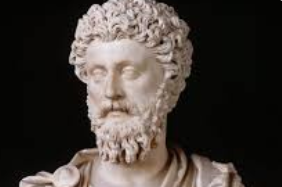
Then what should we work for? Only this: proper understanding; unselfish action; truthful speech. A resolve to accept whatever happens as necessary and familiar, flowing like water from that same source and spring.
▼
Source
source
(Hays translation) IV, 33
8 months 3 weeks ago
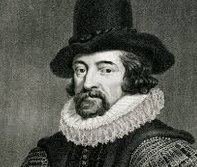
For all knowledge and wonder (which is the seed of knowledge) is an impression of pleasure in itself.
▼
Source
source
Book I, i, 3
6 months 3 weeks ago
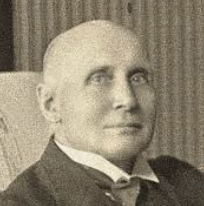
The pursuit of mathematics is a divine madness of the human spirit.
▼
Source
source
Ch. 2: "Mathematics as an Element in the History of Thought", p. 30
7 months 1 week ago
There is but one Temple in the World; and that is the Body of Man. Nothing is holier than this high form. Bending before men is a reverence done to this Revelation in the Flesh. We touch Heaven, when we lay our hand on a human body. Variant translation: There is but one temple in the Universe and that is the Body of Man.
▼
Source
source
As inscribed on the Library of Congress, quoted in Handbook of the New Library of Congress (1897) by Herbert Small, p. 53
4 months 1 week ago
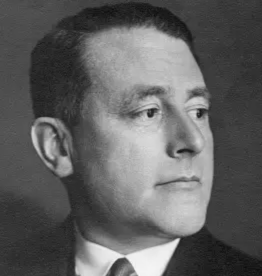
The specific political distinction to which political actions and motives can be reduced is that between friend and enemy.
8 months 2 weeks ago
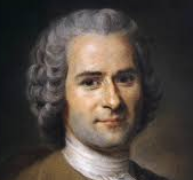
As soon as we have contrived to give our pupil an idea of the word "Useful," we have got an additional means of controlling him, for this word makes a great impression on him, provided that its meaning for him is a meaning relative to his own age, and provided he clearly sees its relation to his own well-being. This word makes no impression on your scholars because you have taken no pains to give it a meaning they can understand, and because other people always undertake to supply their needs so that they never require to think for themselves, and do not know what utility is. "What is the use of that?"

6 months 3 weeks ago
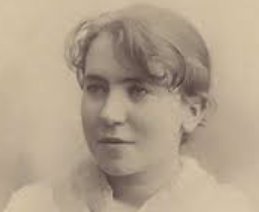
Some will ask, what about weak natures, must they not be protected? Yes, but to be able to do that, it will be necessary to realize that education of children is not synonymous with herdlike drilling and training. If education should really mean anything at all, it must insist upon the free growth and development of the innate forces and tendencies of the child. In this way alone can we hope for the free individual and eventually also for a free community, which shall make interference and coercion of human growth impossible.
9 months 2 days ago
The aged are cared for until death; adults are employed in jobs that make full use of their abilities; and children are nourished, educated, and fostered;...orphans... the disabled and the diseased are all well taken care of....
4 months 1 week ago
Objective judgment, now, at this very moment. Unselfish action, now, at this very moment. Willing acceptance-now, at this very moment-of all external events. That's all you need.
▼
Source
source
(Hays translation) IX, 6
8 months 1 week ago
I saw a moving sight the other morning before breakfast in a little hotel where I slept in the dusty fields. The young man of the house shot a little wolf called coyote in the early morning. The little heroic animal lay on the ground, with his big furry ears, and his clean white teeth, and his little cheerful body, but his little brave life was gone. It made me think how brave all living things are. Here little coyote was, without any clothes or house or books or anything, with nothing to pay his way with, and risking his life so cheerfully - and losing it - just to see if he could pick up a meal near the hotel. He was doing his coyote-business like a hero, and you must do your boy-business, and I my man-business bravely, too, or else we won't be worth as much as a little coyote.
▼
Source
source
28-Aug-89
CivilSimian.com created by AxiomaticPanic, CivilSimian, Kalokagathia