
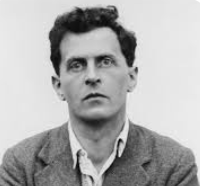
4 months ago
The problems are dissolved in the actual sense of the word — like a lump of sugar in water.
▼
Source
Ch. 9 : Philosophy, p. 183
4 months ago
Interviewer: How do philosophy and theology coexist in you? Vannini: Since the age of reason, I have felt a certain love and interest for deeply philosophical and theological issues, according to the Hegelian interpretation that philosophy has the absolute in common with religion.
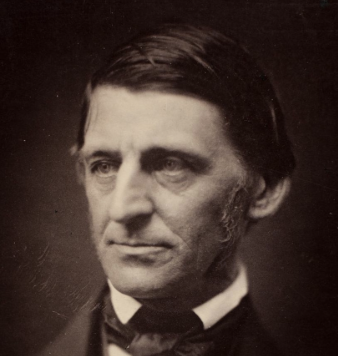
4 months ago
We boil at different degrees.
▼
Source
Eloquence
4 months ago
Induction is the glory of science and the scandal of philosophy.
▼
Source
Broad, C.D. (1926). The philosophy of Francis Bacon: An address delivered at Cambridge on the occasion of the Bacon tercentenary, 5 October, 1926. Cambridge: University Press, p. 67. The quotation is a paraphrase of the concluding sentence in the monograp
4 months ago
Every moment celebrates obsequies over the virtues of its predecessor.
▼
Source
Ch. XIV
4 months ago
For do our Theologians pretend to make a monopoly of the word, action, and may not the atheists likewise take possession of it, and affirm that plants, animals, men, &c. are nothing but particular actions of one simple universal substance, which exerts itself from a blind and absolute necessity?
▼
Source
Part 4, Section 5
4 months ago
If a person gave your body to any stranger he met on his way, you would certainly be angry. And do you feel no shame in handing over your own mind to be confused and mystified by anyone who happens to verbally attack you? (28) [tr. Elizabeth Carter]
4 months ago
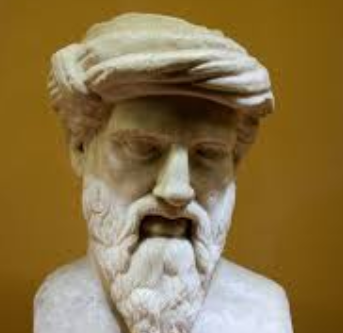
The combination of mathematics and theology, which began with Pythagoras, characterized religious philosophy in Greece, in the Middle Ages, and in modern times down to Kant. Orphism before Pythagoras was analogous to Asiatic mystery religions. But in Plato, Saint Augustine, Thomas Aquinas, Descartes, Spinoza, and Kant there is an intimate blending of religion and reasoning, of moral aspiration with logical admiration of what is timeless, which comes from Pythagoras, and distinguishes the intellectualized theology of Europe from the more straightforward mysticism of Asia. It is only in quite recent times that it has been possible to say clearly that Pythagoras was wrong. I do not know of any other man who has been as influential as he was in the sphere of thought. I say this because what appears as Platonism is, when analyzed, found to be in essence Pythagoreanism. The whole conception of an eternal world, revealed to the intellect but not to the senses, is derived from him. But for him, Christians would not have thought of Christ as the Word; but for him, theologians would not have sought logical proofs of God and immortality.
▼
Source
Bertrand Russell, in A History of Western Philosophy (1945), Book One, Part I, Chapter III, Pythagoras, p. 37
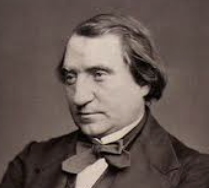
4 months ago
As a rule, all heroism is due to a lack of reflection, and thus it is necessary to maintain a mass of imbeciles. If they once understand themselves the ruling men will be lost.
▼
Source
Orlando, in Caliban, act 2, sc. 1 (1878).
4 months ago
But if you say: "How am I to know what he means, when I see nothing but the signs he gives?" then I say: "How is he to know what he means, when he has nothing but the signs either?"
▼
Source
§ 504

4 months ago
Each and every master, regardless of the era or the place, heard the call and attained harmony with heaven and earth. There are many paths leading to the top of Mount Fuji, but there is only one summit — love.
▼
Source
Morihei Ueshiba, as quoted in You Can Save the Earth: 7 Reasons Why and 7 Simple Ways, a Philosophy for the Future (2008) by Hatherleigh, Sean K. Smith, and Andrew Flach, p. 92
4 months ago
As soon as there is life there is danger.
▼
Source
Actually from De l'Allemagne (1813) by Madame de Stael.
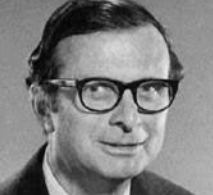
4 months ago
The scientist has to have a way of thinking about the environment of a system that is richer and more subtle than a mere looking at for boundaries. He does this by noting that, when we say that something lies ‘outside’ the system, we mean that system can do relatively little about its characteristics or its behavior. Environment, in effect, makes up the things and people that are ‘fixed’ or ‘given’, from the system’s point of view.
▼
Source
p. 35
4 months ago
It is not politics that can bring true liberty to the soul; that must be achieved, if at all, by philosophy;
▼
Source
"The Irony of Liberalism"
4 months ago
Necessity may be defined in two ways, conformably to the two definitions of cause, of which it makes an essential part. It consists either in the constant conjunction of like objects, or in the inference of the understating from one object to another.
▼
Source
§ 8.27
4 months ago
It is important to recognize that the materialist, scientific paradigm that dominates the late twentieth century world and provides the basis for its dominant institutions, has its basis in the life and work of Pythagoras, one of the most significant representatives of the perennial philosophy and a founder of the magical tradition. This spirit, which gave rise to our world view, is a spirit that must be recaptured if our civilization is to flourish. The choice is a clear one to many, and was summed up in a book title by the late Pythagorean and futurist Buckminster Fuller, Utopia or Oblivion.
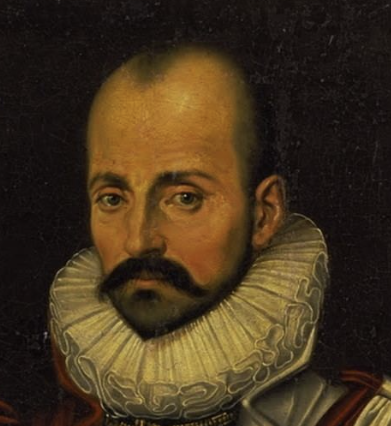
4 months ago
Poor, wretched, and stupid peoples, nations determined on your own misfortune and blind to your own good! You let yourselves be deprived before your own eyes of the best part of your revenues; your fields are plundered, your homes robbed, your family heirlooms taken away. You live in such a way that you cannot claim a single thing as your own; and it would seem that you consider yourselves lucky to be loaned your property, your families, and your very lives. All this havoc, this misfortune, this ruin, descends upon you not from alien foes, but from the one enemy whom you yourselves render as powerful as he is, for whom you go bravely to war, for whose greatness you do not refuse to offer your own bodies unto death. He who thus domineers over you has only two eyes, only two hands, only one body, no more than is possessed by the least man among the infinite numbers dwelling in your cities; he has indeed nothing more than the power that you confer upon him to destroy you. Where has he acquired enough eyes to spy upon you, if you do not provide them yourselves? How can he have so many arms to beat you with, if he does not borrow them from you? The feet that trample down your cities, where does he get them if they are not your own? How does he have any power over you except through you? How would he dare assail you if he had no cooperation from you? What could he do to you if you yourselves did not connive with the thief who plunders you, if you were not accomplices of the murderer who kills you, if you were not traitors to yourselves? You sow your crops in order that he may ravage them, you install and furnish your homes to give him goods to pillage; you rear your daughters that he may gratify his lust; you bring up your children in order that he may confer upon them the greatest privilege he knows — to be led into his battles, to be delivered to butchery, to be made the servants of his greed and the instruments of his vengeance; you yield your bodies unto hard labor in order that he may indulge in his delights and wallow in his filthy pleasures; you weaken yourselves in order to make him the stronger and the mightier to hold you in check.
4 months ago
I think I summed up my attitude to philosophy when I said: philosophy ought really to be written only as a poetic composition.
▼
Source
p. 24e | variant translation at [https://wittgenstein-initiative.com/writing-philosophy-as-poetry-literary-form-in-wittgenstein/ wittgenstein-initiative.com]: I think I summed up my position vis-а-vis philosophy when I said: philosophy should really be wr
4 months ago
In order to establish heaven on earth, we need a Budo that is pure in spirit, that is devoid of hatred and greed. It must follow natural principles and harmonize the material with the spiritual. Aikido means not to kill. Although nearly all creeds have a commandment against taking life, most of them justify killing for reason or another. In Aikido, however, we try to completely avoid killing, even the most evil person.
4 months ago
Even when provocation was great, his satire was so gentle and genial that it warmed even its object.
▼
Source
Charles Johnson Woodbury, Talks with Ralph Waldo Emerson (1890), p. 43
4 months ago
Everybody's daily life consists of problems arising from what you decided yesterday. Managers understand that. Mathematicians want to solve a theorem, publish the results and walk away clean. Managers never walk away clean. The real world is a very dirty place.Clarity is supposed to be the objective of science. I disagree. I think the objective of science is confusion, because confusions carries you into problems.
▼
Source
C. West Churchman cited in: Peter R. Horner (1993). "TIMS Turns 40," in: OR/MS Today, Vol. 20, No. 2, p. 40-43
4 months ago
The earth has music for those who listen.
▼
Source
This statement is commonly associated with Santayana, but no source or attribution can be found in his works or correspondence. This quotation is appropriately attributed to Reginald Vincent Holmes' poem "The Magic of Sound", published in Fireside Fancies
4 months ago
The slaving Poor are incapable of any Principles: Gentlemen may be converted to true Principles, by Time and Experience. The middling Rank of Men have Curiosity and Knowledge enough to form Principles, but not enough to form true ones, or correct any Prejudices that they may have imbib'd: And 'tis among the middling Rank, that Tory Principles do at present prevail most in England.
▼
Source
Part I, Essay 9: Of The Parties of Great Britain; final lines of this essay in the 1741 and 1742 editions of Essays, Moral and Political, they were not included in later editions.
4 months ago
One might say: art shows us the miracles of nature. It is based on the concept of the miracles of nature.
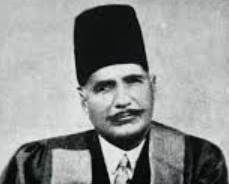
4 months ago
Let the lament of this lonely bulbul pierce the hearts of all,Arouse the hearts of the sleeping, with this my clarion call.Transfused with fresh blood, a new compact of faith we'll sign.Let our hearts thirst again for a sip of the vintage wine.What if the pitcher be Persian, from Hejaz is the wine I serve.What if the song be Indian, it is Hejazi in its verve.
▼
Source
(Singh, p. 58) | Variant:"May hearts be torn by the voice of this solitary Nightingale,May hearts be awakening through the sound of this same bell.That is, may hearts become alive again through a new promise of faithfulness,May hearts again thirst for thi
4 months ago
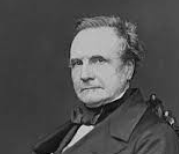
As soon as an Analytical Engine exists, it will necessarily guide the future course of the science. Whenever any result is sought by its aid, the question will then arise — by what course of calculation can these results be arrived at by the machine in the shortest time?
▼
Source
Passages from the Life of a Philosopher (1864), ch. 8 "Of the Analytical Engine"
4 months ago
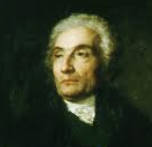
Unhappily, history proves that war is, in a certain sense, the habitual state of mankind, which is to say that human blood must flow without interruption somewhere or other on the globe, and that for every nation, peace is only a respite.
▼
Source
Chapter III, p. 23
4 months ago
Were a stranger to drop on a sudden into this world, I would show him, as a specimen of its ills, a hospital full of diseases, a prison crowded with malefactors and debtors, a field of battle strewed with carcasses, a fleet foundering in the ocean, a nation languishing under tyranny, famine, or pestilence. To turn the gay side of life to him, and give him a notion of its pleasures; whither should I conduct him? to a ball, to an opera, to court? He might justly think, that I was only showing him a diversity of distress and sorrow.
▼
Source
Demea to Philo, Part X
4 months ago
Lately, the one person that's meant a lot to me is Wittgenstein. I think his remarks on color turn into some of the most beautiful poetry I've ever read. People call Wittgenstein a philosopher and I call him a poet.
▼
Source
Leslie Marmon Silko, 1986 interview in Conversations with Leslie Marmon Silko edited by Ellen L. Arnold (2000)
4 months ago
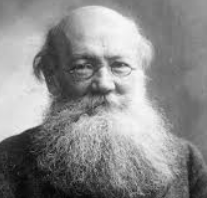
A soon as we study animals — not in laboratories and museums only, but in the forest and prairie, in the steppe and in the mountains — we at once perceive that though there is an immense amount of warfare and extermination going on amidst various species, and especially amidst various classes of animals, there is, at the same time, as much, or perhaps even more, of mutual support, mutual aid, and mutual defence amidst animals belonging to the same species or, at least, to the same society. Sociability is as much a law of nature as mutual struggle. Of course it would be extremely difficult to estimate, however roughly, the relative numerical importance of both these series of facts. But if we resort to an indirect test, and ask Nature: "Who are the fittest: those who are continually at war with each other, or those who support one another?" we at once see that those animals which acquire habits of mutual aid are undoubtedly the fittest. They have more chances to survive, and they attain, in their respective classes, the highest development and bodily organization. If the numberless facts which can be brought forward to support this view are taken into account, we may safely say that mutual aid is as much a law of animal life as mutual struggle; but that as a factor of evolution, it most probably has a far greater importance, inasmuch as it favors the development of such habits and characters as insure the maintenance and further development of the species, together with the greatest amount of welfare and enjoyment of life for the individual, with the least waste of energy.
▼
Source
"Mutual Aid as a Factor in Evolution" as quoted in The Cry for Justice : An Anthology of the Literature of Social Protest (1915) by Upton Sinclair
4 months ago
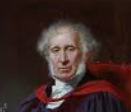
It is not within our province to inquire by what process, and in what condition the Almighty brought matter into existence-what the space was which it occupied, or what the forms were which it assumed. Of such things we know nothing. In the depths of primeval time, the globe we inhabit may have a planetary existence, wheeling along its ethereal railway without a breathing passenger to count its periods, and without a living plant to measure the day by its opening and closing blossoms, or to mark the rolling seasons by the yearly increments of its stem. Or it may have been the theatre on which vast cycles of animal and vegetable life have been run- now its birthplace, and now its grave: But we have no data to guide us in our conjectures, and even imagination fails us if we call it to our aid. Whatever may have been, had ceased to be at the commencement of our history, when the primary rocks, forming the moten nucleus of the globe, were first exposed to the action of the elements.
4 months ago
War is divine in itself, since it is a law of the world. War is divine through its consequences of a supernatural nature which are as much general as particular, consequences little known because little studied, but which are nevertheless incontestable. War is divine in the mysterious glory that surrounds it and in the no less inexplicable attraction that draws us to it. War is divine by the manner in which it breaks out.
▼
Source
"Seventh Dialogue," p. 218
4 months ago
Mahomet established a religion by putting his enemies to death; Jesus Christ, by commanding his followers to lay down their own lives.
▼
Source
[http://books.google.pt/books?id=MGkNAAAAYAAJ&pg=PA202&dq=%22Mahomet+established+a%22&hl=pt-PT&sa=X&ei=oZmPU-fCDemp7Ab7s4HQAg&ved=0CCsQ6AEwAA#v=onepage&q=%22Mahomet%20established%20a%20religion%22&f=false Thoughts on Religion and Philosophy] (W. Collins,
4 months ago
The millions of laws which exist for the regulation of humanity appear upon investigation to be divided into three principal categories: protection of property, protection of persons, protection of government. And by analyzing each of these three categories, we arrive at the same logical and necessary conclusion: the uselessness and hurtfulness of law.
▼
Source
IV
4 months ago
Writers differ with respect to the apophthegms of the Seven Sages, attributing the same one to various authors.
▼
Source
Thales, 14.
4 months ago
[Maistre's] style is strong, lively, picturesque; animation and good humour temper his dogmatic tone, and he might even be deemed eloquent. It is true he does not disdain paradox in his thinking or violence in his language: he has neither the moderation nor the serenity of Bossuet. But he possesses a wonderful facility in exposition, precision of doctrine, breadth of learning, and dialectical power. He influenced the age that followed him: he dealt Gallicanism such decisive blows that it never rose again. In a word, he was a great and virtuous man, a profound thinker, and one of the finest writers of that French language of which his works are a distinguished ornament.
▼
Source
George Bertrin, "Joseph-Marie, Comte de Maistre" in Catholic Encyclopedia, Volume 9 (1913)
4 months ago
Several particular maxims... are as powerful, although false, in carrying away belief, as those the most true.
4 months ago
In the long run my observations have convinced me that some men, reasoning preposterously, first establish some conclusion in their minds which, either because of its being their own or because of their having received it from some person who has their entire confidence, impresses them so deeply that one finds it impossible ever to get it out of their heads. Such arguments in support of their fixed idea as they hit upon themselves or hear set forth by others, no matter how simple and stupid these may be, gain their instant acceptance and applause. On the other hand whatever is brought forward against it, however ingenious and conclusive, they receive with disdain or with hot rage — if indeed it does not make them ill. Beside themselves with passion, some of them would not be backward even about scheming to suppress and silence their adversaries.
▼
Source
p. 322
4 months ago
The grandeur of man is measured according to what he seeks and according to the urgency by which he remains a seeker.
▼
Source
Basic Questions of Philosophy: Selected "Problems" of "Logic" (Grundfragen der Philosophie: Ausgewählte "Probleme" der "Logik" (1984), translated by Richard Rojcewicz and André Schuwer, Indiana University Press, 1994, ISBN 0253004381, p. 7)
4 months ago
All that was an element of progress in the past or an instrument of moral and intellectual improvement of the human race is due to the practice of mutual aid, to the customs that recognized the equality of men and brought them to ally, to unite, to associate for the purpose of producing and consuming, to unite for purpose of defence to federate and to recognize no other judges in fighting out their differences than the arbitrators they took from their own midst.Each time these institutions, issued from popular genius, when it had reconquered its liberty for a moment, — each time these institutions developed in a new direction, the moral level of society, its material well-being, its liberty, its intellectual progress, and the affirmation of individual originality made a step in advance. And, on the contrary, each time that in the course of history, whether following upon a foreign conquest, or whether by developing authoritarian prejudices men become more and more divided into governors and governed, exploiters and exploited, the moral level fell, the well-being of the masses decreased in order to insure riches to a few, and the spirit of the age declined.
4 months ago
That virtue was sufficient of herself for happiness.
▼
Source
Plato, 42.
4 months ago
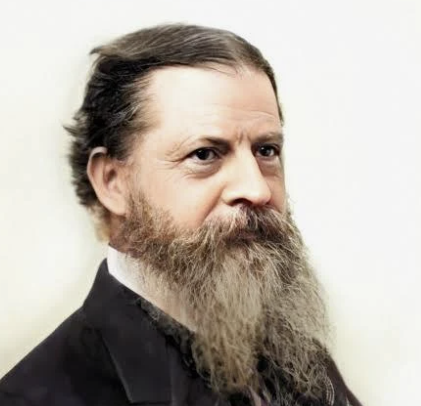
I call a sign which stands for something merely because it resembles it, an icon. Icons are so completely substituted for their objects as hardly to be distinguished from them. Such are the diagrams of geometry. A diagram, indeed, so far as it has a general signification, is not a pure icon; but in the middle part of our reasonings we forget that abstractness in great measure, and the diagram is for us the very thing. So in contemplating a painting, there is a moment when we lose the consciousness that it is not the thing, the distinction of the real and the copy disappears, and it is for the moment a pure dream, — not any particular existence, and yet not general. At that moment we are contemplating an icon.
4 months ago
The mind must not be forced; artificial and constrained manners fill it with foolish presumption, through unnatural elevation and vain and ridiculous inflation, instead of solid and vigorous nutriment.
4 months ago
Measure what is measurable, and make measurable what is not so.
▼
Source
The quote is widely misattributed to Galilei, but is actually from two French scholars, Antoine-Augustin Cournot and Thomas-Henri Martin. See "Der messende Luchs: Zwei verbreitete Fehler in der Galilei-Literatur" by Andreas Kleinert in "NTM Zeitschrift fü
4 months ago
In everything well known something worthy of thought still lurks.
▼
Source
p. xxxix
4 months ago
Accustomed as we are by hereditary prejudices an absolutely unsound education and training to see Government, legislation and magistracy everywhere around, we have come to believe that man would tear his fellow man to pieces like a wild beast the day the police took his eye off him; that chaos would come about if authority were overthrown during a revolution. And with out eyes shut we pass by thousands and thousands of human groupings which form themselves freely, without any intervention of the law, and attain results infinitely superior to those achieved under government tutelage.
▼
Source
Ch 11 : Free Agreement
4 months ago
A man once asked Diogenes what was the proper time for supper, and he made answer, "If you are a rich man, whenever you please; and if you are a poor man, whenever you can."
▼
Source
Diogenes, 6.
4 months ago
Bourgeois political economy … never gets to see man who is its real subject. It disregards the essence of man and his history and is thus in the profoundest sense not a ‘science of people’ but of non-people and of an inhuman world of objects and commodities.
▼
Source
“The Foundations of Historical Materialism,” Studies in Critical Philosophy (1972), p. 9

4 months ago
Either everything is illusion, nature as well as revelation, or experience alone can explain faith.
4 months ago
Time with its continuity logically involves some other kind of continuity than its own. Time, as the universal form of change, cannot exist unless there is something to undergo change, and to undergo a change continuous in time, there must be a continuity of changeable qualities.
CivilSimian.com created by AxiomaticPanic, CivilSimian, Kalokagathia