
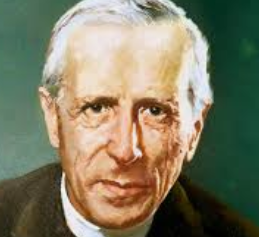
4 months ago
All the communions of a life-time are one communion.All the communions of all men now living are one communion.All the communions of all men, present, past and future, are one communion.
▼
Source
The Divine Milieu, p. 124
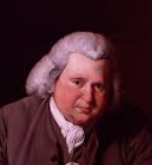
4 months ago
Soon shall thy arm, Uɴᴄᴏɴǫᴜᴇʀ'ᴅ Sᴛᴇᴀᴍ! afarDrag the slow barge, or drive the rapid car;Or on wide-waving wings expanded bearThe flying-chariot through the fields of air.—Fair crews triumphant, leaning from above,Shall wave their fluttering kerchiefs as they move;Or warrior-bands alarm the gaping crowd,And armies shrink beneath the shadowy cloud.
▼
Source
[Steam Power], The Botanic Garden (1791), Part i, Canto i, ll. 289-296.
4 months ago
If dialectical logic understands contradiction as “necessity” belonging to the very “nature of thought,” … it does so because contradiction belongs to the very nature of the object of thought, to reality, where Reason is still Unreason, and the irrational still the rational. Conversely, all established reality militates against the logic of contradictions — it favors the modes of thought which sustain the established forms of life and the modes of behavior which reproduce and improve them. The given reality has its own logic and its own truth; the effort to comprehend them as such and to transcend them presupposes a different logic, a contradicting truth. They belong to modes of thought which are non-operational in their very structure; they are alien to scientific as well as common-sense operationalism. … These modes of thought appear to be a relic of the past, like all non-scientific and non-empirical philosophy. They recede before a more effective theory and practice of Reason.
▼
Source
p. 142
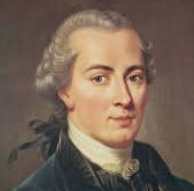
4 months ago
Since men in their endeavors behave, on the whole, not just instinctively, like the brutes, nor yet like rational citizens of the world according to some agreed-on plan, no history of man conceived according to a plan seems to be possible, as it might be possible to have such a history of bees or beavers. One cannot suppress a certain indignation when one sees men’s actions on the great world-stage and finds, beside the wisdom that appears here and there among individuals, everything in the large woven together from folly, childish vanity, even from childish malice and destructiveness. In the end, one does not know what to think of the human race, so conceited in its gifts.
▼
Source
Introduction
4 months ago
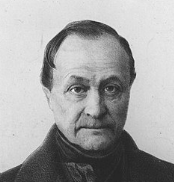
Foreknowledge is power.
▼
Source
As quoted in A Dictionary of Scientific Quotations (1991) by Alan Lindsay Mackay
4 months ago
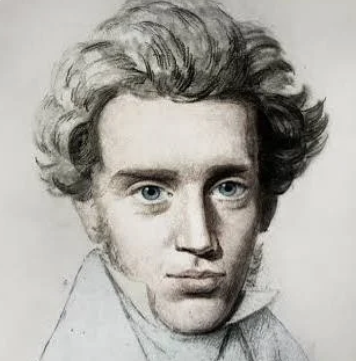
People are scarcely aware that it is a slavery they are creating; they forget this in their zeal to make people free by overthrowing dominions. They are scarcely aware that it is slavery; how could it be possible to be a slave in relation to equals?
▼
Source
Søren Kierkegaard, Upbuilding Discourses in Various Spirits, Hong p. 327
4 months ago
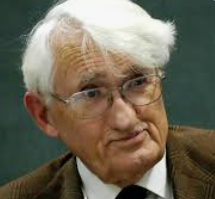
The speaker must choose a comprehensible [verständlich] expression so that speaker and hearer can understand one another.
▼
Source
Habermas (1979) cited in: Werner Ulrich (1983) Critical heuristics of social planning. p. 123
4 months ago
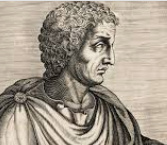
Always act in such a way as to secure the love of your neighbour.
▼
Source
Book XVIII, sec. 44.
4 months ago
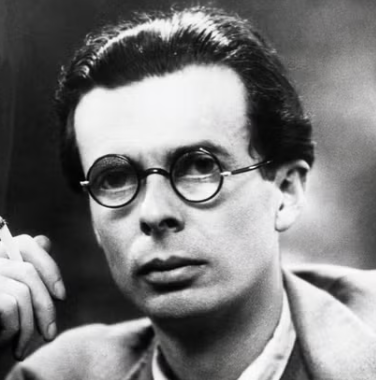
Surtout point de zèle. ["Above all, no zeal" —Talleyrand] Butler's favourite maxim is not perhaps the last word in human wisdom and human virtue; the last word insists on the imperative duty of zeal in certain circumstances. But, if not the last, it is unquestionably the last word but one. A world which consistently lived up to this motto would certainly be without some of the finest and most extraordinary flowers of human endeavour; but it would also be relieved of innumerable miseries and wickednesses. Men show at least as much zeal in mischief as in well doing, in folly as in wisdom. The surest way to work up a crusade in favor of some good cause is to promise people that they will have a chance of maltreating someone. Men must be bribed to build up and do good by the offer of an opportunity to hurt and pull down. To be able to destroy with good conscience, to be able to behave badly and call your bad behavior 'righteous indignation' — this is the height of psychological luxury, the most delicious of moral treats. In any cause, the best or the most atrocious, zeal is always intoxicating. A world without zeal would be a world deprived of many simple but savage pleasures: but at least half its present excuses for interfering and bullying would have been taken away from it.
▼
Source
Introduction (July 24, 1933), in Samuel Butler, Erewhon (1934), The Easton Press; often misattributed to his novel Crome Yellow
4 months ago
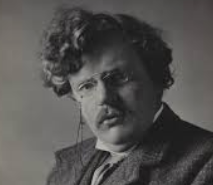
The centre of every man's existence is a dream. Death, disease, insanity, are merely material accidents, like toothache or a twisted ankle. That these brutal forces always besiege and often capture the citadel does not prove that they are the citadel.
▼
Source
Twelve Types (1903) "Sir Walter Scott"
4 months ago
When Galilei let balls of a particular weight, which he had determined himself, roll down an inclined plain, or Torricelli made the air carry a weight, which he had previously determined to be equal to that of a definite volume of water; or when, in later times, Stahl changed metal into lime, and lime again into metals, by withdrawing and restoring something, a new light flashed on all students of nature. They comprehended that reason has insight into that only, which she herself produces on her own plan, and that she must move forward with the principles of her judgments, according to fixed law, and compel nature to answer her questions, but not let herself be led by nature, as it were in leading strings, because otherwise accidental observations made on no previously fixed plan, will never converge towards a necessary law, which is the only thing that reason seeks and requires. Reason, holding in one hand its principles, according to which concordant phenomena alone can be admitted as laws of nature, and in the other hand the experiment, which it has devised according to those principles, must approach nature, in order to be taught by it: but not in the character of a pupil, who agrees to everything the master likes, but as an appointed judge, who compels the witnesses to answer the questions which he himself proposes. Therefore even the science of physics entirely owes the beneficial revolution in its character to the happy thought, that we ought to seek in nature (and not import into it by means of fiction) whatever reason must learn from nature, and could not know by itself, and that we must do this in accordance with what reason itself has originally placed into nature. Thus only has the study of nature entered on the secure method of a science, after having for many centuries done nothing but grope in the dark.
▼
Source
Preface to 2nd edition, Tr. F. Max Müller (1905)
4 months ago
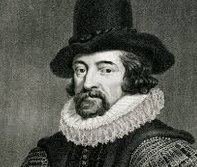
Read not to contradict and confute, nor to believe and take for granted, nor to find talk and discourse, but to weigh and consider.
▼
Source
Of Studies
4 months ago
Someone in despair despairs over something. So, for a moment, it seems, but only for a moment. That same instant the true despair shows itself, or despair in its true guise. In despairing over something he was really despairing over himself, and he wants now to be rid of himself.
▼
Source
p. 49
4 months ago
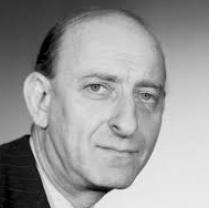
The optimism of the Left was created and maintained by a strong feeling: admiration for the power of reason, certainty that the application of science to industry would revolutionise the order of human society and the condition of its individual members. The ancestral aspiration towards human brotherhood was united with faith in practical science in order to inspire either nationalism or socialism or both.
▼
Source
The Opium of Intellectuals (1955), Conclusion: The End of the Ideological Age?
4 months ago
Those who believe that they are exclusively in the right are generally those who achieve something.
▼
Source
"[http://books.google.com/books?id=gcfPAAAAMAAJ&q="Those+who+believe+that+they+are+exclusively+in+the+right+are+generally+those+who+achieve+something" Note on Dogma]"
4 months ago
It is terrible to contemplate how few politicians are hanged.
▼
Source
In The Cleveland Press (1 March 1921)
4 months ago
There is no substitute for the comfort supplied by the utterly taken-for-granted relationship.
▼
Source
A Severed Head (1961); 1976, p. 181.
4 months ago
The question here is not, “How conscience ought to be guided? For Conscience is its own General and Leader; it is therefore enough that each man have one. What we want to know is, how conscience can be her own Ariadne, and disentangle herself from the mazes even of the most raveled and complicated casuistical theology. Here is an ethical proposition that stands in need of no proof: No Action May At Any Time Be Hazarded On The Uncertainty That Perchance It May Not Be Wrong (Quod dubitas, ne feceris! Pliny - which you doubt, then neither do) Hence the Consciousness, that Any Action I am about to perform is Right, is in itself a most immediate and imperative duty. What actions are right, - what wrong – is a matter for the understanding, not for conscience. p. 251
▼
Source
Book IV, Part 2, Section 4
4 months ago
It would be an unsound fancy and self-contradictory to expect that things which have never yet been done can be done except by means which have never yet been tried.
▼
Source
Aphorism 6
4 months ago
A person can perhaps succeed in hiding his sins from the world, he can perhaps be foolishly happy that he succeeds, or yet, a little more honest, admit that it is a deplorable weakness and cowardliness that he does not have the courage to become open-but a person cannot hide his sins from himself. P. 182
4 months ago
I don't believe anything, but I have many suspicions.
▼
Source
[http://www.rawilson.com/thoughts.html "RAW Thoughts" at rawilson.com]
4 months ago
How shall we define a god? Expressed in psychological terms (which are primary-there is no getting behind them) a god is something that gives us the peculiar kind of feeling which Professor Otto has called "numinous". Numinous feelings are the original god-stuff from which the theory-making mind extracts the individualised gods of the pantheon.
▼
Source
"Meditation on the Moon"
4 months ago
There is a road from the eye to the heart that does not go through the intellect. Men do not quarrel about the meaning of sunsets; they never dispute that the hawthorn says the best and wittiest thing about the spring.
▼
Source
"A Defence of Heraldry"
4 months ago
The evil effect of science upon men is principally this, that by far the greatest number of those who wish to display a knowledge of it accomplish no improvement at all of the understanding, but only a perversity of it, not to mention that it serves most of them as a tool of vanity.
▼
Source
Part III : Selection on Education from Kant's other Writings, Ch. I Pedagogical Fragments, # 52
4 months ago
Since my logic aims to teach and instruct the understanding, not that it may with the slender tendrils of the mind snatch at and lay hold of abstract notions (as the common logic does), but that it may in very truth dissect nature, and discover the virtues and actions of bodies, with their laws as determined in matter; so that this science flows not merely from the nature of the mind, but also from the nature of things.
▼
Source
Aphorism 52
4 months ago
A master and way out of the league that the rest of us play in.
▼
Source
Jerry Fodor in the [http://www.lrb.co.uk/v26/n20/fodo01_.html London Review of Books (21 October 2004)]
4 months ago
Many tribal peoples have both all-male and all-female secret societies, which help maintain the cultural values or reality tunnel. Freemasonry is certainly the largest, and probably the oldest, and still the most controversial of the all-male secret societies surviving in our world. No two scholars can even agree on how old it is, much less on how "good" or "evil" it is. … Although Masonry is often denounced as either a political or religious "conspiracy", Freemasons are forbidden to discuss either politics or religion within the lodge. Gary Dryfoos of the Massachusetts Institute of technology, who maintains, always stresses these points and also offers personal testimony that after many years as a Mason, including high ranks, he has not yet been asked to engage in pagan or Satanic rituals or plot for any reason for or against any political party. The more rabid anti-Masons, of course, dismiss such testimony as flat lies. The enemies of Masonry, who are usually Roman Catholics or Fundamentalist Protestants, insist that the rites of the order contain "pagan" elements, e.g., the Yule festival, the Spring Solstice festival, the dead-and-resurrected martyr (Jesus, allegedly historical, to Christians; Hiram, admittedly allegorical, to Masons). All these and many other elements in Christianity and Masonry have a long prehistory in paganism, as documented in the 12 volumes of Sir James George Frazer's Golden Bough. The major offense of Masonry to orthodox churches is that it, like our First Amendment, encourages equal tolerance for all religions, and this tends, somewhat, to lessen dogmatic allegiance to any one religion. Those who insist you must accept their dogma fervently and renounce all others as devilish errors, correctly see this Masonic tendency as inimitable to their faith.
▼
Source
Freemasonry, p. 187; in the final sentence here, inimitable perhaps should be "inimicable"
4 months ago
The Bhagavad-Gita is perhaps the most systematic scriptural statement of the Perennial Philosophy. To a world at war, a world that, because it lacks the intellectual and spiritual prerequisites to peace, can only hope to patch up some kind of precarious armed truce, it stands pointing, clearly and unmistakably, to the only road of escape from the self-imposed necessity of self-destruction.
4 months ago
Round the birth of "Pickwick" broke one of those literary quarrels that were too common in the life of Dickens.... He turned people into mortal enemies whom he might have turned very easily into immortal jokes.
▼
Source
Ch 4: "The Pickwick Papers"
4 months ago
The man Butler, whose works were perhaps known to the man Kant, wished to save the belief in the immortality of the soul, and with this object he made it independent of belief in God. The first chapter of his Analogy treats, as I have said, of the future life, and the second of the government of God by rewards and punishments. And the fact is that, fundamentally, the good Anglican bishop deduces the existence of God from the immortality of the soul. And as this deduction was the good Anglican bishop's starting-point, he had not to make that somersault which at the close of the same century the good Lutheran philosopher had to make. Butler, the bishop, was one man and Kant, the professor, another man.
▼
Source
Miguel de Unamuno Tragic Sense Of Life 1921 Chapter 1 The Man of Flesh and Bone
4 months ago
We are far more liable to catch the vices than the virtues of our associates.
▼
Source
As quoted in Thesaurus of Epigrams: A New Classified Collection of Witty Remarks, Bon Mots and Toasts (1942) by Edmund Fuller
4 months ago
We should admit rather that power produces knowledge (and not simply by encouraging it because it serves power or by applying it because it is useful); that power and knowledge directly imply one another.
▼
Source
Michel Foucault, quoted in Subrata Chattopadhyay Banerjee - The Development of Aryan Invasion Theory in India, A Critique of Nineteenth-Century Social Constructionism-Springer (2020)
4 months ago
After the new forms are introduced into the language, it is possible to formulate with their help internal questions and possible answers to them. A question of this kind may be either empirical or logical; accordingly a true answer is either factually true or analytic.
▼
Source
Ch. 3. What does acceptance of a kind of entities mean?
4 months ago
I was sitting on the seashore, half listening to a friend arguing violently about something which merely bored me. Unconsciously to myself, I looked at a film, of sand I had picked up on my hand, when I suddenly saw the exquisite beauty of every little grain of it; instead of being dull, I saw that each particle was made up on a perfect geometrical pattern, with sharp angles, from each of which a brilliant shaft of light was reflected, while each tiny crystal shone like a rainbow. . . . The rays crossed and recrossed, making exquisite patterns of such beauty that they left me breathless. ... Then, suddenly, my consciousness was lighted up from within and I saw in a vivid way how the whole universe was made up of particles of material which, no matter how dull and lifeless they might seem, were nevertheless filled with this intense and vital beauty. For a second or two the whole world appeared as a blaze of glory. When it died down, it left me with something I have never forgotten and which constantly reminds me of the beauty locked up in every minute speck of material around us.
▼
Source
(p. 77-78)
4 months ago
"I swear to you, then," said MacIan, after a pause. "I swear to you that nothing shall come between us. I swear to you that nothing shall be in my heart or in my head till our swords clash together. I swear it by the God you have denied, by the Blessed Lady you have blasphemed; I swear it by the seven swords in her heart. I swear it by the Holy Island where my fathers are, by the honour of my mother, by the secret of my people, and by the chalice of the Blood of God." The atheist drew up his head. "And I," he said, "give my word."
▼
Source
Part II: "The Religion of the Stipendiary Magistrate", last paragraphs
4 months ago
When shall we see poets born? After a time of disasters and great misfortunes, when harrowed nations begin to breathe again. And then, shaken by the terror of such spectacles, imaginations will paint things entirely strange to those who have not witnessed them.
4 months ago
It is understandable then that tragic heroes, unlike the baroque characters who had preceded them, could never be mad, and that inversely madness could never take on the tragic value we have known since Nietzsche and Artaud. In the classical epoch, tragic characters and the mad face each other without any possible dialogue or common language, for the one can only pronounce the decisive language of being, where the truth of light and the depths of night meet in a flash, and the other repeats endlessly an indifferent murmur where the empty chatter of the day is cancelled out by the deceptive lies of the shadows.
▼
Source
Part Two: 2. The Transcendence of Delirium
4 months ago
Asked to prove a questioner's existence, Morgenbesser shot back, "Who's asking?"
▼
Source
[https://web.archive.org/web/20040821091507/http://daily.nysun.com/Repository/getmailfiles.asp?Style=OliveXLib:ArticleToMail&Type=text/html&Path=NYS/2004/08/03&ID=Ar01400 Remembering Sidney Morgenbesser,] by Gary Shapiro in 'The New York Sun' 3 August 200
4 months ago
Never give children a chance of imagining that anything exists in isolation. Make it plain from the very beginning that all living is relationship. Show them relationships in the woods, in the fields, in the ponds and streams, in the village and in the country around it. Rub it in.
4 months ago
Talk about the pews and steeples And the cash that goes therewith!But the souls of Christian peoples... Chuck it, Smith!
▼
Source
Antichrist, or the Reunion of Christendom
4 months ago
The possession and the exercise of political, and among others of electoral, rights, is one of the chief instruments both of moral and of intellectual training for the popular mind; and all governments must be regarded as extremely imperfect, until every one who is required to obey the laws, has a voice, or the prospect of a voice, in their enactment and administration.
▼
Source
[https://en.wikisource.org/wiki/Thoughts_on_Parliamentary_Reform Thoughts on Parliamentary Reform] (1859), p. 22
4 months ago
Although a man may wear fine clothing, if he lives peacefully; and is good, self-possessed, has faith and is pure; and if he does not hurt any living being, he is a holy man.
▼
Source
Gautama Buddha, as quoted in the Dhammapada.
4 months ago
This legible lesson, this ritual recording, must be repeated as often as possible; the punishments must be a school rather than a festival; an ever-open book rather than a ceremony. The duration that makes the punishment effective for the guilty is also useful for the spectators. They must be able to consult at each moment the permanent lexicon of crime and punishment. A secret punishment is a punishment half wasted. Children should be allowed to come to the places where the penalty is being carried out; there they will attend their classes in civics. And grown men will periodically relearn the laws. Let us conceive of places of punishment as a Garden of the Laws that families would visit on Sundays.
▼
Source
Chapter Three, The Gentle Way in Punishment

4 months ago
He had not applauded, he had remained seated, but he had looked at her steadily. From the depths of eternity he had looked at her and Rosalind became immortal. If I could believe him, she thought, if only I could believe him!
▼
Source
P. 30
4 months ago
Say that a thing is so, according to the Pope or the Bible, and it will be dismissed as a superstition without examination. But preface your remark merely with "they say" or "don't you know that?" or try (and fail) to remember the name of some professor mentioned in some newspaper; and the keen rationalism of the modern mind will accept every word you say.
4 months ago
Whenever the general disposition of the people is such, that each individual regards those only of his interests which are selfish, and does not dwell on, or concern himself for, his share of the general interest, in such a state of things, good government is impossible.
▼
Source
Ch. II: The Criterion of a Good Form of Government (p. 167)
4 months ago
It is perhaps fortunate that Mr. Bentham devoted a much greater share of his time and labour to the subject of legislation, than that of morals; for the mode in which he understood and applied the principle of Utility, appears to me far more conducive to true and valuable results in the former, than in the latter of these two branches of inquiry.
▼
Source
John Stuart Mill, "Remarks on Bentham's Philosophy" in [https://archive.org/details/englandenglish0000lytt/page/407/mode/1up Appendix B] of Edward Bulwer-Lytton, England and the English (1833)
4 months ago
The political, ethical, social, philosophical problem of our day is not to try to liberate the individual from the state and from the state's institutions but to liberate us both from the state and from the type of individualization which is linked to the state. We have to promote new forms of subjectivity through the refusal of this kind of individuality which has been imposed on us for several centuries.
▼
Source
p. 785
4 months ago
The humanity of tomorrow will be living in its flesh and in its conscious liberty; that time will be its present and it will in turn prefer it. New relations of flesh and sentiment of which we have no conception will arise between the sexes; already, indeed, there have appeared between men and women friendships, rivalries, complicities, comradeships — chaste or sensual — which past centuries could not have conceived.
4 months ago
When people stop believing in God, they don't believe in nothing — they believe in anything.
▼
Source
This quotation actually comes from page 211 of Émile Cammaerts' book The Laughing Prophet: The Seven Virtues and G. K. Chesterton (1937) in which he quotes Chesterton as having Father Brown say, in "The Oracle of the Dog" (1923): "It's the first effect of
CivilSimian.com created by AxiomaticPanic, CivilSimian, Kalokagathia