
4 months 1 week ago
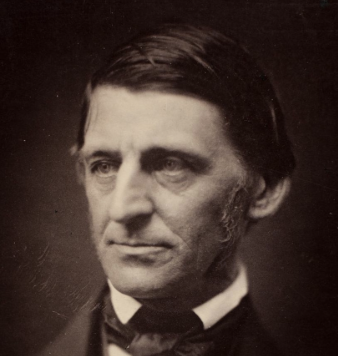
They reckon ill who leave me out; When me they fly, I am the wings; I am the doubter and the doubt; And I the hymn the Brahmin sings.
▼
Source
Brahma, st. 3
4 months 1 week ago
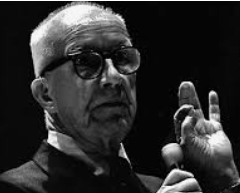
Gravity is the inwardly cohering force acting integratively on all systems. Radiation is the outwardly disintegrating force acting divisively upon all systems.
▼
Source
[http://www.rwgrayprojects.com/synergetics/s00/p0000.html 000.113]
4 months 1 week ago
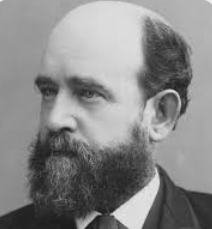
We cannot think with precision unless in our own minds we use words with precision.
▼
Source
General Introduction
4 months 1 week ago
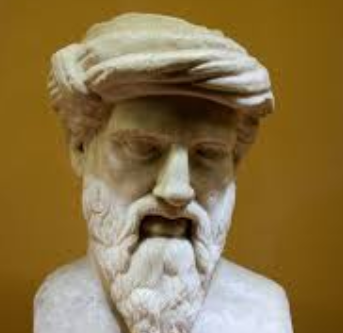
It is requisite to defend those who are unjustly accused of having acted injuriously, but to praise those who excel in a certain good.
▼
Source
"Pythagorean Ethical Sentences From Stobæus" (1904)
4 months 1 week ago
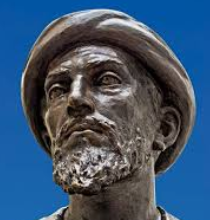
The portion of the materia prima which is... is endowed with the intellectual faculty, possesses a special property by which each individual, according to the degree of his perfection, is enabled to manage, to calculate, and to discover what is conducive both to the temporary existence of the individual and to the preservation of the species. All other movements... by the individual members of the species are due to accident; they are not, according to Aristotle, the result of rule and management... Aristotle sees no difference between the falling of a leaf or a stone and the death of the good and noble people in the ship; nor does he distinguish between the destruction of a multitude of ants by an ox depositing on them his excrement and the death of worshippers killed by the fall of the house when its foundations give way.
▼
Source
Ch.17
4 months 1 week ago
Raphael paints wisdom, Handel sings it, Phidias carves it, Shakespeare writes it, Wren builds it, Columbus sails it, Luther preaches it, Washington arms it, Watt mechanizes it.
▼
Source
Art
4 months 1 week ago
War is obsolete. It could never have been done before. Only ten years ago... technology reached the point where it could be done. Since then the invisible technological-capability revolution has made it ever easier so to do.
4 months 1 week ago
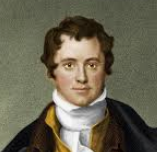
Have and at all justified the hope that they would facilitate the means of procuring the comforts and conveniences of life? I have not the time... to attempt to follow the many changes in the metallurgy of the metals of the alkalis of the past century. Let me... show how the matter stands at the end of a hundred years.
4 months 1 week ago
Honor Wisdom; and deny it not to them that would learn; and shew it unto them that dispraise it! Sow not the sea fields!
4 months 1 week ago
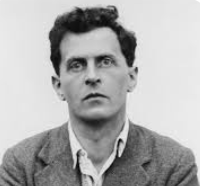
Philosophy aims at the logical clarification of thoughts. Philosophy is not a body of doctrine but an activity. A philosophical work consists essentially of elucidations. Philosophy does not result in 'philosophical propositions', but rather in the clarification of propositions. Without philosophy thoughts are, as it were, cloudy and indistinct: its task is to make them clear and to give them sharp boundaries. (4.112)
▼
Source
Variant translation: Philosophy is not a theory but an activity. A philosophical work consists essentially of elucidations. The result of philosophy is not a number of "philosophical propositions." but to make propositions clear. | Original German: Der Zw
4 months 1 week ago
Actions are divided as regards their object into four classes; they are either purposeless, unimportant, or vain, or good.
▼
Source
Ch.25
4 months 1 week ago
Now shall we say that only the first men were well alive, and the existing generation is invalided and degenerate? ... A more subtle and severe criticism might suggest that some dislocation has befallen the race; that men are off their centre; that multitudes of men do not live with Nature, but behold it as exiles. People go out to look at sunrises and sunsets who do not recognize their own quietly and happily, but know that it is foreign to them. As they do by books, so they quote the sunset and the star, and do not make them theirs. Worse yet, they live as foreigners in the world of truth, and quote thoughts, and thus disown them. Quotation confesses inferiority.
▼
Source
Quotation and Originality
4 months 1 week ago
I do not look upon human beings as good or bad. I don't think of my feet as a right foot and a wrong foot. ... I am a student of the effectiveness of the technological evolution in its all unexpected alterations of the preoccupations of humanity and in its all unexpected alterings of human behaviors and prospects.
4 months 1 week ago
If the potential of every number is in the monad, then the monad would be intelligible number in the strict sense, since it is not yet manifesting anything actual, but everything conceptually together in it.
▼
Source
On the Monad
4 months 1 week ago
The ground for taking ignorance to be restrictive of freedom is that it causes people to make choices which they would not have made if they had seen what the realization of their choices involved.
▼
Source
"The Concept of Freedom".
4 months 1 week ago
For on these matters we should not trust the multitude who say that none ought to be educated but the free, but rather to philosophers, who say that the educated alone are free.
▼
Source
Variant: ...Only the educated are free. | Book II, ch. 1, § 22.
4 months 1 week ago
Pythagoras called his Gnosis “the knowledge of things that are,” or ἡ γνῶσις τῶν ὄντων, and preserved that knowledge for his pledged disciples only: for those who could digest such mental food and feel satisfied; and he pledged them to silence and secrecy. Occult alphabets and secret ciphers are the development of the old Egyptian hieratic writings, the secret of which was, in the days of old, in the possession only of the Hierogrammatists, or initiated Egyptian priests.
▼
Source
H.P. Blavatsky in [http://www.gutenberg.org/ebooks/55618 The Key to Theosophy] p. 7, (1889)
4 months 1 week ago
Those who have taken the planets to be inanimate bodies without function, limited to traveling geometric paths, resemble idiots who would believe that the brain is inanimate because it has no visible function, or that the stomach is idle because it does no visible work as do our limbs. Civilizees have always been reproached for believing nature to be limited to known effects. If the planets were not animate creatures endowed with functions, God would then appear to be an advocate of laziness. He would have created universes furnished with large inert bodies spending eternity in purposeless meandering as do the idlers in our society.
▼
Source
L'attraction passioneé
4 months 1 week ago
The ceremonial (hot or cold) as opposed to the haphazard (lukewarm) characterizes piety.
▼
Source
Ch. 7 : Remarks on Frazer's Golden Bough, p. 127
4 months 1 week ago
Almighty God the Father is the one who can be prayed to, and prayed to for help, both for eternal life and – above all – for the needs and desires of this earthly life. It is therefore not surprising that religions continue to thrive, particularly in those parts of the world and among those sections of the population that feel the harshness of existence most acutely. In this sense, Karl Marx's old definition of religion as the opium of the people and the groaning of the oppressed creature is still valid, and is necessarily expressed precisely through the image of Almighty God the Father. The picture is completely different among the educated classes. Since the Enlightenment, since the days of Reimarus and Lessing, historical criticism and philological analysis have destroyed that image, as they have dismantled the supernatural claim of the Bible, the foundation of that image throughout our world, through Judaism, Christianity, and Islam. From this perspective, God is truly dead, as in Nietzsche's famous passage, and the fact that businesspeople have not noticed this does not detract from the fact itself: the biblical God died the moment people realized that they themselves had constructed his image.
4 months 1 week ago
In skating over thin ice our safety is our speed.
▼
Source
Prudence
4 months 1 week ago
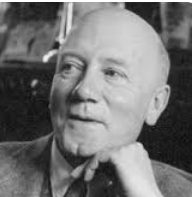
Those who, like the present writer, never had the privilege of meeting Sidgwick can infer from his writings, and still more from the characteristic philosophic merits of such pupils of his as McTaggart and Moore, how acute and painstaking a thinker and how inspiring a teacher he must have been. Yet he has grave defects as a writer which have certainly detracted from his fame. His style is heavy and involved, and he seldom allowed that strong sense of humour, which is said to have made him a delightful conversationalist, to relieve the uniform dull dignity of his writing. He incessantly refines, qualifies, raises objections, answers them, and then finds further objections to the answers. Each of these objections, rebuttals, rejoinders, and surrejoinders is in itself admirable, and does infinite credit to the acuteness and candour of the author. But the reader is apt to become impatient; to lose the thread of the argument: and to rise from his desk finding that he has read a great deal with constant admiration and now remembers little or nothing. The result is that Sidgwick probably has far less influence at present than he ought to have, and less than many writers, such as Bradley, who were as superior to him in literary style as he was to them in ethical and philosophical acumen. Even a thoroughly second-rate thinker like T. H. Green, by diffusing a grateful and comforting aroma of ethical "uplift", has probably made far more undergraduates into prigs than Sidgwick will ever make into philosophers.
▼
Source
From Five Types of Ethical Theory (1930)
4 months 1 week ago
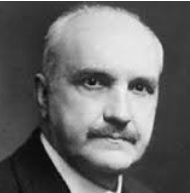
When men and women agree, it is only in their conclusions; their reasons are always different.
▼
Source
[http://books.google.com/books?id=ICAsAAAAYAAJ&q=%22When+men+and+women+agree+it+is+only+in+their+conclusions+their+reasons+are+always+different%22&pg=PA148#v=onepage Ch. VI: Free Society]
4 months 1 week ago
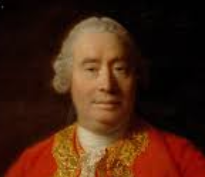
Now as we call every thing , which proceeds from a past repetition, without any new reasoning or conclusion, we may establish it as a certain truth, that all the belief, which follows upon any present impression, is deriv'd solely from that origin.
▼
Source
Part 3, Section 8
4 months 1 week ago
Some things are in our control and others not. Things in our control are opinion, pursuit, desire, aversion, and, in a word, whatever are our own actions. Things not in our control are body, property, reputation, command, and, in one word, whatever are not our own actions. (1).
4 months 1 week ago
He ordained that his disciples should speak well and think reverently of the Gods, muses and heroes, and likewise of parents and benefactors; that they should obey the laws; that they should not relegate the worship of the Gods to a secondary position, performing it eagerly, even at home; that to the celestial divinities they should sacrifice uncommon offerings; and ordinary ones to the inferior deities. (The world he Divided into) opposite powers; the "one" was a better monad, light, right, equal, stable and straight; while the "other" was an inferior duad, darkness, left, unequal, unstable and movable.
▼
Source
Porphyry of Tyre, in [http://www.tertullian.org/fathers/porphyry_life_of_pythagoras_02_text.htm "The Life of Pythagoras"] as translated by Kenneth Sylvan Guthrie in The Pythagorean Sourcebook and Library: An Anthology of Ancient Writings which Relate to P
4 months 1 week ago
The real discovery is the one which enables me to stop doing philosophy when I want to. The one that gives philosophy peace, so that it is no longer tormented by questions which bring itself into question.
▼
Source
§ 133

4 months 1 week ago
Kicking leaves you momentarily on one foot, and for that moment you are in a very weak position. If you were to be swept off your feet, you would be finished. This is why lifting your feet off the ground is crazy.
▼
Source
As quoted in Aikido Shugyo (1991) by Gōzō Shioda, p. 79
4 months 1 week ago
There is a kind of latent omniscience not only in every man but in every particle.
▼
Source
p. 263
4 months 1 week ago
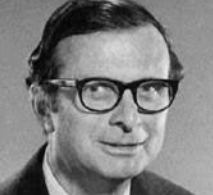
The problem of systems improvement is the problem of the 'ethics of the whole system'.
▼
Source
p. 4
4 months 1 week ago
Never since the heroic days of Greece has the world had such a sweet, just, boyish master.
▼
Source
"The British Character"
4 months 1 week ago
That the sun will not rise to-morrow is no less intelligible a proposition, and implies no contradiction, than the affirmation, that it will rise.
▼
Source
§ 4.8
4 months 1 week ago
Zoroaster, Pythagoras, Epicharmus, Empedocles, Kebes, Euripides, Plato, Euclid, Philo, Boethius, Virgil, Marcus Cicero, Plotinus, Iamblichus, Proclus, Psellus, Synesius, Origen, and, finally, Aristotle himself, far 'from denying our immortality, support it most emphatically. (p. 251)
▼
Source
The Veil of Isis, Part 1, Science.
4 months 1 week ago
Man has to awaken to wonder — and so perhaps do peoples. Science is a way of sending him to sleep again.
▼
Source
p. 5e
4 months 1 week ago
When an opponent comes forward, move in and greet him; if he wants to pull back, send him on his way.
4 months 1 week ago
I love Emerson, the first great American writer.
▼
Source
1987 interview in Conversations with Susan Sontag edited by Leland Poague (1995)
4 months 1 week ago
I am often inclined to put the implementation questions first, ie, "Can anything be changed?" Should the implementation question not accompany the whole process from its very beginning to its very end?
▼
Source
C. West Churchman (1979, p. 21) as cited in: Interfaces (1982) Vol 12, p. 12
4 months 1 week ago
They [the wise spirits of antiquity in the first circle of Dante's Inferno] are condemned, Dante tells us, to no other penalty than to live in desire without hope, a fate appropriate to noble souls with a clear vision of life.
▼
Source
Obiter Scripta (1936)
4 months 1 week ago
It is a very comfortable reflection to the lovers of liberty, that this peculiar privilege of Britain is of a kind that cannot easily be wrested from us, but must last as long as our government remains, in any degree, free and independent. It is seldom, that liberty of any kind is lost all at once. Slavery has so frightful an aspect to men accustomed to freedom, that it must steal upon them by degrees, and must disguise itself in a thousand shapes, in order to be received. But, if the liberty of the press ever be lost, it must be lost at once. The general laws against sedition and libelling are at present as strong as they possibly can be made. Nothing can impose a farther restraint, but either the clapping an Imprimatur upon the press, or the giving to the court very large discretionary powers to punish whatever displeases them. But these concessions would be such a bare-faced violation of liberty, that they will probably be the last efforts of a despotic government. We may conclude, that the liberty of Britain is gone for ever when these attempts shall succeed.
▼
Source
Part I, Essay 2: Of the Liberty of the Press
4 months 1 week ago
I believe that one of the things Christianity says is that sound doctrines are all useless. That you have to change your life. (Or the direction of your life.)
▼
Source
p. 53e
4 months 1 week ago
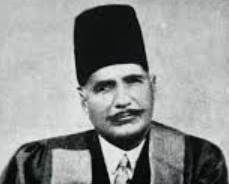
Why must I forever lose, forever forgo profit that is my due,Sunk in the gloom of evenings past, no plans for the morrow pursue.Why must I all attentive be to the nightingale's lament?Friend, am I as dumb as a flower? Must I remain silent?My theme makes me bold, makes my tongue more eloquent.Dust be in my mouth, against Allah I make complaint.
▼
Source
[https://archive.org/details/ShikwaJawabIShikwaIqbalsDialogueWithAllahTrKhushwantSinghIqbal Shikwa and Jawab-i-Shikwa (Complaint and Answer): Iqbal's Dialogue with Allah], translated by Khushwant Singh, p. 28. | Variant:"Why would I become a loss-causer,
4 months 1 week ago
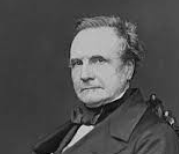
The Church has been reproached with endeavouring to appropriate to itself all those professorships in our Universities which are connected with science: it is however certain that the larger portion of these ill-remunerated offices have been filled by clergymen.
▼
Source
p. 225
4 months 1 week ago
Too many French scholars were the principal authors of the Revolution, too many approved and gave their support so long as the Revolution, like Tarquinius' sceptre, struck down only the tallest heads. Like so many others, they said, It is impossible to make a great revolution without incurring misfortunes. But when a philosopher justifies evil by the end in view, when he says in his heart, Let there be a hundred thousand murders, provided we are free, and Providence replies, I accept your offer, but you must be included in the number, where is the injustice?
▼
Source
Chapter II, pp. 9–10
4 months 1 week ago
If the material world rests upon a similar ideal world, this ideal world must rest upon some other; and so on, without end. It were better, therefore, never to look beyond the present material world. By supposing it to contain the principle of its order within itself, we really assert it to be God; and the sooner we arrive at that Divine Being, so much the better. When you go one step beyond the mundane system, you only excite an inquisitive humour which it is impossible ever to satisfy.
▼
Source
Philo to Cleanthes, Part IV
4 months 1 week ago
If we spoke a different language, we would perceive a somewhat different world.
▼
Source
This actually first appears in Recent Experiments in Psychology (1950) by Leland Whitney Crafts, Théodore Christian Schneirla, and Elsa Elizabeth Robinson, where it is expressed:
4 months 1 week ago
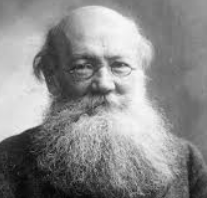
The history of human thought recalls the swinging of a pendulum which takes centuries to swing. After a long period of slumber comes a moment of awakening. Then thought frees herself from the chains with which those interested — rulers, lawyers, clerics — have carefully enwound her. She shatters the chains. She subjects to severe criticism all that has been taught her, and lays bare the emptiness of the religious political, legal, and social prejudices amid which she has vegetated. She starts research in new paths, enriches our knowledge with new discoveries, creates new sciences. But the inveterate enemies of thought — the government, the lawgiver, and the priest — soon recover from their defeat. By degrees they gather together their scattered forces, and remodel their faith and their code of laws to adapt them to the new needs.
▼
Source
[http://dwardmac.pitzer.edu/anarchist_Archives/kropotkin/AM/anarchist_moralitytc.html Anarchist Morality] (1890)
4 months 1 week ago
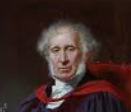
Jesus will take me safe trough... I shall see Jesus, who created all things, Jesus, who made the worlds; I shall see Him as He is;... Yes; I have had the Light for many years, and Oh! how bright it is! I feel SO SAFE, SO SATISFIED.
▼
Source
His last words, as quoted in The Home Life of Sir David Brewster (2010), by his daughter, Margaret Maria Gordon. Cambridge University Press. Chapter XXI.
4 months 1 week ago
Wherever an altar is found, there civilization exists.
▼
Source
Original text:Partout où vous verrez un autel, là se trouve la civilisation. | "Second Dialogue," p. 44
4 months 1 week ago
Upon the whole, I have always considered him, both in his lifetime and since his death, as approaching as nearly to the idea of a perfectly wise and virtuous man, as perhaps the nature of human frailty will permit.
▼
Source
Adam Smith
4 months 1 week ago
As man does not live in a solitary state, habits and feeling develop within him which are useful for the preservation of society and the propagation of the race. Without social feelings and usages life in common would have been absolutely impossible. It is not law which has established them; they are anterior to all law. Neither is it religion which has ordained them; they are anterior to all religions. They are found amongst all animals living in society. They are spontaneously developed by the new nature of things, like those habits in animals which men call instinct. They spring from a process of evolution, which is useful, and, indeed, necessary, to keep society together in the struggle it is forced to maintain for existence.
▼
Source
II
CivilSimian.com created by AxiomaticPanic, CivilSimian, Kalokagathia