
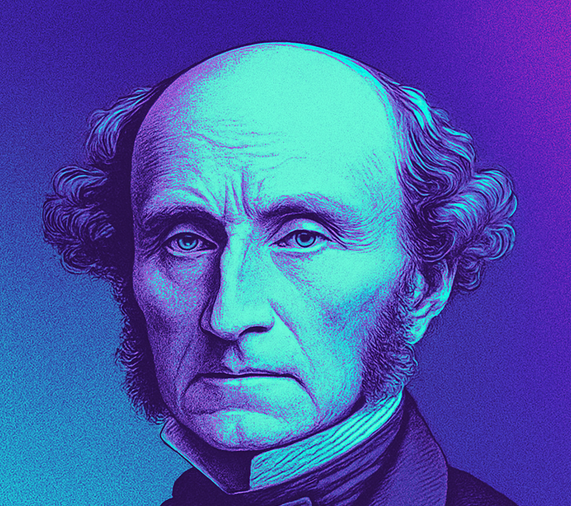
4 months 1 week ago
The remedies for all our diseases will be discovered long after we are dead; and the world will be made a fit place to live in, after the death of most of those by whose exertions it will have been made so. It is to be hoped that those who live in those days will look back with sympathy to their known and unknown benefactors.
▼
Source
Diary, April 15, 1854, in The Collected Works of John Stuart Mill, Toronto, 1988, vol. 27, p. 668
4 months 1 week ago
Gaiety — a quality of ordinary men. Genius always presupposes some disorder in the machine.
▼
Source
“Diseases"
4 months 1 week ago
The condemned man found himself transformed into a hero by the sheer extend of his widely advertised crimes, and sometimes the affirmation of his belated repentance. Against the law, against the rich, the powerful, the magistrates, the constabulary or the watch, against taxes and their collectors, he appeared to have waged a struggle with which one all too easily identified. The proclamation of these crimes blew up to epic proportions the tiny struggle that passed unperceived in everyday life. If the condemned man was shown to be repentant, accepting the verdict, asking both God and man for forgiveness for his crimes, it was as if he had come through some process of purification: he died, in his own way, like a saint.
▼
Source
Chapter One: The Spectacle of the scaffold, pp. 67

4 months 1 week ago
Time is beginning to flow again.
▼
Source
Raimon (Raymond) to Regina, p. 17
4 months 1 week ago
The big commercial concerns of to-day are quite exceptionally incompetent. They will be even more incompetent when they are omnipotent.
▼
Source
p. 23
4 months 1 week ago
No one can be a great thinker who does not recognise, that as a thinker it is his first duty to follow his intellect to whatever conclusions it may lead...Not that it is solely, or chiefly, to form great thinkers, that freedom of thinking is required. On the contrary, it is as much and even more indispensable to enable average human beings to attain the mental stature which they are capable of.
▼
Source
Ch. II: Of the Liberty of Thought and Discussion
4 months 1 week ago
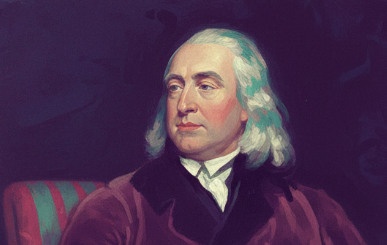
In looking over the catalogue of human actions (says a partizan of this principle) in order to determine which of them are to be marked with the seal of disapprobation, you need but to take counsel of your own feelings: whatever you find in yourself a propensity to condemn, is wrong for that very reason. For the same reason it is also meet for punishment: in what proportion it is adverse to utility, or whether it be adverse to utility at all, is a matter that makes no difference. In that same proportion also is it meet for punishment: if you hate much, punish much: if you hate little, punish little: punish as you hate. If you hate not at all, punish not at all: the fine feelings of the soul are not to be overborne and tyrannized by the harsh and rugged dictates of political utility.
▼
Source
Ch. 2: Of Principles Adverse to That of Utility
4 months 1 week ago
Recalling all the erroneous things that doctors have been able to say about sex or madness does us a fat lot of good. I think that what is currently politically important is to determine the regime of verediction established at a given moment ... on the basis of which you can now recognize, for example, that doctors in the nineteenth century said so many stupid things about sex. ... It is not so much the history of the true or the history of the false as the history of verediction which has a political significance.
▼
Source
Lecture 2, January 17, 1979, p. 36
4 months 1 week ago
To "catch" a husband is an art; to "hold" him is a job.
▼
Source
Bk. 2, part 5, Ch. 1: The Married Woman, p. 468
4 months 1 week ago
A man must love a thing very much if he not only practices it without any hope of fame and money, but even practices it without any hope of doing it well.
▼
Source
As quoted in Alan L. Mackay, The Harvest of a Quiet Eye: A Selection of Scientific Quotations (1977), p. 34
4 months 1 week ago
People are not aware how entirely, in former ages, the law of superior strength was the rule of life; how publicly and openly it was avowed, I do not say cynically or shamelessly — for these words imply a feeling that there was something in it to be ashamed of, and no such notion could find a place in the faculties of any person in those ages, except a philosopher or a saint.
▼
Source
Ch. 1
4 months 1 week ago
In... "The Education of Children"... Plutarch gives an anecdote of Theocritus, a sophist, as an example of athuroglossos... he is... "a giant in impudence"... strong not because of his reason, or his rhetorical ability... or his ability to pronounce the truth, but only because he is arrogant. ...His fourth trait is... "putting his confidence in bluster." He is confident in thorubos... the noise made by a strong voice, by a scream, a clamor, or uproar. ...The final characteristic ...his confidence in ..."ignorant outspokenness..." ... it lacks mathesis ...—learning or wisdom.
▼
Source
Ref: Plutarch, "The Education of Children", ' (1927) Vol. 1, Tr. Frank Cole Babbit, [https://archive.org/details/plutarchs-moralia-vol.-1-loeb-197/page/n35/mode/1up p. 4,] The Loeb Classical Library, Harvard University Press.
4 months 1 week ago
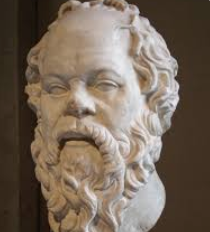
In the course of my life I have often had intimations in dreams "that I should make music." The same dream came to me sometimes in one form, and sometimes in another, but always saying the same or nearly the same words: Make and cultivate music, said the dream. And hitherto I imagined that this was only intended to exhort and encourage me in the study of philosophy, which has always been the pursuit of my life, and is the noblest and best of music.
4 months 1 week ago
There can be no whole without a thought which grasps it as a whole; and this grasping of what is before the mind as a whole can be effected only by a sort of voluntary halt in a kind of progressive movement of thought.
▼
Source
p. 123
4 months 1 week ago
He regarded it with the feelings due not to a mere mental delusion, but to a great moral evil. He looked upon it as the greatest enemy of morality: first, by setting up factitious excellencies,—belief in creeds, devotional feelings, and ceremonies, not connected with the good of human kind,—and causing these to be accepted as substitutes for genuine virtues: but above all, by radically vitiating the standard of morals; making it consist in doing the will of a being, on whom it lavishes indeed all the phrases of adulation, but whom in sober truth it depicts as eminently hateful.
▼
Source
([https://archive.org/details/autobiography01mill/page/40/mode/1up p. 40])
4 months 1 week ago
I know well that many of my readers do not think as I do. This also is most natural and confirms the theorem. For although my opinion turn out erroneous, there will always remain the fact that many of those dissentient readers have never given five minutes' thought to this complex matter. How are they going to think as I do? But by believing that they have a right to an opinion on the matter without previous effort to work one out for themselves, they prove patently that they belong to that absurd type of human being which I have called the "rebel mass." It is precisely what I mean by having one's soul obliterated, hermetically closed. Here it would be the special case of intellectual hermetism.
▼
Source
Chap. VIII: The Masses Intervene In Everything, And Why Their Intervention Is Solely By Violence
4 months 1 week ago
Nothing is more uncommon than a very large or a very small man; and this applies generally to all extremes, whether of great and small, or swift and slow, or fair and foul, or black and white; and whether the instances you select be man or dogs or anything else, few are the extremes,but many are in the mean between them.

4 months 1 week ago
Creation means discovery of a new reality that exists but that has not yet been noticed. The word is alive again. The speaking word. The verbs are in revolt—a revolt of the masses against the representation that has always been the main weapon of the state. (p.121)
4 months 1 week ago
For I now saw, or thought I saw, what I had always before received with incredulity—that the habit of analysis has a tendency to wear away the feelings: as indeed it has, when no other mental habit is cultivated, and the analysing spirit remains without its natural complements and correctives.
▼
Source
([https://archive.org/details/autobiography01mill/page/137/mode/1up p. 137])
4 months 1 week ago
Scientific truth is characterized by its exactness and the certainty of its predictions. But these admirable qualities are contrived by science at the cost of remaining on a plane of secondary problems. leaving intact the ultimate and decisive questions. … Yet science is but a small part of the human mind and organism. Where it stops, man does not stop.
▼
Source
p. 13
4 months 1 week ago
What is divine is full of Providence. Even chance is not divorced from nature, from the inweaving and enfolding of things governed by Providence. Everything proceeds from it.
▼
Source
All that is from the gods is full of Providence. | II, 3(Hays translation)
4 months 1 week ago
Every sentence I utter must be understood not as an affirmation, but as a question.
▼
Source
As quoted in A Dictionary of Scientific Quotations (1991) by Alan L. Mackay, p. 35
4 months 1 week ago
There is no greater evil one can suffer than to hate reasonable discourse.
4 months 1 week ago
It is necessary to distinguish between socialism and socialism—in fact, between idea and idea of the same socialist conception, in order to distinguish among them those that are inimical to Fascism. It is well known that Sorellian syndicalism, out of which the thought and the political method of Fascism emerged—conceived itself the genuine interpretation of Marxist communism. The dynamic conception of history, in which force as violence functions as an essential, is of unquestioned Marxist origin. Those notions flowed into other currents of contemporary thought, that have themselves, via alternative routes, arrived at a vindication of the form of State—implacable, but absolutely rational—that finds historic necessity in the very spiritual dynamism through which it realizes itself.
▼
Source
Che cosa è il fascismo: Discorsi e polemiche (“What is Fascism?”), Florence: Vallecchi, (1925) pp. 42-45, 47-48, 49-51, 56, Origins and Doctrine of Fascism, A. James Gregor, translator and editor, Transaction Publishers, 2003, p. 59
4 months 1 week ago
The practical reformer has continually to demand that changes be made in things which are supported by powerful and widely-spread feelings, or to question the apparent necessity and indefeasibleness of established facts; and it is often an indispensable part of his argument to show, how these powerful feelings had their origin, and how those facts came to seem necessary and indefeasible. There is therefore a natural hostility between him and a philosophy which discourages the explanation of feelings and moral facts by circumstances and association, and prefers to treat them as ultimate elements of human nature; a philosophy which is addicted to holding up favorite doctrines as intuitive truths, and deems intuition to be the voice of Nature and of God, speaking with an authority higher than that of our reason. In particular, I have long felt that the prevailing tendency to regard all the marked distinctions of human character as innate, and in the main indelible, and to ignore the irresistible proofs that by far the greater part of those differences, whether between individuals, races, or sexes, are such as not only might but naturally would be produced by differences in circumstances, is one of the chief hindrances to the rational treatment of great social questions, and one of the greatest stumbling blocks to human improvement.
▼
Source
([https://archive.org/details/autobiography01mill/page/273/mode/1up pp. 273-274])
4 months 1 week ago
As surgeons keep their instruments and knives always at hand for cases requiring immediate treatment, so shouldst thou have thy thoughts ready to understand things divine and human, remembering in thy every act, even the smallest, how close is the bond that unites the two.
▼
Source
III, 13

4 months 1 week ago
Everyday we act in ways that reflect our ethical judgements.
▼
Source
Chapter 3, From Evolution To Ethics?, p. 69
4 months 1 week ago
As for me, all I know is that I know nothing.
▼
Source
See All I know is that I know nothing on Wikipedia for a detailed account of the origins of this attribution. | μοι νυνὶ γέγονεν ἐκ τοῦ διαλόγου μηδὲν εἰδέναι· ὁπότε γὰρ τὸ δίκαιον μὴ οἶδα ὅ ἐστιν, σχολῇ εἴσομαι εἴτε ἀρετή τις οὖσα τυγχάνει εἴτε καὶ οὔ, κ
4 months 1 week ago
I am a spectator, so to speak, of the molecular whirlwind which men call individual life; I am conscious of an incessant metamorphosis, an irresistible movement of existence, which is going on within me — and this phenomenology of myself serves as a window opened upon the mystery of the world. I am, or rather my sensible consciousness is, concentrated upon this ideal standing-point, this invisible threshold, as it were, whence one hears the impetuous passage of time, rushing and foaming as it flows out into the changeless ocean of eternity. After all the bewildering distractions of life — after having drowned myself in a multiplicity of trifles and in the caprices of this fugitive existence, yet without ever attaining to self-intoxication or self-delusion — I come again upon the fathomless abyss, the silent and melancholy cavern, where dwell 'Die Mütter,' where sleeps that which neither lives nor dies, which has neither movement nor change, nor extension, nor form, and which lasts when all else passes away.
4 months 1 week ago
His sense of the miseries and wrongs of "the greatest number" was the mainspring of the resolute beneficence of thought and purpose that really made his very life and daily being... Mill would take endless trouble to procure the reversal of an inhuman sentence in a police court; he abhorred insensibility to the sufferings of our fellows in the lower order of creation. He was warm in congratulation on Freeman's attack on field sports published in the Fortnightly (1869). "I honour him," Mill wrote, "for having broken ground—a thing I have been often tempted to do myself, but having so many unpopular causes already on my hands, thought it wiser not to provoke fresh hostility."
▼
Source
pp. 58-59
4 months 1 week ago
If the result of a war is to change nothing, but only to destroy, with the mere result that a group of human beings who do not differ notably from the conquered acquires preponderant advantages for the future, there is lacking the affective strength of an existence that has inspired faith, of an existence whose destiny would have been decided by the war.
4 months 1 week ago
You're better off not giving the small things more time than they deserve.
▼
Source
IV, 32(Hays translation)

4 months 1 week ago
One of my brothers was nearly of my own age; and he it was whom I most loved, though I was very fond of them all, and they of me. He and I used to read Lives of Saints together. When I read of martyrdom undergone by the Saints for the love of God, it struck me that the vision of God was very cheaply purchased; and I had a great desire to die a martyr's death, — not out of any love of Him of which I was conscious, but that I might most quickly attain to the fruition of those great joys of which I read that they were reserved in Heaven; and I used to discuss with my brother how we could become martyrs. We settled to go together to the country of the Moors, begging our way for the love of God, that we might be there beheaded; and our Lord, I believe, had given us courage enough, even at so tender an age, if we could have found the means to proceed; but our greatest difficulty seemed to be our father and mother.
▼
Source
Ch. I "Childhood and early Impressions" ¶ 4
4 months 1 week ago
My mind has been a tumult of opposing systems, — Stoicism, Quietism, Buddhism, Christianity. Shall I never be at peace with myself? If impersonality is a good, why am I not consistent in the pursuit of it? and if it is a temptation, why return to it, after having judged and conquered it? Is happiness anything more than a conventional fiction? The deepest reason for my state of doubt is that the supreme end and aim of life seems to me a mere lure and deception. The individual is an eternal dupe, who never obtains what he seeks, and who is forever deceived by hope. My instinct is in harmony with the pessimism of Buddha and of Schopenhauer. It is a doubt which never leaves me, even in my moments of religious fervor. Nature is indeed for me a Mala; and I look at her, as it were, with the eyes of an artist. My intelligence remains skeptical. What, then, do I believe in? I do not know. And what is it I hope for? It would be difficult to say. Folly! I believe in goodness, and I hope that good will prevail. Deep within this ironical and disappointed being of mine there is a child hidden — a frank, sad, simple creature, who believes in the ideal, in love, in holiness, and all heavenly superstitions. A whole millennium of idyls sleeps in my heart; I am a pseudo-skeptic, a pseudo-scoffer.
▼
Source
31 August 1869
4 months 1 week ago
The mind is the ruler of the soul. It should remain unstirred by agitations of the flesh--gentle and violent ones alike. Not mingling with them, but fencing itself off and keeping those feelings in their place. When they make their way into our thoughts, through the sympathetic link between mind and body, don't try to resist the sensation. The sensation is natural. But don't let the mind start in with judgments, calling it 'good' or 'bad.'
▼
Source
V, 26(Hays translation)
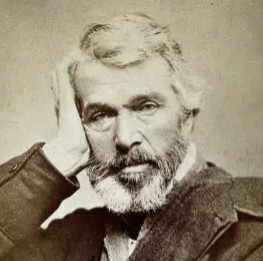
4 months 1 week ago
I must say, it [the Koran] is as toilsome reading as I ever undertook. A wearisome confused jumble, crude, incondite; endless iterations, long-windedness, entanglement; most crude, incondite; — insupportable stupidity, in short! Nothing but a sense of duty could carry any European through the Koran ... It is the confused ferment of a great rude human soul; rude, untutored, that cannot even read; but fervent, earnest, struggling vehemently to utter itself in words ... We said "stupid:" yet natural stupidity is by no means the character of Mahomet's Book; it is natural uncultivation rather. The man has not studied speaking; in the haste and pressure of continual fighting, has not time to mature himself into fit speech ... The man was an uncultured semi-barbarous Son of Nature, much of the Bedouin still clinging to him: we must take him for that. But for a wretched Simulacrum, a hungry Impostor without eyes or heart ... we will not and cannot take him. Sincerity, in all senses, seems to me the merit of the Koran; what had rendered it precious to the wild Arab men ... Curiously, through these incondite masses of tradition, vituperation, complaint, ejaculation in the Koran, a vein of true direct insight, of what we might almost call poetry, is found straggling.
▼
Source
Thomas Carlyle, "On Heroes, Hero-Worship and the Heroic in History" (1841), pg. 64-67
4 months 1 week ago
Almost as soon as I began to study philosophy, I was impressed by the way in which philosophical problems appeared, disappeared, or changed shape, as a result of new assumptions or vocabularies.
▼
Source
Preface
4 months 1 week ago
Finally, take a circuit round your own self; survey man within and without. Even this handiwork of our God will be pleasing to you, inasmuch as your own lord, that better god, loved it so well, and for your sake was at the pains of descending from the third heaven to these poverty-stricken elements, and for the same reason was actually crucified in this sorry apartment of the Creator.
▼
Source
Book I, Chapter XIV.—All Portions of Creation Attest the Excellence of the Creator, Whom Marcion Vilifies. His Inconsistency Herein Exposed. Marcion’s Own God Did Not Hesitate to Use the Creator’s Works in Instituting His Own Religion. | Compare 2 Corinth

4 months 1 week ago
I esteem monarchy above any other form of government, and hereditary monarchy above elective. I reverence kings, their office, their rights, their persons; and it will never be owing to the principles I am going to establish, because the character and government of a patriot king can be established on no other, if their office and their right are not always held divine, and their persons always sacred.
▼
Source
pp. 83-84
4 months 1 week ago
An angry countenance is much against nature, and it is oftentimes the proper countenance of them that are at the point of death. But were it so, that all anger and passion were so thoroughly quenched in thee, that it were altogether impossible to kindle it any more, yet herein must not thou rest satisfied, but further endeavour by good consequence of true ratiocination, perfectly to conceive and understand, that all anger and passion is against reason.
▼
Source
VII, 18
4 months 1 week ago
When the oak-tree is felled, the whole forest echoes with it; but a hundred acorns are planted silently by some unnoticed breeze.
▼
Source
On History.
4 months 1 week ago
And if I glance around at their examples—(examples) of some David's heaping up marriages for himself even through sanguinary means, of some Solomon rich in wives as well as in other riches—you are bidden to “follow the better things;” and you have withal Joseph but once wedded, and on this score I venture to say better than his father; you have Moses, the intimate eye-witness of God; you have Aaron the chief priest. The second Moses, also, of the second People, who led our representatives into the (possession of) the promise of God, in whom the Name (of Jesus) was first inaugurated, was no digamist.
▼
Source
Chapter 6

4 months 1 week ago
We account the Scriptures of God to be the most sublime philosophy. I find more sure remarks of authenticity in the Bible than in any profane history whatever.
▼
Source
Anecdote reported by Dr. Robert Smith, late Master of Trinity College, to his student Richard Watson, as something that Newton expressed when he was writing his Commentary On Daniel. In Watson's Apology for the Bible. London 8vo. (1806), p. 57
4 months 1 week ago
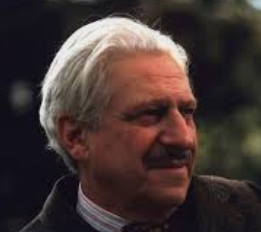
Galileo had the experience of beholding the heavens as they actually are for perhaps the first time, and wherever he looked he found evidence to support the Copernican system against the Ptolemaic, or at least weaken the authority of the ancients. This shattering experience—of observing the depths of the universe, of being the first mortal to know what the heavens are actually like—made so deep an impression... that it is only by considering the events of 1609... that one can understand the subsequent direction of his life.
▼
Source
I. Bernard Cohen,
4 months 1 week ago
It's silly to try to escape other people's faults. They are inescapable. Just try to escape your own.
▼
Source
VII, 71 (Hays translation)
4 months 1 week ago
Our grand business undoubtedly is, not to see what lies dimly at a distance, but to do what lies clearly at hand.
4 months 1 week ago
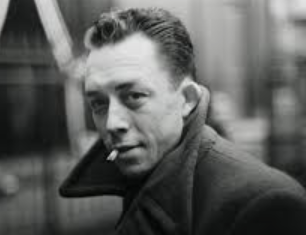
Happiness implied a choice, and within that choice a concerted will, a lucid desire.

4 months 1 week ago
Those among them that have not received our religion do not fright any from it, and use none ill that goes over to it, so that all the while I was there one man was only punished on this occasion. He being newly baptised did, notwithstanding all that we could say to the contrary, dispute publicly concerning the Christian religion, with more zeal than discretion, and with so much heat, that he not only preferred our worship to theirs, but condemned all their rites as profane, and cried out against all that adhered to them as impious and sacrilegious persons, that were to be damned to everlasting burnings. Upon his having frequently preached in this manner he was seized, and after trial he was condemned to banishment, not for having disparaged their religion, but for his inflaming the people to sedition; for this is one of their most ancient laws, that no man ought to be punished for his religion.
▼
Source
Ch. 9 : Of the Religions of the Utopians
4 months 1 week ago
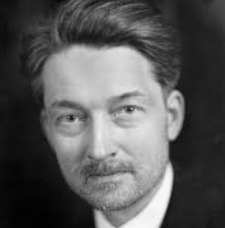
The hope of the coming of a new Christian era in our civilization is to my mind a hope for a distant future, a very distant future.
▼
Source
p. 217.
4 months 1 week ago
He who fears death either fears to lose all sensation or fears new sensations. In reality, you will either feel nothing at all, and therefore nothing evil, or else, if you can feel any sensations, you will be a new creature, and so will not have ceased to have life.
▼
Source
VIII, 58
CivilSimian.com created by AxiomaticPanic, CivilSimian, Kalokagathia