
4 months 1 week ago
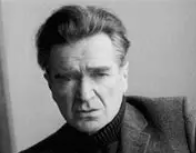
I believe in the salvation of humanity, in the future of cyanide . . .
4 months 1 week ago
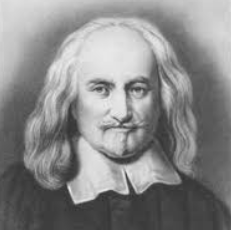
From whence it follows, that were the publique and private interest are most closely united, there is the publique most advanced.
▼
Source
The Second Part, Chapter 19, p. 97
4 months 1 week ago
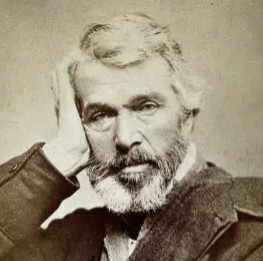
And yet I will venture to believe that in no time, since the beginnings of Society, was the lot of those same dumb millions of toilers so entirely unbearable as it is even in the days now passing over us. It is not to die, or even to die of hunger, that makes a man wretched; many men have died; all men must die,—the last exit of us all is in a Fire-Chariot of Pain. But it is to live miserable we know not why; to work sore and yet gain nothing; to be heart-worn, weary, yet isolated, unrelated, girt in with a cold universal Laissez-faire: it is to die slowly all our life long, imprisoned in a deaf, dead, Infinite Injustice, as in the accursed iron belly of a Phalaris' Bull! This is and remains forever intolerable to all men whom God has made. Do we wonder at French Revolutions, Chartisms, Revolts of Three Days? The times, if we will consider them, are really unexampled.

4 months 1 week ago
Throw moderation to the winds, and the greatest pleasures bring the greatest pains.
4 months 1 week ago
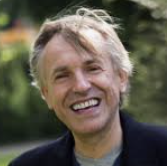
When Bernard Marx tells the Savage he will try to secure permission for him and his mother to visit the Other Place, John is initially pleased and excited. Echoing Miranda in The Tempest, he exclaims: "O brave new world that has such people in it." Heavy irony. Like innocent Miranda, he is eager to embrace a way of life he neither knows nor understands. And of course he comes unstuck. Yet if we swallow such fancy literary conceits, then ultimately the joke is on us. It is only funny in the sense there are "jokes" about Auschwitz. For it is Huxley who neither knows nor understands the glory of what lies ahead. A utopian society in which we are sublimely happy will be far better than we can presently imagine, not worse. And it is we, trapped in the emotional squalor of late-Darwinian antiquity, who neither know nor understand the lives of the god-like super-beings we are destined to become.
▼
Source
"[https://www.huxley.net/ Brave New World? A Defence of Paradise-Engineering]", BLTC Research, 1998
4 months 1 week ago
Journalism has become a great god of the period, and gods have a way of ruthlessly and demonically taking over their servitors.
▼
Source
Chapter Two, The Encounter With Nothingness, p. 27
4 months 1 week ago
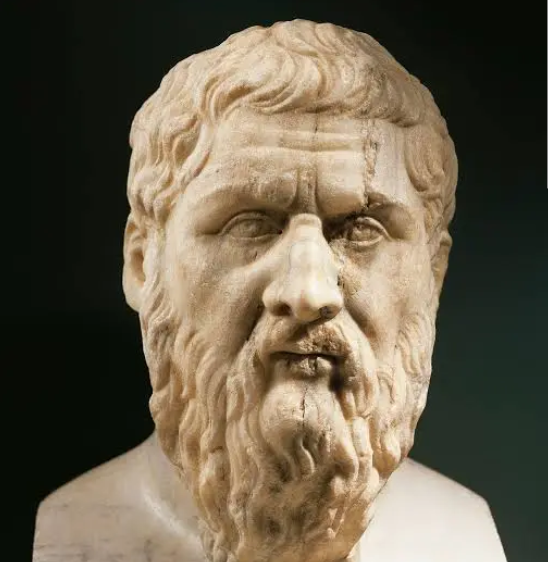
Since those who rule in the city do so because they own a lot, I suppose they're unwilling to enact laws to prevent young people who've had no discipline from spending and wasting their wealth, so that by making loans to them, secured by the young people's property, and then calling those loans in, they themselves become even richer and more honored.
▼
Source
555c, G. Grube and C. Reeve, trans., Plato: Complete Works (1997), p. 1166
4 months 1 week ago
Christian love was not the feeling which long animated the respective followers of Peter and Paul.We who have been born into a settled state of things can hardly realise the commotion out of which this tranquillity has emerged. We have, for example, the canon of Scripture already arranged for us. But to sift and select these writings from the mass of spurious documents afloat at the time of compilation was a work of vast labour, difficulty, and responsibility. The age was rife with forgeries. Even good men lent themselves to these pious frauds, believing that true Christian doctrine, which of course was their doctrine, would be thereby quickened and promoted. There were gospels and counter-gospels; epistles and counter-epistles—some frivolous, some dull, some speculative and romantic, and some so rich and penetrating, so saturated with the Master's spirit, that, though not included in the canon, they enjoyed an authority almost equal to that of the canonical books.
4 months 1 week ago
But for my part (Continues Carneades) what my Indignation at this Un-philosophical way of teaching Principles has now extorted from me, is meant chiefly to excuse my self, if I shall hereafter oppose any Particular Opinion or assertion, that some Follower of Paracelsus or any Eminent Artist may pretend not to be his Masters. For, as I told you long since, I am not Oblig'd to examine private mens writings, (which were a Labour as endless as unprofitable) being only engag'd to examine those Opinions about the Tria Prima, which I find those Chymists I have met with to agree in most: And I Doubt not but my Arguments against their Doctrine will be in great part easily enough applicable ev'n to those private Opinions, which they do not so directly and expresly oppose.
4 months 1 week ago
I foresee the day when we shall read nothing but telegrams and prayers.
4 months 1 week ago
It is a remarkable fact that, in a history extending over nearly twenty-five hundred years, a considerable part of the most significant writing on political philosophy was done in two periods of only about fifty years each and in two places of quite restricted area. … The Second place was England, and the period was the half century between 1640 and 1690, which produced the works of Hobbes and Locke, together with the works of a host of lesser figures.
▼
Source
George Sabine, "What is a Political Theory?" (1939)
4 months 1 week ago
Nature admits no lie.
▼
Source
Latter Day Pamphlet, No. 5.
4 months 1 week ago
One might naively suppose that a negative utilitarian would welcome human extinction. But only (trans)humans - or our potential superintelligent successors - are technically capable of phasing out the cruelties of the rest of the living world on Earth. And only (trans)humans - or rather our potential superintelligent successors - are technically capable of assuming stewardship of our entire Hubble volume.
▼
Source
"[https://www.hedweb.com/social-media/pre2014.html Unsorted Postings]", Facebook, pre-2014

4 months 1 week ago
The nationalism I grew up with is a principled standpoint that regards the world as governed best when nations are able to chart their own independent course, cultivating their own traditions and pursuing their own interests without interference. This is opposed to imperialism, which seeks to bring peace and prosperity to the world by uniting mankind, as much as possible, under a single political regime.
4 months 1 week ago
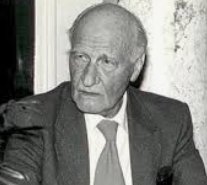
Here, first of all men for pure justice famed,And moral virtue, Aristocles lies;And if there e'er has lived one truly wise,This man was wiser still; too great for envy.
▼
Source
The epigram on his tomb, with what Laërtius reported to be his original name, in: {{cite web
4 months 1 week ago
Not only the Greeks in general — Aristotle no less than Plato — but the great medieval thinkers as well, all held that there was an element of purely receptive "looking," not only in self-perception but also in intellectual knowing or, as Heraclitus said, "Listening-in to the being of things."The medievals distinguished between the intellect as ratio and the intellect as intellectus. Ratio is the power of discursive thought, of searching and re-searching, abstracting, refining, and concluding [cf. Latin dis-currere, "to run to and fro"], whereas intellectus refers to the ability of "simply looking" (simplex intuitus), to which the truth presents itself as a landscape presents itself to the eye.
▼
Source
p. 11
4 months 1 week ago
He revived the atomic hypothesis, and explained chemical combination on the basis of affinity.
4 months 1 week ago
Creation is in fact a fault, man's famous sin thereby appearing as a minor version of a much graver one. What are we guilty of, except of having followed, more or less slavishly, the Creator's example? Easy to recognize in ourselves the fatality which was His: not for nothing have we issued from the hands of a wicked and woebegone god, a god accursed.
4 months 1 week ago
If Governments neglect to invite what noble intellect there is, then too surely all intellect, not omnipotent to resist bad influences, will tend to become beaverish ignoble intellect; and quitting high aims, which seem shut up from it, will help itself forward in the way of making money and such like; or will even sink to be sham intellect, helping itself by methods which are not only beaverish but vulpine, and so "ignoble" as not to have common honesty.
4 months 1 week ago
No amount of happiness enjoyed by some organisms can notionally justify the indescribable horrors of Auschwitz. Nor can the fun and games outweigh the sporadic frightfulness of pain and despair that occurs every second of every day. For there's nothing inherently wrong with non-sentience or non-existence; whereas there is something frightfully and self-intimatingly wrong with suffering.
▼
Source
2.7 [https://www.hedweb.com/hedethic/hedon2.htm#negative Why Be Negative?]
4 months 1 week ago
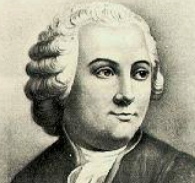
We shall not … begin this logic by definitions, axioms, or principles; we shall begin by observing the lessons which nature gives us.
▼
Source
The Logic of Condillac (trans. Joseph Neef, 1809), "Of the Method of Thinking", p. 3.
4 months 1 week ago
Being precedes Truth, and … Truth precedes the Good.
4 months 1 week ago
Skepticism is an exercise in defascination.
4 months 1 week ago
The most remarkable piece of reading that you may be recommended to take and try if you can study is a book by Goethe—one of his last books, which he wrote when he was an old man, about seventy years of age—I think one of the most beautiful he ever wrote, full of mild wisdom, and which is found to be very touching by those who have eyes to discern and hearts to feel it. It is one of the pieces in "Wilhelm Meister's Travels." I read it through many years ago; and, of course, I had to read into it very hard when I was translating it (applause), and it has always dwelt in my mind as about the most remarkable bit of writing that I have known to be executed in these late centuries. I have often said, there are ten pages of that which, if ambition had been my only rule, I would rather have written than have written all the books that have appeared since I came into the world.
4 months 1 week ago
What I would like to show is that there is a vital dimension of their writing, which I call performative reflexivity, which if ignored or misunderstood will impede an adequate response to it.
▼
Source
Chapter 8, Performative Reflexivity, p. 134
4 months 1 week ago
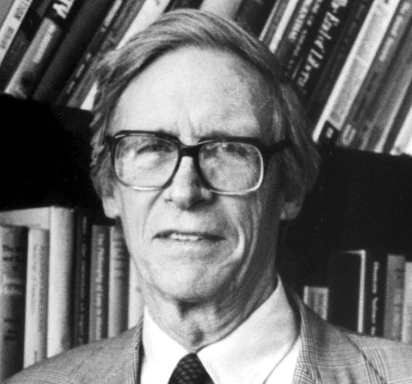
First of all, principles should be general. That is, it must be possible to formulate them without use of what would be intuitively recognized as proper names, or rigged definite descriptions.
▼
Source
Chapter III, Section 23, pg. 131
4 months 1 week ago
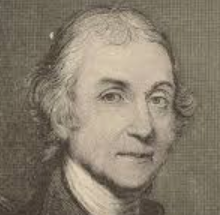
I was led into in consequence of inhabiting a house adjoining to a public brewery, where I at first amused myself with making experiments on the fixed air [carbon dioxide] which I found ready made in the process of fermentation. When I removed from that house I was under the necessity of making the fixed air for myself; and one experiment leading to another, as I have distinctly and faithfully noted in my various publications on the subject, I by degrees contrived a convenient apparatus for the purpose, but of the cheapest kind.
▼
Source
Letter to Dr. Richard Price (Oct. 19, 1771) as quoted in John Towill Rutt, [http://books.google.com/books?id=psMGAAAAQAAJ Life and Correspondence of Joseph Priestley] (1831)
4 months 1 week ago
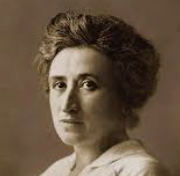
The scene has thoroughly changed. The six weeks' march to Paris has come world drama. Mass murder has become a monotonous task, and yet the final solution is not one step nearer. Capitalist rule is caught in its own trap, and cannot ban the spirit that it has Gone is the first mad delirium. Gone are the patriotic street demonstrations, the chase after suspicious-looking automobiles; the false telegrams, the cholera-poisoned wells. Gone the mad stories of Russian students who hurl bombs from every bridge of Berlin, or French men flying over Nuremberg; gone the excesses of spy-hunting populace, the singing through, the coffee shops with their patriotic songs; gone the violent mobs, ready to denounce, ready to persecute women, ready to whip themselves into a delirious frenzy over every wild rumor; gone the atmosphere of ritual murder, the Kishinev air that left the policeman at the corner as the only remaining representative of human dignity.
▼
Source
Ch.1
4 months 1 week ago
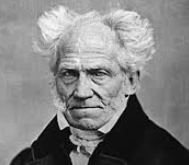
And O! how the mind is here washed clean of all its early ingrafted Jewish superstition ! It is the most profitable and elevating reading which is possible in the world. It has been the solace of my life, and will be the solace of my death.
▼
Source
About the Upanishads. | Arthur Schopenhauer, quoted in [https://archive.org/details/in.ernet.dli.2015.221820/mode/2up Europe Looks At India by Mukherhi, D.P. ]
4 months 1 week ago
Not one moment when I have not been conscious of being outside Paradise.
4 months 1 week ago
After fifty years we are still dependent on him for Cromwell, and in Past and Present he gave what was the most remarkable piece of historical thinking in the language. But the mystery of investigation had not been revealed to him when he began his most famous book [The French Revolution] ... [T]he vivid gleam, the mixture of the sublime with the grotesque, make other opponents forget the impatient verdicts and the poverty of settled fact in the volumes that delivered our fathers from thraldom to Burke. They remain one of those disappointing storm-clouds that give out more thunder than lightning.
▼
Source
Lord Acton, ‘Appendix: The Literature of the Revolution’ (c. 1895–99), quoted in Lord Acton, Lectures on the French Revolution, eds. J. N. Figgis and R. V. Laurence (1910), pp. 358–359
4 months 1 week ago
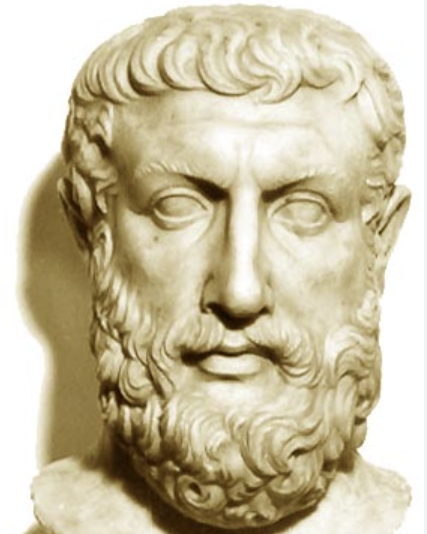
There is one story left, one road: that it is. And on this road there are very many signs that, being, is uncreated and imperishable, whole, unique, unwavering, and complete.
▼
Source
Frag. B 8.1-4, quoted by Simplicius, Commentary on the Physics, 144
4 months 1 week ago
I have tried to set forth a theory that enables us to understand and to assess these feelings about the primacy of justice. Justice as fairness is the outcome: it articulates these opinions and supports their general tendency.
▼
Source
Chapter IX, Section 87, p. 586
4 months 1 week ago
As I conceive this doctrine to be a gross misrepresentation of the character and moral government of God, and to affect many other articles in the scheme of Christianity, greatly disfiguring and depraving it; I shall show, in a fuller manner than I mean to do with respect to any other corruption of Christianity, that it has no countenance whatever in reason, or the Scriptures; and, therefore, that the whole doctrine of atonement, with every modification of it, has been a departure from the primitive and genuine doctrine of Christianity.
▼
Source
On conventional doctrines of Jesus Christ's atonement for sins, in Part II : Opinions Relating to the Doctrine of Atonement, Introduction
4 months 1 week ago
Rarely was heard on her lips the phrase, “I cannot”; more frequently were heard the words, “I must.”
▼
Source
Clara Zetkin, as quoted in [https://www.marxists.org/archive/zetkin/1919/09/rosa.htm Rosa Luxemburg], marxists.org, September 1919.
4 months 1 week ago
Europeans are awakening more and more to a sense that beasts have rights, in proportion as the strange notion is being gradually overcome and outgrown, that the animal kingdom came into existence solely for the benefit and pleasure of man. This view, with the corollary that non-human living creatures are to be regarded merely as things, is at the root of the rough and altogether reckless treatment of them, which obtains in the West.
▼
Source
Part III, Ch. VIII, 7, [https://archive.org/stream/basisofmorality00schoiala#page/225/mode/2up p. 225]
4 months 1 week ago
All my life, I have lived with the feeling that I have been kept from my true place. If the expression "metaphysical exile" had no meaning, my existence alone would afford it one.
4 months 1 week ago
If you want one great name in English literature that sums up all that England does not stand for, a bitter spirit, sour, an extravagant, a worshipper of force and of the führerprinzip, it can be said in one name: Carlyle.
▼
Source
A. L. Rowse, 'The English Spirit', The English Spirit: Essays in History and Literature (1944), p. 37
4 months 1 week ago
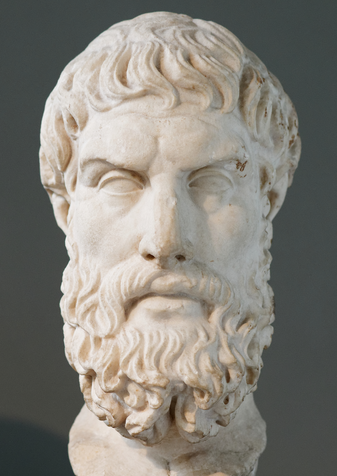
This happy state can only be obtained by a prudent care of the body, and a steady government of the mind. The diseases of the body are to be prevented by temperance, or cured by medicine, or rendered tolerable by patience.
4 months 1 week ago
[E]mpty space is nothing, nothing cannot be thought, and therefore cannot exist. What is, never came into being, nor is anything going to come into being in the future. "Is it or is it not?" If it is, then it is now, all at once.
4 months 1 week ago
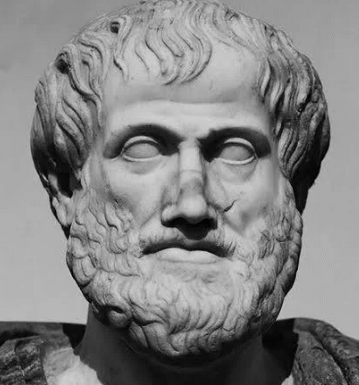
Nature does not do anything in vain.
4 months 1 week ago
This is the age in which hills can look down upon the mountains.
▼
Source
A Morir [To Die]
4 months 1 week ago
Everything turns on mastering the gap between the presupposition (that must be rejected) of a being of the one and the thesis of its 'there is'.
▼
Source
Meditation One: The One and the Multiple: a priori conditions of any possible ontology
4 months 1 week ago
Epicurus, the great teacher of happiness, has correctly and finely divided human needs into three classes. First there are the natural and necessary needs which, if they are not satisfied, cause pain. Consequently, they are only victus et amictus [food and clothing] and are easy to satisfy. Then we have those that are natural yet not necessary, that is, the needs for sexual satisfaction. … These needs are more difficult to satisfy. Finally, there are those that are neither natural nor necessary, the needs for luxury, extravagance, pomp, and splendour, which are without end and very difficult to satisfy.
▼
Source
E. Payne, trans. (1974) Vol. 1, p. 346
4 months 1 week ago
I do nothing, granted. But I see the hours pass — which is better than trying to fill them.
4 months 1 week ago
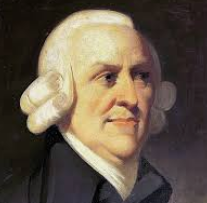
The Union was a measure from which infinite Good has been derived to this country.
▼
Source
Letter to William Strahan (4 April 1760), quoted in Adam Smith, The Correspondence of Adam Smith, eds. E. C. Mossner and I. S. Ross (1987), p. 68
4 months 1 week ago
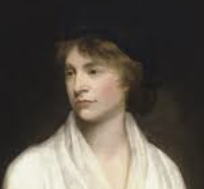
Virtue can only flourish amongst equals.
▼
Source
A Vindication of the Rights of Men (1790)
4 months 1 week ago
That body is heavier than another which, in an equal bulk, moves downward quicker.
▼
Source
IV. 1. as quoted by Florian Cajori (1899)
4 months 1 week ago
To insist on racial divisions, on racial differences, in an already divided people, is to place obstacles in the way of public and individual happiness, which can only be obtained by bringing people together as a nation.
4 months 1 week ago
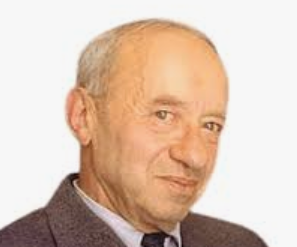
The present article is almost wholly devoted to a single problem—the definition of truth. Its task is to construct—with reference to a given language—a materially adequate and formally correct definition of the term 'true sentence. This problem, which belongs to the classical problems of philosophy, raises considerable difficulties. For although the meaning of the term 'true sentence' in colloquial language seems to be quite clear and intelligible, all attempts to define this meaning more precisely have hitherto been fruitless, and many investigations in which this term has been used and which started with apparently evident premisses have often led to paradoxes and antinomies (for which, however, a more or less satisfactory solution has been found). The concept of truth shares in this respect the fate of other analogous concepts in the domain of the semantics of language.
▼
Source
"The Concept of Truth in Formalized Languages" (1931) in Logic, Semantics, Metamathematics: Papers from 1923 to 1938 (1956) Tr. J. H. Woodger.
CivilSimian.com created by AxiomaticPanic, CivilSimian, Kalokagathia