

4 months ago
To have accomplished nothing and to die overworked.
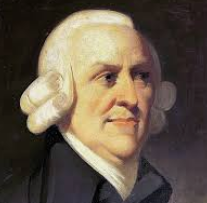
4 months ago
The proposal of any new law or regulation of commerce which comes from this order, ought always to be listened to with great precaution, and ought never to be adopted till after having been long and carefully examined, not only with the most scrupulous, but with the most suspicious attention. It comes from an order of men, whose interest is never exactly the same with that of the public, who have generally an interest to deceive and even to oppress the public, and who accordingly have, upon many occasions, both deceived and oppressed it."
▼
Source
Chapter XI, Part III, Conclusion of the Chapter, p. 292.
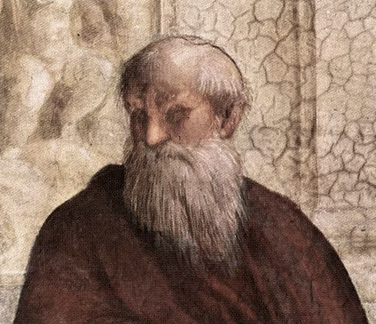
4 months ago
Pleasure and distress, fear and courage, desire and aversion, where have these affections and experiences their seat? Clearly, either in the Soul alone, or in the Soul as employing the body, or in some third entity deriving from both. And for this third entity, again, there are two possible modes: it might be either a blend or a distinct form due to the blending.
▼
Source
First Tractate : The Animate and the Man, §1
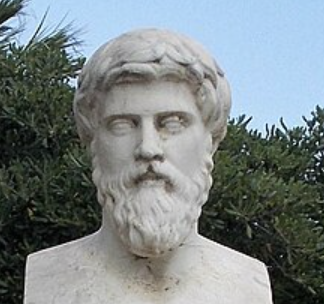
4 months ago
As Athenodorus was taking his leave of Cæsar, "Remember," said he, "Cæsar, whenever you are angry, to say or do nothing before you have repeated the four-and-twenty letters to yourself."
▼
Source
Cæsar Augustus

4 months ago
Contrary to generations of western progressives, it was not Russian backwardness or mistakes in applying Marxian theory that produced the society that Lyons observed. Similar regimes came into being wherever the communist project was attempted. Lenin’s Russia, Mao’s China, Ceausescu’s Romania and many more were variants of a single dictatorial model. From being a movement aiming for universal freedom, communism turned into a system of universal despotism. That is the logic of utopia. If 1984 is such a powerful myth, one reason is that it captures this truth. Yet there is a flaw in Orwell’s story, which emerges in his picture of the all-powerful interrogator. The dystopia of perpetual power is a fantasy, and so is O’Brien. Soviet torturers were sweating functionaries living in constant fear. Like their victims, they knew that they were resources that would be used up in the service of power. There was no inner-party elite safe from the contingencies of history.
▼
Source
An Old Chaos: Two Times Two Equals Five (p. 52)
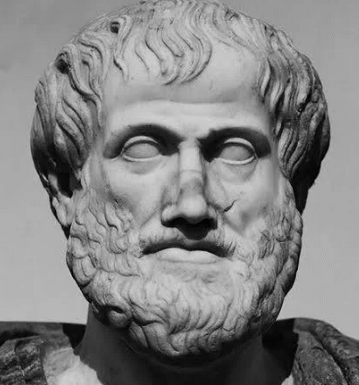
4 months ago
The single harmony produced by all the heavenly bodies singing and dancing together springs from one source and ends by achieving one purpose, and has rightly bestowed the name not of "disordered" but of "ordered universe" upon the whole.
▼
Source
Pseudo-Aristotle, De Mundo, [https://archive.org/stream/worksofaristotle03arisuoft#page/n181/mode/2up/search/heavenly 399a]
4 months ago
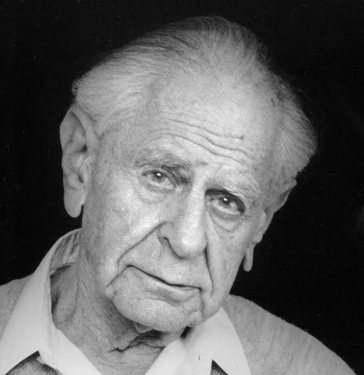
The more we learn about the world, and the deeper our learning, the more conscious, specific, and articulate will be our knowledge of what we do not know, our knowledge of our ignorance. For this, indeed, is the main source of our ignorance — the fact that our knowledge can be only finite, while our ignorance must necessarily be infinite.
▼
Source
Variant translation: The more we learn about the world, and the deeper our learning, the more conscious, clear, and well-defined will be our knowledge of what we do not know, our knowledge of our ignorance. The main source of our ignorance lies in the fac
4 months ago
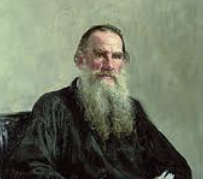
For us, with the rule of right and wrong given us by Christ, there is nothing for which we have no standard. And there is no greatness where there is not simplicity, goodness, and truth.
▼
Source
Bk. XIV, ch. 18
4 months ago
The works of the great writers of the past are very beautiful even from without. And yet their visible beauty is sheer ugliness, compared with the beauty of those hidden treasures which disclose themselves only after very long, never easy, but always pleasant work. This always difficult but always pleasant work is, I believe, what the philosophers had in mind when they recommended education. Education, they felt, is the only answer to the always pressing question, to the political question par excellence, of how to reconcile order which is not oppression with freedom which is not license.
▼
Source
p. 37
4 months ago
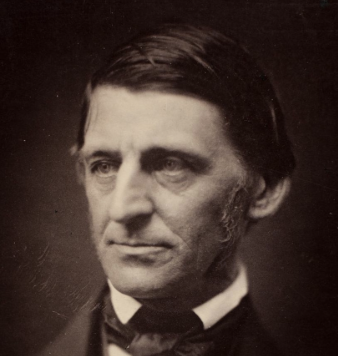
How we hate this solemn Ego that accompanies the learned, like a double, wherever he goes.
▼
Source
1839

4 months ago
The prison has become a black hole into which the detritus of contemporary capitalism is deposited. Mass imprisonment generates profits as it devours social wealth, and thus it tends to reproduce the very conditions that lead people to prison. There are thus real and often quite complicated connections between the deindustrialization of the economy—a process that reached its peak during the 1980s—and the rise of mass imprisonment, which also began to spiral during the Reagan-Bush era. However, the demand for more prisons was represented to the public in simplistic terms. More prisons were needed because there was more crime. Yet many scholars have demonstrated that by the time the prison construction boom began, official crime statistics were already falling.
▼
Source
Chapter One
4 months ago
Opinions, yes; convictions, no. That is the point of departure for an intellectual pride.
4 months ago
Even the free importation of foreign corn could very little affect the interest of the farmers of Great Britain. Corn is a much more bulky commodity than butcher's-meat. A pound of wheat at a penny is as dear as a pound of butcher's-meat at fourpence. The small quantity of foreign corn imported even in times of the greatest scarcity, may satisfy our farmers that they can have nothing to fear from the freest importation.
▼
Source
Chapter II
4 months ago
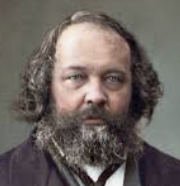
I hate Communism because it is the negation of liberty and because humanity is for me unthinkable without liberty. I am not a Communist, because Communism concentrates and swallows up in itself for the benefit of the State all the forces of society, because it inevitably leads to the concentration of property in the hands of the State, whereas I want the abolition of the State, the final eradication of the principle of authority and the patronage proper to the State, which under the pretext of moralizing and civilizing men has hitherto only enslaved, persecuted, exploited and corrupted them. I want to see society and collective or social property organized from below upwards, by way of free association, not from above downwards, by means of any kind of authority whatsoever.
▼
Source
As quoted in Michael Bakunin (1937) by E.H. Carr, p. 356
4 months ago
Nothing in all literature is so depressing as the “Dissertations” of the slave [Epictetus], unless it be the “Meditations” of the Emperor [Marcus Aurelius] ...[after some excerpts from the two books]..... In such passages we feel the proximity of Christianity and its dauntless martyrs; indeed were not the Christian ethic of self-denial, the Christian political ideal of an almost communistic brotherhood of man, and the Christian eschatology of the final conflagration of all the world, fragments of Stoic doctrine floating on the stream of thought? In Epictetus the Greco-Roman soul has lost its paganism, and is ready for a new faith".
4 months ago
Hayek may still have lessons to teach us. The policies he recommended during the Great Depression may have been badly flawed but his insight that prosperity cannot be restored by unending expansion of debt may have some value at a time when the limits of “Keynesian” quantitative easing are becoming clear. It is in any case far from obvious that Keynes would have supported a continuation of QE once a disastrous collapse had been averted. “Keynesianism” is a confection of Keynes’s more mechanical disciples, not an indication of how this mercurially brilliant mind would have responded to our present dilemmas. Again, Hayek’s claim that nothing can be done to mitigate the impact of free markets on social cohesion was dangerously misguided. But he was right to point out that capitalism cannot be remodelled to fit some conception of an ideally fair distribution of resources. Whether any kind of social democracy can be reconciled with the anarchic energies of global markets is an open question.
4 months ago
I do not believe in what is often called... 'exact '... [or] in definitions... [they] do not... add to exactness... I especially dislike pretentious terminology and... pseudo-exactness concerned with it.
4 months ago
Ivan Ilych's life had been most simple and most ordinary and therefore most terrible.
▼
Source
Ch. II
4 months ago
It was not the "God-intoxicated" philosopher but the hard-headed, not to say hard-hearted, pupil of Machiavelli and philologic-historical critic of the Bible. Orthodoxy could be returned to only if Spinoza was wrong in every respect.
▼
Source
Preface
4 months ago
Islamophobic violence is nurtured by histories of anti-black racist violence.
4 months ago
Philosophical pessimism
4 months ago
In England, success in the profession of the law leads to some very great objects of ambition; and yet how few men, born to easy fortunes, have ever in this country been eminent in that profession?
▼
Source
Chapter I, Part III, p. 824.
4 months ago
The great honor of Christianity, its incontestable merit, and the whole secret of its unprecedented and yet thoroughly legitimate triumph, lay in the fact that it appealed to that suffering and immense public to which the ancient world, a strict and cruel intellectual and political aristocracy, denied even the simplest rights of humanity. Otherwise it never could have spread.
▼
Source
Dover edition, p. 75
4 months ago
As we find a place in the economic world the rebellion of youth subsides; we disapprove of earthquakes when our feet are on the earth. We forget then the radicalism then in a gentle liberalism — which is radicalism softened with the consciousness of a bank account.
▼
Source
Ch. 3 : On Middle Age

4 months ago
It is on account neither of God's weakness nor ignorance that evil comes into the world, but rather it is due to the order of his wisdom and the greatness of his goodness that diverse grades of goodness occur in things, many of which would be lacking if no evil were permitted. Indeed, the good of patience would not exist without the evil of persecution; nor the good of preservation of life in a lion if not for the evil of the destruction of the animals on which it lives.
▼
Source
q. 3, art. 6, ad 4
4 months ago
1. A person who acquires a holding in accordance with the principle of justice in acquisition is entitled to that holding. 2. A person who acquires a holding in accordance with the principle of justice in transfer, from someone else entitled to the holding, is entitled to the holding. 3. No one is entitled to a holding except by (repeated) applications of 1 and 2.
▼
Source
Ch. 7 : Distributive Justice, Section I, The Entitlement Theory, p. 151
4 months ago
The work of Garrison, the father, in his foundation of the Society of Non-resistants and his Declaration, even more than my correspondence with the Quakers, convinced me of the fact that the departure of the ruling form of Christianity from the law of Christ on non-resistance by force is an error that has long been observed and pointed out, and that men have labored, and are still laboring, to correct. Ballou's work confirmed me still more in this view. But the fate of Garrison, still more that of Ballou, in being completely unrecognized in spite of fifty years of obstinate and persistent work in the same direction, confirmed me in the idea that there exists a kind of tacit but steadfast conspiracy of silence about all such efforts.
▼
Source
Chapter I, The Doctrine of Non-resistance to Evil by Force has been Professed by a Minority of Men from the Very Foundation of Christianity
4 months ago
But just how "sinister" was Leo Strauss himself? The answer depends on how a reader approaches his books. If you read Strauss with a well-disposed spirit, he can be interpreted as a genuine friend of American liberal democracy. He worked to create an elite that was strong, sober, and sufficiently free of illusions about the goodness of man to fight the totalitarian enemies of liberal democracy-be they fascists, communists, or Islamicist fundamentalists.But if you read Strauss with a skeptical mind, the way he himself read the great philosophers, a more disturbing picture takes shape. Strauss, by this view, emerges as a disguised Machiavelli, a cynical teacher who encouraged his followers to believe that their intellectual superiority entitles them to rule over the bulk of humanity by means of duplicity. The worst thing you can do to Leo Strauss, perhaps, is to read his books with Straussian eyes.
▼
Source
Jeet Heer, "The philosopher", The Boston Globe (May 11, 2003)
4 months ago
Gentlemen, there is a sublime and friendly Destiny by which the human race is guided, — the race never dying, the individual never spared, — to results affecting masses and ages. Men are narrow and selfish, but the Genius or Destiny is not narrow, but beneficent. It is not discovered in their calculated and voluntary activity, but in what befalls, with or without their design. Only what is inevitable interests us, and it turns out that love and good are inevitable, and in the course of things. That Genius has infused itself into nature. It indicates itself by a small excess of good, a small balance in brute facts always favorable to the side of reason.
4 months ago
Jazz is the false liquidation of art — instead of utopia becoming reality it disappears from the picture.
▼
Source
Perennial fashion — Jazz, as quoted in The Sociology of Rock (1978) by Simon Frith
4 months ago
When contemporary feminist movement first began, feminist writings and scholarship by black women was groundbreaking. The writings of black women like Cellestine Ware, Toni Cade Bambara, Michele Wallace, Barbara Smith, and Angela Davis, to name a few, were all works that sought to articulate, define, speak to and against the glaring omissions in feminist work, the erasure of black female presence.
▼
Source
bell hooks, Teaching to Transgress: Education as the Practice of Freedom (1994)
4 months ago
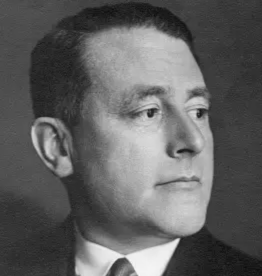
It is striking that one of the most consequential representatives of this abstract scientific orientation of the seventeenth century became so personalistic. This is because as a juristic thinker he wanted to grasp the reality of societal life just as much as he, as a philosopher and natural scientist, wanted to grasp the reality of nature. He did not discover that there is a juristic reality and life that need not be reality in the sense of the natural sciences. Mathematical relativism and nominalism also operate concurrently. Often he seemed to be able to construct the unity of the state from any arbitrary given point. But juristic thought in those days had not yet become so overpowered by the natural sciences that he, in the intensity of his scientific approach, should unsuspectingly have overlooked the specific reality of legal life inherent in the legal form. The form that he sought lies in the concrete decision, one that emanates from a particular authority. In the independent meaning of the decision, the subject of the decision has an independent meaning, apart from the question of content. What matters for the reality of legal life is who decides.
4 months ago
I have found one just man in Gomorrah—Adam Smith, author of the Wealth of Nations. He was the Duke of Buccleuch's tutor, is a wise and deep philosopher, and although made commissioner of the customs here by the Duke and Lord Advocate, is what I call an honest fellow. He wrote a most kind as well as elegant letter to Burke on his resignation, as I believe I told you before; and on my mentioning it to him, he told me he was the only man here who spoke out for the Rockinghams.
▼
Source
Gilbert Elliot, letter (25 July 1782), quoted in Life and Letters of Sir Gilbert Elliott, First Earl of Minto from 1751 to 1806, Vol. I, ed. Countess of Minto (1874), p. 84
4 months ago
Art is a human activity having for its purpose the transmission to others of the highest and best feelings to which men have risen.
▼
Source
Ch. 8
4 months ago
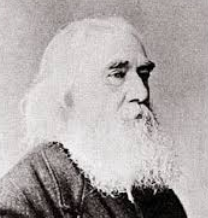
For more than six hundred years—that is, since the Magna Carta in 1215—there has been no clearer principle of English or American constitutional law, than that, in criminal cases, it is not only the right and duty of juries to judge, what are the facts, what is the law, and what was the moral intent of the accused; but that it is also their right, and their primary and paramount duty, to judge the justice of the law, and to hold all laws invalid, that are, in their opinion, unjust, oppressive, and all persons guiltless in violating, or resisting the execution of, such laws.
▼
Source
An Essay on the Trial by Jury, Boston, MA: John P. Jewett and Company, Cleveland, Ohio: Jewett, Proctor & Worthington (1852) p. 5
4 months ago
Hast thou named all the birds without a gun; Loved the wood-rose, and left it on its stalk.
▼
Source
Forbearance
4 months ago
The jargon of authenticity ... is a trademark of societalized chosenness, ... sub-language as superior language.
▼
Source
pp. 5-6
4 months ago
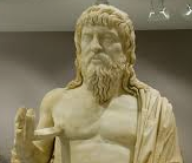
Some disobey the earth and sharpen knives against the animals to gain clothing and food. The Indian Brahmans disapproved of this personally and taught the Naked Philosophers of Egypt to disapprove of it too. From there Pythagoras, who was the first Greek to associate with Egyptians, borrowed the principle. He let the earth keep living creatures, but held that what the earth grows is pure, and so lived off that because it was sufficient to feed body and soul. Clothing made from dead creatures, which most people wear, he considered impure; he dressed in linen and, for the same reason, made his shoes of plaited bark. He derived many advantages from this purity, above all that of perceiving his own soul.
▼
Source
Attributed to Apollonius in Philostratus, Life of Apollonius. Quoted from Ram Swarup (2000). On Hinduism: Reviews and reflections, Chapter India and Greece
4 months ago
Adam Smith discovered a remarkable property of a competitive market economy. Under perfect competition and with no market failures, markets will squeeze as many useful goods and services out of the available resources as is possible. But where monopolies or pollution or similar market failures become pervasive, the remarkable efficiency properties of the invisible hand may be destroyed.
▼
Source
Paul Samuelson and William Nordhaus, Economics (19th ed., 2009), Chap. 2 : The Modern Mixed Economy
4 months ago
"Why, you have tried to improve before, and failed," the tempter in his soul whispered. "What is the good of trying again? You are not the only one—all are alike. Such is life." But the free, spiritual being which alone is true, alone powerful, alone eternal, was already awake in Nekhludoff. And he could not help believing it. However great the difference between that which he was and that which he wished to be, for the awakened spiritual being everything was possible.
▼
Source
Ch. 28
4 months ago
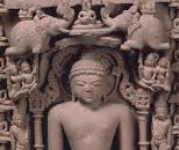
Kill not, cause no pain. Nonviolence is the greatest religion.
▼
Source
As quoted in Let's Celebrate! (1987) by Caroline Parry, p. 127.
4 months ago
Great men, great nations, have not been boasters and buffoons, but perceivers of the terror of life, and have manned themselves to face it.
▼
Source
Fate
4 months ago
Philosophers conclude that they need no longer participate personally in what Socrates called “the tendance of the soul.”
▼
Source
p. xii
4 months ago
Everywhere we seek the Absolute, and always we find only things.
▼
Source
Fragment No. 1; Variant: We seek the absolute everywhere and only ever find things.

4 months ago
Not having heard of it is not as good as having heard of it. Having heard of it is not as good as having seen it. Having seen it is not as good as knowing it. Knowing it is not as good as putting it into practice. Learning arrives at putting it into practice and then stops.
▼
Source
As translated by Eric L. Hutton in Xunzi: The Complete Text (2024), Ch. 8 :The Achievements of the Ru | Variant translations: | Not having learned it is not as good as having learned it; having learned it is not as good as having seen it carried out; havi
4 months ago
Is Wagner a human being at all? Is he not rather a disease? He contaminates everything he touches - he has made music sick.
▼
Source
Der Fall Wagner (1888)
4 months ago
In the spiritual realm nothing is indifferent: what is not useful is harmful.
▼
Source
VII
4 months ago
In my larger work, the Mishnah Torah, I have contented myself with briefly stating the principles of our faith and its fundamental truths, together with such hints as approach a clear exposition. In this work, however, I address those who have studied philosophy and have acquired sound knowledge, and who while firm in religious matters are perplexed and bewildered on account of the ambiguous and figurative expressions employed in the holy writings.
4 months ago
Leave this hypocritical prating about the masses. Masses are rude, lame, unmade, pernicious in their demands and influence, and need not to be flattered, but to be schooled. I wish not to concede anything to them, but to tame, drill, divide, and break them up, and draw individuals out of them.
▼
Source
Considerations by the Way
CivilSimian.com created by AxiomaticPanic, CivilSimian, Kalokagathia