
4 months 1 week ago
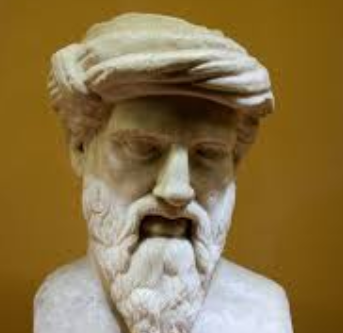
The close of the life of Pythagoras was, according to every statement, in the midst of misfortune and violence. Some particulars are related by Iamblichus, which, though he is not an authority beyond all exception, are so characteristic as seem to entitle them to the being transcribed. … Cylon, the richest man, or, as he is in one place styled, the prince, of Crotona, had manifested the greatest partiality to Pythagoras. He was at the same time a man of rude, impatient and boisterous character. He, together with Perialus of Thurium, submitted to all the severities of the Pythagorean school. They passed the three years of probation, and the five years of silence. They were received into the familiarity of the master. They were then initiated, and delivered all their wealth into the common stock. They were however ultimately pronounced deficient in intellectual power, or for some other reason were not judged worthy to continue among the confidential pupils of Pythagoras. They were expelled. The double of the property they had contributed was paid back to them. A monument was set up in memory of what they had been; and they were pronounced dead to the school. It will easily be conceived in what temper Cylon sustained this degradation. Of Perialus we hear nothing further. But--> … Cylon, from feelings of the deepest reverence and awe for Pythagoras, which he had cherished for years, was filled even to bursting with inextinguishable hatred and revenge. The unparalleled merits, the venerable age of the master whom he had so long followed, had no power to control his violence. His paramount influence in the city insured him the command of a great body of followers. He excited them to a frame of turbulence and riot. He represented to them how intolerable was the despotism of this pretended philosopher. They surrounded the school in which the pupils were accustomed to assemble, and set it on fire. Forty persons perished in the flames. According to some accounts Pythagoras was absent at the time. According to others he and two of his pupils escaped. He retired from Crotona to Metapontum. But the hostility which had broken out in the former city, followed him there. He took refuge in the Temple of the Muses. But he was held so closely besieged that no provisions could be conveyed to him; and he finally perished with hunger, after, according to Laertius, forty days' abstinence.
4 months 1 week ago
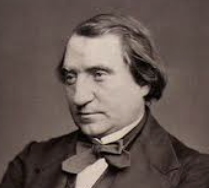
There has always been an element of the magical in the style of M. Ernest Renan—an art of saying things in a way to make them beautiful.
▼
Source
Henry James, Atlantic Monthly (August 1883)
4 months 1 week ago
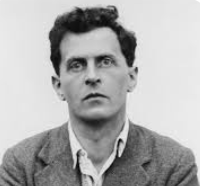
378. Knowledge is in the end based on acknowledgement.

4 months 1 week ago
The Art of Peace is not easy. It is a fight to the finish, the slaying of evil desires and all falsehood within. On occasion the Voice of Peace resounds like thunder, jolting human beings out of their stupor.
4 months 1 week ago
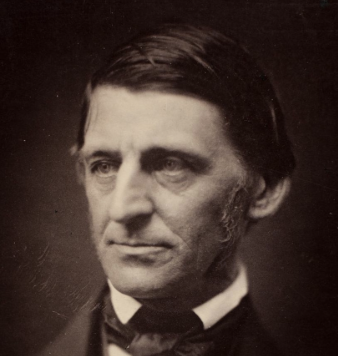
What, then, is his secret? Is it not that he out-Yankees us all? that his range includes us all? that he is equally at home with the potato disease and original sin, with pegging shoes and the Over-soul? that, as we try all trades, so has he tried all cultures? and above all, that his mysticism gives us a counterpoise to our super-practicality?
▼
Source
James Russell Lowell, My Study Windows (1871), "Emerson, the Lecturer"
4 months 1 week ago
Finally we should note the basic assumption of the classical laboratory-namely, that nature is neither capricious nor secretive. If nature were capricious, she would tell one observer one thing and another observer a quite different thing... Also nature is not secretive, in the sense that she will not forever hide certain aspects of her being...
▼
Source
p. 57; as cited in: Carolyn Merchant (1982) "Isis' Consciousness Raised", in: Isis, Vol. 73, No. 3. (1982), pp. 398-409
4 months 1 week ago
In solitude it is possible to love mankind; in the world, for one who knows the world, there can be nothing but secret or open war.
4 months 1 week ago
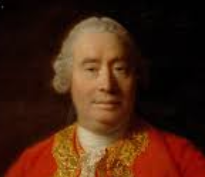
The more exquisite any good is, of which a small specimen is afforded us, the sharper is the evil, allied to it; and few exceptions are found to this uniform law of nature. The most sprightly wit borders on madness; the highest effusions of joy produce the deepest melancholy; the most ravishing pleasures are attended with the most cruel lassitude and disgust; the most flattering hopes make way for the severest disappointments. And, in general, no course of life has such safety (for happiness is not to be dreamed of) as the temperate and moderate, which maintains, as far as possible, a mediocrity, and a kind of insensibility, in every thing. As the good, the great, the sublime, the ravishing are found eminently in the genuine principles of theism; it may be expected, from the analogy of nature, that the base, the absurd, the mean, the terrifying will be equally discovered in religious fictions and chimeras.
▼
Source
Part XV - General corollary
4 months 1 week ago
The Pythagoreans knew some properties of s... how a plane can be filled by... regular triangles, squares, or regular hexagons, and space by cubes... [They] may also have known the regular oktahedron and dodekahedron—the latter figure because pyrite, found in Italy, crystallizes in dodekahedra, and models... date to Etruscan times.
▼
Source
, A Concise History of Mathematics (1948)
4 months 1 week ago
The purely corporeal can be uncanny. Compare the way angels and devils are portrayed. So-called "miracles" must be connected with this. A miracle must be, as it were, a sacred gesture.
▼
Source
p. 50e
4 months 1 week ago
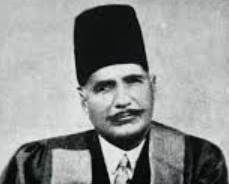
Shah Alamgir, that high and mighty king, Pride and renown of Gurgan Timur’s line,In whom Islam attained a loftier fameAnd wider honour graced the Prophet’s Law,He the last arrow to our quiver leftIn the affray of Faith with Unbelief ;When that the impious seed of heresy,By Akbar nourished, sprang and sprouted fresh In Dara’s soul, the candle of the heart Was dimmed in every breast, no more secureAgainst corruption our CommunityContinued ; then God chose from IndiaThat humble-minded warrior, Alamgir,Religion to revive, faith to renew.The lightning of his sword set all ablazeThe harvest of impiety ; faith’s torchOnce more its radiance o’er our counsels shed.
▼
Source
The Secrets of Selflessness, Emperor Alamgir and the Tiger
4 months 1 week ago
There are in the Exhibition some beautiful examples of such amongst the productions of other countries as well as of our own. They are made by the united labour of many women. The cost of a piece of lace will consist of:

4 months 1 week ago
How many mistakes power has committed! And how often has it ignored the means to conserve itself! Man is insatiable for power; he is infinite in his desires, and, always discontented with what he has, he loves only what he has not. People complain about the despotism of princes; they should complain about that of man. We are all born despots, from the most absolute monarch of Asia to the child who smothers a bird with his hand for the pleasure of seeing something in the world weaker than himself. There is no man who does not abuse power, and experience proves that the most abominable despots, if they come to seize the sceptre, will be precisely those who rant against despotism.
4 months 1 week ago
The same good sense, that directs men in the ordinary occurrences of life, is not hearkened to in religious matters, which are supposed to be placed altogether above the cognizance of human reason.
4 months 1 week ago
For a truly religious man nothing is tragic.
▼
Source
Conversation of 1930
4 months 1 week ago
The universal jargon, in the sense explained above, is the same for the child and for the adult. It is the same for a Robinson Crusoe as for a human society. If Robinson wants to join what is in a protocol of yesterday with what is in his protocol today, that is, if he wants to make use of language at all, he must make use of the ‘intersubjective’ language. The Robinson of yesterday and the Robinson of today stand precisely in the same relation in which Robinson stands to Friday.
▼
Source
p. 96
4 months 1 week ago
The human voice may be denominated the music of the mind; language, a figurative mode of expressing our ideas and sentiments. The effects of flowing from this beneficent endowment are overwhelming in contemplation and almost infinite in extent. It is principally instrumental to all the moral and physical improvements of man, and enables him to pour forth his otherwise invisible, inaudible, unfathomable thoughts, to his fellow-man and to his God.
▼
Source
Philosophical Magazine and Journal Of Science (July-December 1836), p. 346
4 months 1 week ago
The question is frequently asked: why there is a school of theology attached to every University? The answer is easy: It is, that the Universities may subsist, and that the instruction may not become corrupt. Originally, the Universities were only schools of theology, to which other faculties were joined, as subjects around their Queen. The edifice of public instruction, placed on such a foundation, has continued even to our day. Those who have subverted it among themselves, will repent it, in vain, for a long time to come. To burn a city, there is needed only a child or a madman; but to rebuild it, architects, materials, workmen, money, and especially time, will be required.
▼
Source
XXXVIII, p. 111
4 months 1 week ago
I freely admit that the remembrance of David Hume was the very thing that many years ago first interrupted my dogmatic slumber and gave a completely different direction to my researches in the field of speculative philosophy.
▼
Source
Immanuel Kant, Prolegomena to Any Future Metaphysics (1783), Preface
4 months 1 week ago
Cleverly assorted scraps of spurious science are inculcated upon the children to prove necessity of law; obedience to the law is made a religion; moral goodness and the law of the masters are fused into one and the same divinity. The historical hero of the schoolroom is the man who obeys the law, and defends it against rebels.
▼
Source
I
4 months 1 week ago
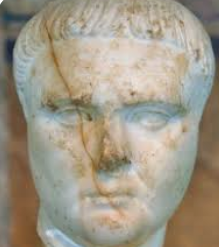
When some people urged that it is impossible for man to live like the animals owing to the tenderness of his flesh and because he is naked and unprotected, [Diogenes] would say in reply that men are so very tender because of their mode of life. ... Man’s ingenuity and his discovering and contriving so many helps to life had not been altogether advantageous to later generations, since men do not employ their cleverness to promote courage or justice, but to procure pleasure.
▼
Source
p. 267
4 months 1 week ago
To overcome oneself, to submit to circumstances, is a duty for everyone, but especially for women. A man, my dear child, is an animal. Unfortunately for your sex, extremely proud; but happily for this same sex, extremely foolish. It is necessary to use his foolishness against his pride. In ceding skilfully and with grace, it is necessary to make him believe that he will always be king. Then he is content to allow himself to be led. As soon as a woman cedes the sceptre, it is given back to her immediately. That is all there is to the catechism of this world. Never forget it. You know by heart the beatitudes of the Gospel; but it is not forbidden to know others, as, for example, Happy are mild women, for they will possess men. Submit therefore my dear Adèle; submit, caress, insinuate yourself; you will soon find some imbecile full of wit who will say in his heart: ‘Here is the one I need.’ If after you have wed he comes to discover that you are a bit impertinent, the evil is not great.
▼
Source
Letter to his daughter Adèle de Maistre, 14 December 1802, Œuvre critique, ix, p. 109
4 months 1 week ago
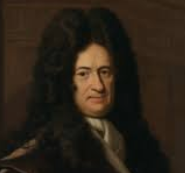
To love is to be delighted by the happiness of someone, or to experience pleasure upon the happiness of another. I define this as true love.
▼
Source
The Elements of True Piety (c. 1677), [http://books.google.com/books?id=oFoCY3xJ8nkC&dq The Shorter Leibniz Texts (2006)] edited by Lloyd H. Strickland, p. 189
4 months 1 week ago
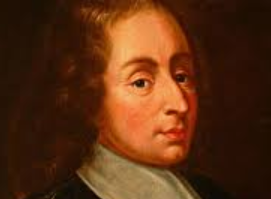
If it is pleasing to observe in nature her desire to paint God in all his works, in which we see some traces of him because they are his images, how much more just is it to consider in the productions of minds the efforts which they make to imitate the essential truth, even in shunning it, and to remark wherein they attain it and wherein they wander from it, as I have endeavored to do in this study.
4 months 1 week ago
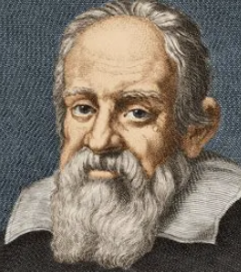
Copernicus never discusses matters of religion or faith, nor does he use argument that depend in any way upon the authority of sacred writings which he might have interpreted erroneously. ... He did not ignore the Bible, but he knew very well that if his doctrine were proved, then it could not contradict the Scriptures when they were rightly understood.
4 months 1 week ago
When we ask for the abolition of the State and its organs we are always told that we dream of a society composed of men better than they are in reality. But no; a thousand times, no. All we ask is that men should not be made worse than they are, by such institutions!

4 months 1 week ago
It was a common saying of Myson that men ought not to investigate things from words, but words from things; for that things are not made for the sake of words, but words for things.
▼
Source
Myson, 3.
4 months 1 week ago
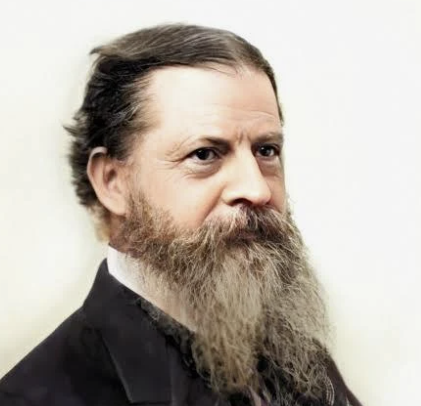
It is terrible to see how a single unclear idea, a single formula without meaning, lurking in a young man’s head, will sometimes act like an obstruction … in an artery, hindering the nutrition of the brain, and condemning its victim to pine away in the fullness of his intellectual vigor and in the midst of intellectual plenty.
▼
Source
"How to make our ideas clear,” Popular Science Monthly, Vol. 12 (January 1878)
4 months 1 week ago
As to the objection that these rules are common in the world, that it is necessary to define every thing and to prove every thing, and that logicians themselves have placed them among their art, I would that the thing were true and that it were so well known... But so little is this the case, that, geometricians alone excepted, who are so few in number that they are a single in a whole nation and long periods of time, we see no others that know it.
4 months 1 week ago
I esteem myself happy to have as great an ally as you in my search for truth. I will read your work … all the more willingly because I have for many years been a partisan of the Copernican view because it reveals to me the causes of many natural phenomena that are entirely incomprehensible in the light of the generally accepted hypothesis. To refute the latter I have collected many proofs, but I do not publish them, because I am deterred by the fate of our teacher Copernicus who, although he had won immortal fame with a few, was ridiculed and condemned by countless people (for very great is the number of the stupid).
▼
Source
Letter to Johannes Kepler (1596), as quoted in The Story of Civilization : The Age of Reason Begins, 1558-1648 (1935) by Will Durant, p. 603
4 months 1 week ago
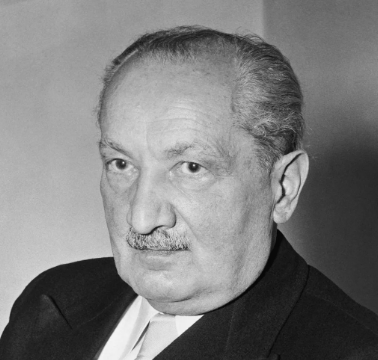
Der Tod ist die Möglichkeit der schlechthinnigen Daseinsunmöglichkeit.
▼
Source
Death is the possibility of the absolute impossibility of Dasein. | Macquarrie & Robinson translation
4 months 1 week ago
What we do want is so to arrange things that every human being born into the world shall be ensured the opportunity in the first instance of learning some useful occupation, and of becoming skill in it; next, that he shall be free to work at his trade without asking leave of master or owner, and without handing over to landlord or capitalist the lion's share of what he produces.
▼
Source
Ch. 4 : Expropriation
4 months 1 week ago
He used to teach that God is incorporeal, as Plato also asserted, and that his providence extends over all the heavenly bodies.
▼
Source
Aristotle, 13.

4 months 1 week ago
The Christian Scholastics... might have shown that God Himself said that He had "imprinted an active principle in the elements of matter (Gen. i; Is. lxvi).
▼
Source
Ch. V Concerning the Moving Force of Matter
4 months 1 week ago
What distinct meaning can attach to saying that an idea in the past in any way affects an idea in the future, from which it is completely detached?
4 months 1 week ago
I see the situation of man in the world of planetary technicity not as an inexitricable and inescapable destiny, but I see the task of thought precisely in this, that within its own limits it helps man as such achieve a satisfactory relationship to the essence of technicity. National Socialism did indeed go in this direction. Those people, however, were far too poorly equipped for thought to arrive at a really explicit relationship to what is happening today and has been underway for the past 300 years.
▼
Source
As translated by William Richardson in Risk and Meaning, Nicolas Bouleau (translated by Dené Oglesby and Martin Crossley), ed. Springer, 2011 , page 102.
4 months 1 week ago
In short, we may say that the theory of Malthus, by shaping into a pseudo-scientific form the secret desires of the wealth-possessing classes, became the foundation of a whole system of practical philosophy, which permeates the minds of both the educated and uneducated, and reacts, (as practical philosophy always does) upon the theoretical philosophy of our century.
4 months 1 week ago
Protagoras asserted that there were two sides to every question, exactly opposite to each other.
▼
Source
Protagoras, 3.
4 months 1 week ago
The will is a unity of two different aspects or moments: first, the individual’s ability to abstract from every specific condition and, by negating it, to return to the absolute liberty of the pure ego; secondly, the individual’s act of freely adopting a concrete condition, freely affirming his existence as a particular, limited ego. P. 185
4 months 1 week ago
If one's organism is... the preeminent advantage, and the source of all others, education is the second. The best made brain would be a total loss without it...
4 months 1 week ago
Were the ends of a person already explicit, there would be no room for development, for growth, for life; and consequently there would be no personality. The mere carrying out of predetermined purposes is mechanical. This remark has an application to the philosophy of religion. It is that genuine evolutionary philosophy, that is, one that makes the principle of growth a primordial element of the universe, is so far from being antagonistic to the idea of a personal creator, that it is really inseparable from that idea; while a necessitarian religion is in an altogether false position and is destined to become disintegrated. But a pseudo-evolutionism which enthrones mechanical law above the principle of growth is at once scientifically unsatisfactory, as giving no possible hint of how the universe has come about, and hostile to all hopes of personal relations to God.
4 months 1 week ago
Man lives very well upon flesh, you say, but, if he thinks this food to be natural to him, why does he not use it as it is, as furnished to him by Nature? But, in fact, he shrinks in horror from seizing and rending living or even raw flesh with his teeth, and lights a fire to change its natural and proper condition. … What is clearer than that man is not furnished for hunting, much less for eating, other animals? In one word, we seem to be admirably admonished by Cicero that man was destined for other things than for seizing and cutting the throats of other animals. If you answer that ‘that may be said to be an industry ordered by Nature, by which such weapons are invented,’ then, behold! it is by the very same artificial instrument that men make weapons for mutual slaughter. Do they this at the instigation of Nature? Can a use so noxious be called natural? Faculty is given by Nature, but it is our own fault that we make a perverse use of it.
▼
Source
Letter to Van Helmont, quoted in [https://archive.org/stream/ethicsofdietcate00will/ethicsofdietcate00will#page/n3/mode/2up The Ethics of Diet: A Catena of Authorities Deprecatory of the Practice of Flesh-eating] by Howard Williams (London: F. Pitman, 188
4 months 1 week ago
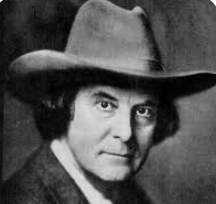
Responsibilities gravitate to the person who can shoulder them.
▼
Source
"J.B. Runs Things," Short Stories and Index: Elbert Hubbard's Selected Writings, Part 14 (1923), p. 278
4 months 1 week ago
The category “society” itself expressed the acute conflict between the social and political sphere—society as antagonistic to the state. Similarly, “individual,” “class,” “private,” “family” denoted spheres and forces not yet integrated with the established conditions—spheres of tension and contradiction. With the growing integration of industrial society, these categories are losing their critical connotation, and tend to become descriptive, deceptive, or operational terms. An attempt to recapture the critical intent of these categories, and to understand how the intent was cancelled by the social reality, appears from the outset to be regression from a theory joined with historical practice to abstract, speculative thought: from the critique of political economy to philosophy. This ideological character of the critique results from the fact that the analysis is forced to proceed from a position “outside” the positive as well as negative, the productive as well as destructive tendencies in society.
▼
Source
p. xlvi
4 months 1 week ago
Every man is fully satisfied that there is such a thing as truth, or he would not ask any question.
▼
Source
Vol. V, par. 211
4 months 1 week ago
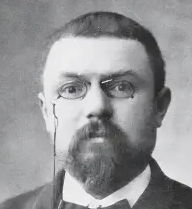
The mathematician is born, not made.
4 months 1 week ago
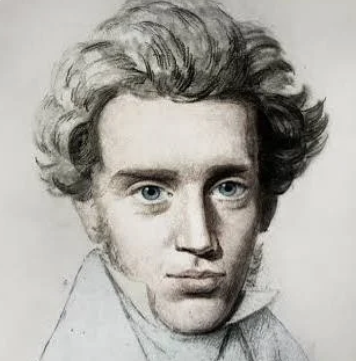
Deep within every human being there still lives the anxiety over the possibility of being alone in the world, forgotten by God, overlooked among the millions and millions in this enormous household. One keeps this anxiety at a distance by looking at the many round about who are related to him as kin and friends, but the anxiety is still there, nevertheless, and one hardly dares think of how he would feel if all this were taken away.
▼
Source
Journals VII 1A 363
4 months 1 week ago
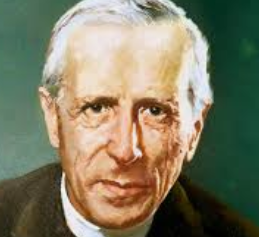
The truth is, indeed, that love is the threshold of another universe. Beyond the vibrations with which we are familiar, the rainbow-like range of its colours is still in full growth. But, for all the fascination that the lower shades have for us, it is only towards the "ultra" that the creation of light advances. It is in these invisible and, we might almost say, immaterial zones that we can look for true initiation into unity. The depths we attribute to matter are no more than the reflection of the peaks of spirit.
▼
Source
"The Evolution of Chastity" (1934), as translated by René Hague in Toward the Future (1975)
4 months 1 week ago
Do not take life too seriously – you will never get out of it alive.
▼
Source
p. 74
4 months 1 week ago
The present stage redefines the possibilities of man and nature in accordance with the new means available for their realization.
▼
Source
p. 65
CivilSimian.com created by AxiomaticPanic, CivilSimian, Kalokagathia