
4 months 1 week ago
The second class of evils comprises such evils as people cause to each other, when, e.g., some of them use their strength against others. These evils are more numerous than those of the first kind... they likewise originate in ourselves, though the sufferer himself cannot avert them.
▼
Source
Ch.12
4 months 1 week ago
And striving to be man, the worm Mounts through all the spires of form.
▼
Source
May-Day
4 months 1 week ago
Unity is plural and, at minimum, is two.
▼
Source
[http://www.rwgrayprojects.com/synergetics/s02/p2400.html#224.12 224.12]
4 months 1 week ago
An important recurring theme in George is the purposeful corruption of the science of economics in order to serve and apologize for wealthy special interests. As a self trained economist, the academics preferred to ignore the uncomfortable realities George’s work exposed.
▼
Source
Stephen Zarlenga, 2001, https://monetary.org/articles/henry-georges-concept-of-money/
4 months 1 week ago
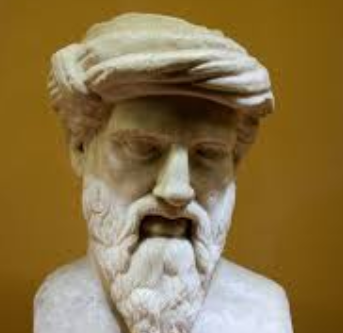
None can be free who is a slave to, and ruled by, his passions.
▼
Source
As quoted in Florilegium, XVIII, 23, as translated in Dictionary of Quotations (1906) by Thomas Benfield Harbottle, p. 368 | No one is free who has not obtained the empire of himself. | As translated by Nicholas Rowe(1732) | No man is free who cannot comm
4 months 1 week ago
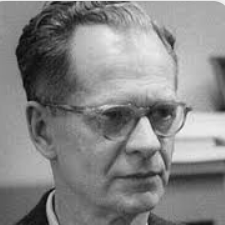
We shouldn't teach great books; we should teach a love of reading. Knowing the contents of a few works of literature is a trivial achievement. Being inclined to go on reading is a great achievement.
▼
Source
As quoted in B. F. Skinner : The Man and His Ideas (1968) by Richard Isadore Evans, p. 73
4 months 1 week ago
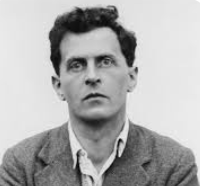
One often makes a remark and only later sees how true it is.
▼
Source
Journal entry (11 October 1914), p. 10e
4 months 1 week ago
Even when a person suffers pain in consequence of a thorn having entered into his hand, although it is at once drawn out, it is a punishment that has been inflicted on him, and the least pleasure he enjoys is a reward; all this is meted out by strict justice; as is said in the Scripture, "all His ways are judgement" (Deut. xxxii. 4); we are only ignorant of the working of that judgement.
▼
Source
Ch.17
4 months 1 week ago
Alcohol, hashish, prussic acid, strychnine are weak dilutions. The surest poison is time.
▼
Source
Poetry and Imagination
4 months 1 week ago
The nearest each of us can come to God is by loving the truth.

4 months 1 week ago
"But to be hanged—is that not unendurable?" Even so, when a man feels that it is reasonable, he goes off and hangs himself.
▼
Source
Book I, ch. 2, § 3.
4 months 1 week ago
None but a Craftsman can judge of a craft.
4 months 1 week ago
This remark provides the key to the problem, how much truth there is in solipsism. For what the solipsist means is quite correct; only it cannot be said, but makes itself manifest. The world is my world: this is manifest in the fact that the limits of language (of that language which alone I understand) mean the limits of my world. (5.62)
4 months 1 week ago
Those who believe that... detailed rules originate in a certain cause, are as far from the truth as those who assume that the whole law is useless.
▼
Source
Ch.26
4 months 1 week ago
Respect the child. Be not too much his parent. Trespass not on his solitude.
▼
Source
Education
4 months 1 week ago
We are here as local information harvesters, local problem-solvers in support of the integrity of eternally regenerative Universe. The fact that we get away from physical problems doesn't mean we go away from problems. The problems are really rarely physical.

4 months 1 week ago
The Triad has a special beauty and fairness beyond all numbers, primarily because it is the very first to make actual the potentiality of the Monad — oddness, perfection, proportionality, unification, limit.
▼
Source
On the Triad
4 months 1 week ago
Why, then, do we wonder any longer that, although in material things we are thoroughly experienced, nevertheless in our actions we are dejected, unseemly, worthless, cowardly, unwilling to stand the strain, utter failures one and all?
▼
Source
Book II, ch. 16, § 18.
4 months 1 week ago
Pythagoras could not have been the discoverer of the relation, because... this property was known and used by scholars and artisans of Oriental lands thousands of years before Pythagoras... While deductive geometry is barely more than twenty-five hundred years old, empirical geometry is probably as old as civilization itself.
▼
Source
Tobias Dantzig, The Bequest of the Greeks (1955)
4 months 1 week ago
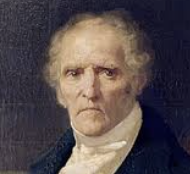
There is a class of writers who are ever boasting of the progress of civilization and of the human mind in modern times. If we were to credit their pretensions, we should be led to believe that the science of society had reached its highest degree of perfection, because old metaphysical and economic theories have been somewhat refined upon.In answer to their boasts of social progress, it is not sufficient to refer to the deeply-rooted social evils which exist, and which prey upon our boasted civilized social order. We will mention but a single one, the frightful increase of national debts and of taxation.
▼
Source
The Theory of Social Organization. Harmonian Man: Selected Writings of Charles Fourier
4 months 1 week ago
Philosophical problems can be compared to locks on safes, which can be opened by dialing a certain word or number, so that no force can open the door until just this word has been hit upon, and once it is hit upon any child can open it.
▼
Source
Ch. 9 : Philosophy, p. 175 | Variant: Philosophy is like trying to open a safe with a combination lock: each little adjustment of the dials seems to achieve nothing, only when everything is in place does the door open. | Conversation of 1930, in Personal

4 months 1 week ago
Enjoy your life without comparing to that of others. It is enough for you to know that you are good, without examining whether others are as good as you.
▼
Source
Advice to his daughter (written in hiding March 1794), quoted in Lukes, S., & Urbinati, N. (Eds.). (2012). Condorcet: Political Writings (Cambridge Texts in the History of Political Thought). Cambridge: Cambridge University Press. doi:10.1017/CBO978113910
4 months 1 week ago
Self-trust is the first secret of success.
▼
Source
Success
4 months 1 week ago
Ethical judgments can be and should be included in the scope of science
▼
Source
Cited in: John P. van Gigch (2006) Wisdom, Knowledge, and Management. p. 2
4 months 1 week ago
To know how just a cause we have for grieving is already a consolation.
▼
Source
Ch. IV.: Music
4 months 1 week ago
For my part, when I enter most intimately into what I call myself, I always stumble on some particular perception or other, of heat or cold, light or shade, love or hatred, pain or pleasure. I never can catch myself at any time without a perception, and never can observe any thing but the perception. When my perceptions are remov'd for any time, as by sound sleep; so long am I insensible of myself, and may truly be said not to exist. And were all my perceptions remov'd by death, and cou'd I neither think, nor feel, nor see, nor love, nor hate after the dissolution of my body, I shou'd be entirely annihilated, nor do I conceive what is farther requisite to make me a perfect non-entity. If any one upon serious and unprejudic'd reflexion, thinks he has a different notion of himself, I must confess I can reason no longer with him. All I can allow him is, that he may be in the right as well as I, and that we are essentially different in this particular. He may, perhaps, perceive something simple and continu'd, which he calls himself; tho' I am certain there is no such principle in me... But setting aside some metaphysicians of this kind, I may venture to affirm of the rest of mankind, that they are nothing but a bundle or collection of different perceptions, which succeed each other with an inconceivable rapidity, and are in a perpetual flux and movement.
▼
Source
Part 4, Section 6
4 months 1 week ago
If a man has reported to you, that a certain person speaks ill of you, do not make any defense (answer) to what has been told you: but reply, The man did not know the rest of my faults, for he would not have mentioned these only.
▼
Source
(33) [tr. George Long (1888)].
4 months 1 week ago
Inasmuch as I have begun to explain to you how much greater was my impulse to approach philosophy in my youth than to continue it in my old age, I shall not be ashamed to tell you what ardent zeal Pythagoras inspired in me. Sotion used to tell me why Pythagoras abstained from animal food, and why, in later times, Sextius did also. In each case, the reason was different, but it was in each case a noble reason. … Pythagoras … held that all beings were inter-related, and that there was a system of exchange between souls which transmigrated from one bodily shape into another. If one may believe him, no soul perishes or ceases from its functions at all, except for a tiny interval – when it is being poured from one body into another.
▼
Source
Seneca, Moral letters to Lucilius, CVIII, 17-19
4 months 1 week ago
He whom God has touched will always be a being apart: he is, whatever he may do, a stranger among men; he is marked by a sign.
▼
Source
Oeuvres Complètes, vol. 3. L’Avenir de la Science (1890).
4 months 1 week ago
Does man think because he has found that thinking pays? Does he bring his children up because he has found it pays?
▼
Source
§ 467

4 months 1 week ago
True Budo is practiced not only to destroy an enemy, it must also make him, or his own will, gladly lose his spirit (seishin) to oppose you.
▼
Source
(p. 26)
4 months 1 week ago
Build a better mousetrap, and the world will beat a path to your door.
4 months 1 week ago
In general, we can say that the larger the system becomes, the more the parts interact, the more difficult it is to understand environmental constraints, the more obscure becomes the problem of what resources should be made available, and deepest of all, the more difficult becomes the problem of the legitimate values of the system.
▼
Source
p. 77; cited in John Gall (1978) Systemantics; how systems work... and especially how they fail
4 months 1 week ago
Liberalism has merely cleared a field in which every soul and every corporate interest may fight with every other for domination. Whoever is victorious in this struggle will make an end of liberalism; and the new order, which will deem itself saved, will have to defend itself in the following age against a new crop of rebels.
▼
Source
"The Irony of Liberalism"
4 months 1 week ago
Though experience be our only guide in reasoning concerning matters of fact; it must be acknowledged, that this guide is not altogether infallible, but in some cases is apt to lead us into errors.
▼
Source
Section 10 : Of Miracles Pt. 1
4 months 1 week ago
The concept of a harmonious universe ordered according to "the Great Chain of Being" — a chain that connects the continuum of matter, body, mind, soul and spirit — stands as one of the most fundamental ideas of western thought. … It continues to be a profound influence upon the deepest strata of our thought. And yet a major rift has appeared in the consciousness of our time because the theme of harmonia has not been translated into the realm of human conduct. The challenge of our time may be to revive it, and make divine harmony "the great theme" of the next millennium. Any success we have in accomplishing this will be based, in large part, on the achievements of Pythagoras.

4 months 1 week ago
There is in our souls some native seed of reason, which, if nourished by good counsel and training, flowers into virtue, but which, on the other hand, if unable to resist the vices surrounding it, is stifled and blighted.
▼
Source
Part 2
4 months 1 week ago
If you use a trick in logic, whom can you be tricking other than yourself?
▼
Source
p. 24e
4 months 1 week ago
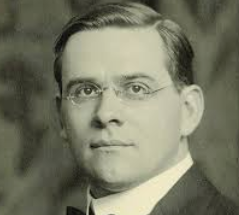
Philosophy... is that activity by which the meaning of propositions is established or discovered. Philosophy elucidates propositions, science verifies them. In the latter we are concerned with the truth of statements, but in the former with what they actually mean.
▼
Source
p. 157 ; As cited in: Uebel (2012:78)
4 months 1 week ago
General systems theory is considered as a formal theory (Mesarovic, Wymore), a methodology (Ashby, Klir), a way of thinking (Bertalanffy, Churchman), a way of looking at the world (Weinberg), a search for an optimal simplification (Ashby, Weinberg), didactic method (Boulding, Klir, Weinberg), metalanguage (Logren), and profession (Klir).
▼
Source
George Klir cited in: James T. Ziegenfuss (1983) Patients' rights and organizational models: sociotechnical systems research on mental health programs. p. 104
4 months 1 week ago
The working of great administrations is mainly the result of a vast mass of routine, petty malice, self-interest, carelessness and sheer mistake. Only a residual fraction is thought.
▼
Source
Giorgio de Santillana (1902-1974) [http://books.google.com/books?id=34uQ6tlYHRgC&q=%22The+working+of+great+administrations+is+mainly+the+result+of+a+vast+mass+of+routine+petty+malice+self-interest+carelessness+and+sheer+mistake+Only+a+residual+fraction+is
4 months 1 week ago
Avarice, the spur of industry, is so obstinate a passion, and works its way through so many real dangers and difficulties, that it is not likely to be scared by an imaginary danger, which is so small, that it scarcely admits of calculation. Commerce, therefore, in my opinion, is apt to decay in absolute governments, not because it is there less secure, but because it is less honourable.
▼
Source
Part I, Essay 12: Of Civil Liberty
4 months 1 week ago
You could attach prices to ideas. Some cost a lot some little. ... And how do you pay for ideas? I believe: with courage.
▼
Source
p. 60e
4 months 1 week ago
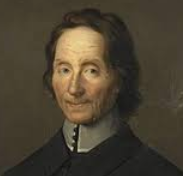
It is not within our power not to desire to be happy.
4 months 1 week ago
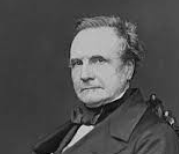
In the works of the Creator ever open to our examination, we possess a firm basis on which to raise the superstructure of an enlightened creed. The more man inquires into the laws which regulate the material universe, the more he is convinced that all its varied forms arise from the action of a few simple principles. These principles themselves converge, with accelerating force, towards some still more comprehensive law to which all matter seems to be submitted. Simple as that law may possibly be, it must be remembered that it is only one amongst an infinite number of simple laws: that each of these laws has consequences at least as extensive as the existing one, and therefore that the Creator who selected the present law must have foreseen the consequences of all other laws. The works of the Creator, ever present to our senses, give a living and perpetual testimony of his power and goodness far surpassing any evidence transmitted through human testimony. The testimony of man becomes fainter at every stage of transmission, whilst each new inquiry into the works of the Almighty gives to us more exalted views of his wisdom, his goodness, and his power.
▼
Source
"Passages from the life of a philosopher", The Belief In The Creator From His Works, p. 402
4 months 1 week ago
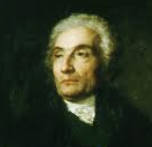
Men gather the clouds, and then they complain of the tempests that follow.
▼
Source
Chapter III, p. 30
4 months 1 week ago
And is it possible, CLEANTHES, said PHILO, that after all these reflections, and infinitely more, which might be suggested, you can still persevere in your Anthropomorphism, and assert the moral attributes of the Deity, his justice, benevolence, mercy, and rectitude, to be of the same nature with these virtues in human creatures? His power we allow is infinite: whatever he wills is executed: but neither man nor any other animal is happy: therefore he does not will their happiness. His wisdom is infinite: He is never mistaken in choosing the means to any end: But the course of Nature tends not to human or animal felicity: therefore it is not established for that purpose. Through the whole compass of human knowledge, there are no inferences more certain and infallible than these. In what respect, then, do his benevolence and mercy resemble the benevolence and mercy of men? EPICURUS's old questions are yet unanswered. Is he willing to prevent evil, but not able? then is he impotent. Is he able, but not willing? then is he malevolent. Is he both able and willing? whence then is evil?
▼
Source
Philo to Cleanthes, Part X
4 months 1 week ago
Perhaps the best place to begin trying to understand Wittgenstein's character is with the photographs that exist of his face.
▼
Source
Colin McGinn, "My Wicked Heart", London Review of Books (22 November 1990)
4 months 1 week ago
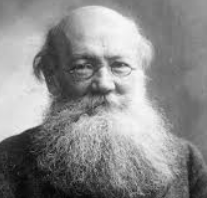
Lenin is not comparable to any revolutionary figure in history. Revolutionaries have had ideals. Lenin has none. He is a madman, an immolator, wishful of burning, and slaughter, and sacrificing.
▼
Source
As quoted in Peter Kropotkin : From Prince to Rebel (1990) by George Woodcock and Ivan Avakumovic, p. 407
4 months 1 week ago
Though the large runt pigeon, with its massive beak and its huge feet, differs from its blue and barred progenitor the rock, it is a pigeon still. Though the slender Italian greyhound has a strange contrast with the short-legged bull-dog, they are both dogs in their teeth and in their skull. The mouse, even, has not been transmuted into the cat, nor the hen into the turkey, nor the duck into the goose, nor the hawk into the eagle, and still less the monkey into the man.
CivilSimian.com created by AxiomaticPanic, CivilSimian, Kalokagathia