
4 months 1 week ago
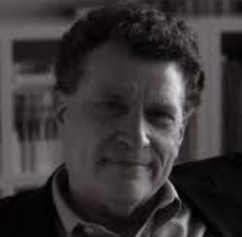
Here, we may well distinguish between Extreme Liberationism and Open Liberationism. So, as regards stealing, for example, the Extreme view holds that ... not only is it good to steal, but it's wrong not to do so. By contrast, Open Liberationism holds that it's at least good to steal and, while it's open to the (epistemic) possibility that it's wrong not to do so, it's also open to the possibility that it's not wrong. While I'm inclined to think that, in the end, even the Extreme view is correct, in this book it's enough to argue for Open Liberationism.
▼
Source
p. 13
4 months 1 week ago
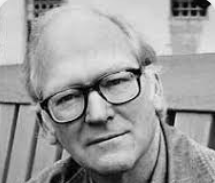
The methodological advice to interpret in a way that optimizes agreement should not be conceived as resting on a charitable assumption about human intelligence that might turn out to be false. If we cannot find a way to interpret the utterances and other behaviour of a creature as revealing a set of beliefs largely consistent and true by our standards, we have no reason to count that creature as rational, as having beliefs, or as saying anything
▼
Source
Donald Davidson. "Radical interpretation." Dialectica 27.3‐4 (1973): p. 324; as cited in; Herman Parret, Jacques Bouveresse (1981) Meaning and Understanding, p. 186
4 months 1 week ago
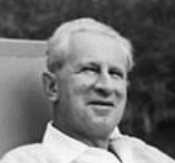
The revolution, Stahl declared, is the ‘world-historic mark of our age.’ It would found ‘the entire State on the will of man instead of on the commandment and ordinance of God.’ p. 364

4 months 1 week ago
In very different fashion does the book set to work that already in its very title declares that man is a machine. While the 'Natural History of the Soul' was cautious, cunningly arranged, and only gradually surprising us with its results, here, on the contrary,the final conclusion is expressed at the outset of the work. While the 'Natural History of the Soul' allied itself with the whole Aristotelian metaphysics only in order to prove by degrees that the soul is but an empty form, into which we may pour a materialistic content, here we no longer deal in all those fine distinctions.
4 months 1 week ago
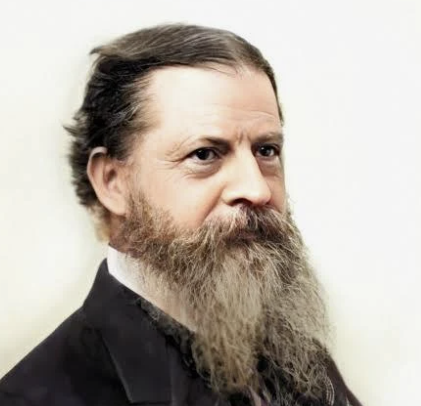
There never was a sounder logical maxim of scientific procedure than Ockham's razor: Entia non sunt multiplicanda praeter necessitatem. That is to say; before you try a complicated hypothesis, you should make quite sure that no simplification of it will explain the facts equally well. No matter if it takes fifty generations of arduous experimentation to explode the simpler hypothesis, and no matter how incredible it may seem that that simpler hypothesis should suffice, still fifty generations are nothing in the life of science, which has all time before it; and in the long run, say in some thousands of generations, time will be economized by proceeding in an orderly manner, and by making it an invariable rule to try the simpler hypothesis first. Indeed, one can never be sure that the simpler hypothesis is not the true one, after all, until its cause has been fought out to the bitter end. But you will mark the limitation of my approval of Ockham's razor. It is a sound maxim of scientific procedure. If the question be what one ought to believe, the logic of the situation must take other factors into account. Speaking strictly, belief is out of place in pure theoretical science, which has nothing nearer to it than the establishment of doctrines, and only the provisional establishment of them, at that. Compared with living belief it is nothing but a ghost. If the captain of a vessel on a lee shore in a terrific storm finds himself in a critical position in which he must instantly either put his wheel to port acting on one hypothesis, or put his wheel to starboard acting on the contrary hypothesis, and his vessel will infallibly be dashed to pieces if he decides the question wrongly, Ockham's razor is not worth the stout belief of any common seaman. For stout belief may happen to save the ship, while Entia non sunt multiplicanda praeter necessitatem would be only a stupid way of spelling Shipwreck. Now in matters of real practical concern we are all in something like the situation of that sea-captain.
▼
Source
Lecture II : The Universal Categories, §3. Laws: Nominalism, CP 5.60
4 months 1 week ago
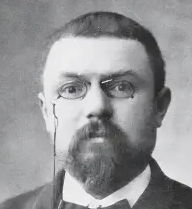
We do not have and cannot have any means of discovering whether or not we are carried along in a uniform motion of translation.
▼
Source
L’état actuel et l’avenir de la physique mathematique (1904)
4 months 1 week ago
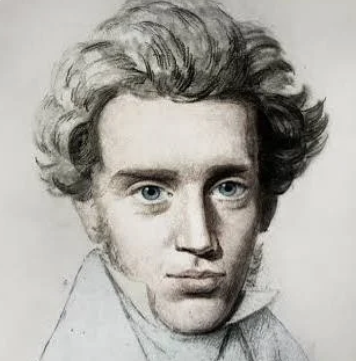
How close men, despite all their knowledge, usually live to madness? What is truth but to live for an idea? When all is said and done, everything is based on a postulate; but not until it no longer stands on the outside, not until one lives in it, does it cease to be a postulate. (Dialectic - Dispute)
▼
Source
Journals of Søren Kierkegaard 1A75, 1835
4 months 1 week ago
Having discovered the true principle, I then derived all the laws that govern the motion of light, those concerning its direct propagation, its reflection and its refraction. I reserve for particular members of our Assembly the geometrical demonstration of my theory.I know the distaste that many mathematicians have for final causes applied to physics, a distaste that I share up to some point. I admit, it is risky to introduce such elements; their use is dangerous, as shown by the errors made by Fermat and Leibniz in following them. Nevertheless, it is perhaps not the principle that is dangerous, but rather the hastiness in taking as a basic principle that which is merely a consequence of a basic principle.
4 months 1 week ago
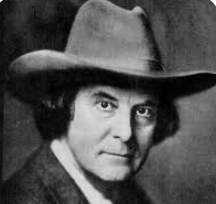
I believe that brutality tends to defeat itself. Prizefighters die young, gourmands get the gout, hate hurts worse the man who nurses it, and all selfishness robs the mind of its divine insight, and cheats the soul that would know. Mind alone is eternal. He, watching over Israel, slumbers not nor sleeps. My faith is great: out of the transient darkness of the present the shadows will flee away, and Day will yet dawn. I am an Anarchist.
4 months 1 week ago
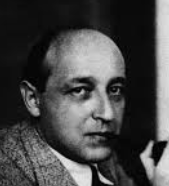
Ascending modern rationalism, in its speculative as well as empirical form, shows a striking contrast between extreme critical radicalism in scientific and philosophic method on the one hand, and an uncritical quietism in the attitude toward established and functioning social institutions. Thus Descartes' ego cogitans was to leave the “great public bodies” untouched, and Hobbes held that “the present ought always to be preferred, maintained, and accounted best.” Kant agreed with Locke in justifying revolution if and when it has succeeded in organizing the whole and in preventing subversion. However, these accommodating concepts of Reason were always contradicted by the evident misery and injustice of the “great public bodies” and the effective, more or less conscious rebellion against them. Societal conditions existed which provoked and permitted real dissociation. from the established state of affairs; a private as well as political dimension was present in which dissociation could develop into effective opposition, testing its strength and the validity of its objectives. With the gradual closing of this dimension by the society, the self-limitation of thought assumes a larger significance. The interrelation between scientific-philosophical and societal processes, between theoretical and practical Reason, asserts itself "behind the back” of the scientists and philosophers. The society bars a whole type of oppositional operations and behavior; consequently, the concepts pertaining to them are rendered illusory or meaningless. Historical transcendence appears as metaphysical transcendence, not acceptable to science and scientific thought. The operational and behavioral point of view, practiced as a “habit of thought” at large, becomes the view of the established universe of discourse and action, needs and aspirations. The “cunning of Reason” works, as it so often did, in the interest of the powers that be. The insistence on operational and behavioral concepts turns against the efforts to free thought and behavior from the given reality and for the suppressed alternatives.
▼
Source
pp. 15-16
4 months 1 week ago
Once we recognize that all historical knowledge is relational knowledge, and can only be formulated with reference to the position of the observer, we are faced, once more, with the task of discriminating between what is true and what is false in such knowledge.
4 months 1 week ago
Peirce was a man of tremendous energy, producing a multitude of ideas, good, bad, and indifferent. He reminds on of a volcano spouting vast masses of rock, of which some, on examination, turn out to be nuggets of pure gold. He holds―and I confess that an examination of scientific inference has made me feel the force of this view―that man is adapted, by his congenital constitution, to the apprehension of natural laws which cannot be proved by experience, although experience is in conformity with them.
▼
Source
Bertrand Russell, Foreword to James K. Feibleman, An Introduction to Peirce's Philosophy (1946)
4 months 1 week ago
Behold... the only... rule we can follow: when a phenomenon appears... as the cause of another, we regard it as anterior. ...Therefore by cause... we define time; but...how do we recognize which is the cause and which the effect? We assume... the anterior fact, the antecedent, is the cause of the... consequent. It is then by time that we define cause. ...Shall we escape from this vicious circle?
4 months 1 week ago
But on the other hand, the understanding, reflection, is also a gift of God. What shall one do with it, how dispose of it if one is not to use it? And if one then uses it in fear and trembling not for one's own advantage but to serve the truth, if one uses it that way in fear and trembling and furthermore believing that it still is God who determines the issue in its eternal significance, venturing to trust in him, and with unconditional obedience yielding to what he makes use of it: is this not fear of God and serving God the way a person of reflection can, in the somewhat different way than the spontaneously immediate person, but perhaps more ardently. But if this is the case, does not a maieutic element enter into the relation to other man or to various other men. The maieutic is really only the expression for a superiority between man and man. That is exists cannot be denied-but existence presses far more powerfully upon the superior one precisely because he is a maieutic (because he has the responsibility) than upon the other. As far as I am concerned, there has been no lack of witnesses. All my upbuilding discourses are in fact in the form of direct communication. Consequently there can be a question only about this, something that has occupied me for a long time (already back in earlier journals): should I for one definitely explain myself as author, what I declare myself to be, how I from the beginning understood myself to be a religious author. But now is not the time to do it; I am also somewhat strained at the moment, I need more physical recreation.
▼
Source
JP VI 6234 (Pap. IX A 222 1848)
4 months 1 week ago
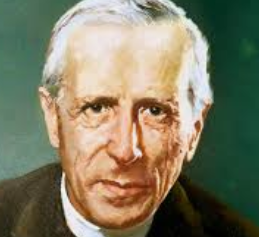
This book deals with man solely as a phenomenon; but... with the whole pheneomenon...
4 months 1 week ago
The great Big Black Things that have loomed against the horizon of my life, threatening to devour me, simply loomed and nothing more. The things that have really made me miss my train have always been sweet, soft, pretty, pleasant things of which I was not in the least afraid.
▼
Source
p. 61
4 months 1 week ago
Institutionalized desublimation thus appears to be an aspect of the “conquest of transcendence” achieved by the one-dimensional society. Just as this society tends to reduce, and even absorb opposition (the qualitative difference!) in the realm of politics and higher culture, so it does in the instinctual sphere. The result is the atrophy of the mental organs for grasping the contradictions and the alternatives and, in the one remaining dimension of technological rationality, the Happy Consciousness comes to prevail.
▼
Source
p. 79
4 months 1 week ago
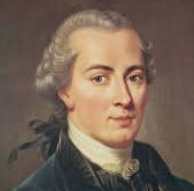
Now the maximum of perfection is called ideal, by Plato, Idea — for instance, his Idea of a Republic — and is the principle of all that is contained under the general notion of any perfection, inasmuch as the lesser grades are not thought determinable but by limiting the maximum. But God, the Ideal of perfection, and hence the principle of cognition, is also, as existing really, the principle of the creation of all perfection.
4 months 1 week ago
My hearers, this discourse has not wandered out into the world to look for conflict, it has not tried to get the better of anybody, it has not even tried to uphold anybody, as though there was battle without. It has spoken to you; not by way of explaining anything to you, but trying to speak secretly with you about your relationship to that secret wisdom mentioned in our text. Oh that nothing may upset you in respect to this, “neither life nor death nor things present nor things to come nor any other creature” (Romans 8:38) –not this discourse, which, though it may have profited you nothing, yet has striven for what after all is the first and the last, to help you have what the Scripture calls “faith in yourself before God” (Romans 14:22).
▼
Source
P. 173

4 months 1 week ago
No text in the tradition seems as lucid concerning the way in which the political is becoming worldwide. concerning the irreducibility of the technical and the media in the current of the most thinking thought-and this goes beyond the railroad and the newspapers of the time whose powers were analyzed in such an incomparable way in the Manifesto. And few texts have shed so much light on law. international law. and nationalism.
▼
Source
Injunctions of Marx
4 months 1 week ago
A breeze passes in the night. When did it spring up? Whence does it come? Whither is it going? No man knows.
▼
Source
The Divine Milieu, p. 128
4 months 1 week ago
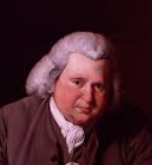
Roll on, ʏᴇ Sᴛᴀʀs! exult in youthful prime,Mark with bright curves the printless steps of Time;Near and more near your beamy cars approach,And lessening orbs on lessening orbs encroach;—Flowers of the sky! ye too to age must yield,Frail as your silken sisters of the field!Star after star from Heaven's high arch shall rush,Suns sink on suns, and systems systems crush,Headlong, extinct, to one dark centre fall,And Death and Night and Chaos mingle all!—Till o'er the wreck, emerging from the storm,Immortal Nᴀᴛᴜʀᴇ lifts her changeful form,Mounts from her funeral pyre on wings of flame,And soars and shines, another and the same.
▼
Source
[Immortal Nature], The Botanic Garden (1791), Part i, Canto iv, ll. 359-380.
4 months 1 week ago
the society which projects and undertakes the technological transformation of nature alters the base of domination by gradually replacing personal dependence (of the slave on the master, the serf on the lord of the manor, the lord on the donor of the fief, etc.) with dependence on the “objective order of things” (on economic laws, the market etc.).
▼
Source
p. 144
4 months 1 week ago
All natural capacities of a creature are destined to evolve completely to their natural end.
▼
Source
First Thesis | Variant translations: | All natural capacities of a creature are destined sooner or later to be developed completely and in conformity with their end. | All natural capacities of a creature are destined to develop themselves completely and
4 months 1 week ago
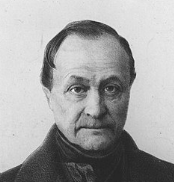
Reorganisation, irrespectively of God or king, by the worship of Humanity, systematically adopted. Man’s only right is to do his duty. The Intellect should always be the servant of the Heart, and should never be its slave.
▼
Source
Title Page
4 months 1 week ago
The two guides call out to a man early and late. And yet, no, for when remorse calls to a man it is always late. The call to find the way again by seeking out God in the confession of sins is always at the eleventh hour. Whether you are young or old, whether you have sinned much or little, whether you have offended much or neglected much, the guilt makes this call come at the eleventh hour. The inner agitation of the heart understands what remorse insists upon, that the eleventh hour has come. For in the sense of time, the old man's age is the eleventh hour; and the instant of death, the final moment in the eleventh hour. The indolent youth speaks of a long life that lies before him. The indolent old man hopes that his death is still a long way off. But repentance and remorse belong to the eternal in a man.
▼
Source
Søren Kierkegaard, Purity of Heart is to Will One Thing, 1847 p. 40-41
4 months 1 week ago
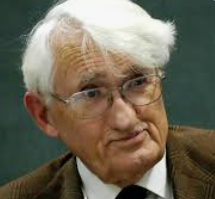
I would in fact tend to have more confidence in the outcome of a democratic decision if there was a minority that voted against it, than if it was unanimous… Social psychology has amply shown the strength of this bandwagon effect.
▼
Source
Habermas (1993) "Further reflections on the public sphere", in: Craig Calhoun Eds. Habermas and the Public Sphere. MIT Press. p. 441
4 months 1 week ago
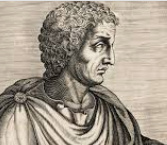
It is a maxim universally agreed upon in agriculture, that nothing must be done too late; and again, that everything must be done at its proper season; while there is a third precept which reminds us that opportunities lost can never be regained.
▼
Source
Book XVIII, sec. 44.
4 months 1 week ago
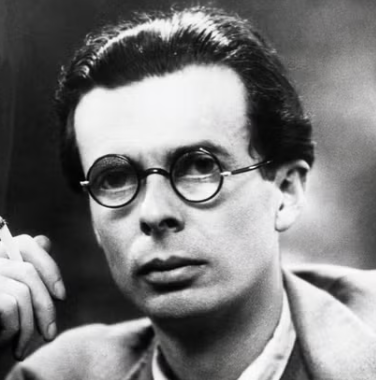
To his dog, every man is Napoleon; hence the constant popularity of dogs.
▼
Source
Reader's Digest (1934)
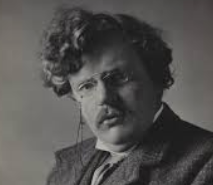
4 months 1 week ago
The simplification of anything is always sensational.
▼
Source
Varied Types (1903)
4 months 1 week ago
I have therefore found it necessary to deny knowledge in order to make room for faith.
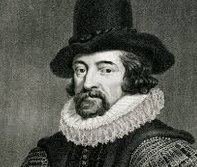
4 months 1 week ago
Some books are to be tasted, others to be swallowed, and some few to be chewed and digested; that is, some books are to be read only in parts; others to be read, but not curiously; and some few to be read wholly, and with diligence and attention.
▼
Source
Of Studies
4 months 1 week ago
This fact, that the opposite of sin is by no means virtue, has been overlooked. The latter is partly a pagan view, which is content with a merely human standard, and which for that very reason does not know what sin is, that all sin is before God. No, the opposite of sin is faith.
▼
Source
pp. 114 - 115
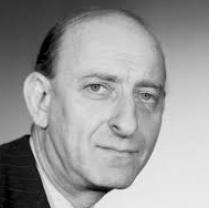
4 months 1 week ago
The man who no longer expects miraculous changes either from a revolution or from an economic plan is not obliged to resign himself to the unjustifiable. It is because he likes individual human beings, participates in communities, and respects the truth, that he refuses to surrender his soul to an abstract ideal of humanity, a tyrannical party, and an absurd scholasticism. . . . If tolerance is born of doubt, let us teach everyone to doubt all the models and utopias, to challenge all the prophets of redemption and the heralds of catastrophe. If they can abolish fanaticism, let us pray for the advent of the sceptics.
▼
Source
The Opium of Intellectuals (1955)
4 months 1 week ago
That all men are equal is a proposition which at ordinary times no sane individual has ever given his assent.
▼
Source
"The Idea of Equality"
4 months 1 week ago
There are two ways of dealing with nonsense in this world. One way is to put nonsense in the right place; as when people put nonsense into nursery rhymes. The other is to put nonsense in the wrong place; as when they put it into educational addresses, psychological criticisms, and complaints against nursery rhymes or other normal amusements of mankind.
▼
Source
Child Psychology and Nonsense (15 October 1921)
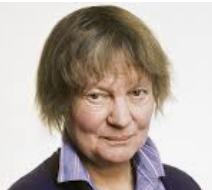
4 months 1 week ago
I think being a woman is like being Irish... Everyone says you're important and nice, but you take second place all the same.
▼
Source
The Red and the Green (1965), ch. 2, p. 30.
4 months 1 week ago
Although individuals who have begun to awake to freedom of cogitation, after having long unconsciously slumbered under the yoke of a belief (e.g. Protestants), do straightway deem themselves ennobled, in proportion to their articles of belief are scanty; yet, singularly enough, they whose understandings still lie dormant, cling to a very different principle of safety. “Better Believe Too Much Than Believe Too Little,” is here the adage; for whatever is done beyond and above what is duty, cannot in any event harm, but may perchance to good. Upon this delusive dream, which would make dishonesty the very spirit and soul of religious confession, is based on the well-known argumentum a tuto, which obtains a more easy and extended currency, because religion compensates for every fault, and hence also for dishonesty in adopting it. If, says the [https://en.wiktionary.org/wiki/sciolist sciolist], what I profess to believe concerning the Godhead is correct, then I have precisely hit the very truth. Should, on the other hand, the articles contain an error, still, as there is nothing in them morally improper, then have I merely assented to something superfluous and unnecessary, by all which I have no doubt molested, but certainly not incriminated myself. The peril arising out of the improbity of his profession – The Lesson of Conscience-necessarily undergone, when what is declared in the presence of God to be certain, which mankind must nevertheless know not to be so constituted as to admit of being affirmed with unconditioned certainty, are all overlooked by this dishonest maxim, And Indeed Pass With The Hypocrite For Nothing. The genuine safety-principle of true religion is contrariwise as follows. Whatever is a mean or condition of future bliss, unknown to naked reason, and promulgated singly by revelation, can strike root in my conviction, just like any other history; and so far forth as it does not militate against morality, cannot be absolutely false. Besides leaving this point totally undecided, I may unquestionably trust, that whatever of salutary there may lie in a document, will stand me in good stead, provided I do not by my moral short-coming make myself unworthy of it. In this maxim, there is a real moral safety, viz. That conscience be not violated; and more cannot be demanded from mankind. There is, moreover, an utmost danger and insecurity in that lauded stratagem of expediency, whereby we think astutely to evade any disadvantageous sequents that may spring from unbelieving nonconformity. Thus tampering with either party, we destroy our credit with both.
▼
Source
Book IV, Part 2, Section 4 | Immanuel Kant, Religion Within the Boundary of Pure Reason 1793 translated by James W Semple, Advocate ,Edinburgh 1838 p. 255-257
4 months 1 week ago
The logic now in use serves rather to fix and give stability to the errors which have their foundation in commonly received notions than to help the search for truth. So it does more harm than good.
▼
Source
Aphorism 7
4 months 1 week ago
It is true that in the confessional it is the pastor who preaches; but the true preacher is still the secret-sharer in your inner being. The pastor can preach only in vague generalities; the preacher in your inner being is just the opposite; he speaks simply and solely about you, to you, and within you. P. 183
4 months 1 week ago
I regard the two major male archetypes in 20th Century literature as Leopold Bloom and Hannibal Lecter. M.D. Bloom, the perpetual victim, the kind and gentle fellow who finishes last, represented an astonishing breakthrough to new levels of realism in the novel, and also symbolized the view of humanity that hardly anybody could deny c. 1900-1950. History, sociology, economics, psychology et al. confirmed Joyce’s view of Everyman as victim. Bloom, exploited and downtrodden by the Brits for being Irish and rejected by many of the Irish for being Jewish, does indeed epiphanize humanity in the first half of the 20th Century. And he remains a nice guy despite everything that happens... Dr Lecter, my candidate for the male archetype of 1951-2000, will never win any Nice Guy awards, I fear, but he symbolizes our age as totally as Bloom symbolized his. Hannibal's wit, erudition, insight into others, artistic sensitivity, scientific knowledge etc. make him almost a walking one man encyclopedia of Western civilization. As for his "hobbies" as he calls them — well, according to the World Game Institute, since the end of World War II, in which 60,000,000 human beings were murdered by other human beings, 193, 000,000 more humans have been murdered by other humans in brush wars, revolutions, insurrections etc. What better symbol of our age than a serial killer? Hell, can you think of any recent U.S. President who doesn't belong in the Serial Killer Hall of Fame? And their motives make no more sense, and no less sense, than Dr Lecter's Darwinian one-man effort to rid the planet of those he finds outstandingly loutish and uncouth.
▼
Source
"Previous Thoughts" at rawilson.com
4 months 1 week ago
It is only by poets that the life of any epoch can be synthesized. Encyclopaedias and guides to knowledge cannot do it, for the good reason that they affect only the intellectual surface of a man’s life. The lower layers, the core of his being, they leave untouched.
▼
Source
p. 4
4 months 1 week ago
The one stream of poetry which is continually flowing is slang.
▼
Source
"A Defence of Slang"
4 months 1 week ago
Man's greatest concern is to know how he shall properly fill his place in the universe and correctly understand what he must be in order to be a man.
▼
Source
Part III : Selection on Education from Kant's other Writings, Ch. I Pedagogical Fragments, # 53
4 months 1 week ago
To God, truly, the Giver and Architect of Forms, and it may be to the angels and higher intelligences, it belongs to have an affirmative knowledge of forms immediately, and from the first contemplation. But this assuredly is more than man can do, to whom it is granted only to proceed at first by negatives, and at last to end in affirmatives, after exclusion has been exhausted.
▼
Source
Aphorism XV
4 months 1 week ago
As a thorough Christian — or, as he would have put it, infinitely interested in becoming one — Søren Kierkegaard addressed himself neither to Jews nor to Judaism. But they have overheard him. In part because they could not help it... Jews are well advised to be on the alert for what they can learn not only about him but about themselves also.
▼
Source
Rabbi Milton Steinberg, in "Kierkegaard and Judaism" in The Menorah Journal 37:2 (1949)
4 months 1 week ago
"Elohim," the name for the creative power in Genesis, is a female plural, a fact that generations of learned rabbis and Christian theologians have all explained as merely grammatical convention. The King James and most other Bibles translate it as "God," but if you take the grammar literally, it seems to mean "goddesses." Al Shaddai, god of battles, appears later, and YHWH, mispronounced Jehovah, later still.
▼
Source
Genesis, p. 197
4 months 1 week ago
Ignore death up to the last moment; then, when it can't be ignored any longer, have yourself squirted full of morphia and shuffle off in a coma. Thoroughly sensible, humane and scientific, eh?
4 months 1 week ago
Fiction means the common things as seen by the uncommon people. Fairy tales mean the uncommon things as seen by the common people.
▼
Source
Ch 4: "The Pickwick Papers"
4 months 1 week ago
Kant believed that the concept of time is a prior condition of our minds that affects our experience of the world, but this does not explain why different human societies have had different concepts of time and have assigned different degrees of significance to the temporal aspect of phenomena. ...instead of being a prior condition, our concept of time should be regarded as a consequence of our experience of the world, the result of a long evolution. ...In recent years it has become clear that all our mental abilities are potential capacities which we can only realize in practice by learning how to use them.
▼
Source
Gerald James Whitrow, Time in History: Views of Time from Prehistory to the Present Day (1988)
CivilSimian.com created by AxiomaticPanic, CivilSimian, Kalokagathia