
4 months 1 week ago
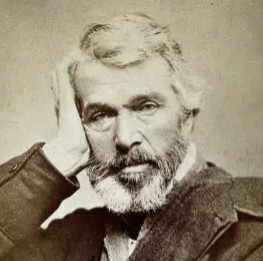
Who is there that can recognize real intellect, and do reverence to it; and discriminate it well from sham intellect, which is so much more abundant, and deserves the reverse of reverence? He that himself has it!—One really human Intellect, invested with command, and charged to reform Downing Street for us, would continually attract real intellect to those regions, and with a divine magnetism search it out from the modest corners where it lies hid. And every new accession of intellect to Downing Street would bring to it benefit only, and would increase such divine attraction in it, the parent of all benefit there and elsewhere!

4 months 1 week ago
All moral tradeoffs are messy. However, on some fairly modest ethical assumptions, when a severe and irreconcilable conflict of interests occurs, then the interests of the more sentient take precedence over the less sentient. This rule of thumb holds regardless of the age, race or species of the victim.
▼
Source
Reply to "[https://www.quora.com/Why-is-David-Pearce-a-vegan-and-a-negative-utilitarian-given-industrial-agricultures-decimation-of-insect-populations-and-therefore-suffering-the-greater-number-of-insects-than-farm-animals-Shouldnt-insects-outweigh/answer
4 months 1 week ago
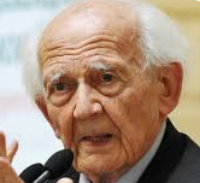
The problem is, eternity is barred to humans, and so humans, all too painfully aware of that and entertaining little hope of appealing against that verdict of fate, seek to stifle and deafen their tragic wisdom in a hubbub of frail and fleeting pleasures. This admittedly being a false calculation—for the same reason which prompted it (that tragic wisdom can never be chased or conjured away for good)—they condemn themselves, whatever their material wealth, to perpetual spiritual poverty: to continuous unhappiness (‘A man is as unhappy as he has convinced himself to be’). Instead of seeking the way to happiness within the limits of their predicament, they take a long detour, hoping that somewhere along the route their odious and repulsive destiny may be escaped or fooled—only to land back in the despair that prompted them to start on their voyage of (dearly wished for, yet unattainable) discovery. The only discovery humans can possibly make on that voyage is that the route they have taken was but a detour that sooner or later will bring them back to the starting line.
▼
Source
[paraphrasing the view of Seneca], p. 34.
4 months 1 week ago
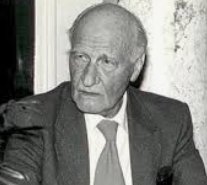
It should now be clear that "wonder" and philosophizing are connected with each other in a more essential sense than may at first appear in the statement, "Philosophy begins in wonder." For wonder is not merely the beginning, in the sense of initium, the first stage or phase of philosophy. Rather, wonder is the beginning in the sense of the "principle" (principium), the abiding, ever-intrinsic origin of philosophizing. It is not true to say that the philosopher, insofar as he philosophizes, ever "emerges from his wonder" — if he does depart from his state of wonder, he has ceased to philosophize.
▼
Source
pp. 105–106

4 months 1 week ago
There is no means of proving it is preferable to be than not to be.
4 months 1 week ago
A man perfects himself by work much more than by reading.
4 months 1 week ago
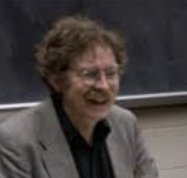
The educated man is the man who does not live in immediate intuition, but in his recollection so that little is new to him any longer.
▼
Source
Chapter 4, Philosophy As Writing: The Case Of Hegel, p. 74
4 months 1 week ago
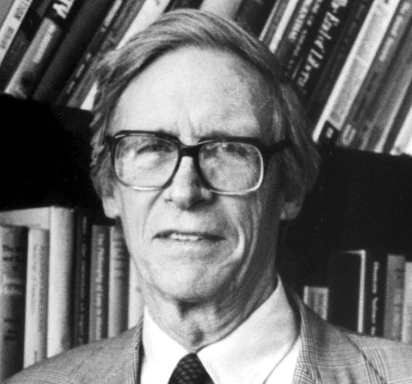
The difference principle, for example, requires that the higher expectations of the more advantaged contribute to the prospects of the least advantaged.
▼
Source
Chapter II, Section 16, pg. 95

4 months 1 week ago
From the constitution of the solar system it is... probable that the temperature of the poles... are a little less than that of space... the same for all... although the distances from the sun may be unequal.

4 months 1 week ago
In the history of bourgeois society, legislative reform served to strengthen progressively the rising class till the latter was sufficiently strong to seize political power, to suppress the existing juridical system and to construct itself a new one.
▼
Source
Ch.8
4 months 1 week ago
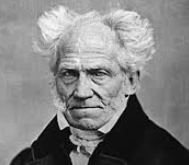
The bad thing about all religions is that, instead of being able to confess their allegorical nature, they have to conceal it; accordingly, they parade their doctrines in all seriousness as true sensu proprio, and as absurdities form an essential part of these doctrines we have the great mischief of a continual fraud. Nay, what is worse, the day arrives when they are no longer true sensu proprio, and then there is an end of them; so that, in that respect, it would be better to admit their allegorical nature at once. But the difficulty is to teach the multitude that something can be both true and untrue at the same time. Since all religions are in a greater or less degree of this nature, we must recognise the fact that mankind cannot get on without a certain amount of absurdity, that absurdity is an element in its existence, and illusion indispensable; as indeed other aspects of life testify.
▼
Source
"The Christian System" in Religion: A Dialogue, and Other Essays (1910) as translated by Thomas Bailey Saunders, p. 106
4 months 1 week ago
For a long time — always, in fact — I have known that life here on earth is not what I needed and that I wasn't able to deal with it; for this reason and for this reason alone, I have acquired a touch of spiritual pride, so that my existence seems to me the degradation and the erosion of a psalm.
4 months 1 week ago
If they be inhabited, what a scope for misery and folly; if they be un-inhabited, what a waste of space.
▼
Source
On other stars | Attributed by John Burroughs on the first page of his 1920 book Accepting The Universe | Variant: A sad spectacle. If they be inhabited, what a scope for misery and folly. It they be not inhabited, what a waste of space. | Attributed by C
4 months 1 week ago
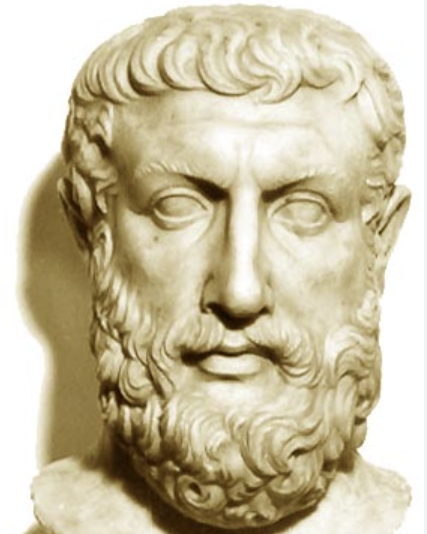
You must learn all things, both the unshaken heart of persuasive truth, and the opinions of mortals in which there is no true warranty.
▼
Source
Frag B 1.28-30, quoted by Sextus Empiricus, Against the Mathematicians, vii. 3; Simplicius, Commentary on the Heavens, 557-8; Proclus, Commentary on the Timaeus I, 345
4 months 1 week ago
That persons have opposing interests and seek to advance their own conception of the good is not at all the same thing as their being moved by envy and jealousy.
▼
Source
Chapter IX, Section 81, p. 540
4 months 1 week ago
It may, perhaps, be true, though we cannot distinctly see it to be so, that as all finite things require a cause, infinites admit of none. It is evident, that nothing can begin to be without a cause; but it by no means follows from thence, that that must have had a cause which had no beginning. But whatever there may be in this conjecture, we are constrained, in pursuing the train of causes and effects, to stop at last at something uncaused. That any being should be self created is evidently absurd, because that would suppose that he had a being before he had, or that he existed, and did not exist at the same time. For want of clearer knowledge of this subject, we are obliged to content ourselves with terms that convey only negative ideas, and to say that God is a being untreated or uncaused; and this is all that we mean when we sometimes say that he is self existent.
▼
Source
Vol. I : Part I : The Being and Attributes of God, § 1 : Of the existence of God, and those attributes which art deduced from his being considered as uncaused himself, and the cause of every thing else (1772)
4 months 1 week ago
If we assume the viewpoint claimed as his own by Lenin and we fear the influence of intellectuals in the proletarian movement, we can conceive of no greater danger to the Russian party than Lenin's plan of organization. Nothing will more surely enslave a young labor movement to an intellectual elite hungry for power than this bureaucratic straightjacket, which will immobilize the movement and turn it into an automaton manipulated by a Central Committee. On the other hand there is no more effective guarantee against opportunist intrigue and personal ambition than the independent revolutionary action of the proletariat, as a result of which the workers acquire the sense of political responsibility and self-reliance.
4 months 1 week ago
We, on the contrary, now send to the Brahmans English clergymen and evangelical linen-weavers, in order out of sympathy to put them right, and to point out to them that they are created out of nothing, and that they ought to be grateful and pleased about it. But it is Just the same as if we fired a bullet at a cliff. " In India, our religions wIll never at any time take root; the ancient wisdom of the human race will not be supplanted by the events in Galilee. On the contrary, Indian Wisdom flows back to Europe, and will produce a fundamental change in our knowledge and thought.
▼
Source
Schopenhauer, Arthur The world as will and representation. Translated from the German by E. F. J. Payne. New York, Dover Publications [c1969 - Volume I, & 63 p. 356-357. quoted in Londhe, S. (2008). A tribute to Hinduism: Thoughts and wisdom spanning cont
4 months 1 week ago
It's not worth the bother of killing yourself, since you always kill yourself too late.
4 months 1 week ago
I always felt the force of his [John Stuart Mill's] distrust of "thunderings" after an hour with Carlyle. You walked away from Chelsea stirred to the depths by a torrent of humour. But then it was splendid caricature: words and images infinitely picturesque and satiric, marvellous collocations and antitheses, impassioned railing against all the human and even superhuman elements in our blindly misguided universe. But of direction, of any sign-post or way out, not a trace was to be discovered, any more than a judicial page, or sense of any wisdom in the judicial, is to be found in his greatest pieces of history. After the grand humorist's despair was over, it was a healthy restorative in passing homeward along the Embankment to fling oneself into the arms of any statistician, politician, political economist, sanitary authority, poor-law reformer, prisoner-reformer, drainage enthusiast, or other practical friend of improvement, whom genial accident might throw in one's way.
▼
Source
John Morley, Recollections, Volume I (1917), pp. 56-57
4 months 1 week ago
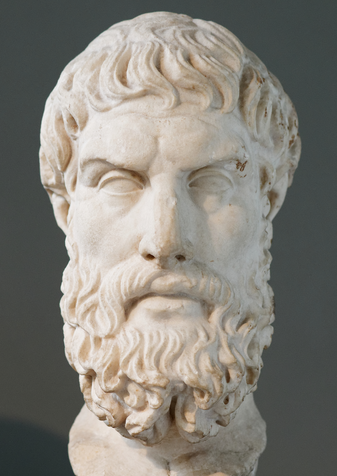
The end of living, or the ultimate good, which is to be sought for its own sake, according to the universal opinion of mankind, is happiness; yet men, for the most part, fail in the pursuit of this end, either because they do not form a right idea of the nature of happiness, or because they do not make use of proper means to attain it.
4 months 1 week ago
Parmenides was... the first philosopher to expound his system in metrical language. ...[T]he only Greeks who ...wrote philosophy in verse were ...Parmenides and Empedokles; for Xenophanes was not primarily a philosopher... The fragments of Parmenides are preserved for the most part by Simplicius...
4 months 1 week ago
Man needs to go outside himself in order to find repose and reveal himself.
▼
Source
"Vivir en Sí" [To Live in Oneself] (1891)
4 months 1 week ago
Gentleness, as opposed to an irascible temper, greatly contributes to the tranquility and happiness of life, by preserving the mind from perturbation, and arming it against the assaults of calumny and malice.
4 months 1 week ago
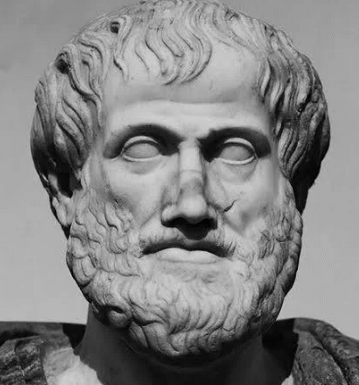
But it is better to assume principles less in number and finite, as Empedocles makes them to be. All philosophers... make principles to be contraries... (for Parmenides makes principles to be hot and cold, and these he demominates fire and earth) as those who introduce as principles the rare and the dense. But Democritus makes the principles to be the solid and the void; of which the former, he says, has the relation of being, and the latter of non-being. ...it is necessary that principles should be neither produced from each other, nor from other things; and that from these all things should be generated. But these requisites are inherent in the first contraries: for, because they are first, they are not from other things; and because they are contraries, they are not from each other.
▼
Source
Book I, Ch. VI, pp. 53-55.
4 months 1 week ago
Barricades of ideas are worth more than barricades of stones. There is no prow that can cut through a cloudbank of ideas. A powerful idea, waved before the world at the proper time, can stop a squadron of iron-clad ships, like the mystical flag of the Last judgement.
4 months 1 week ago
The cinema is a place of intrinsic indiscernibility between art and non-art.
▼
Source
From Considérations sur l'état actuel du cinéma (1999), translated as Philosophy and Cinema in Infinite Thought: truth and the return of philosophy. London: Continuum, 2003. .
4 months 1 week ago
The teaching of my philosophy... that our whole existence is something which had better not have been, and that to disown and disclaim it is the highest wisdom.
▼
Source
Ch 1
4 months 1 week ago
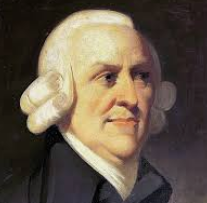
The more you live, the less useful it seems to have lived.
4 months 1 week ago
Hatred and anger are the greatest poison to the happiness of a good mind.
▼
Source
Section II, Chap. III.

4 months 1 week ago
Nothing could be more natural than the developement of the passions, nor more striking than the views of the human heart. What delicate struggles! and uncommonly pretty turns of thought!
▼
Source
Mary: A Fiction (1788)

4 months 1 week ago
I suggest that scientific knowledge, though logically more articulate and far more complex, is of this sort. The books and teachers from whom it is acquired present concrete examples together with a multitude of theoretical generalizations. Both are essential carriers of knowledge, and it is therefore Pickwickian to seek a methodological criterion that supposes the scientist can specify in advance whether each imaginable instance fits or would falsify his theory.
▼
Source
"Logic of Discovery or Psychology of Research?", Criticism and the growth of knowledge edited by Imre Lakatos and Alan Musgrave (1970)
4 months 1 week ago
Nature flies from the infinite, for the infinite is unending or imperfect, and Nature ever seeks an end.
▼
Source
Book I, 715b.15
4 months 1 week ago
Perhaps the enemies of liberty are such only because they judge it by its loud voice. If they knew its charms, the dignity that accompanies it, how much a free man feels like a king, the perpetual inner light that is produced by decorous self-awareness and realization, perhaps there would be no greater friends of freedom than those who are its worst enemies.

4 months 1 week ago
'Party,' in the general vocabulary of world intellectuals, is basically a unified social organization with a 'world-view,' an 'Ideology,' a 'philosophy of history,' and 'ideal social order,' a 'class foundation,' a 'class orientation,' a 'social leadership,' a 'political philosophy,' a 'political orientation,' a 'tradition,' a 'slogan,' a 'strategy,' a "tactic of struggle," and … a "hope" that wants to change the "status quo" in man, society, people, or a particular class, and establish the "desired status" in its stead.
▼
Source
Ali Shariati, in: The Islamic Quarterly, Vol. 27-29, (1983), p. 215; as quoted in: Ali Mirsepassi (2000), Intellectual Discourse and the Politics of Modernization, p. 126.
4 months 1 week ago
Writers may be classified as meteors, planets, and fixed stars. A meteor makes a striking effect for a moment. You look up and cry “There!” and it is gone forever. Planets and wandering stars last a much longer time. They often outshine the fixed stars and are confounded by them by the inexperienced; but this only because they are near. It is not long before they must yield their place; nay, the light they give is reflected only, and the sphere of their influence is confined to their orbit — their contemporaries. Their path is one of change and movement, and with the circuit of a few years their tale is told. Fixed stars are the only ones that are constant; their position in the firmament is secure; they shine with a light of their own; their effect today is the same as it was yesterday, because, having no parallax, their appearance does not alter with a difference in our standpoint. They belong not to one system, one nation only, but to the universe. And just because they are so very far away, it is usually many years before their light is visible to the inhabitants of this earth.
▼
Source
Vol. 2 "The Art of Literature" as translated in Essays and Aphorisms (1970), as translated by R. J. Hollingdale
4 months 1 week ago
Get hold of yourself, be confident once more, don't forget that it is not given to just anyone to have idolized discouragement without succumbing to it.
4 months 1 week ago
But man has almost constant occasion for the help of his brethren, and it is in vain for him to expect it from their benevolence only. He will be more likely to prevail if he can interest their self-love in his favour, and shew them that it is for their own advantage to do for him what he requires of them. Whoever offers to another a bargain of any kind, proposes to do this. Give me that which I want, and you shall have this which you want, is the meaning of every such offer; and it is in this manner that we obtain from one another the far greater part of those good offices which we stand in need of. It is not from the benevolence of the butcher, the brewer, or the baker that we expect our dinner, but from their regard to their own interest. We address ourselves, not to their humanity, but to their self-love, and never talk to them of our own necessities, but of their advantages. Nobody but a beggar chooses to depend chiefly upon the benevolence of his fellow-citizens. Even a beggar does not depend upon it entirely.
▼
Source
Chapter II, p. 19.
4 months 1 week ago
Executions, far from being useful examples to the survivors, have, I am persuaded, a quite contrary effect, by hardening the heart they ought to terrify. Besides, the fear of an ignominious death, I believe, never deterred anyone from the commission of a crime, because in committing it the mind is roused to activity about present circumstances.
▼
Source
Letter 19
4 months 1 week ago
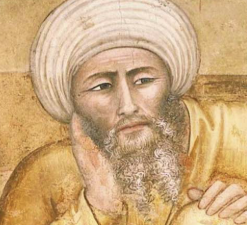
The Asharites have expressed a very peculiar opinion, both with regard to reason and religion; about this problem they have explained it in a way in which religion has not, but have adopted quite an opposite method.
▼
Source
Part 4: Divine Justice and Injustice; Opening sentence
4 months 1 week ago
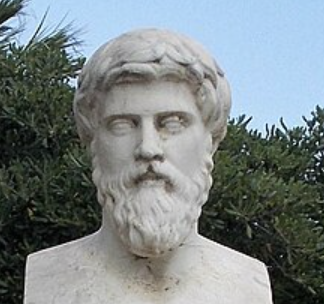
Scilurus on his death-bed, being about to leave four-score sons surviving, offered a bundle of darts to each of them, and bade them break them. When all refused, drawing out one by one, he easily broke them,—thus teaching them that if they held together, they would continue strong; but if they fell out and were divided, they would become weak.
▼
Source
31 Scilurus

4 months 1 week ago
Ridden with conflicts and lacking the industrial base of communism and nazism, Islamism is nowhere near a danger of the magnitude of those that were faced down in the 20th century.
4 months 1 week ago
For some identify happiness with virtue, some with practical wisdom, others with a kind of philosophic wisdom, others with these, or one of these, accompanied by pleasure or not without pleasure; while others include also external prosperity. Now ... it is not probable that these should be entirely mistaken, but rather that they should be right in at least some one respect or even in most respects.
▼
Source
Book I, 1098b.23
4 months 1 week ago
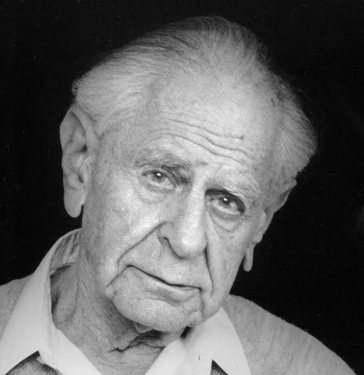
If the many, the specialists, gain the day, it will be the end of science as we know it - of great science. It will be a spiritual catastrophe comparable in its consequences to nuclear armament.
▼
Source
K. Popper, The Myth of the Framework, London: Routledge. As quoted in [https://books.google.it/Brooks?id=ha6yDAAQBAJ&of=PA173 The Cambridge Companion to Karl Popper] (2016) by J. Shearmur, G. Stokes
4 months 1 week ago
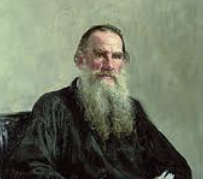
God is the infinite ALL. Man is only a finite manifestation of Him. Or better yet: God is that infinite All of which man knows himself to be a finite part. God alone exists truly. Man manifests Him in time, space and matter. The more God's manifestation in man (life) unites with the manifestations (lives) of other beings, the more man exists. This union with the lives of other beings is accomplished through love. God is not love, but the more there is of love, the more man manifests God, and the more he truly exists... We acknowledge God only when we are conscious of His manifestation in us. All conclusions and guidelines based on this consciousness should fully satisfy both our desire to know God as such as well as our desire to live a life based on this recognition.
▼
Source
[http://www.linguadex.com/tolstoy/chapter1.htm Entry in Tolstoy's Diary] (1 November 1910)
4 months 1 week ago
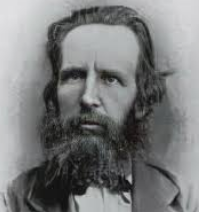
And if my friends refused to listen to me, then the walls had to hear me or the stones in the fields and the trees of the forests.
▼
Source
Quoted by Harry Slochower in "Julius Bahnsen, Philosopher of Heroic Despair, 1830-1881" (1932), The Philosophical Review, 41(4), p. 371

4 months 1 week ago
Palestine is a moral litmus test for the world
▼
Source
[https://www.aljazeera.com/program/upfront/2023/10/27/angela-davis-palestine-is-a-moral-litmus-test-for-the-world Angela Davis: 'Palestine is a moral litmus test for the world'] (27 Oct 2023)
4 months 1 week ago
There are, first of all, two kinds of authors: those who write for the subject’s sake, and those who write for writing’s sake. The first kind have had thoughts or experiences which seem to them worth communicating, while the second kind need money and consequently write for money.
4 months 1 week ago
Impossible to spend sleepless nights and accomplish anything: if, in my youth, my parents had not financed my insomnias, I should surely have killed myself.
4 months 1 week ago
China is a much richer country than any part of Europe.
▼
Source
Chapter XI, Part III, (First Period) p. 221.
CivilSimian.com created by AxiomaticPanic, CivilSimian, Kalokagathia