
4 months 1 week ago
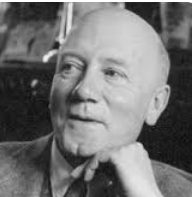
There certainly are changes of fashion in philosophy. When a new kind is in vogue, many things in the philosophy of an earlier day, which are of permanent value and perhaps highly relevant to contemporary problems, tend to be altogether forgotten or carelessly and ignorantly dismissed, simply because they occur in an out-of-date setting and are clad in an unfashionable dress. It is now quite certain that much of permanent value in Scholastic philosophy was ignored or contemned from this cause by Locke, Berkeley, Hume, and their followers. I have little doubt that the same is true mutatis mutandis of the attitude of many present-day philosophers towards the systems of monistic idealism which were fashionable at the beginning of this century. It is consoling to a philosopher's vanity not to pry too closely into the history of his subject, for otherwise he is liable to find that his discoveries have been anticipated and his fallacies refuted in advance by predecessors whom he has ignored or despised.
▼
Source
From Philosophy (I), in Inquiry (1), (1958)
4 months 1 week ago
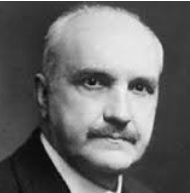
In proportion as a man's interests become humane and his efforts rational, he appropriates and expands a common life, which reappears in all individuals who reach the same impersonal level of ideas.
▼
Source
Ch. VIII: Ideal Society
4 months 1 week ago
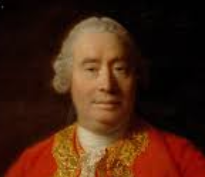
There is nothing in any object, consider'd in itself, which can afford us a reason for drawing a conclusion beyond it; [...] even after the observation of the frequent or constant conjunction of objects, we have no reason to draw any inference concerning any object beyond those of which we have had experience.
▼
Source
Part 3, Section 12
4 months 1 week ago
Men are disturbed, not by things, but by the principles and notions which they form concerning things.
4 months 1 week ago
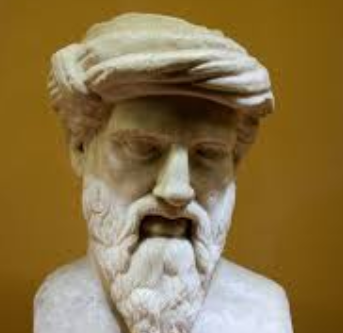
Such things taught he, though advising above all things to speak the truth, for this alone deifies men. For as he had learned from the Magi, who call God Oremasdes, God's body is light, and his soul is truth. He taught much else, which he claimed to have learned from Aristoclea at Delphi.
▼
Source
Porphyry of Tyre, as translated by Kenneth Sylvan Guthrie in The Pythagorean Sourcebook and Library: An Anthology of Ancient Writings which Relate to Pythagoras and Pythagorean Philosophy (1919); also quoted in The Golden Chain: An Anthology of Pythagorea
4 months 1 week ago
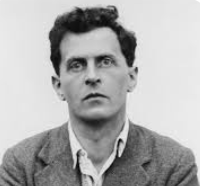
To obey a rule, to make a report, to give an order, to play a game of chess, are customs (uses, institutions)
▼
Source
§ 199
4 months 1 week ago
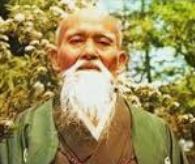
Aiki is not a technique to fight with or defeat an enemy. It is the way to reconcile the world and make human beings one family.
▼
Source
As quoted in It's A Lot Like Dancing… : An Aikido Journey (1993 by Terry Dobson Riki Moss, and Jan E. Watson -
4 months 1 week ago
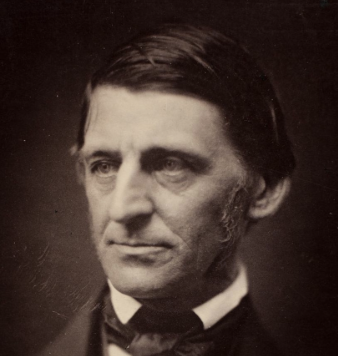
The next thing to saying a good thing yourself, is to quote one.
▼
Source
This sentence has no known source in Emerson's works, but its general sense does closely match the tenor of Emerson's essay "Quotation and Originality", in particular the sentence "Next to the originator of a good sentence is the first quoter of it." (lis
4 months 1 week ago
The idea of a ‘system approach’ is both quite popular and quite unpopular. It’s popular because it sounds good to say that the whole system is being considered, but it’s quite unpopular because it sounds either like a lot of nonsense or else downright dangerous – so much evil can be created under the guise of serving the whole.
▼
Source
p. 11
4 months 1 week ago
The world is a perpetual caricature of itself; at every moment it is the mockery and the contradiction of what it is pretending to be.
▼
Source
"Dickens"
4 months 1 week ago
I say, then, that belief is nothing but a more vivid, lively, forcible, firm, steady conception of an object, than what the imagination alone is ever able to attain
▼
Source
§ 4.9
4 months 1 week ago
The laws of Manu are the doctrines of Plato, Philo, Zoroaster, Pythagoras, and of the Kabala. The esoterism of every religion may be solved by the latter. The kabalistic doctrine of the allegorical Father and Son, or Xlarrjp and Aoyos is identical with the groundwork of Buddhism. Moses could not reveal to the multitude the sublime secrets of religious speculation, nor the cosmogony of the universe ; the whole resting upon the Hindu Illusion, a clever mask veiling the Sanctum Sanctorum, and which has misled so many theological commentators. (p. 271)
▼
Source
The Veil of Isis, Part 1, Science.
4 months 1 week ago
If someone is merely ahead of his time, it will catch up to him one day.
▼
Source
p. 8e
4 months 1 week ago
When life is victorious, there is birth; when it is thwarted, there is death. A warrior is always engaged in a life-and-death struggle for Peace.
4 months 1 week ago
Virtually at the same time as Kierkegaard gave philosophical significance to moods, Emerson was doing the same. In "Experience" he characterized our life experiences as "a train of moods" that color whatever we encounter, and he described life as "a flux of moods" that affect our "states of mind."
▼
Source
Nineteenth-century prose v. 30 The Emerson Enigma by George M Stack, 2003 p. 444
4 months 1 week ago
It would be a good thing, if the systems planner's germination was moral outrage and not just a mild felt need. In other words, I do not think we should view the major problems of the world today with calm objectivity. We shouldn't first ask ourselves for a precise and operational definition of malnutrition. We should begin with 'kids are starving in great numbers, damn it all!
▼
Source
p. 17
4 months 1 week ago
Skepticism, like chastity, should not be relinquished too readily.
▼
Source
George Santayana, as quoted in Quotations for Our Time (1977) edited by Laurence J. Peter
4 months 1 week ago
Nothing appears more surprising to those, who consider human affairs with a philosophical eye, than the easiness with which the many are governed by the few; and the implicit submission, with which men resign their own sentiments and passions to those of their rulers. When we enquire by what means this wonder is effected, we shall find, that, as Force is always on the side of the governed, the governors have nothing to support them but opinion. It is therefore, on opinion only that government is founded; and this maxim extends to the most despotic and most military governments, as well as to the most free and most popular.
▼
Source
Part I, Essay 4: Of The First Principles of Government
4 months 1 week ago
Wisdom is passionless. But faith by contrast is what Kierkegaard calls a passion.
▼
Source
p. 53e
4 months 1 week ago
Would we have played with our lives for nothing but worldly gain? If our people had run after earth's goods and gold,Need they have smashed idols, and not idols sold?
▼
Source
Shikwa. [https://archive.org/details/ShikwaJawabIShikwaIqbalsDialogueWithAllahTrKhushwantSinghIqbal]
4 months 1 week ago
But a much graver charge attaches itself, if not to our clergy, certainly to those who have the distribution of ecclesiastical patronage. The richest Church in the world maintains that its funds are quite insufficient for the purposes of religion and that our working clergy are ill-paid, and church accommodation insufficient. It calls therefore upon the nation to endow it with larger funds, and yet, while reluctant to sacrifice its own superfluities, it approves of its rich sinecures being given to reward, — not the professional service of its indefatigable parochial clergy, but those of its members who, having devoted the greater part of their time to scientific researches, have political or private interest enough to obtain such advancement. But this mode of rewarding merit is neither creditable to the Church nor advantageous to science. It tempts into the Church talents which some of its distinguished members maintain to be naturally of a disqualifying, if not of an antagonistic nature to the pursuits of religion; whilst, on the other hand, it makes a most unjust and arbitrary distinction amongst men of science themselves. It precludes those who cannot conscientiously subscribe to Articles, at once conflicting and incomprehensible, from the acquisition of that preferment and that position in society, which thus in many cases, must be conferred on less scrupulous, and certainly less distinguished inquirers into the works of nature. As the honorary distinctions of orders of knight hood are not usually bestowed on the clerical profession, its members generally profess to entertain a great contempt for them, and pronounce them unfit for the recognition of scientific merit.
▼
Source
p. 225-226
4 months 1 week ago
If Providence erases, it is no doubt in order to write.
▼
Source
Chapter II, p. 20
4 months 1 week ago
But were this world ever so perfect a production, it must still remain uncertain, whether all the excellencies of the work can justly be ascribed to the workman. If we survey a ship, what an exalted idea must we form of the ingenuity of the carpenter who framed so complicated, useful, and beautiful a machine? And what surprise must we feel, when we find him a stupid mechanic, who imitated others, and copied an art, which, through a long succession of ages, after multiplied trials, mistakes, corrections, deliberations, and controversies, had been gradually improving? Many worlds might have been botched and bungled, throughout an eternity, ere this system was struck out; much labour lost; many fruitless trials made; and a slow, but continued improvement carried on during infinite ages in the art of world-making. In such subjects, who can determine, where the truth; nay, who can conjecture where the probability, lies; amidst a great number of hypotheses which may be proposed, and a still greater number which may be imagined?
▼
Source
Philo to Cleanthes, Part V
4 months 1 week ago
What struck me most in this conversation was a radical passion for truthfulness in everything (which I came to know as a characteristic vogue among the young Viennese intellectuals of the generation immediately preceding mine only in the following university years). This truthfulness became almost a fashion in that border group between the purely Jewish and the purely Gentile parts of the intelligentsia in which I came so much to move. It meant much more than truth in speech. One had to "live" truth and not tolerate any pretence in oneself or others. It sometimes produced outright rudeness and, certainly, unpleasantness. Every convention was dissected and every conventional form exposed as fraud. Wittgenstein merely carried this further in applying it to himself. I sometimes felt that he took a perverse pleasure in discovering falsehood in his own feelings and that he was constantly trying to purge himself of all fraud.
▼
Source
Friedrich Hayek, "[https://www.unz.org/Pub/Encounter-1977aug-00020 Remembering My Cousin, Ludwig Wittgenstein]", Encounter ([https://www.unz.org/Pub/Encounter-1977aug August 1977]) Page 20.
4 months 1 week ago
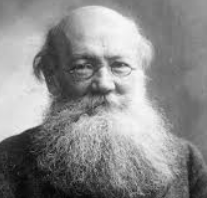
America is just the country that shows how all the written guarantees in the world for freedom are no protection against tyranny and oppression of the worst kind. There the politician has come to be looked upon as the very scum of society. The peoples of the world are becoming profoundly dissatisfied and are not appeased by the promise of the social-democrats to patch up the State into a new engine of oppression.
▼
Source
Speech (26 September 1891); as quoted in Peter Kropotkin : From Prince to Rebel (1990) by George Woodcock and Ivan Avakumovic, p. 269
4 months 1 week ago
If it has been revealed to man that the Almighty made him out of the dust of the earth, and breathed into his nostrils the breath of life, it is in vain to tell a Christian that man was originally a speck of albumen, and passed through the stages of monads and monkeys, before he attained his present intellectual preeminence. If it be a received truth that the Creator has repeatedly interposed in the government of the universe and displayed his immediate agency in miraculous interpositions, it is an insult to any reader to tell him that the being slumbers on his throne and rules under a "primal arrangement in his counsels," and "by a code of laws of unbending operation."
4 months 1 week ago
All pain is a punishment, and every punishment is inflicted for love as much as for justice.
▼
Source
"Fifth Dialogue," p. 149
4 months 1 week ago
The hospitality of primitive peoples, respect for human life, the sense of reciprocal obligation, compassion for the weak, courage, extending even to the sacrifice of self for others which is first learnt for the sake of children and friends, and later for that of members of the same community — all these qualities are developed in man anterior to all law, independently of all religion, as in the case of the social animals. Such feelings and practices are the inevitable results of social life. Without being, as say priests and metaphysicans, inherent in man, such qualities are the consequence of life in common. But side by side with these customs, necessary to the life of societies and the preservation of the race, other desires, other passions, and therefore other habits and customs, are evolved in human association. The desire to dominate others and impose one's own will upon them; the desire to seize upon the products of the labor of a neighboring tribe; the desire to surround oneself with comforts without producing anything, while slaves provide their master with the means of procuring every sort of pleasure and luxury — these selfish, personal desires give rise to another current of habits and customs.
▼
Source
II
4 months 1 week ago
When Thales was asked what was difficult, he said, "To know one’s self." And what was easy, "To advise another."
▼
Source
Thales, 9.
4 months 1 week ago
Joseph de Maistre is another of those men whose word, like that of Burke, has vitality. In imaginative power he is altogether inferior to Burke. On the other hand his thought moves in closer order than Burke's, more rapidly, more directly; he has fewer superfluities. Burke is a great writer, but Joseph de Maistre's use of the French language is more powerful, more thoroughly satisfactory, than Burke's use of the English. It is masterly; it shows us to perfection of what that admirable instrument, the French language, is capable.
▼
Source
Matthew Arnold, "Joseph de Maistre on Russia" in English Literature and Irish Politics (1873), p. 87
4 months 1 week ago
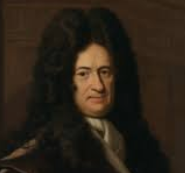
We never have a full demonstration, although there is always an underlying reason for the truth, even if it is only perfectly understood by God, who alone penetrated the infinite series in one stroke of the mind.
▼
Source
[http://books.google.com/books?id=oFoCY3xJ8nkC&dq The Shorter Leibniz Texts (2006)] edited by Lloyd H. Strickland, p. 111
4 months 1 week ago
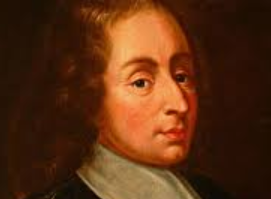
I do not speak here of divine truths... because they are infinitely superior to nature: God alone can place them in the soul... I know that he has desired that they should enter from the heart into the mind, and not from the mind into the heart, to humiliate that proud power of reasoning that pretends to the right to be the judge of the things that the will chooses; and to cure this infirm will which is wholly corrupted by its filthy attachments.
4 months 1 week ago
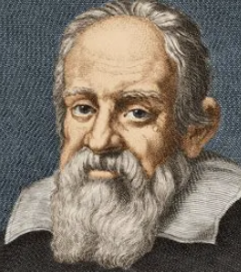
It always seems to me extreme rashness on the part of some when they want to make human abilities the measure of what nature can do. On the contrary, there is not a single effect in nature, even the least that exists, such that the most ingenious theorists can arrive at a complete understanding of it. This vain presumption of understanding everything can have no other basis than never understanding anything. For anyone who had experienced just once the perfect understanding of one single thing, and had truly tasted how knowledge is accomplished, would recognize that of the infinity of other truths he understands nothing.
▼
Source
Day One
4 months 1 week ago
Practised for centuries, repression has so badly succeeded that it has but led us into a blind alley from which we can only issue by carrying torch and hatchet into the institutions of our authoritarian past.
4 months 1 week ago
Aristippus said that a wise man’s country was the world.
▼
Source
Aristippus, 13.
4 months 1 week ago
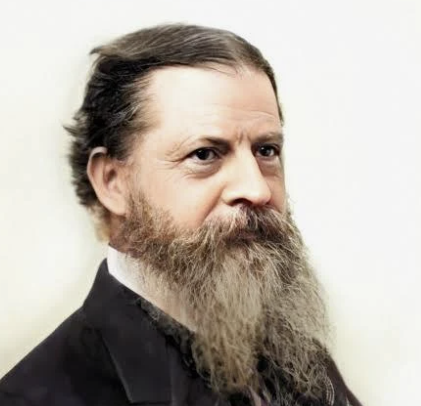
The definition of definition is at bottom just what the maxim of pragmatism expresses.
▼
Source
Letter to William James (8 January 1909)
4 months 1 week ago
Nothing is more common than good things: the point in question is only to discriminate them; and it is certain that they are all natural and within our reach and even known to all mankind.
4 months 1 week ago
Names and attributes must be accommodated to the essence of things, and not the essence to the names, since things come first and names afterwards.
▼
Source
As quoted in Discoveries and Opinions of Galileo (1957) by Stillman Drake, p. 92 | Variant translation: Names and attributes must be accommodated to the essence of things, and not the essence to the names, because things came first, and their names subseq
4 months 1 week ago
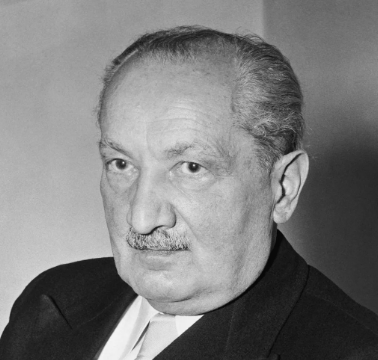
Do the essences of proposition and of the truth determine themselves from out of the essence of the thing, or does the essence of the thing determine itself from out of the essence of the proposition? The question is posed as an either/or. However does this either/or itself suffice? Are the essence of the thing and the essence of the proposition only built as mirror images because both of them together determine themselves from out of the same but deeper lying root? However, what and where can be this common ground for the essence of the thing and of the proposition and of their origin? The unconditioned (Unbedingt)? We stated at the beginning that what conditions the essense of the thing in its thingness can no longer itself be thing and conditioned, it must be an unconditioned (Un-bedingtes). p. 47
4 months 1 week ago
It is not sufficient to distribute the profits realized by a trade in equal parts, if at the same time thousands of other workers are exploited. It is a case of PRODUCING THE GREATEST AMOUNT OF GOODS NECESSARY TO THE WELL-BEING OF ALL, WITH THE LEAST POSSIBLE WASTE OF HUMAN ENERGY.
▼
Source
Ch. 8 : Ways and Means
4 months 1 week ago
One of the sayings of Diogenes was that most men were within a finger’s breadth of being mad; for if a man walked with his middle finger pointing out, folks would think him mad, but not so if it were his forefinger.
▼
Source
Diogenes, 6.
4 months 1 week ago
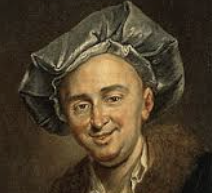
I reduce to two the systems of philosophy which deal with man's soul. The first and older system is materialism; the second is spiritualism.
4 months 1 week ago
From these two immediate perceptions, we gain a mediate, or inferential perception of the relation of all four instants. This mediate perception is objectively, or as to the object being represented, spread over the four instants; but subjectively, or as itself the subject of duration, it is completely embraced in the second moment. (The reader will observe that I use the word instant to mean a point in time, and moment to mean an infinitesimal duration.
4 months 1 week ago
What has happened to those who, like Heidegger, have tried to find their ways in immediacy, in intuition, in nature, would be too sad to retell—and is well known anyway. What is certain is that those pathmarks off the beaten track led indeed nowhere.
▼
Source
Bruno Latour, “Why Has Critique Run out of Steam? From Matters of Fact to Matters of Concern” Critical Inquiry 30, (Winter 2004)
4 months 1 week ago
One single war — we all know — may be productive of more evil, immediate and subsequent, than hundreds of years of the unchecked action of the mutual-aid principle may be productive of good.
4 months 1 week ago
The chief good is the suspension of the judgment, which tranquillity of mind follows like its shadow.
▼
Source
Pyrrho, 11.
4 months 1 week ago
Hegel’s philosophy revolved about the universality of reason; it was a rational system with its every part (the subjective as well as the objective spheres) integrated into a comprehensive whole. Marx shows that capitalist society first put such a universality into practice. P. 286-287
4 months 1 week ago
In the year 1742 he... received there a position as surgeon to the Guard. In this capacity he made a campaign in Germany, and... was seized by a violent fever, and used this opportunity in order to institute observations upon himself as to the influence of quickened circulation upon thought. He came to the conclusion that thought is nothing but a consequence of the organisation of our mechanism. ...[H]e tried during his convalescence to explain the mental functions by the help of anatomy, and he had his conjectures printed under the title of a 'Natural History of the Soul.' The regimental chaplain sounded the alarm, and soon a universal cry of indignation was raised... His books were recognised as heretical, and he could no longer continue to be surgeon of the Guard. ...about the same time ...writing a satire on his rivals, the foremost Paris practitioners. ...He fled in the year 1746 to Leyden. Here he wrote ...a new satire upon the charlatanism and ignorance of doctors, and soon afterwards (1748) appeared also his 'Homme Machine.'
4 months 1 week ago
When anything is present to the mind, what is the very first and simplest character to be noted in it, in every case, no matter how little elevated the object may be? Certainly, it is its presentness.
▼
Source
Lecture II : The Universal Categories, § 1 : Presentness, CP 5.44
4 months 1 week ago
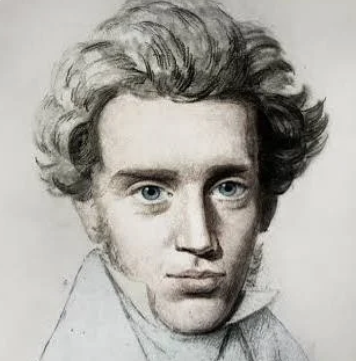
After a considerable walk through the forest, where I became acquainted with several of the little lakes I am so fond of, I came to Hestehaven and Lake Carl. Here is one of the most beautiful regions I have ever seen. The countryside is somewhat isolated and slopes steeply down to the lake, but with the beech forests growing on either side, it is not barren. A growth of rushes forms the background and the lake itself the foreground; a fairly large part of the lake is clear, but a still larger part is overgrown with the large green leaves of the waterlily, under which the fish seemingly try to hide but now and then peek out and flounder about on the surface in order to bathe in sunshine. The land rises on the opposite side, a great beech forest, and in the morning light the lighted areas make a marvelous contrast to the shadowed areas. The church bells call to prayer, but not in a temple made by human hands. If the birds do not need to be reminded to praise God, then ought men not be moved to prayer outside of the church, in the true house of God, where heaven's arch forms the ceiling of the church, where the roar of the storm and the light breezes take the place of the organ's bass and treble, where the singing of the birds make up the congregational hymns of praise, where echo does not repeat the pastor's voice as in the arch of the stone church, but where everything resolves itself in an endless antiphony — Hillerød, July 25, 1835
CivilSimian.com created by AxiomaticPanic, CivilSimian, Kalokagathia