
4 months 1 week ago
I am not fighting a hopeless fight. People who have fought in real fights don't, as a rule.
▼
Source
Ch. XXIII: "The March on Ivywood" (Patrick Dalroy loq.)
4 months 1 week ago
The principle itself of dogmatic religion, dogmatic morality, dogmatic philosophy, is what requires to be rooted out; not any particular manifestation of that principle. ¶ The very corner-stone of an education intended to form great minds, must be the recognition of the principle, that the object is to call forth the greatest possible quantity of intellectual power, and to inspire the intensest love of truth: and this without a particle of regard to the results to which the exercise of that power may lead, even though it should conduct the pupil to opinions diametrically opposite to those of his teachers. We say this, not because we think opinions unimportant, but because of the immense importance which we attach to them; for in proportion to the degree of intellectual power and love of truth which we succeed in creating, is the certainty that (whatever may happen in any one particular instance) in the aggregate of instances true opinions will be the result; and intellectual power and practical love of truth are alike impossible where the reasoner is shown his conclusions, and informed beforehand that he is expected to arrive at them.
▼
Source
"Civilization," London and Westminster Review (April 1836)
4 months 1 week ago
Good music is very close to primitive language.
▼
Source
"Correspondence of Ideas with the Motion of Organs"
4 months 1 week ago
The criticism of the reformers was directed not so much at the weakness or cruelty of those in authority, as at a bad economy of power.
▼
Source
Chapter Two, pp.. 79

4 months 1 week ago
If I had amnesia, I'd be almost like other men. Perhaps I'd even be able to love you.
▼
Source
Raimon to Regina. p. 17
4 months 1 week ago
Employers will give time to eat, time to sleep; they are in terror of a time to think.
▼
Source
p. 31
4 months 1 week ago
Human nature is not a machine to be built after a model, and set to do exactly the work prescribed for it, but a tree, which requires to grow and develop itself on all sides, according to the tendency of the inward forces which make it a living thing.
▼
Source
Ch. III: Of Individuality, As One of the Elements of Well-Being
4 months 1 week ago
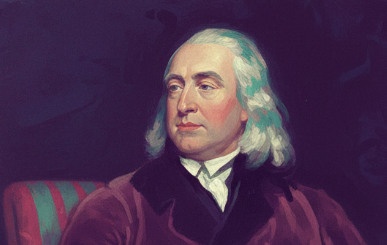
Lawyers are the only persons in whom ignorance of the law is not punished.
▼
Source
Attributed to Bentham in The Dictionary of Humorous Quotations (1949) by Evan Esar, p. 29; no earlier sources for this have been located.
4 months 1 week ago
The new governmental reason does not deal with what I would call the things in themselves of governmentality, such as individuals, things, wealth, and land. It no longer deals with these things in themselves. It deals with the phenomena of politics, that is to say, interests, which precisely constitute politics and its stakes; it deals with interests, or that respect in which a given individual, thing, wealth, and so on interests other individuals or the collective body of individuals. ... In the new regime, government is basically no longer to be exercised over subjects and other things subjected through these subjects. Government is now to be exercised over what we could call the phenomenal republic of interests. The fundamental question of liberalism is: What is the utility value of government and all actions of government in a society where exchange determines the value of things?
▼
Source
Lecture 2, January 17, 1979, pp. 45-46
4 months 1 week ago
Cooking is revelation and creation; and a woman can find special satisfaction in a successful cake or a flaky pastry, for not every one can do it: one must have the gift.
▼
Source
Bk. 2, part 5, Ch. 1: The Married Woman, p. 506
4 months 1 week ago
Never invoke the gods unless you really want them to appear. It annoys them very much.
▼
Source
As quoted in "The Sleep of Trees" (1980) by Jane Yolen, in Tales of Wonder (1983) by Jane Yolen, p. 33
4 months 1 week ago
Stupidity is much the same all the world over. A stupid person's notions and feelings may confidently be inferred from those which prevail in the circle by which the person is surrounded. Not so with those whose opinions and feelings are an emanation from their own nature and faculties.
▼
Source
Ch. 1
4 months 1 week ago
In order for parrhesia to have positive political effects, it must... be linked to a good education, to intellectual and moral formation, to paideia or mathesis.
4 months 1 week ago
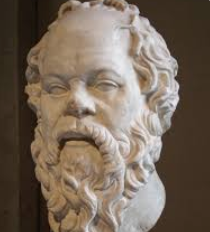
[Why is suicide held not to be right?] There is a doctrine uttered in secret that a man is a prisoner who has no right to open the door to his prison and run away; this is a great mystery which I do not understand. Yet I too, believe that the gods are our guardians, and that we are a possession of theirs. ...And if one of your possessions, an ox or an ass, for example took the liberty of putting himself out of the way when you had given no intimation of your wish that he should die, would you not be angry with him, and would you not punish him if you could? ...Then there may be reason in saying that a man should wait, and not take his own life until God summons him, as he is now summoning me.
4 months 1 week ago
We are living in a world which seems to be founded on the refusal to reflect.
▼
Source
p. 132
4 months 1 week ago
My father was as well aware as anyone that Christians do not, in general, undergo the demoralizing consequences which seem inherent in such a creed, in the manner or to the extent which might have been expected from it. The same slovenliness of thought, and subjection of the reason to fears, wishes, and affections, which enable them to accept a theory involving a contradiction in terms, prevents them from perceiving the logical consequences of the theory. Such is the facility with which mankind believe at one and the same time things inconsistent with one another, and so few are those who draw from what they receive as truths, any consequences but those recommended to them by their feelings, that multitudes have held the undoubting belief in an Omnipotent Author of Hell, and have nevertheless identified that being with the best conception they were able to form of perfect goodness.
▼
Source
([https://archive.org/details/autobiography01mill/page/41/mode/1up pp. 41–42])
4 months 1 week ago
I often asked myself the following question. There is no doubt that at all times for many men one of the greatest tortures of their lives has been the contact, the collision with the folly of their neighbours. And yet how is it that there has never been attempted — I think this is so — a study on this matter, an Essay on Folly? For the pages of Erasmus do not treat of this aspect of the matter.
▼
Source
Chap. VIII: The Masses Intervene In Everything, And Why Their Intervention Is Solely By Violence
4 months 1 week ago
When a simple man who has no skill in dialectics believes an argument to be true which he afterwards imagines to be false, whether really false or not, and then another and another, he no longer has any faith left, and great disputers, as you know, come to think, at last that they have grown to be the wisest of mankind; for they alone perceive the utter unsoundness and instability of all arguments, or, indeed, of all things, which like the currents in the Euripus, are going up and down in never-ceasing ebb and flow.

4 months 1 week ago
Banks are the temples of America. This is a holy war. Our economy is our religion. (p.8)
4 months 1 week ago
All those to whom I looked up, were of opinion that the pleasure of sympathy with human beings, and the feelings which made the good of others, and especially of mankind on a large scale, the object of existence, were the greatest and surest sources of happiness. Of the truth of this I was convinced, but to know that a feeling would make me happy if I had it, did not give me the feeling.
▼
Source
([https://archive.org/details/autobiography01mill/page/138/mode/1up p. 138])
4 months 1 week ago
That science is incapable of solving in its own way those fundamental questions is no sufficient reason for slighting them
▼
Source
p. 14
4 months 1 week ago
There is a limit to the time assigned you, and if you don't use it to free yourself it will be gone and never return.
▼
Source
II, 4(Hays translation)
4 months 1 week ago
It is a great pity that human beings cannot find all of their satisfaction in scientific contemplativeness.
▼
Source
As quoted in Chandra: A Biography of S. Chandrasekhar (1991) by Kameshwar C. Wali, p. 147
4 months 1 week ago
By means of beauty all beautiful things become beautiful. For this appears to me the safest answer to give both to myself and others; and adhering to this, I think that I shall never fall, but that it is a safe answer both for me and any one else to give — that by means of beauty beautiful things become beautiful.
▼
Source
Phaedo
4 months 1 week ago
Of which liberalism does one wish to speak? I distinguish two principal forms of liberalism. For one… liberty is a right; for the other a duty. For one it is a gift; for the other a conquest… One liberalism conceives liberty rooted in the individual, and therefore opposes the individual to the State, a State understood as possessing no intrinsic value—but exclusively serving the well being and the improvement of the individual. The State is seen as a means, not an end. It limits itself to the maintenance of public order, excluding itself from the entirety of spiritual life—which, therefore, remains exclusively a sphere restricted to the individual conscience. That liberalism, historically, is classical liberalism—of English manufacture. It is, we must recognize, a false liberalism, containing only half the truth. It was opposed among us by Mazzini with a criticism, that I maintain, is immortal. But there is another liberalism, that matured in Italian and German thought, that holds entirely absurd this view of the antagonism between the State and the individual.
▼
Source
Che cosa è il fascismo: Discorsi e polemiche (“What is Fascism?”), Florence: Vallecchi, (1925) pp. 42-45, 47-48, 49-51, 56,Origins and Doctrine of Fascism, A. James Gregor, translator and editor, Transaction Publishers, 2003, p. 63
4 months 1 week ago
I well knew that to propose something which would be called extreme, was the true way not to impede but to facilitate a more moderate experiment.
▼
Source
([https://archive.org/details/autobiography01mill/page/294/mode/1up p. 294])
4 months 1 week ago
Nothing earthly succeeds by ignoring heaven, nothing heavenly by ignoring the earth. (Hays translation)
▼
Source
III, 14

4 months 1 week ago
The capacity to reason is a special sort of capacity because it can lead us to places that we did not expect to go.
▼
Source
Chapter 4, Reason, p. 88
4 months 1 week ago
Seemeth it nothing to you, never to accuse, never to blame either God or Man? to wear ever the same countenance in going forth as in coming in? This was the secret of Socrates: yet he never said that he knew or taught anything... Who amongst you makes this his aim? Were it indeed so, you would gladly endure sickness, hunger, aye, death itself.
▼
Source
Epictetus, Golden Sayings of Epictetus #85
4 months 1 week ago
Uncertainty is the refuge of hope.
▼
Source
— Amiel's journal; the Journal intime of Henri-Frédéric Amiel 1890 (p.368)
4 months 1 week ago
I do not know whether then or at any other time so short a book ever instantly produced so wide and so important an effect on contemporary thought as did Mill's On Liberty in that day of intellectual and social fermentation (1859)... Mill believed that no symmetry, no uniformity of custom and convention, but bold, free expansion in every field, was demanded by all the needs of human life, and the best instincts of the modern mind... The little volume belongs to the rare books that after hostile criticism has done its best are still found to have somehow added a cubit to man's stature... [It] is a restatement and new reinforcement of Tolerance, discussion without restriction, the free life of the individual, so long as he does not injure other people, fair play for social experiment. On all this nothing could be more bracing than Mill's handling of his lofty case, and the idealism of it, the enthusiasm, sustained as it was for page after page, very nearly approached the electrifying region of the poetic, in the eyes of ardent men and women in our age.
▼
Source
pp. 60-63
4 months 1 week ago
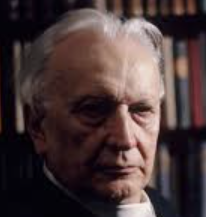
The possibility of peace, on whose behalf many are working, might perhaps become actual because the technical advances in offensive weapons make the prospect of a European war so disastrous, and because, if the nations were at grips again, even the victorious aggressor would be ruined. But there still remains open the possibility of a new war which, more dreadful than any that have preceded it would make an end of contemporary Europeans.
4 months 1 week ago
Then what should we work for? Only this: proper understanding; unselfish action; truthful speech. A resolve to accept whatever happens as necessary and familiar, flowing like water from that same source and spring.
▼
Source
IV, 33(Hays translation)

4 months 1 week ago
It will be as well, I think, to explain these locutions of God, and to describe what the soul feels when it receives them, in order that you, my father, may understand the matter; for ever since that time of which I am speaking, when our Lord granted me that grace, it has been an ordinary occurrence until now, as will appear by what I have yet to say. The words are very distinctly formed; but by the bodily ear they are not heard. They are, however, much more clearly understood than they would be if they were heard by the ear. It is impossible not to understand them, whatever resistance we may offer. When we wish not to hear anything in this world, we can stop our ears, or give attention to something else: so that, even if we do hear, at least we can refuse to understand. In this locution of God addressed to the soul there is no escape, for in spite of ourselves we must listen; and the understanding must apply itself so thoroughly to the comprehension of that which God wills we should hear, that it is nothing to the purpose whether we will it or not; for it is His will, Who can do all things.
▼
Source
Ch. XXV. "Divine Locutions. Discussions on That Subject" ¶ 1 & 2
4 months 1 week ago
This morning the music of a brass band which had stopped under my windows moved me almost to tears. It exercised an indefinable, nostalgic power over me; it set me dreaming of another world, of infinite passion and supreme happiness. Such impressions are the echoes of Paradise in the soul; memories of ideal spheres whose sad sweetness ravishes and intoxicates the heart. O Plato! O Pythagoras! ages ago you heard these harmonies, surprised these moments of inward ecstasy, — knew these divine transports! If music thus carries us to heaven, it is because music is harmony, harmony is perfection, perfection is our dream, and our dream is heaven.
▼
Source
17 March 1870
4 months 1 week ago
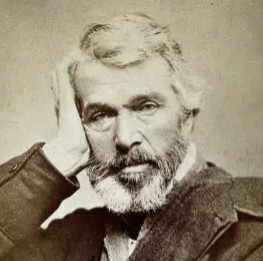
He that works and does some Poem, not he that merely says one, is worthy of the name of Poet.
▼
Source
Introduction to Cromwell's Letters and Speeches (1845).
4 months 1 week ago
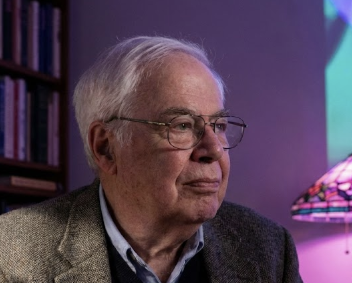
From Richard McKeon and Robert Brumsbaugh I learned to view the history of philosophy as a series, not of alternative solutions to the same problems, but of quite different sets of problems. From Rudolph Carnap and Carl Hempel I learned how pseudo-problems could be revealed as such by restarting them in the formal mode of speech. From Charles Hartshorne and Paul Weiss I learned how they could be so revealed by being translated into Whiteheadian or Hegelian terms.
▼
Source
Preface
4 months 1 week ago
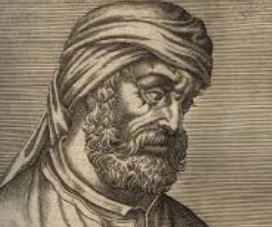
Then, inasmuch as He too has fabricated a world out of some underlying material which is unbegotten, and unmade, and contemporaneous with God, just as Marcion holds of the Creator, you reduce this likewise to the dignity of that local space which has enclosed two gods, both God and matter.
▼
Source
Book I, Chapter XV.—The Lateness of the Revelation of Marcion’s God. The Question of the Place Occupied by the Rival Deities. Instead of Two Gods, Marcion Really (Although, as It Would Seem, Unconsciously) Had Nine Gods in His System. | Compare Thomas Jef

4 months 1 week ago
The obligation of submission to both, is discoverable by so clear and so simple an use of our intellectual faculties, that it may be said properly enough to be revealed to us by God; and tho both these laws cannot be said properly to be given by Him, yet our obligation to submit to the civil law is a principal paragraph in the natural law, which he has most manifestly given us.
▼
Source
pp. 84-85
4 months 1 week ago
Is any man afraid of change? Why what can take place without change?
▼
Source
VII, 18
4 months 1 week ago
The barrenest of all mortals is the sentimentalist.
▼
Source
Characteristics.
4 months 1 week ago
So true, moreover, is it that divorce “was not from the beginning,” that among the Romans it is not till after the six hundredth year from the building of the city that this kind of “hard-heartedness” is set down as having been committed. But they indulge in promiscuous adulteries, even without divorcing (their partners): to us, even if we do divorce them, even marriage will not be lawful.
▼
Source
Chapter 9
4 months 1 week ago
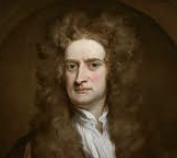
Oh, Diamond! Diamond! thou little knowest what mischief thou hast done!
▼
Source
This is from an anecdote found in [http://www.gutenberg.org/files/15331/15331-h/15331-h.htm St. Nicholas magazine, Vol. 5, No. 4, (February 1878)] :
4 months 1 week ago
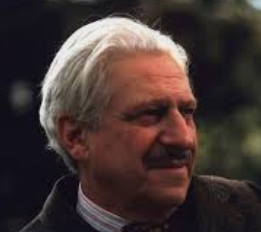
His conflict with the Catholic Church arose because deep in his heart Galileo was a believer. There was for him no path of compromise, no way to have separate secular and theological cosmologies. If the Copernican system was true as he believed, what else could Galileo do but fight with every weapon he had in his arsenal... to make his Church accept a new system of the universe. ...In the contrast between Galileo's heroic stand when he tried to reform the cosmological basis of orthodox theology and his humbled, kneeling surrender when he disavowed his Copernicanism, we may sense the tremendous forces attendant on the birth of modern science.
4 months 1 week ago
The nature of the All moved to make the universe.
▼
Source
VII, 75

4 months 1 week ago
"The most interesting aspect of suffering is the sufferer's belief in its absoluteness. He believes he has a monopoly on suffering. I think that I alone suffer, that I alone have the right to suffer, although I also realize that there are modalities of suffering more terrible than mine, pieces of flesh falling from the bones, the body crumbling under one's very eyes, monstrous, criminal , shameful sufferings. One asks oneself, How can this be, and if it be, how can one still speak of finality and other such old wives' tales? Suffering moves me so much that I lose all my courage. I lose heart because I do not understand why there is suffering in the world.", in essay: the monopoly of suffering
4 months 1 week ago
With what scientific stoicism he walks through the land of wonders, unwondering.

4 months 1 week ago
The opposite of an idealist is too often a man without love.

4 months 1 week ago
Utopus having understood that before his coming among them the old inhabitants had been engaged in great quarrels concerning religion, by which they were so divided among themselves, that he found it an easy thing to conquer them, since, instead of uniting their forces against him, every different party in religion fought by themselves. After he had subdued them he made a law that every man might be of what religion he pleased, and might endeavour to draw others to it by the force of argument and by amicable and modest ways, but without bitterness against those of other opinions; but that he ought to use no other force but that of persuasion, and was neither to mix with it reproaches nor violence; and such as did otherwise were to be condemned to banishment or slavery. This law was made by Utopus, not only for preserving the public peace, which he saw suffered much by daily contentions and irreconcilable heats, but because he thought the interest of religion itself required it. He judged it not fit to determine anything rashly; and seemed to doubt whether those different forms of religion might not all come from God, who might inspire man in a different manner, and be pleased with this variety; he therefore thought it indecent and foolish for any man to threaten and terrify another to make him believe what did not appear to him to be true. And supposing that only one religion was really true, and the rest false, he imagined that the native force of truth would at last break forth and shine bright, if supported only by the strength of argument, and attended to with a gentle and unprejudiced mind; while, on the other hand, if such debates were carried on with violence and tumults, as the most wicked are always the most obstinate, so the best and most holy religion might be choked with superstition, as corn is with briars and thorns; he therefore left men wholly to their liberty, that they might be free to believe as they should see cause.
▼
Source
Ch. 9 : Of the Religions of the Utopians
CivilSimian.com created by AxiomaticPanic, CivilSimian, Kalokagathia