

4 months ago
To have accomplished nothing and to die overworked.
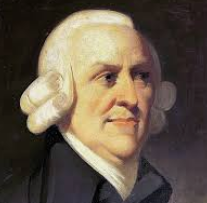
4 months ago
The proposal of any new law or regulation of commerce which comes from this order, ought always to be listened to with great precaution, and ought never to be adopted till after having been long and carefully examined, not only with the most scrupulous, but with the most suspicious attention. It comes from an order of men, whose interest is never exactly the same with that of the public, who have generally an interest to deceive and even to oppress the public, and who accordingly have, upon many occasions, both deceived and oppressed it."
▼
Source
Chapter XI, Part III, Conclusion of the Chapter, p. 292.
4 months ago
If to describe a misery were as easy to live through it!
4 months ago
A merchant, it has been said very properly, is not necessarily the citizen of any particular country.
▼
Source
Chapter IV, p. 456.
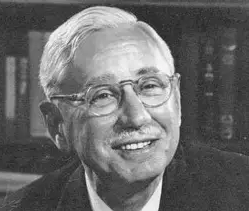
4 months ago
Sixty years ago I knew everything. Now I know nothing. Education is a progressive discovery of our own ignorance.
▼
Source
Quoted in [https://time.com/archive/6628044/teachers-the-essence-of-the-centuries/ "Teachers: The Essence of the Centuries"], Time magazine, 13 August 1965
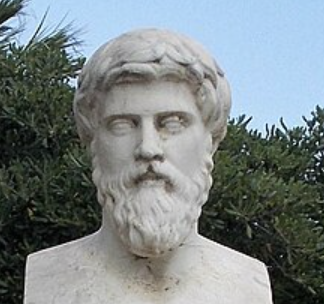
4 months ago
A physician, after he had felt the pulse of Pausanias, and considered his constitution, saying, "He ails nothing," "It is because, sir," he replied, "I use none of your physic."
▼
Source
Of Pausanias the Son of Phistoanax

4 months ago
In a traditional reading eating the apple was the original sin; but, as Gnostics understood the story, the two primordial humans were right to eat the apple. The God that commanded them not to do so was not the true God but only a demiurge, a tyrannical underling exulting in its power, while the serpent came to free them from slavery. True, when they ate the apple Adam and Eve fell from grace. This was indeed the Fall of Man – a fall into the dim world of everyday consciousness. But the Fall need not be final. Having eaten its fill from the Tree of Knowledge, humankind can then rise into a state of conscious innocence. When this happens, Herr C. declares, it will be ‘the final chapter in the history of the world'.
▼
Source
The Faith of Puppets: The Freedom of the Marionette (p. 8)
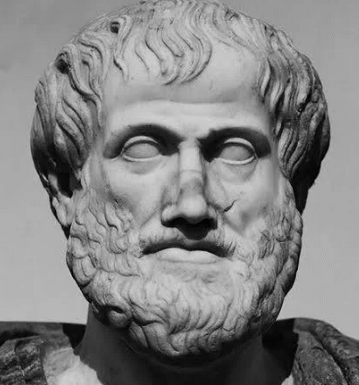
4 months ago
Tolerance and apathy are the last virtues of a dying society.
▼
Source
Not in any of Aristotle's extant works. [https://sententiaeantiquae.com/2018/09/29/racists-use-this-fake-quote-from-aristotle/]
4 months ago
There are all kinds of sources of our knowledge; but none has authority ... The fundamental mistake made by the philosophical theory of the ultimate sources of our knowledge is that it does not distinguish clearly enough between questions of origin and questions of validity.
4 months ago
"If you want him defined, here he is: a prime, well-fed beast such as takes medals at the cattle shows, and nothing more," he said, with a tone of vexation that interested her."No; how so?" she replied. "He's seen a great deal, anyway; he's cultured?""It's an utterly different culture—their culture. He's cultivated, one sees, simply to be able to despise culture, as they despise everything but animal pleasures."
▼
Source
Vronky and Anna discussing the visiting Prince, Part 4, Chapter 3
4 months ago
In following this movement towards its end we shall inevitably reach a point beyond which the scene is darkened by the shadow of Hitler. Unfortunately, it does not go without saying that in our examination we must avoid the fallacy that in the last decades has frequently been used as a substitute for the reductio ad absurdum: the reductio ad Hitlerum. A view is not refuted by the fact that it happens to have been shared by Hitler.
▼
Source
p. 42
4 months ago
The word liberty in the mouth of Mr. Webster sounds like the word love in the mouth of a courtesan.
▼
Source
February 12, 1851; cf. the remark of John Wilkes about Samuel Johnson, "Liberty is as ridiculous in his mouth as Religion in mine" (20 March 1778), quoted in Boswell's Life of Johnson (1791)

4 months ago
The call to abolish the prison as the dominant form of punishment cannot ignore the extent to which the institution of the prison has stockpiled ideas and practices that are hopefully approaching obsolescence in the larger society, but that retain their ghastly vitality behind prison walls.
▼
Source
Chapter Four
4 months ago
By virtue of depression, we recall those misdeeds we buried in the depths of our memory. Depression exhumes our shames.
4 months ago
To hinder, besides, the farmer from selling his goods at all times to the best market, is evidently to sacrifice the ordinary laws of justice to an idea of public utility, to a sort of reasons of state; an act of legislative authority which ought to be exercised only, which can be pardoned only in cases of the most urgent necessity.
▼
Source
Chapter V, p. 584.
4 months ago
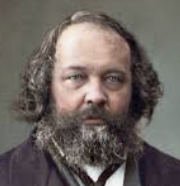
Here then is what we understand by these words: “the equalization of the classes.” It would perhaps have been better to say suppression of the classes, the unification of society by the abolition of economic and social inequality. But we have also demanded the equalization of the individuals, and it is there especially that we attract all the thunderbolts of outraged eloquence from our adversaries. One has made use of that part of our proposition to prove in a conclusive manner that we are nothing but communists.
4 months ago
Rooted in freedom, bonded in the fellowship of danger, sharing everywhere a common human blood, we declare again that all men are brothers, and that mutual tolerance is the price of liberty.

4 months ago
If … the motion of the earth were circular, it would be violent and contrary to nature, and could not be eternal, since … nothing violent is eternal.… It follows, therefore, that the earth is not moved with a circular motion.
▼
Source
Commentaria in libros Aristotelis de caelo et mundo (Commentary on Aristotle's On the Heavens, c. 1272–1273)

4 months ago
Animals are rational; in most of them logos is imperfect, but it is certainly not wholly lacking. So if, as our opponents say, justice applies to rational beings, why should not justice, for us, also apply to animals?
▼
Source
3, 18, 1
4 months ago
Leadership is solving problems. The day soldiers stop bringing you their problems is the day you have stopped leading them. They have either lost confidence that you can help or concluded you do not care. Either case is a failure of leadership.
▼
Source
Colin Powell in My American Journey (1995)
4 months ago
A real mother, who knows the will of God by experience, will prepare her children also to fulfil it. Such a mother will suffer if she sees her child overfed, effeminate, and dressed-up, for she knows that these things will make it difficult for it to fulfil the will of God which she recognizes.
4 months ago
The facile delusions which conceal from us our true situation all amount to this: that we are, or can be, wiser than the wisest men of the past. We are thus induced to play the part, not of attentive and docile listeners, but of impresarios and lion-tamers.
▼
Source
“What is liberal education,” p.
4 months ago
Wherever Macdonald sits, there is the head of the table.
▼
Source
par. 37
4 months ago
This is an extraordinary moment. I have never experienced anything like the conditions we are currently experiencing, the conjuncture created by the COVID-19 pandemic and the recognition of the systemic racism that has been rendered visible under these conditions because of the disproportionate deaths in Black and Latin communities.
4 months ago
The necessaries of life occasion the great expense of the poor. They find it difficult to get food, and the greater part of their little revenue is spent in getting it. The luxuries and vanities of life occasion the principal expense of the rich, and a magnificent house embellishes and sets off to the best advantage all the other luxuries and vanities which they possess. A tax upon house-rents, therefore, would in general fall heaviest upon the rich; and in this sort of inequality there would not, perhaps, be anything very unreasonable. It is not very unreasonable that the rich should contribute to the public expense, not only in proportion to their revenue, but something more than in that proportion.
▼
Source
Chapter II, Part II, Article I, p. 911.
4 months ago
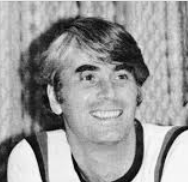
Utopia is a meta-utopia: the environment in which Utopian experiments may be tried out; the environment in which people are free to do their own thing; the environment which must, to a great extent, be realized first if more particular Utopian visions are to be realized stably.
▼
Source
Ch. 10 : A Framework for Utopia; The Framework, p. 312
4 months ago
To recognize this clearly is enough to drive a man out of his senses or to make him shoot himself. And this is just what does happen, and especially often among military men. A man need only come to himself for an instant to be impelled inevitably to such an end.
▼
Source
Chapter V, Contradiction Between our Life and our Christian Conscience
4 months ago
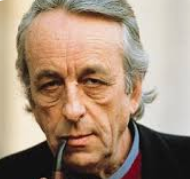
The number-one philosophical battle therefore takes place on the frontier between the scientific and the ideological. There the idealist philosophies which exploit the sciences struggle against the materialist philosophies which serve the sciences.
▼
Source
p. 6
4 months ago
I wiped away the weeds and foam, And fetched my sea-born treasures home; But the poor, unsightly, noisome things Had left their beauty on the shore With the sun, and the sand, and the wild uproar.
▼
Source
Each and All, st. 3
4 months ago
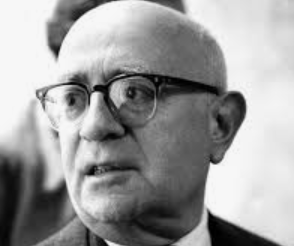
Regressive listeners behave like children. Again and again and with stubborn malice, they demand the one dish they have once been served.
▼
Source
p. 290

4 months ago
We may have an excellent Ear in Musick, without being able to perform in any kind. We may judg well of Poetry, without being Poets, or possessing the least of a Poetick Vein: But we can have no tolerable Notion of Goodness, without being tolerably good.
▼
Source
Vol. 1, p. 26; "A Letter Concerning Enthusiasm".
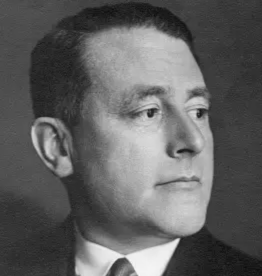
4 months ago
The friend, enemy, and combat concepts receive their real meaning precisely because they refer to the real possibility of physical killing. War follows from enmity. War is the existential negation of the enemy.
4 months ago
The answer is that Smith saw the all-important division of labor as a once-for-all, not a continuing, process. As has been recently pointed out, he did not see the organizational and technological core of the division of labor as a self-generating process of change, but as a discrete advance that would impart its stimulus and then disappear. Thus, in the very long run the growth momentum of society would come to a halt—Smith once mentions two hundred years as the longest period over which a society could hope to flourish. Thereafter the laborer would return to his subsistence wages, the capitalist to the modest profits of a stable market, and the landlord alone might enjoy a somewhat higher income as food production remained at the levels required by a larger, although no longer growing, population. For all its optimistic boldness, Smith’s vision is bounded, careful, sober—for the long run, even sobering.
▼
Source
Robert Heilbroner, The Worldly Philosophers 7th ed. (1999), Chapter III. The Wonderful World of Adam Smith

4 months ago
What makes The Present Age and The Difference Between a Genius and an Apostle important is not so much that the former essay anticipates Heidegger and the latter, Barth: it would be more accurate to say that Heidegger’s originality is widely overestimated, and that many things he says at great length in his highly obscure German were said earlier by various writers who had made the same points much more elegantly, and that some of these writers, including Kierkegaard, were known to Heidegger. Why should Kierkegaard’s significance depend on someone else’s, quite especially when many points that others copied from him may be wrong?
▼
Source
Walter Kaufmann, Preface to The Present Age, by Soren Kierkegaard, Dru translation 1962 p. 15-16
4 months ago
The Christianity of the first centuries recognized as productions of good art, only legends, lives of saints, sermons, prayers, and hymn-singing evoking love of Christ, emotion at his life, desire to follow his example, renunciation of worldly life, humility, and the love of others; all productions transmitting feelings of personal enjoyment they considered to be bad, and therefore rejected ... This was so among the Christians of the first centuries who accepted Christ teachings, if not quite in its true form, at least not yet in the perverted, paganized form in which it was accepted subsequently. But besides this Christianity, from the time of the wholesale conversion of whole nations by order of the authorities, as in the days of Constantine, Charlemagne and Vladimir, there appeared another , a Church Christianity, which was nearer to paganism than to Christ's teaching. And this Church Christianity ... did not acknowledge the fundamental and essential positions of true Christianity — the direct relationship of each individual to the Father, the consequent brotherhood and equality of all people, and the substitution of humility and love in place of every kind of violence — but, on the contrary, having founded a heavenly hierarchy similar to the pagan mythology, and having introduced the worship of Christ, of the Virgin, of angels, of apostles, of saints, and of martyrs, but not only of these divinities themselves but of their images, it made blind faith in its ordinances an essential point of its teachings. However foreign this teaching may have been to true Christianity, however degraded, not only in comparison with true Christianity, but even with the life-conception of the Romans such as Julian and others, it was for all that, to the barbarians who accepted it, a higher doctrine than their former adoration of gods, heroes, and good and bad spirits. And therefore this teaching was a religion to them, and on the basis of that religion the art of the time was assessed. And art transmitting pious adoration of the Virgin, Jesus, the saints, and the angels, a blind faith in and submission to the Church, fear of torments and hope of blessedness in a life beyond the grave, was considered good; all art opposed to this was considered bad.
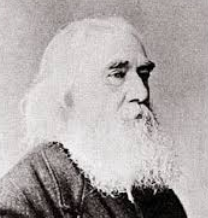
4 months ago
That the only security men can have for their political liberty, consists in their keeping their money in their own pockets, until they have assurances, perfectly satisfactory to themselves, that it will be used as they wish it to be used, for their benefit, and not for their injury.
4 months ago
Every hero becomes a bore at last.
▼
Source
Uses of Great Men
4 months ago
The conflicts that tear society apart resemble the distinction between the concept and the particular facts subordinated to it. ... Whatever refuses to abide by the unity imposed by the principle of dominion manifests itself not as something indifferent to that principle, but as an infringement of logic: as a contradiction.
▼
Source
p. 169
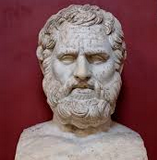
4 months ago
You should look into a mirror: if you look fine, do fine things; if you look ugly, correct by nobility the defect of your nature.
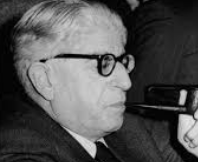
4 months ago
On bourgeois ground … change is impossible anyway even if it were desired. In fact, bourgeois interest would like to draw every other interest opposed to it into its own failure; so, in order to drain the new life, it makes its own agony apparently fundamental, apparently ontological. The futility of bourgeois existence is extended to be that of the human situation in general, of existence per se.
▼
Source
The Principle of Hope (1959), N. Plaice, trans. (1986), p. 4
4 months ago
In short, the mercantilists were preoccupied with the transfer of wealth, whether by export surpluses, imperialism, or slavery— all of which benefit some at the expense of others. Adam Smith was concerned with the creation of wealth, which is not a zero-sum process. Smith rejected government intervention in the economy to help merchants— the source of the name “mercantilism”— and instead advocated free markets along the lines of the French economists, the Physiocrats, who had coined the term laissez faire. ... The most fundamental difference between Adam Smith and the mercantilists was that Smith did not regard gold as being wealth. The very title of his book— The Wealth of Nations— raised the fundamental question of what wealth consisted of. Smith argued that wealth consisted of the goods and services which determined the standard of living of the people— the whole people, who to Smith constituted the nation. Smith rejected both imperialism and slavery— on economic grounds as well as moral grounds, ... Although Adam Smith is today often regarded as a “conservative” figure, he in fact attacked some of the dominant ideas and interests of his own times. Moreover, the idea of a spontaneously self-equilibrating system— the market economy— first developed by the Physiocrats and later made part of the tradition of classical economics by Adam Smith, represented a radically new departure, not only in analysis of social causation but also in seeing a reduced role for political, intellectual, or other elites as guides or controllers of the masses.
▼
Source
Thomas Sowell, Basic Economics, 4th ed. (2010), Ch. 25. The History of Economics.
4 months ago
It once occurred to a certain king, that if he always knew the right time to begin everything; if he knew who were the right people to listen to, and whom to avoid; and, above all, if he always knew what was the most important thing to do, he would never fail in anything he might undertake.
▼
Source
Part VII: Stories Given to Aid Persecuted Jews (1903) Three Questions
4 months ago
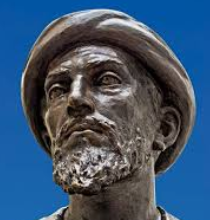
It is natural for a man's character and actions to be influenced by his friends and associates and for him to follow the local norms of behavior. Therefore, he should associate with the righteous and be constantly in the company of the wise, so as to learn from their deeds. Conversely, he should keep away from the wicked who walk in darkness, so as not to learn from their deeds.
▼
Source
Chapter 6, Section 1
4 months ago
Money often costs too much.
▼
Source
Wealth
4 months ago
Some of my readers may find themselves thinking that the mere fact that millions of human beings, including many highly intelligent and deeply thoughtful ones, have had strongly held religious beliefs is itself a reason for giving them serious intellectual attention — not necessarily for believing them, of course, but for finding them interesting and for treating them with respect. I would agree with this if the reasons given for them commanded respect. But I have yet to encounter such reasons. What are claimed as proofs are not proofs, and all such "proofs" have long since been discredited, the most important of them by Christians themselves, such as Kant. Yet they go on being trotted out: assertions are made without evidence; mutually contradictory claims proliferate; historical knowledge is defied; mistranslations abound; language is used in a way that slithers unacknowledged between literal meaning and metaphor; the whole vocabulary rests on unsecured presuppositions. Superstitions and belief in magic are perennial in just the same way as religion, and something near to being universal among mankind; and why this is so may be interesting, but in most cases the beliefs themselves are devoid of interesting content, at least to me.
▼
Source
p. 346
4 months ago
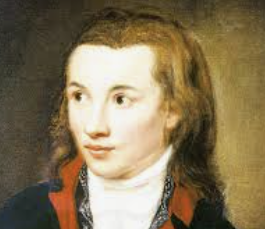
Where children are, there is a golden age.
▼
Source
Fragment No. 97
4 months ago
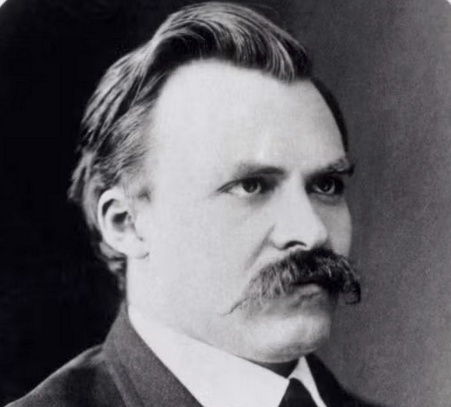
Only by means of such discipline can the young man acquire that physical loathing for the beloved and much-admired 'elegance' of style of our newspaper manufacturers and novelists, and for the 'ornate style' of our literary men; by it alone is he irrevocably elevated at a stroke above a whole host of absurd questions and scruples, such, for instance, as whether Auerbach and Gutzkow are really poets, for his disgust at both will be so great that he will be unable to read them any longer, and thus the problem will be solved for him. Let no one imagine that it is an easy matter to develop this feeling to the extent necessary in order to have this physical loathing; but let no one hope to reach sound æsthetic judgments along any other road than the thorny one of language, and by this I do not mean philological research, but self-discipline in one's mother-tongue. Everybody who is in earnest in this matter will have the same sort of experience as the recruit in the army who is compelled to learn walking after having walked almost all his life as a dilettante or empiricist. It is a hard time: one almost fears that the tendons are going to snap and one ceases to hope that the artificial and consciously acquired movements and positions of the feet will ever be carried out with ease and comfort. It is painful to see how awkwardly and heavily one foot is set before the other, and one dreads that one may not only be unable to learn the new way of walking, but that one will forget how to walk at all. Then it suddenly become noticeable that a new habit and a second nature have been born of the practised movements, and that the assurance and strength of the old manner of walking returns with a little more grace: at this point one begins to realise how difficult walking is, and one feels in a position to laugh at the untrained empiricist or the elegant dilettante. Our 'elegant' writers, as their style shows, have never learnt 'walking' in this sense, and in our public schools, as our other writers show, no one learns walking either. Culture begins, however, with the correct movement of the language: and once it has properly begun, it begets that physical sensation in the presence of 'elegant' writers which is known by the name of 'loathing.'
4 months ago
Wealth brings a heavy purse; poverty, a light spirit.
▼
Source
p. 88
4 months ago
[T]he principal part in the human body, namely, the heart, is in constant motion, and is the source of every motion noticed in the body; it rules over the other members, and communicates to them through its own pulsations the force required for their functions. The outermost sphere by its motion rules in a similar way over all other parts of the universe, and supplies all things with their special properties. Every motion in the universe has thus its origin in the motion of that sphere; and the soul of every animated being derives its origin from the soul of that same sphere.
4 months ago
Fine manners need the support of fine manners in others.
▼
Source
Behavior
CivilSimian.com created by AxiomaticPanic, CivilSimian, Kalokagathia