
4 months ago
It is strange how few people make more than a casual cult of enjoying Nature. And yet the earth is actually and literally the mother of us all. One needs no strange spiritual faith to worship the earth.
▼
Source
p. 178
4 months ago
The tyrant has arisen, and the king and oligarchy and aristocracy and democracy, because men are not contented with that one perfect ruler, and do not believe that there could ever be any one worthy of such power or willing and able by ruling with virtue and knowledge to dispense justice and equity rightly to all, but that he will harm and kill and injure any one of us whom he chooses on any occasion, since they admit that if such a man as we describe should really arise, he would be welcomed and would continue to dwell among them, directing to their weal as sole ruler a perfectly right form of government. But, as the case now stands, since, as we claim, no king is produced in our states who is, like the ruler of the bees in their hives, by birth pre-eminently fitted from the beginning in body and mind, we are obliged, as it seems, to follow in the track of the perfect and true form of government by coming together and making written laws.
▼
Source
301c-e

4 months ago
For two thousand years, Jesus has revenged himself on us for not having died on a sofa.
4 months ago
A Covenant not to defend my selfe from force, by force, is always voyd.
▼
Source
The First Part, Chapter 14, p. 69
4 months ago
The Soldier is perhaps one of the most difficult things to realise; but Governments, had they not realised him, could not have existed: accordingly he is here.
4 months ago
Fortune is lavish with her favors, but not to be depended on. Nature on the other hand is self-sufficing, and therefore with her feebler but trustworthy [resources] she wins the greater [meed] of hope.
4 months ago
The present, which, as a model of Messianic time, comprises the entire history of mankind in an enormous abridgment, coincides with the stature which the history of mankind has in the universe.
▼
Source
XVIII
4 months ago
Charles Darwin, the Abraham of scientific men — a searcher as obedient to the command of truth as was the patriarch to the command of God.
▼
Source
Science and Man.
4 months ago
The vicious lover is the follower of earthly Love who desires the body rather than the soul; his heart is set on what is mutable and must therefore be inconstant. And as soon as the body he loves begins to pass the first flower of its beauty, he "spreads his wings and flies away," giving the lie to all his pretty speeches and dishonoring his vows, whereas the lover whose heart is touched by moral beauties is constant all his life, for he has become one with what will never fade.
▼
Source
183e, M. Joyce, trans, Collected Dialogues of Plato (1961), p. 537
4 months ago
There are some mixt bodies, from which it has not been yet made appear, that any degree of fire can separate either salt, or sulphur, or mercury, much less all the three. The most obvious instance of this truth is gold, which is a body so fixed, and wherein the elementary ingredients (if it have any) are so firmly united to each other, that we find not in the operations, wherein gold is exposed to the fire, how violent soever, that it does discernably so much as lose of its fixedness or weight, so far is it from being dissipated into those principles, whereof one at least is acknowledged to be fugitive enough.
4 months ago
I seem to myself, among civilised men, an intruder, a troglodyte enamored of decrepitude, plunged into subversive prayers.
4 months ago
But if it bee well considered, The praise of Ancient Authors, proceeds not from the reverence of the Dead, but from the competition and mutual envy of the Living.
▼
Source
Review and Conclusion, p. 395
4 months ago
[M]en's hearts ought not to be set against one another; but set with one another, and all against the Evil Thing only.
4 months ago
Some days will be sublime. Others will be merely wonderful. But critically, there will be one particular texture ("what it feels like") of consciousness that will be missing from our lives; and that will be the texture of nastiness.
▼
Source
"[https://ieet.org/index.php/IEET2/more/sirius20120314 Feeling Groovy, Forever]", Institute for Ethics and Emerging Technologies, 14 Mar. 2012

4 months ago
The Holy Spirit through blessed John the evangelist makes a terrible threat against those who add anything to or take anything from divine scripture when he says in the last chapter of Revelations [22:18–9], "If any man shall add to these things, God shall add unto him the plagues which are in this book. And if any man shall take away from the words of the book of this prophecy, God shall take his part out of the book of life and out of the holy city, and from these things that are written in this book." We clearly gather from all these that nothing should be added to sacred scripture nor anything removed from it. To decide by way of teaching, therefore, which assertion should be considered catholic, which heretical, chiefly pertains to theologians, the experts on divine scripture. You see that I have set out opposing assertions in response to your question and I have touched on quite strong arguments in support of each position. Therefore consider now which seems the more probable to you.
▼
Source
Vol. I, Book 1, Ch. 2.
4 months ago
It has lately been the fashion to speak of "the untenable conceptions of an uncultivated past." As though it were possible to hide behind an epigram the intellectual quarries out of which the reputations of so many modern philosophers have been carved! Just as Tyndall is ever ready to disparage ancient philosophers — for a dressing-up of whose ideas more than one distinguished scientist has derived honor and credit — so the geologists seem more and more inclined to take for granted that all of the archaic races were contemporaneously in a state of dense barbarism.
▼
Source
H.P. Blavatsky, Isis Unveiled, Part One, Science, Ch. 1, p. 4 (1877)
4 months ago
Only the dead have seen the end of war.
▼
Source
Attributed to Plato by General Douglas MacArthur, earliest source found is work of George Santayana who doesn't attribute it to anyone. | [http://plato-dialogues.org/faq/faq008.htm Plato and his dialogues by Bernard SUZANNE, "Frequently Asked Questions ab
4 months ago
He concludes... that the Paracelsian elements—their "salt," "sulphur," and "mercury"—are not the first and most simple principles of bodies; but that these consist, at most, of concretions of corpuscles or particles more simple than they, and possessing the radical and universal properties of volume, shape, and motion.
4 months ago
What pride to discover that nothing belongs to you — what a revelation.
4 months ago
For the Able Man, meet him where you may, is definable as the born enemy of Falsity and Anarchy, and the born soldier of Truth and Order: into what absurdest element soever you put him, he is there to make it a little less absurd, to fight continually with it till it become a little sane and human again. Peace on other terms he, for his part, cannot make with it; not he, while he continues able, or possessed of real intellect and not imaginary. There is but one man fraught with blessings for this world, fated to diminish and successively abolish the curses of the world; and it is he. For him make search, him reverence and follow; know that to find him or miss him, means victory or defeat for you, in all Downing Streets, and establishments and enterprises here below.
4 months ago
As well as seriously – indeed exhaustively – researching everything that could conceivably go wrong, I think we should also investigate what could go right. The world is racked by suffering. The hedonic treadmill might more aptly be called a dolorous treadmill. Hundreds of millions of people are currently depressed, pain-ridden or both. Hundreds of billions of non-human animals are suffering too. If we weren't so inured to a world of pain and misery, then the biosphere would be reckoned in the throes of a global medical emergency. Thanks to breakthroughs in biotechnology, pain-thresholds, default anxiety levels, hedonic range and hedonic set-points are all now adjustable parameters in human and non-human animals alike. We are living in the final century of life on Earth in which suffering is biologically inevitable. As a society, we need an ethical debate about how much pain and misery we want to preserve and create.
▼
Source
[https://qr.ae/pyLLo8 How do you break the hedonic treadmill?]", Quora, 6 Apr. 2019
4 months ago
A powerful case for that refurbished, secularized response to individual mortality was constructed and extensively argued by Émile Durkheim, one of the founders of modern sociology. He strove to insert and settle “society” in the place vacated by God and by Nature viewed as God’s creation or embodiment—and thereby to claim for the nascent nation-state that right to articulate, pronounce and enforce moral commandments and command the supreme loyalties of its subjects; the right previously reserved for the Lord of the Universe and His anointed earthly lieutenants.
▼
Source
p. 32.
4 months ago
Since "the answers of the special sciences" do not reach "the horizon of total reality", they are given "without having to speak at the same time of 'God and the world.'
▼
Source
p. 96
4 months ago
To conceive a thought — just one, but one that would tear the universe to pieces.
4 months ago
Flimsy, desultory readers, who fly from foolish book to foolish book, and get good of none, and mischief of all—are not these as foolish, unhealthy eaters, who mistake their superficial false desire after spiceries and confectioneries for their real appetite, of which even they are not destitute, though it lies far deeper, far quieter, after solid nutritive food?
4 months ago
Like literature, philosophy is not distinguished from other subjects by a specific approach to a subject-matter independent of it. Chemistry deals with chemicals, biology with life and astronomy with very large, very distant objects. Philosophy can boast no such definite subject-matter.
▼
Source
Chapter 4, Philosophy As Writing: The Case Of Hegel, p. 69
4 months ago
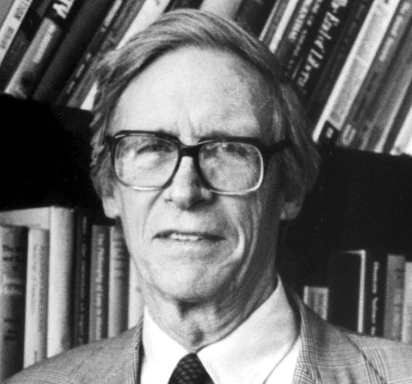
Greater intelligence, wealth and opportunity, for example, allow a person to achieve ends he could not rationally contemplate otherwise.
▼
Source
Chapter II, Section 15, pg. 93
4 months ago
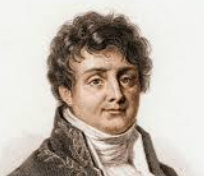
The primitive heat... in the interior of the earth would not increase the external temperature of space... for... the effect of this central heat has long since become insensible at the surface, although it may be very great at a moderate depth.
4 months ago
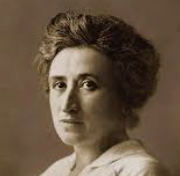
The leadership has failed. Even so, the leadership can and must be recreated from the masses and out of the masses. The masses are the decisive element, they are the rock on which the final victory of the revolution will be built. The masses were on the heights; they have developed this 'defeat' into one of the historical defeats which are the pride and strength of international socialism. And that is why the future victory will bloom from this 'defeat'. 'Order reigns in Berlin!' You stupid henchmen! Your 'order' is built on sand. Tomorrow the revolution will already 'raise itself with a rattle' and announce with fanfare, to your terror: I was, I am, I will be!
▼
Source
"Order reigns in Berlin", Last written words. Collected Works 4
4 months ago
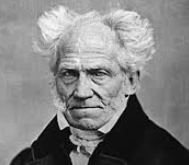
When the Church says that, in the dogmas of religion, reason is totally incompetent and blind, and its use to be reprehended, this really attests the fact that these dogmas are allegorical in their nature, and are not to be judged by the standard which reason, taking all things sensu proprio, can alone apply. Now the absurdities of a dogma are just the mark and sign of what is allegorical and mythical in it. In the case under consideration, however, the absurdities spring from the fact that two such heterogeneous doctrines as those of the Old and New Testaments had to be combined. The great allegory was of gradual growth. Suggested by external and adventitious circumstances, it was developed by the interpretation put upon them, an interpretation in quiet touch with certain deep-lying truths only half realised. The allegory was finally completed by Augustine, who penetrated deepest into its meaning, and so was able to conceive it as a systematic whole and supply its defects.
▼
Source
"The Christian System" in Religion: A Dialogue, and Other Essays (1910) as translated by Thomas Bailey Saunders, p. 105
4 months ago
I have never taken myself for a being. A non-citizen, a marginal type, a nothing who exists only by the excess, by the superabundance of his nothingness.
4 months ago
War is a quarrel between two thieves too cowardly to fight their own battle; therefore they take boys from one village and another village, stick them into uniforms, equip them with guns, and let them loose like wild beasts against each other.
▼
Source
Quoted by Emma Goldman in her essay, "Patriotism: A Menace to Liberty", chapter five of Anarchism and Other Essays (2nd revised edition, 1911).
4 months ago
Many conservative writers have contended that the tendency to equality in modern social movements is the expression of envy. In this way they seek to discredit this trend, attributing it to collectively harmful impulses.
▼
Source
Chapter IX, Section 82, p. 538
4 months ago
The mind of man will never be able to contemplate the being, perfections, and providence of God without meeting with inexplicable difficulties. We may find sufficient reason for acquiescing in the darkness which involves these great subjects, but we must never expect to see them set in a perfectly clear light. But notwithstanding this, we may know enough of the divine being, and of his moral government, to make us much better and happier beings than we could be without such knowledge; and even the consideration of the insuperable difficulties referred to above is not without its use, as it tends to impress the mind with sentiments of reverence, humility, and submission.
▼
Source
Vol. I : Preface (1772)
4 months ago
But what has been the experience of the Russian socialist movement up to now? The most important and fruitful changes in its tactical policy during the last ten years have not been the inventions of several leaders and even less so of any central organizational organs. They have always been the spontaneous product of the movement in ferment.
4 months ago
In every page of David Hume, there is more to be learned than from Hegel's, Herbart's and Schleiermacher's complete philosophical works. - vol. II, p. 582 (as cited on p. 177 of Schopenhauer: A Biography)
4 months ago
It is a great force, and a great fortune, to be able to live without any ambition whatever. I aspire to it, but the very fact of so aspiring still participates in ambition.
4 months ago
This is not so much a history, as an epic poem; and notwithstanding, or even in consequence of this, the truest of histories. It is the history of the French Revolution, and the poetry of it, both in one; and on the whole no work of greater genius, either historical or poetical, has been produced in this country for many years.
▼
Source
John Stuart Mill, review of Carlyle's French Revolution in The London and Westminster Review (July 1837), p. 17
4 months ago
Those who were best able to provide themselves with the means of security against their neighbors, being thus in possession of the surest guarantee, passed the most agreeable life in each other's society; and their enjoyment of the fullest intimacy was such that, if one of them died before his time, the survivors did not mourn his death as if it called for sympathy.
4 months ago
[P]ossibly... Parmenides believed in a "philosophic life" (§ 35), and... got the idea from the Pythagoreans; but there is very little trace... of his having been... affected by the religious side of Pythagoreanism. ...[T]here are traces of Orphic ideas in the poem ...Parmenides was a western Hellene, and he had probably been a Pythagorean, so it is not a little remarkable that he should be so free from the common tendency of his age and country. ...[L]ike most of the older philosophers, he took part in politics; and recorded that he legislated for his native city. Others add that the magistrates of Elea made the citizens swear every year to abide by the laws which Parmenides had given them.
4 months ago
A grain of poetry suffices to season a century.
▼
Source
Dedication of the Statue of Liberty (1887)
4 months ago
If I had but a garden for a bower Wherein the roses of Damascus flower, How happy, with the Luzumiyat in hand, To pass the afternoon and sunset hour!
▼
Source
Clinton Scollard
4 months ago
A reproach can only hurt if it hits the mark. Whoever knows that he does not deserve a reproach can treat it with contempt.
4 months ago
If death is as horrible as is claimed, how is it that after the passage of a certain period of time we consider happy any being, friend or enemy, who has ceased to live?
4 months ago
Once I reveled in a destiny like no other joy I'd known: when the warden — reading my death sentence — wept.
▼
Source
I (Yo soy un hombre sincero) as translated by Esther Allen in José Martí : Selected Writings (2002), p. 273
4 months ago
It is impossible that each of the elements should be infinite. For that is body which has interval on all sides; and that is infinite which has extension without bound.
▼
Source
Book III, Ch. VII, p. 159.

4 months ago
The one thing we can say is that if Socrates really expected to get a definitive answer to his question, 'What is justice?' when talking to his friends on their way back to the Piraeus, he has been disappointed. It remains a contentious and disputed subject.
4 months ago
Money is human happiness in the abstract: he, then, who is no longer capable of enjoying human happiness in the concrete devotes his heart entirely to money.
▼
Source
Vol. 2, Ch. 26, § 320
4 months ago
I feel effective, competent, likely to do something positive only when I lie down and abandon myself to an interrogation without object or end.
4 months ago
The man of system, on the contrary, is apt to be very wise in his own conceit; and is often so enamoured with the supposed beauty of his own ideal plan of government, that he cannot suffer the smallest deviation from any part of it. He goes on to establish it completely and in all its parts, without any regard either to the great interests, or to the strong prejudices which may oppose it. He seems to imagine that he can arrange the different members of a great society with as much ease as the hand arranges the different pieces upon a chess-board. He does not consider that the pieces upon the chess-board have no other principle of motion besides that which the hand impresses upon them; but that, in the great chess-board of human society, every single piece has a principle of motion of its own, altogether different from that which the legislature might choose to impress upon it. If those two principles coincide and act in the same direction, the game of human society will go on easily and harmoniously, and is very likely to be happy and successful. If they are opposite or different, the game will go on miserably, and the society must be at all times in the highest degree of disorder.
▼
Source
Section II, Chap. II.
CivilSimian.com created by AxiomaticPanic, CivilSimian, Kalokagathia