
4 months 1 week ago
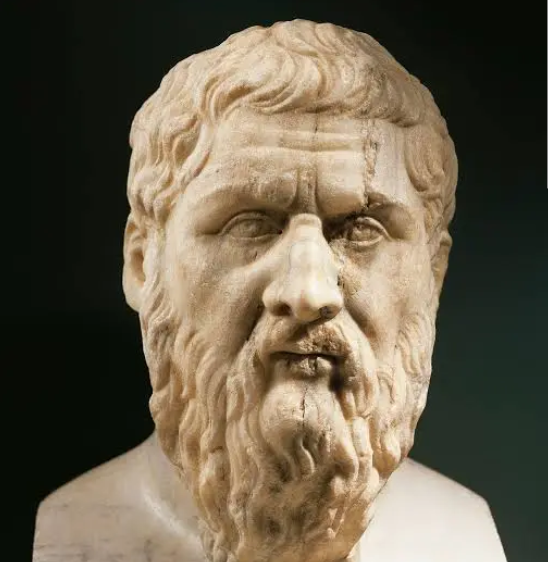
Neither human wisdom nor divine inspiration can confer upon man any greater blessing than this: live a life of happiness and harmony here on earth.
▼
Source
256b
4 months 1 week ago
Life is a wave, which in no two consecutive moments of its existence is composed of the same particles.
▼
Source
Vitality.
4 months 1 week ago
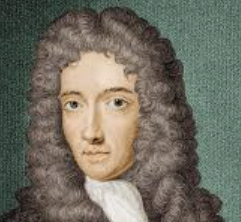
Being Gentlemen and very far from the litigious humour of loving to wrangle about words or terms or notions as empty; they had before his coming in, readily agreed promiscuously to use when they pleased Elements and Principles as terms equivalent: and to understand both by the one and the other, those primitive and simple bodies of which the mixt ones are said to be composed, and into which they are ultimately resolved.
4 months 1 week ago
Who Rebels? Who rises in arms? Rarely the slave, but almost always the oppressor turned slave.
4 months 1 week ago
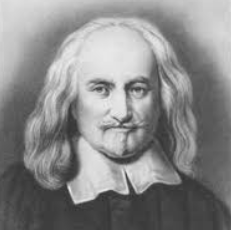
And for Incoherent Speech, it was amongst the Gentiles taken for one sort of Prophecy, because the Prophets of their Oracles, intoxicated with a spirit, or vapor from the cave of the Pythian Oracle at Delphi, were for a time really mad, and spake like mad-men; of whoose loose words a sense might be made to fit any event, in such sort, as all bodies are said to be made of Materia prima.
▼
Source
The Third Part, Chapter 36, p. 226 (See also: Glossolalia)
4 months 1 week ago
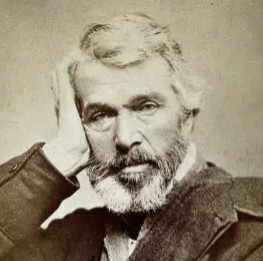
May not this religious reticence, in these devout good souls, be perhaps a merit, and sign of health in them? Jocelin, Eadmer, and such religious men, have as yet nothing of 'Methodism;' no Doubt or even root of Doubt. Religion is not a diseased self-introspection, an agonising inquiry: their duties are clear to them, the way of supreme good plain, indisputable, and they are traveling on it. Religion lies over them like an all-embracing heavenly canopy, like an atmosphere and life-element, which is not spoken of, which in all things is presupposed without speech. Is not serene or complete Religion the highest aspect of human nature.
4 months 1 week ago
Our present-day neurochemical cocktail, we are asked to believe, is the medium through which alien realms of consciousness can be grasped and neutrally appraised from a third-person perspective. Empirical research suggests this optimism is at best naïve.
▼
Source
"[https://www.hedweb.com/bokowfil.htm Storming Heaven: LSD and the American Dream]", BLTC Research (2009)

4 months 1 week ago
Logic is the most useful tool of all the arts. Without it no science can be fully known. It is not worn out by repeated use, after the manner of material tools, but rather admits of continual growth through the diligent exercise of any other science. For just as a mechanic who lacks a complete knowledge of his tool gains a fuller [knowledge] by using it, so one who is educated in the firm principles of logic, while he painstakingly devotes his labor to the other sciences, acquires at the same time a greater skill at this art.
▼
Source
Summa Logicae (c. 1323), [http://www.pvspade.com/Logic/docs/ockham.pdf Prefatory Letter, as translated by Paul Vincent Spade (1995)]
4 months 1 week ago
Democracy does not contain any force which will check the constant tendency to put more and more on the public payroll. The state is like a hive of bees in which the drones display, multiply and starve the workers so the idlers will consume the food and the workers will perish.
4 months 1 week ago
History is the record of a vast experimental investigation—of a search by man after the best conditions of existence.
4 months 1 week ago
It appeared to him that to prepare a "History of Trades" in which the observations and practices of different trades might be united... would draw the attention of philosophers to the interests of industry, and of artizans to the benefits promised by philosophy. ...Such a work was not written; and until a more recent period the store of facts gained in the pursuit of industrial occupations was confined to the acquaintance of those who were occupied therein
▼
Source
Introductory Remarks
4 months 1 week ago
Were we to undertake an exhaustive self-scrutiny, disgust would paralyze us, we would be doomed to a thankless existence.
4 months 1 week ago
I take the liberty of asserting that there is one valid reason, and only one, for either punishing a man or rewarding him in this world; one reason, which ancient piety could well define: That you may do the will and commandment of God with regard to him; that you may do justice to him. This is your one true aim in respect of him; aim thitherward, with all your heart and all your strength and all your soul, thitherward, and not elsewhither at all! This aim is true, and will carry you to all earthly heights and benefits, and beyond the stars and Heavens. All other aims are purblind, illegitimate, untrue; and will never carry you beyond the shop-counter, nay very soon will prove themselves incapable of maintaining you even there. Find out what the Law of God is with regard to a man; make that your human law, or I say it will be ill with you, and not well!
4 months 1 week ago
Today, status quo bias runs deep. Conservation biology is an ideology masquerading as a science. Many researchers seek to extend the tenets of conservation biology to humans. By contrast, a benevolent superintelligence might view Darwinian life on Earth as an infestation of biological malware and act accordingly. The amount of suffering caused by Homo sapiens is hard to quantify. But the suffering is immense and growing daily with the spread of industrialised animal abuse.
▼
Source
Reply to "[https://qr.ae/TWKfFQ Why would someone want to end humanity?]", Quora, 10 Mar. 2018
4 months 1 week ago
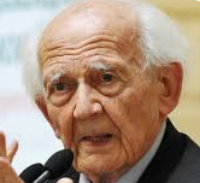
The average person appreciates a value only “in the course of, and through comparison” with the possessions, condition, plight or quality of other persons. … The awareness that the acquisition and enjoyment of that value is beyond the person’s capacity … triggers two mutually opposite, but equally vigorous reactions: an overwhelming desire (all the more tormenting because of the suspicion that it might be impossible to fulfill); and ressentiment—a rancor caused by a desperate urge to ward off self-deprecation and self-contempt by demeaning, deriding and degrading the value in question, together with its possessors.
▼
Source
pp. 24-25 [Quote is from Max Scheler, “Das Ressentiment im Aufbau der Moralen”]
4 months 1 week ago
But why had science lost its way in the first place? What appeal could these teachings of Pythagoras and Plato have had for their contemporaries? They provided, I believe, an intellectually respectable justification for a corrupt social order. The mercantile tradition that had led to Ionian science also led to a slave economy. You could get richer if you owned a lot of slaves. Athens in the time of Plato and Aristotle had a vast slave population. All that brave Athenian talk about democracy applied only to a privileged few.
▼
Source
Carl Sagan, "Cosmos"
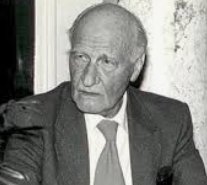
4 months 1 week ago
No less incommensurable with the working-world than the philosophical question is the sound of true poetry. The lover, too, stands outside the tight chain of efficiency of this working world, and so does whoever else approaches the margin of existence through some deep existential disturbance (which always brings a "shattering" of one's environment), or through, say, the proximity of death.
▼
Source
pp. 67–68
4 months 1 week ago
The obsession with suicide is characteristic of the man who can neither live nor die, and whose attention never swerves from this double impossibility.
4 months 1 week ago
[I]n the learned professions as in the unlearned, and in human things throughout, in every place and in every time, the true function of intellect is not that of talking, but of understanding and discerning with a view to performing!
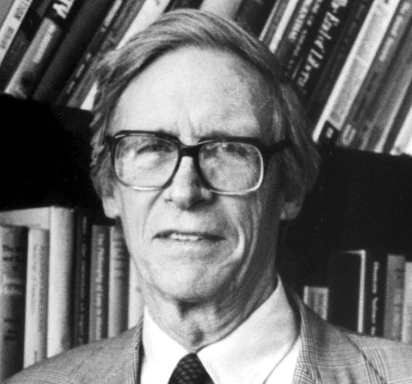
4 months 1 week ago
The first statement of the two principles reads as follows. First: each person is to have an equal right to the most extensive basic liberty compatible with a similar liberty for others. Second: social and economic inequalities are to be arranged so that they are both(a)reasonably expected to be to everyone's advantage, and (b) attached to positions and offices open to all.
▼
Source
Chapter II, Section 11, pg. 60
4 months 1 week ago
The interposition of the air very much modifies the effects of the heat upon the surface of the globe. The solar rays traversing the atmospheric strata, which are condensed by their own weight [at decreasing altitudes], heat them very unequally; those which are rarest are likewise coldest, because they... absorb a smaller part of the rays. The heat of the sun... in the form of light, possesses the property of penetrating transparent solids or liquids, and loses this property... when by... terrestrial bodies, it is turned into heat radiating without light.
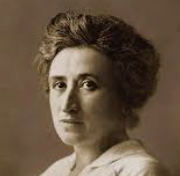
4 months 1 week ago
Public control is indispensably necessary. Otherwise the exchange of experiences remains only with the closed circle of the officials of the new regime. Corruption becomes inevitable. (Lenin’s words, Bulletin No.29) Socialism in life demands a complete spiritual transformation in the masses degraded by centuries of bourgeois rule. Social instincts in place of egotistical ones, mass initiative in place of inertia, idealism which conquers all suffering, etc., etc. No one knows this better, describes it more penetratingly; repeats it more stubbornly than Lenin. But he is completely mistaken in the means he employs. Decree, dictatorial force of the factory overseer, draconian penalties, rule by terror – all these things are but palliatives. The only way to a rebirth is the school of public life itself, the most unlimited, the broadest democracy and public opinion. It is rule by terror which demoralizes.
▼
Source
[http://www.marxists.org/archive/luxemburg/1918/russian-revolution/ch06.htm "The Problem with Dictatorship" in The Russian Revolution] as translated by Bertram Wolfe (1918)
4 months 1 week ago
What I know at sixty, I knew as well at twenty. Forty years of a long, a superfluous, labor of verification.
4 months 1 week ago
Had there not been a natural goodness and indestructible force in my father, I see not how be could have bodied himself forth from these mean impediments. I suppose good precepts were not wanting. There was the Bible to read. Old John Orr, the schoolmaster, used from time to time to lodge with them; be was religious and enthusiastic (though in practice irregular with drink). In my grandfather, also, there seems to have been a certain geniality; for instance, he and a neighbor, Thomas Hogg, read "Anson's Voyages;" also tho "Arabian Nights," for which latter my father, armed with zealous conviction, scrupled not to censure them openly. By one means and another, at an early age he had acquired principles, lights that not only flickered, but shone steadily to guide his way.
4 months 1 week ago
Properly understood, then, the desire to act justly derives in part from the desire to express most fully what we are or can be, namely free and equal rational beings with the liberty to choose.
▼
Source
Chapter IV, Section 40, p. 256
4 months 1 week ago
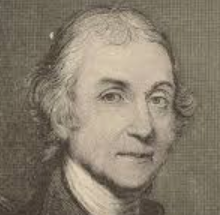
In his Opus Majus he demonstrates, that if a transparent body, interposed between the eye and an object, be convex towards the eye, the object will appear magnified. This observation our author certainly had from Alhazen... this writer [Bacon] gives us figures, representing the progress of rays of light through his spherical segment, as well as endeavours to give reasons why objects are magnified... From the writings of Alhazen and these observations and experiments of Bacon together, it is not improbable that some monks gradually hit upon the construction of spectacles, to which Bacon's lesser segment, not withstanding his mistake concerning it, was a nearer approach than Alhazen's... Whoever they were that pursued the discoveries of Bacon, they probably observed, that a very small convex glass, when held at a greater distance from a book, would magnify the letters more than when it was placed close to them, in which position only Bacon seemed to have used it. In the next place, they might try whether two of these small segments of a sphere placed together, or a glass convex on both sides, would not magnify more than one of them. They would then find, that two of these glasses, one for each eye, would answer the purpose of reading better than one; and lastly they might find, that different degrees of convexity, suited different persons. It is certain that spectacles were well known in the 13th century, and not long before. ...It would certainly have been a great satisfaction to us to have been able to trace the actual steps in the progress of this most useful invention, without which most persons who have a taste for reading must have had the melancholy prospect of passing a very dull and joyless old age; and must have been deprived of the pleasure of entertaining themselves by conversing with the absent and the dead, when they were no longer capable of acting their part among the living. Telescopes and microscopes are to be numbered among the superfluities of life when compared to spectacles, which may now be ranked almost among the necessities of it; since the arts of reading and writing are almost universal.
▼
Source
Period I To the Revival of Letters in Erope
4 months 1 week ago
Lenin's thesis is that the party Central Committee should have the privilege of naming all the local committees of the party. It should have the right to appoint the effective organs of all local bodies from Geneva to Liege, from Tomsk to Irkutsk. It should also have the right to impose on all of them its own ready-made rules of party conduct. It should have the right to rule without appeal on such questions as the dissolution and reconstitution of local organizations. This way, the Central Committee could determine, to suit itself, the composition of the highest party organs. The Central Committee would be the only thinking element in the party. All other groupings would be its executive limbs.
4 months 1 week ago
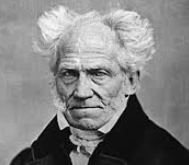
Consider the Koran... this wretched book was sufficient to start a world-religion, to satisfy the metaphysical need of countless millions for twelve hundred years, to become the basis of their morality and of a remarkable contempt for death, and also to inspire them to bloody wars and the most extensive conquests. In this book we find the saddest and poorest form of theism. Much may be lost in translation, but I have not been able to discover in it one single idea of value.
▼
Source
E. Payne, trans., Vol. II, Ch. XVII: On Man's Need for Metaphysics
4 months 1 week ago
If we could sleep twenty-four hours a day, we would soon return to the primordial slime, the beatitude of that perfect torpor before Genesis-the dream of every consciousness sick of itself.
4 months 1 week ago
About that age [16], or perhaps a year later, a friend sent me Sartor Resartus, and one of the most abiding remembrances of those days is the attic in which I used to read by the light only of my collier's lamp whilst going through Carlyle's most impressive book. I felt I was in the presence of some great power, the meaning of which I could only dimly guess at. I mark the reading of Sartor, however, as a real turning point, and went through the book three times in succession until the spirit of it somewhat entered into me. Since then I have learned much of the human failings and weaknesses of Carlyle, but I still remain a worshipper at his shrine. He was, indeed, to me in those days a hero, more particularly when Past and Present and the French Revolution followed in the wake of Sartor.
▼
Source
Keir Hardie, contribution to 'Character Sketches. I—The Labour Party And The Books That Helped To Make It', The Review of Reviews, Vol. XXXIII (June 1906), pp. 570-571
4 months 1 week ago
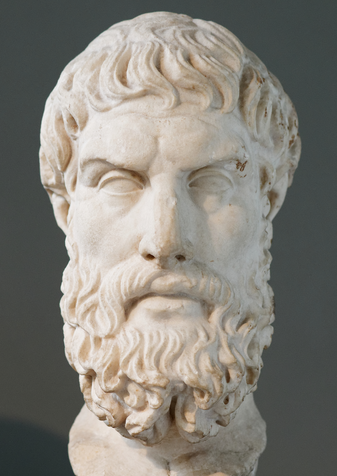
Of our desires some are natural and necessary, others are natural but not necessary; and others are neither natural nor necessary, but are due to groundless opinion.
4 months 1 week ago
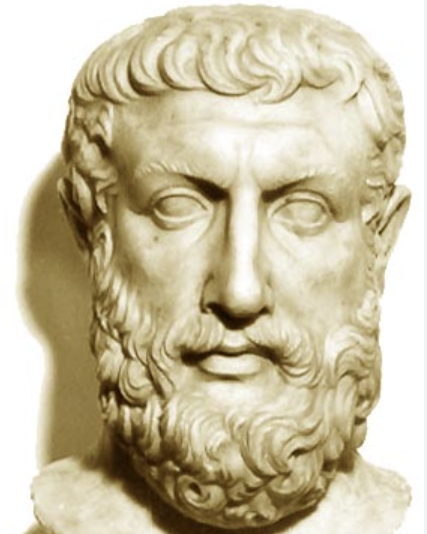
The path of speech (mythos odoio) (by Parmenides) contains within itself the path of day and that of night. It is no coincidence that Parmenides' poem comprises two parts. What exactly the second part contains and why it is so is an ancient philological and exegetical problem that we will not address here and which Plato already denounced in its ambiguity. In fact, it is not possible to separate being and speech without identifying them, and it is not possible to identify them without, ipso facto, separating them. The “simulation” (the simul) is immediate and structural. Human beings are simulators precisely because they are beings of truth. They cannot tell the truth without lying and vice versa. In this sense, they are beings of mediation, beings that stand in the middle, as you happily recall, that is, beings that ‘work’ to translate immediate experience into knowledge, or into a transferential process. God and nature do not work, but human beings do, first and foremost in naming the fruit of sexuality; it then places humans in the relational milieu of parents and children, brothers and sisters, offered, either really or symbolically, in sacrifice to God, that is, to the community of speakers. [...] The 20th century cannot exist without Sigmund Freud, psychoanalysis cannot exist without philosophy, at least in my opinion.
▼
Source
Carlo Sini, quoted in Giorgio Bubbolini, [https://www.spiweb.it/libri/con-autore/intervista-a-carlo-sini/ Intervista a Carlo Sini], Spiweb.it, 17 November 2009.
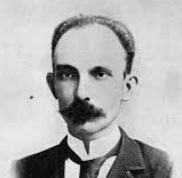
4 months 1 week ago
Man needs to suffer. When he does not have real griefs he creates them. Griefs purify and prepare him.
▼
Source
"Adúltera" [Adulterous Thoughts] (1883)
4 months 1 week ago
This world is such an abode that if those present here Have their wits entire, they will never weep for the absent ones.
▼
Source
1. 142
4 months 1 week ago
The cheapest sort of pride is national pride; for if a man is proud of his own nation, it argues that he has no qualities of his own of which he can be proud; otherwise he would not have recourse to those which he shares with so many millions of his fellowmen. The man who is endowed with important personal qualities will be only too ready to see clearly in what respects his own nation falls short, since their failings will be constantly before his eyes. But every miserable fool who has nothing at all of which he can be proud adopts, as a last resource, pride in the nation to which he belongs; he is ready and glad to defend all its faults and follies tooth and nail, thus reimbursing himself for his own inferiority.
▼
Source
Vol. 1, Ch. 3, Section 2: Pride
4 months 1 week ago
Self-knowledge — the bitterest knowledge of all and also the kind we cultivate least: what is the use of catching ourselves out, morning to night, in the act of illusion, pitilessly tracing each act back to its root, and losing case after case before our own tribunal?
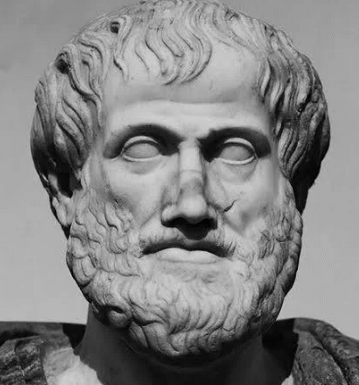
4 months 1 week ago
It is impossible for motion to subsist without place, and void, and time.
▼
Source
Book III, Ch. I, p. 136.
4 months 1 week ago
One must have faith in the best in men and distrust the worst. One must allow the best to be shown so that it reveals and prevails over the worst. Nations should have a pillory for whoever stirs up useless hate, and another for whoever fails to tell them the truth in time.

4 months 1 week ago
Justice is closely connected to respect for rights. Modern writers discuss both subjects together with no suggestion that one might discuss one with the other. It was not always so. Greek political theory and Roman Law had sophisticated ideas about justice in its various aspects, but did not embrace our conception of individual rights. This may seem counter-intuitive. How could a society recognize someone as the owner of a piece of property without acknowledging an individual right? How does legitimate one-man rule, monarchy, differ from its illegitimate parody, tyranny, unless the lawful king has a right to the authority he exercises that the tyrant does not?The answer is that property and authority were defined by law rather than our notion of individual rights. To own property was to be the person to whom the law accorded the privileges and immunities that locally defined ownership. To be a legitimate ruler was to be the person the law designated to rule. It is a commonplace that ancient notions of law accorded far more power over property to the family and other groups than modern notions of private property do. Even under the Roman Law, where ownership had an 'absolute' and sovereign character, property was not understood in the modern way; when the law told the judge to give a man his ius, this primarily meant that he should be treated as the law required. The 'subjective' understanding of rights, whereby the right-holder may stand on his rights or not as he chooses, was not a Roman notion.
4 months 1 week ago
Truth that has been merely learned is like an artificial limb, a false tooth, a waxen nose; at best, like a nose made out of another's flesh; it adheres to us only because it is put on. But truth acquired by thinking of our own is like a natural limb; it alone really belongs to us. This is the fundamental difference between the thinker and the mere man of learning. The intellectual attainments of a man who thinks for himself resemble a fine painting, where the light and shade are correct, the tone sustained, the colour perfectly harmonised; it is true to life. On the other hand, the intellectual attainments of the mere man of learning are like a large palette, full of all sorts of colours, which at most are systematically arranged, but devoid of harmony, connection and meaning.
▼
Source
Vol. 2, Ch. 22, § 261
4 months 1 week ago
We must suffer to the end, to the moment when we stop believing in suffering.
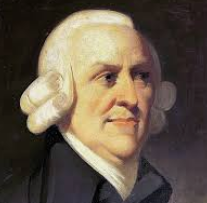
4 months 1 week ago
How many people ruin themselves by laying out money on trinkets of frivolous utility? What pleases these lovers of toys is not so much the utility, as the aptness of the machines which are fitted to promote it. All their pockets are stuffed with little conveniences. They contrive new pockets, unknown in the clothes of other people, in order to carry a greater number. They walk about loaded with a multitude of baubles, in weight and sometimes in value not inferior to an ordinary Jew's-box, some of which may sometimes be of some little use, but all of which might at all times be very well spared, and of which the whole utility is certainly not worth the fatigue of bearing the burden.
▼
Source
Chap. I.

4 months 1 week ago
How can a rational being be ennobled by anything that is not obtained by its own exertions?
▼
Source
Ch. 3
4 months 1 week ago
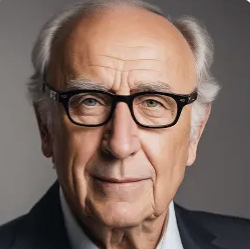
Normal science, the puzzle-solving activity we have just examined, is a highly cumulative enterprise, eminently successful in its aim, the steady extension of the scope and precision of scientific knowledge. In all these respects it fits with great precision the most usual image of scientific work. Yet one standard product of the scientific enterprise is missing. Normal science does not aim at novelties of fact or theory and, when successful, finds none.
▼
Source
p. 52
4 months 1 week ago
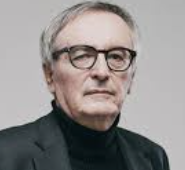
The result of toppling tyranny in divided countries is usually civil war and ethnic cleansing.
▼
Source
[http://www.guardian.co.uk/commentisfree/2007/jul/31/comment.politics1 "The death of this crackpot creed is nothing to mourn,"] The Guardian (2007-07-31)
4 months 1 week ago
And surely to know what this good is, is of great importance for the conduct of life, for in that case we shall be like archers shooting at a definite mark, and shall be more likely to do what is right. But, if this is the case, we must try to comprehend, in outline at least, what it is and to which of the sciences it belongs.
▼
Source
(Bk I, Ch I)
4 months 1 week ago
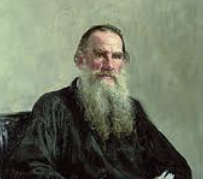
I sit on a man's back, choking him, and making him carry me, and yet assure myself and others that I am very sorry for him and wish to ease his lot by any means possible, except getting off his back.
▼
Source
Writings on Civil Disobedience and Nonviolence (1886)
4 months 1 week ago
Just as he who gives his life to serve a great idea is admirable, he who avails himself of a great idea to serve his personal hopes of glory and power is abominable, even if he too risks his life. To give one's life is a right only when one gives it unselfishly.
4 months 1 week ago
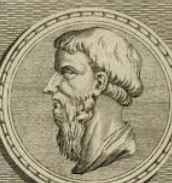
The forum is an established place for men to cheat one another, and behave covetously.
▼
Source
As quoted in The Lives and Opinions of Eminent Philosophers by Diogenes Laërtius, as translated by C. D. Yonge (1853), "Anacharsis" sect. 5, p. 48
4 months 1 week ago
Every man takes the limits of his own field of vision for the limits of the world.
▼
Source
"Psychological Observations"
CivilSimian.com created by AxiomaticPanic, CivilSimian, Kalokagathia