
4 months 1 week ago
That the sun will not rise to-morrow is no less intelligible a proposition, and implies no contradiction, than the affirmation, that it will rise.
▼
Source
§ 4.8
4 months 1 week ago
Zoroaster, Pythagoras, Epicharmus, Empedocles, Kebes, Euripides, Plato, Euclid, Philo, Boethius, Virgil, Marcus Cicero, Plotinus, Iamblichus, Proclus, Psellus, Synesius, Origen, and, finally, Aristotle himself, far 'from denying our immortality, support it most emphatically. (p. 251)
▼
Source
The Veil of Isis, Part 1, Science.
4 months 1 week ago
Man has to awaken to wonder — and so perhaps do peoples. Science is a way of sending him to sleep again.
▼
Source
p. 5e

4 months 1 week ago
When an opponent comes forward, move in and greet him; if he wants to pull back, send him on his way.
4 months 1 week ago
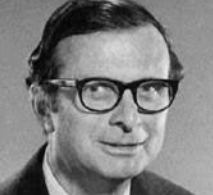
I love Emerson, the first great American writer.
▼
Source
1987 interview in Conversations with Susan Sontag edited by Leland Poague (1995)
4 months 1 week ago
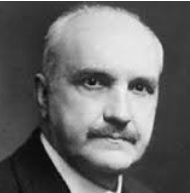
I am often inclined to put the implementation questions first, ie, "Can anything be changed?" Should the implementation question not accompany the whole process from its very beginning to its very end?
▼
Source
C. West Churchman (1979, p. 21) as cited in: Interfaces (1982) Vol 12, p. 12
4 months 1 week ago
They [the wise spirits of antiquity in the first circle of Dante's Inferno] are condemned, Dante tells us, to no other penalty than to live in desire without hope, a fate appropriate to noble souls with a clear vision of life.
▼
Source
Obiter Scripta (1936)
4 months 1 week ago
It is a very comfortable reflection to the lovers of liberty, that this peculiar privilege of Britain is of a kind that cannot easily be wrested from us, but must last as long as our government remains, in any degree, free and independent. It is seldom, that liberty of any kind is lost all at once. Slavery has so frightful an aspect to men accustomed to freedom, that it must steal upon them by degrees, and must disguise itself in a thousand shapes, in order to be received. But, if the liberty of the press ever be lost, it must be lost at once. The general laws against sedition and libelling are at present as strong as they possibly can be made. Nothing can impose a farther restraint, but either the clapping an Imprimatur upon the press, or the giving to the court very large discretionary powers to punish whatever displeases them. But these concessions would be such a bare-faced violation of liberty, that they will probably be the last efforts of a despotic government. We may conclude, that the liberty of Britain is gone for ever when these attempts shall succeed.
▼
Source
Part I, Essay 2: Of the Liberty of the Press
4 months 1 week ago
I believe that one of the things Christianity says is that sound doctrines are all useless. That you have to change your life. (Or the direction of your life.)
▼
Source
p. 53e
4 months 1 week ago
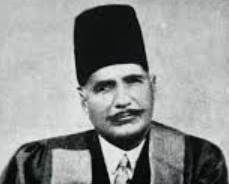
Why must I forever lose, forever forgo profit that is my due,Sunk in the gloom of evenings past, no plans for the morrow pursue.Why must I all attentive be to the nightingale's lament?Friend, am I as dumb as a flower? Must I remain silent?My theme makes me bold, makes my tongue more eloquent.Dust be in my mouth, against Allah I make complaint.
▼
Source
[https://archive.org/details/ShikwaJawabIShikwaIqbalsDialogueWithAllahTrKhushwantSinghIqbal Shikwa and Jawab-i-Shikwa (Complaint and Answer): Iqbal's Dialogue with Allah], translated by Khushwant Singh, p. 28. | Variant:"Why would I become a loss-causer,
4 months 1 week ago
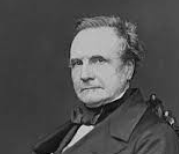
The Church has been reproached with endeavouring to appropriate to itself all those professorships in our Universities which are connected with science: it is however certain that the larger portion of these ill-remunerated offices have been filled by clergymen.
▼
Source
p. 225
4 months 1 week ago
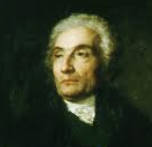
Too many French scholars were the principal authors of the Revolution, too many approved and gave their support so long as the Revolution, like Tarquinius' sceptre, struck down only the tallest heads. Like so many others, they said, It is impossible to make a great revolution without incurring misfortunes. But when a philosopher justifies evil by the end in view, when he says in his heart, Let there be a hundred thousand murders, provided we are free, and Providence replies, I accept your offer, but you must be included in the number, where is the injustice?
▼
Source
Chapter II, pp. 9–10
4 months 1 week ago
If the material world rests upon a similar ideal world, this ideal world must rest upon some other; and so on, without end. It were better, therefore, never to look beyond the present material world. By supposing it to contain the principle of its order within itself, we really assert it to be God; and the sooner we arrive at that Divine Being, so much the better. When you go one step beyond the mundane system, you only excite an inquisitive humour which it is impossible ever to satisfy.
▼
Source
Philo to Cleanthes, Part IV
4 months 1 week ago
If we spoke a different language, we would perceive a somewhat different world.
▼
Source
This actually first appears in Recent Experiments in Psychology (1950) by Leland Whitney Crafts, Théodore Christian Schneirla, and Elsa Elizabeth Robinson, where it is expressed:
4 months 1 week ago
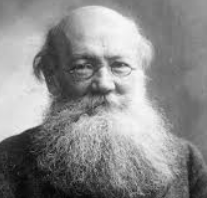
The history of human thought recalls the swinging of a pendulum which takes centuries to swing. After a long period of slumber comes a moment of awakening. Then thought frees herself from the chains with which those interested — rulers, lawyers, clerics — have carefully enwound her. She shatters the chains. She subjects to severe criticism all that has been taught her, and lays bare the emptiness of the religious political, legal, and social prejudices amid which she has vegetated. She starts research in new paths, enriches our knowledge with new discoveries, creates new sciences. But the inveterate enemies of thought — the government, the lawgiver, and the priest — soon recover from their defeat. By degrees they gather together their scattered forces, and remodel their faith and their code of laws to adapt them to the new needs.
▼
Source
[http://dwardmac.pitzer.edu/anarchist_Archives/kropotkin/AM/anarchist_moralitytc.html Anarchist Morality] (1890)

4 months 1 week ago
Jesus will take me safe trough... I shall see Jesus, who created all things, Jesus, who made the worlds; I shall see Him as He is;... Yes; I have had the Light for many years, and Oh! how bright it is! I feel SO SAFE, SO SATISFIED.
▼
Source
His last words, as quoted in The Home Life of Sir David Brewster (2010), by his daughter, Margaret Maria Gordon. Cambridge University Press. Chapter XXI.
4 months 1 week ago
Wherever an altar is found, there civilization exists.
▼
Source
Original text:Partout où vous verrez un autel, là se trouve la civilisation. | "Second Dialogue," p. 44
4 months 1 week ago
Upon the whole, I have always considered him, both in his lifetime and since his death, as approaching as nearly to the idea of a perfectly wise and virtuous man, as perhaps the nature of human frailty will permit.
▼
Source
Adam Smith
4 months 1 week ago
As man does not live in a solitary state, habits and feeling develop within him which are useful for the preservation of society and the propagation of the race. Without social feelings and usages life in common would have been absolutely impossible. It is not law which has established them; they are anterior to all law. Neither is it religion which has ordained them; they are anterior to all religions. They are found amongst all animals living in society. They are spontaneously developed by the new nature of things, like those habits in animals which men call instinct. They spring from a process of evolution, which is useful, and, indeed, necessary, to keep society together in the struggle it is forced to maintain for existence.
▼
Source
II
4 months 1 week ago
Thales said there was no difference between life and death. "Why, then," said some one to him, "do not you die?" "Because," said he, "it does make no difference."
▼
Source
Thales, 9.
4 months 1 week ago
Maistre attached the highest importance to the ‘philosophy of style,’ and averred that he who knew not how to write was incapable of metaphysics. The violence that pervades his thought and rhetoric is a response to the primal experience of the ‘terrible truth of evil,’ while his style incarnates his sense of the mystery of history. By conveying his thought in what Baudelaire called ‘rockets,’ Maistre provoked his readers into a state of fascination and shock.
▼
Source
Carolina Armenteros, "Epilogue: the forced inhabitant of history" in The New Enfant du Siècle: Joseph de Maistre as a Writer (2010), p. 101–102
4 months 1 week ago
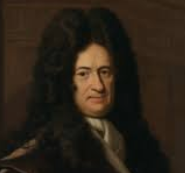
Although the whole of this life were said to be nothing but a dream and the physical world nothing but a phantasm, I should call this dream or phantasm real enough, if, using reason well, we were never deceived by it.
▼
Source
As quoted in The World of Mathematics (1956) by J. R. Newman, p. 1832
4 months 1 week ago
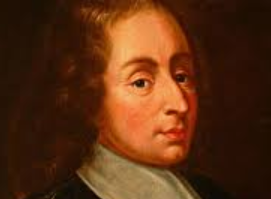
All men are almost led to believe not of proof, but by attraction. This way is base, ignoble, and irrelevant; every one therefore disavows it. Each one professes to believe and even to love nothing but what he knows to be worthy of belief and love.
4 months 1 week ago
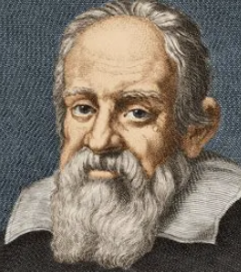
I tell you that if natural bodies have it from Nature to be moved by any movement, this can only be circular motion, nor is it possible that Nature has given to any of its integral bodies a propensity to be moved by straight motion. I have many confirmations of this proposition, but for the present one alone suffices, which is this. I suppose the parts of the universe to be in the best arrangement, so that none is out of its place, which is to say that Nature and God have perfectly arranged their structure. This being so, it is impossible for those parts to have it from Nature to be moved in straight, or in other than circular motion, because what moves straight changes place, and if it changes place naturally, then it was at first in a place preternatural to it, which goes against the supposition. Therefore, if the parts of the world are well ordered, straight motion is superfluous and not natural, and they can only have it when some body is forcibly removed from its natural place, to which it would then return by a straight line, for thus it appears that a part of the earth does [move] when separated from its whole. I said "it appears to us," because I am not against thinking that not even for such an effect does Nature make use of straight line motion.
▼
Source
A note on this statement is included by Stillman Drake in his Galileo at Work, His Scientific Biography (1981): Galileo adhered to this position in his Dialogue at least as to the "integral bodies of the universe." by which he meant stars and planets, her
4 months 1 week ago
Not only has a coercive system contributed and powerfully aided to create all the present economical, political and social evils, but it has given proof of its absolute impotence to raise the moral level of societies; it has not been even able to maintain it at the level it had already reached. If a benevolent fairy could only reveal to our eyes all the crimes that are committed every day, every minute, in a civilized society under cover of the unknown, or the protection of law itself, — society would shudder at that terrible state of affairs.
4 months 1 week ago
Once Diogenes, who was washing vegetables, ridiculed him as he passed by, and said, "If you had learnt to eat these vegetables, you would not have been a slave in the palace of a tyrant." But Aristippus replied, "And you, if you had known how to behave among men, would not have been washing vegetables."
▼
Source
Aristippus, 4.
4 months 1 week ago
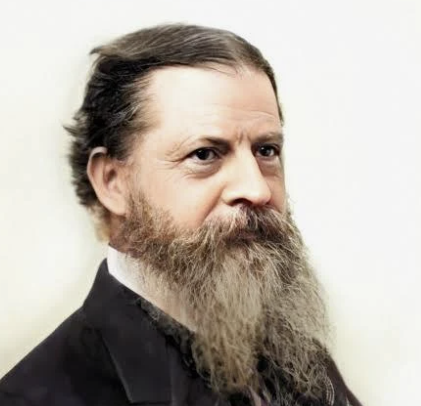
It has never been in my power to study anything, — mathematics, ethics, metaphysics, gravitation, thermodynamics, optics, chemistry, comparative anatomy, astronomy, psychology, phonetics, economics, the history of science, whist, men and women, wine, metrology, except as a study of semeiotic.
▼
Source
Letter to Victoria (23 December 1908)
4 months 1 week ago
The method of not erring is sought by all the world. The logicians profess to guide it, the geometricians alone attain it, and apart from science, and the imitations of it, there are no true demonstrations.
4 months 1 week ago
Wine is a mixture of moisture and light.
▼
Source
As quoted in Lorenzo Magalotti's Scientific and Scholarly Letter (1721)
4 months 1 week ago
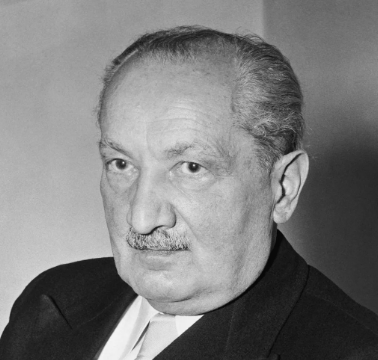
There is no information about the thingness of the thing without knowledge of the kind of truth in which the thing stands. But there is no information about this truth of the thing without knowledge of the thingness of the thing whose truth is in question. Where are we to get a foothold? The ground slips away under us. Perhaps we are already close to falling into the well. At any rate the housemaids are already laughing. p. 27
4 months 1 week ago
It is absolutely incomprehensible to us that intelligent men — and such are not wanting in the collectivist party — can remain partisans of national or municipal parliaments after all the lessons history has given them — in France, in England, in Germany, or in the United States.
▼
Source
Ch. 13 : The Collectivist Wages System
4 months 1 week ago
"Bury me on my face," said Diogenes; and when he was asked why, he replied, "Because in a little while everything will be turned upside down."
▼
Source
Diogenes, 6.

4 months 1 week ago
It is not enough for a wise man to study nature and truth; he should dare state truth for the benefit of the few who are willing and able to think.
4 months 1 week ago
In fact, this infinitesimally spread-out consciousness is a direct feeling of its contents as spread out. In an infinitesimal interval we directly perceive the temporal sequence of its beginning, middle, and end... Now upon this interval follows another, whose beginning is the middle of the former, and whose middle is the end of the former. Here we have an immediate perception of the temporal sequence of its beginning, middle and end, or say, of the second, third, and fourth instants.
4 months 1 week ago
Ask professional philosophers of today to name the five most significant philosophers of the twentieth century and, whether they love him or loathe him, most will include Heidegger on the list.
▼
Source
Stephen Hicks, Nietzsche and the Nazis (2007), Occam's Razor, p. 10
4 months 1 week ago
Mutual aid, even though it may represent one of the factors of evolution, covers nevertheless one aspect only of human relations; that by the side of this current, powerful though it may be, there is, and always has been, the other current — the self-assertion of the individual, not only in its efforts to attain personal or caste superiority, economical, political, and spiritual, but also in its much more important although less evident function of breaking through the bonds, always prone to become crystallized, which the tribe, the village community, the city, and the State impose upon the individual. In other words, there is the self-assertion of the individual taken as a progressive element. It is evident that no review of evolution can be complete, unless these two dominant currents are analyzed. However, the self-assertion of the individual or of groups of individuals, their struggles for superiority, and the conflicts which resulted therefrom, have already been analyzed, described, and glorified from time immemorial. In fact, up to the present time, this current alone has received attention from the epical poet, the annalist, the historian, and the sociologist. History, such as it has hitherto been written, is almost entirely a description of the ways and means by which theocracy, military power, autocracy, and, later on, the richer classes' rule have been promoted, established, and maintained.
4 months 1 week ago
If appearances are deceitful, then they do not deserve any confidence when they assert what appears to them to be true.
▼
Source
Pyrrho, 11.
4 months 1 week ago
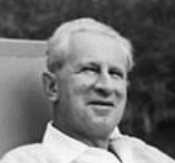
Marx explains the alienation of labor as exemplified in, first, the relation of the worker to the product of his labor and, second, the relation of the worker to his own activity. P. 276
4 months 1 week ago
As a friend, he may have been obliging and self-sacrificing; as an enemy, he was, as in particular had to experience, malicious and low in the choice of his means.
4 months 1 week ago
Be it understood, then, that what we have to do, as students of phenomenology, is simply to open our mental eyes and look well at the phenomenon and say what are the characteristics that are never wanting in it, whether that phenomenon be something that outward experience forces upon our attention, or whether it be the wildest of dreams, or whether it be the most abstract and general of the conclusions of science. The faculties which we must endeavor to gather for this work are three. The first and foremost is that rare faculty, the faculty of seeing what stares one in the face, just as it presents itself, unreplaced by any interpretation, unsophisticated by any allowance for this or for that supposed modifying circumstance. This is the faculty of the artist who sees for example the apparent colors of nature as they appear. When the ground is covered by snow on which the sun shines brightly except where shadows fall, if you ask any ordinary man what its color appears to be, he will tell you white, pure white, whiter in the sunlight, a little greyish in the shadow. But that is not what is before his eyes that he is describing; it is his theory of what ought to be seen. The artist will tell him that the shadows are not grey but a dull blue and that the snow in the sunshine is of a rich yellow. That artist's observational power is what is most wanted in the study of phenomenology. The second faculty we must strive to arm ourselves with is a resolute discrimination which fastens itself like a bulldog upon the particular feature that we are studying, follows it wherever it may lurk, and detects it beneath all its disguises. The third faculty we shall need is the generalizing power of the mathematician who produces the abstract formula that comprehends the very essence of the feature under examination purified from all admixture of extraneous and irrelevant accompaniments.
▼
Source
Lecture II : The Universal Categories, § 1 : Presentness, CP 5.41 - 42
4 months 1 week ago
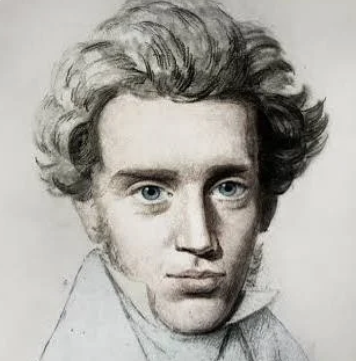
The reason I cannot really say that I positively enjoy nature is that I do not quite realize what it is that I enjoy. A work of art, on the other hand, I can grasp. I can — if I may put it this way — find that Archimedian point, and as soon as I have found it, everything is readily clear for me. Then I am able to pursue this one main idea and see how all the details serve to illuminate it.
▼
Source
Journals of Søren Kierkegaard 1A 8, 1834
4 months 1 week ago
May we not say that, in the fortuitous combination of the productions of Nature, since only those creatures could survive in whose organizations a certain degree of adaptation was present, there is nothing extraordinary in the fact that such adaptation is actually found in all these species which now exist? Chance, one might say, turned out a vast number of individuals; a small proportion of these were organized in such a manner that the animals' organs could satisfy their needs. A much greater number showed neither adaptation nor order; these last have all perished.... Thus the species which we see today are but a small part of all those that a blind destiny has produced.
▼
Source
Essai de cosmologie (1750), qtd, in
4 months 1 week ago
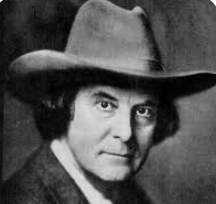
Piety is the tinfoil of pretense.
▼
Source
[http://books.google.com/books?id=Y4lHAAAAYAAJ&q="Piety+is+the+tin-foil+of+pretense"&pg=RA1-PA115#v=onepage The Philistine] (September 1908)
4 months 1 week ago
The spontaneous reproduction of superimposed needs by the individual does not establish autonomy; it only testifies to the efficacy of the control.
▼
Source
p. 8
4 months 1 week ago
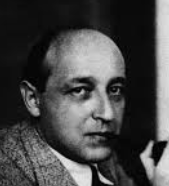
The particular conception of ideology operates primarily with a psychology of interests, while the total conception uses a more formal functional analysis, without any reference to motivations, confining itself to an objective description of the structural differences in minds operating in different social settings. The former assumes that this or that interest is the cause of a given lie or deception. The latter presupposes simply that there is a correspondence between a given social situation and a given perspective, point of view, or apperception mass. In this case, while an analysis of constellations of interests may often be necessary it is not to establish causal connections but to characterize the total situation. Thus interest psychology tends to be displaced by an analysis of the correspondence between the situation to be known and the forms of knowledge.
4 months 1 week ago
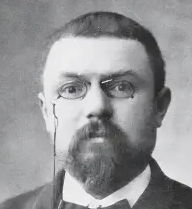
Our whole past experience is continually in our consciousness, though most of it sunk to a great depth of dimness. I think of consciousness as a bottomless lake, whose waters seem transparent, yet into which we can clearly see but a little way.
▼
Source
Vol. VII, par. 547
4 months 1 week ago
In physical reality one cause does not produce a given effect, but a multitude of distinct causes contribute to produce it, without our having any means of discriminating the part of each of them. ...Causes which have produced a certain effect will never be reproduced except approximately.
4 months 1 week ago
Death cannot explain itself. The earnestness consists precisely in this, that the observer must explain it to himself.
▼
Source
Pap VI B 120:13 1845
4 months 1 week ago
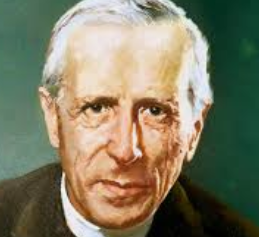
We only have to look around us to see how complexity and psychic temperature are still rising: and rising no longer on the scale of the individual but now on that of the planet. This indication is so familiar to us that we cannot but recognize the objective, experiential, reality of a transformation of the planet as a whole.
▼
Source
The Heart of Matter (1950)
4 months 1 week ago
An idea that is not dangerous is not worthy of being called an idea at all.
CivilSimian.com created by AxiomaticPanic, CivilSimian, Kalokagathia