
4 months 1 week ago
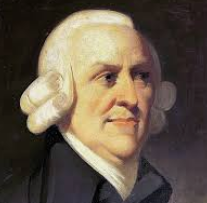
The real and effectual discipline which is exercised over a workman is that of his customers. It is the fear of losing their employment which restrains his frauds and corrects his negligence.
▼
Source
Chapter X, Part II.
4 months 1 week ago
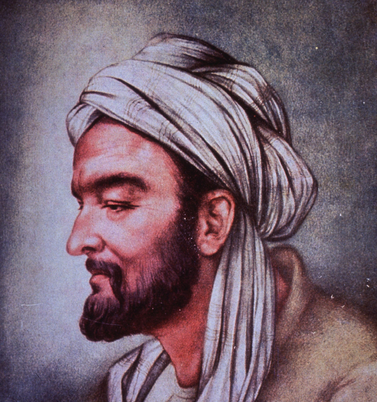
The world is divided into men who have wit and no religion and men who have religion and no wit.
▼
Source
This was declared without citation to have been attributed to Avicenna in A Rationalist Encyclopaedia : A Book of Reference on Religion, Philosophy, Ethics, and Science (1950), by Joseph McCabe, p. 43; it was also later wrongly attributed to Averroes in T
4 months 1 week ago
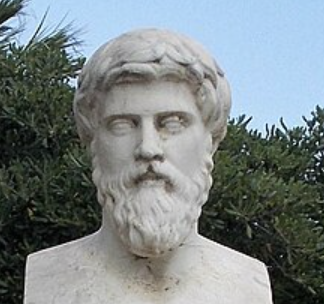
Lysander said, "Where the lion's skin will not reach, it must be pieced with the fox's."
▼
Source
60 Lysander

4 months 1 week ago
If our universe is one of many, unlike others in containing observers like ourselves, there is no need to posit a designer. Most universes will be too chaotic to allow the emergence of life or mind. In that case, the fact that humans exist in this universe needs no special explanation
▼
Source
Sweet Morality (p. 222)
4 months 1 week ago
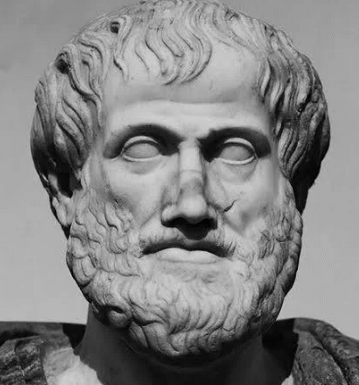
Wit is cultured insolence.
▼
Source
Book II, 1389b.11
4 months 1 week ago
I do not overlook the fact that there are irrationalists who love mankind, and that not all forms of irrationalism engender criminality. But I hold that he who teaches that not reason but love should rule opens up the way for those who rule by hate. (Socrates, I believe, saw something of this when he suggested that mistrust or hatred of argument is related to mistrust or hatred of man).
▼
Source
Vol. 2, Ch. 24 "Oracular Philosophy and the Revolt against Reason"
4 months 1 week ago
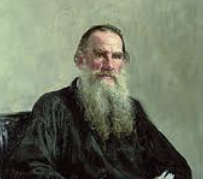
In historical events great men — so-called — are but labels serving to give a name to the event, and like labels they have the least possible connection with the event itself. Every action of theirs, that seems to them an act of their own free will, is in an historical sense not free at all, but in bondage to the whole course of previous history, and predestined from all eternity.
▼
Source
Bk. IX, ch. 1
4 months 1 week ago
Science, as the positivist understands it, is susceptible of infinite progress. That you learn in every elementary school today, I believe. Every result of science is provisional and subject to future revision, and this will never change. In other words, fifty thousand years from now there will still be results entirely different from those now, but still subject to revision. Science is susceptible of infinite progress. But how can science be susceptible of infinite progress if its object does not have an inner infinity? The belief admitted by all believers in science today — that science is by its nature essentially progressive, and eternally progressive — implies, without saying it, that being is mysterious. And here is the point where the two lines I have tried to trace do not meet exactly, but where they come within hailing distance. And, I believe, to expect more in a general way, of people in general, would be unreasonable.
▼
Source
"Why We Remain Jews" (1962)
4 months 1 week ago
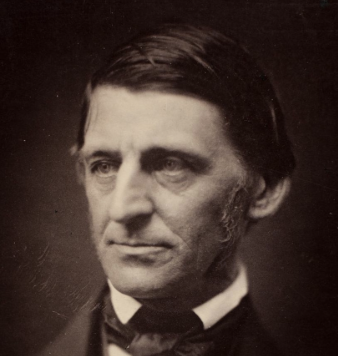
A man contains all that is needful to his government within himself. He is made a law unto himself. All real good or evil that can befal [sic] him must be from himself. He only can do himself any good or any harm. Nothing can be given to him or can taken from him but always there is a compensation.. There is a correspondence between the human soul and everything that exists in the world; more properly, everything that is known to man. Instead of studying things without the principles of them, all may be penetrated unto with him. Every act puts the agent in a new position. The purpose of life seems to be to acquaint a man with himself. He is not to live the future as described to him but to live the real future to the real present. The highest revelation is that God is in every man.
▼
Source
September 8, 1833

4 months 1 week ago
Insofar as the military contest between the North and the South was a war to overthrow the Southern slaveholding class, it was a war which had been basically conducted in the interests of the Northern bourgeoisie, i.e., the young and enthusiastic industrial capitalists who found their political voice in the Republican party. The Northern capitalists sought economic control over the entire nation. Their struggle against the Southern slaveocracy did not therefore mean that they supported the liberation of Black men or women as human beings.

4 months 1 week ago
Of all that makes us suffer, nothing — so much as disappointment — gives us the sensation of at last touching Truth.
4 months 1 week ago
It is not for its own sake that men desire money, but for the sake of what they can purchase with it.
▼
Source
Chapter I, p. 471.
4 months 1 week ago
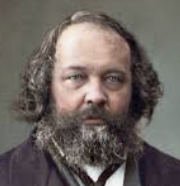
We exhort the compromisers to open their hearts to truth, to free themselves of their wretched and blind circumspection, of their intellectual arrogance, and of the servile fear which dries up their souls and paralyzes their movements. Let us therefore trust the eternal Spirit which destroys and annihilates only because it is the unfathomable and eternal source of all life. The passion for destruction is a creative passion, too!
▼
Source
"The Reaction in Germany" (1842) | Often paraphrased as, "The urge to destroy is also a creative urge"
4 months 1 week ago
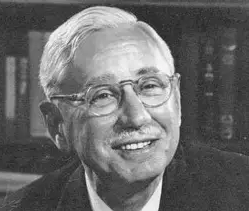
The rise of philosophy, then, often heralds the decay of a civilization. Speculation begins with nature and begets naturalism; it passes to man—first as a psychological mystery and then as a member of society—and begets individualism. Philosophers do not always desire these results; but they achieve them. They feel themselves the unwilling enemies of the state: they think of men in terms of personality while the state thinks of men in terms of social mechanism. Some philosophers would gladly hold their peace, but there is that in them which will out; and when philosophers speak, gods and dynasties fall. Most states have had their roots in heaven, and have paid the penalty for it: the twilight of the gods is the afternoon of states. Every civilization comes at last to the point where the individual, made by speculation conscious of himself as an end per se, demands of the state, as the price of its continuance, that it shall henceforth enhance rather than exploit his capacities. Philosophers sympathize with this demand, the state almost always rejects it: therefore civilizations come and civilizations go. The history of philosophy is essentially an account of the efforts great men have made to avert social disintegration by building up natural moral sanctions to take the place of the supernatural sanctions which they themselves have destroyed. To find—without resorting to celestial machinery—some way of winning for their people social coherence and permanence without sacrificing plasticity and individual uniqueness to regimentation,—that has been the task of philosophers, that is the task of philosophers.
4 months 1 week ago
Plutarch is amazing in every respect but especially where he makes judgements on men's actions.
▼
Source
Michel de Montaigne, 'On anger', The Complete Essays, translated by M. A. Screech (1991; 2003), p. 809
4 months 1 week ago
Rather than trying to escape violence, human beings more often become habituated to it. History abounds with long conflicts – the Thirty Years’ War in early seventeenth-century Europe, the Time of Troubles in Russia, twentieth-century guerrilla conflicts – in which continuous slaughter has been accepted as normal. Famously adaptable, the human animal quickly learns to live with violence and soon comes to find satisfaction in it.
▼
Source
In the Puppet Theatre: Roof Gardens, Feathers and Human Sacrifice (p. 80)
4 months 1 week ago
I do not agree with Plato, but if anything could make me do so, it would be Aristotle's arguments against him.
▼
Source
Bertrand Russell, A History of Western Philosophy (1945), Book One, Part II, Ch. XXI, Aristotle's Politics, p. 189
4 months 1 week ago
Scientific Method... [is] even less existent than some other non-existent subjects.
4 months 1 week ago
Go — take the mother's soul, and learn three truths: Learn What dwells in man, What is not given to man, and What men live by. When thou hast learnt these things, thou shalt return to heaven.
▼
Source
Ch. IV
4 months 1 week ago
The most superficial fact regarding the Discourses, the fact that the number of its chapters equals the number of books of Livy's History, compelled us to start a chain of tentative reasoning which brings us suddenly face to face with the only New Testament quotation that ever appears in Machiavelli's two books and with an enormous blasphemy.
▼
Source
p. 49
4 months 1 week ago
A nation never falls but by suicide.
▼
Source
1861
4 months 1 week ago
Positing decarceration as our overarching strategy, we would try to envision a continuum of alternatives to imprisonment - demilitarization of schools, revitalization of education at all levels, a health system that provides free physical and mental care to all, and a justice system based on reparatuon and reconciliation rather than retribution and vengeance.
▼
Source
Chapter Six
4 months 1 week ago
Basically—I speak of life as it is and not of abstract philosophical constructs—life is only bearable because one does not go to the end; doing something is only possible when one has particular illusions and that holds also for friendships, for everything.
4 months 1 week ago
It cannot be very difficult to determine who have been the contrivers of this whole mercantile system; not the consumers, we may believe, whose interest has been entirely neglected; but the producers, whose interests has been so carefully attended to; and among this later class our merchants and manufactures have been by far the principal architects. In the mercantile regulations, which have been taken notice of in this chapter, the interest of our manufacturers has been most peculiarly attended to;and the interest, not so much of the consumers, as that of some other sets of producers, has been sacrificed to it.
▼
Source
Chapter VIII, p. 721.
4 months 1 week ago
We must make a very precise distinction between the official and consequently dictatorial prerogatives of society organized as a state, and of the natural influence and action of the members of a non-official, non-artificial society.
4 months 1 week ago
Childhood may be defined as the age of play; therefore some children are never young, and some adults are never old.
▼
Source
Ch. 1 : Our life begins

4 months 1 week ago
Nothing is in the intellect that was not first in the senses.
▼
Source
q. 2, art. 3, arg. 19 | This is known as the Peripatetic axiom.
4 months 1 week ago
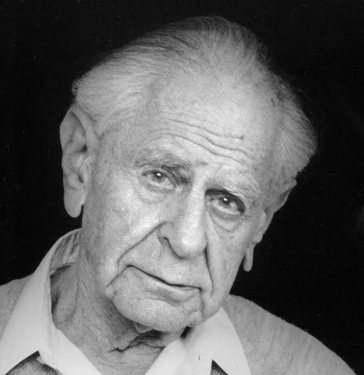
[T]he paradox lurking at the heart of Karl Popper's career... Everyone says this opponent of dogmatism is almost pathologically dogmatic. ...Popper scoffs at scientists’ hope that they can achieve a final theory of nature. "...I think we have gone very far, but we are much further away." He... returns with his book Conjectures and Refutations... [and] reads his own words with reverence: "In our infinite ignorance we are all equal." ...Can a skeptic avoid self-contradiction... the Popper paradox? And if he doesn’t, if he preaches but fails to practice intellectual doubt and humility, does that negate his work? Not at all. Such paradoxes corroborate the skeptic’s point... the quest for truth is endless, twisty and riddled with pitfalls, into which even sharp-eyed seekers tumble. In our infinite ignorance we are all equal.
▼
Source
John Horgan, [https://johnhorgan.org/cross-check/the-paradox-of-karl-popper The Popper Paradox] (August 4, 2023)
4 months 1 week ago
To be good and lead a good life means to give to others more than one takes from them.
▼
Source
Ch. VII
4 months 1 week ago
In order to see the relation between philosophy as rigorous science and the alternative to it clearly, one must look at the political conflict between the two antagonists, i.e. at the essential character of that conflict.
4 months 1 week ago
In how many churches, by how many prophets, tell me, is man made sensible that he is an infinite Soul; that the earth and heavens are passing into his mind; that he is drinking forever the soul of God?
▼
Source
p. 18
4 months 1 week ago
In the way we think about past movements, I encourage people to look beyond heroic male figures. While Martin Luther King is someone I revere, I don't like to allow his representation to erase the contributions of ordinary people. The 1955 Montgomery bus boycott was successful because Black women, domestic workers, refused to ride the bus. Had they not, where would we be today?
4 months 1 week ago
The value of money is in proportion to the quantity of the necessaries of life which it will purchase.
▼
Source
Chapter II, Part II, Article IV.

4 months 1 week ago
Is not the minimal state, the framework for utopia, an inspiring vision? The minimal state treats us as inviolate individuals, who may not be used in certain ways by others as means or tools or instruments or resources; it treats us as persons having individual right with the dignity this constitutes. Treating us with respect by respecting our rights, it allows us, individually or with whom we please, to choose our life and to realize our ends and our conception of ourselves, insofar as we can, aided by the voluntary cooperation of other individuals possessing the same dignity. How dare any state or group of individuals do more. Or less.
▼
Source
Ch. 10 : A Framework for Utopia; Utopia and the Minimal State, p. 333
4 months 1 week ago
The universal hypocrisy has so entered into the flesh and blood of all classes of our modern society, it has reached such a pitch that nothing in that way can rouse indignation. Hypocrisy in the Greek means "acting," and acting—playing a part—is always possible.
▼
Source
Chapter XII, Conclusion—Repent Ye, for the Kingdom of Heaven is at Hand | Variant Translation: Hypocrisy with good reason means the same as acting, and anybody can pretend — act a part.
4 months 1 week ago
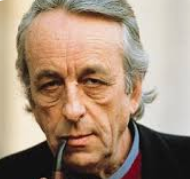
Those who are in ideology believe themselves by definition outside ideology: one of the effects of ideology is the practical denegation of the ideological character of ideology by ideology: ideology never says, ‘I am ideological’. It is necessary to be outside ideology, i.e. in scientific knowledge, to be able to say: I am in ideology (a quite exceptional case) or (the general case): I was in ideology. As is well known, the accusation of being in ideology only applies to others, never to oneself (unless one is really a Spinozist or a Marxist, which, in this matter, is to be exactly the same thing). Which amounts to saying that ideology has no outside (for itself), but at the same time that it is nothing but outside (for science and reality).
▼
Source
p. 118
4 months 1 week ago
Rhodora! if the sages ask thee why This charm is wasted on the earth and sky, Tell them, dear, that, if eyes were made for seeing, Then beauty is its own excuse for Being.
▼
Source
The Rhodora
4 months 1 week ago
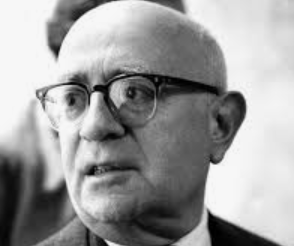
The importance of the culture industry in the spiritual constitution of the masses is no dispensation for reflection on its objective legitimation, its essential being, least of all by a science which thinks itself pragmatic.

4 months 1 week ago
The Taste of Beauty, and the Relish of what is decent, just, and amiable, perfects the Character of the Gentleman, and the Philosopher. And the Study of such a Taste or Relish will, as we suppose, be ever the great Employment and Concern of him, who covets as well to be wise and good, as agreeable and polite.
▼
Source
Vol. 2, p. 207; "Miscellany III".
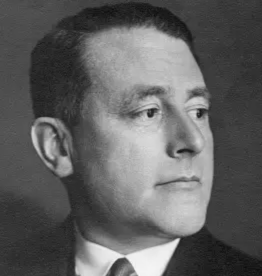
4 months 1 week ago
Political thought and political instinct prove themselves theoretically and practically in the ability to distinguish friend and enemy. The high points of politics are simultaneously the moments in which the enemy is, in concrete clarity, recognized as the enemy.
4 months 1 week ago
In Victorian times - at the apex of the repression of the Great Mother - a Scottish schoolmaster named Adam Smith noticed a lot of greed and scarcity around him and assumed that was how all "civilized" societies worked. Smith, as you know, created modern economics, which can be defined as a way of allocating scarce resources through the mechanism of individual, personal greed... If a society is afraid of scarcity, it will actually create an environment in which it manifests well-grounded reasons to live in fear of scarcity. It is a self-fulfilling prophecy!
▼
Source
Bernard Lietaer, [https://library.uniteddiversity.coop/Money_and_Economics/Bernard_Lietaer/Interview_Yes%21.pdf Beyond Greed and Scarcity, YES! A Journal of Positive Futures] , (Spring 1997)
4 months 1 week ago
Aesthetic theories arose one hundred fifty years ago among the wealthy classes of the Christian European world. ...And notwithstanding its obvious insolidity, nobody else's theory so pleased the cultured crowd or was accepted so readily and with such absence of criticism. It so suited the people of the upper classes that to this day, notwithstanding its entirely fantastic character and the arbitrary nature of its assertions, it is repeated by the educated and uneducated as though it were something indubitable and self-evident.
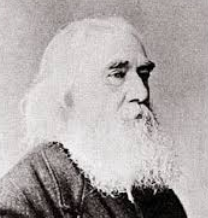
4 months 1 week ago
No objection can be made to these voluntary associations upon the ground that they would lack that knowledge of justice, as a science, which would be necessary to enable them to maintain justice, and themselves avoid doing injustice. Honesty, justice, natural law, is usually a very plain and simple matter, easily understood by common minds. Those who desire to know what it is, in any particular case, seldom have to go far to find it.
▼
Source
Section IV, p. 8
4 months 1 week ago
What point of morals, of manners, of economy, of philosophy, of religion, of taste, of the conduct of life, has he not settled? What mystery has he not signified his knowledge of? What office, or function, or district of man's work, has he not remembered? What king has he not taught state, as Talma taught Napoleon? What maiden has not found him finer than her delicacy? What lover has he not outloved? What sage has he not outseen? What gentleman has he not instructed in the rudeness of his behavior?
▼
Source
Shakespeare; or, The Poet
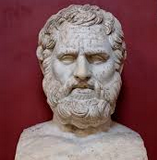
4 months 1 week ago
Cherish wisdom as a means of travelling from youth to old age, for it is more lasting than any other possession.
4 months 1 week ago
We hear only ourselves.
4 months 1 week ago
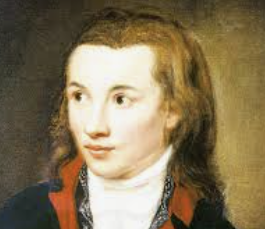
I was still blind, but twinkling stars did dance Throughout my being's limitless expanse, Nothing had yet drawn close, only at distant stages I found myself, a mere suggestion sensed in past and future ages.
▼
Source
As quoted in Romantic Vision, Ethical Context: Novalis and Artistic Autonomy (1987) by Géza von Molnár, p. 2
4 months 1 week ago
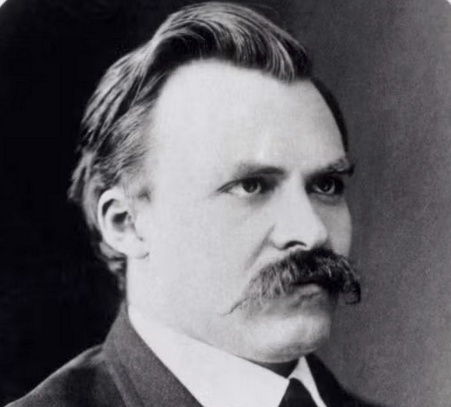
I am utterly amazed, utterly enchanted! I have a precursor, and what a precursor! I hardly knew Spinoza: that I should have turned to him just now, was inspired by "instinct." Not only is his overtendency like mine—namely to make all knowledge the most powerful affect — but in five main points of his doctrine I recognize myself; this most unusual and loneliest thinker is closest to me precisely in these matters: he denies the freedom of the will, teleology, the moral world-order, the unegoistic, and evil. Even though the divergencies are admittedly tremendous, they are due more to the difference in time, culture, and science. In summa: my lonesomeness, which, as on very high mountains, often made it hard for me to breathe and make my blood rush out, is now at least a twosomeness. Strange! Incidentally, I am not at all as well as I had hoped. Exceptional weather here too! Eternal change of atmospheric conditions! — that will yet drive me out of Europe! I must have clear skies for months, else I get nowhere. Already six severe attacks of two or three days each. With affectionate love, Your friend.
▼
Source
Postcard to Franz Overbeck, Sils-Maria (30 July 1881), tr. Walter Kaufmann, The Portable Nietzsche (1954)
4 months 1 week ago
In former times the chief method of justifying the use of violence and thereby infringing the law of love was by claiming a divine right for the rulers: the Tsars, Sultans, Rajahs, Shahs, and other heads of states. But the longer humanity lived the weaker grew the belief in this peculiar, God-given right of the ruler. That belief withered in the same way and almost simultaneously in the Christian and the Brahman world, as well as in Buddhist and Confucian spheres, and in recent times it has so faded away as to prevail no longer against man's reasonable understanding and the true religious feeling. People saw more and more clearly, and now the majority see quite clearly, the senselessness and immorality of subordinating their wills to those of other people just like themselves, when they are bidden to do what is contrary not only to their interests but also to their moral sense.
▼
Source
III
4 months 1 week ago
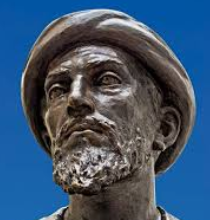
After a long time the great and awful Name was forgotten and the people, men, women and children, only recognized an image of wood or stone and the temple of wood or stone which they had been brought up from infancy to serve by bowing down.
▼
Source
“Idolatry,” H. Russell, trans. (1983), p. 72
CivilSimian.com created by AxiomaticPanic, CivilSimian, Kalokagathia