
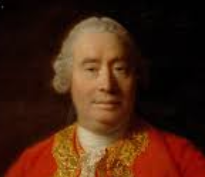
4 months 1 week ago
When we run over libraries, persuaded of these principles, what havoc must we make? If we take in our hand any volume; of divinity or school metaphysics, for instance; let us ask, Does it contain any abstract reasoning concerning quantity or number? No. Does it contain any experimental reasoning concerning matter of fact and existence? No. Commit it then to the flames: For it can contain nothing but sophistry and illusion.
▼
Source
Section 12 : Of the Academical or Sceptical Philosophy Pt. 3
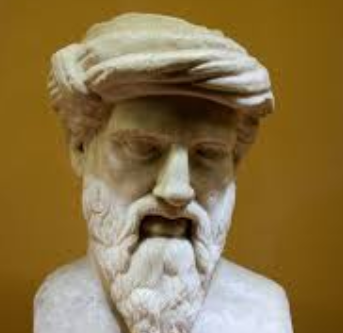
4 months 1 week ago
Ionian philosophers... had sought to identify a first principle for all things. Thales had thought to find this in water, but others preferred to think of air or fire as the basic element. The Pythagoreans had taken a more abstract direction, postulating that number... was the basic stuff behind phenomena; this numerical atomism... had come under attack by the followers of Parmenides of Elea... The fundamental tenet of the was the unity and permanence of being... contrasted with the Pythagorean ideas of multiplicity and change. Of Parmenides' disciples the best known was Zeno the Eleatic... who propounded arguments to prove the inconsistency in the concepts of multiplicity and divisibility.
▼
Source
Carl B. Boyer, A History of Mathematics (1968).
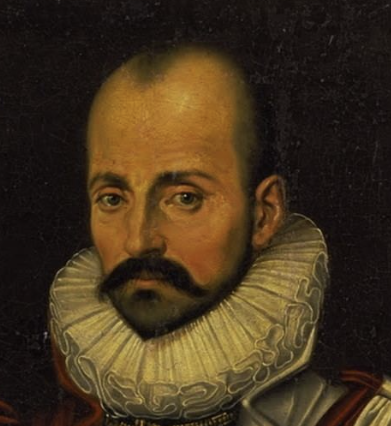
4 months 1 week ago
The mob has always behaved in this way—eagerly open to bribes that cannot be honorably accepted, and dissolutely callous to degradation and insult that cannot be honorably endured.
▼
Source
Part 2
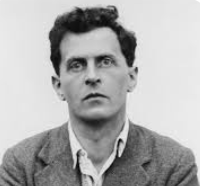
4 months 1 week ago
Aim at being loved without being admired.
▼
Source
p. 38e
4 months 1 week ago
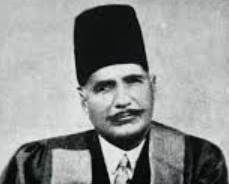
"Muhammad of Arabia ascended the highest Heaven and returned. I swear by God that if I had reached that point, I should never have returned.” These are the words of a great Muslim saint, ‘Abd al-Quddūs of Gangoh. In the whole range of Sufi literature it will be probably difficult to find words which, in a single sentence, disclose such an acute perception of the psychological difference between the prophetic and the mystic types of consciousness. The mystic does not wish to return from the repose of “unitary experience”; and even when he does return, as he must, his return does not mean much for mankind at large.
▼
Source
[https://www.google.com/books/edition/The_Reconstruction_of_Religious_Thought/uCh14nl09jkC?hl=en The Reconstruction of Religious Thought in Islam] (1930), p. 99
4 months 1 week ago
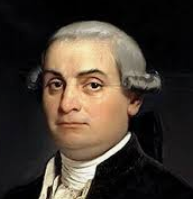
As punishments become more cruel, the minds of men, which like fluids always adjust to the level of their surroundings, become hardened, and the ever lively power of the emotions brings it about that after a hundred years of cruel tortures, the wheel causes no more fear than prison previously did. For a punishment to serve its purpose, it is only necessary that the harm that it inflicts outweighs the benefit that “the criminal can derive from the crime, and into the calculation of this balance, we must add the certainty of punishment and the loss of the good produced by the crime. Anything more than this is superfluous, and therefore tyrannical.
4 months 1 week ago
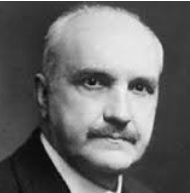
"In America literary reputations come and go so swiftly," I complained, fatuously. [Santayana's] answer was swift. "It would be insufferable if they did not."
▼
Source
Gore Vidal, in Palimpsest, A Memoir (1995)
4 months 1 week ago
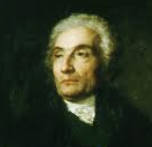
Creating difficulties for himself for the pleasure of resolving them is a strange human mania.
▼
Source
p. 48
4 months 1 week ago
People who invented the word charity, and used it in a good sense, inculcated more clearly, and much more efficaciously, the precept, Be charitable, than any pretended legislator or prophet, who should insert such a maxim in his writings.
▼
Source
Part I, Essay 22: Of the Standard of Taste
4 months 1 week ago
It's only by thinking even more crazily than philosophers do that you can solve their problems.
▼
Source
p. 75e
4 months 1 week ago
Finally it should be noted that the picture education, especially the pictorial statistics, are of international importance. Words carry more emotional elements than set pictures, which can be observed by people of different countries, different parties without any protest; Words divide, pictures unite.
▼
Source
Otto Neurath (1931), "Bildstatistik nach Wiener Methode", Die Volksschule 27 (1931): 569 ; Translated and cited in Sybilla Nikolow (2013) "‘Words Divide, Pictures Unite.’Otto Neurath’s Pictorial Statistics in Historical Context."
4 months 1 week ago
We must be careful to discriminate between our own incapacity to test truth and the necessary improbability of an event. It is plain that from our ignorance of the remote spheres of God's action we cannot judge of His works removed from our experience; but a fact is not necessarily doubtful because it cannot be reached by our ordinary senses. To recapitulate, we may lay down the following propositions: 1. That there is no real physical distinction between miracles and any other operations of the Divine energy : that we regard them differently is because we are familiar with one order of events and not the other. 2. There is nothing incredible in a miracle, and the credibility of a miraculous event is to be measured only by the evidence which sustains it. And although the extraordinary character of a phenomenon may render the event itself improbable, it does not, therefore, necessarily render it either incredible or untrue.
▼
Source
"Passages from the life of a philosopher", Appendix, p. 489
4 months 1 week ago
The Constitution of 1795, like its predecessors, was made for man. But there is no such thing as man in the world. In my lifetime I have seen Frenchmen, Italians, Russians, etc.; thanks to Montesquieu, I even know that one can be Persian. But as for man, I declare that I have never in my life met him; if he exists, he is unknown to me.
4 months 1 week ago
The difference between a man who is led by opinion or emotion and one who is led by reason. The former, whether he will or not, performs things of which he is entirely ignorant; the latter is subordinate to no one, and only does those things which he knows to be of primary importance in his life, and which on that account he desires the most; and therefore I call the former a slave, but the latter free.
▼
Source
Commonly attributed to Hume, but is actually from Spinoza (Ethics part IV PROP. LXVI Note)
4 months 1 week ago
The philosophical tradition that goes from Descartes to Husserl, and indeed a large part of the philosophical tradition that goes back to Plato, involves a search for foundations: metaphysically certain foundations of knowledge, foundations of language and meaning, foundations of mathematics, foundations of morality, etc. [...] Now, in the twentieth century, mostly under the influence of Wittgenstein and Heidegger, we have come to believe that this general search for these sorts of foundations is misguided.
▼
Source
John Searle, “The Word Turned Upside Down,” The New York Review of Books, 27 October 1983
4 months 1 week ago
If you reason instead of repeating what is taught you; if you analyze the law and strip off those cloudy fictions with which it has been draped in order to conceal its real origin, which is the right of the stronger, and its substance, which has ever been the consecration of all the tyrannies handed down to mankind through its long and bloody history; when you have comprehended this, your contempt for the law will be profound indeed. You will understand that to remain the servant of the written law is to place yourself every day in opposition to the law of conscience, and to make a bargain on the wrong side; and, since this struggle cannot go on forever, you will either silence your conscience and become a scoundrel, or you will break with tradition, and you will work with us for the utter destruction of all this injustice, economic, social and political.
4 months 1 week ago
If a lack of empirical foundations is a defect of the theory of logical probability, it is also a defect of deductive logic.
▼
Source
The Rationality of Induction, Oxford: Clarendon, 1986. Page 176, last paragraph.
4 months 1 week ago
There is perhaps nothing more interesting than to listen to a superior man talk of what he does not know. He advances slowly, and scarcely puts his foot down without knowing if the ground is solid; he looks for plausible analogies; he tries to attach his ideas to higher and incontestable principles; he always has the tone of looking, never that of teaching; and it often happens that, even if he is mistaken, he leaves a great enough idea of his mental honesty.
▼
Source
p. 43
4 months 1 week ago
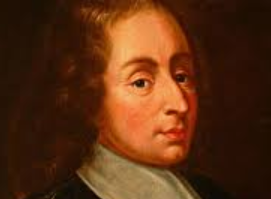
This right which you have, is not founded any more than his upon any quality or any merit in yourself which renders you worthy of it. Your soul and your body are, of themselves, indifferent to the state of boatman or that of duke; and there is no natural bond that attaches them to one condition rather than to another.
4 months 1 week ago
It is futile to speak of liberty as long as economic slavery exists."Speak not of liberty — poverty is slavery!" is not a vain formula; it has penetrated into the ideas of the great working-class masses; it filters through all the present literature; it even carries those along who live on the poverty of others, and takes from them the arrogance with which they formerly asserted their rights to exploitation.
4 months 1 week ago
Bias used to say that men ought to calculate life both as if they were fated to live a long and a short time, and that they ought to love one another as if at a future time they would come to hate one another; for that most men were bad.
▼
Source
Bias, 5.
4 months 1 week ago
This art, which I call the art of persuading, and which, properly speaking, is simply the process of perfect methodical proofs, consists of three essential parts: of defining the terms of which we should avail ourselves by clear definitions, of proposing principles of evident axioms to prove the thing in question; and of always mentally substituting in the demonstrations the definition in the place of the thing defined.
4 months 1 week ago
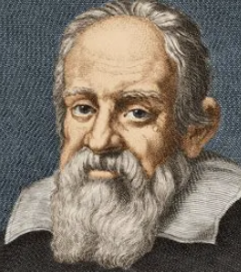
I was obliged to retract, like a good Catholic, this opinion of mine; and as a punishment my dialogue was prohibited; and after five months being dismissed from Rome (at the time that the city of Florence was infected with plague), the habitation which with generous pity was assigned to me, was that of the dearest friend I had in Siena, Monsignor the Archbishop Piccolomini, whose most agreeable conversation I enjoyed with such quite and satisfaction of mind, that having there resumed my studies, I discovered and demonstrated a great number on the mechanical conclusions on the resistance of solids … after about five months, the pestilence having ceased, the confinement of that house was changed by His Holiness for the freedom of the country so agreeable to me, whence I returned to the villa of Bellosguardo, and afterwards to Arcetri, where I still breathe salubrious air near my dear native-country Florence. Stay sane.
▼
Source
p. 251-253
4 months 1 week ago
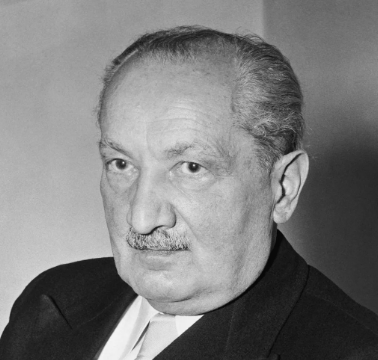
Everywhere we remain unfree and chained to technology, whether we passionately affirm or deny it. But we are delivered over to it in the worst possible way when we regard it as something neutral; for this conception of it, to which today we particularly like to do homage, makes us utterly blind to the essence of technology.
▼
Source
The Question Concerning Technology (1954)
4 months 1 week ago
Millions of human beings have labored to create this civilization on which we pride ourselves today. Other millions, scattered through the globe, labor to maintain it. Without them nothing would be left in fifty years but ruins.
▼
Source
Ch. 1 : Our Riches
4 months 1 week ago
Wealth is the sinews of affairs.
▼
Source
Bion, 48.
4 months 1 week ago
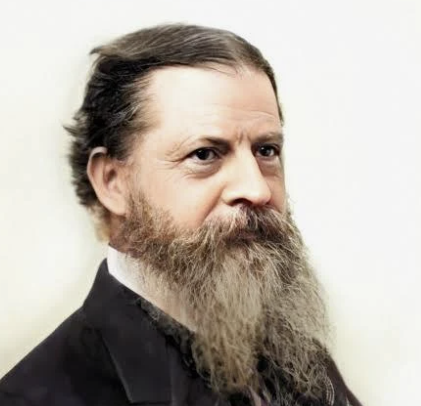
The only possible way of accounting for the laws of nature and for uniformity in general is to suppose them results of evolution. This supposes them not to be absolute, not to be obeyed precisely. It makes an element of indeterminacy, spontaneity, or absolute chance in nature. Just as, when we attempt to verify any physical law, we find our observations cannot be precisely satisfied by it, and rightly attribute the discrepancy to errors of observation, so we must suppose far more minute discrepancies to exist owing to the imperfect cogency of the law itself, to a certain swerving of the facts from any definite formula.
4 months 1 week ago
If beings are grasped as will to power, the “should” which is supposed to hang suspended over them, against which they might be measured, becomes superfluous. If life itself is will to power, it is itself the ground, principium, of valuation. Then a “should” does not determine being. Being determines a “should.” “When we talk of values we are speaking under the inspiration or optics of life: life itself compels us to set up values; life itself values through us whenever we posit values.” (VIII, 89)
▼
Source
p. 32
4 months 1 week ago
And yet the Paris gardener is not our ideal of an agriculuralist. In the painful work of civilisation he has shown us the way to follow; but the ideal of modern civilisation is is elsewhere. He toils, with but short interruption, from 3 in the morning till late in the night. He knows no leisure; he has no time to live the life of a human being; the commonwealth does not exist for him; his world is his garden, more than his family. He cannot be our ideal; neither he nor his system of agriculture. Our ambition is, that he should produce even more... with less labour, and should enjoy all the joys of human life. And this is fully possible.
4 months 1 week ago
They say that the first inclination which an animal has is to protect itself.
▼
Source
Zeno, 52.
4 months 1 week ago
German idealism rescued philosophy from the attack of British empiricism, and the struggle between the two became not merely a clash of different philosophical school, but a struggle for philosophy as such. P. 16

4 months 1 week ago
A mere nothing, a tiny fibre, something that could never be found by the most delicate anatomy, would have made of Erasmus and Fontenelle two idiots, and Fontenelle himself speaks of this very fact in one of his best dialogues.
4 months 1 week ago
Second, in the presence of this continuity of feeling, nominalistic maxims appear futile. There is no doubt about one idea affecting another, when we can directly perceive the one generally modified and shaping itself into the other. Nor can there any longer be any difficulty about one idea resembling another, when we can pass along the continuous field of quality from one to the other and back again to the point which we had marked.
4 months 1 week ago
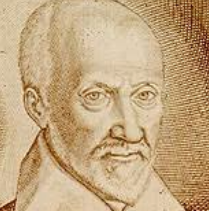
Pleasure and pain, though directly opposite, are yet so contrived by nature as to be constant companions; and it is a fact that the same motions and muscles of the face are employed both in laughing and crying.
▼
Source
p. 161 (Extremes)
4 months 1 week ago
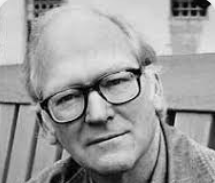
I cannot see that this view of radical interpretation possesses the relevance for historians that some of Davidson’s more enthusiastic followers, such as Macdonald and Pettit, have supposed. Davidson is merely proposing a general strategy for using assertions to get at underlying beliefs, the strategy of beginning by assuming general agreement. It may well be that we need to start with some such assumption if we are to find another culture intelligible. If I am to identify the nature of Bodin’s beliefs about witches, or even to establish that they are beliefs about that particular subject-matter, it certainly seems plausible to assume that Bodin and I must share a considerable number of ancillary beliefs. It is arguable, however, that Davidson has overemphasised the significance of this consideration and too comfortably ridiculed the notion of radically different conceptual schemes.
▼
Source
Quentin Skinner, "Interpretation, rationality and truth", Visions of Politics (2002)
4 months 1 week ago
Gentile himself call his doctrine ‘absolute formalism’: there is no; ’matter’ apart from the pure ‘form’ of acting. ‘The only matter there is in the spiritual act is the form itself, as activity.’ P. 407
4 months 1 week ago
Of the three Universes of Experience familiar to us all, the first comprises all mere Ideas, those airy nothings to which the mind of poet, pure mathematician, or another might give local habitation and a name within that mind. Their very airy-nothingness, the fact that their Being consists in mere capability of getting thought, not in anybody's Actually thinking them, saves their Reality. The second Universe is that of the Brute Actuality of things and facts. I am confident that their Being consists in reactions against Brute forces, notwithstanding objections redoubtable until they are closely and fairly examined. The third Universe comprises everything whose being consists in active power to establish connections between different objects, especially between objects in different Universes. Such is everything which is essentially a Sign — not the mere body of the Sign, which is not essentially such, but, so to speak, the Sign's Soul, which has its Being in its power of serving as intermediary between its Object and a Mind.
4 months 1 week ago
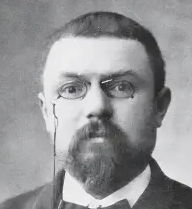
The very possibility of the science of mathematics seems an insoluble contradiction. If this science is deductive only in appearance, whence does it derive that perfect rigor no one dreams of doubting? If, on the contrary, all the propositions it enunciates can be deduced one from another by the rules of formal logic, why is not mathematics reduced to an immense tautology? The syllogism can teach us nothing essentially new, and, if everything is to spring from the principle of identity, everything should be capable of being reduced to it. Shall we then admit that the enunciations of all those theorems which fill so many volumes are nothing but devious ways of saying A is A! ...Does the mathematical method proceed from particular to the general, and, if so, how can it be called deductive? ...If we refuse to admit these consequences, it must be conceded that mathematical reasoning has of itself a sort of creative virtue and consequently differs from a syllogism.
▼
Source
Ch. I: On the Nature of Mathematical Reasoning (1905) [https://books.google.com/books?id=5nQSAAAAYAAJ Tr.] George Bruce Halstead
4 months 1 week ago
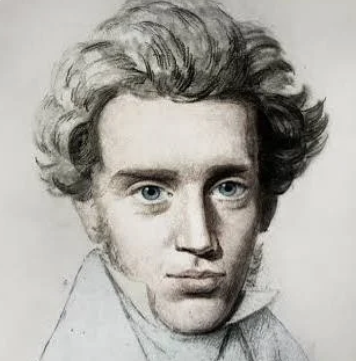
God creates out of nothing. Wonderful you say. Yes, to be sure, but He does what is still more wonderful: He makes saints out of sinners.
▼
Source
7 July 1838
4 months 1 week ago
The supreme Being is everywhere; but He is not equally visible everywhere. Let us seek Him in the simplest things, in the most fundamental laws of Nature, in the universal rules by which movement is conserved, distributed or destroyed; and let us not seek Him in phenomena that are merely complex consequences of these laws.
4 months 1 week ago
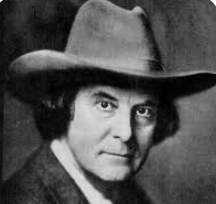
Literary people of the opposite sex do not really love each other. All they really desire is to read their manuscript aloud to a receptive listener.
▼
Source
p. 11
4 months 1 week ago
The music of the soul is also the music of salesmanship. Exchange value, not truth value counts. On it centers the rationality of the status quo, and all alien rationality is bent to It.
▼
Source
p. 57
4 months 1 week ago
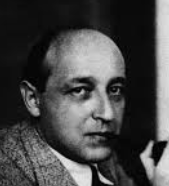
This first non-evaluative insight into history does not inevitably lead to relativism, but rather to relationism. Knowledge, as seen in the light of the total conception of ideology, is by no means an illusory experience, for ideology in its relational concept is not at all identical with illusion. Knowledge arising out of our experience in actual life situations, though not absolute, is knowledge none the less. The norms arising out of such actual life situations do not exist in a social vacuum, but are effective as real sanctions for conduct. Relationism signifies merely that all of the elements of meaning in a given situation have reference to one another and derive their significance from this reciprocal interrelationship in a given frame of thought. Such a system of meanings is possible and valid only in a given type of historical existence, to which, for a time, it furnishes appropriate expression. When the social situation changes, the system of norms to which it had previously given birth ceases to be in harmony with it. The same estrangement goes on with reference to knowledge and to the historical perspective. All knowledge is oriented toward some object and is influenced in its approach by the nature of the object with which it is pre-occupied. But the mode of approach to the object to be known is dependent upon the nature of the knower.
4 months 1 week ago
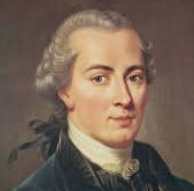
Religion is too important a matter to its devotees to be a subject of ridicule. If they indulge in absurdities, they are to be pitied rather than ridiculed.
▼
Source
A lecture at Königsberg (1775), as quoted in A New Dictionary of Quotations on Historical Principles from Ancient and Modern Sources (1946) by H. L. Mencken, p. 1017
4 months 1 week ago
(1) The rules applied are exceedingly various. (2) It is difficult to separate the qualitative problem of simultaneity from the quantitative problem of the measurement of time; no matter whether a chronometer is used, or whether account must be taken of a velocity of transmission, as... of light, because such a velocity could not be measured without measuring a time.
4 months 1 week ago
Socrates did not stop with a philosophical consideration of mankind; he addressed himself to each one individually, wrested everything from him, and sent him away empty-handed.
▼
Source
p. 173
4 months 1 week ago
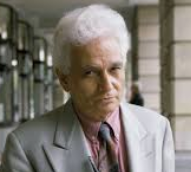
As soon as we cease to believe in such an engineer and in a discourse which breaks with the received historical discourse, and as soon as we admit that every finite discourse is bound by a certain bricolage and that the engineer and the scientist are also species of bricoleurs, then the very idea of bricolage is menaced and the difference in which it took on its meaning breaks down.
▼
Source
"Structure, Sign, and Play in the Discourse of the Human Sciences," Writing and Difference, tr. w/ intro & notes by Alan Bass. The University of Chicago Press. Chicago, 1978. p. 285
4 months 1 week ago
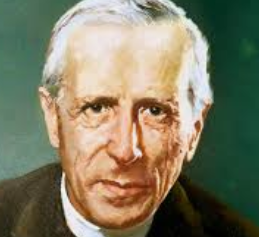
Sometimes we need bread, sometimes wine, sometimes a tonic or a hormone injection, sometimes the stimulation of a colour, sometimes the magic of a sound which goes in at our ears as a vibration and reaches our brains in the form of inspiration. ...There is something through which material and spiritual energy hold together and are complementary. ...There must be a single energy operating in the world. ...The 'soul' must be ...a focal point of transformation ...Forces of bodies converge, to become interiorised and sublimated in beauty and truth. ...Yet, ...direct transformation of one of these two energies into the other... has to be abandoned. As... we try to couple them... their mutual independence becomes as clear as their interrelation.
4 months 1 week ago
Do not dump your woes upon people — keep the sad story of your life to yourself. Troubles grow by recounting them.
▼
Source
p. 156
4 months 1 week ago
The closed language does not demonstrate and explain—it communicates decision, dictum, command. Where it defines, the definition becomes “separation of good from evil;” it establishes unquestionable
▼
Source
p. 101
CivilSimian.com created by AxiomaticPanic, CivilSimian, Kalokagathia