
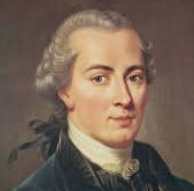
4 months 1 week ago
For Kant, there are no different religions, but rather different forms of belief in divine revelation [...] among which Christianity, as far as we know, is the most appropriate.
▼
Source
Marcello Pera, Perché dobbiamo dirci cristiani, p. 43; quoted in Alessandro Roveri, [http://www.ilponterivista.com/article_view.php?intId=10 La conversione di Marcello Pera al cattolicesimo], Il ponte, January-February 2009
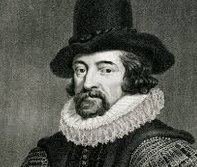
4 months 1 week ago
The Great Reform of Philosophy and Method, in which Bacon so eloquently called upon men to unite their exertions in his day, has, even in ours, been very imperfectly carried into effect. And even if his plan had been fully executed, it would now require to be pursued and extended.
▼
Source
William Whewell, History of the Inductive Sciences (1837)
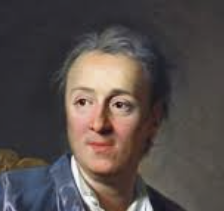
4 months 1 week ago
It has been said that love robs those who have it of their wit, and gives it to those who have none.
▼
Source
Paradoxe sur le Comédien (1773-1777)
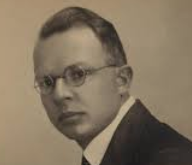
4 months 1 week ago
If we compare. e.g. the systems of classical mathematics and of intuitionistic mathematics, we find that the first is much simpler and technically more efficient, while the second is more safe from surprising occurences, e.g. contradictions. At the present time, any estimation of the degree of safety of the system of classical mathematics, in other words, the degree of plausibility of its principles, is rather subjective. The majority of mathematicians seem to regard this degree as sufficiently high for all practical purposes and therefore prefer the application of classical mathematics to that of intuitionistic mathematics. The latter has not, so far as I know, been seriously applied in physics by anybody.
▼
Source
Rudolf Carnap (1939; 51), as cited in: Paul van Ulsen. [http://www.illc.uva.nl/Research/Publications/Inaugurals/IV-10-Arend-Heyting.text.pdf Wetenschapsfilosofie], 6 november 2017.
4 months 1 week ago
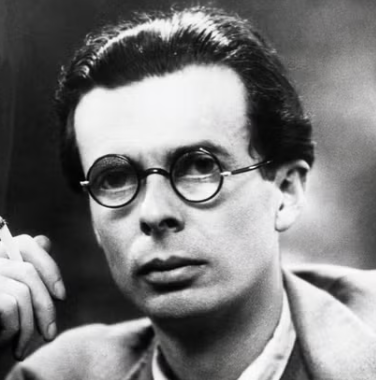
It had been, when I read it, only a vaguely pregnant piece of nonsense. Now it was all as clear as day, as evident as Euclid. Of course the Dharma-Body of the Buddha was the hedge at the bottom of the garden. At the same time, and no less obviously, it was these flowers, it was anything that I—or rather the blessed Not-I, released for a moment from my throttling embrace—cared to look at.
▼
Source
describing his experiment with mescaline, pp. 18-19
4 months 1 week ago
The Puritan is only strong enough to stiffen; the Catholic is strong enough to relax.
▼
Source
"The Critic"
4 months 1 week ago
Reason is to the philosopher what grace is to the Christian.Grace causes the Christian to act, reason the philosopher. Other men are carried away by their passions, their actions not being preceded by reflection: these are the men who walk in darkness. On the other hand, the philosopher, even in his passions, acts only after reflection; he walks in the dark, but by a torch. The philosopher forms his principles from an infinity of particular observations. Most people adopt principles without thinking of the observations that have produced them, they believe the maxims exist, so to speak, by themselves. But the philosopher takes maxims from their source; he examines their origin; he knows their proper value, and he makes use of them only in so far as they suit him. Truth is not for the philosopher a mistress who corrupts his imagination and whom he believes to be found everywhere; he contents himself with being able to unravel it where he can perceive it. He does not confound it with probability; he takes for true what is true, for false what is false, for doubtful what is doubtful, and probable what is only probable. He does more, and here you have a great perfection of the philosopher: when he has no reason by which to judge, he knows how to live in suspension of judgment... The philosophical spirit is, then, a spirit of observation and exactness, which relates everything to true principles...
▼
Source
Article on Philosophy, Vol. 25, p. 667, as quoted in Main Currents of Western Thought : Readings in Western European Intellectual History from the Middle Ages to the Present (1978) by Franklin Le Van Baumer | Variant translation: Reason is to the philosop
4 months 1 week ago
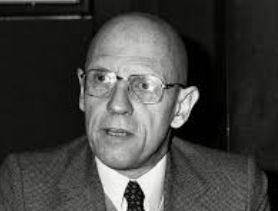
But what then is this confrontation below the language of reason? Where might this interrogation lead, following not reason in its horizontal becoming, but seeking to retrace in time this constant verticality, which, the length of Western culture, confronts it with what it is not, measuring it with its own extravagance?
▼
Source
Preface to 1961 edition
4 months 1 week ago
What else do conservatives and libertarians profess in common? The answer to that question is simple: nothing. Nor will they ever. To talk of forming a league or coalition between these two is like advocating a union of ice and fire.
4 months 1 week ago
The indispensible is not necessarily the desirable.
▼
Source
Chapter 6 (p. 48)
4 months 1 week ago
But since he stood for England And knew what England means, Unless you give him bacon You mustn’t give him beans.
▼
Source
Ch. XV: "The Songs of the Car Club" (The Englishman, st. 2)
4 months 1 week ago
The most dangerous madmen are those created by religion, and … people whose aim is to disrupt society always know how to make good use of them on occasion.
4 months 1 week ago
We must first rid ourselves of the illusion that penality is above all (if not exclusively) a means of reducing crime and that, in this role, according to the social forms, the political systems or beliefs, it may be severe or lenient, tend towards expiation of obtaining redress, towards the pursuit of individuals or the attribution of collective responsibility. We must analyse rather the ‘concrete systems of punishment’, study them as social phenomena that cannot be accounted for by the juridical structure of society alone, nor by its fundamental ethical choices; we must situate them in their field of operation, in which the punishment of crime is not the sole element; we must show that punitive measures are not simply ‘negative’ mechanisms that make it possible to repress, to prevent, to exclude, to eliminate; but that they are linked to a whole series of positive and useful effects which it is their task to support (and, in this sense,although legal punishment is carried out in order to punish offences, one might say that the definition of offences and their prosecution are carried out in turn in order to maintain the punitive mechanisms and their functions).
▼
Source
Chapter One, The body of the condemned, pp. 24

4 months 1 week ago
When Sartre and I met not only did our backgrounds fuse, but also our solidity, our individual conviction that we were what we were made to be. In that framework we could not become rivals. Then, as the relationship between Sartre and me grew, I became convinced that I was irreplaceable in his life, and he in mine. In other words, we were totally secure in the knowledge that our relationship was also totally solid, again preordained, though, of course, we would have laughed at that word then. When you have such security it's easy not to be jealous. But had I thought that another woman played the same role as I did in Sartre's life, of course, I would have been jealous.
▼
Source
[http://www.marxists.org/reference/subject/ethics/de-beauvoir/1976/interview.htm Interview by John Gerassi in Society (January-February 1976)]
4 months 1 week ago
It is something to have wept as we have wept, It is something to have done as we have done, It is something to have watched when all men slept, And seen the stars which never see the sun. It is something to have smelt the mystic rose, Although it break and leave the thorny rods, It is something to have hungered once as those Must hunger who have ate the bread of gods.
▼
Source
The Great Minimum
4 months 1 week ago
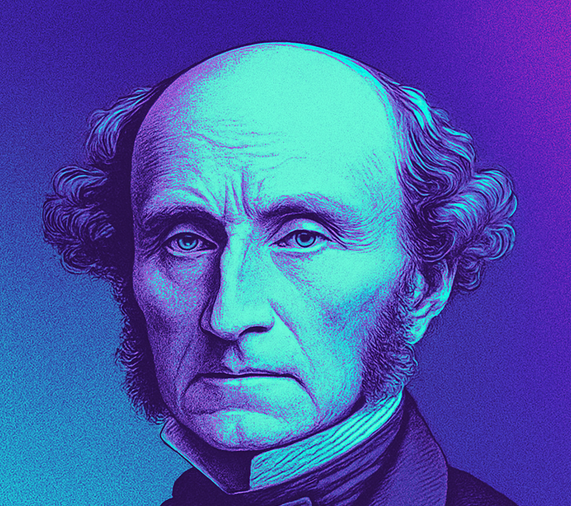
Society can and does execute its own mandates: and if it issues wrong mandates instead of right, or any mandates at all in things with which it ought not to meddle, it practises a social tyranny more formidable than many kinds of political oppression, since, though not usually upheld by such extreme penalties, it leaves fewer means of escape, penetrating much more deeply into the details of life, and enslaving the soul itself. Protection, therefore, against the tyranny of the magistrate is not enough: there needs protection also against the tyranny of the prevailing opinion and feeling; against the tendency of society to impose, by other means than civil penalties, its own ideas and practices as rules of conduct on those who dissent from them; to fetter the development, and, if possible, prevent the formation, of any individuality not in harmony with its ways, and compel all characters to fashion themselves upon the model of its own.
▼
Source
Ch. 1: Introductory
4 months 1 week ago
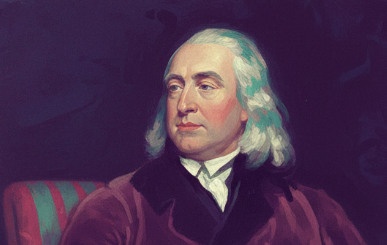
Nature has placed mankind under the governance of two sovereign masters, pain and pleasure. It is for them alone to point out what we ought to do, as well as to determine what we shall do. On the one hand the standard of right and wrong, on the other the chain of causes and effects, are fastened to their throne. They govern us in all we do, in all we say, in all we think: every effort we can make to throw off our subjection, will serve but to demonstrate and confirm it. In words a man may pretend to abjure their empire: but in reality he will remain subject to it all the while. The principle of utility recognizes this subjection, and assumes it for the foundation of that system, the object of which is to rear the fabric of felicity by the hands of reason and of law. Systems which attempt to question it, deal in sounds instead of sense, in caprice instead of reason, in darkness instead of light.
▼
Source
Ch. 1: Of the Principle of Utility
4 months 1 week ago
Homosexuality appears as one of the forms of sexuality when it was transposed from the practice of sodomy onto a kind of interior androgyny, a hermaphroditism of the soul. The sodomite had been a temporary aberration; the homosexual was now a species.
▼
Source
Vol I: La volonté de savoir
4 months 1 week ago
It is doubtless impossible to approach any human problems with a mind free from bias.
▼
Source
[http://books.google.com/books?id=kUW0AAAAIAAJ&q=%22It+is+doubtless+impossible+to+approach+any+human+problems+with+a+mind+free+from+bias%22&pg=PA20#v=onepage Introduction : Woman as Other]
4 months 1 week ago
Nothing is more terrible than a bed; since it is always waiting to be a death-bed.
▼
Source
Ch. I: "'The Myth of Stevenson'"
4 months 1 week ago
The utilitarian doctrine is, that happiness is desirable, and the only thing desirable, as an end; all other things being only desirable as means to that end.
▼
Source
Ch. 4
4 months 1 week ago
Power without limitation is directly related to madness. The man who exercises power is wise only insofar as there exists someone who can use parrhesia to criticize him, thereby putting some limit to his power, to his command.
4 months 1 week ago
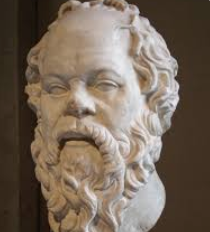
Wonder is the feeling of a philosopher, and philosophy begins in wonder.
▼
Source
Theaetetus, 155d
4 months 1 week ago
speaking metaphysically, the only genuine hope is hope in what does not depend on ourselves, hope springing from humility and not from pride.
4 months 1 week ago
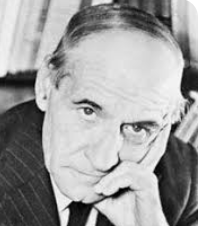
My state of mind was not humility, but neither was it arrogance. I never thought of saying to myself, I am, or I can do, so and so. I neither estimated myself highly nor lowly. I did not estimate myself at all. If I thought anything about myself, it was that I was rather backward in my studies, since I always found myself so, in comparison with what my father expected from me. I assert this with confidence, though it was not the impression of various persons who saw me in my childhood. They, as I have since found, thought me greatly and disagreeably self-conceited; probably because I was disputatious, and did not scruple to give direct contradictions to things which I heard said. I suppose I acquired this bad habit from having been encouraged in an unusual degree to talk on matters beyond my age, and with grown persons, while I never had inculcated in me the usual respect for them. My father did not correct this ill-breeding and impertinence, probably from not being aware of it, for I was always too much in awe of him to be otherwise than extremely subdued and quiet in his presence.
▼
Source
([https://archive.org/details/autobiography01mill/page/33/mode/1up pp. 33–34])
4 months 1 week ago
It would be wrong to suppose that the man of any particular period always looks upon past times as below the level of his own, simply because they are past. It is enough to recall that to the seeming of Jorge Manrique, "Any time gone by was better."… From A.D. 150 on, this impression of a shrinking of vitality, of a falling from position, of decay and loss of pulse shows itself increasingly in the Roman Empire. Had not Horace already sung: "Our fathers, viler than our grandfathers, begot us who are even viler, and we shall bring forth a progeny more degenerate still"? Horace, Odes, III.6]
▼
Source
Chap. III: The Height Of The Times
4 months 1 week ago
He who is a philosopher or lover of learning, and is entirely pure at departing, is alone permitted to reach the gods. And this is the reason, Simmias and Cebes, why the true votaries of philosophy abstain from all fleshly lusts, and endure and refuse to give themselves up to them—not because they fear poverty or ruin of their families, like the lovers of money, and the world in general; nor like the lovers of power and honor, because they dread the dishonor or disgrace of evil deeds.

4 months 1 week ago
Gods are condemned to live the dream of the imperishable.
4 months 1 week ago
The speaker with whom I was most struck, though I dissented from nearly every word he said, was Thirlwall, the historian, since Bishop of St. David's, then a Chancery barrister, unknown except by a high reputation for eloquence acquired at the before the era of Austin and Macaulay. His speech was in answer to one of mine. Before he had uttered ten sentences, I set him down as the best speaker I had ever heard, and I have never since heard any one whom I placed above him.
▼
Source
([https://archive.org/details/autobiography01mill/page/125/mode/1up p. 125])
4 months 1 week ago
It would be a piece of ingenuousness to accuse the man of to-day of his lack of moral code. The accusation would leave him cold, or rather, would flatter him. Immoralism has become a commonplace, and anybody and everybody boasts of practising it.
▼
Source
Chapter XV: We Arrive At The Real Question
4 months 1 week ago
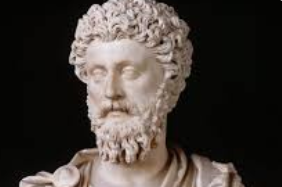
From Apollonius, true liberty, and unvariable steadfastness, and not to regard anything at all, though never so little, but right and reason: and always..that it was possible for the same man to be both vehement and remiss: a man not subject to be vexed, and offended with the incapacity of his scholars and auditors in his lectures and expositions.
▼
Source
I, 5
4 months 1 week ago
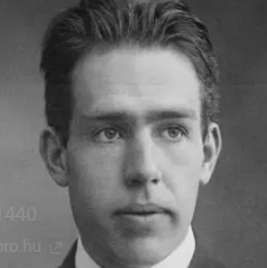
An expert is a person who has found out by his own painful experience all the mistakes that one can make in a very narrow field.
▼
Source
As quoted by Edward Teller, in [http://books.google.de/books?id=I1QEAAAAMBAJ&pg=PA62 Dr. Edward Teller's Magnificent Obsession by Robert Coughlan, in LIFE magazine (6 September 1954), p. 62] | Variant: An expert is a man who has made all the mistakes whic
4 months 1 week ago
Those also who are remarkable for having led holy lives are released from this earthly prison, and go to their pure home which is above, and dwell in the purer earth; and those who have duly purified themselves with philosophy live henceforth altogether without the body, in mansions fairer far than these...
4 months 1 week ago
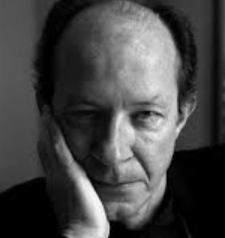
Whatever singularity, which wants to appropriate belonging itself, its own being-in-language, and thus rejects all identity and every condition of belonging, is the principal enemy of the State. Wherever these singularities peacefully demonstrate their being in common there will be Tiananmen, and, sooner or later, the tanks will appear.
▼
Source
page 86.
4 months 1 week ago
Moreover, if the character is formed, and the mind made up, on the few cardinal points of human opinion, agreement of conviction and feeling on these, has been felt in all times to be an essential requisite of anything worthy the name of friendship, in a really earnest mind. All these circumstances united, made the number very small of those whose society, and still more whose intimacy, I now voluntarily sought.
▼
Source
([https://archive.org/details/autobiography01mill/page/229/mode/1up p. 229])
4 months 1 week ago
Respect the faculty that forms thy judgments.
▼
Source
III, 9

4 months 1 week ago
It is now generally accepted that the roots of our ethics lie in patterns of behavior that evolved among our pre-human ancestors, the social mammals and that we retain within our biological nature elements of these evolved responses. We have learned considerably more about these responses, and we are beginning to to understand how they interact with our capacity to reason.
▼
Source
Preface To The 2011 edition, p. xi
4 months 1 week ago
Prefer knowledge to wealth, for the one is transitory, and the other perpetual.
▼
Source
Actually from Isocrates, it can be found on [https://books.google.com/books?id=7DcHEAAAQBAJ&pg=PA213#v=onepage&q&f=false p. 213] of Classical Rhetoric in English, 1650-1800: A Critical Anthology, part of a 1703 translation of a letter Isocrates wrote to h
4 months 1 week ago
A religion of life had come to replace a religion of penance and emaciation, of fasting and prayer. The crucified body had risen in its turn and was no longer abashed Man had reached a harmonious unity: he had discovered that he is a single being not made, like a pendulum, of two different metals, that check each other; he realised that the foe in his members had ceased to exist.
▼
Source
Alexander Herzen, Childhood, Youth, and Exile
4 months 1 week ago
Kant and Mill disagree about many things – even basic things – not only about the substantive foundations of ethics but also about moral psychology and about how such basic moral notions as duty and conscience are to be conceived. But these differences seem to me only to make all the clearer the close parallels in their conception of the structure and aims of ethical theory.
▼
Source
Allen W. Wood, Kantian Ethics (2008), Ch. 3. Ethical Theory
4 months 1 week ago
The masses are our masters; and for every one who looks facts in the face his existence has become dependent on them, so that the thought of them must control his doings, his cares, and his duties. Even an articulated mass always tends to become unspiritual and inhuman. It is life without existence, superstitions without faith. It may stamp all flat; it is disinclined to tolerate independence and greatness, but prone to constrain people to become as automatic as ants.
4 months 1 week ago
Does anything genuinely beautiful need supplementing? No more than justice does—or truth, or kindness, or humility. Are any of those improved by being praised? Or damaged by contempt? Is an emerald suddenly flawed if no one admires it? Or gold, or ivory, or purple? Lyres? Knives? Flowers? Bushes?
▼
Source
IV, 20(Hays translation)
4 months 1 week ago
At one level, this movement on behalf of oppressed farm animals is emotional...Yet the movement is also the product of a deep intellectual ferment pioneered by the Princeton scholar Peter Singer...This idea popularized by Professor Singer — that we have ethical obligations that transcend our species — is one whose time appears to have come...What we’re seeing now is an interesting moral moment: a grass-roots effort by members of one species to promote the welfare of others...animal rights are now firmly on the mainstream ethical agenda.
▼
Source
Nicholas Kristof, [http://www.nytimes.com/2009/04/09/opinion/09kristof.html "Humanity Even for Nonhumans," in The New York Times (8 April 2009)].
4 months 1 week ago
Fear is the true enemy, the only enemy.
▼
Source
Attributed implicitly to Sun Tzu by "William Riker" in the episode The Last Outpost of the TV program Star Trek: The Next Generation, but no source for this quote predates the episode's airing in 1987.
4 months 1 week ago
The man who has no inner life is the slave of his surroundings.
▼
Source
21 January 1866
4 months 1 week ago
The things you think about determine the quality of your mind. Your soul takes on the color of your thoughts.
▼
Source
The soul becomes dyed with the colour of its thoughts. | V, 16 (Hays translation)
4 months 1 week ago
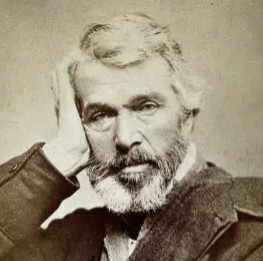
Speech is human, silence is divine, yet also brutish and dead: therefore we must learn both arts.
▼
Source
Notebooks (1830).
4 months 1 week ago
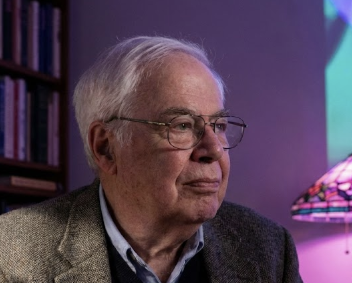
Philosophers get attention only when they appear to be doing something sinister—corrupting the youth, undermining the foundations of civilization, sneering at all we hold dear. The rest of the time everybody assumes that they are hard at work somewhere down in the sub-basement, keeping those foundations in good repair. Nobody much cares what brand of intellectual duct tape is being used.
▼
Source
"Philosophical Convictions." The Nation, June 14, 2004.
4 months 1 week ago
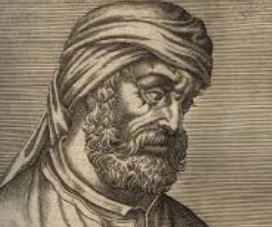
Why lean upon a blind guide, if you have eyes of your own? Why be clothed by one who is naked, if you have put on Christ? Why use the shield of another, when the apostle gives you armour of your own? It would be better for him to learn from you to acknowledge the resurrection of the flesh, than for you from him to deny it; because if Christians must needs deny it, it would be sufficient if they did so from their own knowledge, without any instruction from the ignorant multitude.
▼
Source
De Resurrectione Carnis [Of the Resurrection of Flesh] Ch.1 as quoted in The Writings of Tertullian, [http://books.google.com/books?id=nlcPAQAAMAAJ Vol.2] Tr. Peter Holmes, as contained in Ante-Nicene Christian Library: Translations of the Writings of the

4 months 1 week ago
My Lord, I have insisted the more on this duty which men owe to their country, because I came out of England, and continue still, strongly affected with what I saw when I was there. Our government has approached, nearer than ever before, to the true principles of it, since the revolution of one thousand six hundred and eighty eight: and the accession of the present family to the throne, has given the fairest opportunities, as well as the justest reasons, for compleating the scheme of liberty, and improving it to perfection.
▼
Source
pp. 36-37
CivilSimian.com created by AxiomaticPanic, CivilSimian, Kalokagathia