
4 months 1 week ago
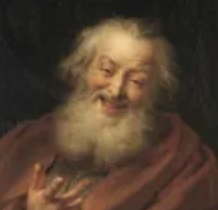
[Democritus says:] By convention sweet is sweet, by convention bitter is bitter, by convention hot is hot, by convention cold is cold, by convention color is color. But in reality there are atoms and the void. That is, the objects of sense are supposed to be real and it is customary to regard them as such, but in truth they are not. Only the atoms and the void are real.
4 months 1 week ago
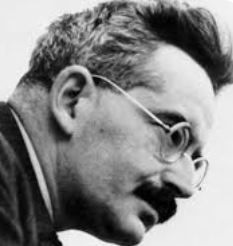
In what time does man live? The thinkers have always known that he does not live in any time at all. The immortality of thoughts and deeds banishes him to a timeless realm at whose heart an inscrutable death lies in wait. ... Devoured by the countless demands of the moment, time slipped away from him; the medium in which the pure melody of his youth would swell was destroyed. The fulfilled tranquility in which his late maturity would ripen was stolen from him. It was purloined by everyday reality, which, with its events, chance occurrences, and obligations, disrupted the myriad opportunities of youthful time, immortal time. ... From day to day, second to second, the self preserves itself, clinging to that instrument: time, the instrument that it was supposed to play.
▼
Source
"The Metaphysics of Youth," in Walter Benjamin: Selected Writings, Vol. 1 (1996), pp. 10-11
4 months 1 week ago
Leisurely, copious, humorous.
▼
Source
Conrad Aiken, review of Wolf Solent in The New York Post, quoted in H. P. Collins, John Cowper Powys: Old Earth-Man (1966), p. 77
4 months 1 week ago
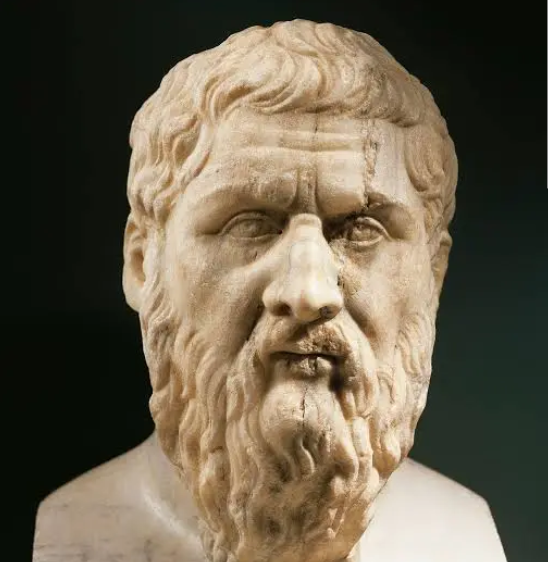
Of these not right forms of government*… monarchy, when bound by good written rules, which we call laws, is the best of all the six; but without law it is hard and most oppressive to live with. The government of the few must be considered intermediate, both in good and in evil. The government of the multitude is weak in all respects and able to do nothing great, either good or bad, when compared with the other forms of government…; therefore of all these governments when they are lawful, this is the worst, and when they are all lawless it is the best.
▼
Source
302b, 302e-303a | *monarchy: royalty or tyranny; the rule of the few: aristocracy or oligarchy; the rule of the many: democracy (regularly constituted popular government or mob rule).302d-eThe seventh must be set apart from all the others, as God is set a
4 months 1 week ago
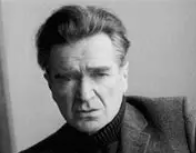
Losing love is so rich a philosophical ordeal that it makes a hairdresser into a rival of Socrates.
4 months 1 week ago
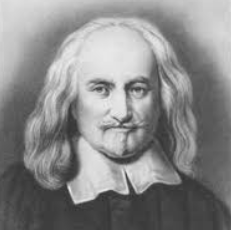
Men looke not at the greatnesse of the evill past, but the greatnesse of the good to follow.
▼
Source
The First Part, Chapter 15, p. 76 (Italics as per text)
4 months 1 week ago
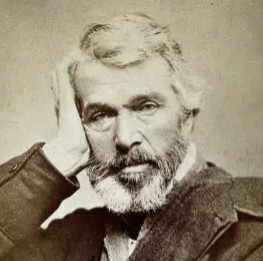
Why, reader, truly, if they asked thee or me, Which way we meant to vote?—were it not our likeliest answer: Neither way! I, as a Tenpound Franchiser, will receive no bribe; but also I will not vote for either of these men. Neither Rigmarole nor Dolittle shall, by furtherance of mine, go and make laws for this country. I will have no hand in such a mission. How dare I! If other men cannot be got in England, a totally other sort of men, different as light is from dark, as star-fire is from street-mud, what is the use of votings, or of Parliaments in England?
4 months 1 week ago
The right-minded man, ever inclined to righteous and lawful deeds, is joyous day and night, and strong, and free from care. But if a man take no heed of the right, and leave undone the things he ought to do, then will the recollection of no one of all his transgressions bring him any joy, but only anxiety and self-reproaching.
4 months 1 week ago
History breaks down in images not into stories.
4 months 1 week ago
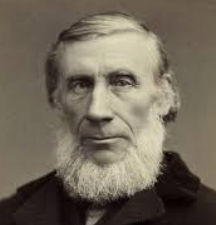
The Christian philosopher of to-day has larger capacities and fuller knowledge than the Israelite of the time of Moses. What the one accepted as literal truth the other cannot accept save as a myth or figure. The children of Israel received without idealisation the statements of their great lawgiver. To them the tables of the law were true tablets of stone, prepared, engraved, broken, and re-engraved; while the graving tool which thus inscribed the law was held undoubtingly to be the finger of God. To us such conceptions are impossible. We may by habit use the words, but we attach to them no definite meaning.
4 months 1 week ago
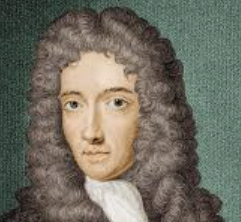
For once touched by love, everyone becomes a poet
▼
Source
196
4 months 1 week ago
I find that even Eminent Writers (such as Raymund Lully, Paracelsus, and others) do so abuse the termes they employ, that as they will now and then give divers things one name, so they will oftentimes give one thing, many Names; and some of them (perhaps) such, as do much more properly signifie some Distinct Body of another kind; nay even in Technical Words or Termes of Art, they refrain not from this Confounding Liberty; but will, as I have Observ'd call the same Substance, sometimes the Sulphur, and Sometimes the Mercury, of a Body.
4 months 1 week ago
A distant enemy is always preferable to one at the gate.
4 months 1 week ago
For such Truth as opposeth no man's profit nor pleasure is to all men welcome.
▼
Source
Review and Conclusion, p. 396, (Last text line)
4 months 1 week ago
Oceans of horse-hair, continents of parchment, and learned-sergeant eloquence, were it continued till the learned tongue wore itself small in the indefatigable learned mouth, cannot make unjust just.
4 months 1 week ago
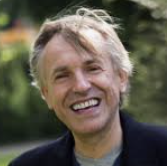
Suffering exists only because it was good for our genes. Conditionally-activated negative emotions were fitness-enhancing in the ancestral environment. In the current era, apologists for mental pain are serving as the innocent mouthpieces of the nasty bits of code which spawned them.
▼
Source
"[https://www.hedweb.com/gooddrug.htm The Good Drug Guide: The Responsible Parent's Guide to Healthy Mood-Boosters for All the Family]", BLTC Research, 2012
4 months 1 week ago
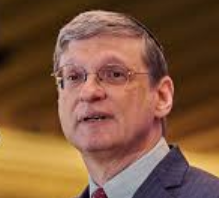
Proverbs is in many respects a work on ethics, presenting arguments concerning the manner in which moral precepts relate to life and the good; Job investigates the reasons good individuals (and, by implication, good nations) should suffer catastrophe; Esther seeks an account of how God’s will works in political circumstances in which one sees nothing but the decisions and deeds of human actors; and so forth.
4 months 1 week ago
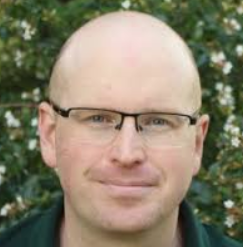
Think of transitional processes of various kinds: waking from sleep, emerging from a coma or from general anesthesia, a fetus developing sentience in the womb, or a lineage evolving sentience over millions of years. In all of these cases, we face the question of whether there is a sudden jump from the complete absence of phenomenal consciousness to its presence in at least minimal form – a ‘lights on’ moment – or a gradual transition with a region of borderline cases in which there is no determinant fact of the matter about whether phenomenal consciousness is present or absent. On this second view, the metaphor of the light switch is no longer appropriate (not even a dimmer switch, because a dimmer switch still has a sharp transition from off to on). The transition is more like the transition from being non-bald to bald, or young to old, where there is no sharp threshold, no single moment at which the transition happens
▼
Source
[https://confessionsofaconservative.com/2024/11/18/the-edge-of-sentience-and-the-beauty-of-being-wrong/]
4 months 1 week ago
Watch a man at play for an hour and you can learn more about him than in talking to him for a year.
▼
Source
Attributed to Plato in Confidence : How to Succeed at Being Yourself (1987) by Alan Loy McGinnis, this is probably a paraphrase of a statement which occurs in Letter of Advice to a Young Gentleman Leaving the University Concerning His Behaviour and Conver
4 months 1 week ago
His published works contain many well-authenticated chemical facts, which are commonly held to be the discovery of a later time.
4 months 1 week ago
To act is to anchor in the imminent future.
4 months 1 week ago
Who is there that can recognize real intellect, and do reverence to it; and discriminate it well from sham intellect, which is so much more abundant, and deserves the reverse of reverence? He that himself has it!—One really human Intellect, invested with command, and charged to reform Downing Street for us, would continually attract real intellect to those regions, and with a divine magnetism search it out from the modest corners where it lies hid. And every new accession of intellect to Downing Street would bring to it benefit only, and would increase such divine attraction in it, the parent of all benefit there and elsewhere!
4 months 1 week ago
All moral tradeoffs are messy. However, on some fairly modest ethical assumptions, when a severe and irreconcilable conflict of interests occurs, then the interests of the more sentient take precedence over the less sentient. This rule of thumb holds regardless of the age, race or species of the victim.
▼
Source
Reply to "[https://www.quora.com/Why-is-David-Pearce-a-vegan-and-a-negative-utilitarian-given-industrial-agricultures-decimation-of-insect-populations-and-therefore-suffering-the-greater-number-of-insects-than-farm-animals-Shouldnt-insects-outweigh/answer
4 months 1 week ago
The problem is, eternity is barred to humans, and so humans, all too painfully aware of that and entertaining little hope of appealing against that verdict of fate, seek to stifle and deafen their tragic wisdom in a hubbub of frail and fleeting pleasures. This admittedly being a false calculation—for the same reason which prompted it (that tragic wisdom can never be chased or conjured away for good)—they condemn themselves, whatever their material wealth, to perpetual spiritual poverty: to continuous unhappiness (‘A man is as unhappy as he has convinced himself to be’). Instead of seeking the way to happiness within the limits of their predicament, they take a long detour, hoping that somewhere along the route their odious and repulsive destiny may be escaped or fooled—only to land back in the despair that prompted them to start on their voyage of (dearly wished for, yet unattainable) discovery. The only discovery humans can possibly make on that voyage is that the route they have taken was but a detour that sooner or later will bring them back to the starting line.
▼
Source
[paraphrasing the view of Seneca], p. 34.
4 months 1 week ago
It should now be clear that "wonder" and philosophizing are connected with each other in a more essential sense than may at first appear in the statement, "Philosophy begins in wonder." For wonder is not merely the beginning, in the sense of initium, the first stage or phase of philosophy. Rather, wonder is the beginning in the sense of the "principle" (principium), the abiding, ever-intrinsic origin of philosophizing. It is not true to say that the philosopher, insofar as he philosophizes, ever "emerges from his wonder" — if he does depart from his state of wonder, he has ceased to philosophize.
▼
Source
pp. 105–106
4 months 1 week ago
There is no means of proving it is preferable to be than not to be.
4 months 1 week ago
A man perfects himself by work much more than by reading.
4 months 1 week ago
The educated man is the man who does not live in immediate intuition, but in his recollection so that little is new to him any longer.
▼
Source
Chapter 4, Philosophy As Writing: The Case Of Hegel, p. 74
4 months 1 week ago
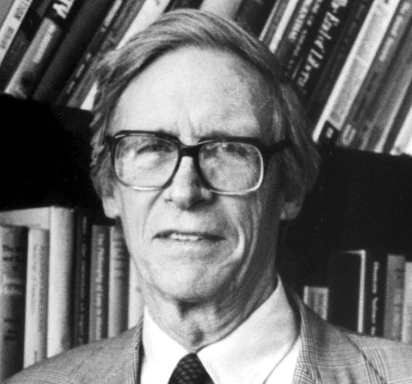
The difference principle, for example, requires that the higher expectations of the more advantaged contribute to the prospects of the least advantaged.
▼
Source
Chapter II, Section 16, pg. 95
4 months 1 week ago
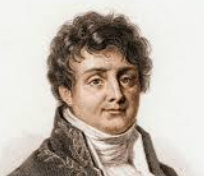
From the constitution of the solar system it is... probable that the temperature of the poles... are a little less than that of space... the same for all... although the distances from the sun may be unequal.
4 months 1 week ago
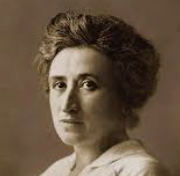
In the history of bourgeois society, legislative reform served to strengthen progressively the rising class till the latter was sufficiently strong to seize political power, to suppress the existing juridical system and to construct itself a new one.
▼
Source
Ch.8
4 months 1 week ago
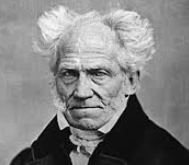
The bad thing about all religions is that, instead of being able to confess their allegorical nature, they have to conceal it; accordingly, they parade their doctrines in all seriousness as true sensu proprio, and as absurdities form an essential part of these doctrines we have the great mischief of a continual fraud. Nay, what is worse, the day arrives when they are no longer true sensu proprio, and then there is an end of them; so that, in that respect, it would be better to admit their allegorical nature at once. But the difficulty is to teach the multitude that something can be both true and untrue at the same time. Since all religions are in a greater or less degree of this nature, we must recognise the fact that mankind cannot get on without a certain amount of absurdity, that absurdity is an element in its existence, and illusion indispensable; as indeed other aspects of life testify.
▼
Source
"The Christian System" in Religion: A Dialogue, and Other Essays (1910) as translated by Thomas Bailey Saunders, p. 106
4 months 1 week ago
For a long time — always, in fact — I have known that life here on earth is not what I needed and that I wasn't able to deal with it; for this reason and for this reason alone, I have acquired a touch of spiritual pride, so that my existence seems to me the degradation and the erosion of a psalm.
4 months 1 week ago
If they be inhabited, what a scope for misery and folly; if they be un-inhabited, what a waste of space.
▼
Source
On other stars | Attributed by John Burroughs on the first page of his 1920 book Accepting The Universe | Variant: A sad spectacle. If they be inhabited, what a scope for misery and folly. It they be not inhabited, what a waste of space. | Attributed by C
4 months 1 week ago
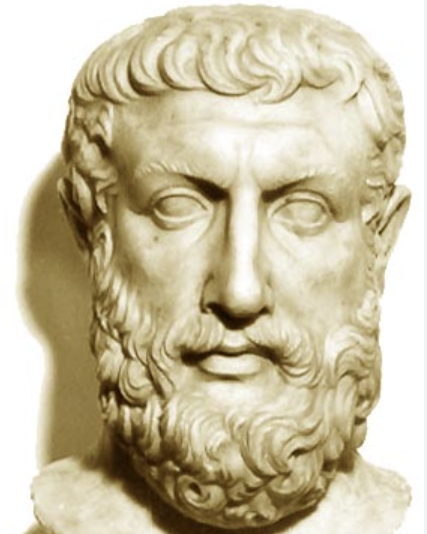
You must learn all things, both the unshaken heart of persuasive truth, and the opinions of mortals in which there is no true warranty.
▼
Source
Frag B 1.28-30, quoted by Sextus Empiricus, Against the Mathematicians, vii. 3; Simplicius, Commentary on the Heavens, 557-8; Proclus, Commentary on the Timaeus I, 345
4 months 1 week ago
That persons have opposing interests and seek to advance their own conception of the good is not at all the same thing as their being moved by envy and jealousy.
▼
Source
Chapter IX, Section 81, p. 540
4 months 1 week ago
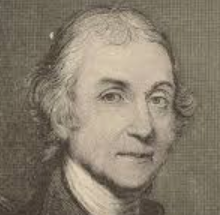
It may, perhaps, be true, though we cannot distinctly see it to be so, that as all finite things require a cause, infinites admit of none. It is evident, that nothing can begin to be without a cause; but it by no means follows from thence, that that must have had a cause which had no beginning. But whatever there may be in this conjecture, we are constrained, in pursuing the train of causes and effects, to stop at last at something uncaused. That any being should be self created is evidently absurd, because that would suppose that he had a being before he had, or that he existed, and did not exist at the same time. For want of clearer knowledge of this subject, we are obliged to content ourselves with terms that convey only negative ideas, and to say that God is a being untreated or uncaused; and this is all that we mean when we sometimes say that he is self existent.
▼
Source
Vol. I : Part I : The Being and Attributes of God, § 1 : Of the existence of God, and those attributes which art deduced from his being considered as uncaused himself, and the cause of every thing else (1772)
4 months 1 week ago
If we assume the viewpoint claimed as his own by Lenin and we fear the influence of intellectuals in the proletarian movement, we can conceive of no greater danger to the Russian party than Lenin's plan of organization. Nothing will more surely enslave a young labor movement to an intellectual elite hungry for power than this bureaucratic straightjacket, which will immobilize the movement and turn it into an automaton manipulated by a Central Committee. On the other hand there is no more effective guarantee against opportunist intrigue and personal ambition than the independent revolutionary action of the proletariat, as a result of which the workers acquire the sense of political responsibility and self-reliance.
4 months 1 week ago
We, on the contrary, now send to the Brahmans English clergymen and evangelical linen-weavers, in order out of sympathy to put them right, and to point out to them that they are created out of nothing, and that they ought to be grateful and pleased about it. But it is Just the same as if we fired a bullet at a cliff. " In India, our religions wIll never at any time take root; the ancient wisdom of the human race will not be supplanted by the events in Galilee. On the contrary, Indian Wisdom flows back to Europe, and will produce a fundamental change in our knowledge and thought.
▼
Source
Schopenhauer, Arthur The world as will and representation. Translated from the German by E. F. J. Payne. New York, Dover Publications [c1969 - Volume I, & 63 p. 356-357. quoted in Londhe, S. (2008). A tribute to Hinduism: Thoughts and wisdom spanning cont
4 months 1 week ago
It's not worth the bother of killing yourself, since you always kill yourself too late.
4 months 1 week ago
I always felt the force of his [John Stuart Mill's] distrust of "thunderings" after an hour with Carlyle. You walked away from Chelsea stirred to the depths by a torrent of humour. But then it was splendid caricature: words and images infinitely picturesque and satiric, marvellous collocations and antitheses, impassioned railing against all the human and even superhuman elements in our blindly misguided universe. But of direction, of any sign-post or way out, not a trace was to be discovered, any more than a judicial page, or sense of any wisdom in the judicial, is to be found in his greatest pieces of history. After the grand humorist's despair was over, it was a healthy restorative in passing homeward along the Embankment to fling oneself into the arms of any statistician, politician, political economist, sanitary authority, poor-law reformer, prisoner-reformer, drainage enthusiast, or other practical friend of improvement, whom genial accident might throw in one's way.
▼
Source
John Morley, Recollections, Volume I (1917), pp. 56-57
4 months 1 week ago
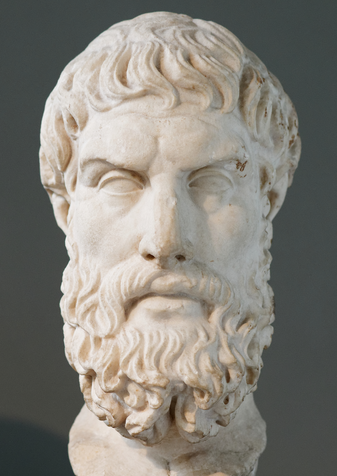
The end of living, or the ultimate good, which is to be sought for its own sake, according to the universal opinion of mankind, is happiness; yet men, for the most part, fail in the pursuit of this end, either because they do not form a right idea of the nature of happiness, or because they do not make use of proper means to attain it.
4 months 1 week ago
Parmenides was... the first philosopher to expound his system in metrical language. ...[T]he only Greeks who ...wrote philosophy in verse were ...Parmenides and Empedokles; for Xenophanes was not primarily a philosopher... The fragments of Parmenides are preserved for the most part by Simplicius...
4 months 1 week ago
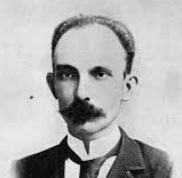
Man needs to go outside himself in order to find repose and reveal himself.
▼
Source
"Vivir en Sí" [To Live in Oneself] (1891)
4 months 1 week ago
I then arrived at the certainty that it was necessary to posit that mathematics writes that which, of being itself, is pronounceable in the field of a pure theory of the Multiple. The entire history of rational thought appeared to me to be illuminated once one assumed the hypothesis that mathematics, far from being a game without object, draws the exceptional severity of its law from being bound to support the discourse of ontology.
▼
Source
Introduction
4 months 1 week ago
The brain may be regarded as a kind of parasite of the organism, a pensioner, as it were, who dwells with the body.
4 months 1 week ago
The mind that puts everything in question, reaches, after a thousand interrogations, an almost total inertia, a situation which the inert, in fact, knows from the start, by instinct. For what is inertia but a congenital perplexity?
4 months 1 week ago
My poems are like a dagger Sprouting flowers from the hilt; My poetry is like a fountain Sprinkling streams of coral water.
▼
Source
V
4 months 1 week ago
It's gravity is the cause; and that which is heavy abides in the middle, and the earth is in the middle: in like manner also, the infinite will abide in itself, through some other cause... and will itself support itself. ...The places of the whole and the part are of the same species; as of the whole earth and a clod, the place is downward; and of the whole of fire, and a spark, the place is upward. So that if the place of the infinite is in itself, there will be the same place also of a part of the infinite.
▼
Source
Book III, Ch. VII, p. 162.

4 months 1 week ago
Political thought as we understand it began in Athens because the Athenians were a trading people who looked at their contemporaries and saw how differently they organized themselves. If they had not lived where they did and organized their economic lives as they did, they could not have seen the contrast. Given the opportunity, they might not have paid attention to it. The Israelites of the Old Testament narrative were very conscious of their neighbors, Egyptian, Babylonian, and other, not least because they were often reduced to slavery or near-slavery by them. That narrative makes nothing of the fact that Egypt was a bureaucratic theocracy; it emphasizes that the Egyptians did not worship Yahweh. The history of Old Testament politics is the history of a people who did their best to have no politics. They saw themselves as under the direct government of God, with little room to decide their own fate except by obeying or disobeying God’s commandments. Only when God took them at their word and allowed them to choose a king did they become a political society, with familiar problems of competition for office and issues of succession. For the Jews, politics was a fall from grace. For the Greeks, it was an achievement. Many besides Plato thought it a flawed achievement; when historians and philosophers began to articulate its flaws, the history of political thought began among the argumentative Athenians.
CivilSimian.com created by AxiomaticPanic, CivilSimian, Kalokagathia