
4 months 1 week ago
To reconcile this science and the Masters of it to the world is an attempt more plausible than possible, the prejudice being so great that neither reason nor authority can balance it.
4 months 1 week ago
If it be true that in showing pity and compassion we think of ourselves, because we fear to be one day or another in the same circumstances as those unfortunate people for whom we feel, why are the latter so sparingly relieved by us of their condition?
▼
Source
Aphorism 48
4 months 1 week ago
If the subjectivist view hold true, thinking cannot be of any help in determining the desirability of any goal in itself. The acceptability of ideals, the criteria for our actions and beliefs, the leading principles of ethics and politics, all our ultimate decisions are made to depend upon factors other than reason. They are supposed to be matters of choice and predilection, and it has become meaningless to speak of truth in making practical, moral or esthetic decisions.
▼
Source
pp. 7-8.
4 months 1 week ago
Continuously thou wilt look at human things as smoke and nothing at all; especially if thou reflectest at the same time, that what has once changed will never exist again in the infinite duration of time. But thou, in what a brief space of time is thy existence? And why art thou not content to pass through this short time in an orderly way?
▼
Source
X, 31
4 months 1 week ago
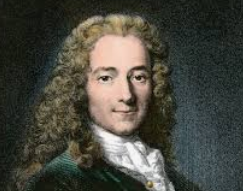
Books, like conversation, rarely give us any precise ideas: nothing is so common as to read and converse unprofitably. We must here repeat what Locke has so strongly urged—Define your terms.
▼
Source
[http://www.gutenberg.org/files/35621/35621-h/35621-h.htm "Abuse of Words"] (1764) | Cf. Locke: "The names of simple ideas are not capable of any definition; the names of all complex ideas are. It has not, that I know, been yet observed by anybody what wo
4 months 1 week ago
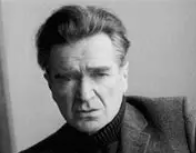
Tell me how you want to die, and I'll tell you who you are.
4 months 1 week ago
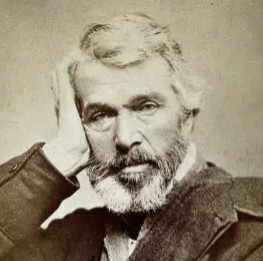
They understood in their heart that it was indispensable to be brave; that Odin would have no favor for them, but despise and thrust them out, if they were not brave. Consider too whether there is not something in this! It is an everlasting duty, valid in our day as in that, the duty of being brave. Valor is still value. The first duty for a man is still that of subduing Fear. We must get rid of Fear; we cannot act at all till then.
4 months 1 week ago
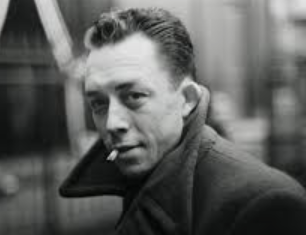
The important thing isn't the soundness or otherwise of the argument, but for it to make you think.
4 months 1 week ago
Hatred also is short lived; but that which makes the splendor of the present and the glory of the future remains forever unforgotten
▼
Source
Book II, 2.64-[5]
4 months 1 week ago
The success and originality of American integration stem precisely from the fact that immigrants' descendants can perpetuate their ancestral cultures while thinking of themselves as Americans in the fullest sense, sharing basic ideals across racial and ethnic barriers. In France, the characteristic attitude of newcomers from North Africa, Turkey, and sub-Saharan Africa is predominantly one of alienation, confrontation, rejection, and hatred.
4 months 1 week ago
Depart then satisfied, for he also who releases thee is satisfied.
▼
Source
XII, 36
4 months 1 week ago
Superstition excites storms; philosophy appeases them.
▼
Source
p. 93
4 months 1 week ago
Irons and the unbreathable air of this world strip us of everything, except the freedom to kill ourselves; and this freedom grants us a strength and pride to triumph over the loads which overwhelm us.
4 months 1 week ago
In the meanest mortal there lies something nobler. The poor swearing soldier, hired to be shot, has his "honor of a soldier," different from drill-regulations and the shilling a day. It is not to taste sweet things, but to do noble and true things, and vindicate himself under God's Heaven as a god-made Man, that the poorest son of Adam dimly longs. Show him the way of doing that, the dullest day-drudge kindles into a hero. They wrong man greatly who say he is to be seduced by ease.
4 months 1 week ago
Metaphysical rebellion is a claim, motivated by the concept of a complete unity, against the suffering of life and death and a protest against the human condition both for its incompleteness, thanks to death, and its wastefulness, thanks to evil.
▼
Source
Part 2: Metaphysical Rebellion
4 months 1 week ago
But what most oppressed them was that they had two wars at once, and has thus reached a pitch of frenzy which no one would have believed possible if he had heard of it before it had come to pass.
▼
Source
Book VII, 7.28-[3]
4 months 1 week ago
Well, what does “good” mean anyway...? As Wittgenstein suggested, “good,” like “game,” has a family of meanings. Prominent among them is this one: “meets the criteria or standards of assessment or evaluation.”
▼
Source
P. 152.
4 months 1 week ago
He who has no taste for order will be often wrong in his judgements, and seldom considerate or conscientious in his actions.
▼
Source
No. 189
4 months 1 week ago
Marcus Aurelius wrote the following about Severus (a person who is not clearly identifiable according to the footnote): Through him [...] I became acquainted with the conception of a community based on equality and freedom of speech for all, and of a monarchy concerned primarily to uphold the liberty of the subject.
▼
Source
I. 14, trans. Maxwell Staniforth
4 months 1 week ago
It is strange that thought should depend upon the stomach, and still that men with the best stomachs are not always the best thinkers.
▼
Source
p. 233
4 months 1 week ago
To Live signifies to believe and hope — to lie and to lie to oneself.
4 months 1 week ago
The Age of Miracles is forever here!
4 months 1 week ago
Manhattan. Sometimes from beyond the skyscrapers, across of thousands of high walls, the cry of a tugboat finds you in your insomnia in the middle of the night, and you remember that this desert of iron and cement is an island.
4 months 1 week ago
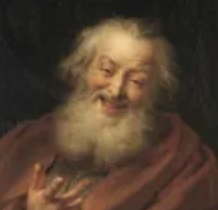
Beautiful objects are wrought by study through effort, but ugly things are reaped automatically without toil.
▼
Source
Freeman (1948), p. 161 | Variant: The good things of life are produced by learning with hard work; the bad are reaped of their own accord, without hard work.
4 months 1 week ago
The world is the book where the eternal Wisdom wrote its own concepts
▼
Source
"Modo di filosofare".
4 months 1 week ago
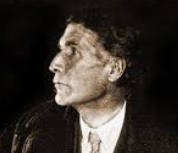
Our rulers at the present day, with their machines and their preachers, are all occupied in putting into our heads the preposterous notion that activity rather than contemplation is the object of life.
▼
Source
In Defence of Sensuality (1930), p. 136
4 months 1 week ago
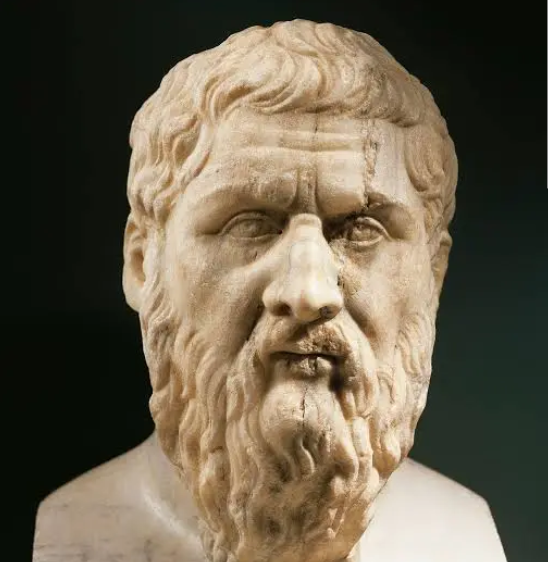
No man of sense can put himself and his soul under the control of names... You must consider courageously and thoroughly and not accept anything carelessly.
▼
Source
440c–d
4 months 1 week ago
O Voltaire! O humaneness! O nonsense! There is something about "truth", about the search for truth; and when a human being is too human about it- "il ne cherche le vrai que pour faire le bien"- I bet he finds nothing.
▼
Source
Friedrich Nietzsche, Beyond Good and Evil, Trns: Walter Kauffmann
4 months 1 week ago
Long before physics or psychology were born, pain disintegrated matter, and affliction the soul.
4 months 1 week ago
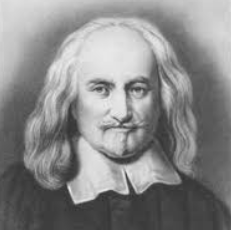
The Value or WORTH of a man, is as of all other things, his Price; that is to say, so much as would be given for the use of his Power...
▼
Source
The First Part, Chapter 10, p. 42
4 months 1 week ago
Every noble work is at first impossible.
▼
Source
From Past and Present (1843), Chapter XI : Labour
4 months 1 week ago
Neither art nor wisdom may be attained without learning.
4 months 1 week ago
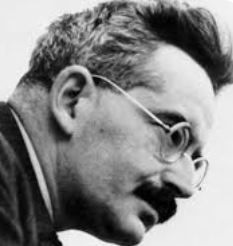
Criticism and prophecy must be the two categories that meet in the salvation of the past
▼
Source
p. 53-54 (trans. John Osborne (London: Verso, 1977)
4 months 1 week ago
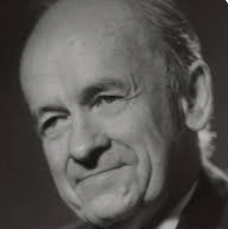
In the interests of the ideal of maximum output, [our society] judges men by their fitness for jobs, not jobs by their fitness for men.
▼
Source
p. 280.
4 months 1 week ago
Let every man remind their descendants that they also are soldiers who must not desert the ranks of their ancestors, or from cowardice fall behind. Even as I exhort you this day, and in all future time, whenever I meet with any of you, shall continue to remind and exhort you, O ye sons of heroes, that you strive to be the bravest of men. And I think that I ought now to repeat what your fathers desired to have said to you who are their survivors, when they went out to battle, in case anything happened to them. I will tell you what I heard them say, and what, if they had only speech, they would fain be saying, judging from what they then said. And you must imagine that you hear them saying what I now repeat to you:Sons, the event proves that your fathers were brave men; for we might have lived dishonourably, but have preferred to die honourably rather than bring you and your children into disgrace, and rather than dishonour our own fathers and forefathers; considering that life is not life to one who is a dishonour to his race, and that to such a one neither men nor Gods are friendly, either while he is on the earth or after death in the world below.Remember our words, then, and whatever is your aim let virtue be the condition of the attainment of your aim, and know that without this all possessions and pursuits are dishonourable and evil.For neither does wealth bring honour to the owner, if he be a coward; of such a one the wealth belongs to another, and not to himself. Nor does beauty and strength of body, when dwelling in a base and cowardly man, appear comely, but the reverse of comely, making the possessor more conspicuous, and manifesting forth his cowardice.And all knowledge, when separated from justice and virtue, is seen to be cunning and not wisdom; wherefore make this your first and last and constant and all-absorbing aim, to exceed, if possible, not only us but all your ancestors in virtue; and know that to excel you in virtue only brings us shame, but that to be excelled by you is a source of happiness to us.And we shall most likely be defeated, and you will most likely be victors in the contest, if you learn so to order your lives as not to abuse or waste the reputation of your ancestors, knowing that to a man who has any self-respect, nothing is more dishonourable than to be honoured, not for his own sake, but on account of the reputation of his ancestors.The honour of parents is a fair and noble treasure to their posterity, but to have the use of a treasure of wealth and honour, and to leave none to your successors, because you have neither money nor reputation of your own, is alike base and dishonourable.And if you follow our precepts you will be received by us as friends, when the hour of destiny brings you hither; but if you neglect our words and are disgraced in your lives, no one will welcome or receive you. This is the message which is to be delivered to our children.
▼
Source
A speech of Aspasia, recounted by Socrates, as portrayed in the dialogue.
4 months 1 week ago
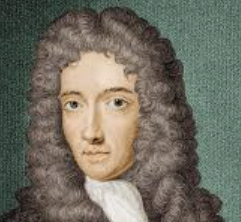
The phaenomena afforded by trades, are a part of the history of nature, and therefore may both challenge the naturalist's curiosity and add to his knowledge, Nor will it suffice to justify learned men in the neglect and contempt of this part of natural history, that the men, from whom it must be learned, are illiterate mechanicks... is indeed childish, and too unworthy of a philosopher, to be worthy of an honest answer.
▼
Source
"That the Goods of Mankind May be Much Increased by the Naturalist's Insight into Trades" in the Works of Robert Boyle, (1772) Vol.3 as quoted in Clifford D. Conner, A People's History of Science (2005) Note: Compare Francis Bacon's The Great Instauration
4 months 1 week ago
If we would regain our freedom, we must shake off the burden of sensation, no longer react to the world by our senses, break our bonds. For all sensation is a bond, pleasure as much as pain, joy as much as misery. The only free mind is the one that, pure of all intimacy with beings or objects, plies its own vacuity.
4 months 1 week ago
No man's error becomes his own Law; nor obliges him to persist in it.
▼
Source
The Second Part, Chapter 26, p. 144
4 months 1 week ago
In a valiant suffering for others, not in a slothful making others suffer for us, did nobleness ever lie.
4 months 1 week ago
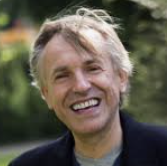
Too many of our preferences reflect nasty behaviours and states of mind that were genetically adaptive in the ancestral environment. Instead, wouldn't it be better if we rewrote our own corrupt code?
▼
Source
"[https://www.abolitionist.com/ The Abolitionist Project]", Talks given at the FHI (Oxford University) and the Charity International Happiness Conference, 2007
4 months 1 week ago
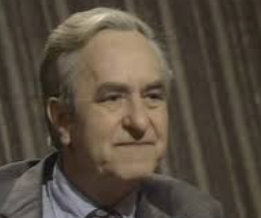
Poets are witnesses to Being before the philosophers are able to bring it into thought.
▼
Source
Chapter Five, Christian sources, p. 105
4 months 1 week ago
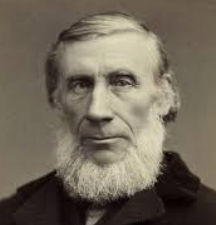
The enunciation of a thought in advance of the moment provokes dissent or evokes approval, and thus promotes action. The thought may be unwise; but it is only by discussion, checked by experience, that its value can be determined.
4 months 1 week ago
And when the father who begat it perceived the created image of the eternal gods, that it had motion and life, he rejoiced and was well pleased; and he bethought him to make it yet more nearly like its pattern. Now whereas that is a living being eternally existent, even so he essayed to make this All the like to the best of his power. Now so it was that the nature of the ideal was eternal. But to bestow this attribute altogether upon a created thing was impossible; so he bethought him to make a moving image of eternity, and while he was ordering the universe he made of eternity that abides in unity an eternal image moving according to number, even that which we have named time. For whereas days and nights and months and years were not before the universe was created, he then devised the generation of them along with the fashioning of the universe. Now all these are portions of time, and was and shall be are forms of time that have come to be, although we wrongly ascribe them unawares to the eternal essence. For we say that it was and is and shall be, but in verity is alone belongs to it: and was and shall be it is meet should be applied only to Becoming which moves in time; for these are motions. But that which is ever changeless without motion must not become elder or younger in time, neither must it have become so in past nor be so in the future; nor has it to do with any attributes that Becoming attaches to the moving objects of sense: these have come into being as forms of time, which is the image of eternity and revolves according to number. Moreover we say that the become is the become, and the becoming is the becoming, and that which shall become is that which shall become, and not-being is not-being. In all this we speak incorrectly. But concerning these things the present were perchance not the right season to inquire particularly.
▼
Source
38b, as quoted by R. D. Archer-Hind, The Timaeus of Plato (1888)
4 months 1 week ago
And first the Doctrine that all their Theory is grounded on, seems to me Inevident and undemonstrated, not to say precarious.
4 months 1 week ago
Each of us must pay for the slightest damage he inflicts upon a universe created for indifference and stagnation, sooner or later, he will regret not having left it intact.
4 months 1 week ago
At the age of forty he was, for the first time, introduced to the works of Euclid, and at once 'fell in love with geometry,' being attracted, he says, more by the rigorous manner of proof employed than by the matter of the science. (Mathematics... were then only beginning to be seriously studied in England. Hobbes tells us that in his undergraduate days geometry was still looked upon generally as a form of the 'Black Art,' and it was not until 1619 that the will of Sir Henry Savile, Warden of Merton College, established the first Professorships of Geometry and Astronomy at Oxford.)
▼
Source
Alfred Edward Taylor, Thomas Hobbes (1908)
4 months 1 week ago
Sure enough, America is a great, and in many respects a blessed and hopeful phenomenon. Sure enough, these hardy millions of Anglo-Saxon men prove themselves worthy of their genealogy; and, with the axe and plough and hammer, if not yet with any much finer kind of implements, are triumphantly clearing out wide spaces, seedfields for the sustenance and refuge of mankind, arenas for the future history of the world; doing, in their day and generation, a creditable and cheering feat under the sun. But as to a Model Republic, or a model anything, the wise among themselves know too well that there is nothing to be said.
4 months 1 week ago
Suppose we encounter an advanced civilization that has engineered a happy biosphere. Population sizes are controlled by cross-species immunocontraception. Free-living herbivores lead idyllic lives in their wildlife parks. Should we urge the reintroduction of starvation, asphyxiation, disemboweling and being eaten alive by predators? Is their regime of compassionate stewardship of the biosphere best abandoned in favour of "re-wilding"? I suspect the advanced civilization would regard human pleas to restore the old Darwinian regime of "Nature, red in tooth and claw" as callous if not borderline sociopathic.
▼
Source
Reply to "[https://freethoughtblogs.com/pharyngula/2015/09/10/i-am-horrified-at-what-goes-on-in-philosophy-departments-personally/#comment-971596 I am horrified at what goes on in philosophy departments, personally]", Freethought Blogs, 10 Sept. 2015
4 months 1 week ago
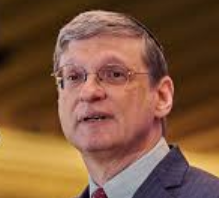
Enlightenment rationalism, to the extent that its program is taken seriously, is an engine of perpetual revolution, which brings about the progressive destruction of every inherited institution, yet without ever being able to consolidate a stable consensus around any new ones.
▼
Source
p. 147
4 months 1 week ago
In leisure — not only there, but certainly there, if anywhere — the truly human is rescued and preserved precisely because the area of the "just human" is left behind over and over again — and this is not brought about through the application of extreme efforts but rather as with a kind of "moving away" (and this "moving" is of course more difficult than the extreme, active effort; it is "more difficult" because it is less at one's own disposal; the condition of utmost exertion is more easily to be realized than the condition of relaxation and detachment, even though the latter is effortless: this is the paradox that reigns over the attainment of leisure, which is at once a human and superhuman condition). As Aristotle said of it: "man cannot live this way insofar as he is man, but only insofar as something divine dwells in him." [Nichomachean Ethics X, 7 (1177b27–28)]
▼
Source
p. 36
CivilSimian.com created by AxiomaticPanic, CivilSimian, Kalokagathia