
4 months 1 week ago
To legislation... the Puritans resorted. Instead of guiding, they repressed, and thus pitted themselves against the unconquerable impulses of human nature. Believing that nature to be depraved, they felt themselves logically warranted in putting it in irons. But they failed; and their failure ought to be a warning to their successors.
4 months 1 week ago
He illustrates this position by stating the following general principles. The phenomena afforded by trade, are (most of them) a part of the history of Nature, and therefore may both challenge the naturalist's curiosity and add to his knowledge. Nor will it, he adds, justify learned men in the neglect and contempt of this part of natural history, that the men from whom it must be learned are illiterate mechanics, and the things which are exhibited are works of Art and not of Nature.
▼
Source
Ch.2 History of Exhibitions

4 months 1 week ago
We understand God by everything in ourselves that is fragmentary, incomplete, and inopportune.
4 months 1 week ago
To all men it is evident that the social interests of one hundred and fifty Millions of us depend on the mysterious industry there carried on; and likewise that the dissatisfaction with it is great, universal, and continually increasing in intensity,—in fact, mounting, we might say, to the pitch of settled despair.

4 months 1 week ago
Humans are prone to status quo bias. So let's do a thought-experiment. Imagine we stumble across an advanced civilisation that has abolished predation, disease, famine, and all the horrors of primitive Darwinian life. The descendants of archaic lifeforms flourish unmolested in their wildlife parks – free living, but not "wild". Should we urge scrapping their regime of compassionate stewardship of the living world – and a return to asphyxiation, disembowelling and being eaten alive? Or is a happy biosphere best conserved intact?
▼
Source
Reply to "[https://qr.ae/TWKYMB Should humans wipe out all carnivorous animals so the succeeding generations of herbivores can live in peace?]", Quora, 16 Jun. 2018

4 months 1 week ago
Our vulnerability to ressentiment is unavoidable (and probably incurable) in a kind of society in which relative equality of political and other rights and formally acknowledged social equality go hand in hand with enormous differences in genuine power, possessions and education; a society in which everyone “has the right” to consider himself equal to everybody else, while in fact being unequal to them.
▼
Source
[paraphrasing the view of Max Scheler], p. 25.
4 months 1 week ago
We can imagine that the Academy, which could be attended only by men of leisure, was a cradle of discontent. The author of the Laws was a disgruntled old man, full of political rancor, fearing and hating the crowd and above all their demagogues; his prejudices had crystallized and he had become an old doctrinaire, unable to see anything but the reflections of his own personality and to hear anything but the echoes of his own thoughts. The worst of it was that he, a noble Athenian, admired the very Spartans who had defeated and humiliated his fatherland. Plato was witnessing a social revolution (even as we are) and he could not bear it at all. His main concern was: how could one stop it.
▼
Source
George Sarton, A History of Science (1952), Vol. 1 p. 409
4 months 1 week ago
And as for the close connection between philosophy and poetry, we can refer to a little-known statement by Thomas Aquinas in his Commentary on Aristotle's Metaphysics [I, 3]: the Philosopher is akin to the Poet in this, that both are concerned with the mirandum, the "wondrous," the astonishing, or whatever calls for astonishment or wonder. This statement is not that easy to fathom, since Thomas, like Aristotle, was a very sober thinker, completely opposed to any Romantic confusion of properly distinct realms. But on the basis of their common orientation towards the "wonderful" (the mirandum — something not to be found in the world of work!) — on this basis, then, of this common transcending-power, the philosophical act is related to the "wonderful," is in fact more closely related to it than to the exact, special sciences; to this point we shall return.
▼
Source
pp. 68–69 | The Aquinas quote cited — "The reason why the philosopher can be compared to the poet is that both are concerned with wonder" — is the epigraph of "The Philosophical Act".
4 months 1 week ago
When you have understood that nothing is, that things do not even deserve the status of appearances, you no longer need to be saved, you are saved, and miserable forever.
4 months 1 week ago
[I]t is our fatalest misery just now, not easily alterable, and yet urgently requiring to be altered, That no British man can attain to be a Statesman, or Chief of Workers, till he has first proved himself a Chief of Talkers: which mode of trial for a Worker, is it not precisely, of all the trials you could set him upon, the falsest and unfairest?
4 months 1 week ago
Philosophy is an everlasting fire, sometimes damped down by setting itself limits, then flaring into new life as it consumes them. Every field of inquiry is limited, but philosophy has an essential relation to the question of limits, to its own limits.
▼
Source
Introduction, p. xiii
4 months 1 week ago
In all sectors of society there should be roughly equal prospects of culture and achievement for everyone similarly motivated and endowed. The expectations of those with the same abilities and aspirations should not be affected by their social class.
▼
Source
Chapter II, Section 12, pg. 73

4 months 1 week ago
This distinction of luminous and non-luminous heat, explains the elevation of temperature caused by transparent bodies.

4 months 1 week ago
The proletarian revolution ought now, by a little ray of kindness, to illuminate the gloomy life of prisoners, shorten Draconian sentences, abolish barbarous punishments - the use of manacles and whippings - improve, as far as possible, the medical attention, the food allowance, and the conditions of labor. That is a duty of honor.
▼
Source
Against Capital Punishment (1918), Rosa Luxemburg Speaks
4 months 1 week ago
It is the courage to make a clean breast of it in the face of every question that distinguishes the philosopher. He must be like Sophocles' Oedipus, who, seeking enlightenment concerning his terrible fate, pursues his indefatigable inquiry even though he divines that appalling horror awaits him in the answer. But most of us carry with us the Jocasta in our hearts, who begs Oedipus, for God's sake, not to inquire further.
▼
Source
Letter to Johann Wolfgang von Goethe (November 1815)[https://archive.org/details/schopenhauerbri00schegoog/page/90/mode/1up?view=theater]
4 months 1 week ago
Having always lived in fear of being surprised by the worst, I have tried in every circumstance to get a head start, flinging myself into misfortune long before it occurred.
4 months 1 week ago
It must have been in his teens, perhaps rather early, that he and his elder brother John, with William Bell (afterwards of Wylie Hill, and a noted drover) and his brother, all met in the kiln at Eelief to play cards. The corn was dried then at home. There was a fire, therefore, aud perhaps it was both heat and light. The boys had played, perhaps, often enough for trifling stakes, and always parted in good humor. One night they came to some disagreement. My father spoke out what was in him about the folly, the sinfulness, of quarreling over a perhaps sinful amusement. The earnest mind persuaded other minds. They threw the cards into the fire, and (I think the younger Bell told my brother James) no one of the four ever touched a card again through life. My father certainly never hinted at such a game since I knew him. I cannot remember that I, at that age, had any such force of belief. Which of us can?
4 months 1 week ago
A just system must generate its own support.
▼
Source
Chapter V, Section 41, p. 261
4 months 1 week ago
It is the earnest wish of my heart, that your minds may be well established in the sound principles of religious knowledge, because I am fully persuaded, that nothing else can be a sufficient foundation of a virtuous and truly respectable conduct in life, or of good hope in death. A mind destitute of knowledge (and, comparatively speaking, no kind of knowledge, besides that of religion, deserves the name) is like a field on which no culture has been bestowed, which, the richer it is, the ranker weeds it will produce, If nothing good be sown in it, it will be dccupied by plants that are useless or noxious.
▼
Source
Vol. I : The Dedication (March 1772)
4 months 1 week ago
For Lenin, the difference between the Social Democracy and is reduced to the observation that in place of a handful of conspirators we have a class-conscious proletariat. He forgets that this difference implies a complete revision of our ideas on organization and, therefore, an entirely different conception of centralism and the relations existing between the party and the struggle itself.
4 months 1 week ago
If a person is stupid, we excuse him by saying that he cannot help it; but if we attempted to excuse in precisely the same way the person who is bad, we should be laughed at.
▼
Source
E. Payne, trans., vol. 2, p. 230
4 months 1 week ago
It is trifling to believe in what you do or in what others do. You should avoid simulacra and even "realities"; you should take up a position external to everything and everyone, drive off or grind down your appetites, live, according to a Hindu adage, with as few desires as a "solitary elephant.
4 months 1 week ago
It is really, as Coleridge I think said of something else, like reading a story by flashes of lightning!
▼
Source
Francis Jeffrey, [http://carlyleletters.dukejournals.org/cgi/content/full/9/1/lt-18370530-TC-JAC-01#FN4 letter to Carlyle] (30 May 1837) on The French Revolution. This is often repeated as stating that Carlyle's style is “like reading history by flashes o
4 months 1 week ago
Natural justice is a symbol or expression of usefulness, to prevent one person from harming or being harmed by another.
▼
Source
Variant: Natural justice is a pledge of reciprocal benefit, to prevent one man from harming or being harmed by another.
4 months 1 week ago
One of Parmenides' merits is to have been the first philosopher who strove to handle general concepts like "being", "not-being", "knowing", "unity", "identity", in their systematic connection.
▼
Source
Willem Jacob Verdenius, in Parmenides (1964), p. 2
4 months 1 week ago
Terrible times in which priests no longer merit the praise of poets and in which poets have not yet begun to be priests.
▼
Source
On El Poema de Niágara of Pérez Bonalde (1883)

4 months 1 week ago
How sad that I returned, how sad,Instead of dying at Baghdad!I say, whene'er things fall amiss,"My coming home hath brought me this."
▼
Source
1. 303, 5
4 months 1 week ago
No doubt, when modesty was made a virtue, it was a very advantageous thing for the fools, for everybody is expected to speak of himself as if he were one.
▼
Source
Vol. 1, Ch. 3, Section 2: Pride
4 months 1 week ago
This very second has vanished forever, lost in the anonymous mass of the irrevocable. It will never return. I suffer from this and I do not. Everything is unique — and insignificant.
4 months 1 week ago
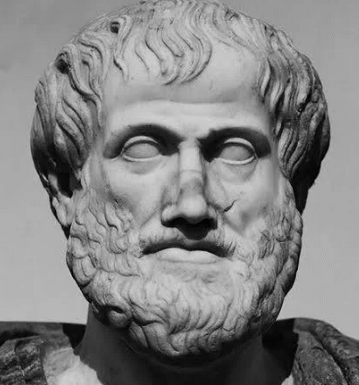
There is... something which is in energy only; and there is something which is both in energy and capacity. ...of relatives, one is predicated as according to excess and defect: another according to the effective and passive, and, in short, the motive, and that which may be moved... Motion, however, has not a substance separate from things... But each of the categories subsists in a twofold manner in all things. Thus... one thing pertaining to it is form, and another privation. ...So the species of motion and mutation are as many as those of being. But since in every genus of things, there is that which is in entelecheia, and that which is in capacity; motion is the entelecheia of that which is in capacity... That there is energy, therefore, and that a thing then happens to be moved, when this energy exists, and neither prior nor posterior to it, is manifest. ... Neither motion nor mutation can be placed in any other genus; nor have those who have advanced a different opinion concerning it spoken rightly. ...for by some motion is said to be difference, inequality, and non-being; though it is not necessary that any of these should be moved... Neither is mutation into these, nor from these, rather than from their opposites. ...The cause, however, why motion appears to be indefinite, is because it can neither be simply referred to the capacity, nor to the energy of beings. ...It is difficult to apprehend what motion is: for it is necessary to refer it either to privation, or to capacity, or to simple energy; but it does not appear that it can be any of these. The above-mentioned mode, therfore remains, viz. that it is a certain energy; but... difficult to be perceived, but which may have a subsistence.
▼
Source
Book III, Ch. I, pp. 137-147.
4 months 1 week ago
There can be no racial animosity, because there are no races. The theorist and feeble thinkers string together and warm over the bookshelf races which the well-disposed observer and the fair-minded traveller vainly seek in the justice of Nature where man's universal identity springs forth from triumphant love and the turbulent hunger for life. The soul, equal and eternal, emanates from bodies of different shapes and colors. Whoever foments and spreads antagonism and hate between the races, sins against humanity.

4 months 1 week ago
Justice is a virtue, but not one that makes people lovable.
4 months 1 week ago
Reading is merely a surrogate for thinking for yourself; it means letting someone else direct your thoughts. Many books, moreover, serve merely to show how many ways there are of being wrong, and how far astray you yourself would go if you followed their guidance. You should read only when your own thoughts dry up, which will of course happen frequently enough even to the best heads; but to banish your own thoughts so as to take up a book is a sin against the holy ghost; it is like deserting untrammeled nature to look at a herbarium or engravings of landscapes.
▼
Source
Vol. 2, Ch. 22, § 261 | Variant translations: | Reading is thinking with some one else's head instead of one's own. | As translated by T. Bailey Saunders | Reading is equivalent to thinking with someone else’s head instead of with one’s own.
4 months 1 week ago
If instead of expanding you, putting you in a state of energetic euphoria, your ordeals depress and embitter you, you can be sure you have no spiritual vocation.
4 months 1 week ago
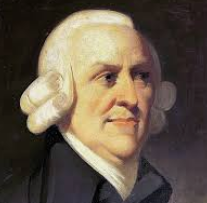
In the languor of disease and the weariness of old age, the pleasures of the vain and empty distinctions of greatness disappear. To one, in this situation, they are no longer capable of recommending those toilsome pursuits in which they had formerly engaged him. In his heart he curses ambition, and vainly regrets the ease and the indolence of youth, pleasures which are fled for ever, and which he has foolishly sacrificed for what, when he has got it, can afford him no real satisfaction. In this miserable aspect does greatness appear to every man when reduced either by spleen or disease to observe with attention his own situation, and to consider what it is that is really wanting to his happiness. Power and riches appear then to be, what they are, enormous and operose machines contrived to produce a few trifling conveniencies to the body, consisting of springs the most nice and delicate, which must be kept in order with the most anxious attention, and which, in spite of all our care, are ready every moment to burst into pieces, and to crush in their ruins their unfortunate possessor. ...But though this splenetic philosophy, which in time of sickness or low spirits is familiar to every man, thus entirely depreciates those great objects of human desire, when in better health and in better humour, we never fail to regard them under a more agreeable aspect. Our imagination, which in pain and sorrow seems to be confined and cooped up within our own persons, in times of ease and prosperity expands itself to every thing around us. We are then charmed with the beauty of that accommodation which reigns in the palaces and economy of the great; and admire how every thing is adapted to promote their ease, to prevent their wants, to gratify their wishes, and to amuse and entertain their most frivolous desires. If we consider the real satisfaction which all these things are capable of affording, by itself and separated from the beauty of that arrangement which is fitted to promote it, it will always appear in the highest degree contemptible and trifling. But we rarely view it in this abstract and philosophical light. We naturally confound it, in our imagination with the order, the regular and harmonious movement of the system, the machine or economy by means of which it is produced. The pleasures of wealth and greatness, when considered in this complex view, strike the imagination as something grand, and beautiful, and noble, of which the attainment is well worth all the toil and anxiety which we are so apt to bestow upon it.And it is well that nature imposes upon us in this manner. It is this deception which rouses and keeps in continual motion the industry of mankind.
▼
Source
Chap. I.
4 months 1 week ago
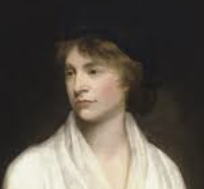
Ah! why do women condescend to receive a degree of attention and respect from strangers different from that reciprocation of civility which the dictates of humanity and the politeness of civilization authorize between man and man? And why do they not discover, when, "in the noon of beauty's power", that they are treated like queens only to be deluded by hollow respect. Confined, then, in cages like the feathered race, they have nothing to do but to plume themselves, and stalk with mock majesty from perch to perch.
▼
Source
Ch. 4

4 months 1 week ago
We must now ask how changes of this sort can come about, considering first discoveries, or novelties of fact, and then inventions, or novelties of theory. That distinction between discovery and invention or between fact and theory will, however, immediately prove to be exceedingly artificial.
▼
Source
p. 52 (2012 ed.)

4 months 1 week ago
While the Marxist faith in central planning is now confined to a few dingy sects, a quasi-religious belief in free markets continues to shape the policies of governments.Many writers have pointed to the havoc and ruin that have accompanied the imposition of free markets across the world. Whether in Africa, Asia, Latin America or post-communist Europe, policies of wholesale privatisation and structural adjustment have led to declining economic activity and social dislocation on a massive scale.
▼
Source
[http://www.guardian.co.uk/books/2007/sep/15/politics "The end of the world as we know it,"] The Guardian (2007-09-15)
4 months 1 week ago
Perhaps then we must begin with such facts as are known to us from individual experience. It is necessary therefore that the person who is to study, with any tolerable chance of profit, the principles of nobleness and justice and politics generally, should have received a good moral training.
▼
Source
(Bk I, Ch II)
4 months 1 week ago
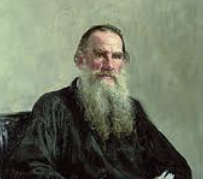
Six feet of land was all that he needed.
▼
Source
How Much Land Does a Man Need? (1886)
4 months 1 week ago
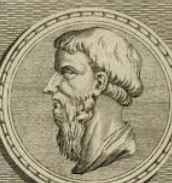
Talent is a gift that brings with it an obligation to serve the world, and not ourselves, for it is not of our making. To use for our exclusive benefit what is not ours is theft. Culture, which makes talent shine, is not completely ours either, nor can we place it solely at our disposal. Rather, it belongs mainly to our country, which gave it to us, and to humanity, from which we receive it as a birthright. A selfish man is a thief.
4 months 1 week ago
Under which head do you class those who are at sea?
▼
Source
Having been asked whether the dead or the living were more numerous., as quoted in The Lives and Opinions of Eminent Philosophers by Diogenes Laërtius, as translated by C. D. Yonge, (1853), "Anacharsis" sect. 5, p. 48
4 months 1 week ago
Every parting gives a foretaste of death; every coming together again a foretaste of the resurrection.
▼
Source
"Psychological Observations"
4 months 1 week ago
After all, why should ordinary people want to contemplate the End, especially when we see the condition of those who do?
4 months 1 week ago
China has been long one of the richest, that is, one of the most fertile, best cultivated, most industrious, and most populous countries in the world. It seems, however, to have been long stationary. Marco Polo, who visited it more than five hundred years ago, describes its cultivation, industry, and populousness, almost in the same terms in which they are described by travellers in the present times.
▼
Source
Chapter VIII, p. 86.
4 months 1 week ago
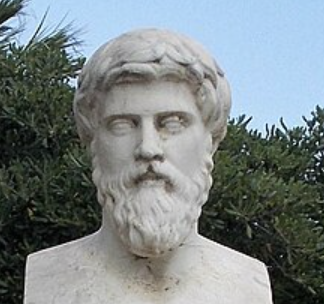
Antagoras the poet was boiling a conger, and Antigonus, coming behind him as he was stirring his skillet, said, "Do you think, Antagoras, that Homer boiled congers when he wrote the deeds of Agamemnon?" Antagoras replied, "Do you think, O king, that Agamemnon, when he did such exploits, was a peeping in his army to see who boiled congers?"
▼
Source
46 Antigonus I
4 months 1 week ago
The evil of totalitarianism is not only that it fails to protect specific liberties but that it extinguishes the very possibility of freedom.
▼
Source
'Isaiah Berlin: The Value of Decency' (p.104)
4 months 1 week ago
When people are friends, they have no need of justice, but when they are just, they need friendship in addition.
▼
Source
Book VIII, 1155a.26
4 months 1 week ago
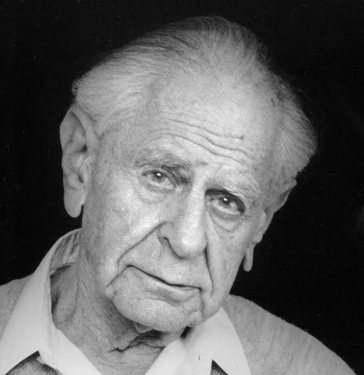
If in this book harsh words are spoken about some of the greatest among the intellectual leaders of mankind, my motive is not, I hope, the wish to belittle them. It springs rather from my conviction that, if our civilization is to survive, we must break with the habit of deference to great men. Great men may make great mistakes; and as the book tries to show, some of the greatest leaders of the past supported the perennial attack on freedom and reason. Their influence, too rarely challenged, continues to mislead those on whose defence civilization depends, and to divide them. The responsibility of this tragic and possibly fatal division becomes ours if we hesitate to be outspoken in our criticism of what admittedly is a part of our intellectual heritage. By reluctance to criticize some of it, we may help to destroy it all.
▼
Source
Preface to the First Edition
4 months 1 week ago
Anna Pávlovna's reception was in full swing. The spindles hummed steadily and ceaselessly on all sides. With the exception of the aunt, beside whom sat only one elderly lady, who with her thin careworn face was rather out of place in this brilliant society, the whole company had settled into three groups. One, chiefly masculine, had formed round the abbé. Another, of young people, was grouped round the beautiful Princess Hélène, Prince Vasíli's daughter, and the little Princess Bolkónskaya, very pretty and rosy, though rather too plump for her age. The third group was gathered round Mortemart and Anna Pávlovna.
▼
Source
Bk. I, Ch. III
CivilSimian.com created by AxiomaticPanic, CivilSimian, Kalokagathia