
4 months 1 week ago
It is not possible to escape from the results of the irruption of faith into the structures of our knowledge.
▼
Source
p. 109.
4 months 1 week ago
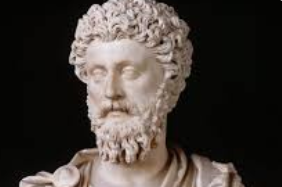
Men exist for the sake of one another. Teach them then or bear with them. (Long translation)
▼
Source
All men are made one for another: either then teach them better, or bear with them. (trans. Meric Casaubon). | Οἱ ἄνθρωποι γεγόνασιν ἀλλήλων ἕνεκεν· ἢ δίδασκε οὖν ἢ φέρε. | VIII, 59

4 months 1 week ago
The terrifying experience and obsession of death, when preserved in consciousness, becomes ruinous. If you talk about death, you save part of yourself. But at the same time, something of your real self dies, because objectified meanings lose the actuality they have in consciousness.
4 months 1 week ago
France was long a despotism tempered by epigrams.
▼
Source
Pt. I, Bk. I, ch. 1.

4 months 1 week ago
Knowing whether or not one can live without appeal is all that interests me.
4 months 1 week ago
I come out as if there were no hours in the days, nor planets in the hours; Neither do I care for any thing, but that interlude of Perendenga in Michael Cervantes: Let the old Man my Master live, and Christ be with us thus all. Thou wilt wonder now where this drives, Conde de lemos, nor a cardinal to pray for.
4 months 1 week ago
From the moment of his self-dedication, when he threw His cares away, and went forth not knowing where to lay his head, the whole energy which others spend on interests of their own was poured into his humane and divine affections, and filled his life with an enthusiasm resistless and unique. However quiet his words, it is impossible not to feel the tender depths from which they come.
▼
Source
Vol. II, p. 31.
4 months 1 week ago
Leibniz’s theory on the subject as substantia ideans in the sense of a causative agent of decision and acts stands much closer to a materialist interpretation of history than does a philosophy which reduces the thinking subject to the role of subsuming protocol sentences under general propositions and deducing other sentences from them.
▼
Source
p. 149.
4 months 1 week ago
If a man is mistaken, instruct him kindly and show him his error. But if thou art not able, blame thyself, or blame not even thyself.
▼
Source
X, 4
4 months 1 week ago
If this is the best of possible worlds, what then are the others?
4 months 1 week ago
Sadness makes you God's prisoner.
4 months 1 week ago
I could give here several other ways of tracing and conceiving a series of curved lines, each curve more complex than any preceding one, but I think the best way to group together all such curves and them classify them in order, is by recognizing the fact that all points of those curves which we may call "geometric," that is, those which admit of precise and exact measurement, must bear a definite relation to all points of a straight line, and that this relation must be expressed by a single equation. If this equation contains no term of higher degree than the rectangle of two unknown quantities, or the square of one, the curve belongs to the first and simplest class, which contains only the circle, the parabola, the hyperbola, and the ellipse; but when the equation contains one or more terms of the third or fourth degree in one or both of the two unknown quantities (for it requires two unknown quantities to express the relation between two points) the curve belongs to the second class; and if the equation contains a term of the fifth or sixth degree in either or both of the unknown quantities the curve belongs to the third class, and so on indefinitely.
▼
Source
Second Book
4 months 1 week ago
I here, on the very threshold, protest against it in reference to Paganism, and to all other isms by which man has ever for a length of time striven to walk in this world. They have all had a truth in them, or men would not have taken them up. Quackery and dupery do abound; in religions, above all in the more advanced decaying stages of religions, they have fearfully abounded: but quackery was never the originating influence in such things; it was not the health and life of such things, but their disease, the sure precursor of their being about to die! Let us never forget this.
4 months 1 week ago
You have already grasped that Sisyphus is the absurd hero. He is, as much through his passions as through his torture. His scorn of the gods, his hatred of death, and his passion for life won him that unspeakable penalty in which the whole being is exerted toward accomplishing nothing. This is the price that must be paid for the passions of this earth. Nothing is told us about Sisyphus in the underworld. Myths are made for the imagination to breathe life into them.
4 months 1 week ago
Abstinence from all injustice to other first-rate powers is a greater tower of strength than anything that can be gained by the sacrifice of permanent tranquillity for an apparent temporary advantage.
▼
Source
Book I, 1.42-[3]
4 months 1 week ago
Similarly, societies where news is censored cannot enjoy the luxury of false objectivity because they do not have the true variety. In free civilizations, false objectivity must be fought by true objectivity, not by some alien bureaucracy. Prejudiced history is eliminated, or at least combated, by serious history, and corrupt journalism can only be defeated by honest journalism, not by a government commission whose first act may be to distribute some secret subsidies.
▼
Source
As quoted in [http://www.friesian.com/gonzalz2.htm#note-9 Totalitarian Temptation] (1976).
4 months 1 week ago
The basic ideals and concepts of rationalist metaphysics were rooted in the concept of the universally human, of mankind, and their formalization implies that they have been severed from their human content. How this dehumanization of thinking affects the very foundations of our civilization can be illustrated by analysis of the principle of the majority, which is inseparable from the principle of democracy. In the eyes of the average man, the principle of the majority is often not only a substitute for but an improvement upon objective reason: since men are after all the best judges of their own interests, the resolutions of a majority, it is thought, are certainly as valuable to a community as the intuitions of a so-called superior reason. … What does it mean to say that “a man knows his own interests best”—how does he gain this knowledge, what evidences that his knowledge is correct? In the proposition, “A man knows [his own interests] best,” there is an implicit reference to an agency that is not totally arbitrary … to some sort of reason underlying not only means but ends as well. If that agency should turn out to be again merely the majority, the whole argument would constitute a tautology. The great philosophical tradition that contributed to the founding of modern democracy was not guilty of this tautology, for it based the principles of government upon … the assumption that the same spiritual substance or moral consciousness is present in each human being. In other words, respect for the majority was based on a conviction that did not itself depend on the resolutions of the majority.
▼
Source
pp. 26-27.
4 months 1 week ago
Have I done something for the general interest? Well then I have had my reward. Let this always be present to thy mind, and never stop doing such good.
▼
Source
XI, 4
4 months 1 week ago
God created woman only to tame man.
▼
Source
p. 41
4 months 1 week ago
Born in a prison, with burdens on our shoulders and our thoughts, we could not reach the end of a single day if the possibilities of ending it all did not incite us to begin the next day all over again.
4 months 1 week ago
Mahomet himself, after all that can be said about him, was not a sensual man. We shall err widely if we consider this man as a common voluptuary, intent mainly on base enjoyments, — nay on enjoyments of any kind. His household was of the frugalest; his common diet barley-bread and water: sometimes for months there was not a fire once lighted on his hearth. They record with just pride that he would mend his own shoes, patch his own cloak. A poor, hard-toiling, ill-provided man; careless of what vulgar men toil for.
4 months 1 week ago
The absurd ... is an experience to be lived through, a point of departure, the equivalent, in existence of Descartes' methodical doubt. Absurdism, like methodical doubt, has wiped the slate clean. It leaves us in a blind alley. But, like methodical doubt, it can, by returning upon itself, open up a new field of investigation, and in the process of reasoning then pursues the same course. I proclaim that I believe in nothing and that everything is absurd, but I cannot doubt the validity of my proclamation and I must at least believe in my protest. The first and only evidence that is supplied me, within the terms of the absurdist experience, is rebellion ... Rebellion is born of the spectacle of irrationality, confronted with an unjust and incomprehensible condition.
▼
Source
pp. 8 - 10 as quoted in Albert Camus and the Philosophy of the Absurd;(2002) by Avi Sagi, p. 44
4 months 1 week ago
That war is an evil is a proposition so familiar to every one that it would be tedious to develop it. No one is forced to engage in it by ignorance, or kept out of it by fear, if he fancies there is anything to be gained by it.
▼
Source
Book IV, 4.59-[2]; "Nobody is driven into war by ignorance, and no one who thinks that he will gain anything from it is deterred by fear." ([http://www.classicpersuasion.org/pw/thucydides/thucydides-passages.php?pleaseget=4.59-64 trans.] Benjamin Jowett)
4 months 1 week ago
Through a vicious circle of pure reason skepsis itself becomes dogma.
▼
Source
Briefwechsel, ed. Arthur Henkel (1955-1975), vol. V, p. 432.
4 months 1 week ago
Whatever happens to you has been waiting to happen since the beginning of time. The twining strands of fate wove both of them together: your own existence and the things that happen to you.
▼
Source
V. 8, trans. Gregory Hays
4 months 1 week ago
All religions are more or less mixed with superstitions. Man is not reasonable enough to content himself with a pure and sensible religion, worthy of the Deity.
▼
Source
p. 139
4 months 1 week ago
Ennui is the echo in us of time tearing itself apart.
4 months 1 week ago
Is it not a right glorious thing, and set of things, this that Shakspeare has brought us? For myself, I feel that there is actually a kind of sacredness in the fact of such a man being sent into this Earth.
4 months 1 week ago
La vraie générosité envers l'avenir consiste à tout donner au présent.
▼
Source
Real generosity toward the future consists in giving all to the present. | Part 5: Thought at the Meridian (p. 313)
4 months 1 week ago
The world's biggest power is the youth and beauty of a woman.
4 months 1 week ago
The fire i th' flint Shows not till it be struck
▼
Source
Poet, scene i
4 months 1 week ago
I want to block some common misunderstandings about "understanding": In many of these discussions one finds a lot of fancy footwork about the word "understanding."
4 months 1 week ago
Trust not him with your secrets, who, when left alone in your room, turns over your papers.
▼
Source
No. 449
4 months 1 week ago
Marcus Aurelius does not direct his reflections to others but only to himself. The “”Memoirs“” are not a lesson for an ideal or real disciple (as Seneca's “'Letters to Lucilius”' were), but a continuous effort to remind “'himself”' of the philosophical cornerstones that alone can guarantee him serenity and inner peace. They therefore have a dramatic tone that is lacking in other ancient and modern moral works. Marcus Aurelius' interlocutor is only himself: Marcus Aurelius, emperor and man. Only within himself does he believe he can find the law of truth and goodness. Seeking solitude is useless, he says; one must withdraw into oneself because only in the depths of one's soul can tranquillity and truth be found. This attitude, which was adopted by the Christian world, is the fundamental leitmotif of Marcus Aurelius's “Memoirs”. In himself, man finds the reason with which divine providence has ordered the universe, and the criterion of truth and moral conduct. But by withdrawing into himself, man does not find himself in isolation: reason binds him to all men with whom he shares it.
4 months 1 week ago
I disapprove of what you say, but I will defend to the death your right to say it.
▼
Source
Variants: | Monsieur l'abbé, I detest what you write, but I would give my life to make it possible for you to continue to write. | I wholly disapprove of what you say—and will defend to the death your right to say it. | Though these words are regularly at
4 months 1 week ago
As incompetent in life as in death, I loathe myself and in this loathing I dream of another life, another death. And for having sought to be a sage such as never was, I am only a madman among the mad.
4 months 1 week ago
But all this language gotten, and augmented by Adam and his posterity, was again lost at the tower of Babel, when by the hand of God, every man was stricken for his rebellion, with an oblivion of his former language.
▼
Source
The First Part, Chapter 4, p. 12 (See also: Julian Jaynes)
4 months 1 week ago
It depends on what we read, after all manner of Professors have done their best for us.
4 months 1 week ago
What was also unusual for Americans was that so many of the revered figures were writers and intellectuals. This is perhaps because to a very large extent theirs was a movement from the universities. Perhaps the single most influential writer for young people in the sixties was Algerian-born French Nobel Prize laureate Albert Camus, who died in 1960 in an automobile crash at age forty-seven, just as what should have been his best decade was beginning. Because of his 1942 essay, “The Myth of Sisyphus,” in which he argued that the human condition was fundamentally absurd, he was often associated with the existential movement. But he refused to consider himself part of that group. He was not a joiner, which is one of the reasons he was more revered than the existentialist and communist Jean-Paul Sartre, even though Sartre lived through and even participated in the sixties student movements. Camus, who worked with the Resistance against the Nazi occupiers of France editing an underground newspaper, Le Combat, often wrote from the perspective of a moral imperative to act. His 1948 novel, The Plague, is about a doctor who risks his life and family to rid his community of a sickness he discovers. In the 1960s, students all over the world read The Plague and interpreted it as a call to activism. Mario Savio’s famous 1964 speech, “There’s a time when the operation of the machine becomes so odious . . . you’ve got to put your bodies upon the gears . . . and you’ve got to make it stop,” sounds like a line from The Plague. “There are times when the only feeling I have is one of mad revolt,” Camus wrote. American civil rights workers read Camus. His books were passed from one volunteer to the next in SNCC. Tom Hayden wrote that he considered Camus to be one of the great influences in his decision to leave journalism and become a student activist. Abbie Hoffman used Camus to explain in part the Yippie! movement, referring to Camus’s words in Notebooks: “The revolution as myth is the definitive revolution.”
▼
Source
Mark Kurlansky, 1968: The Year that Rocked the World (2004), p. 107-08, ISBN 0-345-45581-9
4 months 1 week ago
This argument too shows that in truth we know nothing about anything, but every man shares the generally prevailing opinion.
4 months 1 week ago
Among civilized peoples, especially the very wealthy population of the United States of America, women have become objects of luxury who consume but do not produce.
▼
Source
p. 297.
4 months 1 week ago
Ambition is the grand enemy of all peace.
▼
Source
p. 140
4 months 1 week ago
It is difficult to set forth any of the greater ideas, except by the use of examples; for it would seem that each of us knows everything that he knows as if in a dream and then again, when he is as it were awake, knows nothing of it all.
▼
Source
277d
4 months 1 week ago
To hope is to contradict the future.
4 months 1 week ago
Whatsoever therefore is consequent to a time of Warre, where every man is Enemy to every man; the same is consequent to the time, wherein men live without other security, than what their own strength, and their own invention shall furnish them withall. In such condition, there is no place for Industry; because the fruit thereof is uncertain: and consequently no Culture of the Earth; no Navigation, nor use of the commodities that may be imported by Sea; no commodious Building; no Instruments of moving, and removing things as require much force; no Knowledge of the face of the Earth; no account of Time; no Arts; no Letters; no Society; and which is worst of all, continuall feare, and danger of violent death; And the life of man solitary, poore, nasty, brutish, and short.
▼
Source
The First Part, Chapter 13, p. 62
4 months 1 week ago
Such souls are, in these days, getting somewhat out of humour with the world. Your very Byron, in these days, is at least driven mad; flatly refuses fealty to the world. The world with its injustices, its golden brutalities, and dull yellow guineas, is a disgust to such souls: the ray of Heaven that is in them does at least pre-doom them to be very miserable here. Yes:—and yet all misery is faculty misdirected, strength that has not yet found its way. The black whirlwind is mother of the lightning. No smoke, in any sense, but can become flame and radiance! Such soul, once graduated in Heaven's stern University, steps out superior to your guinea.
4 months 1 week ago
Seek after the good, and with much toil shall ye find it; the evil turns up of itself without your seeking it.
4 months 1 week ago
The historical materialist leaves it to others to be drained by the whore called "Once upon a time" in historicism's bordello.
▼
Source
XVI
4 months 1 week ago
The mind of man may be compared to a musical instrument with a certain range of notes, beyond which in both directions we have an infinitude of silence.
▼
Source
Matter and Force.
4 months 1 week ago
Socrates: The disgrace begins when a man writes not well, but badly. Phaedrus: Clearly. Socrates: And what is well and what is badly—need we ask Lysias, or any other poet or orator, who ever wrote or will write either a political or any other work, in metre or out of metre, poet or prose writer, to teach us this?
▼
Source
258d | paraphrased in Zen and the Art of Motorcycle Maintenance by Robert M. Pirsig: "And what is good, Phaedrus, and what is not good—need we ask anyone to tell us these things?"
CivilSimian.com created by AxiomaticPanic, CivilSimian, Kalokagathia